Ranchers found guilty of animal mistreatment and illegal sales

Ranchers found guilty of animal mistreatment and illegal salesMARTIN, S.D. – Two Bennett County ranchers were taken straight from a courtroom to a jail cell in a case that involved mistreatment of cattle and the false branding and attempted sale of animals they did not own.

Leland Pauly, 60, and longtime girlfriend Lynda Frost, 56, were both taken to jail on Thursday to begin serving 15-day jail sentences on charges they mistreated numerous cattle under their care on their ranch 10 miles east of Martin.

The case came to light after Dan Schilling, a rancher from Wessington, contracted with Pauly and Frost to feed and care for his cattle at their ranch in Bennett County. After discovering his cattle in poor condition, Schilling filed a complaint with the sheriff in March 2024.

Ranchers found guilty of animal mistreatment and illegal sales

That prompted investigations that have led to numerous criminal charges against Pauly and Frost, and now, criminal convictions on livestock-related fraud and neglect charges for them both in South Dakota and Nebraska.

Pauly comes from a longtime ranch family in Bennett County. And he and Frost are both well known in the cattle industry in central South Dakota and northern Nebraska.

Ranchers found guilty of animal mistreatment and illegal sales
Leland Pauly and Lynda Frost of Martin, S.D., are shown on July 17, 2025, in the Bennett County Courthouse. (Photo: Bart Pfankuch / South Dakota News Watch)

The charges against them came as the pair faced major financial struggles, including a recent bankruptcy and now the possibility of Pauly losing the land his family has owned for generations, according to Pauly’s attorney, Sandy Steffen of Gregory.

Bennett County State’s Attorney Sarah E. Harris said there is no excuse for animal mistreatment or economic fraud, and that she hopes the imposition of jail time will serve as a warning to anyone who abuses cattle or tries to defraud others.

“I grew up on a ranch, and it makes me absolutely sick to think of how these cattle were treated,” Harris told News Watch. “Hopefully other people will see this and think twice before entrusting their cattle or any livestock with these people.”

Couple faced multiple charges in two states

After Schilling made the initial complaint, authorities in the two states took notice.

In April 2024, Pauly and Frost were charged in Bennett County with 25 misdemeanor counts of animal neglect or mistreatment.

That same month, the pair was charged in Keith County, Nebraska, in the illegal branding and sale of cattle owned by Schilling.

Then, in September 2024, Pauly and Frost were charged in South Dakota with four felony counts of misuse or alteration of a cattle brand, a Class 5 felony.

In the Nebraska case, Pauly pleaded no contest in June and was sentenced to probation on a felony charge of illegal sale/trade/disposition of livestock, according to Nebraska court records. Frost was found guilty of a misdemeanor charge of using false documents to misrepresent inspection records on livestock.

In South Dakota, court documents indicate that sometime between May 2023 and March 2024, the pair intended to defraud cattle buyers by “brand(ing) calves belonging to Dan Schilling with Lynda Frost’s lazy F over arrow brand.”

The South Dakota brand alteration charges were dropped as part of a plea deal in which Pauly and Frost agreed to plead no contest to three misdemeanor animal neglect charges.

Video shows weakened cattle

In late March, about 265 head of cattle were seized from the Pauly ranch by the Bennett County Sheriff’s Office. Some of the animals had their skeletons showing due to malnourishment. A cow and two calves died soon after being seized, according to authorities.

A video that was played in the Bennett County Courthouse on Thursday showed one group of seven cattle with their spines, hips and shoulder bones clearly visible. Some appeared unsteady as they walked.

Ranchers found guilty of animal mistreatment and illegal sales
The backbone is clearly visible on this cow, seized from the ranch of Leland Pauly and Lynda Frost in March 2024. (Photo: Courtesy Bennett County State’s Attorney)

Harris told the court her office had tested the feed given to the cattle at the Pauly Ranch and found it had no or very little nutritional value.

“It looked like it was ground up corn stalks and sticks,” Harris told News Watch. “There was no way they could gain weight on that, and it’s probably why they looked so terrible.”

Harris told the court that in the weeks after the cattle were seized and provided good nutrition, many began to gain weight and return to good health. The cattle were ultimately returned to Schilling, the owner.

Join other South Dakotans and support statewide storytelling.


Donate

Bennett County Sheriff Jason Erwin told News Watch that he has never seen a livestock neglect case like this since arriving in the area in 2013.

“I’m not going to say they’re bad people,” said Erwin, who is a neighbor to Pauly and Frost. “But it is shocking to see that.”

Schilling told News Watch that Pauly and Frost committed fraud against him in numerous ways and still owe him about $300,000 in cattle and feed costs they misrepresented.

“It’s been terrible,” he said. “And I’ve spent way too much time and money on this thing.”

Approached by News Watch in the Bennett County Courthouse prior to the hearing on Thursday, Pauly and Frost both declined comment.

Defense sought no fine or jail time

Once the couple was found guilty of neglect, the defense and prosecution made recommendations to Circuit Court Judge Bobbi Rank on sentencing.

Harris, the prosecutor, argued for a 30-day jail sentence and three years of probation for each defendant, noting that two veterinarians who examined the seized cattle rated many only a 2 or 3 on a 1-9 scale of animal health. She pointed out that the cattle were confined by Pauly and Frost and unable to obtain adequate food or water on their own.

Ranchers found guilty of animal mistreatment and illegal sales
The ranch run by Leland Pauly and Lynda Frost about 10 miles east of Martin, S.D., is shown on July 17, 2025. (Photo: Bart Pfankuch / South Dakota News Watch)

Steffen, Pauly’s attorney, asked the court to require restitution payments but argued for no jail time or fines for her client and his girlfriend.

She said the cows delivered to Pauly and Frost by Schilling were old and already in poor shape upon arrival, a claim that Harris and Schilling denied.

Steffen also noted that despite the recent criminal charges against her client, Pauly’s criminal history was “unremarkable” and does not include prior charges of animal neglect.

“Mr. Pauly has his whole life been caring for cattle,” she said. “But life happened and things went off the rails.”

Judge Rank, however, turned that argument around by noting instead that after so many years of caring for cattle, Pauly and Frost should have known better than to engage in animal neglect.

Medicaid cuts could hit rural health hard in SD
Rural providers expect bad news and potentially ominous outcomes. “It could lead to people being more sick and also some more people dying.”
Ranchers found guilty of animal mistreatment and illegal sales

“This is not a situation where you have some young kid or a city slicker looking to have a hobby farm and they don’t know what they’re doing,” the judge said.

Rank said that a jail term was needed to ensure a strong message was sent regarding the importance of properly caring for livestock in South Dakota. She sentenced Pauly and Frost to 15 days in jail, a year of unsupervised probation, payment of restitution and court costs, and she ordered that they not own cattle for one year.

“Crops and cattle are among the most beloved things (in the state),” she said. “You had critters here who were completely dependent on the defendants for their lives, and for whatever reason, they neglected that duty.”

This story was produced by South Dakota News Watch, an independent, nonprofit organization. Read more stories and donate at sdnewswatch.org and sign up for an email to get stories when they’re published. Contact Bart Pfankuch at bart.pfankuch@sdnewswatch.org.

Medicaid cuts in federal budget could hit rural health hard in SD

Medicaid cuts in federal budget could hit rural health hard in SDWade Erickson doesn’t want to seem like an alarmist.

But Erickson, CEO of Horizon Health Care in South Dakota, has serious concerns about how the Medicaid cuts embedded in the giant taxation and budget law signed by President Donald Trump will affect the health of South Dakotans, especially in rural areas.

Horizon provides medical care to people across a 28,000 square-mile area of the state. Each year, about 26,000 patients are treated in 80,000 appointments at 19 Horizon Health clinics, dental offices and mental-health centers in South Dakota.

Details are still to come on the cuts to Medicaid, the health insurance program for low-income Americans. But early indications are that the law will cut federal aid to health care by $1 trillion over the next decade.

The nonpartisan Congressional Budget Office estimated that the law will remove 12 million Americans from enrollment in the Medicaid program, many due to new work requirements.

From Erickson’s standpoint, that would impact rural health in two ways.

First, patients who lose Medicaid coverage and are not able to afford medical care from their own pockets will be more likely to delay preventive care or may avoid getting needed medical treatments altogether.

“If people are afraid to access health care because they can’t afford to pay for it, or they stop taking care of their wellness and are no longer catching chronic diseases early to where they can be managed, there’s a very good possibility that it could lead to people being more sick, and also some more people dying before they would otherwise,” Erickson told News Watch.

Medicaid cuts in federal budget could hit rural health hard in SD
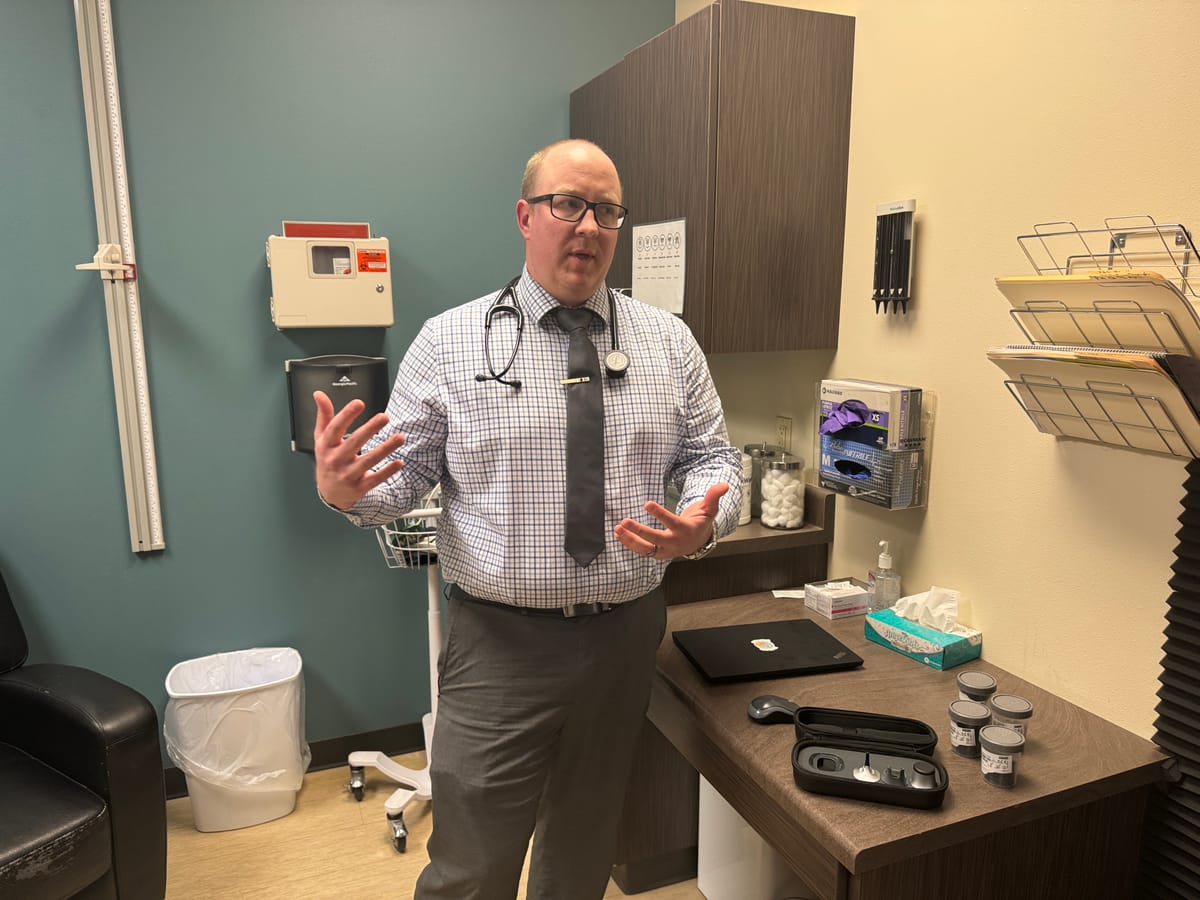
Wade Erickson, CEO of Horizon Health Care, is shown in his system’s clinic in Martin, S.D. in May 2024. (Photo: Bart Pfankuch / South Dakota News Watch)

Secondly, health providers like Horizon, which already run on small or even negative profit margins on some procedures, will see less revenue and could be forced to reduce services.

About 65% of Horizon’s annual budget is funded by the federal government, with roughly 20% coming from Medicaid, which sometimes does not cover the full cost of patient treatments and procedures. Other federal funding sources include Medicare and the annual payment made as part of the Federal Qualified Health Center program.

As a federally qualified center, Horizon cannot turn away any patients. If fewer people are covered by Medicaid, Horizon will have to ask them to pay on a sliding scale or simply provide unreimbursed coverage if the patients cannot afford to pay.

“Just because people lose coverage doesn’t mean they stop getting sick or they should stop taking care of their wellness and chronic conditions,” Erickson said.

“That is super important, that we are able to continue to support that. But without insurance or without a payer source other than themselves, which honestly, people can’t afford it if they’re on Medicaid, so they’ll be uninsured,” he added. “That will just lead to more uncompensated care and make it really difficult for us to maintain services in rural communities.”

Medicaid cuts in federal budget could hit rural health hard in SD
The medical lab at the Horizon Health Care clinic in Martin, S.D., is shown in April 2024. (Photo: Bart Pfankuch / South Dakota News Watch)

Erickson acknowledged that there are many unknowns about how the cuts to Medicaid will play out in the coming years. But he is concerned that reductions in coverage may put rural providers and patients into untenable positions.

“We already have patients who choose whether to get groceries or get their prescriptions, so it’s going to land on the most vulnerable people out there,” he said. “And we have to figure out, how are we going to serve all these new patients who are uninsured?”

Law’s goal is to cut fraud and waste

President Trump and Republican leaders in Congress have said the health care changes in the new budget bill will reduce fraud and waste and ensure that Medicaid is serving those it initially intended: pregnant women, people with disabilities and children.

Cuts in some programs were necessary in order to fund some of Trump’s other priorities, such as increasing immigration enforcement, boosting defense and providing tax cuts.

Medicaid cuts in federal budget could hit rural health hard in SD

The bill includes a $50 billion new fund to help rural hospitals offset revenue losses. But the nonpartisan KFF research institute estimates Medicaid spending in rural areas will fall by $155 billion under the new legislation.

“It’s very clear that Medicaid cuts will result in rural hospital closures,” Alan Morgan, CEO of the National Rural Health Association, a nonprofit advocacy and research organization, told KFF in July.

A $1.65 billion program in SD

Medicaid in South Dakota provides medical, dental, vision and pharmaceutical insurance coverage for qualifying low-income adults and children.

The cost of the Medicaid program in South Dakota in calendar year 2024 was about $1.65 billion, according to data from the Department of Social Services, which administers the program.

DSS officials did not respond to an interview request from News Watch.

Medicaid enrollment and costs in South Dakota rose significantly in July 2023, when voter-approved expanded guidelines kicked in, and both metrics have continued to rise since then.

In June, about 144,300 people were enrolled in Medicaid in South Dakota, with 78,500 children and 65,800 adults covered by the insurance plan. The cost of the program was $155.5 million that month, with the state paying about 40% and the federal government paying around 60%.

While cuts to Medicaid will affect all health care providers across the state, including large health groups in bigger cities, rural providers and patients have fewer options to adapt to changes and as a result may see more acute impacts.

Long-term care industry worries but 1 positive

Providers in the long-term care industry in South Dakota are also trying to determine how the recent budget law will affect their ability to provide care or even remain financially viable, said Mark Deak, executive director of the South Dakota Health Care Association.

The association represents about 170 nursing homes, assisted-living and senior-care homes as well as about 90 vendors and suppliers to the long-term care industry in the state. Many of those facilities, particularly in rural areas, have experienced financial challenges in recent years, leading 10% of nursing homes to close during the early 2020s, Deak said.

While the budget bill does not contain direct cuts to long-term care funding, anticipated reductions in Medicaid funding could squeeze revenues for facilities that on average receive 54% of income from Medicaid enrollees, Deak said.

As a result, care facilities could be hit with revenue challenges, especially in rural areas where workforce is limited and costs can be higher, he said. Meanwhile, potential residents with limited financial resources could find it harder to obtain long-term care.

Join other South Dakotans and support statewide storytelling.


Donate

“Given how tight the margins are, and how tight the budget could get, it just ratchets up the level of anxiety,” Deak said. “Given the overall fiscal pressures, we’re just thinking about what the impacts could be.”

Another less-prominent piece of the legislation, Deak said, will shorten by a month the time period long-term care facilities have to process and be reimbursed for new residents, which also could make it less likely they will take in new low-income residents.

The law did include one big win for long-term care facilities.

It paused a federal staffing level requirement that Deak said would have forced facilities in South Dakota to hire 300 new nurses. That was an expensive and potentially impossible directive to meet given the lack of available workforce, he said.

Waiting and watching in Winner

Brian Williams, CEO of Winner Regional Health, said it’s too early to know how the Medicaid cuts in the federal budget bill will impact his facility and its patients. But he’s staying abreast of funding developments to be prepared if bad news does arrive.

Medicaid cuts in federal budget could hit rural health hard in SD
Brian Williams, CEO of Winner Regional Health

“We do not fully understand how these cuts may or not impact us. But we’re very concerned and we’re keeping a close eye on how this is going to be implemented,” Williams told News Watch. “It  could have a negative impact on our ability to get reimbursement for a lot a services we provide.”

The small, independent health group that includes a hospital, clinic and long-term care facility in south-central South Dakota’s Tripp County has been forced to make tough choices already this year due to revenue challenges.

In February, Winner Regional ended its birthing services, forcing expectant mothers to drive an hour or more to give birth with a doctor present.

Erickson, of Horizon Health Care, said he plans to contact members of Congress to urge them to modify or soften the cuts to Medicaid.

“That’s why we really have to tell our story of the impact of what it’s going to do to people across the country, and in our case, the people of South Dakota.”

This story was produced by South Dakota News Watch, an independent, nonprofit organization. Read more stories and donate at sdnewswatch.org and sign up for an email to get stories when they’re published. Contact Bart Pfankuch at bart.pfankuch@sdnewswatch.org

How Wall is building a model to encourage housing growth

How Wall is building a model to encourage housing growth

WALL, S.D. – This small western South Dakota town known internationally for Wall Drug and its proximity to Badlands National Park seemed like the perfect place for Ana Komar to fulfill her dream of running a scenic flight business.

Komar, 30, has been a licensed pilot for five years and owns a four-seat Cessna. She was looking for a spot to use her skills and feed her adventurous spirit and love of natural beauty by launching a business flying tourists over dramatic terrain.

In many ways, Wall was perfect.

How Wall is building a model to encourage housing growth

The local airport is a few miles from the Badlands, its airstrip had just been extended and local leaders were welcoming and helpful, Komar said.

“I called city hall with my idea and they’re like, ‘Come on down, we’ll set up a meeting with the mayor tomorrow,'” said Komar, who ultimately launched the Fly Badlands aerial tour business this spring. “It’s been amazing, just the enthusiasm and the support of people checking in, coming over here to help me. It’s been a real feat of kindness.”

How Wall is building a model to encourage housing growth
Ana Komar and the Cessna she pilots to take tourists over the South Dakota Badlands while parked at the Wall, S.D., airport on June 23, 2025. (Photo: Bart Pfankuch / South Dakota News Watch)

But for all the positives, there’s been one major drawback — a challenge to growth in Wall that is negatively affecting rural towns and small cities across the entire state.

Komar simply could not find housing anywhere in the city of 700 people or in communities nearby.

“I’m forced to live in Rapid City and drive in every day, which is kind of a bummer and a little draining,” Komar said while speaking from her makeshift office in a storage container at the Wall Municipal Airport, 50 miles east of Rapid City.

“That drive every day is time you can’t get back,” she said. “I want to live in a community, to live in a house, to be able to walk downtown to a coffee shop and get to know people.”

For Komar, who’s single, commuting two hours a day hasn’t been a deal-breaker, and she has a van parked at the airport where she can sleep to prepare for a morning tour or to stay after a sunset flight. 

Yet she wonders if the lack of housing is holding Wall back from reaching its full potential.

“If I had a young family and was making a decision whether to start a business in Wall, it would raise real questions.”

How Wall is building a model to encourage housing growth
Ana Komar, owner and operator of Fly Badlands scenic flight tours, shown on June 23, 2025, was unable to find housing in Wall, S.D., and sometimes sleeps in the van she keeps at the airport. (Photo: Bart Pfankuch / South Dakota News Watch)

A shortage of affordable or even available housing is one of the big three challenges to population stability and economic growth in rural South Dakota. A lack of workers and day care are other top reasons new businesses and families find it hard to locate in small cities and towns.

This story is part of a series that South Dakota News Watch will be reporting as part of Engage South Dakota, which uses storytelling, crowdsourcing and community engagement to identify and share solutions in the works or yet to be developed. Each story will include the community’s response, insights to be learned, evidence of whether the ideas are effective and limitations on the efforts.

Response: Teamwork drives housing development

Wall leaders aren’t just hoping new housing suddenly appears.

Through a coordinated effort that includes local government officials, business leaders, residents and some state funding, the city is setting the stage for development of new housing and the potential growth it can bring.

How Wall is building a model to encourage housing growth
Wall, S.D., finance director Carolynn Anderson, shown on June 23, 2025, shows where lots are ready for development in the Wall Industrial Park on the north side of the city. (Photo: Bart Pfankuch / South Dakota News Watch)

The city received money from the Federal Aviation Administration to extend its local airstrip, allowing for greater access by planes and jets.

It has developed an 85-acre, business-ready industrial park north of the airport, though no business has located there yet.

Join other South Dakotans and support statewide storytelling.


Donate

The city has cleared land for new housing and installed infrastructure that will encourage developers to build homes or apartments, said Mayor Mary Williams.

It tore down an old gas station and used the lot to install three homes through the Governor’s House Program.

Wall also received a $1.2 million loan from South Dakota Housing – a state-funded nonprofit lending agency – to build infrastructure for the proposed Echo Valley subdivision on open land south of Interstate 90.

Resident-driven ideas at heart of Engage South Dakota
Pilot project uses storytelling and civic engagement to identify and share solutions to challenges impacting communities across the state.
How Wall is building a model to encourage housing growth

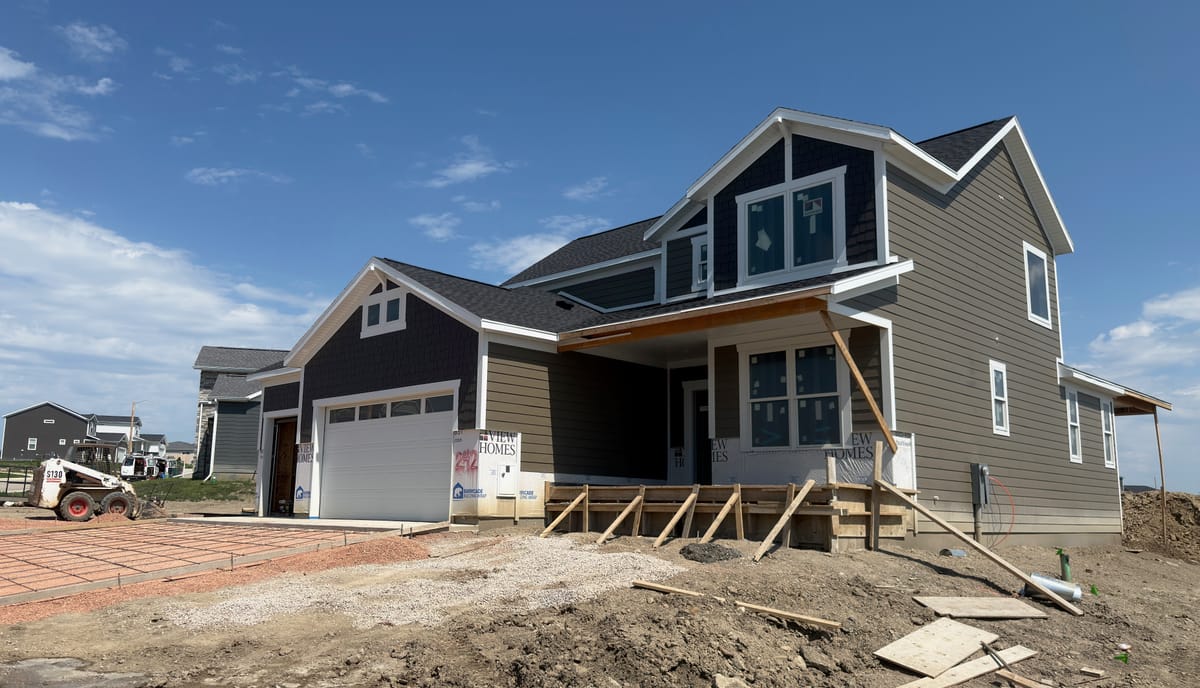
That land, now offered for construction by private developers, can accommodate 24 new homes, 15 of which will be considered affordable, Williams said.

Nearby, the city used other money borrowed from South Dakota Housing to extend a street and connect it to another, creating new buildable lots in the Hansen subdivision that now contain four occupied governor’s homes and two privately-built homes, she said.

“Those homes all went to young couples who have come back home to participate in their family businesses, so that was very successful,” Williams said of the expanded area.

Evidence: Builder shifts to housing

Wall has a stable employment base due to its tourism industry led by Wall Drug and by employers such as local schools and city, county and federal government as well as Golden West Telecommunications and West River Electric Association.

Williams said the positive, welcoming approach to growth has also prompted a few other new businesses to recently locate to Wall, including Dahl Chainsaw Art and Dakota Sky Stone, a manufacturer of Native American influenced jewelry.

How Wall is building a model to encourage housing growth
The city of Wall, S.D., obtained a loan from the South Dakota Housing Development Authority to help pay for infrastructure needed to encourage housing construction in the Echo Valley subdivision south of town. (Photo: Bart Pfankuch / South Dakota News Watch)

John Diedrichs is one of the people seizing on the opportunity to build new housing, partly due to the high demand but also to support the continued growth and stability in his adopted hometown.

Diedrichs owns Cornerstone Industries and Construction Services, with a main focus on building grain bins and other agricultural structures.

He recently moved into the homebuilding space, completing his own family home. He’s planning to build six, two-unit townhomes and a 12-unit apartment building, all in the Echo Valley subdivision south of Interstate 90 where sewer, water and streets are already in place.

He poured the foundation on one townhome in late June and already has one side leased and the second side spoken for by a prospective tenant.

Diedrichs said the city has been “extremely proactive” in helping developers prepare land and in making it easier for builders to get projects started.

Generating new housing opportunities is critical for businesses like his to grow or for new businesses to come to town, he said.

“We don’t hire a lot of people from Wall, and most of them come from other cities or states,” Diedrichs said.

Diedrichs said he can feel the momentum in the town where he has lived since 2010. While it costs more to build housing in a remote small town, and rents are typically lower than in a larger city, Diedrichs said he is committed to helping Wall build a strong future.

“Financially it makes a lot more sense to build in Rapid City, but we want to build in Wall because we’re so entrenched in the community,” he said.

Limitations: Loss of housing and slow growth

Though the efforts so far make the city poised for growth, Wall’s housing offerings remain tight, and a 2022 study commissioned by the city reveals some of the challenges.

It found a slow growth rate, with 20 new single-family homes built from 2010 to 2022. The city lost 56 housing units over that time, a 13% decline attributed to demolitions, loss of rental properties and conversion of some homes and apartments to seasonal rentals.

Meanwhile, the overall housing stock is aging, with a quarter of all units built before 1960.

The city has avoided the significant population declines seen by other similar-sized South Dakota cities, but it has still seen a slow drawdown. The U.S. Census reports the city had 834 residents in 1990, 807 in 2000, 774 in 2010 and 688 in 2023.

Insight: Wall Drug boss says city support is key

Despite those challenges, Wall – like many other small towns – is fortunate to have at least one major employer that provides a foundation on which to build. Wall Drug – made famous worldwide through “miles to” road signs – actively plays a role in making sure its employees have a place to live.

Rick Hustead, the third-generation president of Wall Drug and a member of the Wall City Council, knows firsthand about the housing challenges facing both residents and employers.

How Wall is building a model to encourage housing growth
Rick Hustead, shown in his office in Wall, S.D., on June 23, 2025, is the third-generation president of Wall Drug. (Photo: Bart Pfankuch / South Dakota News Watch)

He and his team at Wall Drug have developed a system for providing housing for the 185 employees who work during summers at the restaurant/retail/leisure complex that takes up a large section of Main Street.

Hustead owns a mobile home park and other housing sites for employees, including the 95 foreign workers who are in Wall on temporary visas this summer and 20 other seasonal employees. Wall Drug has about 70 full-time, non-seasonal staff who mostly reside in Wall, he said.

Hustead, 75, said the city has done a good job of being forward-thinking by aiding developers of new housing and must maintain those efforts to provide buildable land and look for funding sources to aid construction projects.

“The city has been pretty proactive in supplementing new development,” he said. “There’s lots available, but you have to put some money in to help developers.”

Solving South Dakota’s housing problem one idea at a time
How an Aberdeen nonprofit called Homes Are Possible Inc., or HAPI, shares what it has learned to help ease the state’s housing crunch.
How Wall is building a model to encourage housing growth

Besides trying to attract new businesses and the residents they bring, Rochan Burrell, executive director of the Wall Economic Development Corp., is looking 40 miles west.

She’s promoting the city’s housing potential with Ellsworth Air Force Base officials as they prepare for an influx of military and civilian personnel as part of the expansion for the new B-21 bomber program.

“We’ve kind of been the best-kept secret and I’m trying to change that so people know we’re here and that we’re a great community, with great schools and a great place to raise your family,” she said. “I’ve made those relationships and those connections to let them know we’re prepped for growth.”

This story was produced by South Dakota News Watch, an independent, nonprofit organization. Read more stories and donate at sdnewswatch.org and sign up for an email to get stories when they’re published. Contact Bart Pfankuch at bart.pfankuch@sdnewswatch.org.

Fact brief: Does South Dakota have some of the highest rates of DUI arrests in the nation?

Yes.

Fact brief: Does South Dakota have some of the highest rates of DUI arrests in the nation?

Fact brief: Does South Dakota have some of the highest rates of DUI arrests in the nation?

South Dakota ranks at or near the top nationwide for driving under the influence arrests per capita, according to multiple sources from the past few years.

A report compiled by Forbes ranked the state second for DUI risks, citing the highest number of DUI arrests per licensed driver (879 per 100,000) and a high rate of traffic fatalities being caused by drunken drivers (35.14%). Montana ranks No. 1 in the report and Texas No. 3.

Because each source uses different formulas to determine the rankings, South Dakota’s placement varies, but it’s generally high.

Alcohol.org ranks South Dakota as No. 1 by citing data of 938.8 DUI arrests per 100,000 people, over 100 more than North Dakota.

Factors in South Dakota’s consistently high ranking include the Sturgis Motorcycle Rally, frequent sobriety checkpoints, and drivers getting behind the wheel in rural areas and small towns after drinking. 

This fact brief responds to conversations such as this one.

Sources

Forbes, Worst states for drunk driving 2025

SDPB, Study: South Dakota has highest per capita DUI arrest rate in nation 

Alcohol.org, DUIs arrests and fatalities across the US

Kinney Law, South Dakota is one of the worst states for drunk driving

Addiction Group, Updated Drug and Alcohol Statistics for South Dakota


South Dakota News Watch partners with Gigafact to publish fact briefs that refute or confirm a claim with supporting information and additional evidence and context.

Join other South Dakotans and support statewide storytelling.


Donate

This story was produced by South Dakota News Watch, an independent, nonprofit organization. Read more stories and donate at sdnewswatch.org and sign up for an email to get stories when they’re published. Contact Michael Klinski at michael.klinski@sdnewswatch.org.

Tribe asked to allow search for civil rights activist at Wounded Knee

Tribe asked to allow search for civil rights activist at Wounded Knee

The Oglala Sioux Tribal Council will be asked to approve a search for the remains of a Black civil rights activist who disappeared during the 1973 Wounded Knee standoff. He is likely buried on the Pine Ridge Indian Reservation.

Perry Ray Robinson Jr. was 35 years old when he left his home in Bogue Chitto, Alabama, in April 1973 to answer a call for help from the American Indian Movement. For 71 days, AIM members and supporters occupied the village and exchanged gunfire with federal agents gathered around its perimeter. Robinson never returned, was later declared dead without his body being found, and no one was ever charged.

Tribe asked to allow search for civil rights activist at Wounded Knee
Civil rights activist Ray Robinson (center). (Photo: Courtesy Cheryl Buswell-Robinson)

His name came to light after two men were indicted in 2003 on charges they killed Canadian Annie Mae Aquash in December 1975 in South Dakota’s badlands.

Arlo Looking Cloud was arrested in Denver. A federal jury in Rapid City convicted him in 2004 of murder. He was sentenced to life in federal prison, but that was later reduced to 20 years because of his cooperation and acceptance of responsibility. He was released in 2019.

The other man, John Graham, fought extradition from his native Canada. A state jury in Rapid City convicted him of murder in 2010 and he is serving a life prison sentence at the South Dakota State Penitentiary in Sioux Falls.

Hulu documentary about Aquash

Justin Baker, 40, who lives in Mission on South Dakota’s Rosebud Indian Reservation, started the latest effort to search for Robinson’s body.

He has been following the Aquash and Robinson cases since Looking Cloud and Graham were indicted. That included reading media accounts and documents released as part of a Freedom of Information Act request. Baker said he also spent considerable time with Leonard Crow Dog, a Sicangu Lakota medicine man and AIM’s spiritual leader who died in 2021.

Tribe asked to allow search for civil rights activist at Wounded Knee
Logo of “Vow of Silence: The Assassination of Annie Mae.” (Photo: Hulu)

Baker said he was prompted to action after watching a recent documentary about Aquash on the streaming service Hulu entitled “Vow of Silence: The Assassination of Annie Mae.”

Witnesses testified that Aquash, who also responded to AIM’s request for help and rose to prominence in the organization, was killed because she was suspected of being an informant.

“I started thinking, ‘Why can’t they do something for this man, Ray Robinson?'” Baker said.  

He called Paul DeMain of Hayward, Wisconsin, the former editor of the News From Indian Country newspaper who extensively investigated the Aquash and Robinson cases.

Tribe asked to allow search for civil rights activist at Wounded Knee
Civil rights activist Ray Robinson with daughter Desiree (left) and son Deeter in 1971 (right). (Photo: Courtesy Cheryl Buswell-Robinson)

Among the people DeMain put Baker in touch with was Robinson’s widow, Cheryl Buswell-Robinson, and their son, Deeter Robinson.

“I asked Deeter, I said, ‘What would you like me to tell people?’ And he said what it was like growing up without a dad, not having somebody at my sporting events, not having a man’s guidance, not having a father to lean on, and it caused a lot of hardships in my life,” Baker said of the conversation.

“This is somebody’s family that was destroyed and is still hurting 52 years later, and there are still people remaining silent.”

Concerns about 1890 massacre site

DeMain had already done extensive work trying to identify Robinson’s likely resting place. Baker took up the cause using tribal channels.

“I wanted to create a grassroots effort because I think everything else has been tried already,” he said.

Tribe asked to allow search for civil rights activist at Wounded Knee
Justin Baker of Mission, S.D., who is leading the effort to find the body of Ray Robinson on the Pine Ridge Indian Reservation. (Photo: Courtesy Justin Baker)

Baker presented a resolution to and received unanimous support for it in May from the Sicangu Lakota Treaty Council. That group in the Great Sioux Nation advocates for Native treaty rights and inherent sovereignty. The document’s purpose was to start building support for a culturally sensitive search for Robinson’s remains on the Pine Ridge reservation.

Baker then went to the Oglala Sioux Tribe’s land committee on Pine Ridge, which rejected the request for a search, saying it could unearth remains or artifacts from the 1890 Wounded Knee massacre.

Baker said the search would only involve a cadaver dog or ground-penetrating radar that would not disrupt the land. And the area already has been disturbed, he said.

“Wherever Ray is laying was already disturbed through the form of buildings, construction within the downtown Wounded Knee area, or it was disturbed in 1973 from digging bunkers,” Baker said.

Tribe asked to allow search for civil rights activist at Wounded Knee
Civil rights activist Ray Robinson. (Photo: Courtesy Cheryl Buswell-Robinson)

Baker has drawn up a resolution he plans to present to the Oglala Sioux Tribal Council, which includes the Sicangu Lakota Treaty Council resolution and letters of support from elders, descendants of the 1890 massacre and others.

The document, viewed by South Dakota News Watch, calls for all Lakota tribes, in collaboration with Buswell-Robinson and cultural experts, to create a working group to oversee a non-invasive search for the remains of Robinson. The effort would include historic preservation officers, spiritual leaders and elders, the Robinson family, Indigenous archaeologists and forensic scientists and independent advisers.

Tribe asked to allow search for civil rights activist at Wounded Knee

“This resolution does not seek the removal or exhumation of any remains but seeks only to locate, document and honor the possible resting place of Perry Ray Robinson Jr.,” it states.

The document also calls for transparency and respect of those who died in 1890 and might have been killed on the site in 1973.

“We’re asking to search the ground that already has been disturbed and is a long way from the burial of the 1890 massacre victims,” Buswell-Robinson said.

Tribal leaders did not respond to a request for comment.

Widow hopes for Robinson’s return

Besides a son, who has children, the Robinsons have two adult daughters in Detroit, Desiree Marks and Tamara Fant, who have their own children and grandchildren.

“I’m 80 and doing fine. I’d like to get Ray back here before I’m dead,” Buswell-Robinson said. “I’m excited about it because Justin (Baker) is so excited.

“He’s been wonderful to follow and has a strategy.”

Tribe asked to allow search for civil rights activist at Wounded Knee
Cheryl Buswell-Robinson and granddaughter Sarah Kamara in 2025 in Detroit. (Photo: Courtesy Cheryl Buswell-Robinson)

Buswell-Robinson said that because she’s in Detroit, she doesn’t have the connections or know the local structures or politics like Baker does.

Based on her recollections and letters she wrote in the years after her husband’s disappearance, she believes he probably was killed because he naively thought he could turn an unorganized situation into a focused demonstration.

Tribe asked to allow search for civil rights activist at Wounded Knee

His nonviolent approach probably was not well received at what was a violent situation, Buswell-Robinson said. And it’s possible AIM members suspected he was a federal informant, which he was not, she said.

FBI documents include references to fresh graves

Two American Indians were confirmed to have died during the 1973 siege, and rumors of other deaths persist. FBI documents that are now public suggest the possibility of other people buried at Wounded Knee during the occupation.

A May 1973 memo says the FBI talked to a man who reported grave sites just outside of Wounded Knee. Another, a few days later, states that an Interior Department official “observed several fresh graves” at Wounded Knee. One of the graves belonged to one of the two Native Americans killed, the memo states.

Tribe asked to allow search for civil rights activist at Wounded Knee
Civil rights activist Ray Robinson being arrested in Washington, D.C. (Photo: Courtesy Cheryl Buswell-Robinson; original by Dennis Brack/ Black Star)

There’s no mention of Ray Robinson in the FBI correspondence, but two documents reveal the presence of two Black people toward the end of the standoff.

A May 5, 1973, transcript of an interview with a man who claimed to be at Wounded Knee the week prior stated “he heard that one black man and one black woman had recently arrived.”

A May 21, 1973, FBI memo reported that a Native woman who left the village a month earlier counted 200 Indians, 11 whites and two Blacks. Buswell-Robinson said those two were most likely Ray Robinson and a woman from Alabama who went with him.

She returned after the standoff. He didn’t.

This story was produced by South Dakota News Watch, an independent, nonprofit organization. Read more stories and donate at sdnewswatch.org and sign up for an email to get stories when they’re published. Contact Carson Walker at carson.walker@sdnewswatch.org.

SD Supreme Court will consider legality of Igloo bunker leases

SD Supreme Court will consider legality of Igloo bunker leases

The South Dakota Supreme Court will decide the legality of a disputed lease signed by dozens of people who live in former military munitions bunkers located near Edgemont in southwestern South Dakota.

The high court will consider an appeal by the owners of the residential community who lost a recent circuit court case, brought by a former tenant, in which a judge ruled the lease to be legally unenforceable.

The community, known as Vivos xPoint, includes hundreds of above-ground, earth-covered concrete bunkers that were used by the U.S. military from 1942 to 1967 to store conventional and chemical munitions in a town once known as Igloo.

A large portion of the former Black Hills Army Depot munitions facility was purchased and developed in 2016 by California businessman Robert Vicino. The 2,200-square-foot bunkers are now rented as residences, mostly to survivalists or “preppers,” who want to live off the grid and be positioned to survive a global catastrophe.

According to prior reporting by News Watch, the residential community located on windswept prairie land 8 miles south of Edgemont has been beset by conflicts between residents and employees, numerous lawsuits, several complaints to the state attorney general’s office and a near-fatal shooting of a complex employee in 2024.

SD bunker residents raise financial, safety concerns
A former military munitions site with concrete bunkers now used as residences has become the source of numerous lawsuits.
SD Supreme Court will consider legality of Igloo bunker leases

News Watch showed that Vivos has failed to follow through on promises to outfit the community with numerous amenities and employs at least one onsite worker with a violent criminal record. In a prior interview, Vicino said those who complain are “bad apples” and that most Vivos tenants are happy with their treatment.

SD Supreme Court will consider legality of Igloo bunker leases
Hundreds of concrete bunkers, shown in 2024, are part of the Vivos xPoint community south of Edgemont, S.D. (Photo: Bart Pfankuch / South Dakota News Watch)

People who live in bunkers or have them ready to occupy do not buy them outright. Instead, they pay an upfront fee of up to $55,000 and sign a 99-year lease that governs the landlord-tenant relationship.

The 14-page lease has become the subject of lawsuits after it was used as the basis to evict several bunker residents, who then lose the right to occupy the bunkers despite paying the upfront fees and a monthly service fee.

Get free, in-depth news every few days. Unsubscribe anytime.

* indicates required

J. Scott James, an attorney in Custer who represents several former Vivos residents on a number of separate claims, said the circuit judge’s ruling in late April rejected claims by Vivos that the lease was valid and accepted his client’s claims that the lease was unenforceable by law.

“The judge agreed with our argument that the lease was illegal,” he said.

The attorney for Vivos, Eric Schlimgen of Spearfish, did not return calls from News Watch seeking comment. But Schlimgen has appealed the circuit judge’s ruling, which will bring the matter before the Supreme Court.

Appeal prompted by pulled gun

The high court will review an ongoing case in which former Vivos resident Daniel Sindorf, who signed a lease in 2020, was later evicted by Vivos. The eviction came after a July 2023  incident in which Sindorf pulled out a gun after he said he felt threatened by a Vivos employee’s dogs.

Sindorf said he and his wife had felt threatened by the loose dogs on several occasions and pointed the gun at the ground in the area where the dogs were present.

SD Supreme Court will consider legality of Igloo bunker leases

Vivos argues in court documents that Sindorf had pointed the gun directly at the girlfriend of a Vivos employee and was therefore in violation of the lease and subject to eviction.

The legal case hinges on language within the lease, including changes made after Sindorf signed it.

Vivos states that several months prior to the July 2023 confrontation, the company added an addendum to the lease making it a violation to “brandish” a weapon outside of designated shooting areas within Vivos. The company said Sindorf received a copy of the addendum, which it said was emailed to Vivos leaseholders.

SD Supreme Court will consider legality of Igloo bunker leases
This sign just inside the entrance to the Vivos xPoint bunker complex, shown Oct. 4, 2024, near Igloo, S.D., indicates that most promised amenities have not been built and are still “coming soon,” several years after the project launched. (Photo: Bart Pfankuch / South Dakota News Watch)

Sindorf’s attorney, however, argued in the lawsuit that the lease and therefore the eviction were both illegal because it is not lawful to make changes to a signed lease without consent of both parties or without recourse by the tenant.

“Our argument essentially was that the lease wasn’t binding on Mr. Sindorf because they could change the rules at anytime they want to,” James told News Watch. “Unlike other legal contracts, there was no cancellation option, no way for him to pull out of that and no recourse.”

Move into SD bunker backfires on family seeking new life
The problems at the residential bunker complex south of Edgemont, uncovered in a recent News Watch investigation, have landed particularly hard on one family.
SD Supreme Court will consider legality of Igloo bunker leases

In a three-page ruling, Circuit Judge Scott A. Roetzel agreed, noting that, “the 99-year lease is an illusory contract that plaintiff (Vivos) can unilaterally modify the terms of at any time with no resource for defendant (Sindorf).”

Some claims not addressed in ruling

The initial lawsuit filed by Sindorf demanded that he and his wife be refunded the majority of the $35,000 they paid up front to lease a bunker for 99 years and for the monthly fees that were supposed to go toward amenities and services the lawsuit alleges were never provided.

“Plaintiff (Vivos) accepted the common area fees, but failed to complete its obligations … specifically there was no evidence of potable water, and no trash removal was ever done as described, and no security was provided as described,” Sindorf’s lawsuit states.

The judge’s April ruling did not address those claims or others raised in the initial filing. Sindorf continues to pay monthly fees to Vivos, though that money will now be held in escrow, according to court documents.

SD Supreme Court will consider legality of Igloo bunker leases
Attorney J. Scott James in his Custer, S.D., office in 2024. (Photo: Bart Pfankuch / South Dakota News Watch)

James and Vivos are both seeking clarification from the Supreme Court on whether the April ruling negates the entirety of the lease, which also contains controversial elements that include fines or possible eviction if tenants talk to the media and does not allow for return of any funds paid if eviction takes place.

Notice of an appeal has been filed with the Supreme Court, and Vivos xPoint must file the formal appeal by June 16, according to an employee in the Supreme Court clerk’s office. Sindorf’s legal team will then have 45 days to respond. After that, the court could decide to hear oral arguments or just review the entirety of court filings made so far before making a ruling, the employee said.

James said Judge Roetzel has placed a stay on several other pending eviction lawsuits filed by former tenants as the current case moves forward. Several other claims and counter claims involving Vivos are still pending in the courts.

What concealed carry on campus means for South Dakota schools
A new law that will be in effect this fall allows students and faculty to lawfully conceal carry firearms and weapons on public campuses.
SD Supreme Court will consider legality of Igloo bunker leases

James previously told News Watch that Vivos finds ways to evict tenants and then re-leases their bunkers with a requirement that new tenants pay the upfront and monthly fees.

“A lot of these people paid between $35,000 to $50,000 for what Vivos calls a 99-year lease on these bunkers. And if it’s truly a 99-year lease, and you’re evicting my client in year three or four, and they’ve prepaid 95 years of lease money, then you should have to give it back, at least a prorated amount,” James said in 2024. “They (Vivos) get to say, ‘OK, we just get to keep reselling these things over and over to people,’ and that seems like it’s an inequitable relationship.”

James said a high court ruling in his client’s favor could affect not only the ongoing lawsuits by former Vivos tenants but could set a precedent that it would be illegal for one party to alter contracts signed in South Dakota without the other party’s consent.

This story was produced by South Dakota News Watch, an independent, nonprofit organization. Read more stories and donate at sdnewswatch.org and sign up for an email to get stories when they’re published. Contact Bart Pfankuch at bart.pfankuch@sdnewswatch.org.
Potential Pell Grant changes could unfairly impact Native college students

What concealed carry on campus means for South Dakota schools

What concealed carry on campus means for South Dakota schools

The boards that oversee South Dakota’s 10 public colleges are drafting policies in accordance with a new state law that will allow students to carry concealed weapons on campus.

Starting July 1, the four-year and technical institutions will no longer be able to restrict the lawful concealed carry of firearms and weapons on campuses.

Senate Bill 100 (SB 100), which Gov. Larry Rhoden signed into law on March 31, makes South Dakota the 12th state to allow concealed carry on college campuses. It applies to students 18 and older and staff members who have an enhanced permit that requires the person to take a handgun safety course and abide by other requirements.

South Dakota is a constitutional carry state as of 2019, meaning anyone over 18 who can legally possess a firearm does not need a permit to lawfully conceal carry. Prior to SB 100’s passage, individual schools set their own policy regarding concealed carry on campus. No regental or technical institution permitted weapons or firearms on campus.

“The safety and well-being of students, employees and guests will always be our top priority,” Shuree Mortenson, director of communications for the Board of Regents, said in an email to News Watch. “We have been in communication with all our universities to navigate this change.”

What concealed carry on campus means for South Dakota schools

Campus-specific restrictions to comply with the new law are not yet in place, and a draft policy will be available at the Board of Regents meeting July 16-17.

Regental campuses are currently working on identifying spaces where guns will be restricted and developing the proper notifications, Mortenson said.

Those campuses are Black Hills State University in Spearfish, Dakota State University in Madison, Northern State University in Aberdeen, South Dakota School of Mines and Technology in Rapid City, South Dakota State University in Brookings and the University of South Dakota in Vermillion.

How technical colleges are responding to the law

The new law also applies to the states’ four technical colleges: Lake Area Technical College in Watertown, Mitchell Technical College in Mitchell, Southeast Technical College in Sioux Falls and Western Dakota Technical College in Rapid City.

Prior to this bill, all four institutions banned firearms and weapons on campus.

The South Dakota Board of Technical Education, which oversees the four campuses, will implement a new system-wide policy to comply with the law. Executive Director Nick Wendell said the goal is to have a policy affirmed by July 1.

What concealed carry on campus means for South Dakota schools

While the policy will be system-wide, Wendell said institutions will individually determine whether there are certain environments where they will provide secured storage.

Wendell doesn’t envision dramatic changes to the campus environment with this bill.

“I think we have lots of folks in our communities and already on our campuses that maybe had an interest in concealed carrying,” Wendell said. “This just ensures that everybody is aware of what the parameters are on concealed carry.”

Bill does not apply to private institutions

SB 100 does not apply to private institutions. All private schools in South Dakota have policies against allowing concealed carry on campus, and none plans to change in response to the new law.

Firearms and weapons of any kind are not permitted at Augustana University, located in Sioux Falls. The school provides secure storage for hunting weapons in the department of campus safety.

At Dakota Wesleyan University in Mitchell, firearms and weapons are prohibited on campus. Students can have an unloaded hunting rifle or shotgun locked inside the trunk of their vehicle or in the school’s locked gun safe. Ammunition cannot be stored with the firearm.

Mount Marty University in Yankton also has a policy against firearms and weapons on campus.

No weapons or firearms are allowed at the University of Sioux Falls. Students are encouraged to find safe storage off campus.

Student perspectives on the law 

Blake Gibney, a recent South Dakota State University graduate, supports SB 100. Gibney served as a senator on SDSU’s Students’ Association. He voted no on a Students’ Association resolution in February that opposed SB 100.

Gibney enjoys South Dakota’s constitutional carry law. He currently owns a gun and conceal carries without an enhanced permit. If he wasn’t moving out-of-state, he would have gotten his enhanced permit to carry on campus, he said.

Gibney thinks requiring an enhanced permit for on-campus carrying was important to include in the bill.

What concealed carry on campus means for South Dakota schools
(Photo: Tony Webster for South Dakota State University)

“I do enjoy constitutional carry,” Gibney said. “But the 18- to 21-year-old component of having that at a university, an educational-based institution, I think (the enhanced permit requirement was) appropriate.”

Hannah Meland, who was a junior at the University of South Dakota last school year, told USD student newspaper The Volante that she opposes the law.

“Statistically, college is one of the hardest times on mental health and by allowing guns on campus, I feel we are allowing more opportunities for unsafe situations involving a firearm to occur,” Meland said.

What the law allows

Under the new law, students and staff may only conceal carry with the required restricted enhanced permit or enhanced permit. Open carry is not authorized. When an individual is not concealed carrying a firearm or in possession of a self-defense item and remains on campus, the item must be stored in a locked case or safe.

What concealed carry on campus means for South Dakota schools

Institutions may impose restrictions in specific high-risk areas, including: 

  • Hazardous material areas, such as locations with large amounts of flammable liquids, toxic chemicals or gas cylinders.
  • Research and manufacturing rooms, where airborne particles must be controlled.
  • Secure areas, including facilities requiring federal security clearance.
  • Special events, if security measures like metal detectors and armed personnel are in place.

Expert concerned about increased suicides

College campuses have been relatively safe compared to other settings when it comes to gun violence, said Jaclyn Schildkraut, a national expert on school and mass shootings and executive director of the Regional Gun Violence Research Consortium.

“We know that they (colleges) are not immune to gun violence, whether that’s random incidents of gun violence or a mass shooting or things of that nature,” Schildkraut said. “Those things can happen anywhere. They happen in red states, blue states, they happen in big cities, they happen in rural areas, they happen all over the place. But by and large, our campuses are incredibly safe.”

The big question then, according to Schildkraut, is, “What is the benefit of allowing people to carry on campus versus what are the potential risks?”

One risk is the potential loss of open expression of ideas, Schildkraut said. What happens to the academic environment when students are worried about who is carrying a gun, rather than what is being discussed in class?

Another risk with increased firearms, particularly in dorms, is suicide. The part of the brain that handles impulse control is not fully developed until age 25.

Individuals are at a much greater likelihood to be the victim of suicide than the victim of homicide, Schildkraut said.

“When you’re feeling very suicidal, you’re not thinking about, ‘How do I take a pause and get through this?’ It’s, ‘Oh my God, I need to deal with it right now,'” Schildkraut said.

Recap of legislative journey

SB 100 was introduced into the Senate State Affairs Committee on Jan 27. The bill’s prime sponsor was Sen. Mykala Voita, a Republican from Bonesteel.

Proponents argued that no South Dakota law prohibits law-abiding residents from carrying onto a campus with a firearm because of constitutional carry. Voita said school policy is limiting students and staff from potentially defending themselves.

What concealed carry on campus means for South Dakota schools

Sheila Gestring, president of the University of South Dakota, spoke in opposition to the bill on behalf of all six Board of Regents presidents. Gestring advocated for institutions to be able to place some restrictions on where concealed carry is allowed on campuses.

The bill passed through the committee to the Senate floor with a 7-2 vote.

On the Senate floor, Amendment 100E was adopted Feb. 12. The amendment provided institutions with some jurisdiction on where concealed carry can happen on campus. It also required firearms to be locked securely when not in use and made an enhanced permit necessary to carry on campus.

With the amendment, the bill passed 33-2 and moved onto the House State Affairs committee. Nathan Lukkes, executive director of the Board of Regents, spoke in opposition. Lukkes was appreciative that senators and the Board of Regents came to a compromise to adopt Amendment 100E.

However, Lukkes said the BOR had hoped to keep 18- to 20-year-olds from carrying on campus because “the potential consequences of an increased presence of firearms in the dorms” was a big safety concern for the regents.

Jenna Severyn, lobbyist for the South Dakota Police Chiefs’ Association, also spoke in opposition to the bill as amended. Severyn said individuals should not be expected or relied on to step in for law enforcement in the chance of a serious event. Another concern was that local law enforcement and campus police will not know who is carrying and who is not, should an altercation break out.

SB 100 passed the committee with a vote of 10-3 and moved onto the House floor.

What concealed carry on campus means for South Dakota schools

On the House floor, Republican Rep. Marty Overweg, a New Holland resident, spoke in favor of the bill. He said 18-20 year olds that can drive, vote and go to war should be able to carry a gun.

“I don’t think taking a person’s God-given right as an American citizen, because I’m worried some accident might happen … that’s not up to me,” Overweg said. “That’s not my job here as a legislator.”

“Our rights were given to us by our forefathers,” Overweg added. “Think back how many people in the history of the United States have died protecting every one of those rights. They didn’t die so we could sit here as a legislature and take rights away from law abiding citizens … The fact of the matter is, we’re a concealed carry state.”

The South Dakota House of Representatives passed SB 100 with a vote of 55-17 on March 6. Rep. Gov. Rhoden signed the measure on March 31 and will go into effect July 1.

This story was produced by South Dakota News Watch, an independent, nonprofit organization. Read more stories and donate at sdnewswatch.org and sign up for an email to get stories when they’re published. Emily DeCock is a student at South Dakota State University in Brookings. She received the 2025 Jeffrey B. Nelson Investigative Journalism Endowed Internship and Chuck Raasch and Sandy Johnson Scholarship from the SDSU Foundation. Contact Emily: emily.decock@sdnewswatch.org.

Calving goes high tech

Calving goes high tech

MITCHELL, S.D. – The snow’s blowing sideways, the heavy stuff. It’s one of the few winter storms this year and it happens to fall on the first days of March, calving season.

I arrive at Steve Easton’s farm in Hanson County in southeastern South Dakota, prepared, wearing long underwear, snow pants, ski mask. What I was not prepared for was finding Steve, in a T-shirt and jeans sitting at his kitchen table.

“You look like you’re dressed for bad weather,” Steve smiles.

He has no plans to go outside today. And he doesn’t need to. From where he sits, he has a crystal-clear view of those cows that are close to labor on a TV divided into eight smaller screens, one for each camera.

Calving goes high tech
Steve Easton checks on his pregnant cows using a camera system in rural Hanson County, S.D., on March 4, 2025. (Photo: Megan Luther/ South Dakota News Watch)

One screen shows a cow standing, sometimes slightly swaying looking uncomfortable. Is she due soon? Steve pulls out his smartphone and opens an app connected to the cameras. “On the phone, you can actually enlarge it.” He zooms in on the ear tag. The number confirms she’s the one that’s due any day now.

I was shocked: “That is insane.”

The last brush I had with calving was in the early ‘90s at a friend’s ranch, where every two hours they rode a four-wheeler through the pasture to check on cows.

Record low cattle numbers

I had intended to write about hard-working, down-to-earth South Dakotans. Lately, any national news about our state dealt with politics. South Dakota’s more than that. It’s calving season, so I searched for a rancher.

But Steve’s calving cameras blew me away — and led me on another journey to understand how science and technology have made calving more efficient. Read: saving money.

The number of cattle in the U.S. today is at a record low, numbers not seen since 1951, according to the U.S. Department of Agriculture. Over the years, historic drought conditions left little food for cows in the pasture and forced producers to sell their herds.

Calving goes high tech

In 2024, Americans ate around 59 pounds of beef on average, up from the year before, according to the USDA. Short supply and strong demand mean a higher price. Add a recent temporary ban on importing beef from Mexico due to a parasite and USDA estimates that beef prices will hit new highs in 2026.

Ranchers are looking for efficiency: How to consistently produce the best beef that consumers want. In South Dakota, it’s big business with four times as many cattle as humans.

The cost of raising cattle for beef is an investment. Depending on feed costs and operation size, producers can spend hundreds to thousands raising a single animal before it goes to slaughter, confirms Erin DeHaan, South Dakota State University professor and extension beef specialist.

Too expensive to just cross their fingers and pray that it all works out.

A family affair

Easton calves part-time. In search of a larger, full-time calving operation, I traveled just 10 miles from the North Dakota border near Leola to a fourth-generation ranch with around 1,000 head of cattle. Turning off the gravel road, I pass under a 16-foot tall wooden archway with a large sign “Erdmann Ranch” hanging from the top.

A red tractor-trailer is backed up to the cattle corral. A handful of Erdmann family members are loading up their Black Angus heifers — each weighing around 1,100 pounds. These are year-old cows that have yet to get pregnant.

“Hupt! Here we go girls,” commands the matriarch, Anne Jo Erdmann. Anne pronounced Annie, or just call her AJ. “One of my boys gives me crap. He goes, ‘Mom, you’re a 56-year-old grandma. You don’t need to use initials anymore.’” 

But AJ is easier than people repeatedly misspelling Anne Jo. “It pisses me off.”

She’s easy to spot with her purple snow pants and hot pink hoodie poking through her winter coat.

She’s joined by her son, husband, his brother, nephew and his wife. They use various commands to get the heifers to move. “Haaww!” “Let’s go ladies.” There’s a lot of whistling and counting. They need to fit 58 on this load.

The heifers stomp and moo in protest. The Erdmanns use a cattle prod and paddle to get them moving as they funnel through, single file, up the ramp and into the back of the two-story trailer.

Calving goes high tech
Anne Jo Erdmann, far right, stands with her family after loading heifers onto a tractor-trailer near Leola, S.D., on April 26, 2025. (Photo: Megan Luther/ South Dakota News Watch)

In the corral, Anne Jo endearingly calls out “Hey, Lovey.” Does she call all heifers by that name? No – Lovey, or No. 463, is special.

She looks the same as the others with her jet-black hide. But Lovey’s calm demeanor makes her stand out as they are loaded onto the tractor-trailer. Lovey came from a very planned pregnancy, an investment aided by technology that started before she was even a twinkle in a bull’s eye.

The other AI

Whether Lovey’s life will be a success has been tested for generations by trial and error.

“We’re kind of rigorous. We’re kind of picky,” says Anne Jo.

The Erdmanns prefer cows with structurally correct feet and legs, features that indicate a long lifespan. Angus can live up to 10-15 years. They want cows with nice round udders and good teeth and temperament, indicators of being a nurturing mama.

All those features are held by another cow, Queen of Wetonka, named after the tiny town of 16, south of Leola. When a cow has a name, she’s a prize, a nice pet deserving of special treatment.

Trump’s tariffs: South Dakota farmers prepare for impact
Uncertainty surrounding American trade policies could rattle an already fragile agricultural outlook.
Calving goes high tech

Queen of Wetonka has been with the Erdmanns for years and already had birthed three calves by 2023 when they were ready to breed her again. They will use the other AI — artificial insemination.

But first they have to choose a bull.

The bull: By the numbers

It’s a family research effort. Anne Jo, her husband, Dan, their son, Royce, and his Uncle Joe all flip through glossy magazines with high-quality profile photos of bulls, complete with bios and stats. Like a dating profile but with more accurate information.

They search online profiles and talk to other ranchers about their favorite bulls.

Anne Jo is also a sperm dealer. She sells and delivers straws of bull semen to customers. She got an alert about a young bull out of Montana named Spectrum. “We liked his numbers. We liked his pedigree,” Anne Jo says.

One look at his profile page and you can see why. His photo, taken by a professional photographer, shows a side profile of pure black Spectrum standing in fresh hay. This literal stud was born on Valentine’s Day in 2020.

Calving goes high tech
This picture of Spectrum from Sitz Angus Ranch in Montana accompanies his profile with his statistics for those shopping for semen on Genex’s website. (Submitted photo: Kate Roberts)

His bio speaks for itself: “He is the perfect combination of Cow Sense & Science and will raise the bar for nearly every measurable trait.”

Below Spectrum’s auspicious birthday is his scrotal circumference: 40 cm, or about 16 inches. The science behind the size shows positive correlation with his daughters maturing early and allowing them to become pregnant sooner. And typically, the bigger the size, the greater the sperm count, which increases the likelihood of pregnancy.

But there is such a thing as too big. It’s a sign of an injury or a growth, both red flags for fertility.

Get free, in-depth news every few days. Unsubscribe anytime.

* indicates required

If you click on Spectrum’s extended online profile, more than 100 different numbers pop up. The stats show everything from his offsprings’ average birth weight to how his daughters perform as first-time moms to the marbling score of his offsprings’ beef.

It also shows the accuracy of those stats: The more offspring, the greater likelihood a future calf will follow Spectrum results. He’s fathered more than a thousand.

While those stats configure into Erdmann’s decision, what matters most is temperament. “We don’t want anything that’s got any kind of a wonky, snarky temperament,” says Anne Jo.

And there’s a stat for that. Spectrum’s docile score shows his offspring are more calm compared to others.

Diversify to increase success

But numbers aren’t everything. Both Anne Jo and Steve Easton tell me some producers have been known to fudge their stats, hiking up the value of their bulls.

“That’s why we don’t hop in, hog wild, and breed all of our heifers to just one brand new bull. We’ve seen the next ‘Wonder Bull’ umpteen times,” Anne Jo says.

The Erdmanns diversify, choosing multiple bulls’ semen. Beyond the numbers, they also do their own social networking: asking around and finding out how offspring behaved for other ranchers.  

Spectrum fit the bull bill, so the Erdmanns purchased several straws of his semen and inseminated around 20 cows, including Queen of Wetonka in 2023.

To check for a viable pregnancy, they hire a traveling veterinarian from Missouri. With a portable ultrasound machine, he takes just seconds to check if a cow is expecting. The ultrasound image projects on special eye glasses he wears, saving time and effort lugging around a screen.

Spectrum’s semen took and the Queen is indeed pregnant and will be for nine months.

When Queen is close to giving birth, she’s moved into one of the barns with cameras to watch over her labor.

Cameras were a game-changer

This technology was a turning point on the Erdmann ranch. Royce, representing the fourth and youngest generation, tried for years to persuade his dad to add cameras to the farming operation.

“Nope. We don’t need it,” Royce remembers Dan’s repeated reply.

Royce, a board member on the South Dakota Angus Association, heard from other ranchers loving their cameras, wishing they’d installed them sooner. So Royce called the company himself and ordered a camera system at his own expense.

“They installed it. And he said it was stupid,” Royce says.

It didn’t take long for his dad to jump on board.

The cameras mean freedom. Now they can run into town and still check the status of calving on their smartphones, which they can also do from the comfort of bed. It also allows pregnant cows to labor in peace, without disruption.

The technology also saves lives, Steve Easton attests. The eight cameras, which cost him around $2,500, enables him to quickly spot a calf in trouble, such as having its cord wrapped around the neck, being born in the gestational sac or rejected by its mama.

“So if you save one calf, it pays for itself in a year,” Steve says.

But there’s something worth even more than money.

“Our time is so valuable, and I don’t think many of us put a dollar value to our time or even to our health, to tell you the truth,” says Robin Salverson, a cow/calf field specialist with South Dakota State University Extension.

No. 463

Queen of Wetonka, a veteran mama, had an uneventful labor and gave birth to a healthy female calf, No. 463, on March 6, 2024. Anne Jo rattles off the calf’s numbers like it’s her own Social Security number. A true heir of her parents, this calf appears to be calm.

In every herd, the Erdmanns take two heifers with nice temperaments they can easily break. The nice ones tend to lead the herd and make it easier to corral them.

The chosen ones are brought to fairs to be shown. Calf No. 463 shows promise. “She’s just so appreciative of being scratched and brushed and washed and loved. And so we just named her Lovey,” Anne Jo says.

Calving goes high tech
Anne Jo Erdmann’s daughter Brianna Schwarzrock gets ready to show Lovey at the South Dakota State Fair in Huron, S.D. in August 2024. (Submitted photo: Erdmann family)

Lovey’s a pet, a sweetheart, who loves to lick. “She licks your jeans. She’ll lick your arm.”

And she shows well, placing second in her class, reserve calf champ at the South Dakota State Fair in Huron.

But any rancher’s goal is to turn a heifer into a cow that successfully carries a healthy calf. And once they reach a year old, heifers are ready to be bred.

Helping nature along

The weather is starting to turn on the Erdmann ranch, the April winds picking up and it’s starting to spit. The Erdmanns are on their last load and have a herd in the cattle corral.

Lovey’s easy for Anne Jo to spot. While they all look alike, completely black, Anne Jo knows her prized pet. Lovey’s the one with kind, hazel eyes that wiggles her way up to the front of the herd.

With Lovey and the other heifers loaded, the tractor-trailer heads 25 miles south to her mother’s namesake, Wetonka, the south ranch. There Lovey shares 80 acres of pasture with 39 other heifers.

Renewable energy industry powers new job growth in SD
With new wind farms leading the way, South Dakota and its strong technical college system have put the state on the forefront of training needed energy workers.
Calving goes high tech

By mid-May, Lovey and the other heifers in the herd are ovulating. On a Friday, the Erdmanns remove their intrauterine device, or IUD, birth control and give each one a hormone shot to get their cycles in sync.

Just days later, on a rainy and cold Monday, the Erdmann family gathers to insert straws of semen into the heifers one by one. Anne Jo also discovers her purple snow pants aren’t waterproof. “I got wet all the way down to the skin. Man, we were so cold on Monday.”

Lovey is inseminated with a new bull Erdmanns want to test out. A young guy named Grindstone from North Platte, Nebraska.

Three weeks later, they’ll release the cleanup bulls into the pasture to impregnate any heifer whose AI didn’t take.

When the veterinarian does ultrasounds in August, he can usually spot the typical 2-pound difference between an AI calf and a cleanup calf conceived three weeks later, which helps identify the father.

Cows must carry their weight

If Lovey’s pregnant and all goes well, with her easy temperament and natural maternal instincts, she can reasonably stay on the Erdmann ranch for years as a breeder.

“So hopefully, she’s able to level up and accept the challenge that we set in front of her,” Anne Jo says.

They are picky. You have to be when your livelihood is on the line. If Lovey isn’t pregnant, “she goes to town,” sold for slaughter.

They’ve done it before. There was Barbara. “Barbara was the nicest heifer. Just loved her,” Anne Jo says. You can hear a little sadness in her voice. 

But ranching is a business. “And that’s where tough love comes into play,” she says.

“Why would you keep a heifer that’s not paying her way? Do you want those kind of genetics kept in your herd?”

Lovey alive is more valuable to the Erdmanns. She helps lead the herd and could possibly produce several calm offspring like herself. But if this pregnancy doesn’t take, prices are high for beef this year and are expected to continue to climb in 2026. But just like any market, there’s uncertainty.

“We don’t have crystal balls. We pray a lot,” Anne Jo says.

And that’s something technology just can’t do.

This story was produced by South Dakota News Watch, an independent, nonprofit organization. Read more stories and donate at sdnewswatch.org and sign up for an email to get stories when they’re published. Contact Megan Luther at megan.luther@sdnewswatch.org.

Brookings teen makes it to 3rd round of national spelling bee

Brookings teen makes it to 3rd round of national spelling bee

The Brookings eighth grader who represented South Dakota at this week’s Scripps National Spelling Bee made it to the third round of the contest that was won by a 13-year-old from Allen, Texas, who was runner-up last year.

Amanuel Gemechis, a 14-year-old student at George S. Mickelson Middle School in Brookings, earned the trip by out-spelling 27 other elementary and middle schoolers in March at the state spelling bee in Mitchell.

Brookings teen makes it to 3rd round of national spelling bee

South Dakota News Watch, Dakota Wesleyan University and the South Dakota Humanities Council sponsored the state bee for the first time that sent Amanuel and his family to the Washington area.

It was his third trip to the state bee and the first time he won it. His older brother was also a competitor, which influenced him. He practiced every day after school.

Brookings teen makes it to 3rd round of national spelling bee
Amanuel Gemechis’ bio for the Scripps National Spelling Bee. He represented South Dakota in the competition this week in the Washington area.

At the national bee, Amanuel correctly spelled “Menaia” in the first round and in the second round for vocabulary correctly defined a cavalcade as “a procession.” But his score in the third round test fell just one point short, so he did not advance.

The winner, Faizan Zaki, was the favorite entering the bee after his runner-up finish last year.

The bee celebrated its 100th anniversary this year. After last year’s bee had little drama before an abrupt move to the spell-off, Scripps tweaked the competition rules, giving judges more leeway to let the competition play out before going to the tiebreaker. The nine finalists delivered.

Brookings teen makes it to 3rd round of national spelling bee
Participants stand up as they compete during the first preliminary round of the Scripps National Spelling Bee at the Gaylord National Resort & Convention Center, Tuesday, May 27, 2025, in Oxon Hill, Md. (AP Photo/Jose Luis Magana)

During one stretch, six spellers got 28 consecutive words right, and there were three perfect rounds during the finals. The last time there was a single perfect round was the infamous 2019 bee, which ended in an eight-way tie.

With the winner’s haul of $52,500 added to his second-place prize of $25,000, Faizan increased his bee earnings to $77,500. His big splurge with his winnings last year? A $1,500 Rubik’s cube with 21 squares on each side. This time, he said he’d donate a large portion of his winnings to charity.

The bee began in 1925 when the Louisville Courier-Journal invited other newspapers to host spelling bees and send their champions to Washington. For the past 14 years, Scripps has hosted the competition at a convention center just outside the nation’s capital, but the bee returns downtown next year to Constitution Hall, a nearly century-old concert venue near the White House.

Brookings teen makes it to 3rd round of national spelling bee

The Associated Press contributed to this story produced by South Dakota News Watch, an independent, nonprofit organization. Read more stories and donate at sdnewswatch.org and sign up for an email to get stories when they’re published. Contact: info@sdnewswatch.org.