Poll: Majority of South Dakotans unsatisfied with current state of democracy
Editor’s note: If you cite the results of this poll, credit South Dakota News Watch and the Chiesman Center for Democracy, per copyright law and our republishing policy.
PIERRE, S.D. – A majority of South Dakotans are unhappy with democracy in America but believe state lawmakers are largely being held accountable, according to a new poll sponsored by South Dakota News Watch and the Chiesman Center for Democracy at the University of South Dakota.
The survey of 500 registered voters across party affiliation conducted April 7-9 by Mason-Dixon Polling and Strategy, ranked as one of the least-biased and most-factual pollsters by Media Bias/Fact Check, found 32% of respondents were very unsatisfied with the current state of democracy and 22% saying they were somewhat unsatisfied.
Meanwhile, 30% of those polled said they were somewhat satisfied and 14% said they were very satisfied. Roughly 3% of respondents were unsure. The margin of error is plus-or-minus 4.5%.
“Seeing a majority of South Dakotans be ‘unsatisfied,’ and the plurality being ‘very unsatisfied’ with how democracy is working in the United States is highly concerning and indicates a serious issue in our country right now,” Julia Hellwege, director of the Chiesman Center and USD associate professor in political science, told News Watch.
The discontent with democracy was largely fueled by Democrats and Independents.
Three in 4 Democrats polled said they were either very or somewhat unsatisfied with the state of democracy, while 70% of Independents said they were either very or somewhat unsatisfied. On the flip side, 62% of Republicans said they were either very or somewhat satisfied.
Get South Dakota news
Subscribe for a free newsletter on weekdays. Cancel any time. We won’t share your address.
Over the past decade, South Dakota has emerged as a reliably red state, with the late U.S. Sen. Tim Johnson being the last Democrat to hold a statewide elected office. Although South Dakota hasn’t voted for a Democrat for president since Lyndon Johnson in 1964 and hasn’t elected a Democrat for governor since 1974, the state had elected several Democrats for Senate and the at-large U.S. House seat.
Women were also more likely than men to be unsatisfied with democracy in America.
While 57% of women said they were either very or somewhat unsatisfied, men were roughly evenly split at 49% between those that were either very or somewhat satisfied and those who were either very or somewhat unsatisfied.
The discrepancy in gender tracks similar results on the poll questions regarding voter sentiment on the job performance of statewide elected officials.
SD public officials are being held accountable, voters said
Despite their skepticism over national politics, the respondents largely believe South Dakota public officials are being held accountable to residents.
According to the poll, 45% of voters believe South Dakota public officials are somewhat accountable, with 12% saying they are very accountable.
However, as with the question on the current state of democracy, Democrats and Republicans have vastly different views on the issue.
Partner with South Dakota News Watch and support fact-based news and information.
While 64% of Democrats believe public officials in South Dakota are either somewhat unaccountable or not accountable, 74% of Republicans believe the officials are either somewhat accountable or very accountable.
Meanwhile, 31% of Independents believe officials are not being held accountable and 19% said they were somewhat unaccountable.
Hellwege said the seemingly contradictory sentiments of feeling unsatisfied with democracy but also believing they are holding officials accountable could be down to the so-called Fenno’s Paradox in which voters may have a low opinion of a legislative body but continually re-elect their representative out of a belief in their own ability to hold their elected official in check.
“In some ways, this question is more about the voters than the officials themselves. And if voters believe they are able to hold public officials at least somewhat accountable, that’s a positive for electoral democracy,” Hellwege said.
Do lawmakers spend enough time on issues that matter?
Nearly half of respondents believe lawmakers either spent enough time or a great deal of time on what they thought were the most pressing issues during the legislative session that ended last month.
In total, 41% of those polled thought the South Dakota Legislature dedicated a fair amount of time to pertinent issues and 7% said a great deal of time was spent. Conversely, 25% said not much time was spent on pertinent issues and 13% said almost no time. Approximately 14% of respondents were not sure.
As with the other two survey questions, the responses varied along party lines, with a majority of Democrats and Independents believing lawmakers either spent not much time or almost no time on what they deemed to be the most important issues and a majority of Republicans believing the opposite.
Hellwege highlighted that as most Republicans continue to have a rosy picture of the current political environment, Independents are increasingly diverging from the GOP on issues and, in many cases, aligning with Democrats, which wasn’t the case two years ago.
“This is interesting both because it is a divergence from the 2024 election where Independents held similar candidate and issue preferences from Republicans but also because they are in this current poll holding a clear moderate pattern that is distinguishable from both parties on certain issues,” Hellwege said.
Coming Friday
Friday’s story will provide a general overview of our poll results along with an explanation on the methodology.
South Dakota News Watch is an independent nonprofit. Read, donate and subscribe for free at sdnewswatch.org. Contact politics and statehouse reporter Alexander Rifaat: 605-736-4396/alexander.rifaat@sdnewswatch.org.
Fact brief: Is Mount Rushmore National Memorial currently in extreme drought?
Yes.
Three months before a planned fireworks celebration commemorating the nation’s 250th anniversary, Mount Rushmore is under an extreme drought designation.
The national memorial is at a level 5 of 6 tiers ranging from a drought condition of “normal” to “exceptional,” as of an April 7 report.
The Black Hills region has already had severe fires and is currently in a “high” fire danger risk (4 out of 6).
The state of South Dakota says 102,991 tickets were requested for the celebration on July 3. About 4,800 will be able to attend, and applicants were notified April 14 if they were successful.
After the event was discontinued during President Obama’s administration in 2009 because of wildfire and other enviornmental concerns, President Trump’s first administration brought it back in 2020.
The celebration will feature “lighting elements” if “environmental conditions require an alternative to fireworks,” according to Travel South Dakota.
This fact brief responds to conversations such asthis one.
South Dakota News Watch partners with Gigafact to publish fact briefs that refute or confirm a claim with supporting information and additional evidence and context. Send questions or feedback to news@sdnewswatch.org. Submit a question for us to answer on the tipline.
This newsletter and all our stories are free because we believe that essential, fact-based information should be available to everyone, not just those who can pay for it. If you can afford it, please consider joining others and becoming a supporter. Thank you.
South Dakota News Watch is an independent nonprofit. Read, donate and subscribe for free at sdnewswatch.org. Contact freelance reporter Michael Klinski: michael.klinski@sdnewswatch.org.
Primary season enters next phase in South Dakota
PIERRE, S.D. – The field is set for the 2026 South Dakota Primary Election on June 2 for state legislative races as well as governor, U.S. House and U.S. Senate.
Since Democrats had only one nominee qualify for each of the three statewide primary contests, those candidates are automatically that party’s nominee for the Nov. 3 general election and will not appear on the June ballot.
What questions do you have for the GOP governor candidates? The next Republican governor’s debate is Monday, April 13. It will be streamed and air live on SDPB at 8 p.m. CT and will be co-moderated by South Dakota News Watch. Send questions you have for the candidates to alexander.rifaat@sdnewswatch.org or text 605-736-4396.
While the deadline for candidates to submit the required signatures was March 31, it typically takes state election workers several days to verify their veracity. Challenges to a candidate’s signatures must be filed by 5 p.m. today, Friday, April 10.
Here is a rundown of the June 2 primary election races.
Statewide, legislative, local offices
Governor: Aberdeen businessman Toby Doeden, state House Speaker Jon Hansen, U.S. Rep. Dusty Johnson and Gov. Larry Rhoden all qualified for the GOP primary contest after collecting the required 2,171 signatures. Now each candidate will hope they get 35% of the vote and avoid a runoff election eight weeks later. The winner of the contest will meet Democrat Dan Ahlers in the general election.
U.S. House of Representatives: Since Johnson has declined to seek reelection for Congress to run for governor, the state’s only congressional seat is open. Attorney General Marty Jackley is being challenged by James Bialota Jr. for the GOP nomination and the chance to face off against Democrat Nicole “Nikki” Gronli in November.
U.S. Senate: Incumbent Republican U.S. Sen. Mike Rounds is being challenged by Justin McNeal on the GOP primary ballot. The winner of that contest will take on Democrat Julian Beaudion in the general election.
Legislature, county and local races: In addition to statewide offices, hundreds of other candidates qualified for legislative and county and local races, including county treasurer, auditor, finance officer, sheriff, register of deeds, coroner and county commissioner as well as school board, mayor, city council and others. That full list is available on the Secretary of State’s website.
Voter portal: Find out if you’re registered to vote and which legislative district you live in through the Voter Information Portal.
Constitutional and statutory offices
While voters elect candidates for governor in the primary election, political parties choose other state executive candidates at conventions.
Here are the constitutional and statutory offices that have elections in 2026: lieutenant governor, attorney general, auditor, secretary of state, treasurer, commissioner of School and Public Lands and Public Utilities Commission.
The South Dakota Democratic Party holds its convention June 6 in Sioux Falls. The Republican party’s convention is June 25-27 in Rapid City.
Temperature check: Republican
Republican Sen. Jim Mehlhaff of Pierre, majority leader of the state Senate, expects comfortable wins for Jackley and Rounds in their respective primary races. He thinks the gubernatorial contest could come down to either Johnson or Rhoden, pouring skepticism on a poll released last month that showed Doeden ahead of the current governor.
“I don’t think it will hold water in the long term,” Mehlhaff told News Watch. “It doesn’t mean Toby Doeden isn’t running a hard race, I just don’t think he’s there yet.”
Sign up for our free, daily newsletter, delivered to your inbox.
In terms of the state legislative races, Mehlhaff, who faces two primary challengers for his seat in District 24, said a theme he has noticed this election cycle is several incumbent state senators who lost their seat in 2024 are attempting to make a comeback.
That includes former Sen. Jean Hunhoff of Yankton challenging current Sen. Lauren Nelson for the GOP nomination in District 18. Hunhoff lost to Nelson by fewer than 100 votes in the 2024 Republican primary.
Other examples Mehlhaff cited include former Democratic Sen. Erin Tobin, who is looking to take back District 21 from Republican Sen. Mykala Voita, and District 3, where there will be a rematch between former Sen. Katherine “Katie” Washnok and the incumbent, fellow Republican Sen. Carl Perry.
Melhalff said the 2024 primary results could have been impacted by the lack of competitive statewide races, something that isn’t the case this year with the high-profile contests, including statewide races for governor, U.S. House and U.S. Senate.
“There was no big draw to drive turnout, and this time obviously there is, so I think we are going to see a much bigger turnout,” Melhaff said. “It will be interesting to see how that affects all those rematches.”
Temperature check: Democrat
On the Democratic side, Rep. Erik Muckey of Sioux Falls praised his party’s nominees for statewide office and believes, with Republicans set to be engaged in a number of vicious primary battles, his party could give the GOP a run for its money in the general election.
“Above all, they each possess something South Dakotans value: ability to cast a vision for the future and focus on the state above partisanship. That’s something we sorely lack right now as a state,” Muckey told News Watch in a text message.
This newsletter and all our stories are free because we believe that essential, fact-based information should be available to everyone, not just those who can pay for it. If you can afford it, please consider joining others and becoming a supporter. Thank you.
In addition to laying out their plan to address issues pertinent to South Dakota, Muckey said Democrats across the state will highlight growing public disapproval of President Donald Trump’s performance, including his handling of the Jeffrey Epstein files, cuts to Medicare and Medicaid and the war against Iran.
“Republican leadership locally and nationally consistently places party above state and country. It’s time for South Dakotans to be prioritized over politics, and our candidates will bring the message and the actions to back it up,” he said.
South Dakota News Watch is an independent nonprofit. Read, donate and subscribe for free at sdnewswatch.org. Contact politics and statehouse reporter Alexander Rifaat: 605-736-4396/alexander.rifaat@sdnewswatch.org.
Reversing downtown decline in Centerville
CENTERVILLE, S.D. – This small eastern South Dakota town is well known for its deep agricultural roots, its popular Fourth of July celebration and its regionally famous bakery specializing in bi-colored “zebra donuts.”
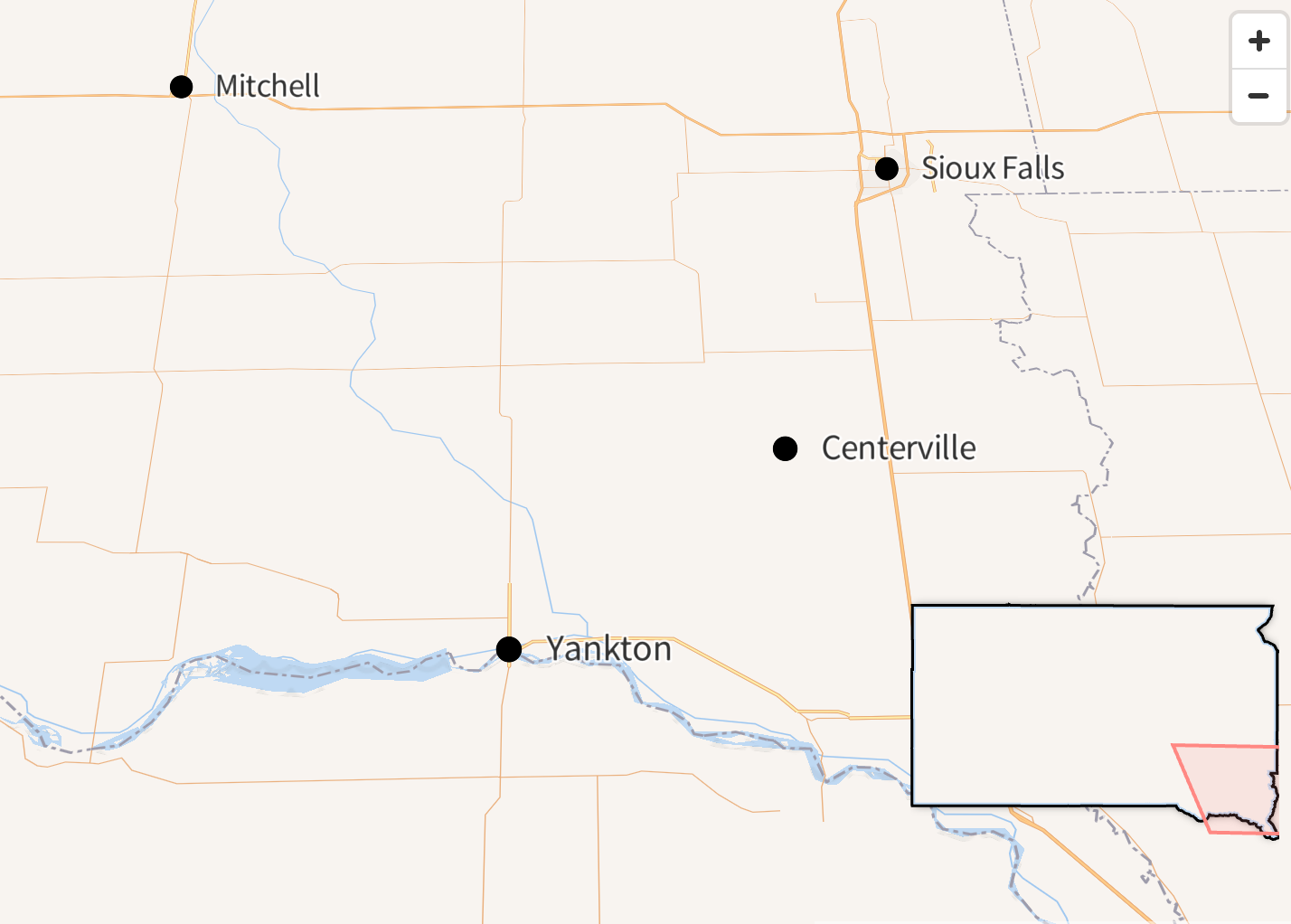
But now, Centerville has a new claim to fame: The town of about 900 people located 40 miles southwest of Sioux Falls has become known as a statewide leader in downtown redevelopment.
“This isn’t going to take us back to the 1950s when everybody came to town on Wednesday and Saturdays to sell their eggs and their cream. … But the very purpose of maintaining Main Streets is getting business owners into those buildings to rejuvenate downtowns and make them lively places again.” – Paula Jensen, Dakota Resources
The successful effort to buck the trend of declining Main Street districts in small South Dakota towns has been fueled in part by a progressive approach to development by local leaders and a sense of entrepreneurship by local business owners.
But the redevelopment of Centerville has largely been driven by implementation of a strong vacant building ordinance that has become a model for other municipalities across the state.
“Vacancies in the central business district are a detriment to your city,” said Jared Hybertson, economic development director in Centerville. “I hear from a lot of other communities looking for guidance because this is a prevalent problem across the state.”
Not a good look for downtowns
A decade ago, Centerville had 14 vacant storefronts in a downtown that encompasses only a few square blocks.
Some properties were occasionally used as rentals, a few served as storage for junk or remnants of former business and others were simply withering toward condemnation. The look was one of decline that was not enticing to potential new visitors, residents or business owners.
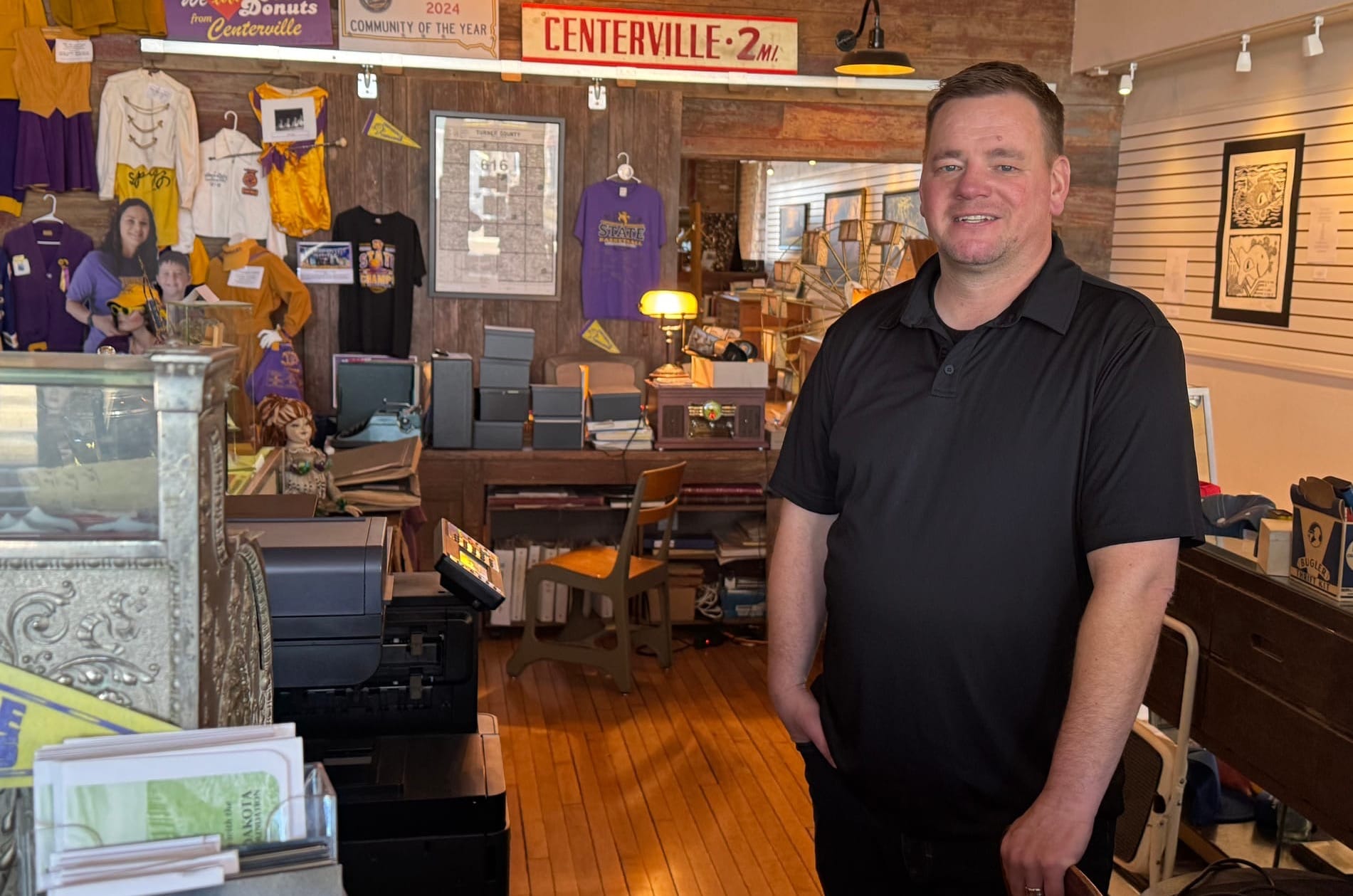
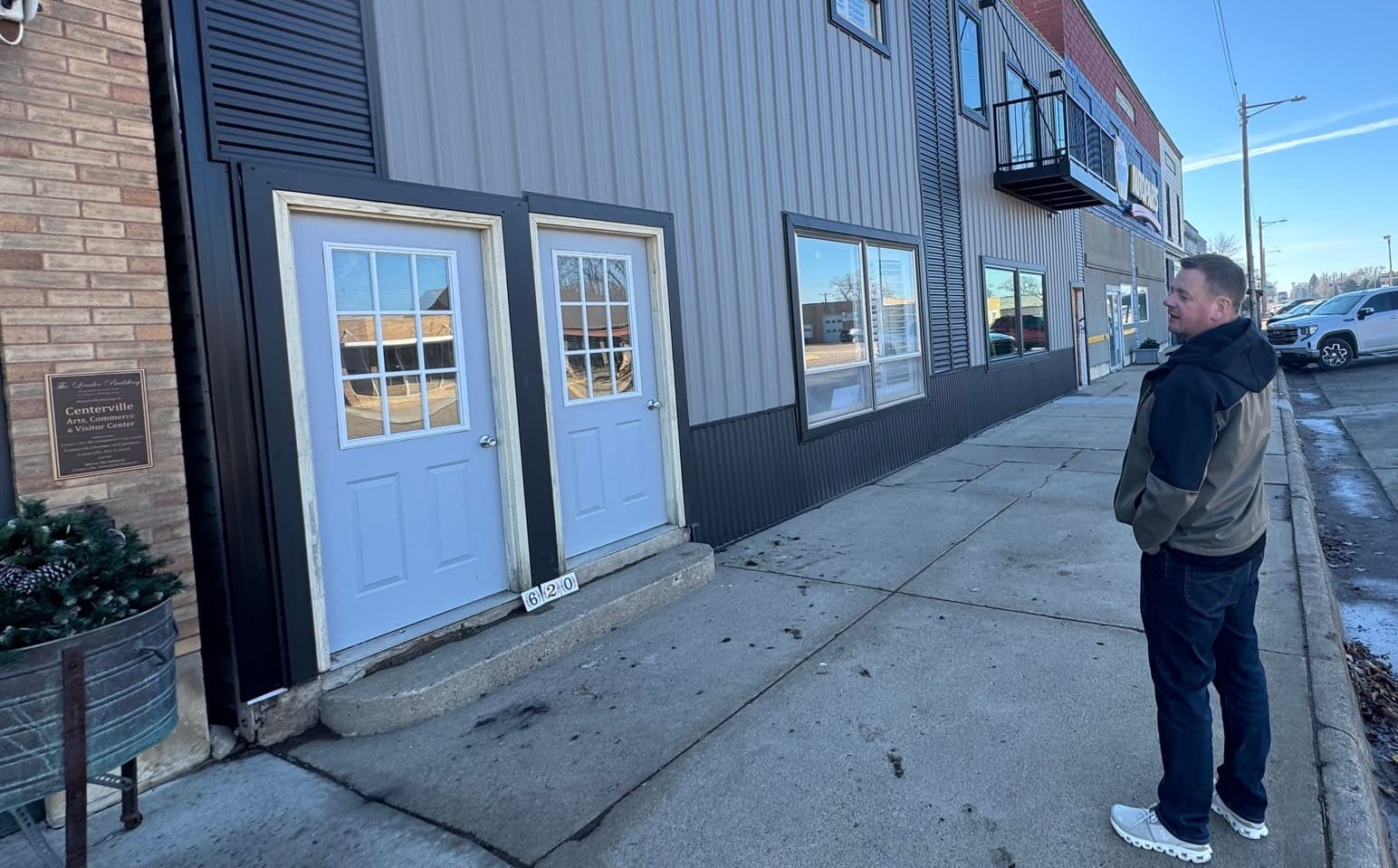
Economic development coordinator Jared Hybertson of Centerville, S.D., on March 19, 2026, in a formerly vacant building that is now a museum, art gallery and community center. (photo: Bart Pfankuch/South Dakota News Watch)
“I was frustrated at the number of vacant buildings we had,” Hybertson told News Watch. “Perception-wise, as a small town, you’re either growing or you’re dying, and there isn’t much in between.”
In 2017, the Centerville City Council passed the vacant buildings ordinance that uses a registration system, building inspections, warning letters, threats of fines and eventual fines to prompt property owners to shape up or sell their buildings to make way for new opportunities.
With the power of the ordinance in hand, Hybertson and a team of committed local officials and business people have ushered a major turnaround in the downtown.
Over roughly the past decade, the Centerville Development Corporation has undertaken efforts to either buy and rehabilitate or buy and tear down nearly a dozen dilapidated or deserted buildings, many of which are now occupied by new businesses.
Centerville has new additions downtown that include a women’s clothing boutique, a salon, a tattoo parlor, a discount retail store, two restaurant locations and a historic building converted into a combination museum/art gallery/visitors center. Plans are in place for further redevelopment projects that include loft housing and an event center.
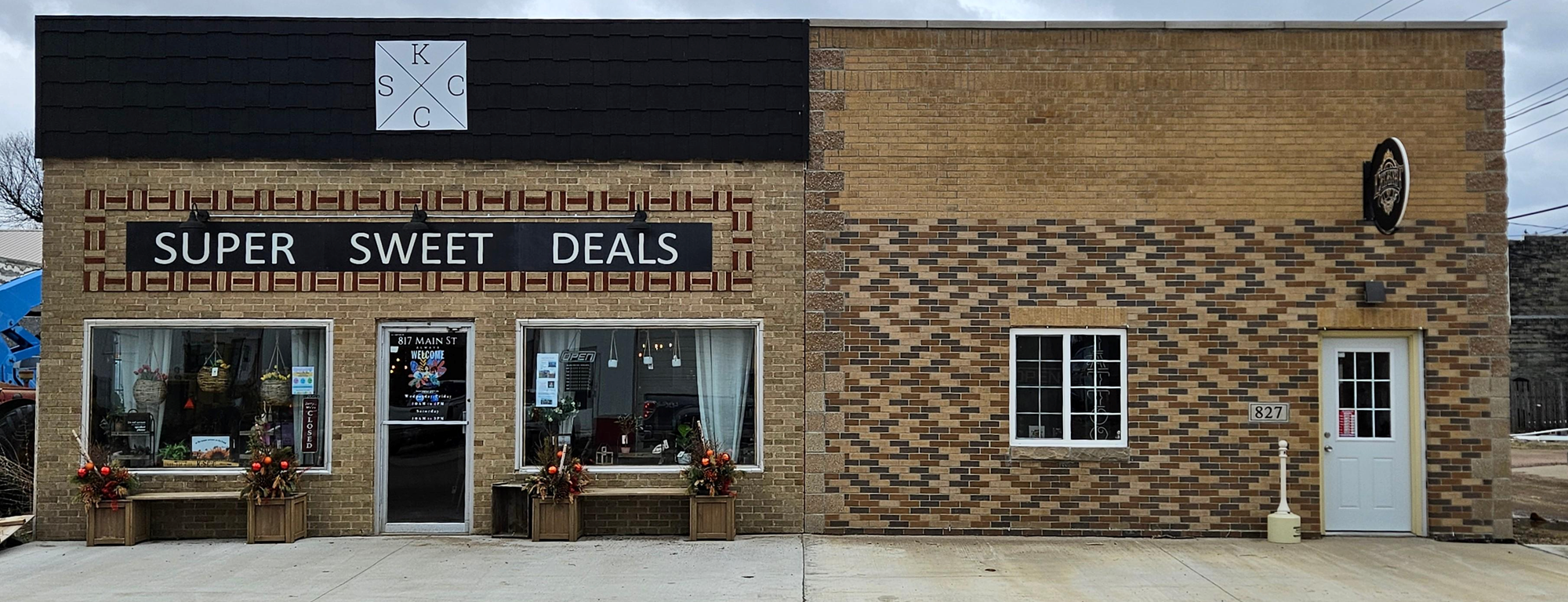
BEFORE: These two unused buildings located on Main Street in Centerville, S.D., in 2017 were subject to the city’s vacant buildings ordinance, which created an opportunity for redevelopment. (Photo: Courtesy city of Centerville)AFTER: A local developer bought the two vacant buildings, then renovated one and built a new one next door to create spaces now occupied by a consumer goods store on the left and a tattoo parlor on the right. (Photo Courtesy city of Centerville)
The new businesses have made Centerville more of a destination for visitors, strengthened the overall economy and led to increases in sales tax revenues.
“It’s really been a joint citywide effort,” Hybertson said. “The ordinance definitely allows us to give property owners a little push to get something done with those properties.”
Building a model for downtown rebirth
Many rural communities in South Dakota have suffered population and economic downturns over the past few decades.
Cities with numerous vacant downtown buildings can suffer from a sense of general decline that can turn away visitors, new residents and potential businesses, said Paula Jensen, a vice president of the community development group Dakota Resources.
“We see what the end game is if we don’t pay attention to this,” she said.
Jensen said it is unlikely that downtown districts in small towns will return to the days decades ago when people gathered frequently to sell agricultural goods, buy all the things they need and make personal connections.
But attracting new commercial, retail and service businesses to a downtown can spur overall community growth, Jensen said.
“This isn’t going to take us back to the 1950s when everybody came to town on Wednesday and Saturdays to sell their eggs and their cream,” she said. “But the very purpose of maintaining Main Streets is getting business owners into those buildings to rejuvenate downtowns and make them lively places again.”
“It creates a good vibe because a vibrant downtown makes everyone feel better about their community.” – Jared Hybertson, economic development director in Centerville
Jensen said downtown revitalization is a long-range project that requires a big and constant commitment and that replacing vacant storefronts with new businesses is just one part of the effort.
“This isn’t just putting flowers on Main Street to beautify it,” she said. “It’s making a decision to incrementally improve their Main Street and show that they’re in it for the long haul, so people will want to establish a business there.”
Jensen said Dakota Resources works to share and promote successful ideas that are replicable in other communities across the state. To that end, the Dakota Resources welcomed Hybertson to a community meeting it hosted in Murdo last fall where he gave a slide presentation on the vacant building ordinance to community leaders from around the state.
Building relationships to revive buildings
While the ordinance gives Centerville a mechanism to address vacancies, it still takes a great deal of patience and negotiation to get properties sold or redeveloped. Hybertson said.
He and city officials use the ordinance as a cudgel tempered by genuine kindness and a willingness to communicate with and compromise with owners of vacant properties. The approach is somewhat of an iron fist in a velvet glove.
“It’s really about fostering a relationship and building trust because a lot of times these owners just don’t know what to do with their buildings,” Hybertson said.
Sign up for our free, daily newsletter, delivered to your inbox.
The effort to convert an aging historic building into the museum/community center provides a good example. The Sioux Falls owner of the building had tried but failed to start businesses there and was hesitant to give up the property.
After numerous discussions with Hybertson, she agreed to sell for $6,000. With about $100,000 in grants and another $100,000 from the development corporation, the renovated building that is now a central gathering place and tourist destination.
“It creates a good vibe because a vibrant downtown makes everyone feel better about their community,” Hybertson said.
A good idea, but tough to implement
Other towns are following Centerville’s lead, but implementing policies that impose on private property owners can be a tough go in South Dakota.
“It can get tricky and controversial when it comes to property rights,” Hybertson said.
Economic development coordinator Jared Hybertson of Centerville, S.D., strolled through a revitalized block in the city’s downtown on March 19, 2026. (Photo: Bart Pfankuch/South Dakota News Watch)
He acknowledged that it takes patience, resilience and sometimes a bit of luck and good timing to make the ordinance effective. Even after improvements are made, maintaining a profitable business is a challenge in small towns, as evidenced by the recent closure of a Mexican restaurant and a coffee shop in Centerville.
“Sometimes it feels like one step forward and two steps back,” he said.
Officials from the city of Hurley contacted Hybertson and ultimately enacted a vacant building ordinance in October 2024, but the policy has not been implemented yet, said city finance officer Marcy Hillman.
Hurley is a town of 385 people located 30 miles southeast of Sioux Falls, and it has struggled to maintain a vibrant downtown, Hillman said. The city has no grocery store and lost a salon that operated downtown but celebrated the recent reopening of the Hurley Bar & Grill, she said.
This newsletter and all our stories are free because we believe that essential, fact-based information should be available to everyone, not just those who can pay for it. If you can afford to become a supporter, please do. We appreciate you.
The town has a handful of vacant buildings downtown, but it has been difficult to enforce its ordinance because Hurley has only four city employees and relies solely on Hillman to perform many of the municipal tasks.
“There’s a lot of towns in South Dakota in the same position as us,” Hillman said. “Our council wants to get something going downtown, but it’s challenging when you don’t have someone who can focus just on that.”
A passion for clothes and community
Christen Cunningham is a benefactor of the effort to find the best use of existing buildings in downtown Centerville.
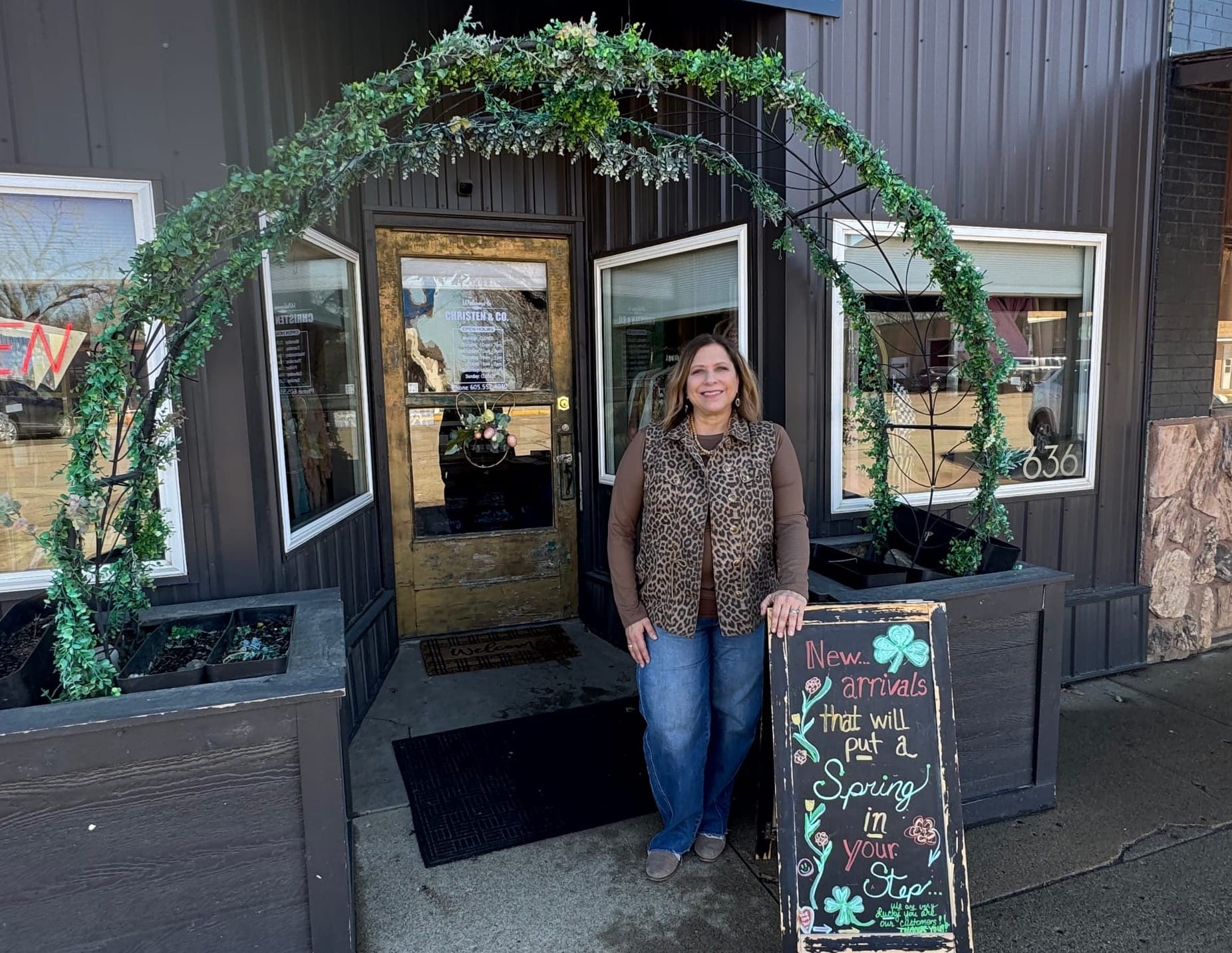
A few years ago, Cunningham and her husband left Colorado to move back to the town where her parents and grandparents lived, and she bought a building she has converted into a thriving women’s clothing store.
Christen & Company boutique is located in a building formerly used by the late beloved town historian Sherree Dee Schmiedt to store artifacts and collectibles from Centerville’s history. Many of those remnants of local history were moved into the museum/community center a few doors down the block after the renovation was complete.
Christen Cunningham, shown on March 19, 2026, is the owner of Christen & Company clothing store, a boutique located in downtown Centerville, S.D. (Photo: Bart Pfankuch/South Dakota News Watch)
While the boutique is not operating in a storefront directly influenced by the city’s vacant building policy, Cunningham said her business is an example of the benefits of a community-wide effort to inject energy into its downtown.
“It’s creating room for opportunity,” she said. “To this day, people tell me they can’t believe this boutique is operating in Centerville.”
The spirit of re-use may continue, as Cunningham has plans to renovate the second floor of the clothing store into short-term rental units, and she has purchased the former bowling alley next door and hopes to convert it into additional space for the boutique or possibly an event hall. Meanwhile, her daughter has moved to Centerville and is operating a beauty salon down the block.
“I like that you can actually talk to people here and realize how connected you are to one another,” she said.
By focusing on downtown redevelopment, and finding new uses for existing structures, Centerville has become a place that is embracing its roots and celebrating its past while also fostering a bright future, Cunningham said.
“The biggest blessing is the relationships we’re making here, because we’re not just selling clothes,” she said. “My mission is to make women feel important and valued and that they’re seen so they feel better when they leave than they did when they came in.”
South Dakota News Watch is an independent nonprofit. Read, donate and subscribe for free at sdnewswatch.org. Contactcontent director Bart Pfankuch: 605-937-9398/bart.pfankuch@sdnewswatch.org.
More than a game: Why basketball runs deep in South Dakota’s Native communities
“Tȟabškátapi kiɳ wičhóni.”
That means “ball is life” in Lakota, and for many people across South Dakota, that saying rings true now more than ever.
Basketball has been the only thing on many students’ minds for the past few months – as the season concluded, the Summit League tournament came to Sioux Falls at the beginning of the month and high school state tournaments were spread out across the state.
For some, though, the sport is more than just a winter pastime – it’s their whole lives. Hence the saying.
Native players, coaches dominate
In Native communities across the state, basketball is the most well-loved sport by a country mile. Fans and families travel hours to watch their favorite high school teams compete. Those teams are often dominant, with high-scoring players and near-undefeated seasons a not-uncommon occurrence.
“I love giving (younger kids) a person who they can look up to as a basketball player.” – Marvin Richard III
A wealth of talented players have come out of rural and reservation areas, and this season is no exception.
Marvin Richard III
Marvin Richard III, a senior at Pine Ridge School, has emerged as one of the most dominant players in state history.
Richard, who plays at a towering 6-foot-3-inches for the Thorpes, recently had a record-breaking run at a game against Lakota Tech, where he scored 73 points. That, ironically, broke the 73-year-old record for most points in a single game in the state.
Senior guard Marvin Richard III looks for a pass for Pine Ridge boys basketball against Cheyenne-Eagle Butte at the Lakota Nation Invitational at The Monument Summit Arena in Rapid City, S.D., on Dec. 19, 2025. (Photo: Matthew Neus/Rapid City Journal)
He was named the best player in the state by MaxPreps and has garnered himself a fanbase of young, ambitious players across the state and at Pine Ridge who hope to see and learn from the best.
“I love giving (younger kids) a person who they can look up to as a basketball player,” Richard told the Rapid City Journal in 2025. “I think a lot of people knew I was going to be something great. It was just a good feeling.”
Ashlan Carlow-Blount
Ashlan Carlow-Blount, from Maȟpíya Lúta (Red Cloud School) on Pine Ridge, was awarded the Spirit of Su at the girls’ state championship this year.
That award honors Su Anne Big Crow, an Oglala Lakota player who led the Pine Ridge High School basketball team to a championship in 1989. It recognizes a player with outstanding character, leadership, athletic ability and grade point average.
In January, Carlow-Blount passed the 1,500-point threshold in her career and in December led her team to its fifth championship win at the Lakota Nation Invitational in Rapid City.
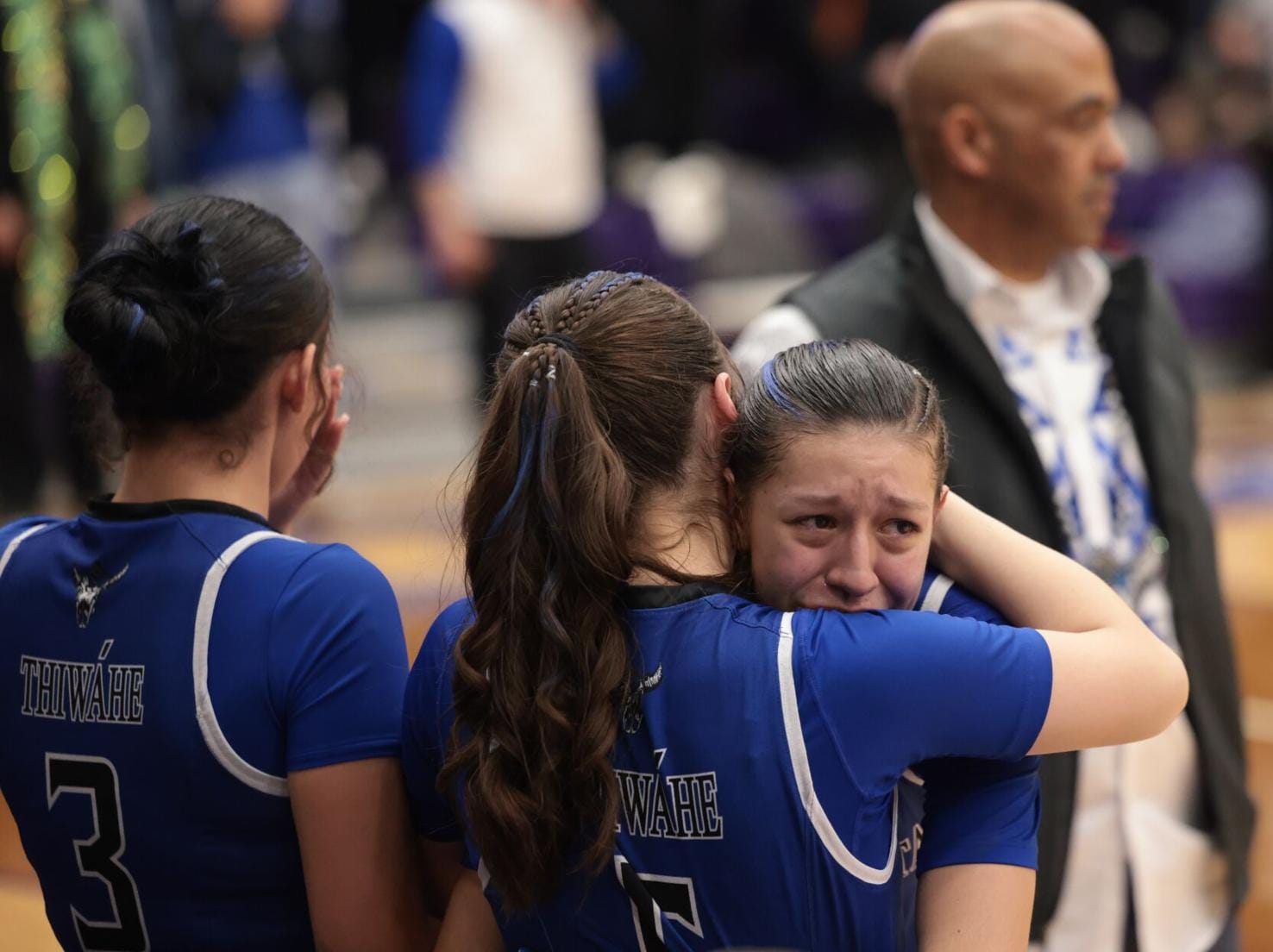
Mahpíya Lúta girls basketball’s Ashlan Carlow-Blount, right, tears up during the Class A title during pre-game ceremonies on Saturday, March 14, 2026, in Watertown, S.D. (Photo: Matt Weiner/Rapid City Journal)
Both Carlow-Blount and Richard III have committed to the University of South Dakota in Vermillion.
Eldon Marshall
Just a bit farther east from Maȟpíya Lúta and Pine Ridge is White River. The town sits on off-reservation trust land for the Rosebud Sioux Tribe and has a population of just over 500. There, Eldon Marshall has been coaching the White River boys’ basketball team since 2003.
He has led the team to qualification for the state tournament 20 years in a row, and two years ago was awarded the Larry Luitjens Coach of Influence Award.
Marshall told News Watch that his own experience with the sport growing up and the mentors he gained along the way are crucial to his coaching success. He credits his own high school basketball coach, Bud Keller, to getting him thinking about his future.
“He was someone that, you know, kind of had an impact on me,” Marshall said. “He was like one of the first people that asked, ‘What are you going to do after high school?’”
“… (Native basketball players) could be victorious at a time when society didn’t allow you many opportunities to be the victor.” – Wade Davies, author of “Native Hoops”
Marshall was raised on the Rosebud Indian Reservation and played basketball his entire life – from elementary school to college, where he played at Black Hills State University in Spearfish. He told News Watch that in small communities like White River, people get to know what success feels like and are motivated to keep chasing it.
“I feel like in a smaller community you just have this bond, you know? We started something, we had a lot of success early going on, and ever since, you just want to keep it going,” Marshall said. “It’s not the same-same, but it’s the same families. The same people that were here 20 years ago that you worked with are somewhat the same people that you are working with now.”
Difficult origins lead to new way to play the game
Wade Davies is the author of “Native Hoops,” a book that spans 75 years of history of the sport on reservations. Davies, a professor of history at the University of Montana, told News Watch that the origins of basketball in Native communities aren’t necessarily happy ones, though it now sees fans packing stands.
Students at Native boarding schools across the country were introduced to basketball during the sport’s inception and rise to popularity in the 1890s. It was an easy sport to play in close quarters – with no extraneous equipment or wide-open space required.
Get South Dakota stories
An email summary on most weekdays that links to the full version. Cancel anytime.
For many students, Davies said, basketball was an escape from the grim conditions of boarding schools.
“At a time when you could get very little positive recognition as a Native person, in South Dakota or in Arizona or wherever you are, they could be successful. And they could be victorious at a time when society didn’t allow you many opportunities to be the victor,” Davies said.
Native players developed their own style of play informed by endurance, speed and “non-stop” play, Davies said.
This would define the sport on reservations in the 20th century, when boarding school students came home with a basketball in hand.
“Relative to non-Native athletes, they were noted in the press for being more up-tempo,” Davies said. “In the schools, they developed this style that initially in the press was just called Indian basketball. But later on, people started to know it as Rez ball.”
All-Native tournaments prove crucial training ground
While the state tournament is the culmination of the basketball season for South Dakota high school players, there are a few other critical tests throughout the season that also serve as major community events.
The Lakota Nation Invitational (LNI) and the Dakota Oyate Challenge (DOC) take place in Rapid City and Mitchell, respectively, inviting Native teams from Class A and Class B schools in South Dakota and Nebraska to compete.
While these tournaments are born from basketball – and the fans’ desire to watch – new traditions come from the gatherings, DOC founder Silas Blaine told News Watch.
Since LNI’s inception in 1976, it has expanded to a major annual community gathering at The Monument arena in Rapid City. In addition to sitting in the often-packed stands of basketball games, spectators can also watch traditional hand games, the Lakota language bowl and more than a dozen other activities.
“Basketball’s so popular, but then through these events, the coordinators want to start having their own events,” Blaine said. “There’s so much going on, all from basketball.”
Maȟpíya Lúta celebrates its record fifth straight Lakota Nation Invitational title on Saturday, Dec. 20, 2026, in Rapid City, S.D. (Photo: Matt Weiner/Rapid City Journal)
Blaine is still the director of DOC and serves on the board of LNI. He told News Watch that bringing together smaller schools at DOC – like Wakpala School on the Standing Rock Indian Reservation, where he is the superintendent and boys’ basketball coach – allows for a different style of community gathering than the massive, thousands-strong LNI.
“The kids, you know, they get to know each other throughout the tournament,” Blaine said. “I see, in a small school environment, kids get to know each other and then when they know who they are, they compete and have fun. It’s a pleasant atmosphere.”
Community and coaching
There is perhaps no better way to demonstrate what this sport means than to look at the players. They get involved in the community – one Maȟpíya Lúta player, Cody Two Bulls, recently received a National Citizens Honor Award for his charity work on the Pine Ridge Reservation.
They stop to take photos with younger kids who look up to them, especially all-time players like Richard.
Support Native American storytelling. Help South Dakota News Watch tell stories from Indian Country that don’t just focus on the problems but on the solutions and rich Indigenous culture.
And sometimes, they become coaches themselves, passing on skills to the next generation – like Marshall and Blaine.
Stretched across the back of every Maȟpíya Lúta basketball player, where one would usually see a last name on a professional jersey, is one word: Thiwáhe. It means family in Lakota, and represents the way this game has stretched across generations, from hardwood gym floors to outdoor pavements, and built communities in some of the state’s most remote areas.
“It’s not just about basketball. It’s about life, and that’s the most meaningful thing to me,” Marshall said.
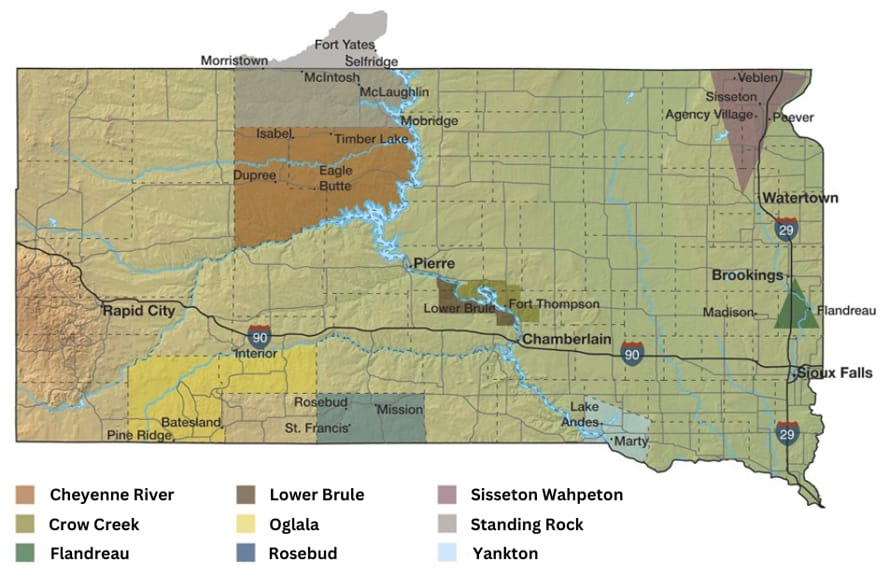
A guide to South Dakota’s 9 Native American tribes
The governance, geography, people and economy of South Dakota’s nine Native American reservations and tribes.
Fact brief: Were aircraft from Ellsworth involved with attacks on Iran?
Yes.
B-1B Lancers from Ellsworth Air Force Base in South Dakota were used in the attacks on Iran on March 1 and 2.
Gov. Larry Rhoden shared a report on X from The Aviationist that the strategic bombers flew from South Dakota to Iran supported by aerial refueling. The mission reportedly took 34 hours, and the Lancers targeted ballistic missile facilities and other command infrastructure.
Ellsworth was also part of a mission in Iran in 2025. The 89th Attack Squadron carried out 175 hours of intelligence, surveillance and reconnaissance as part of Operation Midnight Hammer in June. Rhoden honored them at a ceremony in October.
The B1-B Lancer can travel faster than the speed of sound and has the capability of carrying the largest payload of any aircraft inventory, and its blended wings and body allows for long-range flights. It made its combat debut in 1998.
This fact brief responds to conversations such as this one.
South Dakota News Watch partners with Gigafact to publish fact briefs that refute or confirm a claim with supporting information and additional evidence and context. Send questions or feedback to factbrief@sdnewswatch.org. Submit a question for us to answer on the South Dakota News Watch Tipline. partners with Gigafact to publish fact briefs that refute or confirm a claim with supporting information and additional evidence and context.
Support fact briefs. Help us fight misinformation by supporting fact briefs that refute or confirm a claim with supporting information and additional evidence and context.
This story was produced by South Dakota News Watch, an independent, nonprofit organization. Read more stories and donate at sdnewswatch.org and sign up for an email to get stories when they’re published. Contact Michael Klinski at michael.klinski@sdnewswatch.org.
Horses that heal: Equine therapy rising in popularity
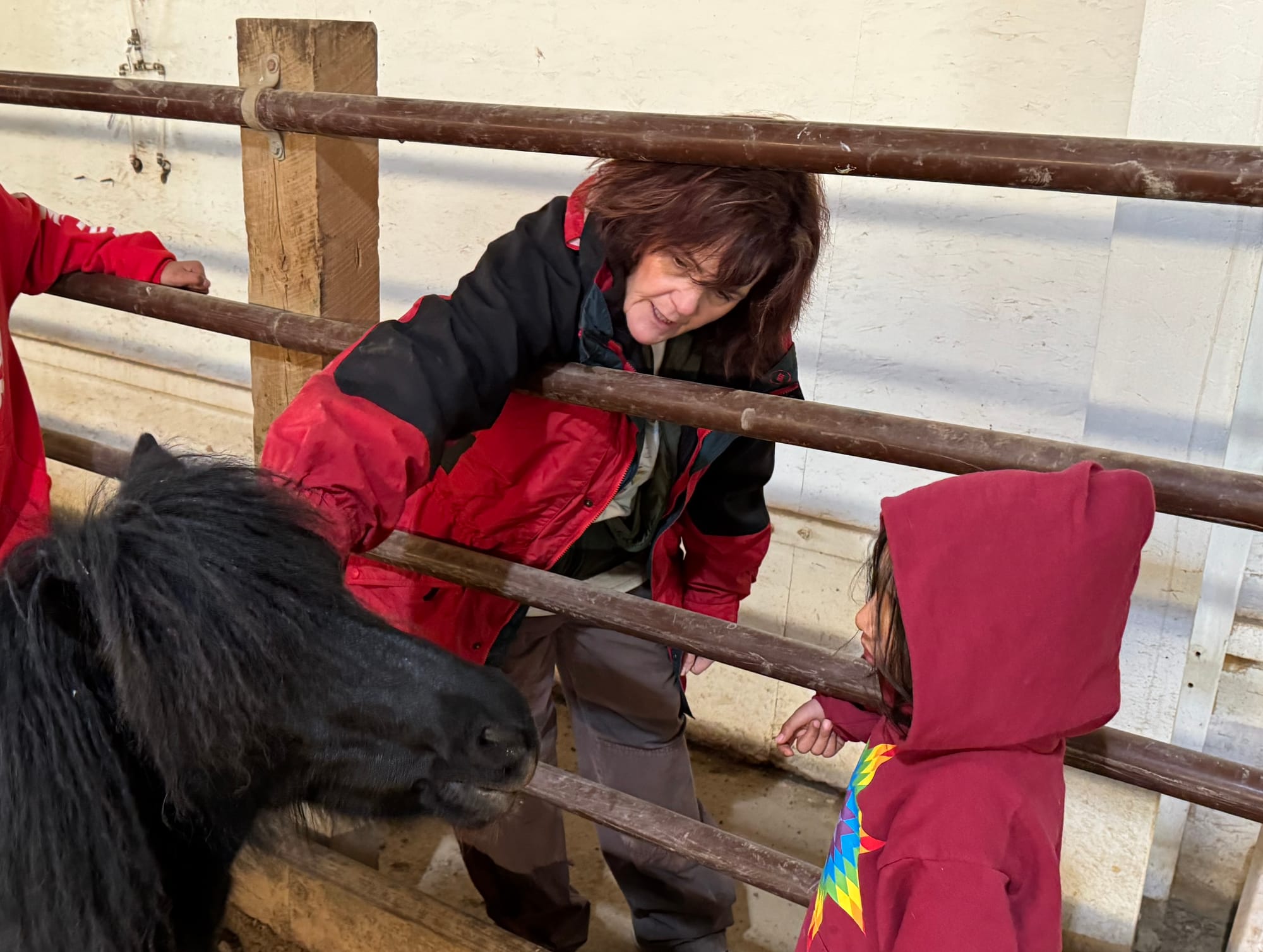
RAPID VALLEY, S.D. – Bridget Williams gathered a group of children together in her barn to show them how to safely give a horse a treat.
Williams told them not to hold the treat near the horse’s mouth because it can’t see the snack and could mistakenly bite a finger. Instead, she said, show the horse the treat and then lower it for gentle chomping by the appreciative animal.
The brief lesson was intended to build trust between the humans and the horses that were gathered on a recent Saturday morning in the barn at Red Horse Healing, the equine therapy practice run by Williams on a rural site in Rapid Valley, a neighborhood on the east side of Rapid City.
Get South Dakota stories
An email summary on most weekdays that links to the full version. Cancel anytime.
Animal-assisted psychotherapy is a form of mental and behavioral health treatment that uses horses and other animals to help adults, children and families to heal from trauma, to manage autism or to overcome anxiety, depression, grief or other emotional problems.
The therapy can help anyone but has been particularly effective in aiding Native Americans, who have a deep historical connection to horses as both working animals and companions.
Bridget Williams introduces a child to a horse at Red Horse Healing in Rapid Valley, S.D., on Feb. 21, 2026. (Photo: Bart Pfankuch / South Dakota News Watch)
Williams, a licensed professional counselor, has employed horses in her practice for 15 years, the past 10 at Red Horse Healing. She said the treatment works because horses – despite their imposing height and weight over 1,000 pounds – are gentle, intuitive creatures that create a sense of calm comfort and mutual understanding for people suffering from emotional or physical ailments.
“Horses hear what is not spoken,” she said. “They help create and maintain non-judgmental relationships.”
Rising acceptance as therapy option
In recent years, equine-assisted therapy has become increasingly established as a bonafide therapeutic modality, with certification offered by several U.S. therapy organizations, including the Equine Assisted Growth and Learning Association.
The modality is supported by the National Association of Social Workers, and some U.S. colleges offer training in the practice, including through a graduate certificate offered at Colorado State University.
In a 2024 article republished by the Substance Abuse and Mental Health Services Administration (SAMHSA), an agency within the federal government, it was noted that “animal therapy incorporates animals into the therapeutic process, leveraging their presence to improve communication, reduce anxiety, and foster a supportive environment.”
Mother-daughter mini donkeys are ready to work with clients at Red Horse Healing in Rapid Valley, S.D. on Feb. 21, 2026. (Photo: Bart Pfankuch / South Dakota News Watch)
Equine-assisted programming is offered at numerous facilities across the state. Several sites are located in Rapid City and across the Black Hills. The therapy is also offered at several East River locations, including at Gentle Spirit sanctuary in Scotland, Helping with Horsepower in Mitchell, HorsePower in Baltic and at McCrossan Boys Ranch in Sioux Falls.
Williams, who currently has about 45 individual clients and also holds group or family therapy sessions with up to eight people several times a week, is expanding her practice with a new facility in Piedmont, just west of Rapid City.
Williams said equine therapy is covered by most health insurers and by Medicaid, the federal insurance program for low-income adults and children, senior citizens, pregnant women and people with disabilities.
Experiencing the ‘charisma of the horses’ by riding, petting, playing
The use of full-sized or miniature horses in behavioral therapy at Red Horse Healing can include a number of techniques, Williams said.
The horses can simply be present to create a calm, safe space for deep issues to be explored. Clients can pet or ride the horses in the barn as part of connection building. Horses can also be part of activities that build trust and the ability to form relationships.
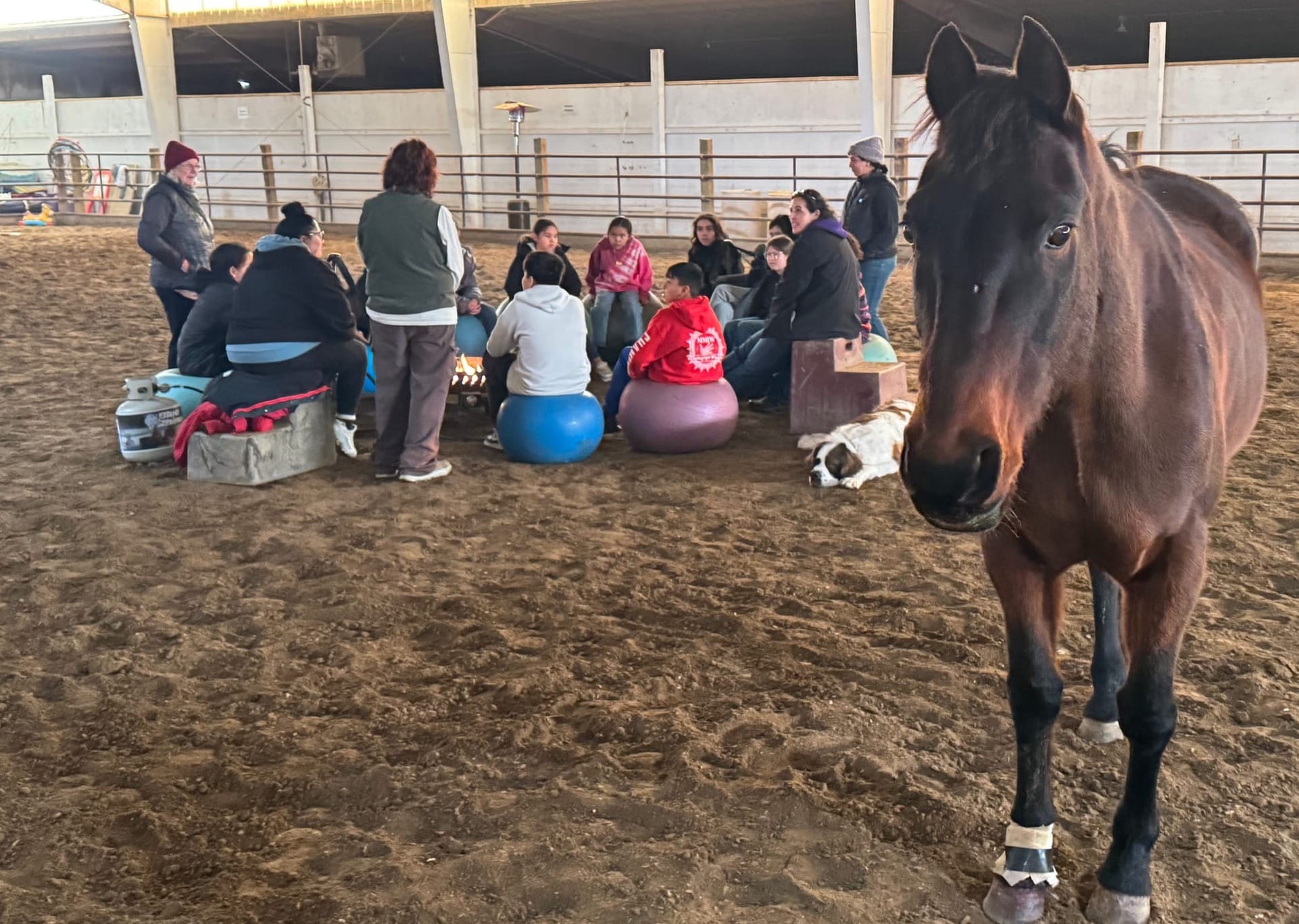
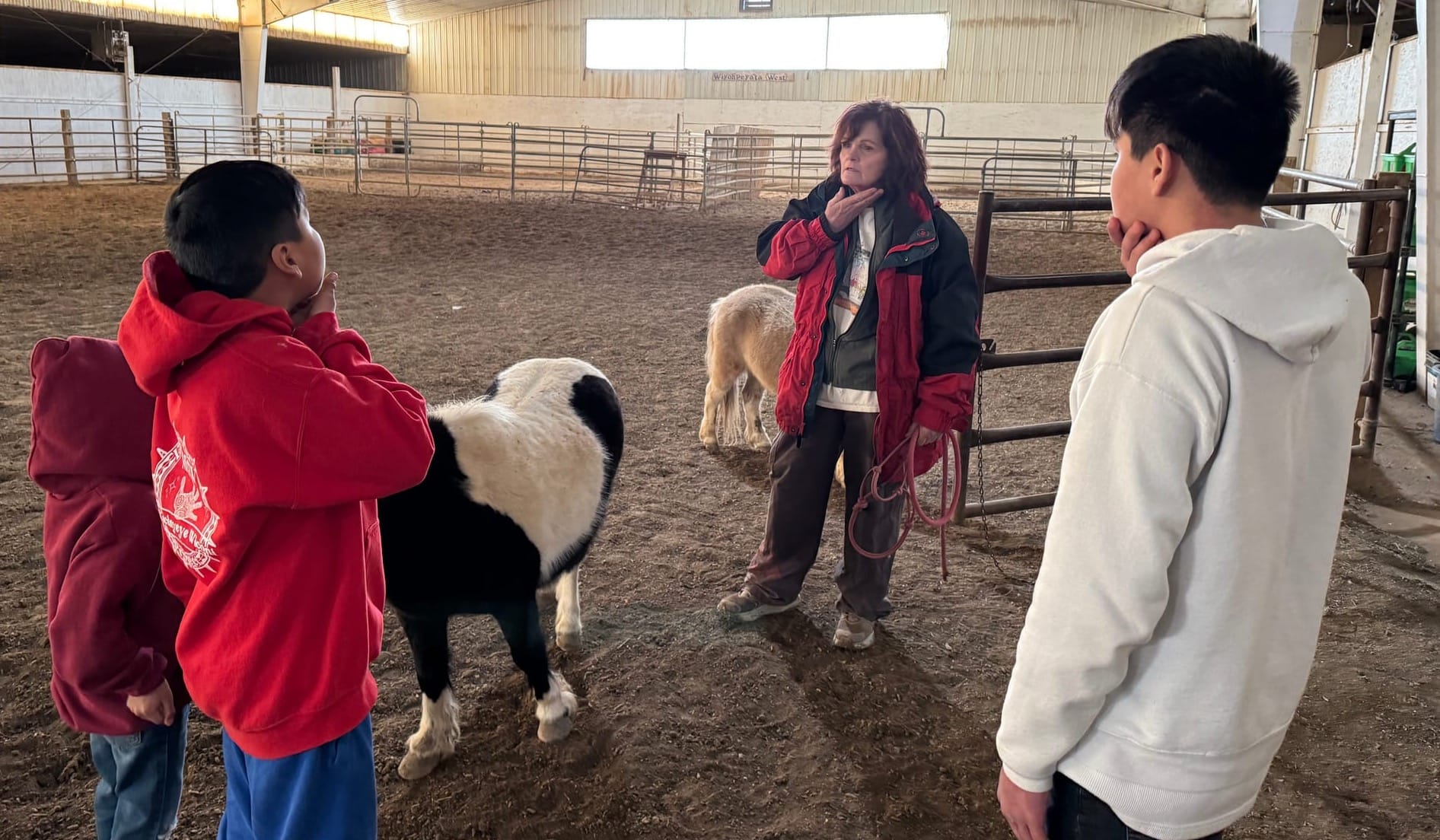
At the recent group session in February, Williams led a dozen or so children through a four-hour journey of education and exploration with the horses.
A horse stands by as children gather during a group therapy session at Red Horse Healing in Rapid Valley, S.D., on Feb. 21, 2026. (Photo: Bart Pfankuch / South Dakota News Watch)
During the event sponsored by the Great Plains Tribal Chairmen’s Association, the children met one another and the half-dozen horses present.
They used yoga balls, pool noodles and other toys to create rhythm and movement opportunities to help regulate emotions and better engage with the horses. They developed a bond with the horses that enabled them to share how they felt or express what was bothering them and to then discuss possible solutions or calming techniques.
Michel Melvin of Wounded Knee brought three of her grandchildren to the session to bond with horses and find strength through interaction with Williams and her staff.
Melvin, 69, has been around horses all her life, and her family has raced horses in South Dakota in the past.
“Sometimes kids need more than just one-on-one with a counselor,” she said. “They get experience with the power and charisma of the horses.”
Not being ‘glued onto electronic devices’
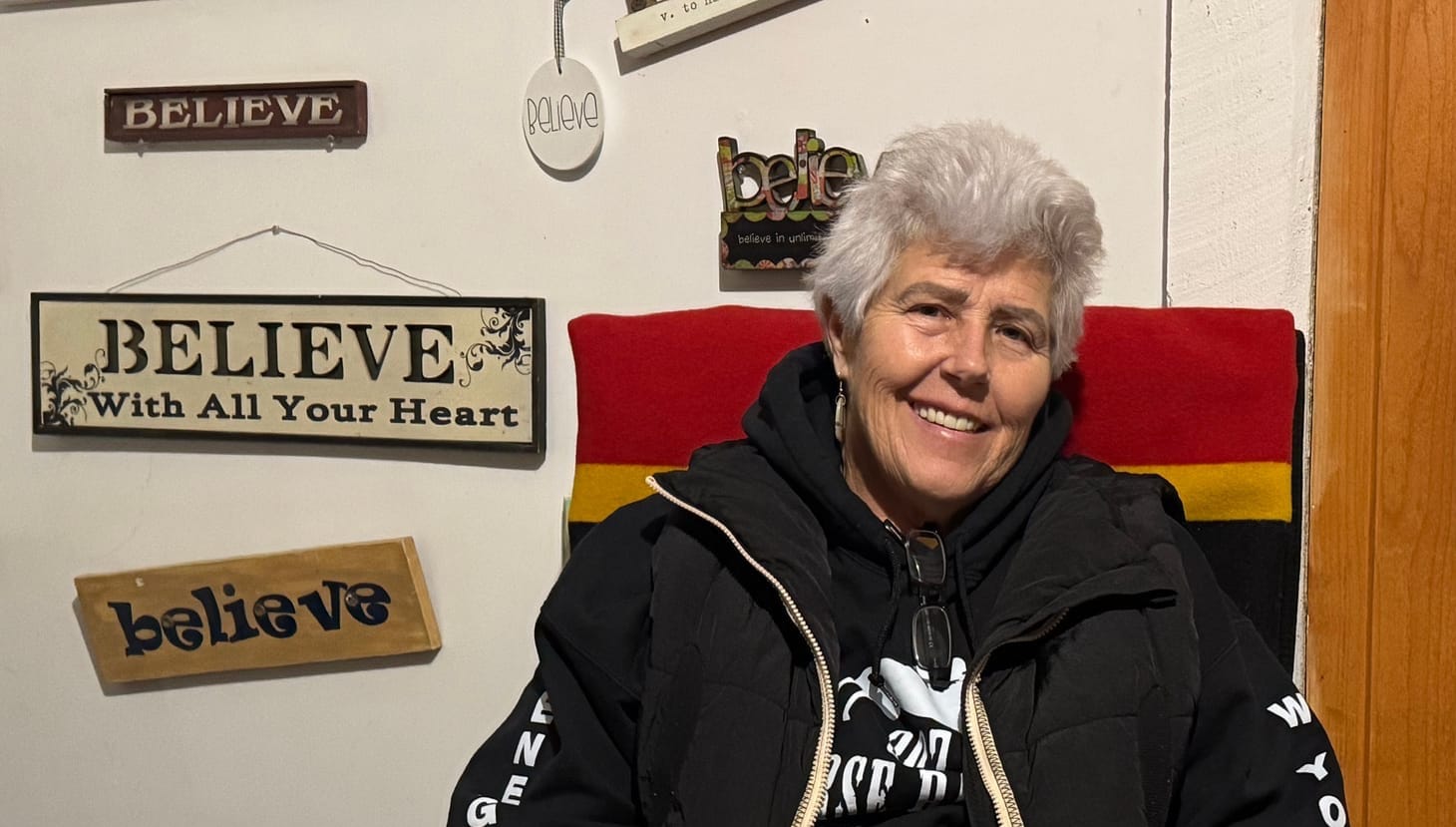
Melvin said Williams has a unique skill set that provides a safe setting for adults but especially for children to break through trauma they may be suffering.
Michel Melvin of Wounded Knee, S.D., is shown in the office at Red Horse Healing in Rapid Valley, S.D., on Feb. 21, 2026. (Photo: Bart Pfankuch / South Dakota News Watch)
“I share a lot of love with my grandchildren, but I think there’s a lot of children out there who don’t get the love they need,” she said. “It’s an opportunity for these children to see something more than they usually see in the home setting where they are glued onto electronic devices.”
Williams often incorporates elements of Lakota culture into her sessions. She provides placards with Lakota words and their meaning to create connections between clients and their culture. Clients sometimes use non-toxic paints to illustrate the horses, just as Native Americans used to do.
Some therapy horses at Red Horse Healing come from traumatic situations of their own and have been rescued by Williams.
Bridget Williams works with children during a group therapy session at Red Horse Healing in Rapid Valley, S.D., on Feb. 21, 2026. (Photo: Bart Pfankuch / South Dakota News Watch)
Clients give the horses special names, and the animals are never forced to do anything, such as being haltered or ridden without their full consent.
Treating the horses with respect and individuality enables clients to create a bond all their own with a horse, Williams said. Clients can then tap into the wisdom and intuitive nature of the horses and use them to project their own hidden feelings and problems, which can then be explored with the counselor.
“It’s a lot safer for them to say, ‘My horse is feeling this way,'” she said. “It allows them to discuss their own feelings more easily.”
Bringing horses into the community
Williams has frequently brought her therapy horses to community events and gatherings to help people find solace.
Her horses have been part of Native American cultural events, such as neighborhood gatherings and day camps at the Lakota Homes and Knollwood neighborhoods in north Rapid City.
At times, Williams has brought horses to events sponsored by the Rapid City Police Department, including at the Star Village community that struggles with poverty and crime.
Trusted, independent sources of information are needed more than ever. Help us continue delivering timely, fact-based storytelling today.
Tyler Read has seen positive outcomes created by Williams and her therapy horses at some of those events.
Read serves as the community engagement specialist for the Rapid City police and has worked with Williams to help rebuild community pride at neighborhood events.
“They prayed together, they ate together and they got to ride horses together,” Read said. “For some, it was an emotional release, and a way to express themselves and let go of some of their hurt.”
Signs on the wall provide additional training for clients at Red Horse Healing in Rapid Valley, S.D., on Feb. 21, 2026. (Photo: Bart Pfankuch / South Dakota News Watch)
The equine therapy Williams provided made a noticeable impact on some of the children who attended the day camps and neighborhood outings, Read said. Several children who had impulse control, hyperactivity or anger issues changed their behaviors after riding or painting the horses.
“There’s a humbling effect and a reverence you have with the horse,” he said. “To be able to ride on something so large, it kind of puts things in perspective and makes you more accountable for your behaviors.”
Award-winning ‘East of Wall’ illustrates rural life in ‘docu-fiction’
“There’s this amazing resurgence of cowboy and Western films, right? But have you seen any of them that are told through the voices of women?”
South Dakota News WatchMolly Wetsch
Read said that as a father, he took his daughters to therapy at Red Horse Healing when they were being bullied. Read said he was pleased to see how his children reacted to the horses and the therapy offered by Williams.
“There’s a level of honesty you want to keep with a horse and being in awe of nature,” he said. “They’re very large creatures, and they’ve got those huge eyes and they’re very quiet and it’s kind of like they can look into a person’s soul.”
Read said Williams is providing an important service to individuals and the community at large that cannot be replicated through traditional counseling alone.
“When you see the impact it creates, it’s special,” he said. “It truly is a beautiful thing.”
South Dakota News Watch is an independent nonprofit. Read, donate and subscribe for free at sdnewswatch.org. Contactcontent director Bart Pfankuch: 605-937-9398/bart.pfankuch@sdnewswatch.org.
South Dakota near the bottom in rate of kids prepared for kindergarten
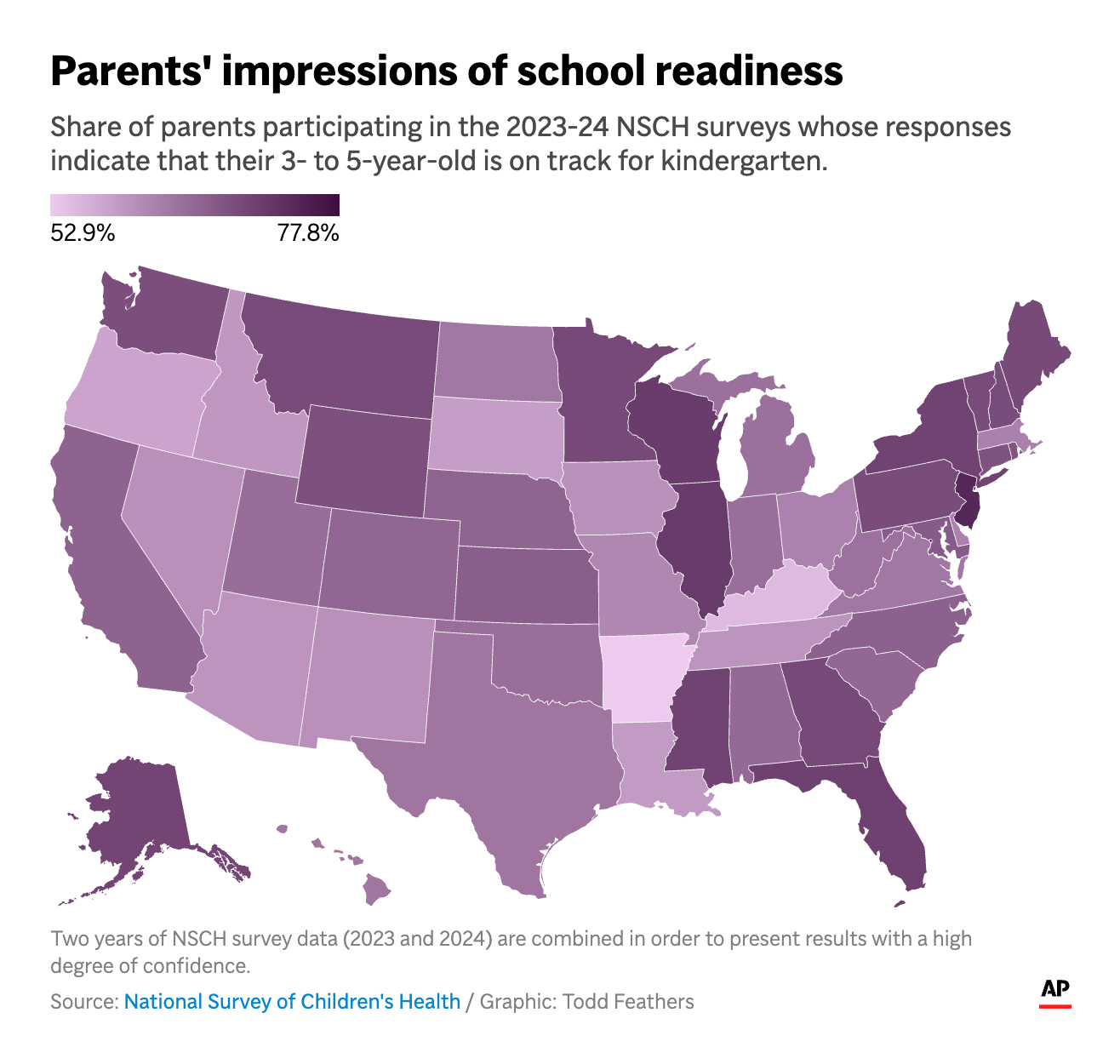
Nearly half of South Dakota children under the age of 5 are not on the right track to start school and find early success in the classroom, a rate that puts the state near the bottom in school readiness across the country.
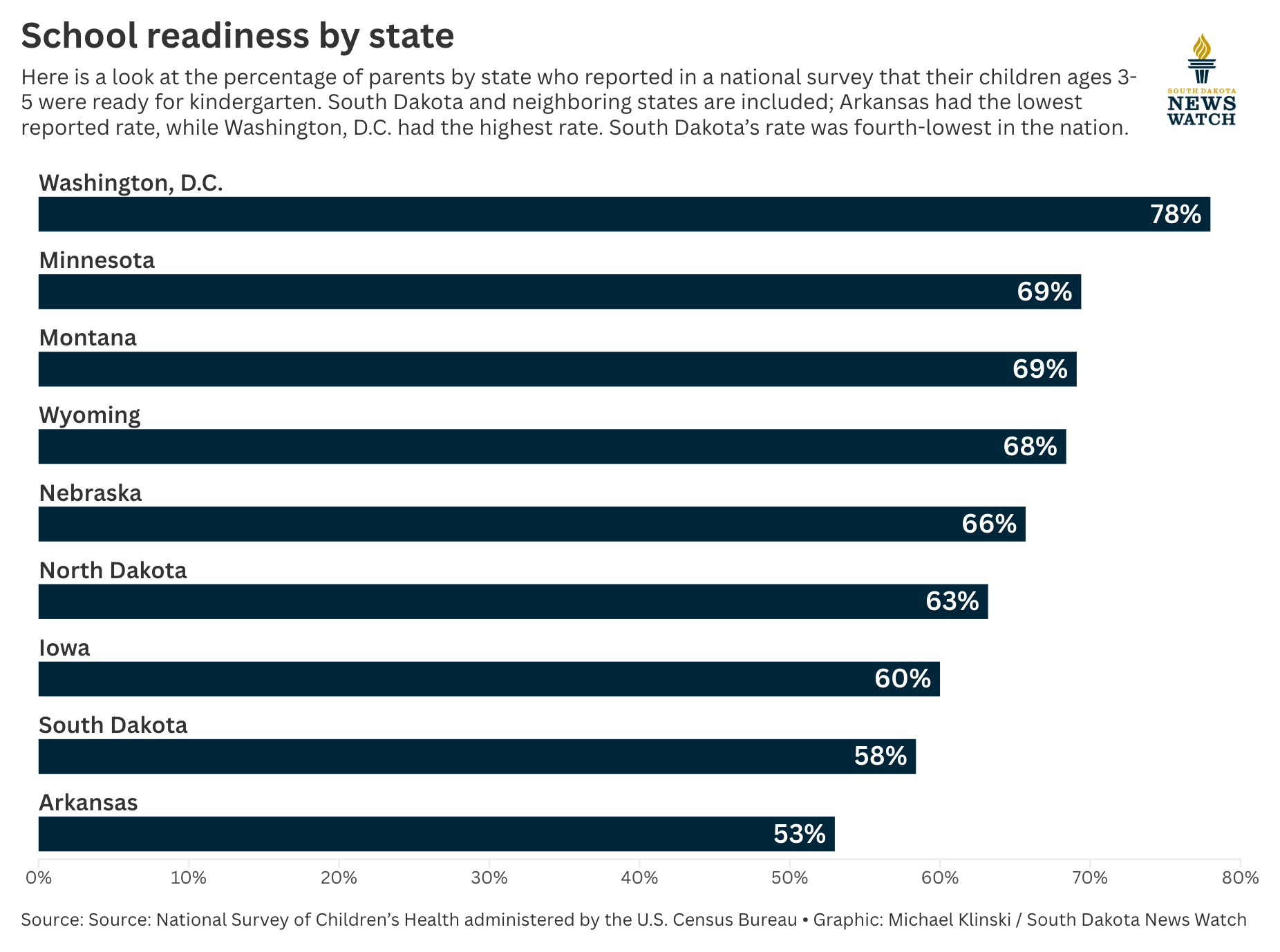
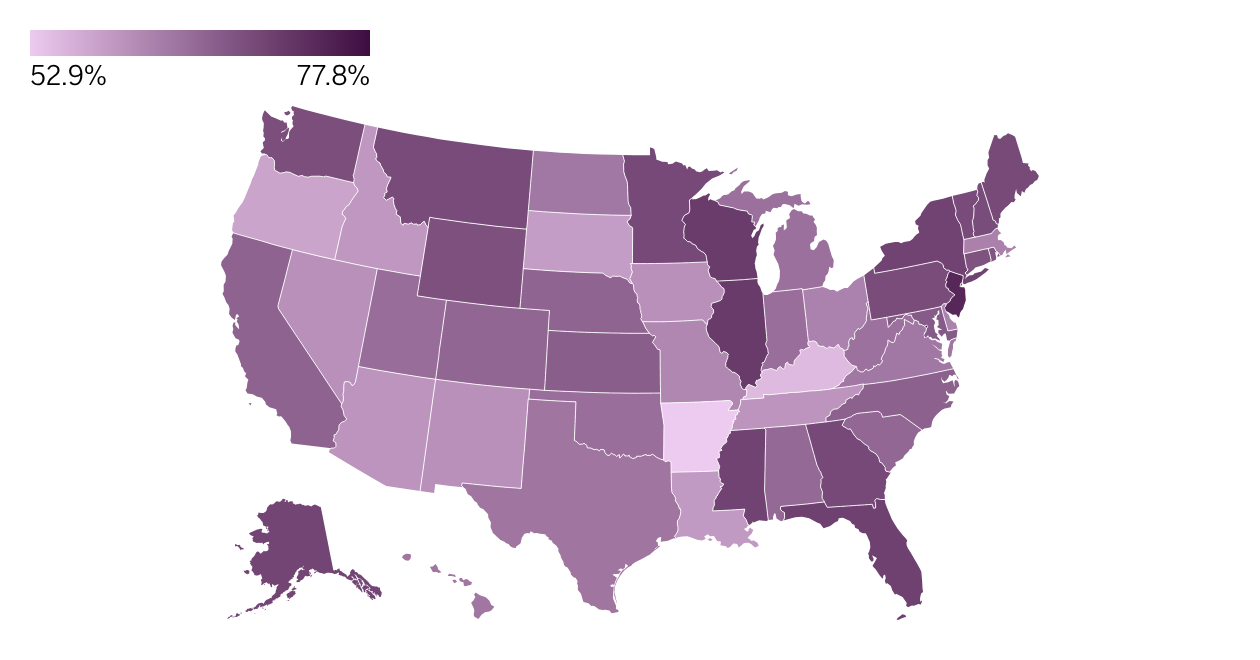
Data from the most recent National Children’s Health Survey, administered by the U.S. Census Bureau, shows that only 58.4% of South Dakota parents report that their children ages 3-5 are prepared to start school.
South Dakota’s rate was the fourth-lowest in the nation and the lowest among all Great Plains states, according to data from 2023 and 2024, the latest years the survey was conducted. Arkansas had the lowest school readiness rate at 53% and Washington, D.C., had the highest at 78%.
Get South Dakota stories
An email summary on most weekdays that links to the full version. Cancel anytime.
Darbi Hunt, deputy director of the Community & Family Services division of the Black Hills Special Services Cooperative, said the first five years of child development are critical to later success.
“The more research we get around this subject, the more we know that so much of what happens in those first five years is a strong indicator of how they’re going to do in terms of school success but also in terms of life success,” Hunt said.
The special services cooperative seeks to connect parents, schools and other community groups to strengthen families and improve educational outcomes, mostly in western South Dakota but also statewide.
Specific challenges in South Dakota
Hunt said she isn’t surprised by the state’s low school readiness ranking because South Dakota families face several challenges in preparing children for school.
“In talking to families, teachers and child care providers, we still hear the same feedback that children are entering schools without the experience and exposures they need to be ready to learn,” Hunt told News Watch.
South Dakota does not provide state-funded preschool programming, and pre-K resources can be limited in some areas, she said.
Additionally, the state has a high percentage of families with both parents working outside the home, Hunt said. That can limit the time and energy parents have to support their children’s early development.
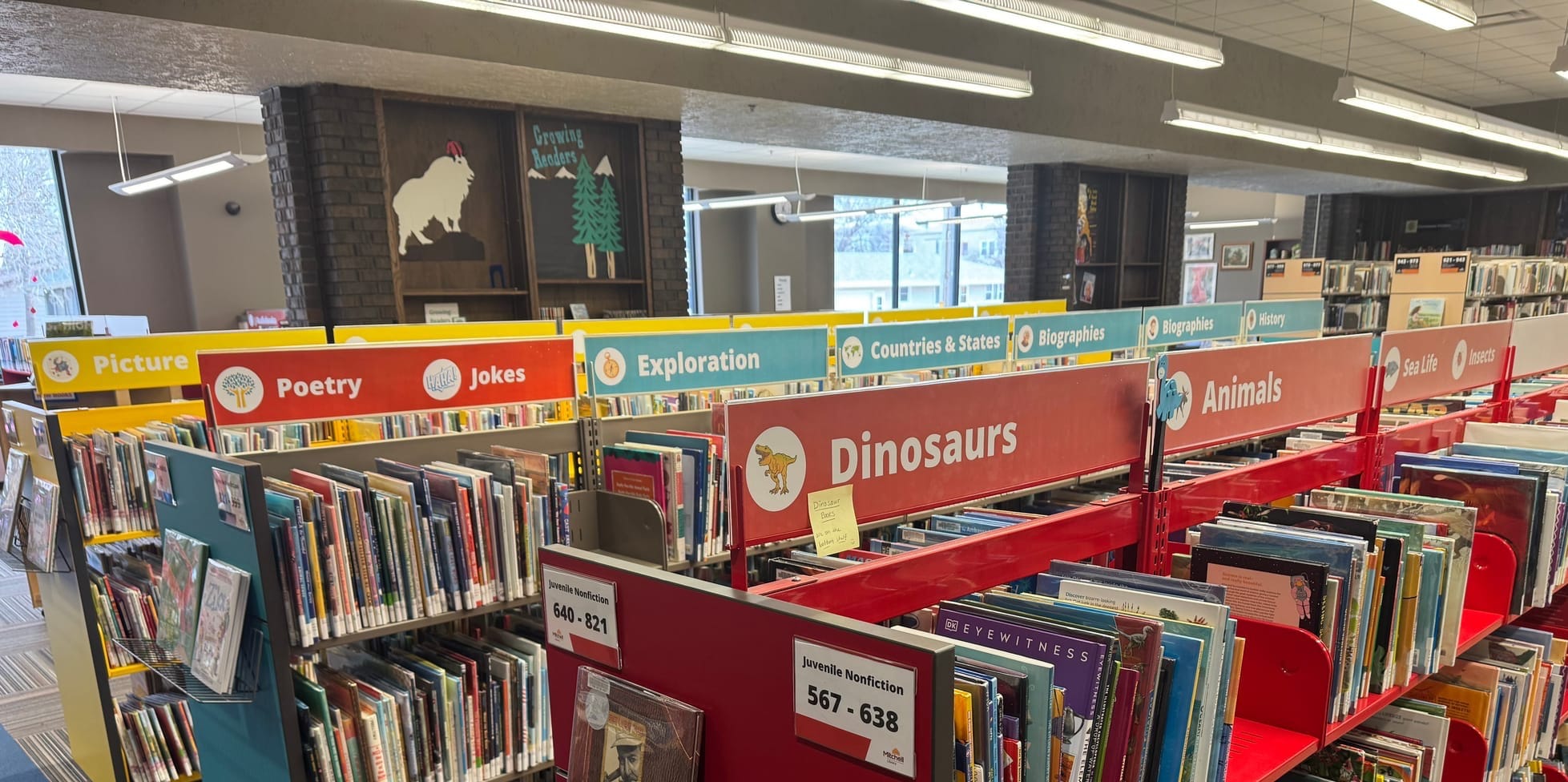
Providing reading materials to children, such as these books at the Mitchell Public Library shown in 2025, is an important early step in their educational success. (Photo: Bart Pfankuch / South Dakota News Watch)
While children need to be physically and emotionally ready for school, the early ability to read and comprehend is a critical component of educational success that is missing for some children, Hunt said.
“You learn to read until second or third grade and after that you’re reading to learn,” she said. “If you’re not at grade-level reading skills, you fall behind not only in literacy but in all the subject areas.”
Poverty plays a role in lack of readiness
Disparities exist in whether parents across the country report their child as ready for kindergarten, new data from the National Survey for Children’s Health shows.
Administered by the U.S. Census Bureau, the federal survey offers a glimpse into school readiness by collecting responses annually from thousands of parents and guardians on their children’s early learning, social-emotional development, self-regulation, motor development and health. The latest results were released in December.
Nationally, nearly two-thirds of children were reported in the survey as on track for kindergarten, regardless of their families’ income. However, the gap in kindergarten readiness is substantial when comparing reports from the poorest families and the wealthiest — approximately a 20% difference.
State data shows that South Dakota has about 6,000 children enrolled in Head Start or other federally funded early learning programs for low-income families but does not have state-funded pre-K education options for working parents who don’t qualify for assistance.
According to the census, the overall poverty rate in South Dakota has fallen in recent years, from 11.8% in 2023 to 10.4% in 2024, now nearly matching the U.S. average of 10.6%.
And yet, some individual counties – many in reservation areas – have far more extreme levels of people living below the official poverty line, including Oglala Lakota County (52.8%), Todd County (49%) and Mellette County (46.2%).
Parents’ impressions of school readiness | Created with Datawrapper
Share of parents participating in the 2023-24 NSCH surveys whose responses indicate that their 3- to 5-year-old is on track for kindergarten.
Create charts and maps with Datawrapper
Click the box above to access an interactive graphic from The Associated Press showing state-by-state school readiness rates.
The state’s two most populous counties had lower poverty rates, with Minnehaha at 8.8% and Pennington County at 12%. Stanley County, where Fort Pierre is the county seat, had the state’s lowest poverty rate of 2.1% in 2023, according to the census.
Low-income children often have less access to experiences that boost school readiness, such as engagement with parents and other children and through high-quality early learning opportunities.
Helping parents and children on Pine Ridge
As the director of Head Start programming on the Pine Ridge Indian Reservation, Lislie Mesteth is responsible for helping more than 300 preschoolers get ready for kindergarten.
The federally funded program provides child care, education and meals to students from birth to age 5 at centers in 10 communities with the goal of providing children a path to educational success once they enter the K-12 system.
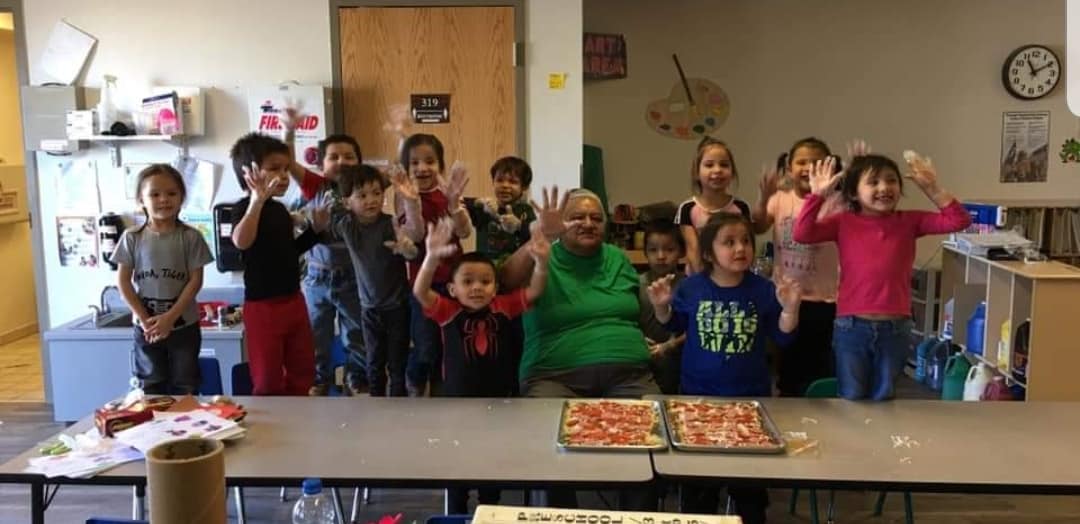
Children participate in a learning activity through the early Head Start program on the Pine Ridge Indian Reservation in 2022. (Photo: Courtesy Oglala Lakota College Head Start)
Mesteth said she sees many children on the reservation who are not prepared to start school, and she partly blames preschool child care programs that do not contain a sufficient educational component.
“A lot of preschools nowadays are just babysitting and they’re not teaching,” she said.
Mesteth also points to poor parenting for a lack of school readiness among children, even among parents who are unemployed and have the ability to spend quality time with their children.
“These kids don’t want to stay home and be bored, but for some parents, it’s not a big priority for them,” she said. “Some kids don’t have a firm schedule, so they come to school tired and disheveled. They need to get their kids ready for school, to spend time with them and make them look presentable.”
Support solutions-focused storytelling. Help South Dakota News Watch tell stories that identify and share solutions to the state’s biggest challenges.
Mesteth, who runs Head Start from offices at Oglala Lakota College in Kyle, said she has taken steps to strengthen the program since becoming director two years ago.
For both the zero to 3 age group and those ages 4-5, Mesteth implemented new curriculums and provided more training for teachers. She also purchased new computer software called ReadyRosie, an educational program that parents can administer to children on their own at their homes.
“We want to help the parents get involved with the child’s learning, and this provides the parents an opportunity to get engaged,” she said.
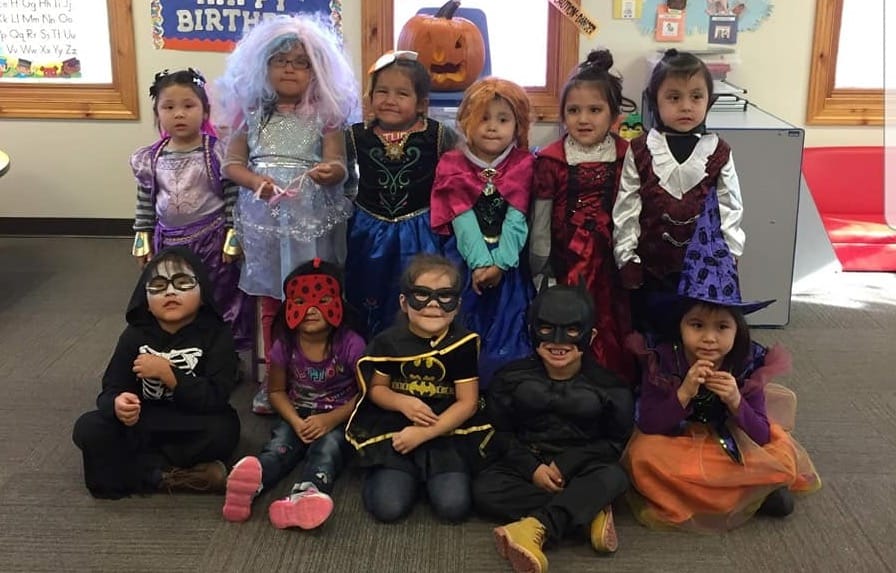
Children celebrate Halloween while attending the Oglala Lakota College Head Start program in 2019. (Photo: Courtesy Oglala Lakota College Head Start)
Mesteth said she and her team of educators are starting to see positive results from the improvements they have made. More children are learning to read and more are better prepared to start kindergarten, she said.
“If you put in the time and effort in, you’re going to see better outcomes,” she said. “You can see it pay off, and it’s amazing to see the progress that kids are making.”
Improved readiness an obtainable goal
There isn’t a universal definition of kindergarten readiness, but many experts emphasize a child’s health and motor skills, social-emotional development, cognition, language development and general attitude toward learning.
Despite the challenges in South Dakota, Hunt said it is possible to improve student readiness and achieve better outcomes for children of all ages and family income levels.
Parents can take simple steps like providing their children with a structured routine that includes quality time spent together reading or even just talking. Parents can create a calm, stable environment and help children learn to process emotions to better prepare them for a busy classroom setting.
Student interest in SD energy programs on the rise
Three students in Lake Area Technical College’s energy programs speak to News Watch about why they chose to join the rapidly growing sector.
South Dakota News WatchMolly Wetsch
If parents need help, those whose income qualifies can enroll children in Head Start, or tap into community programs that help pay for child care, such as the Starting Strong program or the Tri-share program that provides assistance through the John T. Vucurevich Foundation in Rapid City.
Some South Dakota school districts, including the Harrisburg schools, offer pre-K screening programs to improve student readiness. A list of preschool resources for South Dakota parents can be found on the Starting Strong website.
“There’s a lot of things we can replicate from other states and there are things going on in South Dakota that are going really well for us,” Hunt said. “The question is, how do we make more people aware of those programs and how do we expand those ef?”
The Associated Press contributed to this report. South Dakota News Watch is an independent nonprofit. Read, donate and subscribe for free at sdnewswatch.org. Contactcontent director Bart Pfankuch: 605-937-9398/bart.pfankuch@sdnewswatch.org.
Grassroots effort in Redfield turning old bank into day care
REDFIELD, S.D. – Gianna Schieffer doesn’t need data or stories from other parents to prove the point that this central South Dakota city has a worrisome shortage of day care options.
Schieffer, executive director of the Redfield Area Development Corp., has for the past couple years led an effort to obtain grants and loans, solicit donations and host fundraising events to get the money to convert a former bank building into a large child care center in downtown Redfield.
As a working mother of two, including an energetic toddler, Schieffer can point to her own situation as evidence of the shortage and the stress it can cause. On a recent day in February, the in-home child care provider Schieffer relies on came down with the flu, leaving her and several other parents with nowhere to drop off their children.
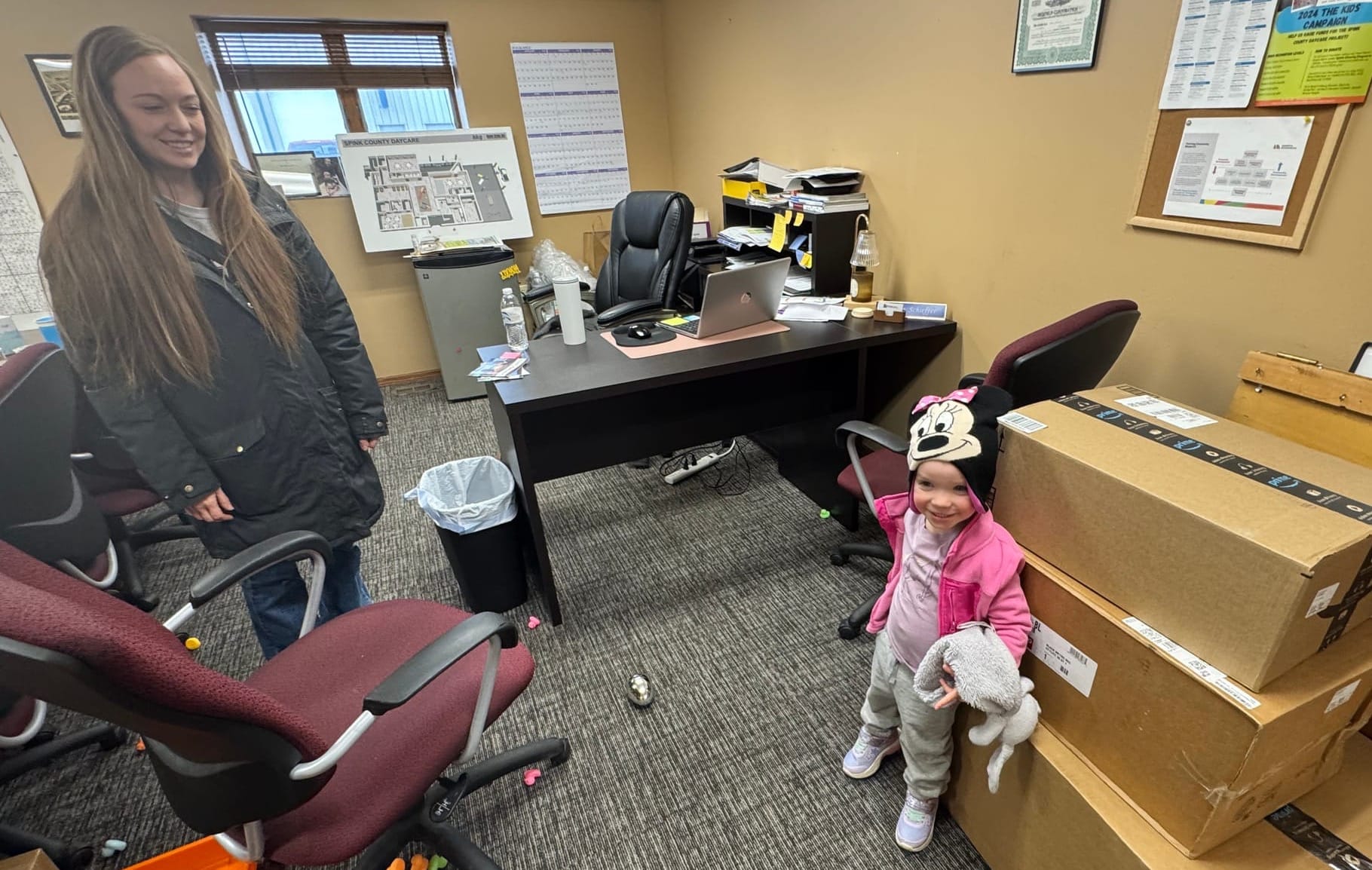
Schieffer’s husband runs a ranch supply store located well out of town. But fortunately, Schieffer works alone in a downtown office and was able to bring 2-year-old Maya with her to work.
“This is exactly the kind of situation we’re hoping to avoid with the new day care, where we could offer a drop-in service for parents on a daily or emergency basis,” Schieffer said. “If you want to work as a parent, you have to take your kids somewhere.”
ABOUT ENGAGE SOUTH DAKOTA
This story is part of an ongoing South Dakota News Watch series called Engage South Dakota using storytelling, crowdsourcing and community engagement to identify and share potentially replicable housing solutions.
Each story includes the community’s response, evidence of whether the ideas are effective, insights to be learned and limitations on the efforts.
Key takeaway for this story: Through strong local leadership and civic engagement, South Dakota communities struggling to provide day care for working parents can find the funding to develop child care centers without waiting for private industry or government to solve the problem.
Response: Finding funding from many sources
The lack of child care is a common problem in cities both large and small across South Dakota and creates ripple effects beyond the immediate uncertainty for working parents.
Combined with a shortage of affordable housing, the dearth of day care is stunting potential economic and population growth as schools, government agencies and businesses are in some cases unable to hire employees because workers cannot find care for their children.
The problem is worse in dozens of small, rural communities that are often isolated from large population centers with more options.
Redfield Area Development Corp. director Gianna Schieffer brought daughter Maya to work in Redfield, S.D., on Feb. 3, 2026, because her day care provider was ill and could not take in children. (Photo: Bart Pfankuch/South Dakota News Watch)
The child care shortage in particular restricts the ability of employers to hire young adults with children who are often seen as critical to the future of the state’s small communities, many of which are losing population and experiencing declining public school enrollment.
Just as they have on development of new housing, leaders in city government, nonprofits and the business community in Redfield have not waited for private industry or the state or federal government to solve its child care problem.
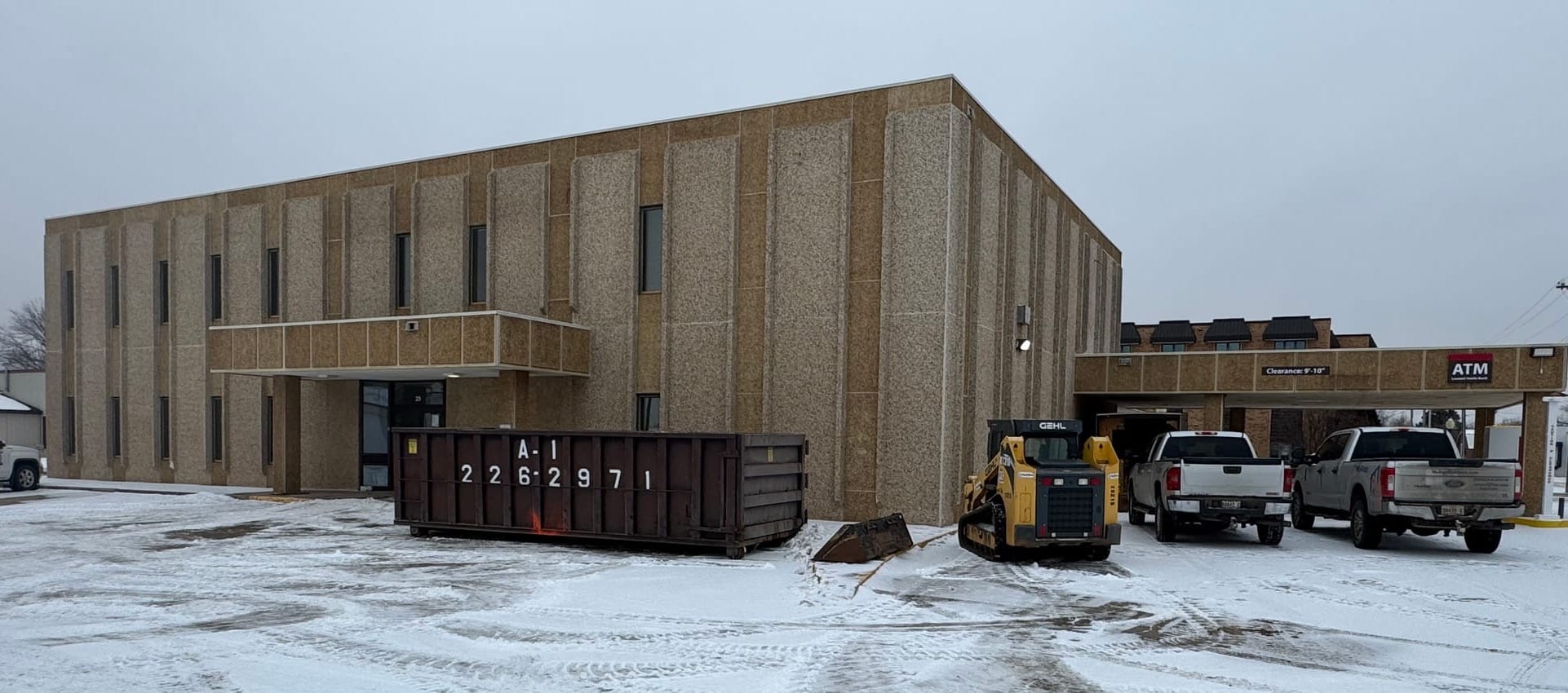
Instead, the community has embarked on a three-year campaign to raise the roughly $1 million needed to buy a former Wells Fargo bank building in town and convert it to large child care able to hold 51 children upon launch and eventually more than 90 children.
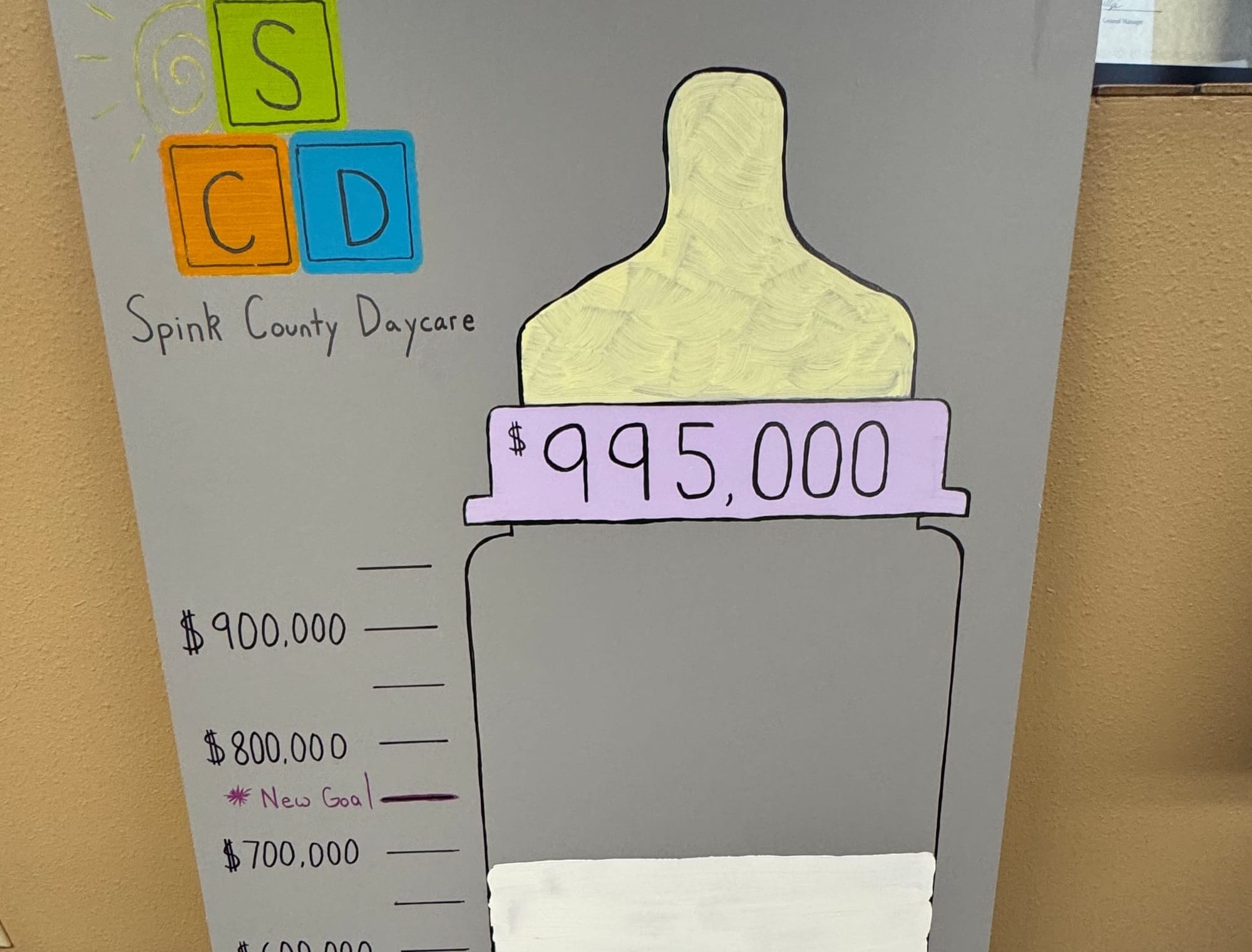
Schieffer has tried to put some “fun” into the fundraising campaign. Donation levels are categorized by types of diapers, and the fundraising goals are measured on a large vertical baby bottle drawn on poster board in her office.
So far, the community has responded well to an unusual lineup of fundraisers. The raffle of a Ford Mustang raised $60,000 for the project, a dueling pianos event brought in $16,000 and a “grocery grab” lottery and hunting blind raffle took in about $10,000 combined.
The Redfield Area Development Corp. is using a baby bottle drawing, shown on Feb. 3, 2026, to indicate the level of donations received so far in the effort to build a community day care in a former bank. (Photo: Bart Pfankuch/South Dakota News Watch)
Schieffer has applied for and received about $300,000 in state grants, and community members and businesses have chipped in about $120,000.
As the project has evolved, the initial estimate has fallen to about $750,000, bringing the organizers within $100,000 of their goal of opening the day care center before school starts in the fall.
Insights: A wide-ranging, statewide problem
South Dakota has about 6,000 children enrolled in Head Start or other federally funded early learning programs for low-income families but does not have state-funded pre-K education options for working parents who don’t qualify for assistance.
According to the First Five Years Fund, a national nonprofit promoting child welfare, the average annual cost of child care in South Dakota is about $8,600 for center-based care and about $6,800 for at-home care. The group estimates the inability of parents to obtain child care and therefore become unable to work full time costs the state at least $750 million in lost productivity each year.
South Dakota communities like Redfield, population 2,200, are typically not targets for development by private day care operators who can build large centers that create opportunities for profits based on economies of scale.
This former Wells Fargo bank building in Redfield, S.D., shown on Feb. 3, 2026, is being converted into a day care with money from local fundraising activities, grants and donations. (Photo: Bart Pfankuch/South Dakota News Watch)
Redfield does not have a center-based day care operation and has seen the number of small, at-home providers fall from 10 in 2023 to seven in 2026. Some of those remaining providers are nearing retirement age and are likely to stop providing the service in the coming years, Schieffer said.
A 2023 child care survey conducted by the countywide development group Grow Spink showed there were more than 550 children under age 9 in potential need of child care within a 20-mile radius of Redfield, the county seat.
The study also found that half of all South Dakota residents – including those in Spink County – live within “child care deserts” where there are three or more children in need of day care for every available spot.
The nearest large city, Aberdeen, is about 45 miles north of Redfield.
Evidence: Targeting child care to spur growth
Jake Dawson is a father to two pre-school age children and feels lucky that he and his wife are able to drop their children off at an in-home day care in Redfield while he works the farm and his wife works in town.
Dawson used to run a John Deere dealership in Redfield and said he often heard from employees or prospective employees that obtaining child care was a challenge. Dawson said he knew of at least two parents who had to drive 50 miles each way either to Miller or Aberdeen in order to drop off their children during the workday.
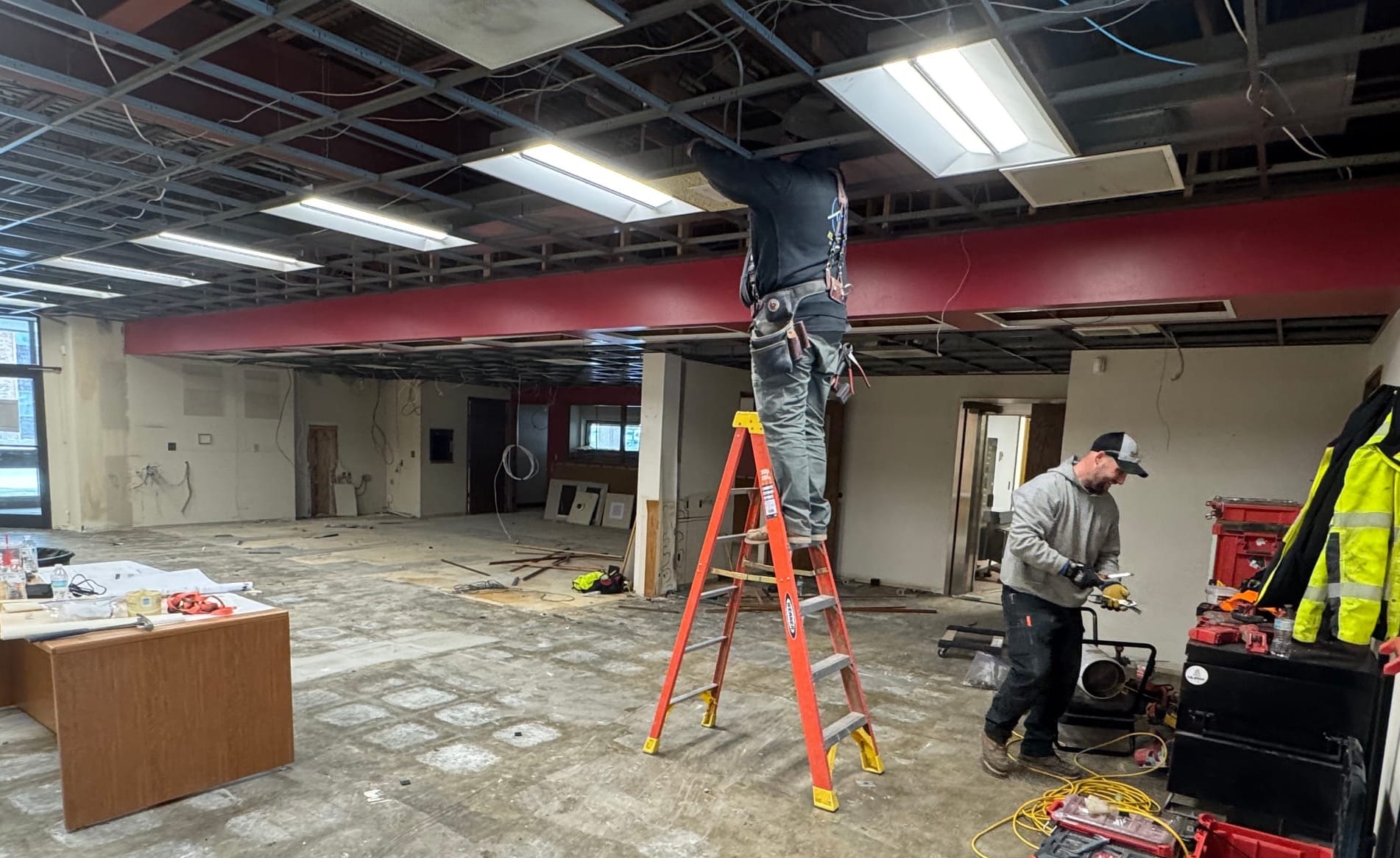
Demolition was underway on Feb. 3, 2026, inside a former bank building being converted into a day care in Redfield, S.D. (Photo: Bart Pfankuch/South Dakota News Watch)
Dawson, who serves on the board of the Redfield development group, said it is clear that a dwindling number of child care openings is holding the city back.
“From an economic development standpoint, having day care available is a huge asset,” he said. “In today’s world, I think young families are looking for smaller towns to start a family. And having day care allows a community to grow by attracting talented young people to town.”
Limitations: Some pieces need to fall together
Schieffer said Redfield was fortunate to have a suitable building available at a reasonable price that unexpectedly came available after Wells Fargo began shuttering more than 2,000 U.S. locations over the past decade. It sold for $240,000 at auction.
The building is downtown and only a couple blocks from the city’s school, library and municipal pool.
Support solutions-focused storytelling. Help South Dakota News Watch tell stories that identify and share solutions to the state’s biggest challenges.
Pulling off such a large community funded project also takes leadership and vision that may not be present in every community.
Even in Redfield, where support for housing and child care projects has been strong, economic development efforts can be at risk of funding cuts. Grow Spink, for example, recently shuttered after losing funding, leaving the Redfield Area Development Corp. as the region’s only agency focused on economic growth.
Schieffer said there is also probably a limit on how often a community can turn to its residents and businesses to make donations, even through unique fundraising efforts. State and federal funding are also harder to come by in the post-COVID era and as competition for grants increases.
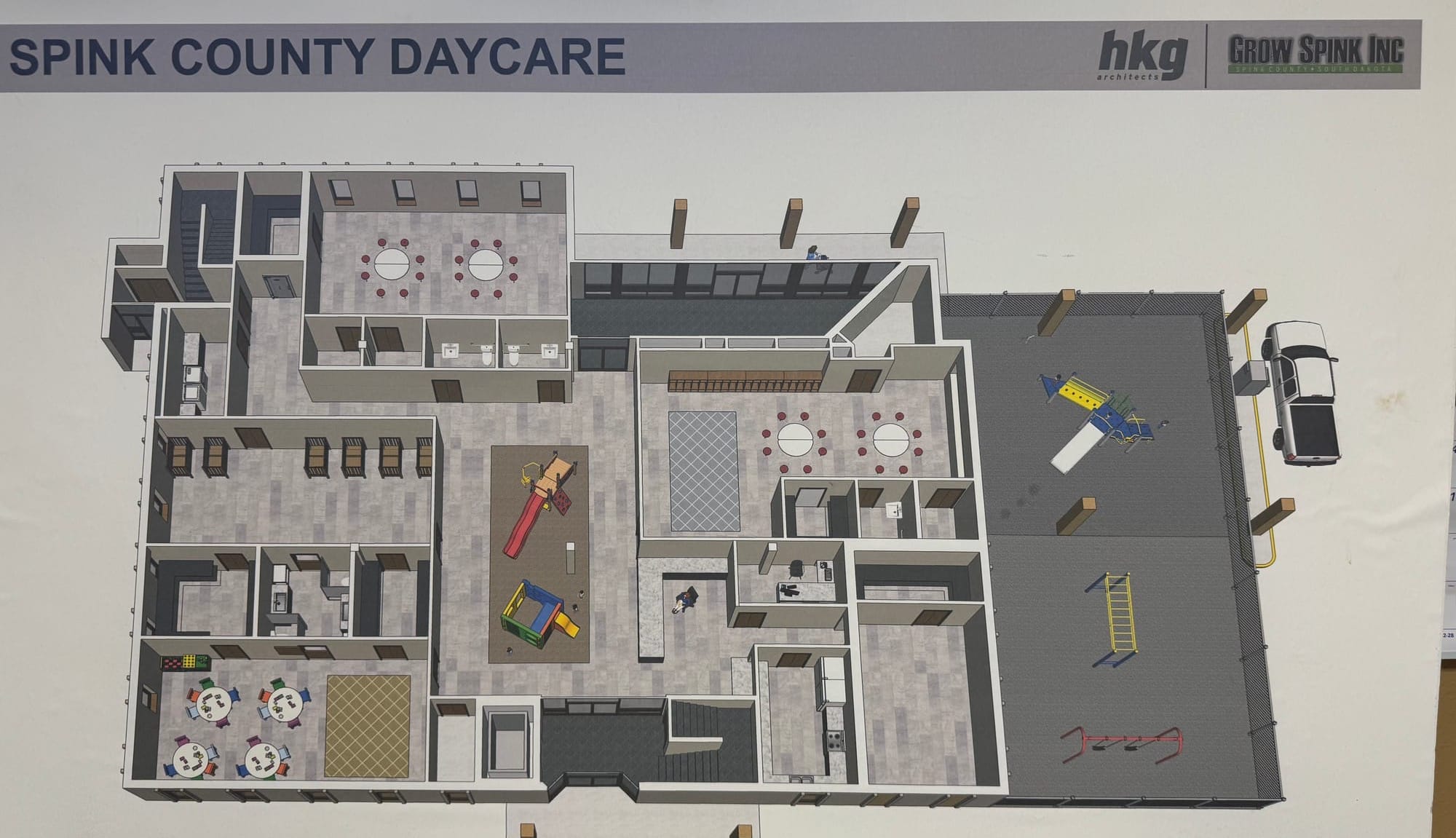
This drawing shows the plans to convert a former bank building in Redfield, S.D., into a day care facility. (Photo: Bart Pfankuch/South Dakota News Watch)
Dawson said he has been impressed with how the city has pulled together to raise the money to support development of the community child care center. He said that once the first-floor day care is established, the second floor of the bank building could be turned into a community center or some other hub of activity for local children.
“I’m really happy that the city’s stepped up and made this a priority,” he said. “I’m hoping the community continues to rally behind this project to expand this into something more for kids of all ages.”
South Dakota News Watch is an independent nonprofit. Read, donate and subscribe for free at sdnewswatch.org. Contactcontent director Bart Pfankuch: 605-937-9398/bart.pfankuch@sdnewswatch.org.
South Dakotans’ biggest needs, according to 211 calls
SIOUX FALLS, S.D. – Some of South Dakotans’ greatest needs for resources in 2025 surrounded housing, food and utilities, according to the Helpline Center’s 211 data from around the state.
The 211 line connects callers with community services statewide. While it’s separate from 988, the state’s mental health crisis hotline, the two lines both operate under the umbrella of the nonprofit, which is funded by the United Way and other private and public donations.
Janet Kittams, CEO of the Helpline Center, told News Watch that the lines benefit from working in tandem – especially as needs for mental health services and other community resources often overlap.
“The two teams really do work in partnership with each other because if 211 does get a call that is crisis-related or mental health-related, they can easily transfer that to the 988 team. I think what will happen with our data is we’ll continue to see mental health on the 211 continue to go down as far as one of our needs,” Kittams said.
Get South Dakota stories
An email summary on most weekdays that links to the full version. Cancel anytime.
The center compiles resources from local organizations that residents can access, such as financial assistance programs and food pantries, both online and when they call, text or email 211.
In more rural areas, it can be a challenge to connect callers with those resources, if they exist at all, said development director Lisa Ottmar. She said 211 will still make efforts to connect with callers even if it cannot offer specific local resource information.
“We can’t control what resources are in the communities, but we still want people to reach out. Sometimes it’s finding that balance of letting them know that we exist and how we can help. Problem solving, even if there isn’t a resource, and just letting them know that there’s a connection, a person that they can connect with,” Ottmar said.
Data illustrates unique county-by-county needs
The Helpline Center began making its data on caller needs and geographies available to the public on its data dashboard three years ago, after the line became available to all South Dakotans six years ago.
Kittams said that data and the resource database being publicly available means that local leaders are able to determine what their community needs the most. And while statewide data indicates that housing is the most pressing concern for most South Dakotans, some counties have vastly different needs.
For example, in Perkins County, where the population density is roughly one person per square mile, health care was the most commonly indicated need. In Douglas County, access to information services was the most pressing.
“I think oftentimes those individual counties are surprised by the needs in their county that maybe are different than what we see overall in the state,” Kittams said.
Need 1: Housing
Key takeaway: Housing is the most pressing need in the vast majority of South Dakota’s counties, both rural and urban.
Nearly 27% of callers to 211 in 2025 mentioned housing as a need they wanted resources for. More than half of those callers needed assistance with rent payments.
“Rent assistance is one of our most common calls. Some of it is immediate like, ‘My rent is due and I’m going to get kicked out. Can I get assistance right away?’ Some of it is a little bit more in advance like, ‘I just got laid off. I’m struggling financially. I know this is gonna come due. Is there a program to help me?’” Kittams said.
Other housing-related needs included assistance in finding shelters, with rent deposits and help with tenants’ rights.
Engage South Dakota: Housing solutions
A list of entities and programs that can assist in developing or obtaining housing as well as links to News Watch reporting on housing solutions.
South Dakota News WatchBart Pfankuch
Need 2: Food
Key takeaway: Immediate access to food, via pantries and other community-access initiatives, is among the largest concerns for South Dakotans.
The Helpline Center’s chief operating officer, Amy Carter, said that temporary cuts to Supplemental Nutrition Assistance Program benefits during last year’s government shutdown meant that 211 saw an increase in calls concerning food access.
Shifts in the resource environment also meant that some callers need assistance in finding new resources – especially related to immediate food access like food pantries, which was the most common food need referenced by callers.
“There’s been some changes in the food resources as well, so that, for example, in Sioux Falls, we used to have resources that would do food delivery. That went away a few months ago. So that’s changed the types of calls we get in that area a little bit,” Carter said.
Need 3: Utility assistance
Key takeaway: State resources are especially useful for common utility-related needs.
Many callers who need utility assistance will likely be connected to statewide programs, like the Public Utilities Commission’s Lifeline program, which discounts phone prices for those in need.
“That resource database – we have everything you can possibly think of,” Ottmar said. “Trying to keep that information up to date is our job because people can go online and do random searches, but is it current? Is it valid? Is it actually legit? You’d never know.”
“We have a specific database team, and that’s what they do is make sure those resources are current. They’re always trying to find the little nuggets that are out there that we don’t hear about.”
Personal connection key to 211 success
While the line’s primary purpose is to connect callers with resources both statewide and in their communities, Kittams said that having voice-to-voice conversations is often the intervention that makes the difference for those in need.
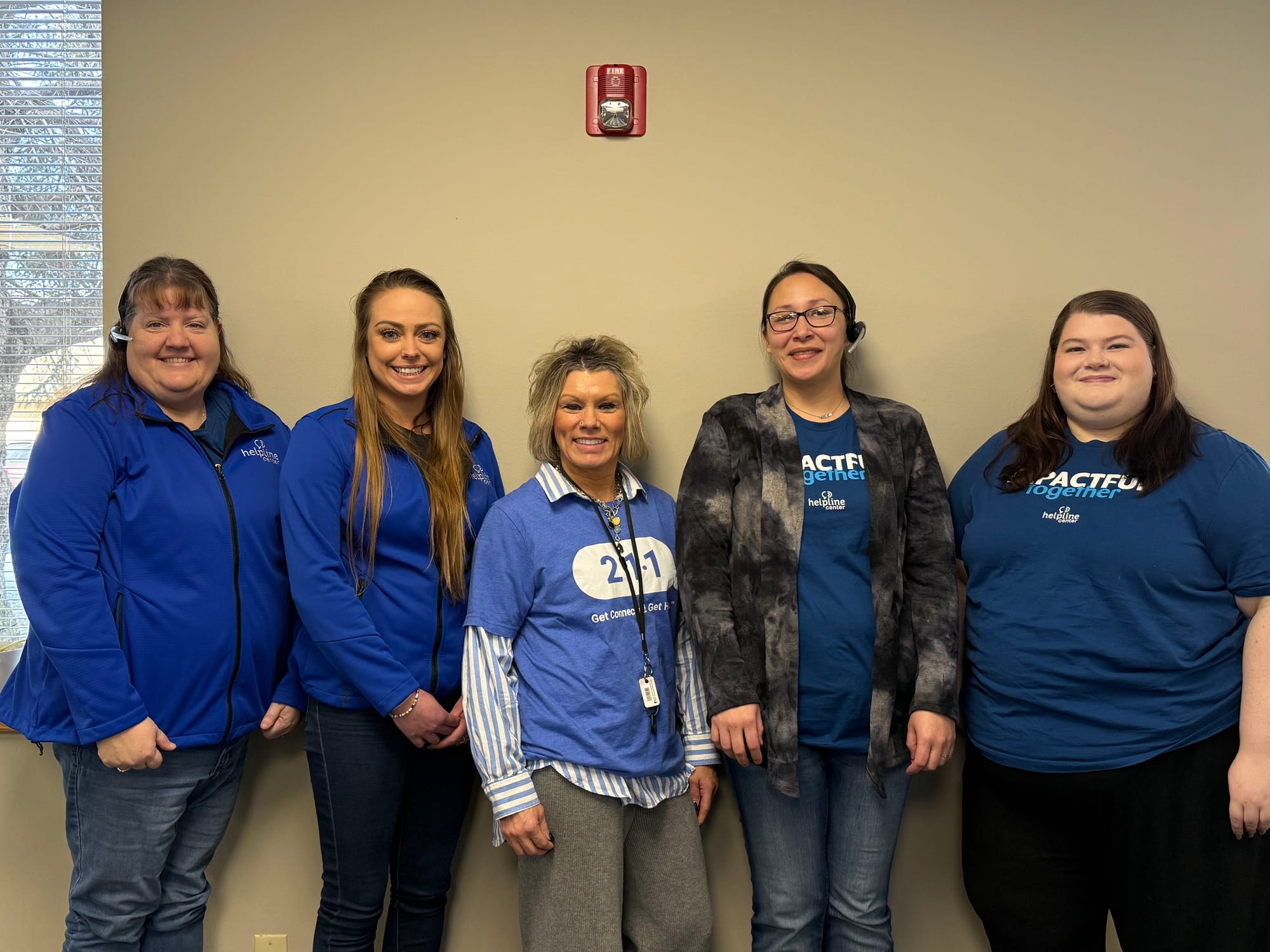
211 director Jamie Cody and 211 staffers at the Helpline Center in Sioux Falls, S.D. L-R Jenny Beauchan, Kylee Wilmarth, Jamie Cody, Jessica and Hannah West on Jan. 30, 2026. (Photo: Molly Wetsch/South Dakota News Watch)
“Sometimes they just need that emotional support, so sometimes our staff at 211 will take some time and just talk with them. And then if they do need referrals to mental health resources, absolutely, our staff would provide that,” Kittams said.
211 Day, the national celebration of 211 and its resources, is on Feb. 11. This year, the Helpline Center will be celebrating more than 50 years of 211 after its establishment in the state in 1974.
“I think that is the difference with 211 – that we have that real live person who’s talking to them. Our staff do a great job of showing that they care and they’re compassionate,” Kittams said.
“They can say, ‘I’m here to help you, I’m here to listen. And I really do want to help you.'”
Join other South Dakotans and support statewide storytelling.

 Editor’s note: If you cite the results of this poll, credit South Dakota News Watch and the Chiesman Center for Democracy, per copyright law and our republishing policy.













 “Tȟabškátapi kiɳ wičhóni.”







 RAPID VALLEY, S.D. – Bridget Williams gathered a group of children together in her barn to show them how to safely give a horse a treat.



 Nearly half of South Dakota children under the age of 5 are not on the right track to start school and find early success in the classroom, a rate that puts the state near the bottom in school readiness across the country.




 SIOUX FALLS, S.D. – Some of South Dakotans’ greatest needs for resources in 2025 surrounded housing, food and utilities, according to the Helpline Center’s 211 data from around the state.