
What happens when a neighborhood is built around a farm
Picture the bucolic little town of a fairy tale. At its core stand medieval buildings, a square where folks hawk their goods, and perhaps a well to provide water. Beyond the defensive wall radiate agricultural fields, where people toil to bring grains, fruits, and vegetables to market.
Invert that for modern times and you’ve got the idea behind “agrihoods,” communities designed around a central farm. Like a garden in a big city, agrihoods promise to boost food security, reduce temperatures, capture rainwater, and increase biodiversity. As climate change intensifies heat, flooding, and pressure on food systems, agrihoods could be a way to make urban living more resilient — not just more picturesque.
“Developers have a hard time offering open space, because they would like to build more housing,” said Vincent Mudd, a partner at the architectural firm Steinberg Hart, which designs agrihoods. “One of the few ways to kind of bridge that gap is to be able to use active open space that actually generates commerce.”
On paper, an agrihood is a simple concept: A working farm surrounded by single- or multi-family housing. Steinberg Hart recently finished two of them in California, one in Santa Clara and another, called Fox Point Farms, in Encinitas. The former, south of San Francisco, features townhouses, market-rate units and affordable housing, plus a community center and retail shops. The latter, north of San Diego, adds a farm-to-table restaurant, an event venue, and a grocery store, but its housing is primarily for sale instead of rent. “Two different housing programs for two different communities, but built around the sustainability of urban farming,” Mudd said.

Kyle Jeffers
While these projects are in relatively affluent areas, Mudd said agrihoods can be built nearly anywhere — though it might require tweaks to zoning rules. “Almost every city has the ability to make that zoning change,” Mudd said, “because it retains commerce, preserves jobs, generates sales tax income from retail, and provides mixed-income, attainable housing.”
(Last year, residents of the agrihood development in Santa Clara alleged that management failures have left them living in unsafe and unhealthy conditions, with delayed repairs, poor air quality, and other issues. The building’s manager, the John Stewart Co., and owner, Core Affordable, did not respond to a request for comment.)
Where it gets more complicated is the logistics of the farm. Water is the big one: Ideally a farm captures enough rainwater to keep crops hydrated. Because Northern California enjoys a Mediterranean climate of rainy winters and warm, dry summers, the Santa Clara agrihood gathers precipitation and stores it in a tower. “It auto-refills with city water once it gets to a certain point, but we can get two-thirds, or sometimes all the way through the summer without having to do that,” said Lara Hermanson, co-founder of Farmscape, which helped design, install, and maintain the community’s farm.
A rainwater capture system, though, comes with an upfront cost that a community garden in a lower-income neighborhood might not be able to afford. If one year the rains stop and drought takes hold, it will have to pay for more water. “Perhaps people with the biggest need for food or nutrition security are also sort of disproportionately facing greater water expenses,” said Lucy Diekmann, an urban agriculture and food systems advisor at University of California Agriculture and Natural Resources.
Even so, one of the many charms of any urban farm or garden is that greenery, and even bare dirt, breaks up the concrete landscape. Historically, cities have been designed to whisk water through gutters and sewers as quickly as possible, before it can pool and cause flooding. This strategy struggles to keep up as climate change supercharges rainstorms, making them dump more water. Green spaces let all that liquid soak into the ground, mitigating flooding even without deliberate catchment systems.
Still, an agrihood’s farm isn’t going to run itself. From the very beginning of planning, Hermanson said, a community must decide what it’s going to grow. The general idea is to get as much yield as possible because space is constrained compared to an industrial farm. So pumpkins probably aren’t a great idea, because those plants take up so much room. Instead, in Santa Clara, Hermanson grows Persian cucumbers, cherry tomatoes, and hot peppers because they’re small.
While an agrihood can’t feasibly provide all the calories residents need, it’s an especially powerful system because the produce that it does produce is highly nutritious. Scale that food production up across a city, and the impact could be huge: One study found that Los Angeles could meet a third of its need for vegetables by converting vacant lots into gardens. “It’s incredible what we could do with what we have, and what we could do even more with intentional planning,” said Catherine Brinkley, a social scientist who studies urban agriculture at the University of California, Davis.
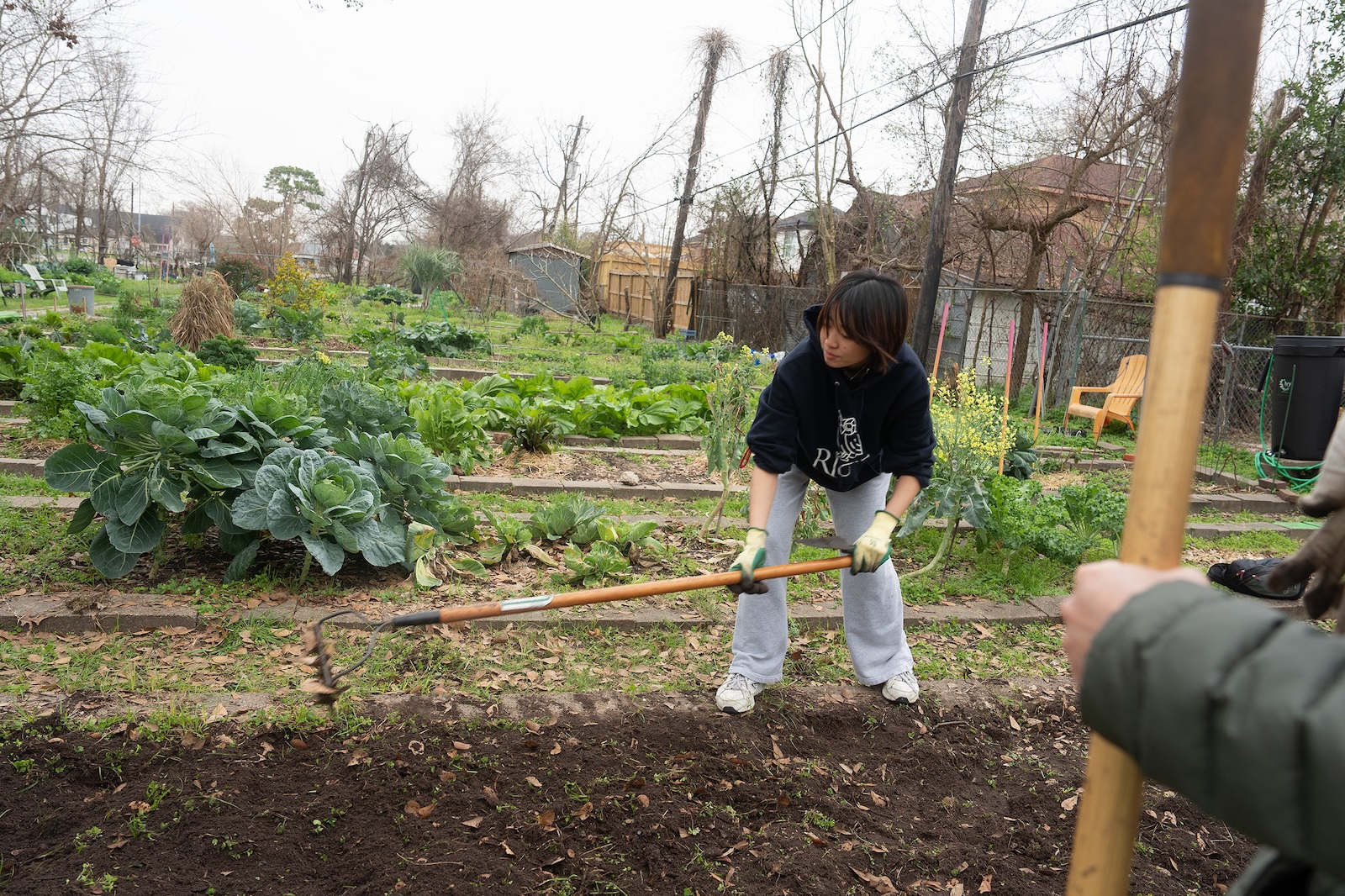
In Encinitas, Greg Reese, the farm manager at Fox Point Farms, is sending food to the agrihood’s grocery store, so in addition to size he also considers the value of his crops. A lot of that comes down to speed: Arugula grows faster than cantaloupe, meaning Reese can harvest it, send it to market, and grow some more in quick succession. (Given the pleasant climate of Southern California, the farm can grow for 11, maybe even 12 months of the year.) It can also produce foods that the chefs at the on-site restaurant want. “What is in high demand, and then what grows really fast as well?” Reese said. “I can plant a seed and they can harvest it in a month, or transplant it within two months, so it’s a higher turnover.”
These crops can even benefit from a quirk of city life: the urban heat island effect. As the sun beats down on all that concrete, asphalt, and brick, the landscape absorbs its thermal energy — raising the mercury well above surrounding rural areas — and slowly releases it at night. This is a growing problem for urbanites struggling with ever-higher temperatures. On the flip side, these green spaces help cool the neighborhood because their plants release water vapor, making summer more comfortable for the surrounding community.
An agrihood can also support local biodiversity. Planting native flowering species, for instance, simultaneously beautifies the landscape and attracts pollinating insects, hummingbirds, and bats (which eat mosquitoes, an added bonus). Even the flowers the crops produce provide food for these pollinators, which return the favor by helping the plants reproduce.
With the crop varieties decided, an agrihood can figure out how much refrigeration and storage capacity to build out. They’ll also have to decide whether to sell produce from a stand, or use it in an on-site restaurant. And they’ll need to project the costs of hiring outside help to keep the farm going.
It’s not so simple, then, as just erecting a few buildings around a green space and calling it a day. “All those things need to be figured out before you start putting things on paper and making commitments,” Hermanson said. “Successful farms are well-funded, well-staffed. Everyone does better with clear expectations, clear budgets, and then also the community knows what it is they’re getting.”
This story was originally published by Grist with the headline What happens when a neighborhood is built around a farm on Feb 6, 2026.
City officials request public health study as odor concerns persist in west Hollister

Lea este artículo en español aquí.
With the sewer odor emanating from the city’s Domestic Water Reclamation Facility expected to get worse even as the city seeks to implement solutions in the coming weeks, Hollister city officials say they need reassurance there are no public health risks to residents on the west side of town.
At the Feb. 2 city council meeting, while Public Works Director Javier Hernandez called the odors a nuisance and stated that there are no public safety concerns, Mayor Roxanne Stephens and Councilmember Rolan Resendiz requested a formal study or soil and water tests.
‘Somebody coming up here and telling me there are no public health safety concerns is not just good enough for me,” Resendiz said. “There are people on the west side of Hollister that are marginalized populations that have had homes built right next to the sewer. That to me is very concerning.”
Hernandez, who was recently promoted as director after William Via left the position in October, said the city has been dealing with new challenges at the Reclamation Facility including the hookup to San Juan Bautista in mid-2025 and a rainy period “that was detrimental to the plant.”
He also said stagnant water on a wastewater pond is an issue and that the city will introduce enzymes to stabilize the wastewater to assist with the odor issue.
“We’ve been catching up and our consultants have been making some headway on this,” he said in regard to the odor complaints the city has received from residents. He added the odors will get worse before residents notice the improvement sometime in mid-March.
Hernandez said the city, which contracts with Veolia to operate the Reclamation Facility, is scheduled to install three oversized, temporary aerators to support oxygen levels in the pond. He said those will be installed when they arrive in mid-February, and in March the city expects to install permanent aerators.
“That should help with that issue,” he said.
He said the pond was designed with eight aerators but it’s now down to three.
Hernandez said the odor will increase at the time the city installs the aerators because it will disturb the sludge, a mud-like material that results from sewage treatment.

Resendiz said the city should also look into removing the sludge, which Hernandez said hasn’t been done since 2022 and cost the city $2.7 million then.
Hernandez said the city also purchased a pump that will be installed in mid-February and will request two more to replace other pumps that have “lived their life.”
The council directed staff to provide updates every meeting until the project is complete.
Hernandez also said the city is working on updating its wastewater master plan that will identify needed infrastructure updates. He said the goal is to finish the update by the end of the calendar year.
Hollister has historically dealt with foul odors related to the Industrial Wastewater Treatment Plant located near the Summer Drive neighborhood. In the summer of 2024, residents complained to the city about the odors, and city staff at the time said it was caused by stagnant wastewater that is produced by the San Benito Foods tomato cannery.
In 2023, an investigation into reported foul odor found that some sewer lines in the Bridge Road area were located in backyards and were relatively shallow.
In March 2024, the city discovered a collapsed underground pipe on the corner of Graf Road and Fourth Street. When that occurred, Via said it was possible sewage soaked into the ground surrounding the pipe.
Other council actions
After spending about $1 million for the Accela Civic Platform since 2022, the city council approved abandoning efforts to implement the software.
“Unfortunately, the implementation of this effort has been unsuccessful, in part, due to the very large scale envisioned with this technology not matching the limited internal capacity and smaller needs required by the city of Hollister,” according to the staff report.
Councilmember Rudy Picha said he felt “sheepish” for not asking staff how the city could be “leaner” during the 2025-2026 budgeting process and lauded staff for identifying this expense.
“Great job to city staff for identifying this and giving us an opportunity to remove it from the budget, saving $250,000 per year,” he said.
Related BenitoLink articles
We need your help. Support local, nonprofit news! BenitoLink is a nonprofit news website that reports on San Benito County. Our team is committed to this community and providing essential, accurate information to our fellow residents. Producing local news is expensive, and community support keeps the news flowing. Please consider supporting BenitoLink, San Benito County’s public service nonprofit news.
The post City officials request public health study as odor concerns persist in west Hollister appeared first on BenitoLink.
National groups to host free “Know Your Rights” workshop for tribal citizens Wednesday
MENDOCINO CO., 1/28/26 – The National Congress of American Indians and Native American Rights Fund will host an online “Know Your Rights” workshop Wednesday focused on tribal citizens’ interactions with law enforcement.
The virtual event will provide an overview of tribal citizens’ legal rights and responsibilities during law enforcement encounters, along with practical steps individuals can take to stay safe. Organizers say the session is intended to offer general information and education rather than legal advice.
The workshop comes amid heightened concern among tribal leaders and civil rights organizations following recent reports of Native American community members being detained by U.S. Immigration and Customs Enforcement during federal enforcement operations in several cities. In some cases, tribal citizens were reportedly questioned or held before their citizenship status was confirmed.
Advocates say such incidents have underscored ongoing confusion around jurisdiction and legal authority involving tribal citizens, and the potential consequences of misunderstandings during law enforcement encounters.
The free presentation is geared toward tribal citizens and community members and will be conducted online.
“Know Your Rights: Tribal Citizens, Law Enforcement Encounters, and Practical Steps to Stay Safe” takes place from 11 a.m. to noon on Wednesday, Jan. 28. Registration is required. More information is available at https://www.ncai.org/event/know-your-rights-tribal-citizens-law-enforcement-encounters-and-practical-steps-to-stay-safe.
Hollister High students protest against ICE

Lea este artículo en español aquí.
About 200 Hollister High Students protested against U.S. Immigration Customs and Enforcement (ICE) on Jan. 16 on campus, joining similar events nationwide.
A combination of students who did not attend their last class and others who were off for the day gathered at the Baler Plaza located along Nash Road around 1:30 p.m. and about an hour later marched east to Hwy 25, then walked along Prospect Avenue and ended at the Veterans Memorial Building on San Benito Street.
Freshman Sarabi Grace Muñoz said she organized the protest because many people in the community have lost their friends and families to ICE.
“We deserve to live in peace and not fear,” Muñoz said.
During the protest, the crowd repeated chants of “No ICE.” Before the students marched out of campus, they danced within the crowd that made a circle.
Muñoz said history is repeating itself with the increased ICE activity in the nation and that things won’t change unless the community does something. She said immigrants were welcomed in this country.
San Benito County Sheriff Eric Taylor said he is not aware of any ICE activity in San Benito County.
Muñoz said she didn’t expect even 100 people to show up but that the turnout shows the community can make change happen.
“You can make a stand and you can make a change,” she said. “All it takes is one person. I know it’s scary, I know it’s nerve-wracking, but your voice can do so much good in the world.”
Junior Anthony Keys De La Rosa said he was “neutral” on the subject but attended the event because he wanted to experience what is happening in school.
“Anyone or any conglomerate in this case can do something bad,” he said,” but just because someone or something does something bad doesn’t necessarily mean that they are bad.”
Several Hollister High staff members supervised the event located at various points of the campus.
Principal Kevin Medeiros said after two students reached out to him notifying him their intention to hold the protest, he met with them and informed them of their right to peacefully protest.
“I did let them know strictly that this is not a school-sponsored event, not a school-endorsed event,” he said. “However, it is our job as a school to maintain safety for all the students involved so we worked really hard to make sure to come up with that plan.”
He said they were also notified that students who missed their class would be marked with an unexcused absence.
Ahead of the protest, the school released a statement saying it respected the rights of the students.
“We believe these experiences can help students develop as informed, civic-minded and responsible members of our community.
It added that any actions that would ordinarily result in disciplinary consequences would be handled as they would in any other situation.
Hollister High School serves a diverse community with a wide range of perspectives,” it stated. “Every student has the right to feel safe, respected, and included on our campus.”
-

Hollister High students march in protest against ICE. Photo by Noe Magaña. -

Student protest started at the high school and ended downtown. Photo by Noe Magaña. -

Freshman Sarabi Grace Muñoz waves a flag as she leads the group of protesters. Photo by Noe Magaña. -

Hollister High Principal Kevin walks along with students to ensure they stay on the sidewalk. Photo by Noe Magaña.
We need your help. Support local, nonprofit news! BenitoLink is a nonprofit news website that reports on San Benito County. Our team is committed to this community and providing essential, accurate information to our fellow residents. Producing local news is expensive, and community support keeps the news flowing. Please consider supporting BenitoLink, San Benito County’s public service nonprofit news.
The post Hollister High students protest against ICE appeared first on BenitoLink.
San José Spotlight
Wildlife corridors planned in South County’s Coyote Valley
Recent flooding closed Cal’s Books. This group of young people is working to bring it back
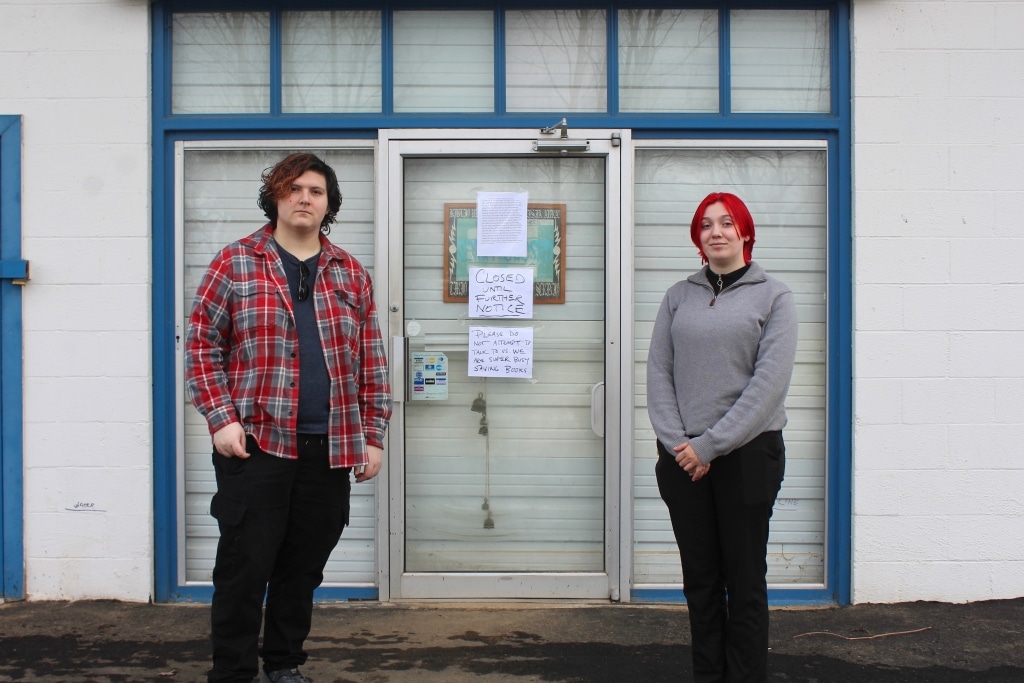
After news came out about Cal’s Books having to permanently close due to severe damage from last month’s flooding, Quetza Perez was devastated.
The 25-year-old moved to Redding about two years ago from Southern California. After earning her first paycheck at a new job back then, she went straight to Cal’s with her partner, a longtime Redding resident who loved the bookstore. She’s adored the store ever since.
“When Cal’s Books flooded, both my partner and I, we kind of broke down about it,” she said. “It was really heartbreaking for us.”
That’s when Perez had the idea to take over the bookstore and revitalize it so it wouldn’t have to close. She formed a group of five people, and after meeting with Cal’s owner, began putting a plan in action to save the bookstore.
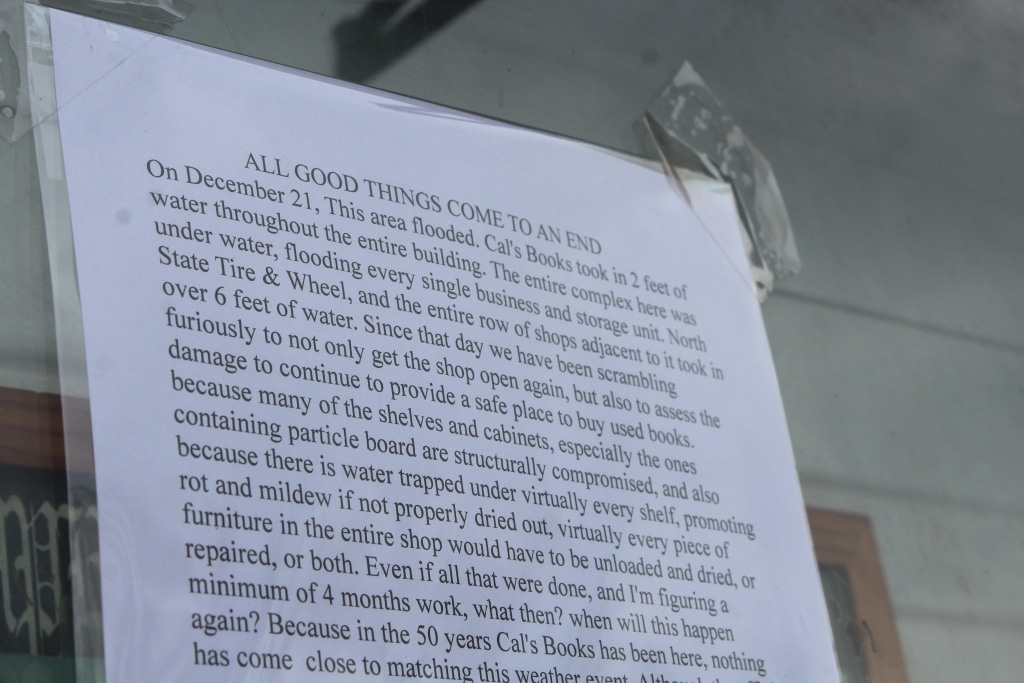
The flood damage from the Dec. 21, 2025 storm was so severe that Cal’s owner, Carl Anger, quickly made the decision to permanently shut down the beloved bookstore. An announcement was shared online within days, and the bookstore formally closed on Dec. 28. But after an outpouring of community support — and the efforts of a group of ambitious young locals stepping in to carry it forward — Cal’s Books is making a comeback.
“It’s a big tragedy, and I never thought this would happen,” Carl said, referencing the flooding that prompted his store’s closure. “But I have met with this group of five people, and every time I meet with them, I’m more and more impressed with their intelligence and enthusiasm. If anybody can pull this out and make this work and even turn it into a better bookstore than it’s ever been before, these are the five people that can do it.”
How the idea came about, and how the young team plans to achieve it
The flooding in Redding and other parts of California caused by a storm on Dec. 21 left a still-unknown number of businesses and residences severely damaged, including Cal’s Books, which opened in 1974. According to a Facebook post by Carl’s brother, Darol Anger, two feet of water flooded the 3,000 square foot-facility, causing significant damage to the store and its books. Carl estimated that between 25,000 and 40,000 books were damaged.
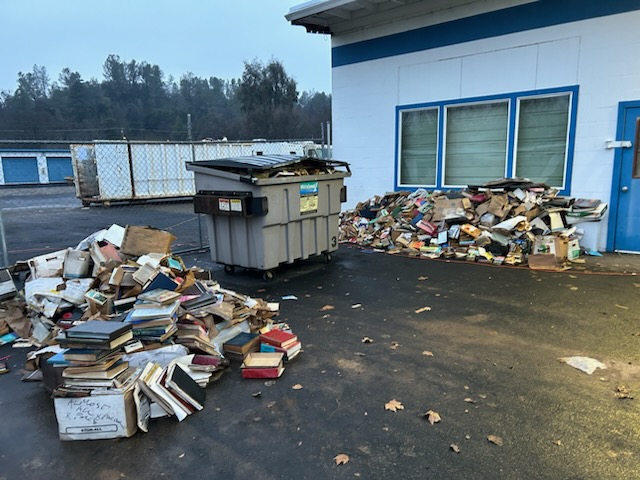
A GoFundMe for the bookstore was started a day after the winter storm by community member Ron Giesecke, but on the following day, Giesecke paused the fundraiser, saying the store’s owner had told him that Cal’s will be closing. The bookstore opened for what would’ve been its two final days — on Dec. 26 and 27 — to sell the salvageable books, and the store was busy throughout both days. A reporter from Shasta Scout who was on site that day noted 84 people in line during the early afternoon of Dec. 27.
In the days following the storm, posts made on Cal’s Books’ Facebook page about the store’s damage and news of its closing were shared hundreds of times, with community members commenting about their heavy disappointment and sharing memories of their visits to Cal’s through the years.
After the announcement that Cal’s Books was closing permanently, Perez vented to her brother about how distraught she was about the store’s closure. He asked her why not “just buy the place,” to which she responded that she doesn’t have the money to do so. But after sitting on the idea for longer and talking with her partner and friends, she was inspired to make this seemingly impossible dream a reality.
Perez formed a team of five, all 20-year-olds and each bound by their immense love for Cal’s and local, used book stores. They reached out to Carl, and Perez said his reaction was “enthusiastic” and “electric.” The group met with Carl one week after the winter storm hit with a plan to not only repair the store from the flood damage, but to also revitalize the business to make it more sustainable in the years to come.
The group has named itself “Cal’s Books Cooperative.” It’s operating under a unique organizational structure called a worker self-directed nonprofit. Perez describes this structure as a fusion between a workplace democracy and a nonprofit organization, where each employee of the bookstore acts as an equal partner instead of having a supervisor that manages the staff. This way, there won’t be concerns about power dynamics and hierarchy, and employees will have a direct say about wages, hours and decisions about the bookstore, Perez said.
To pay for the store’s repairs and revitalization, the group has opened a GoFundMe in hopes of raising $50,000. Of those funds, $40,000 would be used to buy the assets of the business itself — the amount has already been agreed upon between the group and Carl — with the other $10,000 being used for facility repairs and incorporation and storage costs. To reach their goal the group is doing outreach on social media, researching grants they could apply for and looking for private donors. Almost $2,500 has been raised so far.
Cal’s Books Cooperative plans to leave the “spirit and the soul of Cal’s essentially untouched,” Perez said, since many people in the community love the bookstore for its timeless look and old bookstore feel. However, the organization plans to make several changes to the business so that it can be sustainably maintained in the years to come.
Perez said the group plans to look into other funding streams to support the business since it’s difficult for used book stores to compete with e-commerce. Sage Wagner, another member of Cal’s Books Cooperative, said Carl suggested that the group start selling books online so that sales can be extended to people outside of the Shasta region. Wagner also said they plan to host book fairs, book clubs and other community events at the store to help it become a third space — a place to hang out that’s separate from home and work — in the community.
Eventually, when the group is able to gather enough funds, Cal’s Books Cooperative hopes to move the storefront to a different location in Redding for multiple reasons. They want Cal’s, which is currently located at 5242 Westside Rd., to be closer to town to allow people to walk, bike and bus there. They also want a building with more room to accommodate wheelchair users and for it to be located in an area less prone to flooding.
Perez and Wagner said that Carl has agreed to stay on as a consultant to teach the team about the bookselling business and help with the transition of ownership. That process is actually similar to how Carl took over the business in the first place: After Carl and a partner bought Cal’s in 1994 from the original owner, Calvin Kearn, Kearn stayed on during the transition to help them learn how to operate the business.

While the group taking over Cal’s is very ambitious and enthusiastic about their plans, they also are trying to keep a realistic mindset about the challenges of running a small business, especially since they don’t have experience doing so. Perez said she understands that some people might question how a group of 20-year-olds could revive a used book store but emphasized that the team is committed to making Cal’s a place that can remain in Redding for another 50 years.
“It’s entirely fair for people to be skeptical, because with youth comes inexperience, and with inexperience comes mistakes,” she said. “But that’s part of the reason why we’re operating democratically. That’s part of the reason why we have Carl as part of the team helping us out. That’s part of the reason why we’re reaching out to people who are more experienced than us.”
She said Cal’s likely can’t reopen until the group’s funding goal is reached but hopes that can be achieved within the next couple of months. Aside from raising funds, the group’s other short-term focus is to clear the store of damaged and mildewy books and repair the inside of the facility, which is currently attached to a storage unit off South Market Street.

Overall, Perez said Cal’s impact on the community is too strong for it to be lost. Not only is it a place for people to buy affordable books, she said, but it’s also one where people can hang out with friends and meet new people.
“That’s what real community is,” she said. “It’s the interconnective web which unites and binds all of us under a shared sense of purpose: each other. Cal’s books … the impact it’s had on the community, in many respects, is a reflection of the community itself.”
Organizer Wagner said that he grew up in a low income family, and that Cal’s Books was one of the only places where he could afford to buy books for school and leisure. He said he wants to keep Cal’s open to give more people the ability to afford books.
“When [my family] moved up here and we found Cal’s,” he said, “suddenly little me had this whole library at home, and it was all because of Cal’s.
“Reading knowledge is our biggest asset we can have as human beings, and Cal’s just speaks for that,” he continued. “It’s an open well of knowledge and love and compassion and history throughout all the times, and anything you would ever need to know in your life.”
Do you have a correction to share? Email us: editor@shastascout.org.
Heart care expands to South Santa Clara County
English learners in the Valley had a big year. Here’s what to expect for 2026

It’s been a long year for English learners in the central San Joaquin Valley.
From shuffling leadership in multiple local districts, rising test scores in the classroom and looming federal policy shifts, 2025 marked a year full of change for multilingual learners.
But the year started on shaky ground.
In January, the Trump Administration rescinded a law that prohibited federal immigration officers and agents from entering schools, hospitals and places of worship.
Local educational leaders and immigrant rights advocates united together against the order, with the goal of sharing resources and providing a sense of security for impacted families. In light of the new policy, various districts across the Valley reaffirmed their campuses would continue to be safe zones for all students regardless of immigration status.
Throughout the year, Valley schools worked with local organizations to host Know Your Rights workshops and provide resources for families who could be impacted by immigration enforcement.
Districts in the Fresno area did not report any incidents of immigration agents on campuses. The fear of immigration raids, however, caused nearly a quarter of students in five districts (Bakersfield City School District, Southern Kern Unified, Tehachapi Unified, Kerman Unified and Fresno Unified) to stay home instead of going to school, according to a study from Stanford University.
Some students in the Valley also reconsidered their college plans because of the policy change.
Despite the unpredictability of federal policy changes, English learners in the Valley made notable progress in 2025 that experts say will continue into the new year.
Success in the classroom
Scores for English learners in Fresno are rising, catching up with pre-pandemic rates. Central Unified saw growth in English language proficiency using experimental methods, such as English learner bootcamps. District officials are expecting to see more gains after state tests in the coming spring.
“I’m really proud of our leadership at the site levels, really embracing this work at their schools, and the passion that they have for our students,” said Cindy Escandon, director of curriculum and instruction at Central Unified.
Fresno Unified also saw leaps in scores, focusing on literacy and test preparation for students across the board. Results are promising, school leaders told news website Fresnoland. The district is aiming to try out new practices to continue boosting scores.
Another major success for English learners was the expansion of dual language immersion programs.
A recent study found that families of English learners are overwhelmingly supportive of creating more dual language immersion programs, noting the benefits of multilingual instruction in regular schoolwork, future career opportunities and cultural preservation. One common barrier, however, is the lack of access to schools that offer language immersion.
Merced City School District welcomed its first dual language cohort in the fall and will be adding grade offerings in the coming years. Bullard High School in Fresno Unified will launch its dual language program in 2026.
Uncertainty at the federal level
Education leaders across the country are still bracing for federal changes, including major funding cuts, promised earlier this year by the Trump administration. At a recent webinar examining federal policy, leaders from various education institutions said they remain on edge for what’s to come.
“Spoiler alert, nothing has changed,” said Megan Hopkins, UC San Diego department chair of educational studies, at the webinar. “But we have seen a lot of shifts in the federal landscape.”
In May, President Donald Trump announced the closure of the Department of Education. The executive order was unexpected and sent waves of uncertainty about the fate of critical funding streams to support English learners and migrant students.
Regardless of the order, experts say all legal obligations for English learners and students remain in effect under the Civil Rights Act and the Equal Educational Opportunity Act – which require state and local educational agencies to overcome language barriers and provide quality education to English learners in core instruction.
But what has changed, Hopkins said, is how districts are incentivized to continue equity for English learners and other vulnerable student groups.
Funding specifically for this student population is distributed to districts each summer. But this year, $5 billion in Congress-approved funds were frozen in July because of a federal review of how those dollars were going to be used. Grants were eventually released weeks later.
Montserrat Garibay of the National Association of Bilingual Education, along with dozens of other educational advocates, at the time was outraged by the sudden freeze and release of funding – stating that it only harms vulnerable students.
“Losing the funding…it’s going to have detrimental consequences, especially in those states that are not supporting English learners,” Garibay said.
Districts in the Valley have not reported missing federal funds, but are anticipating some cuts in revenue in the new year. Administrators are preparing to utilize local control funding to fill in any gaps.
The post English learners in the Valley had a big year. Here’s what to expect for 2026 appeared first on Fresnoland.