The USDA canceled $300M in farm grants, citing fraud. Did it make up the evidence?

Leah Atwood was rattled. It was the tail end of March, and for days she and her colleagues at Agroecology Commons had been fielding dozens of emails alerting them to grant terminations targeting a $300 million U.S. Department of Agriculture program. One after another, within a single week, 49 of the 50 grantees received notices from the USDA informing them that their grants were cancelled. 

By the end of the month, Agroecology Commons still hadn’t gotten a notice from the USDA. While their peers were figuring out how to pick up the pieces, it seemed as though their $2.5 million grant, structured largely to help farmers of color acquire and sustain land, remained untouched. All they could do was wait. Resignation settled in — after all, they’d been in this position before.

Shortly after President Donald Trump returned to office last January, his administration launched a sweeping campaign to eliminate initiatives it has deemed wasteful or misaligned with its political agenda. At the USDA, that has meant slashing billions in grants and gutting a mix of newer and longstanding federal programs that Agriculture Secretary Brooke Rollins has repeatedly framed as the administration’s attempt to “stop wasteful spending.”

During the administration’s first year, Agroecology Commons lost multiple grants amidst the USDA’s funding purge. In response, the nonprofit filed a joint lawsuit against the agency, claiming that the grants were terminated unlawfully. In August, a judge granted the plaintiffs a preliminary injunction that restored their access to some of the money until the court makes its final determination based on the merits of the case. 

All 49 other recipients of the Increasing Land, Capital, and Market Access grants received termination emails from the USDA during that week in March. In their written cancellations, which gave grantees two business days’ notice, Steven Peterson, the associate administrator of the USDA’s Farm Service Agency, explained to the grantees that their programming doesn’t align with the agency’s priorities and that its funding structure was not in keeping with the intent of Congress. He used the same language about cutting waste and discontinuing DEI efforts that had become routine for the administration. But whereas the administration tended to be vague about its claims of waste and fraud, Peterson’s letter was surprisingly specific. 

“Instances of excessive or frivolous expenditures,” he wrote, “such as purchasing gazebos, massages, a camper/RV, and oversized office supply budgets (in one case, over $130,000) — instead of land are an affront to taxpayers.” 

Through it all, Agroecology Commons still hadn’t heard a thing. 

Questions swirled throughout the grantee network, but no one could explain why Agroecology Commons’ project alone was spared. Atwood’s team presumed their grant wasn’t terminated because of the ongoing litigation. Now, they continue to wait to see whether their funding will abruptly disappear, too. 

“We are trying to accomplish as much as we can in the time that we have, because we don’t know when it’s going to be canceled,” said Atwood. “It’s a strange reality.” 
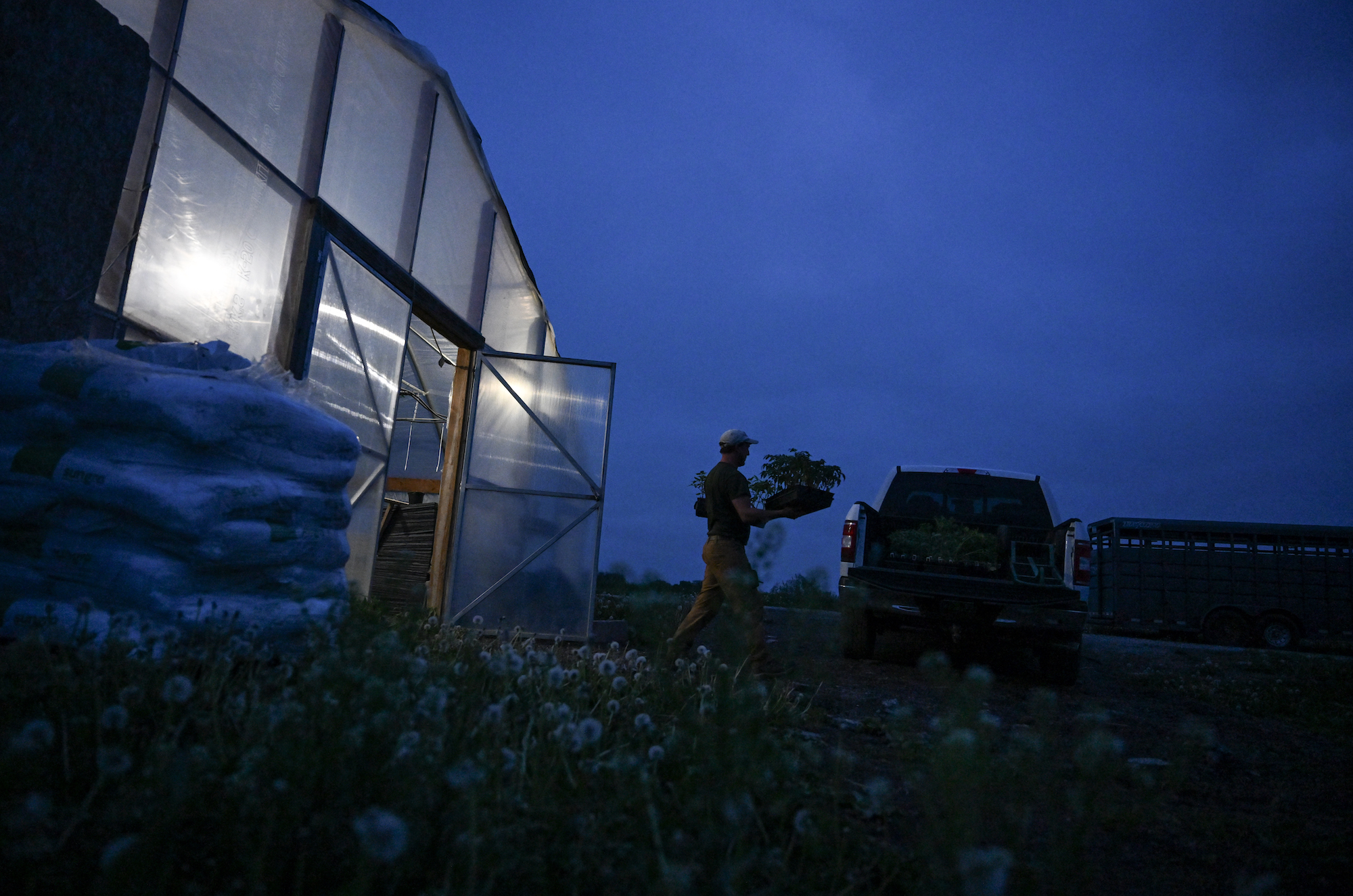
Neither Agroecology Commons nor any of the other grant recipients that Grist spoke to seems to know who may have made those expenditures. 

Kavita Koppa helps run RAFI, a farming organization based in North Carolina that was one of the 49 grants that was cancelled; they’d been awarded $8.5 million to help agricultural producers in North Carolina, Florida, Puerto Rico, and the U.S. Virgin Islands. 

Koppa says RAFI was just about halfway through its five-year contract with USDA and had spent roughly $1.1 million when the termination notice came. From the beginning, almost $2.3 million of their total award had been set aside for grants to support farmer land acquisition and market access, with around $400,000 of that set aside for RAFI to acquire land parcels on behalf of farmers. Another $1.9 million was budgeted for project management costs, which included the fees associated with verifying financial compliance in federal audits, attorneys for farmland acquisition, and translation fees; and then $350k for a bucket of miscellaneous project activities, such as paying guest speakers at workshops, contracting report writers, and mass distributing hard-copies of farmer resources. The last $3.9 million was budgeted for technical assistance, a figure that encompassed the full budgets of the five subawardees that RAFI was working with on the project. 

“Under the guise of increasing land access for producers, the ILA program included no minimum requirement for direct producer support,” a USDA spokesperson told Civil Eats in March. “Instead, the program permitted the abuse of federal funds, including expenditures on the purchasing of a barbeque smoker, construction of a gazebo, massages, and for one awardee, a $20,000 budget for ink pens alone. To no surprise, a peek behind the curtain of this Biden-era program revealed the egregious misuse of taxpayer dollars to the tune of nearly $300 million dollars.” 

Koppa says she has never seen the budget items that the USDA cited. “The details were shocking,” she said. “We didn’t do those things. Why are we being treated as if we did something unethical or wasteful?”

Breanna Horsey, executive director of Sustainable Iowa Land Trust, who led another land access project working to expand Iowa’s fruit and vegetable farmers ability to secure permanent and affordable land access, is also adamant that her $1.8 million grant had no carve-outs for the expenditures detailed in their termination notice. Viva Farms’ Anna Chotzen, project manager of another ILCMA project that was awarded a $2.5 million grant to help beginning and historically underserved farmers in two Washington counties access farmland, said the same. Her team has no idea where those budget items came from. All she knows is that it wasn’t them.

Gloria Montaño Greene, former Deputy Undersecretary of the USDA’s Farm Production and Conservation in the Biden administration who helped oversee the creation of the ILCMA program, questions the validity of the excessive spending claims. 

“If that dollar amount for $20,000 in pens was put in there, did they show proof of that?” said Montaño Greene. “Show the proof, right?”
Throughout April, at least 45 of the 49 terminated grantees — including two subgrantees — filed appeals against the termination to the National Appeals Division, an independent office of the USDA, Grist has learned. According to Amanda Koehler, a consultant on the land access program, all but two were informed that their award terminations are not appealable because the decision to terminate “was a matter of general applicability and not based on the individual application of specific program criteria.” (The outstanding two, says Koehler, have not heard back yet.) 

That finding by NAD should put the USDA’s justification for cancellation under closer scrutiny, she added, because it “underscores, in my opinion, that terminations were not based on anything the awardees did or didn’t do.” To her knowledge, none of the grantees — including Agroecology Commons — had budgets that included any of the claims USDA has made concerning wasteful or fraudulent spending. 

“This termination doesn’t seem like it was rooted in anything about our conduct with this grant,” said RAFI’s Koppa. “It seems to be part of some sort of larger motivation where we were not being treated fairly.”

JohnElla Holmes, who oversees the Kansas Black Farmers Association, which was awarded a land access grant of $8.4 million to help Black producers acquire farmland across Kansas, Texas, Missouri, Oklahoma, and Nebraska, says that roughly 62 percent of the organization’s grant was intended to go directly to farmers. She alleges that, following the administration change, the USDA took nearly a year to supply her team with the necessary approvals required by the grant’s built-in budgetary structure to award payments to farmers. Last November, Holmes says they finally heard from FSA staffers who requested changes to their paperwork. Over the next two months, she worked with them to submit all the revisions and additional documentation the agency asked for. Then, after another period of waiting on USDA, the grant was cancelled.

Other grantees and sources close to the program also say that the USDA obstructed the distributions of funding to farmers with its scarce and severely delayed communication, lack of institutional support, and, crucially, the absence of necessary budgetary approvals over the last year. 

The USDA declined to comment for this story. 

On Tuesday, 24 other ILCMA grantees joined the lawsuit that Agroecology Commons filed last year. The plaintiffs are seeking another preliminary injunction, with the aim of reversing the grant cancellations and restoring grantees’ access to the funds. 

While it still has its money, Agroecology Commons plans to move forward with the land access grant. Atwood’s team, though, is proceeding cautiously — holding off on making longer-term investments into hiring or programming, and scrambling to fundraise against the possibility of a sudden cutoff. 

“When you talk about wasteful spending — the years and years that went into getting this program to even exist, and then to just terminate it,” Atwood said incredulously. That, to her, “seems like the real waste.”

This story was originally published by Grist with the headline The USDA canceled $300M in farm grants, citing fraud. Did it make up the evidence? on Jun 1, 2026.
High gas prices stretch Hood River’s transit budget

Changes to the Columbia Area Transit (CAT) budget since the previous budget committee meeting include the loss of a grant to build bus stops in Cascade Locks, more money to […]

The post High gas prices stretch Hood River’s transit budget appeared first on Uplift Local.

Lummis family could cash in on Microsoft data center expansion through Cheyenne land sales

Lummis family could cash in on Microsoft data center expansion through Cheyenne land sales

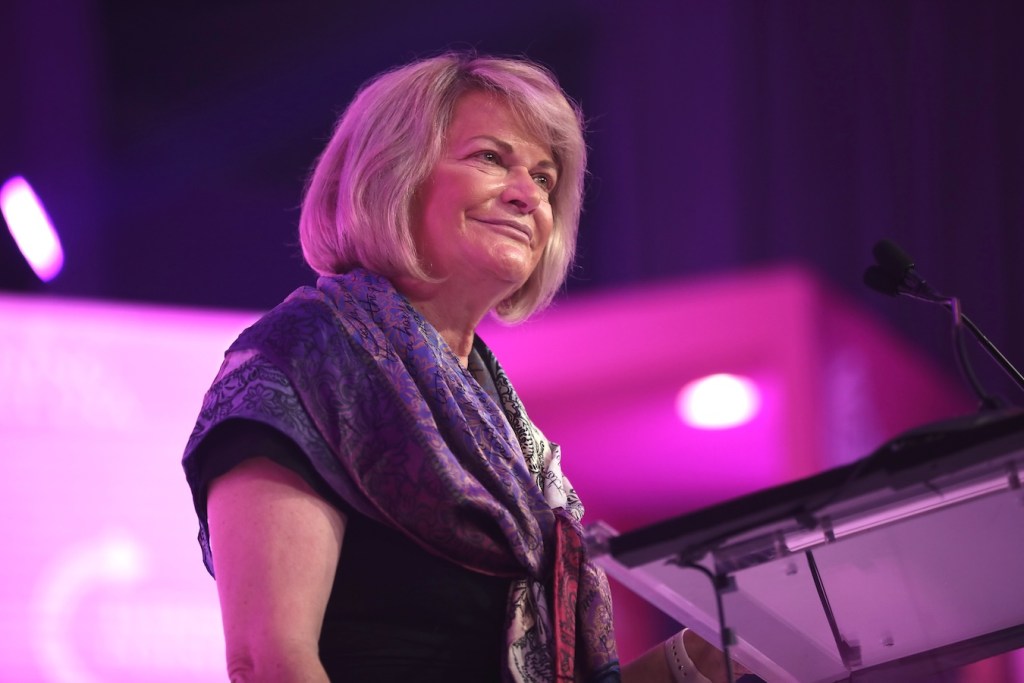
Thousands of acres southeast of Cheyenne owned by and associated with U.S. Sen. Cynthia Lummis lie in the path of Microsoft’s planned data center expansion, Laramie County property records show.

One of Microsoft’s existing data centers — a climate-controlled warehouse of computers, data storage and networks — sits southeast of Cheyenne on land the company purchased from the Lummis family in 2021. In April, the Seattle-area tech giant announced plans to buy 200 acres adjacent to its data center in the Bison Business Park and said it will purchase another 3,000 acres nearby.

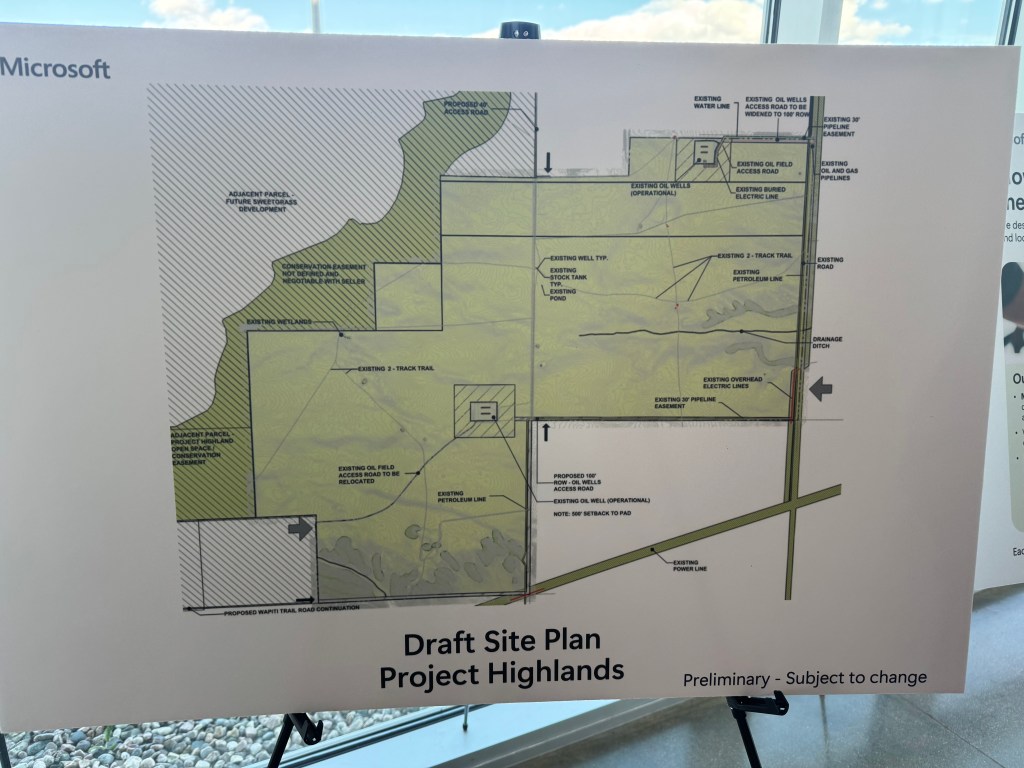
Lummis, members of her family and companies associated with them own about 6,000 contiguous acres that almost surround the Microsoft center. Microsoft displayed a map Thursday at a Cheyenne community information session showing its 3,200-acre expansion extending into that Lummis family property.

Microsoft’s pending purchases land at the doorstep of one of tech’s biggest supporters in Congress. Lummis, known as the crypto queen of the Senate, has sponsored at least five significant cryptocurrency, artificial intelligence, blockchain, stablecoin and tech bills. Political action committees associated with her received $1.34 million, including from major cryptocurrency and tech interests, since Dec. 31, 2021 and July 2025, WyoFile and reporting partner the Sunlight Research Center have found.

Microsoft and members of Lummis family — the senator, her brother Doran and daughter Annaliese Wiederspahn — would not comment or agree to interviews about the development or their relationship to the project. The senator’s family has owned much of the expansion property for decades — some dating back to 1944 and before — and has a long history of ranching, real estate transactions and business operations in and around Cheyenne.

Wiederspahn is a board member of Cheyenne LEADS, a corporation dedicated to area economic development, including data centers.

Microsoft’s land-buy announcement comes as Cheyenne is quickly becoming a data-center hub — the city is weighing proposals for 40 to 70 new data centers, according to some estimates — amid questions among area residents about water and energy usage, plus sweeping changes to the landscape. Those concerns prompted the Cheyenne City Council to consider a moratorium on new data centers, but local officials ultimately voted against such a measure.

Lummis has heard those queries, she wrote in a September op-ed.

“During my travels across Wyoming, countless folks have approached me about AI and the data centers coming to our state,” she wrote. “I tell them the truth: If we don’t power America’s AI with Wyoming energy, China will build their AI dominance on their coal instead.”

Abundant energy and land

Data centers are large, climate-controlled warehouses that contain computers, data storage and networks — used by Microsoft to establish and maintain the Microsoft Cloud, where data is kept. “[Y]ou can store your photos, play Xbox games, video call with your family, and work on documents from anywhere and on any device, without needing a powerful computer,” the company explains.

While some data centers focus on storage, others focus on providing the computing power to operate artificial intelligence. Those servers can also be used for bitcoin mining. 

Wyoming’s coal and potential nuclear power generation are a plus for energy-hungry data centers and AI, Lummis has stated. Wyoming’s cool climate and lack of corporate business tax also fuel data center development near Cheyenne. The state’s open land is another plus for data center development — and Lummis and her family own a lot of it.

“Folks have approached me about AI and the data centers coming to our state. I tell them the truth.”

Cynthia Lummis

Microsoft established its existing data center southeast of Cheyenne on 249 acres of Lummis-family land in the Bison Business Park in 2021, a subdivision created through a fast-track planning process. Arp and Hammond Hardware Co., whose president is Lummis’ brother Doran Lummis, carved out an adjacent 200-acre parcel in April 2025, a year before the tech company announced its intent to expand there.

Beyond that, Lummis’ family owns almost all the surrounding land — about 6,000 acres of it — including property mapped for purchase by Microsoft and displayed at Thursday’s open house in Cheyenne. The sprawling holdings, most of which are unirrigated rangeland, are owned by Lummis family companies Arp and Hammond, Lummis Livestock Co., Old Horse Pasture Inc. and Sweetgrass Land Co., Laramie County property records show.

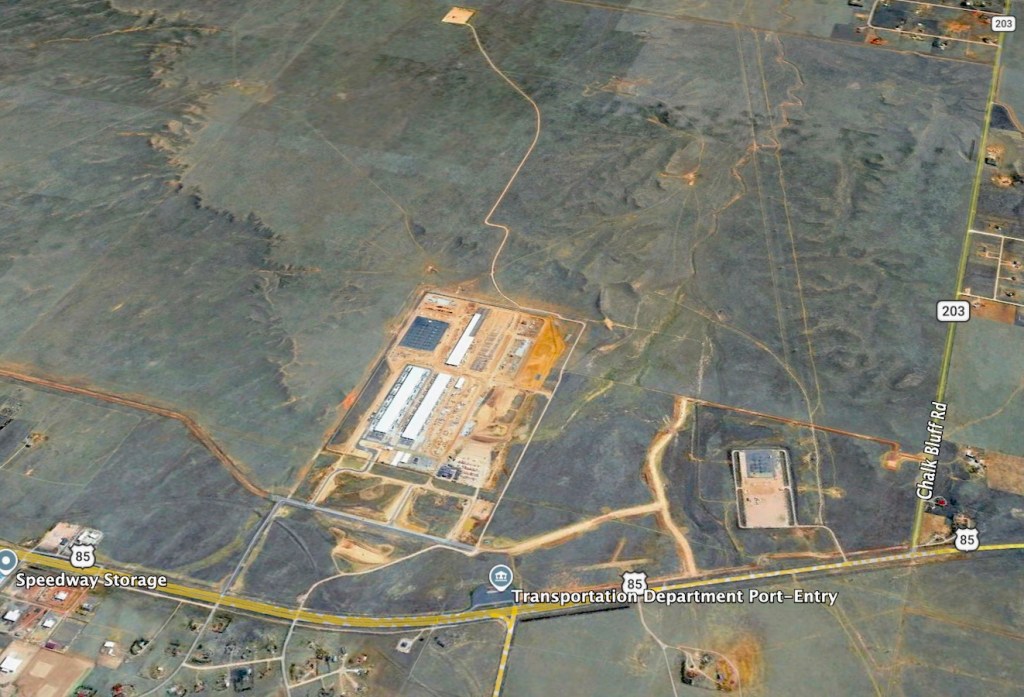
A Google Earth view of Microsoft’s data center in the Bison Business Park southeast of Cheyenne. The view from the southwest shows thousands of acres beyond the park that’s owned by companies associated with Lummis and her family. (screengrab/Google Earth)

The expansion, Microsoft said in an April statement, will be “strengthening Southeast Wyoming’s role as a growing hub for technology-driven economic activity, innovation and job creation.”

Crypto Queen

Sen. Cynthia Lummis posted an image of herself with laser eyes, a symbol of focus and new technology. (screengrab/X)

Lummis, elected to the Wyoming House of Representatives in 1979 at 24, was the youngest woman to serve in the Legislature. Voters then elected her to the state Senate, Wyoming treasurer and, in 2008, as Wyoming’s lone U.S. representative. She won election to the Senate in 2020, defeating Democrat Merav Ben-David with 73% of the vote.

Lummis announced in December she won’t seek reelection this year.

While in the Senate, Lummis has advocated for and sponsored legislation boosting cryptocurrencies — virtual money like bitcoin and stablecoins — and supported technology innovators, artificial intelligence and blockchain.

In 2021, “I founded the Financial Innovation Caucus to educate my fellow senators about the vast potential of emerging technologies to promote financial inclusion and build new wealth for all,” she said in a statement that year.

In December 2022, she placed her shares of Microsoft (valued between $15,000-$50,000) and bitcoin (valued between $50,000-$100,000) in a blind trust “to avoid any conflict of interest or appearance of any such conflict.”

Details about the land sale, including the price, have not been publicly disclosed.

The post Lummis family could cash in on Microsoft data center expansion through Cheyenne land sales appeared first on WyoFile .

Maine sewage sludge crisis is ‘still under a clock’ even if landfill expands

Maine sewage sludge crisis is ‘still under a clock’ even if landfill expands
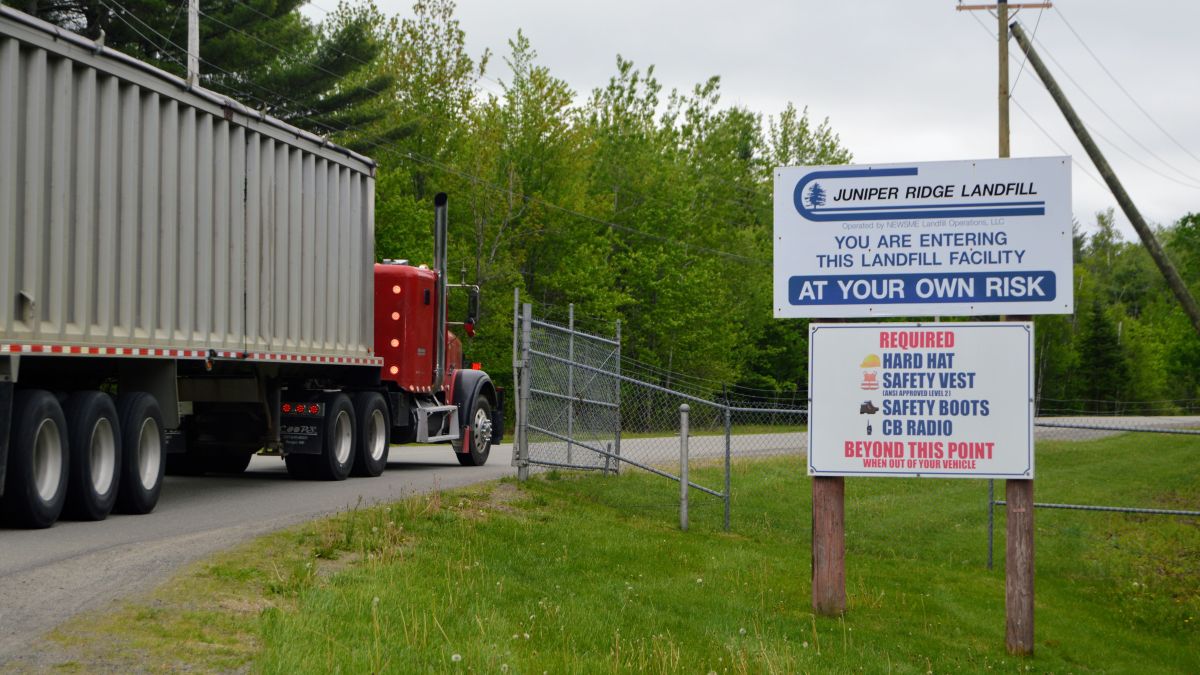
A truck passes through the entrance in Alton to Juniper Ridge Landfill on May 28, 2026. Photo by Erin Rhoda.

The proposed expansion of the Juniper Ridge landfill in Old Town and Alton comes as Maine grapples with where to put the PFAS-contaminated sludge that piles up each day at municipal wastewater treatment plants. 

The landfill’s application for an expansion license is being processed by the Maine Department of Environmental Protection, which recently determined for a second time that the expansion would have a public benefit. That determination remains under an ongoing appeal brought by the Penobscot Nation and the Conservation Law Foundation who argue that air and water pollution from the landfill is an environmental injustice to the surrounding communities and to the Penobscot River, which is central to the Penobscot Nation’s way of life.

Juniper Ridge currently handles about half of the state’s total landfilled waste and about 90 percent of the state’s sewage sludge, the biosolids strained out of wastewater. Three years ago, when the facility suddenly stopped accepting sludge for several months — saying the landfill’s structural integrity was at risk — Maine got a preview of a potential crisis.

The landfill is once again accepting sewage sludge but is set to reach capacity for all types of waste in 2028. If approved, the proposed 61-acre expansion would extend the facility’s capacity for approximately another decade.

The expanded landfill would be able to accept sludge at a similar rate as it does now until about 2040, according to Maine Department of Administrative and Financial Services spokesperson Sharon Huntley. The state owns Juniper Ridge, but it is operated day to day by NEWSME, a subsidiary of the publicly traded company Casella Waste Systems.

“From a biosolids perspective, the expansion would help ensure there is a long-term, secure, in‑state option available for the responsible management of material that can no longer be beneficially reused based on the banning of land application by the state legislature,” Casella spokesperson Jeff Weld wrote in an emailed statement.

Forever chemicals on farmland

Sewage sludge had long been spread on farmland as fertilizer. But testing over the past decade has revealed the practice was contaminating land with PFAS (per- and polyfluoroalkyl substances), often called forever chemicals. Some of these chemicals have been linked to a variety of health harms including increased risk of some cancers.

PFAS find their way into wastewater in large part because they are ubiquitous in everyday products such as food packaging, nonstick cookware, textiles, toiletries and outdoor gear. PFAS are also often concentrated near airports and military bases that have routinely used firefighting foam containing the chemicals.

In 2022, Maine became the first state to ban the spreading of sludge on land. So wastewater treatment plant operators had to send their sewage sludge to landfills, which in Maine by and large has meant Juniper Ridge. The practice has had “a significant impact in recent years” on the landfill’s capacity, according to the latest Maine Materials Management Plan for Solid Waste and Recycling, published in 2024.

A man fishing in the Penobscot River.
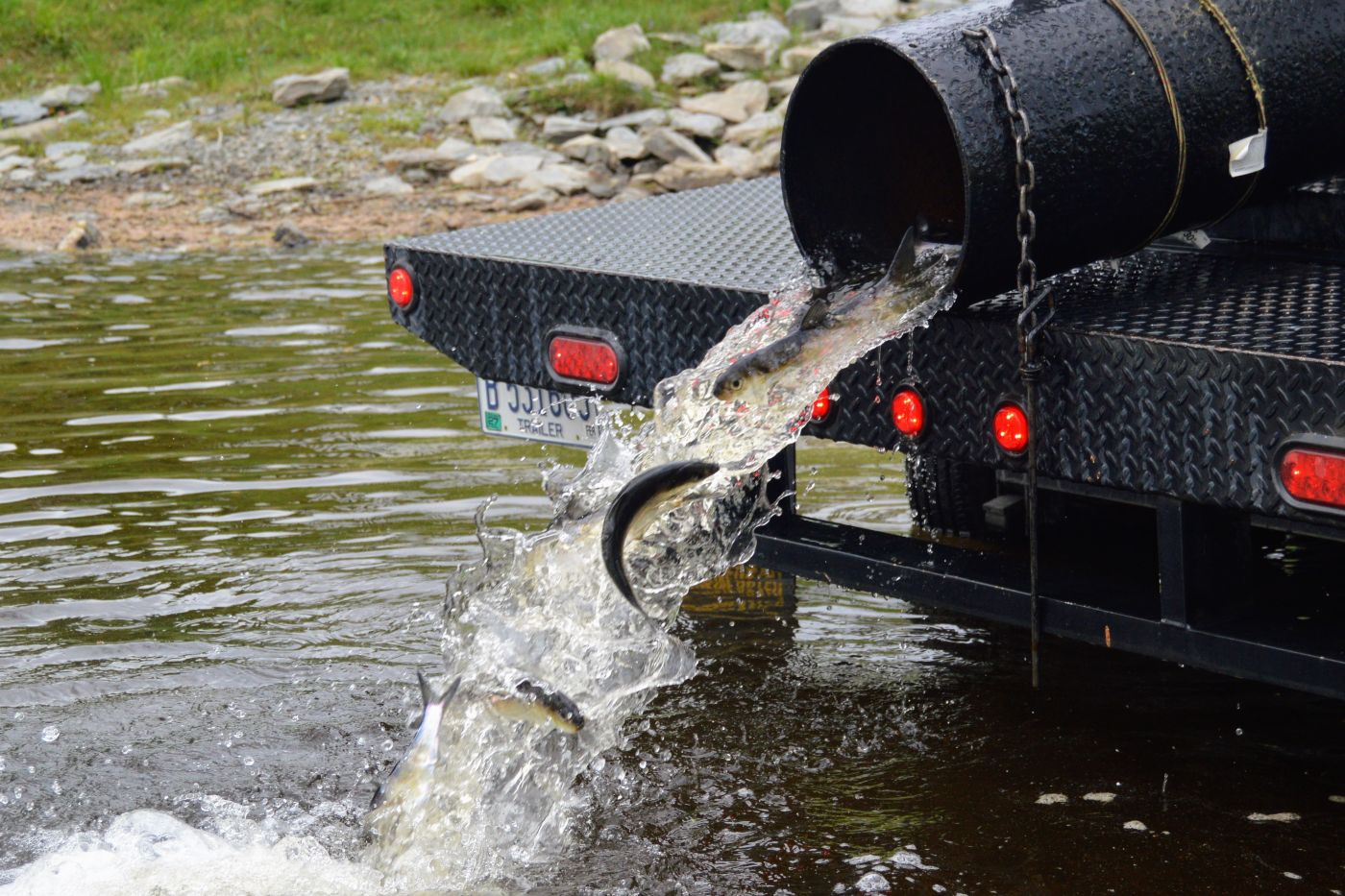
Chip Fitch was catching and releasing an assortment of fish back into the Penobscot River in Old Town on May 28, 2026. Photo by Erin Rhoda.

According to Casella, the landfill operator needs to balance out wet sludge with more solid bulking material such as construction debris, furniture and appliances. Casella had been sourcing much of this type of waste from other states, but, in 2022, the Maine Legislature also banned imports of waste from out of state. Ultimately, because of the sewage sludge crisis, Maine allowed Juniper Ridge to continue importing waste from out of state to use as bulking material until 2027.

Expanding the landfill would help with the immediate problem of where to put sludge, said Rob Pontau, general manager of the Brunswick Sewer District. But it’s not a long-term fix. 

“We’re still under a clock,” he said.

From sewage sludge to landfill leachate

Once sewage sludge arrives at Juniper Ridge, the PFAS pollution isn’t over. When rain and snow enter landfills, that water mixes with whatever is in the landfill to create a liquid called leachate.

“The leachate is poisoned with a wide array of contaminants, no doubt, but certainly with forever chemicals, with PFAS,” said Nora Bosworth, a staff attorney at the Conservation Law Foundation.

Juniper Ridge sends its leachate to the wastewater treatment plant at the closed Nine Dragons paper mill. That facility does not treat the wastewater for PFAS before discharging it into the Penobscot River, which is at the heart of the Penobscot Nation.

“There is this constant ongoing cycle of toxic liquid being pumped from Juniper Ridge landfill ultimately into the Penobscot River, which then poisons the ecosystem there,” Bosworth said. 

The Nine Papers mill seen from across a body of water.
A wastewater treatment plant at the Nine Dragons paper mill in Old Town is authorized to take in leachate from Juniper Ridge Landfill and discharge it into the Penobscot River. Photo by Erin Rhoda.

“We just feel like the landfill has been disproportionately affecting the tribe here since it was put in,” said Chuck Loring, director of the Penobscot Nation’s Department of Natural Resources. 

“There’s a population of people here that rely on this area for subsistence. I think that’s another important consideration,” he said, “that needs to be weighed more heavily.”  

During its public benefit reviews, the Maine Department of Environmental Protection found that the proposed expansion would only ensure environmental justice for the surrounding community, including the Penobscot Nation, if Casella installs a PFAS treatment system for the landfill’s leachate.

The petition by the Penobscot Nation and the Conservation Law Foundation criticized this PFAS treatment condition as insufficient, saying the department’s requirements for Casella are “far too broad” and would not provide the public with enough transparency about the effectiveness of the treatment technology the company chooses to use.

Loring wants more details about what kind of treatment Casella is proposing to use, as well as more time to study and understand what effects PFAS from the leachate are having on water quality and wildlife in the river.

“Landfills need leachate treatment systems for PFAS. There’s no question,” said Bosworth. “It’s just that at this point it is disingenuous, it is false, to pretend that a PFAS treatment system is going to erase the harm that Juniper Ridge landfill will cause the Penobscot River. It will at best dampen the harm.”

Even if the Juniper Ridge landfill does expand, it may not be the primary destination for Maine’s sewage sludge for much longer if wastewater treatment plants begin rerouting their sludge to a forthcoming biosolids drying facility.

The state’s first drying facility is set to open this year at the Crossroads landfill in Norridgewock, owned by Waste Management. When fully operational, it should have capacity to receive and dewater 80 percent of the sewage sludge from Maine’s municipal wastewater treatment plants. Once dry, the biosolids would take up far less space and would remain at the Crossroads landfill long-term. 

But many wastewater plants have contracts to dispose of their sludge with Casella through the end of 2026 or 2027, according to Pontau, which could delay widespread use of the drying facility.

Pontau is also the current president of the Maine Water Environment Association, an industry group for wastewater treatment systems. The group recently published a report on the need for proactive, longer-term solutions for sewage sludge.

While the new drying facility at Crossroads “adds necessary processing capacity,” the report said, “relying on a single commercial entity for statewide management creates a monopoly-like dynamic with questionable redundancy. It leaves utilities vulnerable to price dictation and operational bottlenecks.”

Multiple regional facilities across New England are needed, Pontau said, adding that “sludge doesn’t care about a state line or a county line or a town line.”

Ultimately, he said PFAS needs to be dealt with at the source. 

“If we’re going to set limits on how we deal with it on the back end, then we’ve got to stop making it in the first place,” Pontau said.

Bosworth agreed. “The most important change we can make as a society is: Keep banning PFAS upstream,” she said. “As long as we’re trying to tackle it downstream in our sewage, in our waste, we’re going to be fighting a losing battle.” 

More than 11% of local voters have cast ballot as primary heads into home stretch

More than 11% of local voters have cast ballot as primary heads into home stretch

Lea este artículo en español aquí.

Less than a week before election day, 11.6% or more than 4,500 of San Benito County’s registered voters (about 40,000) had cast their ballots as of May 26, Deputy Clerk-Recorder-Elections Ana De Castro Maquiz told BenitoLink. The figure, De Castro Maquiz said, is typical for a primary election.

More than 39,000 ballots were issued for the June 2 primary election.

Voters can cast ballots in person at two voting centers: the Elections Department at 1601 Lana Way in Hollister and the San Juan Bautista Community Center. Both locations are open from 9 a.m. to 5 p.m. through June 1, and from 7 a.m. to 8 p.m. on Election Day.

Starting May 30, three additional voting centers will join them: the Community Foundation for San Benito County, Hollister High School and Gavilan College. All five locations will have the same hours.

Elections officials have also installed eight drop boxes throughout the county, available until 8 p.m. on June 2, all with 24-hour video surveillance. The locations are:

  • The San Benito County Free Library
  • Community Food Bank on San Felipe Rd.
  • Ridgemark Office Parking lot
  • Fire Station #2 off Valley View Rd.
  • Windmill Shopping Center in San Juan Bautista
  • Aromas Fire Station
  • Elections Department
  • True Value Hardware

We need your help. Support local, nonprofit news! BenitoLink is a nonprofit news website that reports on San Benito County. Our team is committed to this community and providing essential, accurate information to our fellow residents. Producing local news is expensive, and community support keeps the news flowing. Please consider supporting BenitoLink, San Benito County’s public service nonprofit news

The post More than 11% of local voters have cast ballot as primary heads into home stretch appeared first on BenitoLink.

A Texas town hopes a new data center will pay to fix its cracked streets and leaking pipes

Lacy Lakeview, a Waco suburb, said it is considering a data center project in efforts to boost their spending power to repair aging roads.

Federal Broadband Policy Is Increasingly Being Recast Around Satellite

Federal Broadband Policy Is Increasingly Being Recast Around Satellite

Another federal broadband subsidy may soon be restructured to account for the growing role of SpaceX’s Starlink. 

The low-Earth orbit satellite internet provider, having already gained legitimacy within broadband deployment programs administered by the National Telecommunications and Information Administration, has also found a receptive audience at the Federal Communications Commission (FCC).

The FCC recently tweaked a proposal to modernize its High-Cost programs to place greater emphasis on considering the emergence of satellite technologies. 

The High-Cost program, one of four initiatives within the federal Universal Service Fund overseen by the FCC, subsidizes telecommunications and broadband deployment in rural and other expensive-to-serve areas. At roughly $4.5 billion annually, it is the fund’s largest program.

In a proposed rulemaking adopted unanimously on May 20 the FCC asked whether LEO satellite broadband should be treated as a sufficient substitute for terrestrial infrastructure in the most difficult-to-serve areas, and whether continued support for land-based deployments in those locations constitutes unnecessary “overbuilding.”

In its proposal, the FCC claimed “nearly all” remaining U.S. locations without a fiber, cable or fixed wireless broadband connection are now considered to be served by “a LEO satellite provider.” 

Many of those locations are in sparsely populated rural areas, where the high cost of deploying terrestrial broadband infrastructure has historically left residents with few connectivity options.

In its filing, the FCC reinforced its policy that “providing support in areas of the country where another voice and broadband provider is offering high-quality service without government assistance is an inefficient use of limited universal service funds.”

The FCC’s proposed rulemaking landed just days after SpaceX satellite policy principal Joseph Bissonnette met with all FCC commissioners to argue the FCC’s High-Cost programs should be “phased out” with “funding redirected to more productive ends.”

The FCC’s proposed rulemaking raises a series of unresolved questions about how regulators should evaluate satellite broadband performance, particularly around affordability, latency, reliability, and long-term capacity compared to terrestrial networks.

While FCC officials across the political spectrum stressed that the inquiry is meant to “build a record” on the technical merits of satellite service, the proposal closely follows a restructuring of the $42.5 billion Broadband Equity, Access, and Deployment (BEAD) program that expanded consideration of satellite broadband.

Changes implemented by the Trump administration resulted in SpaceX winning the most locations of any ISP, taking more than 464,000 locations under the BEAD program, alongside $636 million in funding.

The previous administration had not treated satellite systems as meeting the technical requirements envisioned for broadband infrastructure under the BEAD program established in the Infrastructure Investment and Jobs Act.

The bipartisan infrastructure law called for broadband networks built with BEAD funding to be capable of providing broadband service with: (1) at least 100/20 Megabit per second (Mbps) speed; (2) a low network latency enabling real-time, interactive applications; and (3) a low network outage rate of less than 48 hours over any 365-day period.

According to recent speed test data from Ookla, only 44.7 percent of Starlink customers in the US reached the 100/20 Mbps mark in the fourth quarter of 2025. That was a dramatic increase from the 17.4 percent who met it in the first quarter of 2025. 

Starlink’s own disclosures indicate significant variability in user performance.

The company’s website says users typically experience download speeds between 45 and 280 Mbps, with a majority of users experiencing speeds over 100 Mbps. Upload speeds, however, range between 10 and 30 Mbps. 

Latency ranges between 25 and 60 milliseconds (ms) in most land-based conditions, but can exceed 100 ms in remote regions such as oceans, islands, and Alaska. 

By contrast, fiber networks commonly deliver symmetrical upload and download speeds exceeding 1 gigabit per second, with latency often below 10 milliseconds.

Higher latency can affect real-time applications such as video calls and interactive services, and users also report occasional service interruptions during satellite handoffs and periods of congestion. The gap becomes more noticeable for bandwidth-intensive or real-time applications such as cloud backups, online gaming, livestreaming and large file transfers.

While SpaceX’s Starlink service has steadily increased user speeds and reduced latency over the past several years, the technology is still outperformed by terrestrial networks in every other broadband performance dimension.

One analysis last year from Penn State University’s X-Lab found that Starlink can support only 6.66 households per square mile before speeds drop below FCC broadband minimums. 

Even still, federal policy is increasingly opening additional pathways for satellite broadband within legacy subsidy programs. A bill passed in the House in March would expand consideration of satellite service in another federal broadband funding stream.

Introduced by Representative David Taylor, a Republican from Ohio, the Expanding Appalachia’s Broadband Access Act would require the Government Accountability Office to assess whether the Appalachian Regional Commission can incorporate satellite-based broadband into its infrastructure grant programs.

The Appalachian Regional Commission (ARC), a federal-state partnership covering 13 Appalachian states, has historically prioritized fiber-optic infrastructure with its broadband grants. 

ARC requires eligible providers to reliably deliver symmetrical 100/100 Mbps speeds with latency under 100 milliseconds. Providers must also offer affordable service with no data caps or throttling.

That ARC’s emphasis on affordability collides with emerging questions about satellite pricing.

SpaceX’s Starlink currently offers a “Residential Lite” plan at $80 per month and a standard residential plan at $120 per month, with advertised download speeds of up to 250–305 Mbps and upload speeds of 35–40 Mbps. After offering a limited promotion, the company recently raised prices across several plans by $5 to $10 per month.

The FCC has also begun to directly examine whether these pricing dynamics could become a policy concern if satellite broadband becomes the primary option in some rural areas. 

The commission has asked whether rates in those regions could rise significantly above those charged for comparable urban services, and how regulators might ensure “reasonably comparable” pricing if terrestrial competition declines.

Looking ahead, SpaceX is positioning Starlink for a major capacity expansion. 

The company expects to begin launching third-generation satellites later this year, which it says will increase download capacity by a factor of 10 and upload capacity by a factor of 24 compared with its current generation. 

The FCC also adopted changes in April to satellite spectrum sharing rules that are expected to increase usable capacity by allowing greater frequency reuse across overlapping satellite beams.

SpaceX has already deployed more than 3,000 satellites in 2025 alone, adding roughly 270 terabits per second of capacity to its constellation, according to company disclosures.

The company’s growing footprint in federal policy comes as it prepares for a highly anticipated initial public offering expected to begin trading on the Nasdaq on June 12. Proceeds are expected to raise between $50 billion and $75 billion, which would make it the largest IPO ever.

SpaceX’s 250-page prospectus filed with the Securities and Exchange Commission last Wednesday offered a first public look at its earnings and financials, revealing that more than a fifth of its revenue now comes from government contracts, underscoring the extent to which federal demand is already intertwined with the business of Starlink.


This article was produced in collaboration with Broadband Breakfast, a news and events community focused on broadband infrastructure, investment, and impact.

The post Federal Broadband Policy Is Increasingly Being Recast Around Satellite appeared first on The Daily Yonder.

Funding Boost for Upper Delaware River Conservation Efforts

State budget language included in the FY27 Aid to Localities Appropriation bill provides funding for two organizations focused on protecting the Upper Delaware River: Friends of the Upper Delaware River (FUDR) and the Upper Delaware Council (UDC).

The 73.4-mile Upper Delaware Scenic and Recreational River, which runs along the New York and Pennsylvania border, is a major natural and recreational resource and an economic driver for the region. According to the announcement, the two organizations submitted a joint request for $550,000 in operational funding to support continued conservation, restoration and management efforts.

The UDC was established in 1988 as part of a formal partnership between local, state and federal entities under the Upper Delaware Scenic and Recreational River Management Plan. FUDR has also previously received state grant funding. The new budget includes additional support intended to strengthen both groups’ ongoing environmental and stewardship work.

Assembly Member Paula Kay (District 100) said the funding reflects the importance of natural resources to the region.

“The water we drink, the air we breath, and the landscapes that truly take our breath away are what makes Sullivan County and Upstate New York so incredible. They drive our tourism, and improve our physical and mental health daily and its thanks to organizations like FUDR and UDC. I fought for these two organizations to get this funding, because I know the work that they do and how much of an asset they are to New York State and I am thrilled that my colleagues in the legislature and Governor Hochul agree with me.”

Upper Delaware Council Executive Director Laurie Ramie credited Kay’s advocacy for securing funding.

“Assembly Member Kay pledged to be our champion and catalyst for New York State to fulfill its fiscal obligation for the Upper Delaware Scenic and Recreational River’s management and maintenance, and she absolutely came through for us! Paula has referred to the Upper Delaware Council’s work as proof of the importance of community organization and collaboration to care for land, water, and people,” Ramie said. “This first-ever state operational funding will enable the UDC to enhance its value and impact in the river valley after struggling to survive on flat federal funding since 1988, with neither state providing their intended 20% shares despite signing on to the 1986 River Management Plan. Now it’s time to challenge the Commonwealth of Pennsylvania to follow New York State’s lead. We are grateful for Paula’s effective and committed advocacy, and excited for the future.”

Friends of the Upper Delaware River Executive Director Molly Oliver also praised the funding.

“We are deeply grateful to Assembly Member Kay for her leadership and commitment to the Upper Delaware River and the communities that depend on it. This funding represents a meaningful investment in clean water, healthy habitat for fish and wildlife, outdoor recreation, and the local economies that are so closely tied to the river. FUDR is proud to work alongside the Upper Delaware Council, our many other local partners, and New York State to ensure this nationally significant resource is protected, restored, and sustained for generations to come.”

Image Credit: iloveny.com

The post Funding Boost for Upper Delaware River Conservation Efforts appeared first on Radio Catskill.

Adirondack events this week highlight migrating birds returning to the region

Adirondack events this week highlight migrating birds returning to the region

North Country events throughout the region this week include the Great Adirondack Birding Celebration, outdoor adventures and community discussions.

Guided paddle for Great Adirondack Birding Celebration kick-off

9 a.m.-12 p.m. on May 28 in Saranac Lake

Join Adirondack Center for Loon Conservation staff for a guided paddle on Little Clear Pond (20-30 minute drive from Saranac Lake) to observe loons. This paddle will be one hour longer than the center’s regularly scheduled paddles as a special offer to those participating in the Great Adirondack Birding Celebration.

Registration is required and participants should plan to bring their own boats.

Registration and more information can be found at adkloon.org.

Rhubarb Festival at the Warrensburg Riverfront Farmers Market

3-6 p.m. on May 29 in Warrensburg

Rhubarb Festival vendors will be on hand at the Warrensburg Riverfront Farmers Market, offering locally-grown rhubarb stalks, bundles and plants for sale, rhubarb recipes and free sampler plates, live music, free crafts and more.

Great Adirondack Birding Celebration

May 29-31 at Paul Smiths VIC in Paul Smiths

Northern NY Audubon will host the Great Adirondack Birding Celebration, inviting birders and nature enthusiasts to experience peak spring migration in the Adirondacks.

The weekend features guided birding trips, workshops and a keynote presentation by acclaimed wildlife photographer and conservationist Melissa Groo. Participants will have the opportunity to seek out iconic boreal species such as Canada Jay and Bicknell’s Thrush.

For more information and to register, visit nnya.org/gabc.

Black Birders event
Black Birders Week features local events on May 30. Photo courtesy of ANCA.

Black Birder’s Week event

7 a.m. on May 30 in Lake Placid and Tupper Lake

Bird enthusiasts from across the state are invited to gather in the Adirondacks for a special celebration of birds and the diverse birding community that admire them. Two local events offer birding opportunities, workshops, presentations, family activities, and more. 

Morning activities will begin at 7 a.m. and conclude at 12:30 p.m. A special evening talk featuring ornithologist, naturalist and author J. Drew Lahham will take place at The Wild Center in Tupper Lake at 6 p.m.

More information, including registration, can be found at adirondack.org.

Frozen Feathers performance at the children’s museum

2:30 p.m. on May 30 at the North Country Children’s Museum in Potsdam

Kids’ Stage Productions at the North Country Children’s Museum presents Frozen Feathers (and Other Stories). The performance will take place on the stage of Addie’s Opera House on the museum’s second floor.

This Senior Storytelling production brings North Country stories shared by older adults in the community to life through live theater performed by local actors. Filled with warmth, humor and heart, Frozen Feathers (and Other Stories) celebrates the voices and experiences of community members through the magic of theater.

The performance is included with regular museum admission and is appropriate for children of all ages. For more information, visit: northcountrychildrensmuseum.org.

4-6 p.m. on May 30 at Tahawus Gallery in Au Sable Forks

A new exhibit “To the Water” will be opening May 30 at Tahawus Gallery. The exhibit will be on display through June 27. To RSVP to the opening reception, email tahawuscenter@gmail.com or call 646-734-0703.

Afternoon Tea discussion of the history of female illusion performance

4 p.m. on June 2 at the Saranac Lake Free Library 

Tri-Lakes Pride will be hosting a presentation and panel discussion at the Saranac Lake Free Library entitled “Afternoon “Tea,” a presentation and discussion of the history of female illusion performance. The discussion will touch on topics from within the Adirondacks, the North Country, nationally and internationally. There will be a brief question and answer period at this event as well.

For tickets to this and other Tri-Lakes Pride kick-off events, visit eventbrite.com.

Did the Supreme Court sidestep North Dakota’s voting rights case?

Did the Supreme Court sidestep North Dakota’s voting rights case?

Yes.

The U.S. Supreme Court vacated a lower court’s decision regarding North Dakota’s legislative redistricting and sent the case back for further review rather than issuing a definitive ruling on broader Voting Rights Act questions.

Did the Supreme Court sidestep North Dakota’s voting rights case?
The North Dakota News Cooperative is partnering with Gigafact to produce timely Fact Briefs, which are quick, evidence-based fact checks about trending claims relevant to North Dakota.

The case, brought by Native American tribes, argues that North Dakota’s legislative map unlawfully diluted Native voting strength.

By sending the case back to the 8th U.S. Circuit Court of Appeals, the Supreme Court bypassed a direct ruling on a high-stakes question: whether private individuals and civil rights groups have the right to bring lawsuits under Section 2 of the Voting Rights Act without the U.S. Department of Justice.

Instead, the justices instructed the lower court to re-evaluate the case in light of the Supreme Court’s decision in Louisiana v. Callais.

About Fact Briefs:

Fact Briefs are bite-sized, well-sourced explanations that offer clear “yes” or “no” answers to questions, confusions, and unsupported claims circulating online. They rely on publicly available data and documents, often from the original source. Fact Briefs are written and published by newsrooms in the Gigafact network. Each brief is limited to 150 words or fewer and is not intended to provide an in-depth analysis, but rather to deliver concise, definitive answers grounded in verified information.

This fact brief is responsive to conversations such as this one.

Sources

Help keep facts accessible to everyone

Fact Briefs are created to serve the public with clear, verified answers to timely questions. They provide the context needed to separate fact from rumor. Your support makes this work possible.


The North Dakota News Cooperative is a nonprofit news organization providing reliable and independent reporting on issues and events that impact the lives of North Dakotans. The organization increases the public’s access to quality journalism and advances news literacy across the state.

Have a story idea? Send tips to
michael@newscoopnd.org.
Connect with us on
X or
Facebook.