Hawaiʻi Is The Only State Not Tracking Abuse In Childcare
The state blames a bureaucratic hurdle for its failure to follow a federal law requiring it to report abuse and serious injuries in childcare settings.

The state blames a bureaucratic hurdle for its failure to follow a federal law requiring it to report abuse and serious injuries in childcare settings.

Why Should Delaware Care?
Despite living close to farmland, students throughout Delaware often do not know how their fruit and vegetables actually get to their plates. A school gardening program that works with more than 60 schools throughout the state allows students to gain first-hand knowledge about where their food comes from and the work it takes to grow it.
On a humid afternoon in May, five Beacon Middle School students spent part of their afternoon racing back and forth through the school’s kitchen alongside the soft hum of salad spinners and running faucets.
The students were not rushing to turn in assignments, or even to wash dishes. Instead, they were cleaning and preparing spinach, carrots, snap peas, and rainbow chard. The veggies, grown in the school’s garden, would later be eaten during lunch.
“I think you’re having too much fun over there,” seventh-grade science teacher Jacqueline Kisiel told her Cape Henlopen School District students over the chatter.
Kisiel oversees her class’s participation with Healthy Foods for Healthy Kids, a nonprofit organization, funded in part with state and federal dollars. The organization partners with more than 60 Delaware schools to build and maintain school gardens.
For the students participating in the program, the gardening work serves as more than an excuse to play in the dirt. It offers lessons about science and nutrition that helps students understand where their food comes from.
In recent months, Kisiel’s students have planted and harvested enough vegetables to feed their entire seventh-grade class.
For some students, like seventh grader Braxton, gardening work provides the opportunity to take on a leadership role with his classmates.

Kisiel assigned Braxton the role of the class’s “water boy.” He’s taken on the responsibility with enthusiasm. He reminds Kisiel when the plants need to be watered. He also guides classmates when it is their turn with the hose, letting them know when the veggies have had enough.
But his favorite part is seeing how much the plants have grown.
“Not everybody got to come out here to see how big they got through the process,” Braxton said.
When a school first connects with Healthy Foods for Healthy Kids, the first step is to determine how they will fund the garden, as not every school can fully support the program itself, Executive Director Lydia Sarson said.
Sometimes the nonprofit works with donors, funders, and granters to bring gardens to Delaware’s schools.
After the money portion is determined and a partnership between a school and an organization is established, Healthy Foods for Healthy Kids’ staff will visit the school to work with groundskeepers to help build the garden and order seeds.
Sarson said students can start planting seeds as soon as the garden is built.
The organization also has program coordinators who help schools with first-time gardens and train teachers to eventually run the garden themselves.
All of that work costs a lot of money.
And around the time that the Beacon students’ plants were sprouting from seeds, the U.S. Department of Agriculture awarded Healthy Foods for Healthy Kids nearly $300,000 through a farm-to-school grant.
It was the organization’s third award from the federal program.
Sarson said the funds will allow her nonprofit to expand program coordinator training and programmatic support.
“We want to make sure that they are as ready for the teacher training for the garden support as possible,” Sarson said.

Although Booker T. Washington Elementary is less than 5 miles from a prominent Kent County farm, most students have never actually seen a farm before, school nurse Megan Holdridge said.
“So here, at least they’re able to see this is how it goes – farm to table,” she said.
Holdridge is not alone in her belief that students should know where their food comes from. Monica Dickens, a paraprofessional at the South Dover Elementary School, told Spotlight Delaware that many of her students believe fruits and vegetables come from grocery stores, not farms.
Dickens said when students see vegetables like lettuce growing, they ask her if it is “really really lettuce?”
The Healthy Foods for Healthy Kids program model is typically made for elementary schools serving students in kindergarten and fifth grade. Each of the grades has certain gardening tasks, with younger students taking on easier roles, such as planting, and older students participating in harvesting and composting.
Still, Sarson said the Healthy Foods for Healthy Kids program can be adapted to fit in schools that primarily focus on younger students.
At East Dover Early Childhood Center, which serves preschoolers and kindergarteners, the 5- and 6-year-olds are the garden leaders. Although their younger classmates are in charge of preparing the soil, the kindergarteners are studying the plants and writing down their own observations.
Toward the end of their observation day, the kindergarteners gather around their teacher Amy Stewart, and discuss what they saw in the garden.
“Are you guys going to be ready to harvest sometime soon?” Stewart asked the students. “Do you think they need a little bit more time?”
The students chant back that the plants do need more time before they can be plucked from the garden and used for their school lunches.
The kindergarteners turn in their papers with their plant observations and line up to return to the classroom.
There will be more time to harvest as the plants continue to grow.
The post Farm to table: Delaware students learn about planting, harvesting through school gardens appeared first on Spotlight Delaware.

Nearly four years after the Montana Department of Environmental Quality levied a $516,567 fine against the current owner of a now-shuttered gold mine, the state’s environmental regulator has come to an agreement with the Bozeman man on the receiving end of the illegal mining penalty.
On May 23, DEQ entered into a consent decree with Luke Ployhar, who purchased the Zortman mine in northcentral Montana in the early 2000s to further his interest in geology and mining. A self-described rockhound who enjoys panning for gold but makes a living as a film producer and special effects creator, Ployhar had hoped to recover valuable minerals from the site. He also hoped to turn it into a profit-generating recreational resource.
Both sets of plans were complicated by a legacy of contamination that has sent acid mine drainage into the Little Rocky Mountains watershed for decades. Acid mine drainage is an unfortunate byproduct of the cyanide heap-leach operation that Pegasus Gold Corporation used in the 1980s and 1990s to pull 2.5 million ounces of gold from the Little Rocky Mountains.
As of 2022, the effort to clean the Zortman and Landusky open-pit mines had cost an estimated $80 to $85 million, most of which has come from government coffers following Pegasus’ bankruptcy in 1998. Environmental regulators don’t see an end to the expensive treatments required to clean the waterways that come into contact with the open-pit mines.
The Fort Belknap Indian Community, which intervened in the lawsuit tied to the fine DEQ levied, opposes the settlement agreement. Tribal representatives argue that the agreement, which calls for Ployhar to pay $200,000 over five years, doesn’t match the seriousness of the violations or the site’s ongoing environmental concerns. FBIC also argues that many of the long-term impacts of the former mines and Ployhar’s actions are borne by tribal residents. The Fort Belknap Reservation borders the mine on three sides.
“This area lies within our ancestral homelands, and we have a responsibility to protect our lands, waters, cultural resources, and future generations,” FBIC President Randall Werk Sr. said in a statement. “Significant environmental concerns remain unresolved, water treatment continues indefinitely, and important questions regarding the full scope of environmental damages have not yet been fully evaluated.”
Ployhar told Montana Free Press last week that he’s pleased with the resolution of the lawsuit. He said he was taken aback at how long and costly the litigation was and maintains that the soil disturbance on his land was not ill-intentioned. Per the terms of the agreement with the government, Ployhar and his company, Blue Arc, do not admit to any wrongdoing or to violating any laws.
“Throughout the litigation, and continuing to today, we firmly believe that our conduct — in all respects — complied with applicable law,” Ployhar and Blue Arc said in a statement.
DEQ declined to comment on the agreement.
Ployhar said the recreational plans he once had for the site — ATV trails, campgrounds, cabin rentals, hunting, tours of the old mine infrastructure, etc. — are on pause. He added that he visited the site over Memorial Day weekend with his family and some friends and described it as a beautiful, underappreciated area.
The 1,062-acre site is listed for sale for $52.5 million.
“Although significant amounts of gold and silver were mined during the tenure of previous mining companies, lead geologists estimate that only 20% of the gold and silver [was] harvested, leaving plenty of reserves for investors or operators,” according to the listing, which highlights the property’s reclaimed pits, timbered ridges and clearcuts. “Zortman Landusky Gold Resource Property not only offers a huge opportunity for operators and investors but is also a unique recreational property.”
The post What to know about the state’s settlement with Zortman mine owner appeared first on Montana Free Press.
 McALESTER — After more than a year of continuances and stays in the case, a former member of the Choctaw Nation Tribal Council has accepted a plea agreement and was sentenced to spend one year in jail for several sexual batteries committed during his time on the council. Ron Perry, who was first elected to […]
The post ‘He’s a predator’: Former Choctaw Nation Councilman Ron Perry sentenced for sexual battery appeared first on NonDoc.

Reading Time: 4 minutes
This article was originally published by Votebeat, a nonprofit news organization covering local election administration and voting access.
Ahead of the Wisconsin Supreme Court election in April, Green Bay election officials accidentally sent duplicate ballots to 150 voters, prompting an administrative complaint before the Wisconsin Elections Commission and conspiracy theories online.
In a slightly different example from this year, some voters in Maryland initially received primary ballots for the wrong party. Election officials then intentionally issued new ballots for the correct party to all voters who had requested a mail ballot, and the original ballots were voided. Nonetheless, President Donald Trump falsely suggested that nobody knew what was happening with the original ballots and that “any Republican running in Maryland doesn’t have a chance” because voters who received them, who were disproportionately Democrats, would be allowed to vote twice.
Despite the heightened attention, election officials accidentally sending duplicate ballots — or sending out an erroneous batch before intentionally sending corrected ballots to the same voters — is a rare but well-understood mistake nationwide that hardly ever results in the type of double voting Trump has warned of.
“Once any ballot is received and accepted, it locks down that voter’s record, so that a second ballot could not be accepted for that same voter,” said Tammy Patrick, chief programs officer of the National Association of Election Officials. “That’s the way it works everywhere.”
Two primary mechanisms keep these accidental duplicate ballots from getting counted: proper record keeping and deterrence, said David Levine, an election security expert and the election director in Richmond, Virginia. Generally, that record keeping is done by putting unique barcodes on absentee ballot envelopes, which prevent people from voting more than once.
“It’s usually not an issue because, one, election officials are pretty good about contingency planning and having procedures in place, so if something like this happens, they know how to either void ballots or segregate them appropriately, so that they’re not going to be counted,” Levine said.
Second, he added, most voters understand that double voting is a crime, and it’s not a practice they want to engage in. A study of 2012 election results found that, at most, one in 4,000 votes cast could be a double vote, but that clerical errors in marking turnout records — not actual double voting — may account for most if not all of that number.
Some of the attention on these mistakes comes from people who are genuinely unaware of the protections that keep double votes from being counted, Levine said. But, he said, there’s also scrutiny from people who are familiar or should be familiar with those safeguards but “choose to try and make a lot of hay out of something that’s largely much ado about nothing.”
Simply put, election season is an extraordinarily busy time for clerks and the vendors that print their ballots. Sometimes amid their multitasking, they mistakenly send two batches of absentee ballots to the same group of voters, or send an incorrect batch and have to send a second, correct one.
In the Green Bay instance, City Clerk Celestine Jeffreys said election officials were scrambling because a mid-March blizzard closed much of the city, and her staff faced a time crunch to send ballots out on time. The city sent notices to the 152 affected voters before Election Day. Ultimately, just one voter returned two ballots, and both were voided after Green Bay officials alerted the voter about it.
In Maryland, the State Board of Elections said the initial batch of ballots was erroneous because of a coding error with the board’s mail ballot vendor. Since the vendor couldn’t identify which voters received the wrong ballots, the board decided to send new ballots to everyone who had requested a mail ballot in that election and void the old ones in the state’s registration database, so they wouldn’t count even if voters returned them.
Similar errors have happened around the state and country. Ahead of the 2024 presidential election, Madison, Wisconsin, officials sent around 2,200 duplicate ballots because of a data processing error. In Racine, Wisconsin, this year, election officials intentionally sent voters a second batch of ballots because the first set left off a municipal race. Other incidents have happened in Pennsylvania and California.
One of the best tools election officials in Wisconsin and elsewhere have at their disposal are unique barcodes printed on the absentee ballot certificates that voters receive.
Those barcodes in Wisconsin connect to the statewide voter registration database and are unique to each voter. Other states have similar systems, with unique identifiers tying an absentee ballot to each voter. If an election official scans a duplicate ballot, the system shows that the voter already returned one, and one of the ballots is rejected.
That’s a “very, very established process,” Wisconsin Elections Commission Administrator Meagan Wolfe said after the Green Bay incident.
In examples like Racine, when voters receive a ballot missing a race or containing another error that can be corrected before Election Day, officials will intentionally send another, correct ballot to the voter. The first ballot becomes known as the “A” ballot, and the second one is known as the “B” ballot.
If a voter returns just one ballot, that vote will count — including only valid votes from the erroneous ballot, if that’s the one submitted. If a voter returns both ballots, officials will scrap the “A” ballot and count the “B” since the latter is the correct form.
That’s different from Maryland, where election officials voided all of the original ballots and reissued new ones.
How specific instances of duplicate ballots get resolved — whether that’s canceling out all the original ballots or planning for “A” and “B” ballots like in Racine — can depend on state laws, officials’ discretion and court rulings, Patrick said. How close the error is to election day and the jurisdiction’s budget can also influence how election officials handle duplicate ballots, she added.
Patrick also drew a distinction between officials sending out duplicate absentee ballots and the rare but occasional instances of double voting.
“More often than not, the rare instances where we see it, it’s an individual voting in two different jurisdictions or two different states,” she said. “It’s not so much that a single person is voting in the same election, in the same jurisdiction, under the same name.”
Alexander Shur is a reporter for Votebeat based in Wisconsin. Contact Shur at ashur@votebeat.org.
Votebeat is a nonprofit news organization reporting on voting access and election administration across the U.S. Sign up for Votebeat Wisconsin’s free newsletter here.
Sometimes officials send duplicate ballots. Here’s how security measures prevent double voting. is a post from Wisconsin Watch, a non-profit investigative news site covering Wisconsin since 2009. Please consider making a contribution to support our journalism.

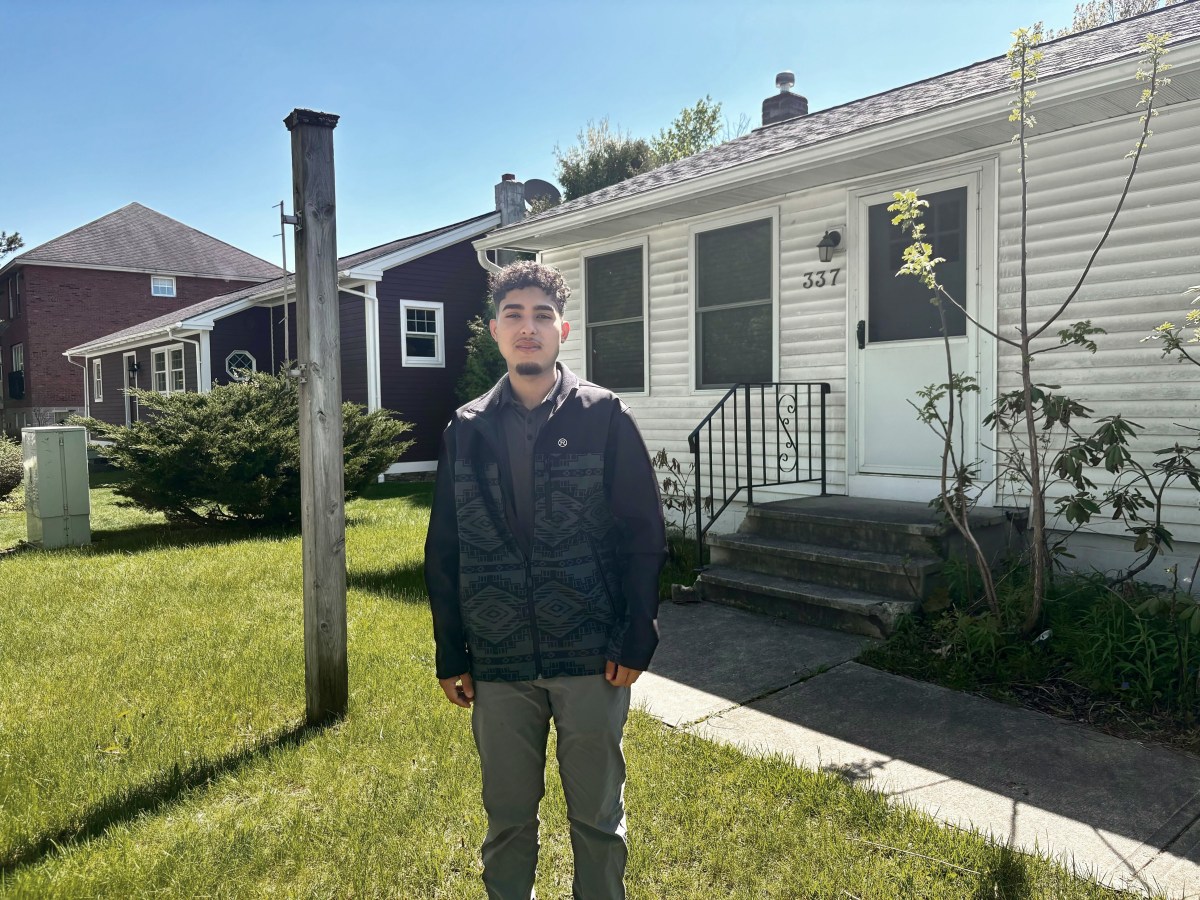
When federal agents stormed into the house he had lived in just five months, José Estrada Jerez said he and his uncle were on their knees, their hands raised in surrender.
“They burst in the door, their guns pointed at me and my uncle,” Jerez said. “I was already on the floor and I was screaming, ‘I surrender. I surrender.’”
More than a month after an armed U.S. Immigration and Customs Enforcement raid in South Burlington apprehended the wrong people, including his uncle Cristian Humberto Jerez Andrade, the 19-year-old immigrant and U.S. citizen said he is trying to recover from the trauma of the assault.
“That was the worst thing that has happened to me, ever,” said Jerez, who recently returned from a trip to Honduras, where he celebrated his 19th birthday.
Jerez’s firsthand account of what happened in the Dorset Street house, shared in a phone interview with VTDigger from his hometown in Honduras, provides a view into how ICE officers conducted themselves that day and how immigrants are affected by federal immigration enforcement actions. Much of his descriptions mirror his testimony in U.S. District Court at a hearing for his uncle in March.
ICE has not responded to multiple email queries to its media relations department about that incident.
In Jerez’s telling, about 15 men in protective gear with guns had stormed into the nondescript single-family house toward the end of a daylong standoff March 11 where the teen lived with his uncle, whom he described as a father figure.
One of the ICE officials in the house pulled him up, threw him back on the floor, handcuffed him and searched him, he said, without consent and without a warrant. The official then took everything in his pockets, he said, including his phone and his U.S. passport, and assaulted him.
“When he had me on the floor, I said, ‘I’m a USA citizen. I’m a USA citizen’ and he’s like, ‘I don’t care. I don’t fucking care.’ Then he picked me up, set me down on a chair and slammed my head against the wall,” he said.
Jerez said he sat there, handcuffed for about 30 minutes, scared to move, while ICE officials searched the house looking for a man who wasn’t there. Eventually they grabbed his uncle.
A citizen of Honduras, Jerez Andrade, 31, was detained for a week before an immigration judge granted bond and released him on March 19. His housemates on Dorset Street, two sisters — Daysi Camila Patin Patin, 20, and Jissela Johana Patin Patin, 31, citizens of Ecuador — were also released shortly after the raid.
By the time a lawyer entered the house to speak with him that evening, the then-18-year-old was in “complete and utter shock,” according to Nathan Virag, who is representing Jerez.
“Probably one of the first things he said to me was about the assault. He was very shaken up about that,” said Virag, an attorney with the Association of Africans Living in Vermont. “He was trying to answer my questions but — I don’t even know how to describe it — he wasn’t quite there.”
Based on his conversations with the residents of the Dorset Street house, Virag said the incident has left them haunted by fear and feeling that their lives were forever changed that day.
“José is a U.S. citizen. He should not have been treated that way by immigration. When immigration broke through the house, they automatically were surrendering, so there was no reason for immigration officials to assault him in that way,” he said.
The federal officials violated his constitutional rights and traumatized him, said Virag, who is looking into legal options to seek justice.
“He’s not doing well. He’s grappling with nightmares. He has trouble sleeping. … I personally don’t know how he’s going to recover from it, but it really affected him. And it’s still affecting him.”
During his testimony at his uncle’s hearing, Jerez discussed witnessing the raid, the actions of the ICE officers inside the house and the accidental gunshot in the attic.
“I feel like I could have died that day,” he said in federal court in Burlington on March 17. “I could’ve lost my life because of an ICE agent’s stupid decision.”
Until the March 11 raid, Jerez said he had lived as an immigrant in and out of the United States since age 5 with a sense of comfort and belonging. Born in Honduras, he was raised largely by his grandmother and his uncle Jerez Andrade. His mother had married an American and was living in Louisiana. He said he became a naturalized U.S. citizen through his mother around age 10.

In those early days in Louisiana, ICE activity was not happening around him or talked about much, he said. That changed, particularly during Donald Trump’s second presidency. Suddenly, he said, immigrants knew they had to be careful.
About seven months ago, Jerez said he left his mother in Louisiana to join his uncle working several jobs in the construction industry in Maine and in Vermont. The winter was particularly difficult, he said, as he had never experienced snow and cold.
The night before the ICE raid in South Burlington, Jerez was devastated to learn that one of their new friends in Vermont, whom he met at a job site in Winooski, was allegedly deported to Mexico.
“This was literally our first friend that got deported. It’s so crazy,” Jerez said.
It was hard to believe this was happening in Vermont. “That’s why people go to Vermont, to feel safe,” he said.
The morning of the raid, it was chilly, and his uncle had started the car so it could warm up, he said. They were going to grab coffee and breakfast at a gas station, per their usual routine, on their way to the work site when they were spotted by ICE officials.
He said the two men initially tried to pull over, but the ICE vehicle hit their car from behind, and his uncle panicked and sped off. On Virag’s advice, Jerez declined to describe the full encounter with the ICE vehicle and the car chase that followed.
They had been out of the house barely 15 minutes when the car chase led them to return to the house. The front door didn’t have a bolt. Jerez said he shoved the couch up against it as they all took shelter. They agreed not to open the doors and made sure the windows were shaded.
As more ICE officials lined the street and backyard, everyone inside the house started to panic, Jerez said.
“My uncle — he was panicking too, you know — said, calm down. Everything’s gonna be OK,” Jerez said. “And then he started to call Migrant Justice.”
Best known for advocating for migrant farmworkers’ rights, the nonprofit in recent years has teamed up with local advocates to provide rapid response to immigrants facing encounters with ICE or U.S. Customs and Border Protection, which includes an emergency number to report federal immigration activity in Vermont.
By 8:15 a.m., people had started gathering outside the house.
“They started singing. They were screaming at the ICE agents, telling them to go away,” Jerez said. “They just started surrounding us, you know, so we started feeling a little bit safer.”
As the protest grew outside, inside the residents called their families. “I was on the phone with my mom, and my uncle was on the phone with his kid, with his wife,” Jerez said.
A part of him was terrified, he said, that he and his uncle would be detained and thrown in jail. Another part of him was grateful and relieved, he said, to see the outpouring of support from people who didn’t even know them. “I was amazed. It was very surprising,” he said.
There was a child in the house. All of them were worried about what would happen to the child if they were detained, he said. The child’s mother got in touch with the child’s teachers in the South Burlington School District, and one of them came by to remove the child. Protesters waited for an opportune moment when ICE officials were not in front of the house. They formed a narrow passageway for the child to be removed by linking hands from the doorway to the teacher’s car.
After several hours, bystanders heard police officers announce that a tactical team from the Vermont State Police was going to force entry and warned people blocking the house that they could be forcibly removed. Jerez didn’t hear the warning, but he did hear the sound of officers from the state police Critical Action Team removing people and busting open the door.
“I was scared. I was really scared, you know. I didn’t know what to think,” he recalled, his voice shaking.
ICE officials barged in with guns, demanding to know where to find Deyvi Daniel Corona-Sanchez, Jerez said. Corona-Sanchez was the 24-year-old Mexican man they were seeking, according to later affidavits by ICE officers.
The residents told the officers they didn’t know who that was, Jerez said. “They were screaming at us,” he said.
Then the ICE officials spotted the opening to the attic. One of them said, “I’m gonna go up in the attic. And if he’s up there, you guys will have to go to jail for a long time,” Jerez said.
The man used a stool to climb up into the attic space. Within minutes, his foot broke through the ceiling and his gun went off, Jerez said: “He fell through the sheetrock because he didn’t know where to step. He just stepped on the weakest spot.”
While the residents were all terrified, Jerez said the other ICE officers started laughing.
“I don’t know why they were laughing because I could have been killed or my uncle could have been or anybody in the house could have been killed. And this is all happening, like, five feet away from me,” he said.
Then they all kept asking about Sanchez and threatened to tear the house apart to find him, he said. One of the ICE officials threatened to tear gas the place.
“We were like, ‘All right, tear gas the place, you know, because there’s nobody else in the house,’” he said. “They kept looking everywhere, looking through the kitchen, through all the rooms. And we — my uncle and I — were still just handcuffed and facing a wall.”
After a fruitless search, ICE officials took Jerez Andrade and the two sisters into custody. One of the ICE officials took Jerez’s handcuffs off before they left. “And he was like, ‘We don’t want no problems with you.’”
Suddenly, Jerez was alone in a quiet house.
“I was lost. I did not know what I was going to do next. I was completely lost,” he said. “I was wondering, what’s gonna happen now, what am I gonna do? My uncle’s gone. The person who’s taking care of me is gone.”
Among the community members who stepped up to offer support in the aftermath was Al Turkos, a Winooski resident and city councilor who was at the Dorset Street standoff all day.
It was “absolutely devastating” to watch a visibly shaken José, they said, as he packed up some of his things in the basement of the house after the raid.
“He was very, very very upset, hysterically crying,” Turkos said. “He’s a young person who recently just relocated here, relocated to this house and had his life upended in mere hours.”
On their invitation, Jerez ended up staying with Turkos — who uses they/them pronouns — and their wife, Liz, in their guest room for about two and a half weeks. His uncle also stayed with them for a few days after he was released, they said.
Turkos, a trauma survivor and community organizer, said they tried to make Jerez feel at home and give him some agency over his life. When asked what would make him feel better on his first night there, Jerez said he wanted to cook.
“So we went to City Market. We got plantains. He made tostones, he made chicken. We asked him what kind of music he wanted to listen to and we were listening to Bad Bunny,” Turkos recalled.
That night, two days after the raid, Jerez spoke at a Migrant Justice rally. Over the week they walked around town together, Jerez hung around with some friends one day and attended a birthday party for one of Turkos’ friends. Last week, Jerez went back to work at a job site in Winooski with his uncle.
Jerez was comfortable sharing a space and meeting their friends, according to Turkos, who remains in contact with him.
“He will always be like a member of our community and our chosen and found family,” said Turkos, who helped him create a $30K fundraiser.
“It’s a misconception that people think that it is the traumatic event that leaves you the most harmed, when, in reality, it is the response and the care that you receive after the traumatic event,” said Turkos, who has worked with survivors of trauma.
More than two months later, Jerez said he is still trying to make sense of the incident and the assault that has left him shaken. He left most of his things there and said he doesn’t feel like he could ever go back to live in that house.
He described the damage: the door was busted, the couch thrown, mattresses were flipped, and the ceiling broken with insulation poking out. “It was like a hurricane just happened.”
As for the car chase, the forced entry, the aggressive search and resulting detentions involving serious injuries, Virag said none of those things should have happened.
“The government has admitted they no longer believe Corona-Sanchez was ever in the vehicle, yet they still were able to access the home and violate a very protected constitutional ground — a home,” he said. “It’s worrisome for the future. We’ve seen this administration violate people’s constitutional rights, and this is a prime example of that. It should have never happened.”
Meanwhile, his respite in Honduras was healing for Jerez. He walked, rode horses and milked cows on his family’s ranch in Cantarranas, officially San Juan de Flores, eating fresh food and spending time with his family.
“I feel a little bit better here because I’m back with my grandma, you know. Being here is like therapy for me. It’s a peaceful place. It’s where I grew up.”
He returned to Vermont in mid-May, after a stop in New Orleans to see his mother, and is back to living with his uncle, this time in a shared apartment in the North End. He joined his uncle to work on a home construction job for 12 hours on his first day back. He especially enjoys framing and painting but said he would like to be an electrician. He is worried about future ICE raids.
“I don’t want this to happen again,” he said. “I don’t want my uncle to be taken again because that was very traumatic.”
Read the story on VTDigger here: ‘The worst thing that has happened to me’: Honduran immigrant shares his experience of the South Burlington ICE raid.

New polling data released indicates that a majority of Ohio voters reject political attacks against the trans community and demand that politicians focus instead on the rising cost of living and the availability of jobs.
GLAAD, the national LGBTQ+ media advocacy organization, and Equality Ohio released results from a new poll on Monday. The survey was conducted between March 16 and April 2, 2026, in partnership with consumer research firm MRI-Simmons.
Nearly 1,200 Ohioans participated in the survey.
Among the results of the poll:
Dwayne Steward, executive director of Equality Ohio, said that the poll results confirmed that “manufactured fear about transgender Ohioans doesn’t work.”

“Lived and legal equality isn’t a partisan value,” Steward said in a statement. “It’s a human one. Equality Ohio’s roadmap back to equality is grounded in that majority belief, and we will keep working until it is reflected in our laws.”
Sarah Kate Ellis, CEO of GLAAD, said that the poll numbers confirm what most Americans already believe: that the nation is at its best when friends, family and neighbors are treated with basic dignity and respect.”
“Voters are tired of divisive culture wars that distract from the real issues keeping families up at night like the skyrocketing costs of housing, fuel, healthcare, and groceries,” Ellis said in a statement.
Ellis also highlighted that “true leadership” would be focusing on economic prosperity and fairness for everyone.
“This Pride season, let’s recommit to the core values of freedom and community, and call on elected leaders and companies to focus on the practical solutions that actually move our country forward,” she said. 
The post New poll: Supermajority of Ohio voters believe politicians use trans issues as a distraction appeared first on The Buckeye Flame.
Are you a renter who needs help? Find local agencies and programs to connect with in Charlottesville and Albemarle County in Charlottesville Tomorrow’s Housing Resource Guide.
“My toilet is leaking and draining all over my floor. In the master bedroom, with an odor,” Park’s Edge resident Lanika Hester emailed to her property manager at 9:55 a.m. on Monday, Sept. 12, 2022.
A foul-smelling substance — maybe sewage? — was spewing from the sink in the apartment next door, she wrote. It had seeped through the walls and leaked into the hallway and the other basement-level apartments. The neighbor across the hall was trying to mop it up.
“Do you have maintenance to take care of this asap? Or a hotel you can put me in until it is taken care of?”
Chunks of what appeared to be used toilet paper and reeking brown stuff floated in at least an inch of water in the hallway and her apartment, Hester later recalled to Charlottesville Tomorrow.
Waking up to such a disgusting mess was startling, Hester said, but it wasn’t necessarily surprising. It wasn’t the first time her apartment had flooded, and it was far from the only maintenance issue she and her neighbors have faced.
Since 2020, residents of the Park’s Edge apartment complex in Albemarle County have reported electrical outlets releasing sparks; broken smoke detectors; faulty appliances; exterior dryer vents bulging with dense, dark balls of lint; mold creeping along walls and growing in ceiling tiles; improperly ventilated and irregularly cleaned HVAC closets that sent dust, dirt and mold into apartments. Residents reported tripping on broken hallway stairs and on the parking lot’s split pavement. Children were waking up to rats in their rooms.
Many of these issues were documented by attorneys and organizers with the Legal Aid Justice Center. LAJC has worked with dozens of Park’s Edge residents who faced eviction, many of whom couldn’t pay rent after losing wages during the COVID-19 pandemic. But during their meetings, residents regularly mentioned poor living conditions, said LAJC attorney Victoria Horrock.
“For everything that we verify, clients are coming in and telling us other things,” she said.
Over the past three years, Charlottesville Tomorrow interviewed seven Park’s Edge residents about their experiences living in the complex, as well as some of the attorneys and housing advocates trying to help them and their neighbors.
Those residents, attorneys and advocates asked other residents if they wanted to speak publicly. Most said they didn’t out of fear of retaliation from their landlord or property manager.
Those who did speak tell the story of a quickly deteriorating apartment complex with limited and inconsistent maintenance — even when the problems were dire.
Built in 1977 and renovated in 2005, Park’s Edge is an eight-building, 96-unit apartment complex located on Whitewood Rd. in Albemarle County’s urban ring, very close to Albemarle High School. It has one-, two-, and three-bedroom apartments, all of which are relatively affordable compared to other places to live in Albemarle County.
Park’s Edge apartments are more affordable because the complex is part of a federal program called the Low-Income Housing Tax Credit program (or “LIHTC,” pronounced “lie tech”). LIHTC is a nationwide tax incentive program administered by the Internal Revenue Service and used by developers to acquire, build, or — as in Park’s Edge’s case — rehabilitate low-cost rental housing reserved specifically for low-income households.
The complex has had at least five different owners since it was built, including two different ones in the last five years, according to Albemarle County’s geographic data.
Residents say they noticed problems starting to pile up in 2020, the year Albemarle Housing Improvement Project sold the property to a company called TRC Park’s Edge LLC.
Charlottesville Tomorrow reporters made multiple calls and sent multiple emails to various individuals associated with TRC Park’s Edge LLC. No one responded. TRC Park’s Edge LLC owned the property for less than two years before selling it to RailField Realty.
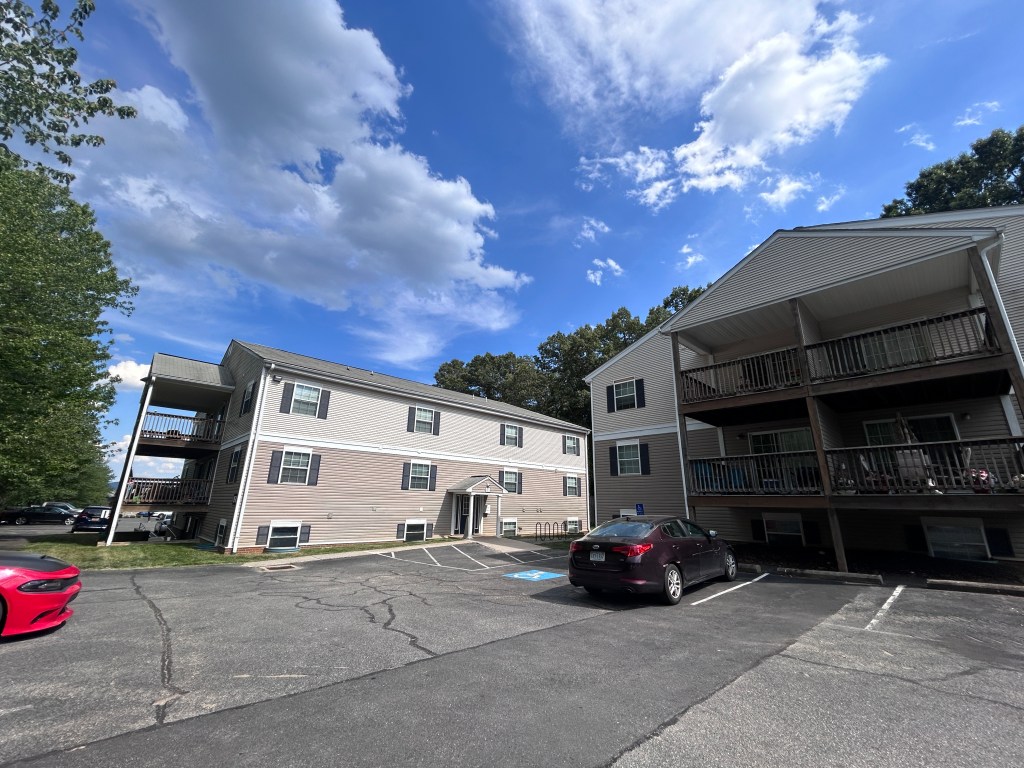
RailField Realty responded to several emailed questions in 2024 and again in 2026, detailing the attempts it has made to address issues with the property since buying it in Sept. 2022.
In April 2024, a representative of the property management company, The Franklin Johnston Group, agreed to answer Charlottesville Tomorrow’s questions on a phone call. They did not respond to multiple messages through their website, emails and phone calls to schedule time for an interview, however. A few weeks later, the reporter received an automated email from the company marking the request “resolved.”
Over the course of about five years, residents in several Park’s Edge buildings made different attempts — from emails and calls to legal action — to improve their living conditions. Most of the residents who spoke with Charlottesville Tomorrow were not satisfied with the responses they received, if they received them at all. Even as conditions got worse in some cases, all said that they could not afford to move. Even if they could, there are not enough affordable housing options in Albemarle County or Charlottesville for them to have any place to go. Now, they say, they’ve run out of options. They’re stuck.
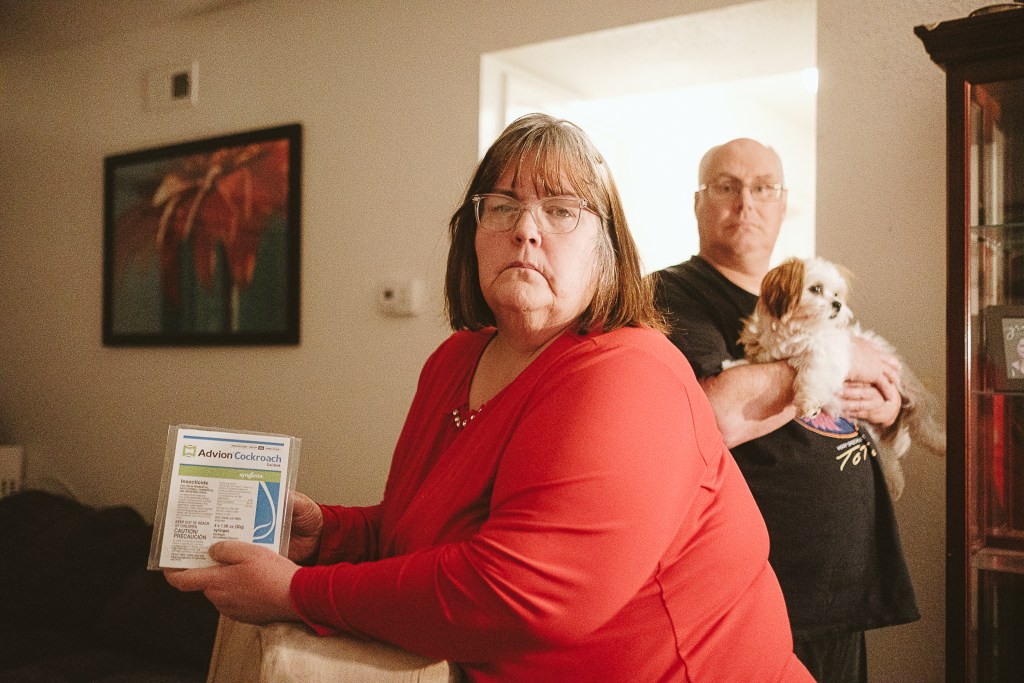
Jojo and Rick Robertson, who have lived for more than 12 years on the third floor of the same Park’s Edge building where Lanika Hester lives with her daughter, have documented a slew of issues in their family’s three-bedroom unit, which smells vaguely of cinnamon. Jojo makes homemade cinnamon air fresheners because it relaxes her and because it covers the mildew odor that permeates the entire building.
Sitting in their living room one January evening in 2024 with their dog, Coco, the Robertsons rattled off a list of things wrong with their apartment — it was clear they’d done this before. They pulled up photo after photo on their phones to show exactly what they were talking about. Jojo regularly stopped to take deep breaths before continuing.
“They just don’t care,” Jojo said repeatedly, shaking her head. “They just don’t care.”
To start, the Robertsons have been afraid to drink or cook with their tap water — it’s been brown or smelly several times, they said. And then there’s what’s happened downstairs with the putrid floods of what smelled like sewage. A few years ago, the Robertsons bought a water cooler and started to pay to have water delivered.
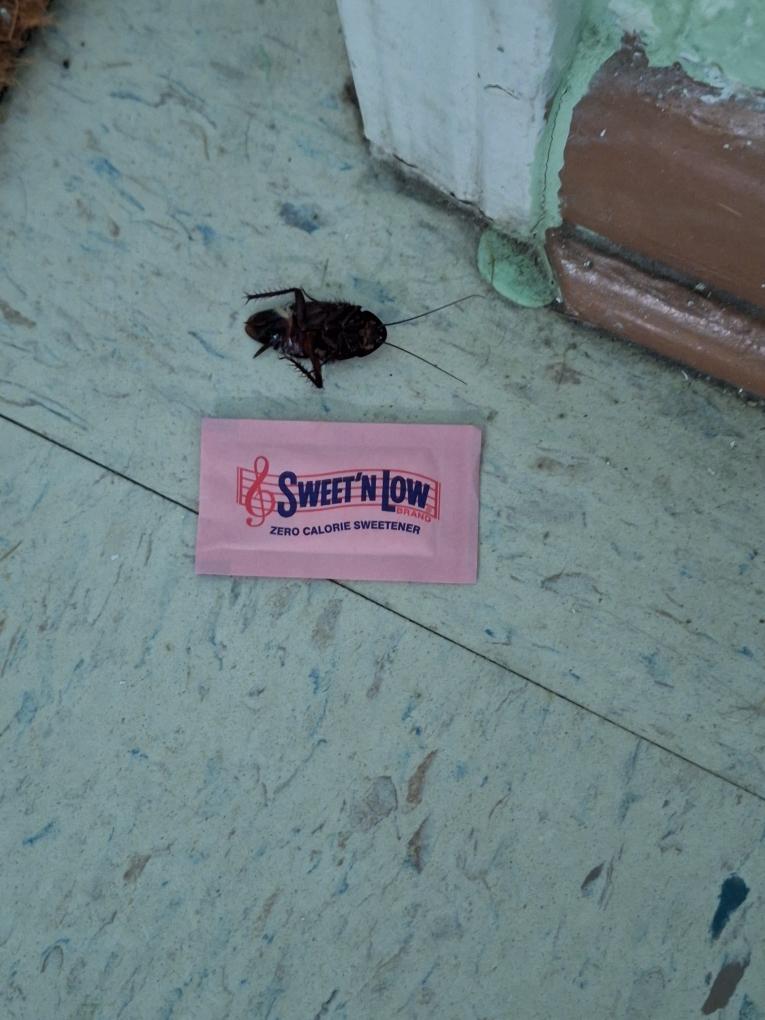
Jojo has photos of roaches the size of Sweet ‘n’ Low packets, and of an enormous ball of lint bulging from an exterior vent, one that the couple can’t reach themselves. They constantly worry the lint ball could catch on fire.

The Robertsons have worried about fires quite a bit, actually. Their outlets sometimes sparked when they plugged in appliances. At least one of their outlets has caught fire. Sometimes, their smoke detectors haven’t worked.
In the fall of 2023, the Robertsons were sitting in their living room when they heard banging on their door.
“There’s a fire, there’s a fire! I don’t know what to do!” yelled the teenage boy who lives in the apartment below theirs. The garbage disposal was ablaze.
One neighbor told him to grab the fire extinguisher while another called the fire department.
After the fire department put it out, Jojo said, they noticed the fire extinguishers were dated 2000. Most have a lifespan of about 10 years.
Jojo said it took weeks for property management to give them new extinguishers.
“We were scared shitless,” she said.
Looking back, many residents say they noticed living conditions in the Park’s Edge complex started to deteriorate between 2020 and 2021, around the time the COVID-19 pandemic was accelerating.
The U.S. government declared a countrywide state of emergency in mid-March 2020, and by the end of the month, then-Virginia governor Ralph Northam issued a statewide stay-at-home order.
The following month, in April 2020, Lanika Hester emailed Albemarle Housing Improvement Program, the nonprofit organization that owned the building at the time, about having the carpets in her apartment cleaned after a flood. She received a prompt reply from the community manager, who explained that certain maintenance issues were on hold due to the state of emergency. Maintenance would address emergencies, including water leaks and flooding. Non-emergency requests, however, would be documented and taken care of once the government lifted the state of emergency.
But even after the state’s stay-at-home order ended in May 2020 and public health guidance allowed for non-essential, masked work to resume, conditions in Park’s Edge apartments continued to decline.
After TRC Parks Edge LLC bought the complex in December 2020, residents’ emails and their website show that they hired The Franklin Johnston Group, a Virginia Beach-based company, to manage it.
Fifteen months after the sale, a Park’s Edge resident took TRC Park’s Edge to court over the conditions in her unit.
A Charlottesville Tomorrow reporter learned about this case while reviewing cases in Albemarle County General District Court records. The lawsuit lists more than a dozen problems, including air filters that hadn’t been replaced in over a year; leaking windows; a rotting bathroom vanity; buckling floors; electrical outlets that didn’t work; a leaky sink; and a buckling kitchen floor.
“I am optimistic that the majority of these repairs can be done in a reasonable timeframe, preferably within/or about thirty (30) days,” Central Virginia Legal Aid Society attorney Katie Allen wrote to the property manager in December 2021. However, Allen added if the repairs were not made, the tenant she represented would take legal action.
In March 2022, the tenant filed a tenant’s assertion, a legal action a tenant can take against a landlord claiming that the landlord is in violation of the lease agreement. The point is usually to pressure a landlord to fix whatever is wrong with the unit.
It seems to have worked. In August 2022, Allen moved to dismiss the case because the repairs had been made.
But, while the apartment in the lawsuit was being fixed, the issues in Hester’s apartment were accumulating.
“I have put in several requests about the issues with my apartment,” Hester wrote in an email to Franklin Johnston Group on June 2, 2022. “It takes months to get anything done, if ever at all. The latest is that I can’t use my stove without it catching fire. My apartment floods regularly. And there has been nothing done. The [bathroom] tub is stopped up again but no service yet. The ceiling that you guys took pictures of is still in the same condition. These floors have suffered from years of flooding and no attention. No one has checked for mold in this basement apartment.”
Hester received a prompt reply to that email, and it seems some repairs were made, but they weren’t the end of her problems.
Hester shared four years of email correspondence between her and various property management staff with Charlottesville Tomorrow detailing the litany of maintenance issues her apartment had during that time.
Between the spring of 2022 and spring 2024, Hester sent more than 150 emails to employees of the property management company about issues with her apartment.
Hester’s emails show that sometimes the Franklin Johnston Group’s staff responded within hours. Other times, it took weeks — and multiple follow-up emails — for someone to reply. A few times, her records show, they didn’t respond at all.
Seven residents of Park’s Edge, along with attorneys and community organizers who talked to dozens more residents, said they had similar experiences trying to improve the condition of their apartments. All of this was particularly frustrating, they said, because it wasn’t always clear who they should be communicating with.
New “community managers” would cycle through every four to six months according to Hester’s email records. Additionally, at least two other people from Franklin Johnston Group filled in when that job was vacant. On top of that, the company used two separate — but similar — email addresses to communicate with Hester.
Whenever someone left the management office and a new person came into that role, Hester said she was back at square one. She had to explain what was going on with her apartment all over again, and justify her frustration to new staff.
Hester is a friendly, upbeat person who loves herbal teas and laughs with her whole body when her cat, Pep (short for Pepita) springs around her living room.
But when she talks about her experience living at Park’s Edge, particularly the last five years, her demeanor changes. She takes sharp, shallow breaths and talks quickly, rattling off a laundry list of things wrong with her home.
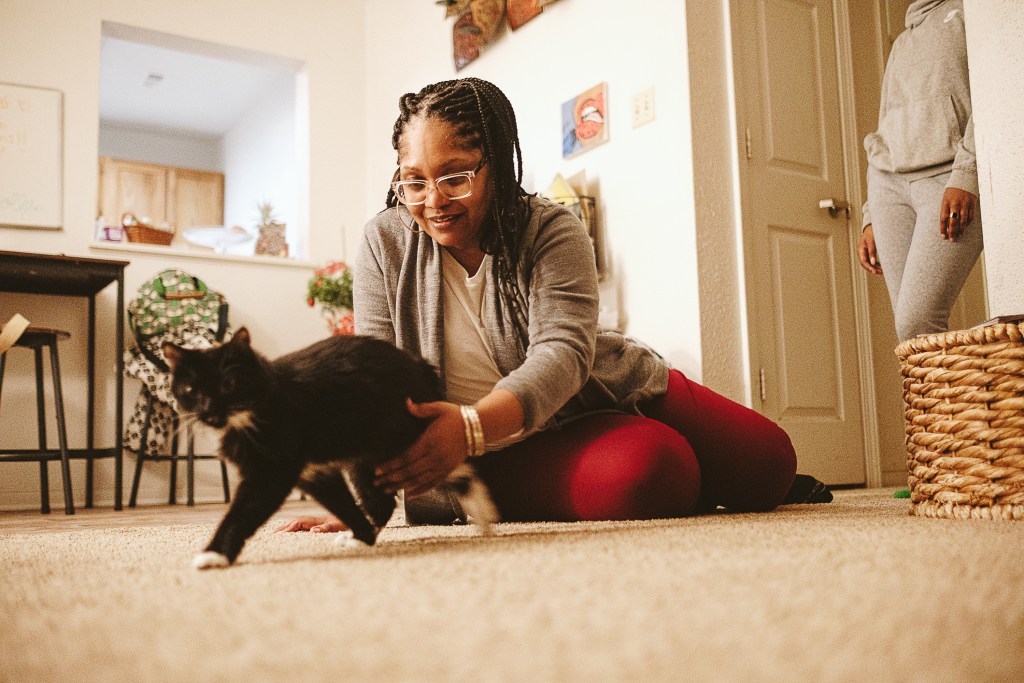
The worst of the maintenance issues in Hester’s apartment at Park’s Edge started Sept. 12, 2022. She woke up that morning to a flood that she said smelled “old, mildewy and poopy.” She emailed property management about it right away, but by the following morning, nothing had been done.
“Sewage has flooded my apartment and they have yet to fix it. It’s madness here,” Hester wrote in an email to an eviction prevention case manager at Piedmont Housing Alliance’s Financial Opportunity Center the next morning. (Hester said she was struggling to keep up with rent after losing one of her two jobs, and at that point, PHA was no longer involved in the management of the property.)
Someone at Franklin Johnston Group replied to Hester on Sept. 13 at 10:56 a.m., about 25 hours after she first emailed them. The company cycled through at least a dozen on-site property managers over about four years, most of whom Charlottesville Tomorrow could not find contact information for after they left the property.
“Is your toilet still leaking? Is there water all on the floor still?” the property manager at the time wrote.
The toilet had stopped leaking, Hester replied. But the apartment was still soaked with foul smelling water.
Hester had to go to work, but she said someone told her they would clean the place. When she returned home, it didn’t appear clean.
“It smells so bad. Is there any way the office can pay for a hotel or refund hotel fees until this particular issue is resolved?” Hester wrote at 3:54 p.m. “The stuff in the tub hasn’t been cleaned. The laundry room, none of it is clean — all covered in the sewage that spewed. They said they did the carpet but the place smells horrid.”
Someone at Franklin Johnston Group replied that professional cleaners could come by the following morning, 48 hours after the flood.
The email did not acknowledge her request for a hotel.
Hester was concerned about what was in the water that soaked her carpet, floors, and some of her belongings and — unable to stand the putrid smell of it — paid to stay in a hotel for a few nights with her daughter.
Hester asked the property manager by email to pay for the hotel a few more times. Someone wrote back about a week later: “If you have renters insurance, I would strongly recommend reaching out to them as they may be able to help out with the refund for a hotel.”
Hester didn’t have rental insurance.
Hester was still emailing the property manager about the smell on Sept. 19, about a week after the flood, and days after a cleaning crew came and went.
“You can smell later at 3:15 when I’m home if you are available,” she wrote.
Eventually, the Franklin Johnston Group decided to just replace the carpet. They scheduled the work for Sept. 29, two weeks after the flood.
But that created an entirely new dilemma.
As the carpet replacement date neared, the Franklin Johnston Group told Hester that she had to move all her belongings out of her apartment in order for the work to be done. Hester panicked.
She barely had the money for the hotel stay, and she couldn’t afford to pay movers. She would have to take time off work to move things, and that meant lost wages. Plus, she didn’t have anywhere to move her stuff.
Hester asked management if she could move her things from room to room as the crew removed the old carpet and installed the new. She asked if someone could help her. The flood wasn’t her fault.
No, they couldn’t have anyone help due to liability issues, management wrote. They couldn’t answer for the carpet crew. And no, they wouldn’t put her in touch with them.
“Just to clarify on this email thread your carpet is being replaced due to age and how long you have been in the apartment,” the Franklin Johnston Group told Hester on Sept. 26. The email did not mention the flood.
Whenever Hester asked a question about the replacement process, management referred her to the agreement she signed for the carpet replacement. Among other things, the contract stipulated that all of her furniture must be moved in order for the carpet to be installed. If she didn’t have her apartment in the right order, they wouldn’t replace the carpet and Hester would be charged a fee.
Hester sent a final email a few days before the appointment with a few more questions.
“If this is an inconvenience,” management replied, “then you will have the choice to cancel your appointment.”
That is not what Hester wanted, she wrote. She only wanted to be prepared.
“We have gone over this with you,” an employee of the Franklin Johnston Group replied. “We cannot help unforeseen circumstances, all we can do is take care of it immediately, which we did. We are doing everything we can to rectify and remedy this situation. If you are still unhappy, then I will let you out of your lease with a 60-day notice.”
Hester couldn’t afford to move out. She did not have the money to pay movers, or to pay first and last month’s rent and a security deposit, likely thousands of dollars, for a new apartment. She wrote back that she did not want to cancel the appointment. Her apartment still smelled.
Hester and other residents say they never learned why their apartments flooded with sewage. But it wasn’t the last time it happened.
About a year and a half later, in mid-2024, another basement apartment at Park’s Edge flooded, this time in a different building in the complex.
Brittney, who has lived at Park’s Edge for about a decade, first with her mother and then on her own, told a story that mirrors Hester’s — mostly.
Brittney (not her real name) spoke with Charlottesville Tomorrow by phone in August 2024 on the condition that we not use her name. She said she feared losing her housing. Legally, a landlord cannot evict a tenant for speaking with a reporter about potential code violations. However, a landlord can decide at their discretion to not renew a tenant’s lease when that comes up.
Her apartment had flooded a couple of months earlier, she said. A chunky brown substance floated in the water. It stank. It inundated her hallway, her son’s bedroom and the small bathroom. She put on her rain boots to walk around inside.
“It smelled like sewage,” she said.
Property managers sent the company Roto Rooter to look at the problem, she said. The Roto Rooter employee told her the flood was caused by wipes clogging up the building’s pipes.
Management said that someone from the maintenance crew would come in after Roto Rooter to clean up the brown water, Brittney said.
“I was up until 4 in the morning waiting for people to come and fix the problem, get the water up,” she said. “But nobody came.”
By the time a maintenance worker knocked at her door the following morning, she’d already mopped up the stinking mess herself. But worse than all that, she said, has been the rats.
“I can deal with a lot of things, but the rats I cannot deal with.”
Rats disturbed, disgusted and eventually terrorized Park’s Edge residents between at least August 2023 and August 2024. By the end of 2024, residents were not only disappointed by how management handled it, they were feeling discouraged because they felt they had no choice but to live with the infestation.
It started sometime in summer 2023. In early September of that year, Jojo Robertson sent a text message to Charlottesville Tomorrow saying that the complex was dealing with a rat infestation. Brittney said she first noticed rats around that time, too. The rats were still around in December, when Hester emailed property management about them.
“It’s getting cold outside and I do not want them in my home,” she wrote.
None of management’s replies to Hester’s emails about rats mentioned rodents.
In January, Robertson said she heard from other residents that the Franklin Johnston Group hadn’t paid extermination bills, and so no one had come to the property to take care of the rats (or the roaches).
Charlottesville Tomorrow was unable to confirm that the property manager did not pay bills, nor did the company explain what actions they took to address the rodent problem. The Franklin Johnston Group did not respond to multiple requests for comment by email and phone from 2024 to just before publishing.
But what is clear is that trash was an issue at Park’s Edge that same month. A heap of it started to accumulate outside some of the buildings in the complex.
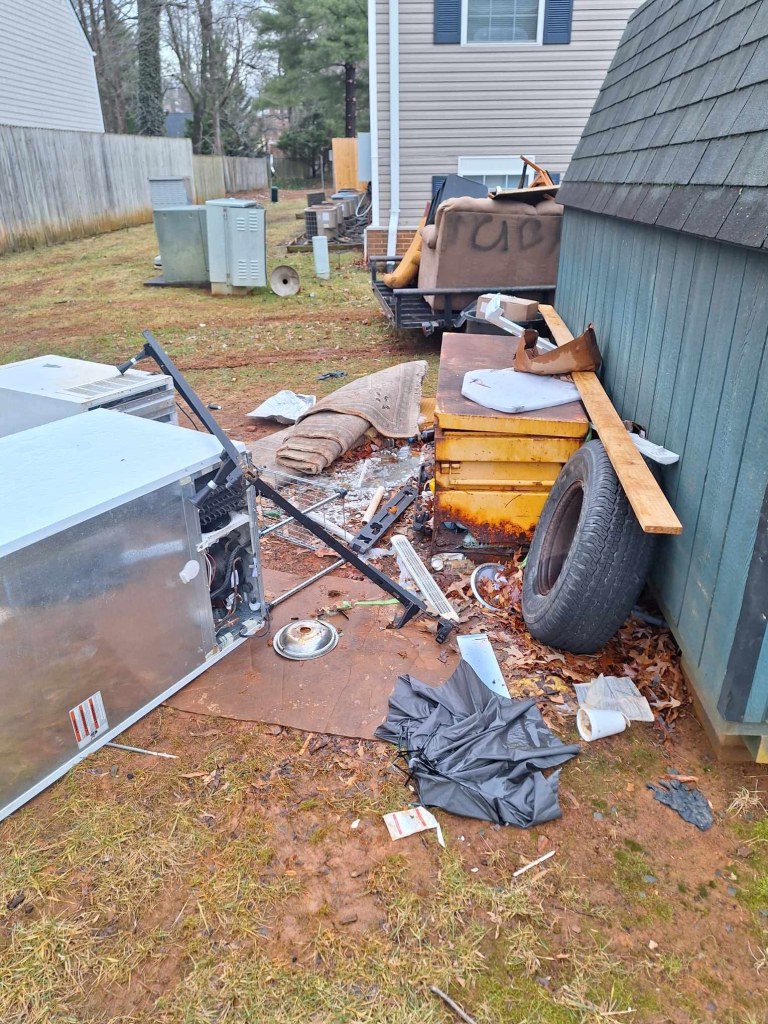
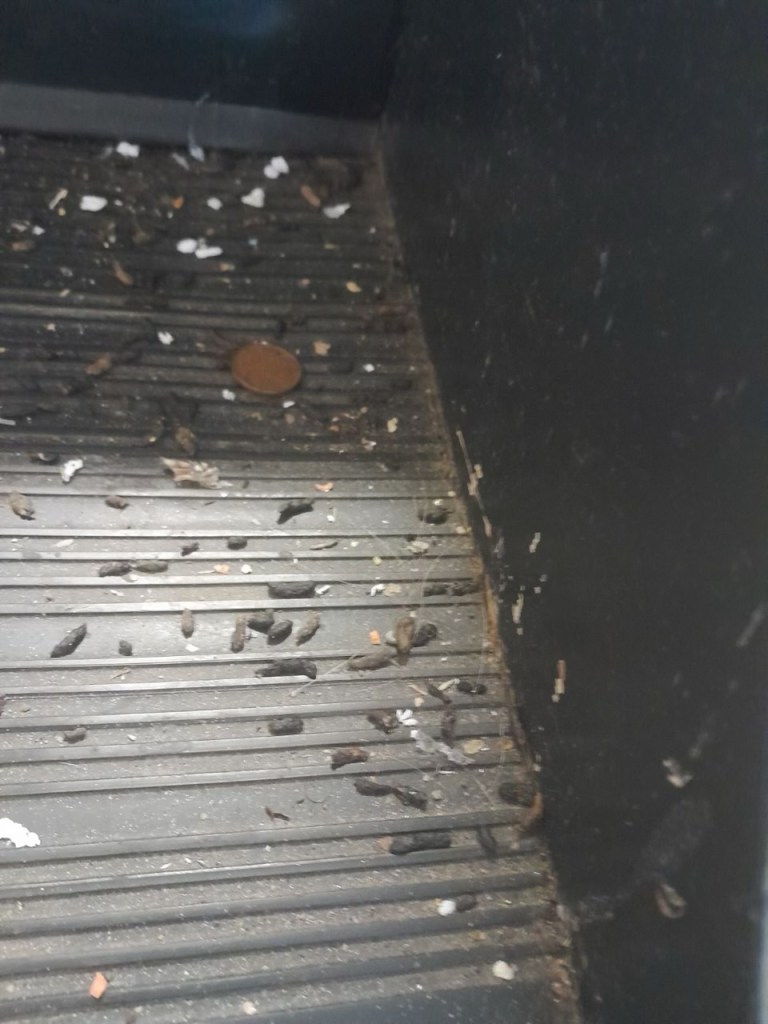
Robertson took photos of the discarded objects. Household appliances lay tipped over on the ground, their internal parts and wiring exposed. Someone had tossed half a bent bed frame over them. There were rolled-up rugs, chairs, a couch, a utility trailer, a rusted tool chest, and smaller bits dotting the ground.
By February, residents suspected that one of their neighbors was hoarding trash and other items inside their apartment. It is unclear whether or not the trash that accumulated outside of the complex was related.
Later that month, though, the outside trash was gone, Robertson said. Management had sent out a notice to residents asking them to tidy up their apartments and exterior areas in preparation for a visit from the owners, RailField Realty, that day.
But, not long after that visit the trash was back. This time it was appliances sitting in the yard next to an upside-down couch.
Trash is one of the things that can attract rats and foment an infestation, Denise G. Aranoff, vice president of American Pest, a national company, told Charlottesville Tomorrow in an email. The company is mentioned in emails between Hester and the property manager, but Aranoff said she was not commenting about Park’s Edge specifically.
“Trash in hallways and breezeways or around dumpsters and trash chutes will attract all sorts of pests,” Aranoff wrote.
As 2024 progressed, the rats became more pervasive, residents said. Fed up, Brittney bought her own traps. But they didn’t help in the way she’d hoped.
One night, Brittney woke to a horrible screeching sound coming from her young son’s bedroom — a rat was stuck to a glue trap. The scene petrified the three-year-old child, who refused to set foot in his bedroom afterward.
“He sleeps with me,” Brittney said. “He doesn’t even play in his room.”
That wasn’t the end of it, though. Rats got into Brittney’s clothes. They chewed up her couch.
Brittney spoke with Charlottesville Tomorrow in August 2024, about a year after she first noticed rodents around her building. By then, she estimated she’d caught about 30 rats in her apartment.
“I’m constantly catching them,” she said at the time, convinced that the rats were getting in through the HVAC system. “I’m catching, like, three a week now.”
It’s unclear how the Franklin Johnston Group was handling the situation before Charlottesville Tomorrow spoke with Brittney. But, by the time she spoke with a reporter, Brittney said she was getting weekly visits from property management, and a pest control company was also visiting the property regularly.
“They’re treating the outside and not really doing anything on the inside,” she said. “They put poison down, but then they’re crawling inside the walls and dying. We have these horrible smells, huge black flies. It’s just terrible.”
She said that property managers were coming into tenants’ apartments weekly to monitor interior conditions, checking to see if people were taking out their trash, warning them not to leave dishes in the sink, or leave laundry out.
But at the same time, she said, trash was all over the outside of the complex.
At one point, the dumpster was so full of furniture, residents had to put their trash on the ground, Brittney said.
“They say we can’t keep trash overnight, but everybody’s scared to take the trash out at night because we have rodents that run around the trash can,” Brittney said. “There’s trash all over the ground. That’s what’s causing rats. None of the maintenance team is picking it up.”
While the property management company did not respond to requests for information, the complex’s owner, RailField Realty, did respond just before this report was published.
“There was a rodent issue in 2023/2024. That issue resolved when two residents were evicted,” Todd Watkins, Railfield’s Chief Operating Officer, told Charlottesville Tomorrow in an email on May 25, 2026. “To my knowledge, the pest control contract was always in full force. We currently have monthly pest and rodent servicing at the property and have not seen a recurrence of the problem.”
But while the infestation was going on, residents began to realize that there wasn’t much they could do to force a faster response. They were learning that Virginia law makes it hard for renters to hold landlords accountable for the condition of their properties, even when there is flooding, rats and fire hazards.
The next report in the series shows what can happen when, against all odds, a resident manages to get a case against their landlord into court.

This series, reported over years of following tenants’ stories, is about what happens when renters in Virginia try to improve the conditions of their homes. It took reviewing images and records, hundreds of emails between residents of Park’s Edge, their landlords and advocates, court records and legislative efforts.
It was reported by Erin O’Hare with editing by Jessie Higgins, photography by Ézé Amos and O’Hare, with images and documents provided by residents of Park’s Edge, editing and design by Angilee Shah and Ashley Harper.
Follow the series over the week of June 1, 2026 by subscribing to Charlottesville Tomorrow’s free Beyond the Headlines newsletter.
Investigative journalism is essential to a healthy democracy — it informs citizens, holds institutions accountable and catalyzes action. If you believe these stories deserve to be told, consider donating. Together, we can ensure that more voices are heard and that the stories that matter most do not go untold.
The post In Albemarle County, Park’s Edge residents endure stinking floods, rat infestations, fire hazards — and a frequently unresponsive landlord appeared first on Charlottesville Tomorrow.


A Cheyenne attorney who filed a formal complaint in April against Wyoming Secretary of State Chuck Gray for sharing sensitive voter data with the federal government says Attorney General Keith Kautz is keeping the public in the dark about the status of the complaint.
“We’ve seen nothing from him,” George Powers told WyoFile on Friday. “And his last comment was, ‘I’m not going to talk to you.’”
In the April 13 complaint, Powers alleges that Gray may have broken state law when, in August, he gave the driver’s license numbers and partial Social Security numbers of every registered Wyoming voter to the U.S. Department of Justice. The Justice Department sought that information from all 50 states.
Gray has stood by the decision and said it was made in consultation with the attorney general. As such, Powers asked Kautz to hand off his complaint to avoid a conflict of interest.
“The conflict between your duties to Gray and your duties to the public create an intolerable conflict of interest,” Powers wrote in a May 20 letter. “The law of Wyoming demands that you recuse yourself and refer this matter to an independent special prosecutor.”
Since the complaint was filed in April, Powers says he has written and tried to contact the Attorney General’s office but has yet to “receive a meaningful response.”
The last time he heard from the office was a May 4 email, Powers said.
“This response is not an invitation for further communication,” Kautz wrote. “A prosecutor’s investigation and exercise of prosecutorial discretion are not conducted in the public square. I previously told you that your complaint would be addressed in accordance with our office policies, the law and the Wyoming Rules of Professional Conduct for Attorneys at Law.”
Powers isn’t certain what will happen now.
“We’re considering options,” Powers said. “But haven’t really been able to decide exactly what the next step would be on our part.”
Kautz did not respond to WyoFile’s request for comment by publishing time, including an inquiry as to the status of the complaint.
Powers is a retired attorney who worked primarily on civil trial and appellate litigation in Wyoming with a focus on medical malpractice, insurance claims and railroad litigation. In 2024, he was a plaintiff in a successful public records lawsuit against the Wyoming Department of Education.
Last year, the Justice Department started asking states to hand over election-related records and data, including copies of statewide voter registration lists. The Trump administration has argued its efforts are intended to keep elections secure. At a hearing in March, a Justice Department official said the agency planned to run the collected voter roll data against Department of Homeland Security data.
In response to the federal government, most states either provided publicly available versions of their voter registration lists — i.e., data sets without sensitive information — or refused to provide such records, underscoring the fact that the U.S. Constitution explicitly tasks states, and not the federal government, with administering elections. Many states also raised privacy concerns.
So far, the Trump administration has filed 31 lawsuits against states with both Democratic and Republican chief election officials. Eight of those cases have been dismissed. Wyoming, meanwhile, was the first of 15 states to fully comply.
“What was the big hurry?” Powers asked WyoFile. “Why did Chuck want to be number one?”

Gray did not respond to WyoFile’s request for comment by publishing time. When Powers filed his complaint in April, Gray said the attorney was attempting to undermine his office’s work.
“I stand by my work with the Trump Administration to advance election integrity. I have worked to maintain compliance with the law and these actions have been carried out in close consultation with the Attorney General,” Gray wrote in a Facebook post.
In his complaint, Powers cited three separate state laws, including one that makes it a felony for an official to violate the election code and another that specifies the confidentiality of certain election records.
According to the statute, “election records containing social security numbers, portions of social security numbers, driver’s license numbers, birth dates, telephone numbers, tribal identification card numbers, e-mail addresses and other personally identifiable information other than names, gender, addresses, unique identifying numbers generated by the state and party affiliations are not public records and shall be kept confidential.”
Powers argues that Gray may have broken this law by sharing confidential records with the federal government.
“When Secretary Gray authorized and directed the officers and staff of the Wyoming Secretary of State’s Office to release an unredacted [voter registry list] to the DOJ, he knew that the [list] contained personally identifiable information about the registered voters of Wyoming, which was confidential and not public records,” the complaint states.
One week after Powers submitted his complaint, Kautz wrote him an email.
“Our office received your Complaint of April 13 and a Supplement on April 17, 2026,” Kautz wrote. “We will address them in accordance with our office policies, the law and the Wyoming Rules of Professional Conduct for Attorneys at Law.”
Records indicate that Powers wrote back several hours later, thanking the attorney general for acknowledging the complaint.
“I look forward to receiving your further response,” Powers wrote. “With regard to the ‘office policies’ mentioned in your email, could you please let me know what those policies are or where I can find them?”
“There are no written policies,” Kautz responded 30 minutes later. “No response will be forthcoming.”
A week later, Powers received a letter from Deputy Attorney General Mackenzie Williams.
“I am writing this letter to refute your claims that the Secretary of State has waived attorney-client privilege as applied to the Attorney General’s advice to Secretary Gray,” Williams wrote on April 27.
The letter did not otherwise address the complaint or its status, including whether it had been referred to an independent party. Since then, Powers said he has not received any more information on his complaint.
“There are specific rules relating to prosecutors as to what they can and cannot say. They have to be very careful not to prejudice the rights of a defendant or a party under their investigation,” Powers told WyoFile on Friday. “On the other hand, the rules do allow for prosecutors to say whether they are investigating, to make broad statements, particularly in matters of high public interest.”
The post Cheyenne attorney wants answers from AG on voter data complaint against Gray appeared first on WyoFile .

In early 2026, the Trump administration quietly advanced plans to build more than 100 miles of steel border wall through the remote Big Bend region, a rural area in Far West Texas stretching down to the Rio Grande River. The administration waived dozens of environmental protections to expedite construction through protected areas like Big Bend State Ranch Park. When Charlie Angell, owner of Angell Expeditions and a river guide in the Big Bend region, first heard of the border wall plans from a friend last winter, he called his local newspaper, The Big Bend Sentinel.

“I called the Sentinel and I said, ‘Hey, have you heard of this?’ I was just told for sure that there is going to be a physical 30-foot-tall wall, with a concrete pad into the ground,” Angell said. “[Reporter] Sam Karas was looking into it…and saw there was this huge contract awarded for a company that had built a lot of the wall.”
Ten days later, while Angell was on the banks of the Rio Grande scouting canoe routes near newly-installed razor wire, he received a call from the U.S. Army Corps of Engineers notifying him that his property would be affected by the wall plans.
IMG_4023: A sign outside of Angell Expeditions in Redford, Texas. (Photo by Anya Petrone Slepyan/The Daily Yonder)
At the time, little confirmed information about the project was publicly available. Early details emerged in fragments through contract filings and informal conversations, leaving both residents and journalists to piece together the scope and location of the proposed construction.
“We put out the first story about [the wall], and that, just like, really accelerated everything, where then the whole community was more or less on the same page,” said Sam Karas, a Big Bend Sentinel reporter and fellow Rio Grande river guide.
Local outlets quickly became the primary source of verified information in a rapidly-changing situation where official details remained scarce and inaccessible.

The Big Bend Sentinel covers Presidio, Brewster, and Jeff Davis counties in far West Texas, a region spanning over 12,300 square miles, comparable to the size of Maryland. Despite operating with only a small staff of a few reporters, residents within the Sentinel’s coverage area remain better served than many Texans when it comes to local news access.
According to the University of North Carolina, 21 of Texas’ 254 counties have no local newspaper at all, all of them rural, while 134 counties are served by just one paper. Across the country, half of all counties, 1,528, only have a single newspaper and 225 don’t have any at all. Most of these gaps are found in rural areas.
For some Texas counties, daily newspapers have been converted to weeklies and rural Texas is facing the rise of “ghost newspapers,” publications that continue to exist in name but produce limited original reporting and rely heavily on wire services for content that may not be place-based.
In the Big Bend region, on-the-ground reporting presence made real-time coverage of the border wall plan possible.

Early reporting by small newsrooms established a timeline of events, identified key contractors and federal agencies, and documented where proposed construction could occur, efforts that began to draw attention well beyond West Texas. As interest spread, these small rural newsrooms adapted in real time, experimenting with new formats and distribution to reach a growing, and increasingly national, audience.
During the first Trump administration, threats of a border wall loomed over the Big Bend region, but plans never materialized. As new efforts to build the wall gained traction during the second Trump administration, the tone and urgency of coverage shifted. With no formal announcements and limited transparency from federal agencies, local journalists moved from monitoring a distant policy debate to closely tracking an active and evolving project on the ground.
“The coverage started pretty quietly. I mean, even for us, it wasn’t necessarily that huge of a story right away, because the details of the border wall plans were not at all clear to start with,” said Travis Bubenik, news director at Marfa Public Radio.
At Marfa Public Radio, a two-person reporting team covers Far West Texas and the Permian Basin The station broadcasts from Midland to Presidio, covering what Bubenik describes as “fundamental civic information.”
In the absence of transparent plans, early reporting relied heavily on records searches and incremental disclosures. Journalists tracked maps, contracts, and land surveys to verify the existence and scope of the project.

As landowners continued receiving formal notices of plans to build the wall through their properties, they increasingly turned to local media. The Big Bend region, which includes Big Bend National Park and large expanses of state-managed land, had not previously seen this type or scale of border infrastructure, heightening uncertainty about its potential impact.
“As landowners and residents who would be impacted by this project started hearing whispers of it, we knew in the press almost right away,” Bubenik said. “They were sharing government documents, Customs and Border Patrol letters that they received with us pretty freely, in a way that doesn’t always happen in bigger places, urban places. We quickly learned a lot of details about this plan just from the people directly impacted by it. Because, again, we know these people. It’s a small town; they’re just local folks in the community.”
The investigation became a community effort.
“In a lot of ways, people who live here began sort of practicing journalism in the sense of just trying to get answers right. Just as we were reporting on this story, so were everyday people,” Bubenik said. “They were talking to their local elected officials in the same way that we do. They were showing up to meetings trying to learn more.”
But as the Big Bend border wall story gained national attention, and became a source of state-wide and national organizing, reporting from local newsrooms began attracting a much wider audience.
“It was really noticeable how our audience engagement shifted,” Karas said. “Our social media blew up. Our website stats blew up. And then individually, people from all different types of media, documentaries, books, podcasts, et cetera, all started calling all around the same time too.”
The widespread engagement raised questions on how to approach the reporting.
“Something we’ve had to kind of figure out on the fly, and had a lot of different editorial conversations about this, is: Who is the audience for every single individual little border wall update story that we do?” Karas said.
To reach these broad audiences, Karas said many of the Sentinel’s reporting tools and practices have had to evolve quickly.
“Success for me right now means reaching the greatest number of people within my community the fastest, and so that’s why we’ve been really experimenting in this moment with different social media engagement things,” Karas said. “It has really prompted us to join the twenty-first century in a way, because the newspaper comes out once a week, and things are happening so incredibly quickly that it has shifted the way that we think about news.”
Karas said that she now delivers many of the border wall updates through short videos on social media, which local residents said help keep them informed in an ever-changing landscape.
“I know about the border wall thanks to Sam Karas,” said Yosdy Valdivia, a Presidio County resident and gallery owner who has become active in the local movement against the wall. “It was thanks to her videos [on social media] with the Sentinel.”
Even as the story has drawn national attention, the difficulties of reporting in a remote region remained. With limited staff and resources, newsrooms faced difficult decisions about what they can, and cannot, cover, and how to incorporate external reporting.
“We’re one of the only media outlets in the region. We can’t cover it all,” Bubenik said. “Every week, there’s some little aspect to this story that we just have to say, we can’t cover it. We just don’t have enough time and resources for that. We have to stay focused on the bigger picture.”
For Karas, the moment highlights the importance and potential of local rural journalism.
“Local rural news is in a really difficult spot, politically, economically, all of those things,” Karas said. “But there are still people out here doing this work, and we’re doing it in really enthusiastic and creative ways that I hope that other people look from the outside and see it and think it’s exciting.”
The post Rural Newsrooms at the Frontlines of the Big Bend Wall appeared first on The Daily Yonder.
