Oklahoma faces poor, early wheat harvest following warm winter
Wheat harvest in northwest Oklahoma(Todd Johnson / <i>OSU Agricultural Communication Services</i>)
Normally, wheat harvest begins in late May around Memorial Day, but this year, farmers are already in the middle of cutting fields in central Oklahoma fields.
The early harvest is the result of a warm winter, which meant crop maturity was ahead of schedule, and also poor.
It comes amid high costs, rising fuel prices, due to the War in Iran, and a drought the state can’t shake. It’s also on the heels of last year’s bumper wheat crop in Oklahoma and across the globe.
This year, farmers began to cut fields on May 8 in central Oklahoma. Mike Schulte, the Oklahoma Wheat Commission’s executive director, said harvest season usually doesn’t start until closer to Memorial Day in the southwestern part of the state before making its way east.
“There have been years we have had earlier harvests because of drought, but nothing like this,” Schulte said.
The wheat crop has been under stress because of widespread drought, prompting some producers to abandon it.
The U.S. Department of Agriculture had a higher projection of 64 million bushels from a couple of weeks ago, he said.
“I’m hoping we’re somewhere in the middle of that but I do think we’re probably more on the edge of being closer to the 48 to 50 million bushel mark,” Schulte said. “So, certainly going to have an economic impact on the state that is not going to be as positive as what we have had as from other years.”
But there is a bright spot in north-central Oklahoma. He said those fields do look better.
“I think we’ll have some of those instances where the producer did just get the rain at the right time, and they were a management-intensive producer,” Schulte said. “They may have a 50-bushel yield out there, but those instances are going to be few and far between.”
Although much of the state did get the mid-May rains, it delayed producers from getting into the field to cut the crop.
There is a whole science and methodology behind what wheat variety to plant, when to plant it and how to raise it.
Schulte said producers who planted wheat in the ground later are faring better, and certain management practices like no-till farming — the practice of growing a crop without disturbing the soil — helped retain moisture. He said some producers decided to run cattle on fields for grazing because of the stressed crop.
Looking ahead, he said farmers are weighing their options due to higher fuel and fertilizer costs. About 19% of the state and the rest of the southern region pre-booked fertilizer, according to an American Farm Bureau survey.
Schulte said the wheat prices have increased, but it’s not outweighing the input costs. There are also crop insurance programs providing help.
“But we’re just at a whole new ball game for input costs,” Schulte said.
Poll: 6 in 10 Montanans support local law enforcement working with ICE
Most Montanans say they support local law enforcement working with federal immigration enforcement agencies, a new Montana Free Press-Eagleton poll found.
While local law enforcement entities are not inherently required to enforce federal immigration law, they can choose to temporarily detain a person of interest on behalf of a federal immigration enforcement entity or share relevant information with an agency like U.S. Immigration and Customs Enforcement or Border Patrol. Local jurisdictions can also receive funding and additional resources when they partner with federal immigration entities.
The poll, which surveyed more than 800 registered voters in late April and early May, found that, regardless of several high-profile disputes on the matter in Helena and Gallatin counties, 59% of respondents at least mostly support local law enforcement working with agencies like Border Patrol and ICE.
Criminal justice experts say working with federal immigration enforcement agencies at a time of public skepticism about federal enforcement tactics can also weaken public trust in local law enforcement. Opting out of immigration enforcement, however, can also come with risk. Officials in the city of Helena and Gallatin County have grappled with the political and financial consequences of limiting local cooperation with federal immigration enforcement entities.
In late January, amid mounting public pressure, the Helena City Commission passed a resolution directing the Helena Police Department not to enter into partnerships with ICE. Montana Attorney General Austin Knudsen then issued a cease-and-desist order, alleging the resolution violated a state law banning sanctuary cities. Two months after enacting the resolution, city commissioners voted to rescind it. While commissioners attempted to collaborate with Knudsen on an amended version of the resolution, Knudsen ultimately declined the invitation, saying that any local immigration policy would be subject to an investigation. City officials have seemingly halted their efforts to reestablish the resolution since.
In April, Knudsen sent a similar cease-and-desist to Gallatin County Attorney Audrey Cromwell, alleging that the county prosecutor’s office had a policy not to recognize ICE as a law enforcement agency entitled to receive certain confidential information. Cromwell has maintained there is no such policy and, earlier this month, the Montana Supreme Court agreed to weigh in on the issue.
The MTFP-Eagleton poll also asked respondents whether they approve or disapprove of the Trump administration’s approach to immigration — the same question a previous MTFP-Eagleton poll asked in December and January. In the winter poll, conducted before federal immigration officers killed Renée Good and Alex Pretti in Minnesota and before Border Patrol arrested Froid diesel mechanic Roberto Orozco-Ramirez, 49% of respondents said they strongly approved of the president’s approach to immigration, while 8% said they somewhat approved, 4% said they somewhat disapproved, and 37% said they strongly disapproved. Asked the same question in late April and early May, the numbers stayed the same.
MTFP reporter JoVonne Wagner contributed to this story.
The MTFP–Eagleton poll surveyed registered voters in Montana who were invited by text message to complete an online survey. Data was collected from April 29, 2025, to May 7, 2026.
Participants were recruited using a probability-based method, meaning they were randomly drawn from the state’s registered voter file so every voter had a known chance of being invited. The results were weighted during analysis to reflect the demographics of Montana’s registered voters. The margin of error is plus or minus 4.3 percentage points. You can find more about the methodology here.
What a small forest animal can tell us about Oklahoma’s environment
A Rich Mountain salamander.(Oklahoma Department of Wildlife Conservation)
By mid-May, wildlife biologist Jocelyn Howell had spent weeks lifting rocks and logs by hand in the Ouachita National Forest. Her strategy was to flip them quickly and watch for movement in the dark soil. It was the fourth year she searched for a secretive species of salamander in the southeastern Oklahoma forest.
Howell works for the U.S. Forest Service in the Oklahoma Ranger District. The agency conducts an annual survey of the Rich Mountain salamander, named after a ridge in the Ouachita range, with the help of the state Department of Wildlife Conservation.
The information collected during the search is used to form a record of the species’ population size. The Rich Mountain salamander is found in the national forest on “sky islands,” which are peaks with relatively high elevations. It’s also listed as a species of greatest conservation need in the wildlife department’s latest action plan.
Jena Donnell and Jocelyn Howell find a Rich Mountain salamander at the Ouachita National Forest in May.(Chloe Bennett-Steele)
While most of the Ouachita National Forest is within the Arkansas state line, the area is still recognized as Oklahoma’s most biodiverse region.
“We have peaks that are over 1,000 feet from the river valleys below,” said Priscilla Crawford, coordinator of the Oklahoma Natural Heritage Inventory. “That topographic diversity makes the plants and animals diverse in the whole area.”
Crawford said the forest is home to similar species to the Smoky Mountains, since it’s on the western tip of the Appalachians. But some animals, including the Rich Mountain salamander, aren’t found anywhere in the world except the Ouachitas.
“Keeping an eye on a rare or limited species is a pretty big deal for us,” Jena Donnell, communication specialist with the state wildlife department, said.
Tracking population trends of amphibians can reveal more than just their annual health records. Researchers say the work can also indicate how their surroundings are faring. As the planet experiences warmer temperatures on average and more extreme weather, this kind of data can create a baseline to compare future findings.
Owen Edwards, heritage zoologist at the Oklahoma Biological Survey, said amphibians, especially salamanders, serve as bioindicators of ecosystems.
“They’re very extremely sensitive to changes in the water systems and temperature and moisture,” he said.
Edwards is also working on a salamander survey with the wildlife department to gather more information on the forest dwellers. He said Oklahoma has up to 27 salamander species, and most of them are at their westernmost range limits.
“What that means for them is usually that they are lower population sizes, they have more sensitivity to climate change and changes in the environment,” he said. “So if we start seeing salamanders disappearing or undergoing population declines in Oklahoma specifically, that’s probably going to be really alarming for the species as a whole.”
Howell said the Rich Mountain salamander is also an umbrella species, meaning its survival affects its ecosystem.
“It can determine that the habitat is changing, and we might need to do something to get the habitat back so we’re not losing multiple species,” she said.
Jena Donnell lifts a log to search for a Rich Mountain salamander.(Chloe Bennett-Steele)
In the months leading up to the Forest Service’s survey, the salamanders burrowed deep beneath leaves, rocks and twigs to avoid winter weather. They emerged with spring rain, but still tend to avoid dry afternoons by lounging under forest debris.
During the survey day in May, just one salamander was found by Howell because of the warm and dry conditions. The late morning searches were conducted in timed 30-minute segments, producing more spiders, beetles and snakes than amphibians. Still, Howell said the information is vital for future generations of researchers.
“We want to protect them all, we want to do the best that we can for them — and when I say them, all species, as well as the salamanders. I feel like I owe it to the next generation to do everything I can to give them that data, that if something is to unfortunately happen to this species, they’ve got that data,” she said.
Like the Texas horned lizard, the Rich Mountain salamander has a closed season in Oklahoma. Residents can’t pursue or catch them without a scientific collector’s permit. But Donnell said she welcomes observations of the species from recreationists who see them out in the wild.
A Rich Mountain salamander.(Oklahoma Department of Wildlife Conservation)
The wildlife department has just a handful of biologists focused on non-game species, she said, and they can only be in a few places across the state at once.
“Having citizen scientists, people that are really interested in nature, in reptiles and amphibians and other taxa, having them be an extension and go out and share their sightings, let us know where certain species are, that can definitely help plan other surveys,” she said. “And it can also just help us check the pulse on a lot of species just because there are so many great observations out there.”
In all, Howell said the month-long survey resulted in seven Rich Mountain salamander sightings. That’s an uptick from last year, she said, as the number varies.
“When you’re surviving up here and you’re living up here, this is your area, this is your world and there’s so much to it and they’re so small,” she said. “It’s miraculous to me that something that little in this vast of a mountain can survive and thrive and is doing well.”
First responders sound sirens to help lost hiker
The Sitka Fire Department made some noise to assist a lost hiker over the weekend (5-24-26).
Shortly before 10 p.m. on Sunday, a hiker called first responders to ask for help. Interim Fire Chief Brian McLaughlin said the man in his twenties was lost in the woods near the Nelson Logging Road and gun range area. Two fire department staff were sent out to the scene alongside an ambulance with a medical crew on board.
“They pretty much got down the road by the gun range, the parking lot just before the actual range, and started to sound off the ambulance’s siren,” McLaughlin said, “To use what we call ‘sound attraction’ to hopefully help the person who’s lost find us and find their way out.”
McLaughlin said eight Search and Rescue volunteers were also on standby, but ultimately were not called in because the siren strategy worked.
“The gentleman did hear the ambulance and see the lights and was able to find his way out, so we didn’t end up actually having to send anyone into the woods for the most part, other than just kind of getting the ambulance down there for signaling,” McLaughlin said.
The lost hiker was able to find the responders in about 10 minutes. He had no injuries and was responsive. After being evaluated by the two fire department staff, he drove himself home. While the lost hiker was able to access cell service to call for help, McLaughlin said that’s not always the case. He urged Sitkans to develop a safety plan ahead of a walk in the woods.
“[Sitka] is a great place to recreate and get out there in the woods, but there’s also some hazards to come with it. We just want people to be prepared,” McLaughlin said.
McLaughlin’s recommended safety plans include hiking with a buddy, and carrying a VHF radio or inReach device.
Native Americans Resist SCOTUS Voting Rights Decision
Over a century after the 1924 Indian Citizenship Act officially recognized Native American people born in the United States as citizens, voting rights advocates and Native communities are now grappling with a significant blow to their right to vote ahead of the 2026 midterm elections.
On April 29, the U.S. Supreme Court sided with self-described “non-African American” voters who argued that a congressional district map drafted by Louisiana lawmakers after the 2020 census violated the Voting Rights Act. In their lawsuit, Louisiana v. Callais, the voters objected to the creation of a second Black-majority district, out of six congressional districts in the state, where Black Louisianans make up one-third of the population. They claimed the action discriminated based on race, and six of the court’s nine justices agreed.
The ink was barely dry on the Callais opinion when states, including Wyoming, Montana, Florida, Alabama, Tennessee, Mississippi, Georgia and South Carolina, began altering, or figuring out how to alter, their election districts to eliminate those dominated by voters of color and to favor Republicans in races for local, state and national offices.
This redistricting will exacerbate the existing barriers to Native election access says Judith LeBlanc, a citizen of the Caddo Nation and executive director of Native Organizers Alliance, which helps grassroots Indigenous groups build their organizations. “We have been facing challenges and obstacles to vote ever since we got the right to vote,” LeBlanc says. The Callais-driven redistricting “has one purpose—to deny us the right to elect someone who has the same life experiences we do,” she says. She calls it “gerrymandering driven by a political agenda.”
In her dissent, Justice Elena Kagan wrote that Section 2 of the Voting Rights Act of 1965, which guarantees that nothing shall “deny or abridge the right of any citizen of the United States to vote on account of race or color,” is now “all but a dead letter.” She was joined in her dissent by Justices Sonia Sotomayor and Ketanji Brown Jackson.
In an opinion concurring with that of the majority of justices, Justice Clarence Thomas (joined by Justice Neil Gorsuch) wrote that the Supreme Court should never have interpreted Section 2 in a way that gave racial groups “an entitlement to roughly proportional representation.” He called this a “disastrous misadventure.”
“This point of view is either profoundly mistaken or intentionally cruel,” says Jacqueline De León, of Isleta Pueblo, senior staff attorney for the Native American Rights Fund (NARF).” It denies the reality that minorities in this country are often targeted and stripped of political power.”
Indeed, the opinion has given free rein to that phenomenon. De León points out that much of the redistricting that has followed the decision has been focused on discriminating based on race. “Which is exactly what Section 2 was designed to prevent,” she says. Having unleashed racial discrimination, the Callais decision would then do for Native voters exactly what it set out to accomplish, which is block claims intended protect their rights.
An example of a Section 2 claim is the federal lawsuit three Crow Creek Sioux Tribe members brought in 2003 against Buffalo County, South Dakota. The tribal members alleged voting districts were drawn to discriminate against the county’s majority Native population, violating the Voting Rights Act’s Section 2, as well as the U.S. Constitution’s 14th and 15th amendments, which guarantee the right to vote, the right to equal protection and more.
In elections for County Commission, which is the local governing body, Buffalo County had for decades packed 1,500-plus tribal members into one district, while 100-plus and 300-plus mostly non-Native residents made up each of the other two districts. This allowed the relatively small number of non-Natives to control Buffalo County’s government and resources. After the lawsuit was settled in 2004, the districts were evened up, and county elections were put under federal supervision.
Long-haul voting
The Supreme Court’s gutting of Section 2 of the Voting Rights Act is part of a larger, decades-long struggle on the part of Native Americans to gain equal access to the ballot box. “Indians have faced a prolonged battle to gain the franchise on a footing equal to that of Whites,” write University of Utah Political Science Professor Emeritus Daniel McCool and co-authors in Native Vote: American Indians, the Voting Rights Act, and the Right to Vote (Cambridge University Press, 2007). “Much like the struggle for Black voting rights in the South, this conflict has been long, arduous and often bitter.”
In the rural West, nearly universal impediments for Native voters are the long distances they must travel to register and to vote. Some voters from Montana reservations, for instance, drive as many as 200 miles round trip. In research undertaken for the Justice Department in 2012 for the federal lawsuit Wandering Medicine v. McCulloch, University of Wyoming geography professor Gerald R. Webster examined three Montana reservations. He found that in these areas, whites, on average, lived much closer to courthouse voting precincts than reservation residents. As a result, in each case the latter traveled two to three times farther than whites to get to the precinct to vote. The problem was compounded by limited access to a vehicle and funds for gas.
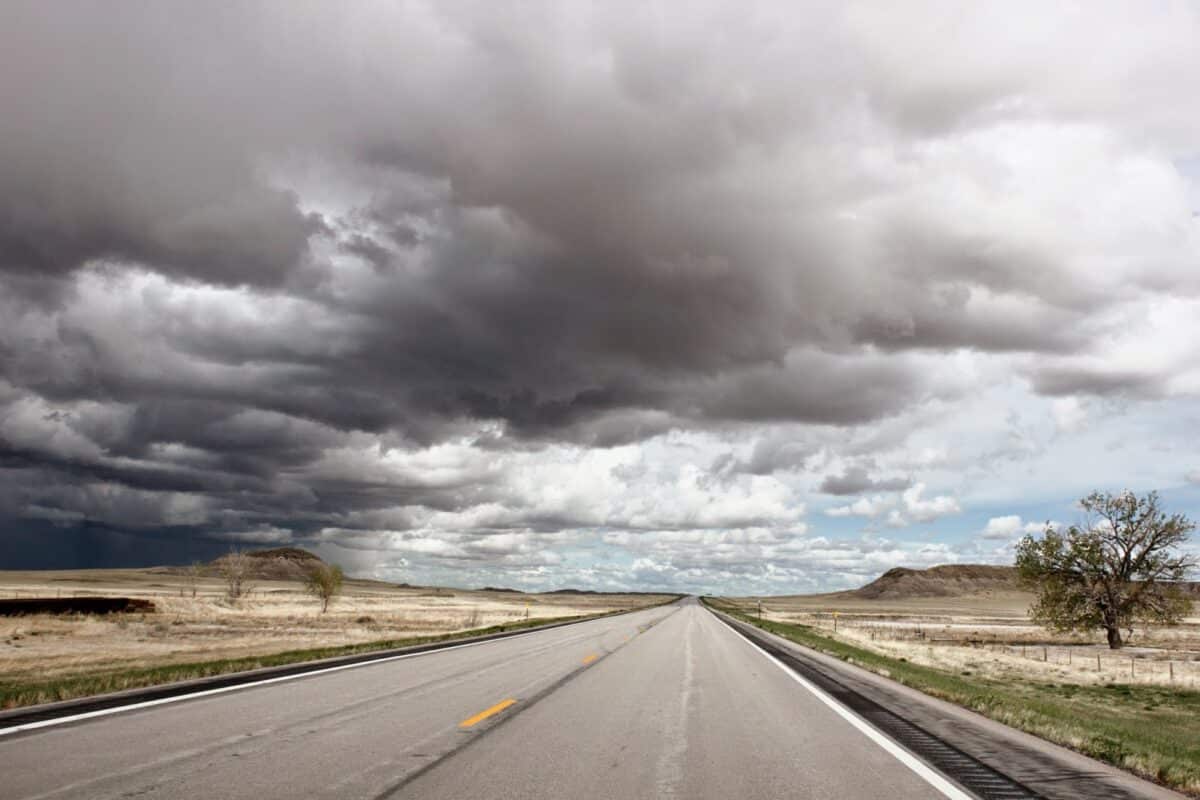
Distances to polling places can be long and lonely on reservations throughout the rural West. Here we see a road on Pine Ridge Indian Reservation, in South Dakota. (Joseph Zummo)
In early May, a Montana state court recognized this problem when it blocked a 2025 state law that would have cut back Election Day voter-registration hours, which had previously allowed voters to both register and vote on the same day. The law would have eliminated the final eight hours of Election Day voter registration.
In a case brought by NARF, the American Civil Liberties Union and others, the court ruled that the measure likely disproportionately harmed Indigenous voters from rural reservation communities and violated their right to vote. Requiring many of them to make two trips—once to register, then again on Election Day to cast their ballots—was a too heavy a burden, said the court. Because the case was filed in state court, the losers cannot appeal it to the Supreme Court, and it will not be affected by the Callais decision.
As Gene Small, president of the Northern Cheyenne Tribe, in Lame Deer, Montana, which was a plaintiff in the lawsuit, remarked in June 2025: “We are not asking for special treatment—we’re demanding equal treatment.”
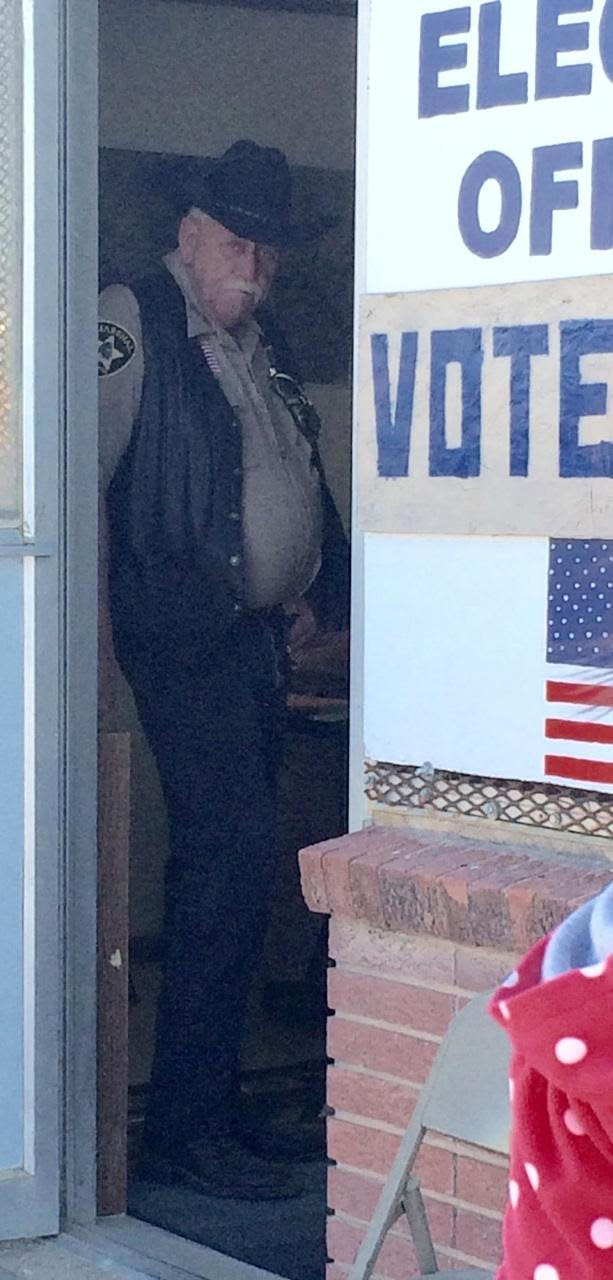
In a bid to frighten away tribal voters, the county handling elections for Pine Ridge Indian Reservation, in South Dakota, stationed a sheriff in the precinct’s doorway. The reservation’s Oglala Sioux voters became concerned that getting past him to vote might inexplicably land them in jail. Voter turnout plummeted. (Donna Semans)
For De León, the outcome of the case was both successful and irritating. “It’s incredibly frustrating to see wasted time and resources—used to deny the vote rather than address inequalities in voter access,” she says.
Hurdles for Native voters may be official, like federal and state laws and Supreme Court opinions. Other barriers are spontaneous schemes, cooked up locally. In 2014, after days of high turnout of Native voters during early voting, the mainly white-inhabited South Dakota county running federal elections for Pine Ridge Indian Reservation stationed a sheriff in the doorway of the polling place.
Pot-bellied and mustachioed, with the requisite cowboy hat and boots, he blocked the opening and alarmed the reservation’s Oglala Sioux voters. They worried that getting past him to cast a ballot might inexplicably land them in jail. The Justice Department intervened, telling the county voting officials to remove the sheriff. They did, and turnout rebounded.
A seat at the table
Reduced access to the polls has had enduring consequences for Fort Belknap Indian Community in northeastern Montana, says William Main, the community’s former chairman. When governments—county, state or federal—make decisions that affect those with minimal voting rights, the consequences for any tribe, Fort Belknap among them, are lack of economic development, meager educational offerings, inadequate medical and dental care and more, he says.
Treaty rights that Native people paid for years ago with their lives and their land are being stripped away, according to LeBlanc at the Native Organizers Alliance. This includes the right to health care, she says. “We’ve never had fully funded health care, so we’ve depended on third parties—Medicare, Medicaid and the Affordable Care Act. When the Medicaid cuts hit hard later this year, it’s going to have a devastating effect on our health care systems.”
At Fort Belknap, insufficient federal support for law enforcement is a serious problem, Main says. In 2022, the tribe brought a federal lawsuit challenging the funding level. The suit is ongoing. Other tribes in Montana have said that they too lack appropriate federal financing for law enforcement.
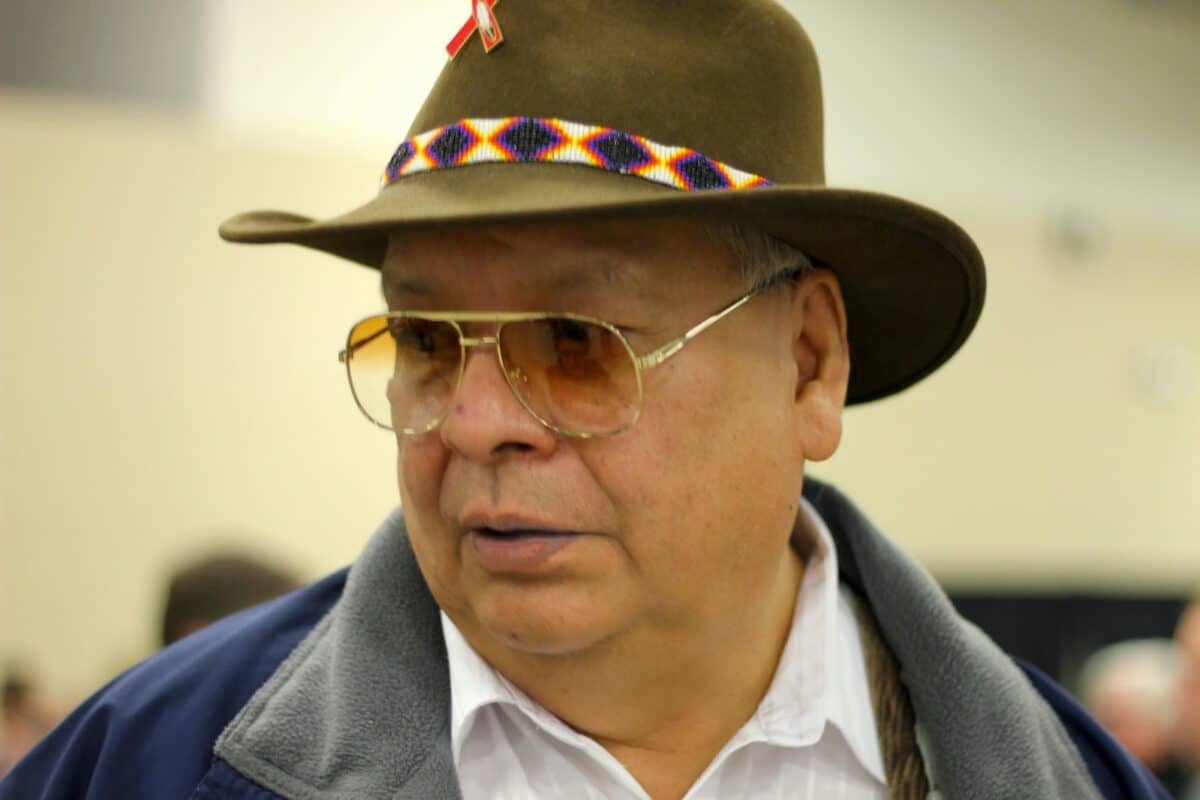
William Main, Gros Ventre and the former chairman of the Fort Belknap Indian Community, in northeastern Montana, explains voting rights hurdles for his people. (Joseph Zummo)
Barn Raiser has reported on even more tribes that struggle to get the federal government’s attention for this critical community-safety issue. In 2023, the Oglala Sioux Tribe sued the Bureau of Indian Affairs for paying for just 30-some officers and seven criminal investigators to patrol the 30,000 tribal members on its 3.1-million-acre Pine Ridge Indian Reservation—an area nearly the size of Connecticut. In 2024, the business committee of the Ute Tribe told Barn Raiser that three officers at most patrol an even larger expanse—its 4.5-million-acre Uintah and Ouray Reservation, in Utah.
Ravaging the land
Disenfranchised Native communities can experience extreme environmental destruction, and they can face severe backlash for making their voices heard.
The 2016 protests at Standing Rock against an oil pipeline planned to cross the Missouri River and jeopardize their water supply drew attention to the many dangerous pipelines and other oil and natural-gas extraction and transport facilities on Native land. Journalists from around the nation and the world reported on the North Dakota police and private contractors they hired, who shot demonstrators with rubber bullets and subjected them to gassing, hosing with cold water in below-freezing temperatures, arrest and other aggressive tactics.
The methods were not new. During the 1960s and 1970s, unarmed members of Northwest tribes were shot at, beaten and arrested while seeking recognition of treaty-guaranteed fishing rights, according to former Puyallup Tribe chairwoman Ramona Bennett. For decades, Nebraska law enforcement roughed up and arrested protesters from Pine Ridge Indian Reservation as they tried to shut down Whiteclay, a tiny bordertown that existed almost exclusively for more than a century to bootleg alcohol onto the dry reservation.
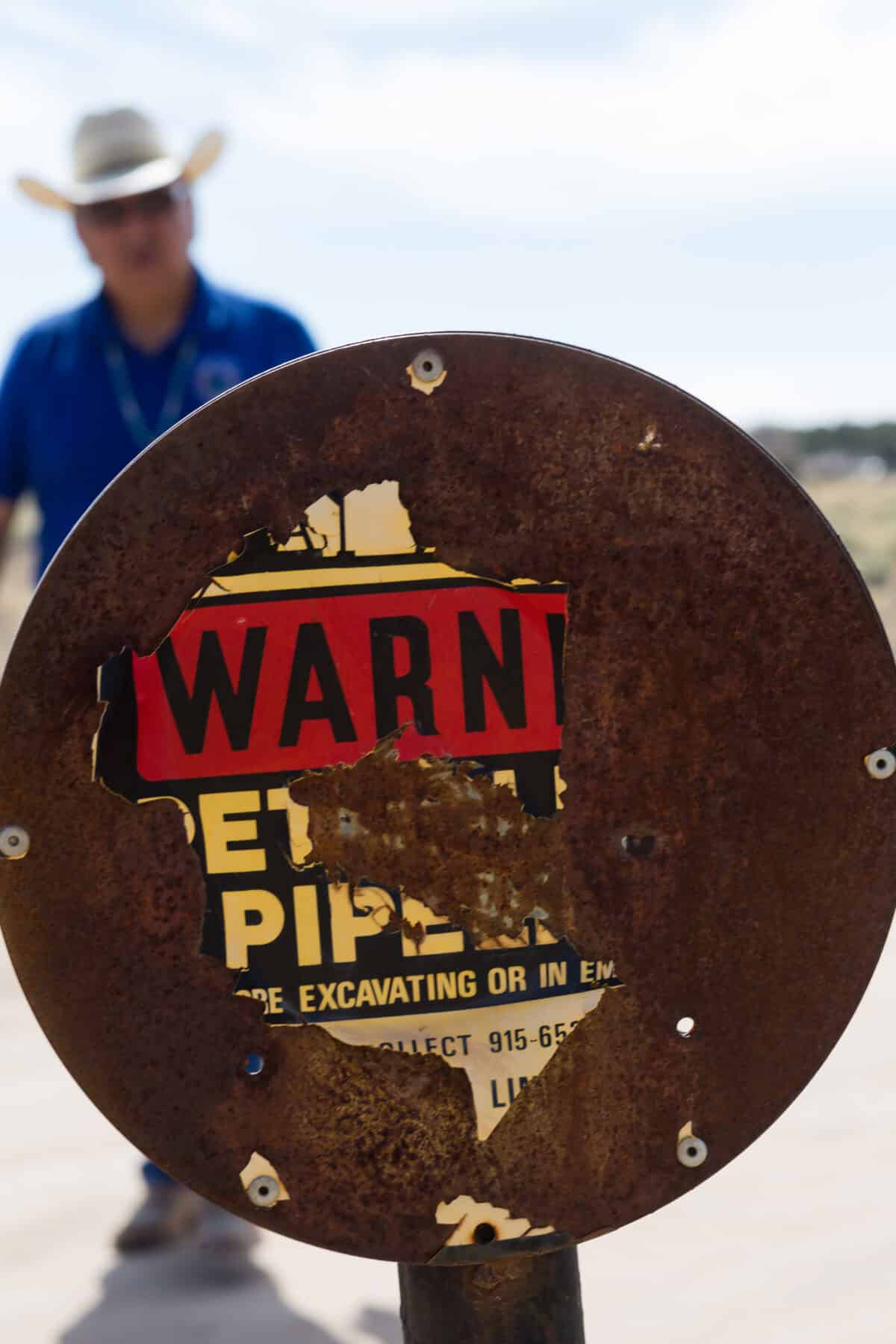
Nationwide, oil and natural-gas pipelines cross land that’s owned by tribal members as well as tribes like Standing Rock. This warning sign identifies a pipeline on a Navajo family’s property. (Joseph Zummo)
Mining is another scourge. A 2023 paper from the Native American Budget and Policy Institute reports that in the 12 western-most U.S. states, more than 600,000 Native people live within a few miles of 160,000-plus abandoned mines for uranium, vanadium, gold, copper and lead. The mines are typically unmarked and unfenced, says the report. According to a 2017 study in Current Environmental Health Reports, they continually expose tribal members to the dangerous toxins used to extract and refine the ore and will not be cleaned up for generations.
After decades of looking the other way, the Nuclear Regulatory Commission (NRC) traveled to the Navajo Nation in 2022 and took testimony on the country’s largest, almost entirely unknown nuclear accident. The accident at Three-Mile Island, Pennsylvania, recognized worldwide, resulted in a negligible release of radioactivity. Few, other than the Navajos affected, have heard of a far worse incident at Church Rock, New Mexico. In 1979, a dam holding back mining waste broke, releasing more than 95 million gallons of radioactive liquid and 1,000 tons of a sand-like radioactive substance. The dangerous material spewed some 150 miles over the Navajo reservation. Many Navajos were afflicted with cancer and other chronic diseases. On its website, NRC still refers to Three-Mile Island as “the most serious accident in U.S. commercial nuclear power plant operating history.”
Looking forward
In the face of all these difficulties, numerous Native candidates look likely to be elected or re-elected in upcoming national, state and local races. They include former Secretary of the Interior Deb Haaland, of Laguna Pueblo, running for governor of New Mexico; Minnesota Lt. Governor Peggy Flanagan, White Earth Band of Ojibwe, campaigning to become U.S. senator from that state; Congresswoman Sharice Davids, Ho-Chunk, seeking re-election as U.S. representative from Kansas; and former Congresswoman Mary Peltola, Yup’ik, looking to become U.S. senator from Alaska.
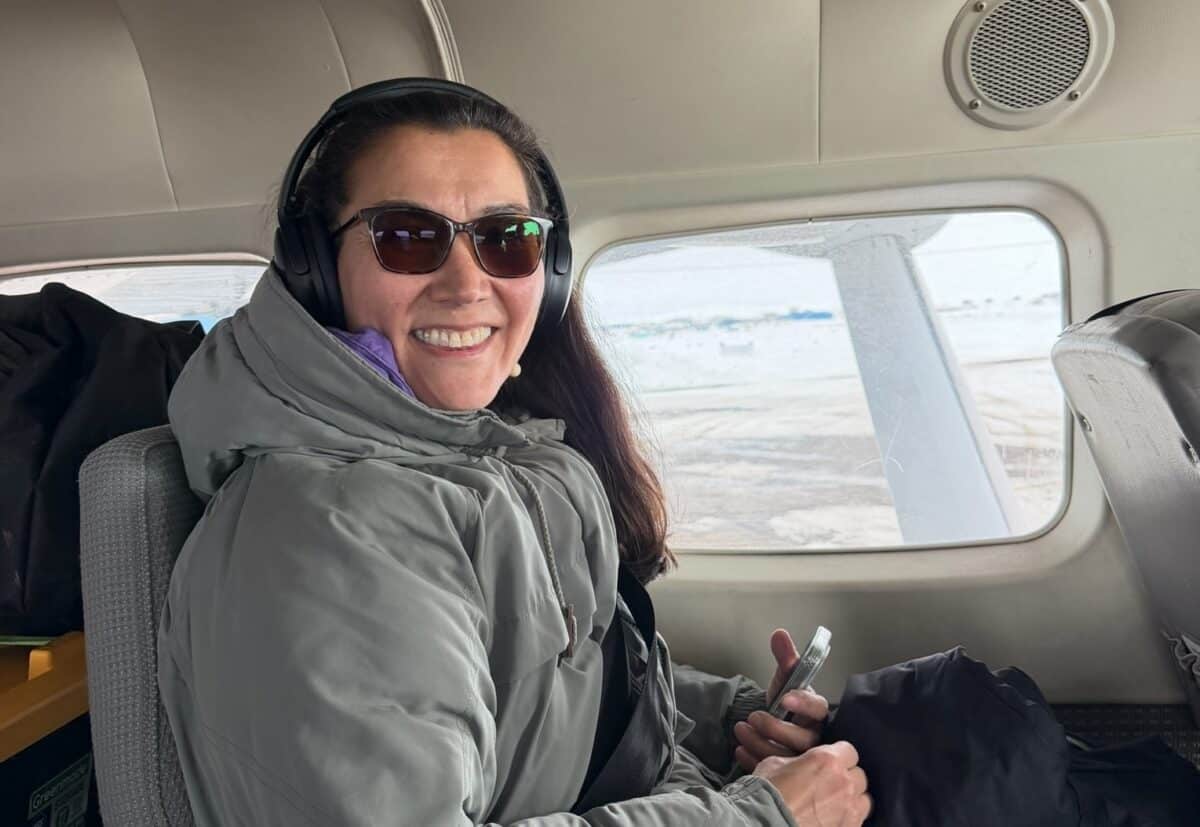
To campaign in Alaska, where many villages are hundreds of miles beyond where the roads end, U.S. Senate candidate Mary Peltola must fly over vast expanses, as shown here in Western Alaska in 2026. (Alaskans for Mary campaign)
They, and many more Native candidates nationwide, have broad appeal in districts that are not necessarily majority Native. “They’re not like other candidates, who say vote for me, and I’ll accomplish this or that,” LeBlanc says. “Our people’s campaign speeches talk about bringing communities together [and] how important it is to form circles of people who are willing to struggle for everyone’s human rights.”
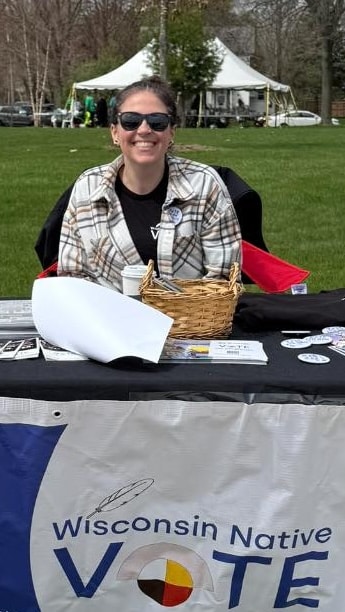
Maria Haskins, Lac Courte Oreilles, regional tribal organizer for Wisconsin Native Vote, at a 2025 Shawano-Menominee event supporting sobriety. She is seen here offering information on both voting and fostering safe and healthy communities. (Courtesy of Wisconsin Native Vote)
“Indigenous people are taking their place at a table where they’ve always had the right to be,” says Maria L. Haskins, a regional tribal organizer for Wisconsin Native Vote, which is part of the advocacy organization Wisconsin Conservation Voices. Haskins is a Lac Courte Oreilles descendant with Stockbridge-Munsee and Oneida Nation of Wisconsin lineage.
Decades will be required to rebuild the immense destruction of our world and our democracy that has occurred, and is still occurring, according to LeBlanc. But rebuilding will be continual and not simply centered on elections. “We have to think Indian about this problem,” she says. LeBlanc describes 100 years of treaty making, with five generations of Native people leaning into the future. “That’s the position we’re in today, a one-, two- or three-generation effort to create solutions that will be better than what we had.”
Haskins is on the ground in Wisconsin doing just that. “We know our tribal communities are disenfranchised,” she says, “so if we can provide people with accurate information, they will make informed decisions when they’re casting their ballot.” Activities she engages in may include door-to-door canvassing or setting up booths or tables at community events. These range from round dances and powwows to moccasin- and basket-making workshops. She helps tribal members figure out where their precinct is and shows them how to find transportation to it.
“We focus on relationship building,” Haskins says. “Our ancestors have been doing that since the beginning.”
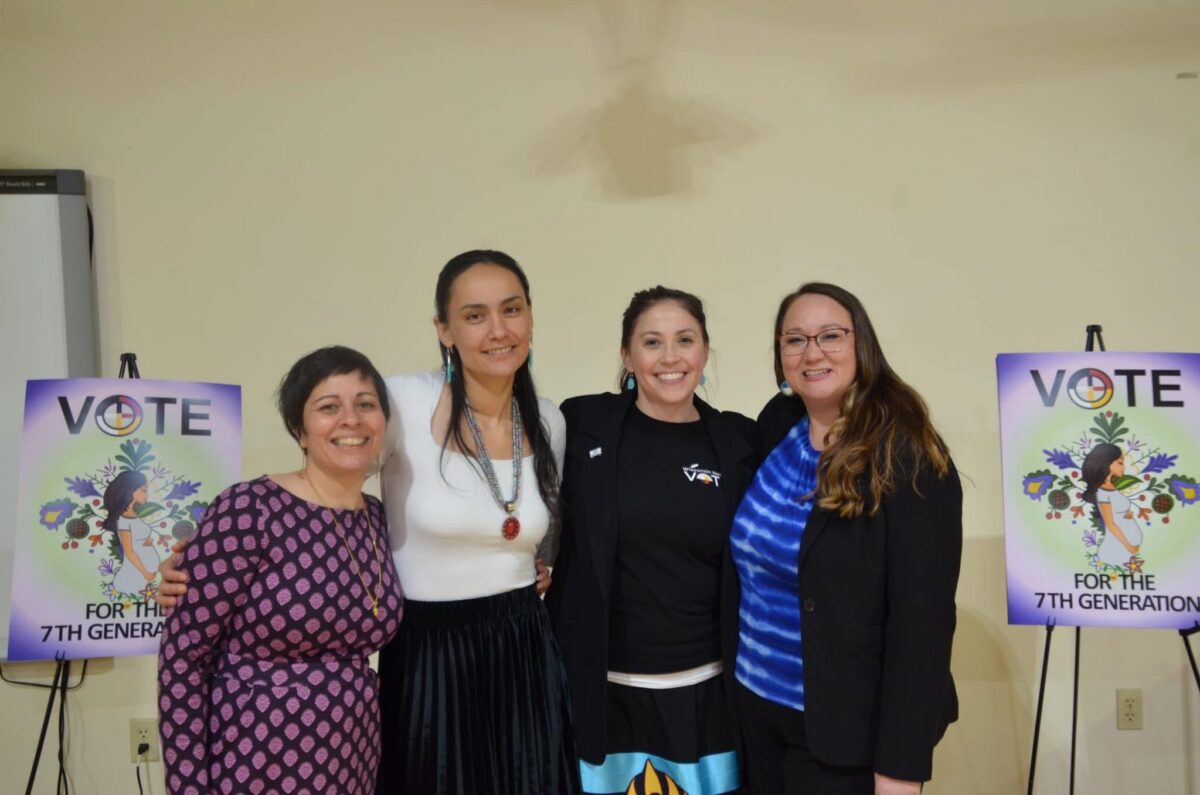
Presenting to a 2025 multi-tribal dinner that highlighted the importance of voting in Wisconsin Supreme Court elections were, from left, Anjali Bhasin, Wisconsin Conservation Voices civic engagement director; Allison Neswood, Navajo, Native American Rights Fund senior staff attorney; Maria Haskins, Lac Courte Oreilles, Wisconsin Native Vote regional tribal organizer; and Wisconsin attorney Star Tourtillott, Little Shell Chippewa. (Courtesy of Wisconsin Native Vote)
NARF will continue to fight on behalf of Native Americans, De León says. “Callais is a setback, but we will persevere.” She called passage of the John R. Lewis Voting Advancement Act, which includes the Native American Voting Rights Act, essential to the preservation of our democracy.
Says LeBlanc, “We have to create a democracy that we’ve never had before, where sovereignty and the care of Mother Earth and the care of all living beings are at the center of policy making, where we all have equal access and equal rights to live in a good way.”
Tribal groups join lawsuit seeking restoration of $127 million in canceled farm grants
Twenty-four organizations, including one that serves tribes in Montana and the surrounding region, on Tuesday joined a lawsuit against the U.S. Department of Agriculture, alleging that grants supporting farmers and ranchers were unlawfully terminated.
At least three projects in Montana were affected: Piikani Lodge Health Institute, headquartered on the Blackfeet Reservation, lost a nearly $9 million grant to improve operations for farmers and ranchers in the region. The Chippewa Cree Tribe in north-central Montana lost a nearly $6 million award to purchase land and train young farmers and ranchers how to manage it. And South Dakota-based Four Bands Community Fund lost an $8.5 million grant to train and financially support at least 25 low-income agricultural producers in Montana, North Dakota, South Dakota and Wyoming. At the time, Montana-based awardees described the terminations as “devastating.”
In several termination letters obtained by Montana Free Press, the USDA wrote that the grants had been canceled because the associated projects “involved discriminatory preferences based on Diversity, Equity and Inclusion and wasteful spending that did little to further lawful agricultural land purchases.”
A lawsuit against the USDA seeking reinstatement of the grants was originally filed in June 2025, after several other grants were terminated following President Donald Trump’s executive orders deprioritizing climate action and Diversity, Equity and Inclusion (DEI) programs. In August 2025, a federal judge in Washington, D.C., ordered the USDA to reinstate six grants awarded to the original plaintiffs. This week, 24 additional organizations, including Four Bands Community Fund, which serves Montana and other states in the region, joined the lawsuit.
The new plaintiffs are represented by lawyers from a variety of advocacy organizations, including FarmSTAND, Farmers’ Legal Action Group and Earthjustice. They argue that the USDA’s March grant terminations were unlawful and have caused irreparable harm.
“Plaintiffs are faced with layoffs, abandoning projects and investments, reputational harm in the community for failing to deliver promised programs, and drastic reductions in their organizations’ operations, or in some cases, having to shutter their organizations entirely,” the complaint reads.
USDA representatives could not immediately be reached for comment.
The plaintiffs allege that the USDA terminated the grants “without individualized review but rather based on vague allegations that the projects were not aligned with the President’s newly stated goals of eliminating funding for DEI and climate initiatives — without any effort to determine whether the projects could be brought into line.”
The plaintiffs specifically allege that in 2023, Four Bands Community Fund was approved for an $8.5 million grant to increase access to land and capital in Mountain Plains tribal areas, but in March received notice that the grant had been terminated, in part because the project “violated equal protection principles by selecting beneficiaries based on race, ethnicity, sexual orientation, or sex.”
The plaintiffs describe the Four Bands grant termination as “particularly arbitrary and capricious,” and argue that the federal government’s reasoning “ignores the unique status of tribes, tribal citizens and tribal lands” and “fails to acknowledge tribal status is not a race-based classification,” as would be subject to DEI programming. It’s well established in federal Indian law that tribal citizenship is a political classification, not a racial one.
Representatives of Four Bands Community Fund could not immediately be reached for comment.
The plaintiffs are asking the United States District Court for the District of Columbia to restore the grant awards, which total $127 million, and prohibit the USDA from terminating the grants in the future.
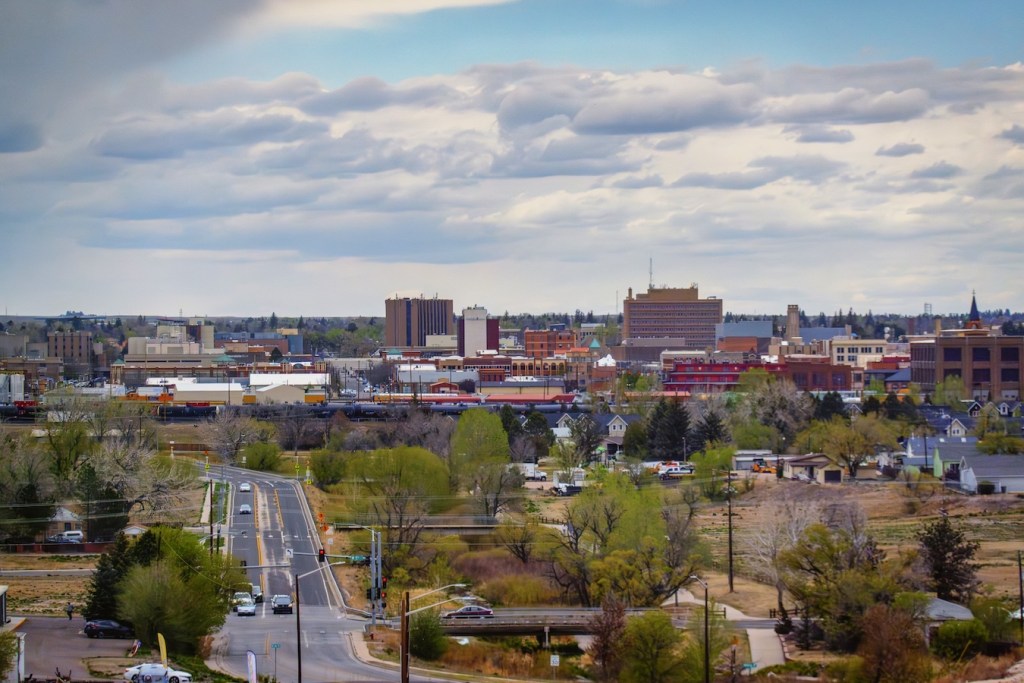
The Cheyenne City Council voted down a one-year moratorium on new data center development Tuesday after about five hours of public comment from more than 50 residents.
“We need to slow down and make sure that none of these are going to be in our populated areas,” Cheyenne resident Michelle Cobb told the council, adding that there are too many unanswered questions regarding water use and property values. “We need a big buffer zone, because a lot of our open areas in Cheyenne are being pegged for rezoning.”
Already home to more than a dozen computing centers, Wyoming’s capital city is entertaining proposals from industry heavyweights such as Meta and Microsoft for a potential 40 to 70 new data centers, according to some estimates. Current plans in the region could require double or triple the volume of all electricity consumed in the state. The scale of investment, construction, jobs and demands on the city is so massive and, by nature, speculative, many said, that it’s difficult to fathom its impact with any accuracy.
A server in a data center in Casper, June 2025. (Dustin Bleizeffer/WyoFile)
For some, like Mark Moody, who sponsored the measure, that’s reason to hit pause, but his fellow council members outnumbered him 8-1 against pausing data center development.
Others, including about a dozen union workers, warned that a moratorium — albeit temporary — would chill data center investment in the region, along with steady construction work that’s already allowed local trade workers to stay close to home rather than chase jobs around the country.
“Until Meta ramped up and brought all of us home, all of these guys from Casper, Cheyenne, South Greeley, Laramie and other parts of the state were in a completely other state,” said Matthew Miles, a journeyman pipefitter with United Association Local 192. “[They were] away from their families, away from anybody they cared to share life with, trying to earn money to support not just their family, but the town they live in.
“This moratorium will only achieve one thing,” Miles added. “These companies will find somewhere else that doesn’t care about what the locals think or which locals want to stay home and have jobs and stay with their families.”
A data center worker checks operations in Casper. (Dustin Bleizeffer/WyoFile) Credit: Dustin Bleizeffer/WyoFile
Even those against the moratorium, however, implored the council to demand that data center developers invest in the city beyond their facilities to ensure Cheyenne can handle growing demands on schools, healthcare and other local services. It was a sentiment shared by council members who voted against the moratorium.
“I think we need to do a better job,” councilman Larry Wolfe said. “We, the council, we the city, need to demand more of these companies.
“Yes, it’s great that Microsoft gives us money and Related Digital gives us money,” Wolfe continued. “But it’s chump change in the whole economic calculation for them. I think we have an opportunity to do that.”
Dozens of residents cast doubt on assurances that the industry is moving toward cooling technologies that require far less water than in years past. Yet Mayor Patrick Collins and several council members said they have more than 10 years of data from city water managers, showing that the current data center fleet is not straining water supplies.
The industry accounts for 1.48% of all water consumed in Cheyenne, Collins has testified before lawmakers. Plans on the books would boost that figure to 3%.
Several council members acknowledged they don’t know for certain how a proliferation of data centers might change Cheyenne, but said they’re committed to economic growth and setting expectations for the companies driving it. But imposing a year-long moratorium probably isn’t going to make skeptics more comfortable, councilwoman Michelle Aldrich said.
“I believe that our job as the council is to enter into things like this, to continue to get answers to our constituents, but also to hold our corporate partners accountable,” she said.
Some animals win, some lose when the Potter Valley Project dams come down
Scott Dam in Lake County, Calif., on May 9, 1967. Located on the Eel River creating Pillsbury Lake which has a surface area of 2,000 acres and 65 miles of shoreline. The concrete dam is an 138 feet in height and was built in 1922 for electricity and its owns by PG&E, who plans to give it up in 2022. (California Department of Water Resources via Bay City News)
MENDOCINO CO., 5/27/26 — For 104 years, the rainbow trout in the cold tributaries above Scott Dam have carried a secret they could not use. Pearse and Kannry’s genetic work, summarized in Friends of the Eel River’s 2025 comments to the state water board, shows the resident fish still hold much of the code for a sea-run life: the chemistry to slip downstream as smolts, turn silver, run to sea and come back heavier as summer steelhead, the southernmost ghost of Northern California’s runs. Two concrete plugs have kept that code from being tested. Once those plugs are removed, the trout can live out their code to run to the sea.
That is the smallest, strangest fact in the Potter Valley Project’s dismantling. Two rivers will live different lives once the dams come down. The Eel, bled for more than a century through a 9,257-foot tunnel under the divide, starts to regain itself; the Russian, drinking imported Eel water since 1908, learns to live thinner. The critters on both rivers are about to get the news.
This tour runs from the bare bottom of what used to be Lake Pillsbury down to the harbor seal haul-outs at Jenner: eight stations across two watersheds. Some critters win, some lose, and most will have to learn a different river.
Station 1 — the drained reservoir
Scott Dam holds back the upper Eel into Lake Pillsbury, a 2,300-acre reservoir completed in 1922. Under PG&E’s surrender and decommissioning plan, removal could begin as early as 2028. The lake bottom will be exposed, and what lived in the lake mostly does not live in the river.
Largemouth bass, bluegill and crappie, the warm-water fishery that draws Bay Area weekenders, are gone from this place, or reduced to whatever side ponds managers maintain elsewhere. None of those fish are native to the Eel. They were put there because there was a lake.
The bald eagles and ospreys that nest around Pillsbury lose a grocery store. Eagles can adjust; ospreys have a harder time of it. Neither species will disappear from the stretch, but the reservoir buffet does. In time, a returning salmon run could feed them on a different schedule.
A tule elk herd at San Luis National Wildlife Refuge in Merced County, Calif., on Nov. 20, 2017 — a stand-in for the Lake Pillsbury herd, which loses the open water once Scott Dam comes out but gains cottonwood and willow on the drained lake bed. (Steve Martarano/U.S. Fish and Wildlife Service via Bay City News)
The tule elk lose open water but not the valley-bottom forage. The exposed bed won’t become paradise overnight; it will pass through mud, weeds and raw ground first. But willow, cottonwood, sedges and meadow plants are the long game, and elk know how to use a river bottom.
The pikeminnow may be the loss nobody is grieving. Sacramento pikeminnow were introduced to the Eel in 1979, supposedly through an illegal bucket-stocking into Pillsbury, and from that warm slack water, they spread through the basin to become one of the most damaging nonnatives in the system, a major predator on juvenile salmonids across the mainstem and South Fork. Pat Higgins’ Eel River Recovery Project has documented their spread for more than a decade.
Pikeminnow thrive in the kind of water dams make: slow, warm, simplified. Take the slack water away, and the cool, fast post-removal river is, finally, the wrong river for them. They won’t vanish overnight and may not vanish at all, but the Eel’s most notorious nonnative finally will lose ground.
A Sacramento pikeminnow in the Russian River near Healdsburg, Calif., on March 21, 2020. Illegally introduced to Lake Pillsbury in 1979, pikeminnow have become the apex predator of juvenile salmonids across the Eel River basin. Remove the dams and their warm slack habitat disappears with them. (Zayd Wheeler/U.S. Fish and Wildlife Service via Bay City News)
Station 2 — the 12 miles between the dams
From Scott Dam down to Cape Horn Dam is about 12 river miles of canyon, hemmed by the Mendocino National Forest. For a century this stretch has been a controlled river: flow set by upstream releases, sediment held back by the same dam.
The first years of removal will be hard on the river. Studies estimate Lake Pillsbury has accumulated roughly 21 million cubic yards of sediment, with about 12 million potentially available for downstream transport, and however the work is staged, those years bring turbidity, burial and a moving bed where a reservoir held the river still.
Aquatic insects get hit first. Caddisfly larvae build stone cases on cobble, so bury the cobble in silt and the caddis go with it. Mayflies and stoneflies take the same hit, and any remaining native freshwater mussel beds are vulnerable to burial too. The lower Eel has survived great sediment violence before, including the 1955 and 1964 floods, but survival was never easy.
A young Pacific lamprey burrows into the streambed at the Carmel River in Monterey County, Calif., on July 25, 2018. Lamprey stand to gain the most when the Eel dams come out — 288 miles of new spawning ground. (U.S. Fish and Wildlife Service Pacific Southwest Region via Bay City News)
This is also where Pacific lamprey begin a quieter return. The larvae are wormlike, blind and ancient; they burrow into fine sediment and filter for years before they run to sea, and when the first pulse passes and the new bed sorts itself, some of that new sand becomes the material they need.
Tribal restoration programs call lamprey a forgotten keystone. The adults carry ocean nutrients deep into the basin, and their bodies feed everything from black bears to belted kingfishers. Lamprey were here when these mountains were rising, and they are about to have a much larger upper basin to work with again.
The foothill yellow-legged frog lays eggs on cobble bars in spring as flows drop, and a dam that releases cold or high water late can drown or chill the clutches. The post-removal pattern of natural snowmelt and rain recession through May and June is closer to what this frog evolved with. The first year is rough on the frog; after that, spring runs closer to the rhythm it evolved with.
A foothill yellow-legged frog, California-threatened on June 30, 2020. On the Eel, natural flow helps the frog. On the Russian, less summer water tips it the other way. (Rebecca Fabbri/U.S. Fish and Wildlife Service via Bay City News)
Station 3 — Cape Horn to Outlet Creek, the dewatered decades
Below the Cape Horn diversion, the upper mainstem Eel has been running a half-river for generations. In recent decades, roughly 60,000 acre-feet a year has been pulled through the tunnel into the East Fork Russian, and in dry summers the reach from Cape Horn down past Hearst to the Outlet Creek confluence at Dos Rios has run nearly bone-dry, what remained warming past salmonid comfort and sometimes past survival. Native Fish Society’s 2015-16 monitoring clocked the mainstem at 78 degrees Fahrenheit at Bloody Rock Roughs, above what juvenile steelhead can ride out for long.
Dam removal won’t give salmon cooler or fuller summer water, which is the common expectation. Lake Pillsbury catches winter rain and releases it slowly through the dry months, so when the lake is gone, the summer release goes with it. The pre-1922 Eel ran low and warm by August on its own, and that is the river the salmonids evolved with. What dam removal restores is passage and timing, not August volume.
In the first years after removal, the upper mainstem may even run drier in late summer than it did with managed Pillsbury releases, which makes the cool tributary refuges — Tomki Creek, Outlet Creek above Dos Rios, cold springs and shaded side channels — more important, not less. Juvenile steelhead and Chinook will hold in those refuges through the worst stretches.
The middle of the Cape Horn fish ladder in Potter Valley, in a federal survey photo from the 1980s. The 49-pool ladder counted 9,528 steelhead in 1944-45; once the dam comes out, the ladder won’t matter. (Historic American Engineering Record / Library of Congress)
What’s new is that they can move. The Cape Horn fish ladder, 434 feet long with 49 pools, was never enough. Van Arsdale’s counting station logged 9,528 steelhead in 1944-45. By recent years the count had fallen to the single thousands, some years to near zero. With the dam gone, the ladder no longer matters, and the counting station, which has been on this river since 1933, will close.
Above the former Scott Dam site, the upper mainstem opens to sea-run fish for the first time since the early 1920s. River otters get a whole reach to work: they key on lamprey, suckers and salmonid juveniles, and all three prey bases should change as passage returns. American mink follow the same edges. Belted kingfisher and American dipper, both tied to live streams, gain water that behaves more like a stream, and common merganser, which times broods to fry emergence, gets a different nursery.
Of all the upper-basin returns, the summer steelhead matters most. Charlie Schneider, CalTrout’s connectivity program manager, has put it plainly in public interviews: the wild trout already up there show where fish want to be, and the door just has to open. Pearse and Kannry’s genetic work suggests the door is real, and the first wild summer-run adult to swim past the former Scott Dam site will be the loudest critter event in the modern Eel.
An adult steelhead in hand at a U.S. Fish and Wildlife Service field station on Jan. 23, 2010. Resident trout above Scott Dam still carry the gene for sea-run summer steelhead; once the dams come down, that gene gets its first real chance in 100 years. (Michael Humling/U.S. Fish and Wildlife Service via Bay City News)
Station 4 — mainstem Eel, South Fork to Pacific
Below Dos Rios the Eel takes in the South Fork and runs to the sea at Centerville. The sediment pulse follows months to years later, through the lower river, estuary and nearshore ocean. Muddied water at the mouth is a real cost for a year or two.
Once the pulse passes, the lower river gets something it has been denied for a century: a natural sediment and wood supply from the upper basin. Rivers build bars, riffles, floodplains and estuaries with the material mountains give them. A century of trapped gravel, sand, wood and organic matter cannot be released without harm, but the river also needs that material to heal.
The half-pounder steelhead, the Eel’s signature subadult, returns to fresh water after one rather than two saltwater years. It gets better passage and a river stitched more closely to its own seasonal cues. Fall Chinook gain upper-basin habitat in numbers; a 2024 run estimate cited in California Sportfishing Protection Alliance field reporting put more than 18,000 adult Chinook in the watershed that year, a reminder that the river is constrained, not dead.
A green sturgeon during a Sacramento River survey in California on Dec. 7, 2017. The Eel has nearly lost its green sturgeon; once the upper basin opens, the fish reaches spawning ground it hasn’t seen in a century. (U.S. Fish and Wildlife Service Pacific Southwest Region via Bay City News)
Green sturgeon are a slower story. The Eel has nearly lost them, and their recovery runs in human generations. Dam removal is not primarily a sturgeon project, but a healthier estuary, restored sediment process and stronger salmonid runs can only help the lower-river food web they belong to.
At the mouth of the Eel, the Wiyot Tribe and restoration partners have been working the Ocean Ranch Unit and the Eel estuary, where young salmon fatten before the ocean and returning adults gather before the run upstream. The estuary has been scoured, diked, drained and simplified by a century of damage, and it now gets a real chance to work as an estuary again. Federally endangered Tidewater goby belongs in this story, as do juvenile salmon, steelhead, longfin smelt and the invertebrate soup that feeds them.
Harbor seals at the mouth depend on more than fish; the sediment supply that builds and reshapes the beach also shapes their haul-outs. Shorebirds on the mudflats are mostly on the edge of this story, with sea-level rise their bigger concern.
A harbor seal pup haul out at the Russian River mouth in Mendocino County, Calif., at Jenner and pup on the bar from March through August; a thinner river closes the bar earlier. (U.S. Fish and Wildlife Service via Bay City News)
Station 5 — the disconnect
On the Russian side of the divide, the 9,257-foot tunnel that has carried Eel water under the ridge since 1908 will no longer run year-round. The 2025 Water Diversion Agreement transfers PG&E’s diversion right to the Round Valley Indian Tribes and authorizes a smaller run-of-river facility near the old Cape Horn site, to be built and operated by the new Eel-Russian Project Authority. PG&E wants it built during dam removal, not after, so the East Branch Russian goes less time without Eel water.
The new facility does not replace the old project. It would divert only under seasonal rules and Eel flow floors. In wet periods some water still crosses the divide, but in dry summers, when the old diversion mattered most for downstream agriculture, storage and recreation, the Russian River should expect little or no Eel subsidy.
The wildlife on both sides of the divide are facing different futures. On the Eel side, the river regains passage, sediment and natural process. On the Russian side, the system loses a summer cushion that has quietly underwritten it for three human lifetimes.
FILE – High water levels are seen at Lake Mendocino near Ukiah, Calif., on Monday, Jan. 16, 2023. The U.S. Army Corps of Engineers San Francisco District (USACE) began a series of high-flow releases from Coyote Valley Dam at Lake Mendocino starting midday on Jan. 16 in response to reservoir levels and improving downstream conditions on the Russian River. (Kenneth James/California Department of Water Resources via Bay City News)
Station 6 — Lake Mendocino and the East Fork Russian
Lake Mendocino is not coming down. The late-1950s Coyote Valley Dam is a separate U.S. Army Corps of Engineers structure, not part of the Potter Valley Project. But its inflows drop sharply when a run-of-river facility replaces year-round plumbing—less water means less water stored and less flexibility to release in summer.
The lake’s own ecology is reservoir ecology: smallmouth bass, bluegill, crappie. Lower lake levels mean less reservoir habitat in dry years, and the ospreys nesting around the lake, the bald eagles wintering on it, and the white pelicans and double-crested cormorants working the surface all see less working water in dry periods. None of these are at-risk species, and the lake will still be a lake, just a smaller, thinner one in the years when water matters most.
Summer baseflow on the East Fork below the dam — and on the mainstem Russian below Hopland, where the East and West forks meet — depends on releases from Lake Mendocino. Those releases are shrinking: recent state flow orders have set lower minimums. Sonoma Water, the regional water agency, and Russian Riverkeeper, the watchdog group, are publicly at odds over how to manage the watershed. Riverkeeper wants earlier water-use cuts to protect the lake’s carryover storage and cold-water pool.
A bald eagle in flight at Tule Lake National Wildlife Refuge in Siskiyou, Calif., on Jan. 30, 2008. Wintering eagles at Pillsbury and Lake Mendocino will see their forage change as the lakes shrink. (Dave Menke/U.S. Fish and Wildlife Service via Bay City News)
Station 7 — Russian mainstem, Ukiah to Wohler
The Russian carries two sea-run populations listed under the Endangered Species Act: Central California Coast steelhead and Central California Coast coho. Steelhead spawn across the basin; coho hang on in cooler tributary refuges such as Mill Creek above Healdsburg, Dry Creek below Warm Springs Dam, Green Valley, Mark West and the shaded side water where summer still gives them a chance.
These populations have been holding on inside a flow regime that included a steady Eel subsidy through the East Fork all summer, and taking much of that subsidy away brings the concern into focus around juvenile rearing from July through October. Juveniles need cool water, cover, food and depth enough to hide, and lower flows can mean shallower, warmer, more fragmented habitat and more concentrated predator pressure from nonnative bass.
Fall Chinook spawning. Sonar counted more than 18,000 Eel adults in 2024; modeling projects 1,000 to 10,000 more returning above the former Scott Dam site once the dams are gone. (Ryan Hagerty/U.S. Fish and Wildlife Service via Bay City News)
The flow number alone doesn’t tell you what the fish are dealing with. Federal regulators have cut summer minimum flows on the Russian so cold water stays banked in Lake Mendocino for release later, when fish need it most. Where the cold water sits, when it gets released and which area it cools matter as much as the gross volume.
The foothill yellow-legged frog faces different conditions on the two rivers. On the Eel, removing the dam restores the natural spring drop in flows that the frog evolved to spawn with. On the Russian, the picture is mixed: less imported Eel water means shallower summer flows in some stretches, hurting tadpoles, while changed release patterns may help in others.Western pond turtle, California’s native freshwater turtle, basks on log jams and rock outcrops along the Russian. It tolerates a wide range of flows but needs pools deep enough to overwinter and connected water to move, so fewer deep pools in dry years would be bad turtle news, slowly rather than dramatically.
North American beaver have been quietly recolonizing the lower Russian and its tributaries. They are flow-tolerant by trade, building their own pools, but a thinner mainstem makes that work harder and pushes the action toward tributaries and side channels with enough gradient, wood and water to hold a dam.
River otters do roughly the same thing on both rivers: they make a living wherever fish, crayfish and cover remain. The urban edges from Ukiah down through Healdsburg suit them better than people expect, and they may be the one species that comes through this transition about even.
A pair of of river otters curiously watching from the water. Otters are likely to do about the same on the post-dam Eel and the thinner Russian — they care about food, and both rivers still have fish. (Grayson Smith/U.S. Fish and Wildlife Service via Bay City News)
Station 8 — the estuary at Jenner
The Russian does not run to the Pacific in a straightforward way. It hits a sandbar at Jenner that closes in summer when wave energy exceeds the river’s outflow, opens when the river rises, and functions as a lagoon when closed. Sonoma Water has spent years writing and revising the management plan for this estuary, balancing flood risk to Jenner homes against juvenile steelhead and coho habitat, harbor seal pupping and the haul-outs on and near Penny Island.
Under a thinner-flow regime the bar can close earlier and stay closed longer, and by itself that can be good for lagoon-rearing fish; the lagoon becomes a warm, productive, food-rich nursery for juvenile steelhead and coho, fattening them before they smolt. A closed lagoon that stays brackish and oxygenated raises young salmonids well. The same lagoon, if it gets too warm or too cut off from tidal exchange, can kill them. Water quality decides which it becomes.
For harbor seals, the picture is mixed. Seals pup on the river bar and nearby beaches from spring into summer, and a stable closed bar can be good pupping habitat, while a sudden mechanical breach during pupping season is not. Lower flows tighten the management trade-offs because flood risk, fish habitat and seal disturbance all have to be balanced on a smaller water budget.
A harbor seal mother and pup at a California haul-out, April 15, 2014. Mothers nurse on the Russian River bar in Mendocino County, Calif., at Jenner March through August; lower flows change when the bar closes and reopens. (U.S. Fish and Wildlife Service Pacific Southwest Region via Bay City News)
Tidewater goby is important in some North Coast bar-built lagoons, including the Eel estuary and nearby Salmon Creek, but there’s no current survey confirming it at Jenner. The lower Russian’s reliable estuary fish are jacksmelt, surfperch, starry flounder and other natives that respond to water quality, salinity and food.
The estuary’s birds track those fish: great blue heron, snowy egret, belted kingfisher, osprey, double-crested cormorant, the wintering common loon and red-throated loon, the brown pelican in fall. The shorebirds on Goat Rock Beach, the sanderling and killdeer and willet and marbled godwit, care less about the river than about the ocean and the beach. They stay mostly on the edge of this story, watching the rest of the critters sort out a smaller river.
What the ledger says
Step back from the eight stations, and the picture isn’t symmetrical.
One of the clearest winners is Pacific lamprey, which regains access to a much larger upper Eel. The Eel’s summer-steelhead life history, reduced to a remnant possibility for a century, gets its first real chance in 100 years, and fall Chinook gain habitat in numbers. A 2020 peer-reviewed modeling by Cooper et al. projects between roughly 1,000 and 10,000 returning adult Chinook above the former Scott Dam site, a wide range that points toward recovery either way.
Adult Pacific lamprey on a stream bottom. Tribes and biologists call lamprey a forgotten keystone — adults carry ocean nutrients deep upstream and feed everything from bears to kingfishers. (U.S. Fish and Wildlife Service via Bay City News)
The clearest loss is the Pillsbury reservoir community: the bass and bluegill, the lake-edge foraging patterns, the human summer lake culture, which ceases to exist as a habitat type. It is a loss even if the fish themselves are not native to the Eel.
Between those two clear cases, the picture is harder, and most of the difficulty is downstream of the ridge. The lower Russian River, cut off from more than a century of imported Eel water, runs thinner in summer. Its steelhead and coho juveniles, its frogs, turtles, pool fish and aquatic mammals were already under pressure, and the pressure just got worse. Sonoma Water and Russian Riverkeeper will spend years politely arguing over flow and demand. The critters don’t get to weigh in on the modeling.
The Eel goes back toward being itself. The Russian learns to be smaller. The plumbing that connected them for more than a century comes apart, and the two rivers, which were never really one river even when the tunnel ran year-round, finish the slow uncoupling that began when the old two-basin compromise stopped being financially or safely sound.
The lamprey won’t know anything happened. The summer steelhead, if it returns, will know only that the door is open. The Pillsbury bass will be gone. The seal pup born at Jenner, on a bar that closes earlier than it used to, will live a slightly different summer.
Two rivers, two futures, and a lot of critters working it out.
Hill Country ranch with caves, cliffs and lake will become Texas’ second-largest state park
The 54,000-acre Silver Lake Ranch, straddling Kinney and Edwards counties, has a 30-acre spring-fed lake. An opening date hasn’t been determined.
Wetlands bill to face lawmakers with $1.5M annual cost
Why Should Delaware Care? As the Trump administration rolls back environmental regulations, environmentalists have worried about the tens of thousands of acres of wetlands that could be left unprotected. For the first time in decades, a state-level wetlands bill is seeming to garner bipartisan support.
For the first time in decades, a proposed law to govern freshwater wetlands is receiving unrivaled support from environmentalists, farmers and developers alike.
“Mike Riemann and I literally wrote the same sentence in our remarks,” Emily Knearl with the Nature Conservancy in Delaware testified last month in Legislative Hall, referring to sharing sentiments with the immediate past president of the Home Builders Association of Delaware.
“Is this bill perfect? No. But it’s good enough,” she said.
How Senate Bill 9, known as the Wetland Stewardship Act, fares once it faces the full Senate and House with its annual $1.5 million-plus price tag remains to be seen. There was no fiscal note when the bill made it unanimously through the Senate Environment, Energy & Transportation Committee in mid-April.
“Everyone feels the pain of something, but they also see the uncertainty of doing nothing,” State Sen. Stephanie Hansen (D-Middletown) recently told Spotlight Delaware.
She said she believed that meeting with so many stakeholders for so long made the key difference in getting so much compromise and support so far. A previous version of the bill failed in committee in 2024.
Knearl agreed that getting dozens of diverse people involved in developing the legislation created a transparent process in which everyone was able to mostly agree that not all wetlands are created equally.
“I’ve been doing this work for 30 years and this is hands-down the best process I have ever seen in terms of writing a complex piece of legislation,” Knearl told Spotlight Delaware. “And this is just the first step.”
What does the bill do?
Unlike the previous version of a freshwater wetlands bill that Hansen tried last session, this legislation protects additional ecosystems by expanding the state’s existing wetlands program instead of adding a new program altogether.
A big concern from more conservative voices at the table, such as farmers and developers, has been giving state environmental regulators too much say in what land can be developed.
Currently, the state has a tidal wetlands program overseeing development on and around tidal waterways and connected ecosystems. State-level protections extend to nontidal wetlands that are only 400 contiguous acres or larger, such as the Great Cypress Swamp along the state’s southern border.
The Wetlands Stewardship Act will update and extend the new permitting process for landowners to also include nontidal or freshwater wetlands that can be as small as half an acre. It also calls for the development of a wetland “screening tool” to be developed as part of the initial regulations.
The actual rules governing this program expansion, which will also add a new category of “exceptional value wetlands,” are yet to be developed. That would be up to a regulatory advisory committee created by the bill.
Riemann, a civil engineer and a principal of Becker Morgan Group, said that committee will be modeled after another that developed the state’s modern stormwater and sediment regulations.
He also agreed that there was “a lot of give and take” throughout what he described as a years-long process to address not only wetlands protection, but also permitting problems and challenges with sprawl.
“Sometimes there’s a belief that you’re either for regulation or you’re not for regulation,” Riemann said. “You can have responsible regulations and you can have appropriate environmental protections, but you can do it efficiently, and you can do it clearly.”
What makes it a million-dollar program?
A fiscal note recently added to the bill indicates that the expansion of the existing wetlands program within the Delaware Department of Natural Resources and Environmental Control will require at least a dozen additional full-time employees.
In the program’s first year, DNREC anticipates nearly $1 million in general start-up costs that will include hiring 12 new full-time staff, including environmental specialists, environmental scientists and one “enforcement coordinator.” Another $765,419 in recurring costs bring the first-year total to $1.73 million.
The program’s cost is expected to be offset by nearly $250,000 in anticipated annual revenue from permit fees.
Projections for the cost are slightly lower in the program’s second and third year, even including a 2% inflation cost increase. By Fiscal Year 2029, the expanded wetlands program would cost an additional $1.66 million per year.
Now that the bill is out of committee, it will head to the Senate floor for consideration. No date has been set for it to be considered.
If it is approved in the Senate, it will then head to the House for a final vote. If it clears that hurdle, it will head to Gov. Matt Meyer’s desk. If he signs the bill, then the process of actually developing the new regulations can begin.
Make your voice heard on legislative issues in Dover this year. Click the button below to find your representative or senator and let them know your opinion on proposed legislation.