Wyoming lawmakers unmoved by Gray’s calls to reexamine electoral maps

Wyoming lawmakers unmoved by Gray’s calls to reexamine electoral maps

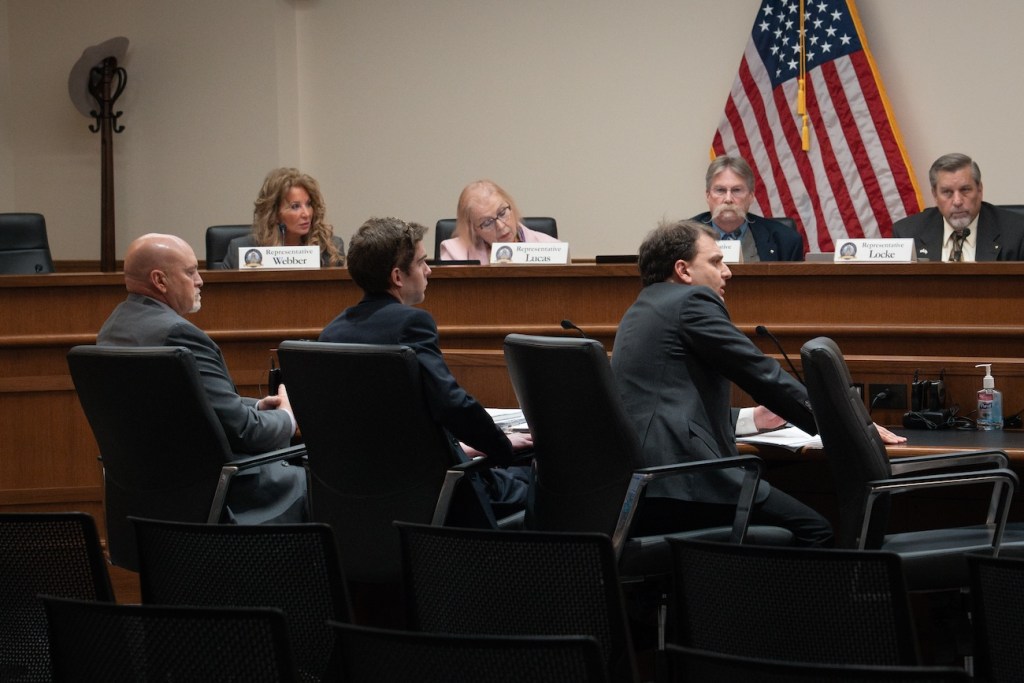
As the earliest stages of Wyoming’s 2032 redistricting process get underway, state lawmakers showed little interest in calls from Secretary of State Chuck Gray to immediately reexamine electoral boundaries. 

The Wyoming Legislature’s Joint Corporations, Elections and Political Subdivisions Committee declined to take action at its Friday meeting in Lander. 

“I think we’re better off to not poke the dog, the sleeping dog. And just let it go,” Rep. Steve Johnson, R-Cheyenne, said at the meeting. 

In recent letters to the Fremont County Commission and Gov. Mark Gordon, Gray pointed to a recent U.S. Supreme Court decision, which narrowed states’ ability to use race as a determining factor in creating election districts. Gray argues that certain maps that overlap with the Wind River Indian Reservation ought to be reexamined now in light of that ruling. More specifically, Gray is taking aim at the Fremont County Commission’s district maps and House District 33, which is represented by the sole Indigenous member serving in the Legislature, Rep. Ivan Posey, D-Fort Washakie. 

Business councils for the Eastern Shoshone and the Northern Arapaho tribes have since denounced Gray for what they call a “direct attack on Native voting.” Some attendees at the meeting held up signs, pushing back on the secretary. 

Gray has stopped short of demanding the governor either suspend the primary election or call a special legislative session — two things southern GOP-controlled states have done in response to the ruling. Instead, Gray has criticized the governor for not taking action. He can now criticize lawmakers for that, too. 

“My recommendation would be: take a deep breath. For all of us to think about this. Weigh it. Have lots of public input,” Senate Corporations Committee Chairman Cale Case, R-Lander, said at the meeting. “It took us a year or more to redistrict the state of Wyoming.”

Case, who represents Senate District 25 and the Wind River Indian Reservation, said the committee had several options, including waiting to sort things out during the next redistricting process. 

Like Case, Rep. Mike Yin, D-Jackson, pointed out that changing the boundaries of one House district would upend the rest of the Legislature’s map. Besides, Yin said, he’d already completed the task Gray had requested. 

“To answer the secretary’s letter directly, I examined [the U.S. Supreme Court ruling] and I examined our maps. And I find them to be in compliance,” Yin said. 

“I would suggest that we just put this topic to bed and leave it as is because we have plenty of other bills to work on,” Yin said, referring to the topics the committee has been tasked with during the legislative off-season. 

Pointing to another discussion surrounding the constitutionality of the Legislature’s maps, Rep. Johnson said, “I would tend to agree with my colleague from the other side of the aisle that we need to just let this go.” 
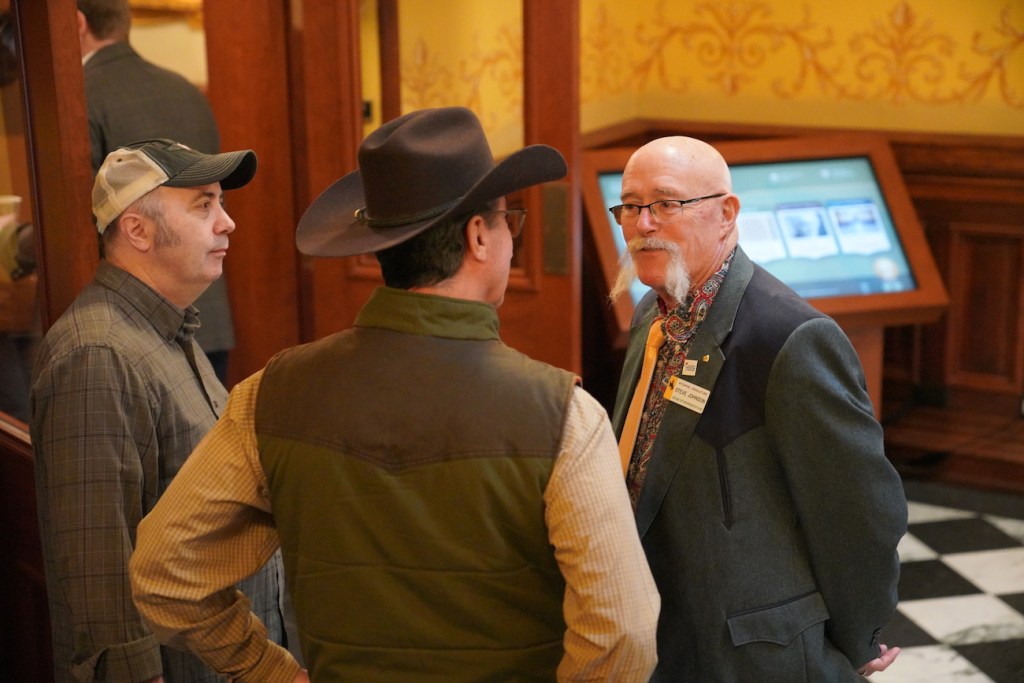
Cheyenne Republican Rep. Steven Johnson, on the right, speaks with constituents during the 2026 legislative session. (Mike Vanata/WyoFile)

With one exception, the public testimony was either explicitly against Gray’s proposal or encouraged the committee to proceed with caution. 

Rep. Nina Webber, R-Cody, asked that the topic be carried over to the committee’s next meeting, “just as a ‘let’s revisit it.’” Otherwise, the committee put the discussion aside. 

Meanwhile, the process for refreshing the state’s legislative maps in 2032 is beginning. The Legislative Service Office updated the committee Friday on its work with the federal government to create census blocks, which function as the smallest geographical unit collected by the federal government. 

When it comes time for lawmakers to begin drawing maps in 2030, census blocks function as the building blocks. And as roads and developments are built and people move around the state, those census blocks must be updated to give lawmakers greater flexibility in drawing maps that accurately reflect their communities. 

The county commission

Wyoming law gives county commissions the latitude to use a district, at-large or hybrid system. Under a district system, commissioners represent certain areas within a county. In comparison, at-large commissioners represent the entire county. 

Since 2010, when a federal court judge ruled in favor of five enrolled Eastern Shoshone and Northern Arapaho members, the Fremont County Commission has used a district system. 

In Large v. Fremont County, the plaintiffs argued that the at-large system diluted Native American voting strength and violated the federal Voting Rights Act. Ultimately, the court ruled in their favor. 

However, Gray is asking the commission to revert to an at-large district, arguing that the U.S. Supreme Court’s recent ruling in Louisiana v. Callais makes the district system unconstitutional.

After receiving Gray’s letter, the commission referred it to the Wyoming Attorney General’s Office for guidance. In the meantime, at least one lawmaker at the meeting made it clear they were uninterested in revising the statute. 

“I have no interest in changing that statute, nor do I have any interest in telling the county commission what they have to or have to not do,” Yin said.

Doug Thompson, a former county commissioner and a defendant in Large v. Fremont County, spoke at Friday’s meeting. He urged caution. 

“My counsel for all who will listen is: Take your time,” Thompson said. “Don’t jump one way or the other. Don’t say no districts. Don’t say at-large. Don’t do either one. Because this is a complex issue.” 

Northern Arapaho Business Council Chairman Keenan Groesbeck and Eastern Shoshone Councilman Clinton Glick both told the committee not to take action to remake the commission or the legislative electoral map. 

The Legislature

The other electoral map Gray takes exception to is House District 33, which stretches across Fremont County and encompasses the tribal towns of Fort Washakie, Ethete and Arapahoe, as well as the small non-tribal communities of Atlantic City, Crowheart and Hudson. 
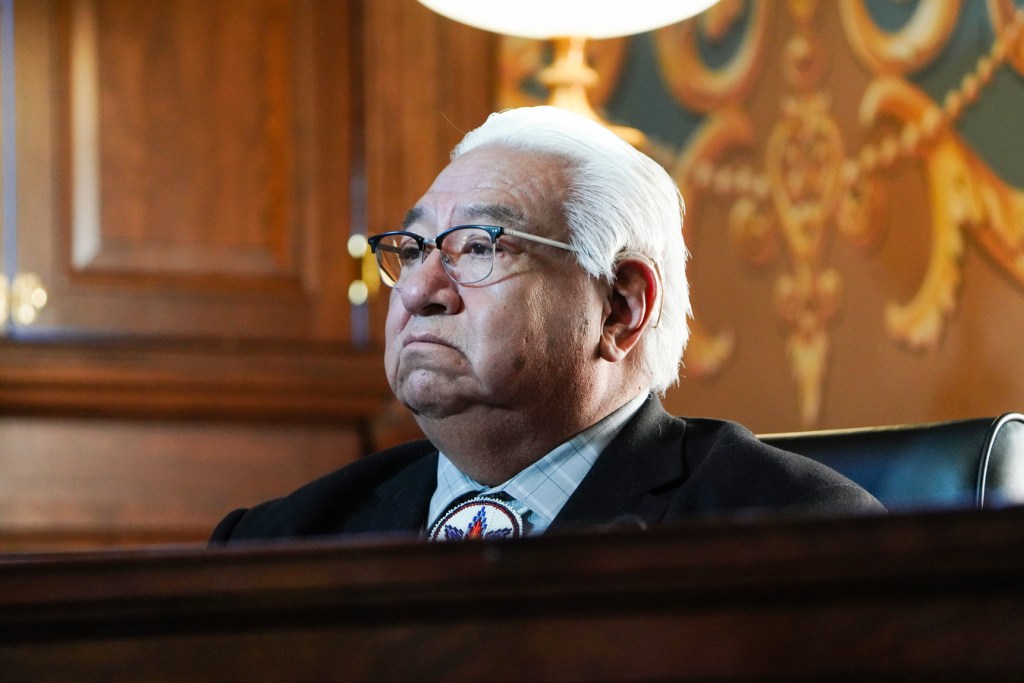
Rep. Ivan Posey, D-Fort Washakie, during the first meeting of the House Special Investigative Committee on Thursday, Feb. 26, 2026, at the Wyoming Capitol in Cheyenne. (Mike Vanata/WyoFile)

Several of the district’s constituents, including non-tribal members, attended the meeting and spoke in favor of the current maps, arguing that the boundaries weren’t simply drawn with consideration to race but also — and officially — to keep communities of interest, such as sovereign governments, intact. 

“To suggest that this very narrow [U.S. Supreme Court] decision has this broad brush that requires you take some immediate action is not quite accurate,” Mark Harris, former Sweetwater County lawmaker, told the committee. 

Harris served in the Legislature as it shifted from strict adherence to county boundaries and toward population, and as such, has direct knowledge of the 2001 legislative session “that essentially created House District 33 as it is today.”

“This district is based on community of interest and always has been,” he said. 

The shift away from county alignment was spurred by a 1991 federal court ruling that Wyoming’s legislative maps violated the Equal Protection Clause of the U.S. Constitution — also known as “one person, one vote.”

Friday, Gray told the committee he doesn’t “think we should wait for a lawsuit to engage” in the examination of the state’s electoral maps. 

Whether the Wyoming Attorney General’s Office agrees remains to be seen. The governor’s office previously told WyoFile it sent Gray’s letter there to be reviewed. Gordon himself has not offered an opinion about Gray’s call to reexamine electoral maps.

The post Wyoming lawmakers unmoved by Gray’s calls to reexamine electoral maps appeared first on WyoFile .
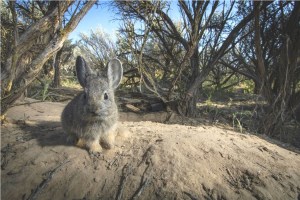
Endangered Species Act protections for pygmy rabbits? Groups sue Trump administration over missed deadlines.

Environmental advocates want the courts to force federal wildlife officials to decide whether pygmy rabbits ought to be protected under the Endangered Species Act. 

Pygmy rabbits, the world’s smallest rabbits, dwell in southwestern Wyoming and parts of seven other western states. Like the declining sage grouse, pygmy rabbits depend on sagebrush-steppe — an ecosystem also in sustained decline — for their diets, den building and survival. 

In early 2024, the U.S. Fish and Wildlife Service, while still operating under the Biden administration, issued a “90-day finding” indicating there was “substantial information” that indicated listing pygmy rabbits “may be warranted.” 

The Endangered Species Act requires that decisions come within a year — the next step in the process is known as a “12-month finding.” With that resolution still in limbo, Western Watersheds Project and WildEarth Guardians sued on May 13.

“With deadline lawsuits, you either met the deadline or you didn’t,” said Greta Anderson, deputy director at the Western Watersheds Project. “It’s pretty straightforward, and there’s not any dispute over the facts. Hopefully, our lawsuit will compel them to address pygmy rabbit populations sooner rather than later, and certainly before it’s too late.” 

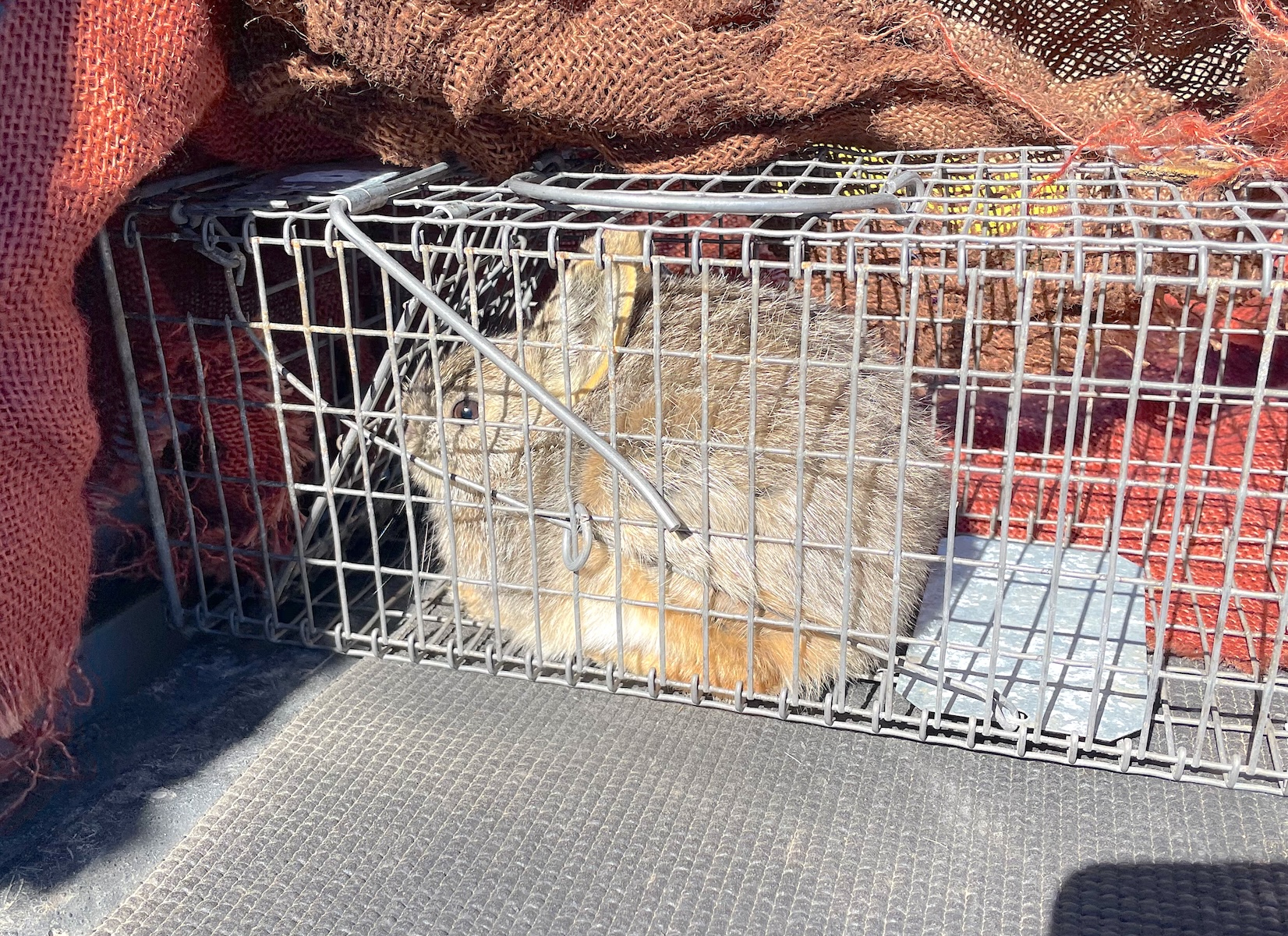
A pygmy rabbit captured in Wyoming’s northern Red Desert in March 2026. (Sacha Wells)

U.S. Fish and Wildlife Service Director Brian Nesvik is listed as the defendant in the groups’ 15-page complaint, which asks a judge to require a 12-month finding by an undefined new date. 

Fish and Wildlife spokesperson Christine Schuldheisz told WyoFile in an email that the agency has no comment on active litigation. 

The agency has 60 days to respond to the lawsuit, Anderson said. 

A “listing workplan” suggests Fish and Wildlife will decide on pygmy rabbits in fiscal year 2028. Nearly 100 other species — from the Yellowstone bison to the Rio Grande shiner — are slated for fiscal years 2026 and 27 and are ahead of the pygmy rabbit in the workplan. 

Anderson argued that there’s an urgent need for federal wildlife managers to make a decision. The emergence of rabbit hemorrhagic disease in Nevada — there was a “rapid decline” of pygmy populations near Jiggs — presents a new threat to the species, she said. 

“We want to really light a fire under the wildlife agencies to try to figure out what’s going on,” Anderson said. “Nothing would make me happier than to find out that the states think pygmy rabbits are secure and flourishing and in more places than we thought. I just don’t think that’s the case.” 

There are some bright spots. 

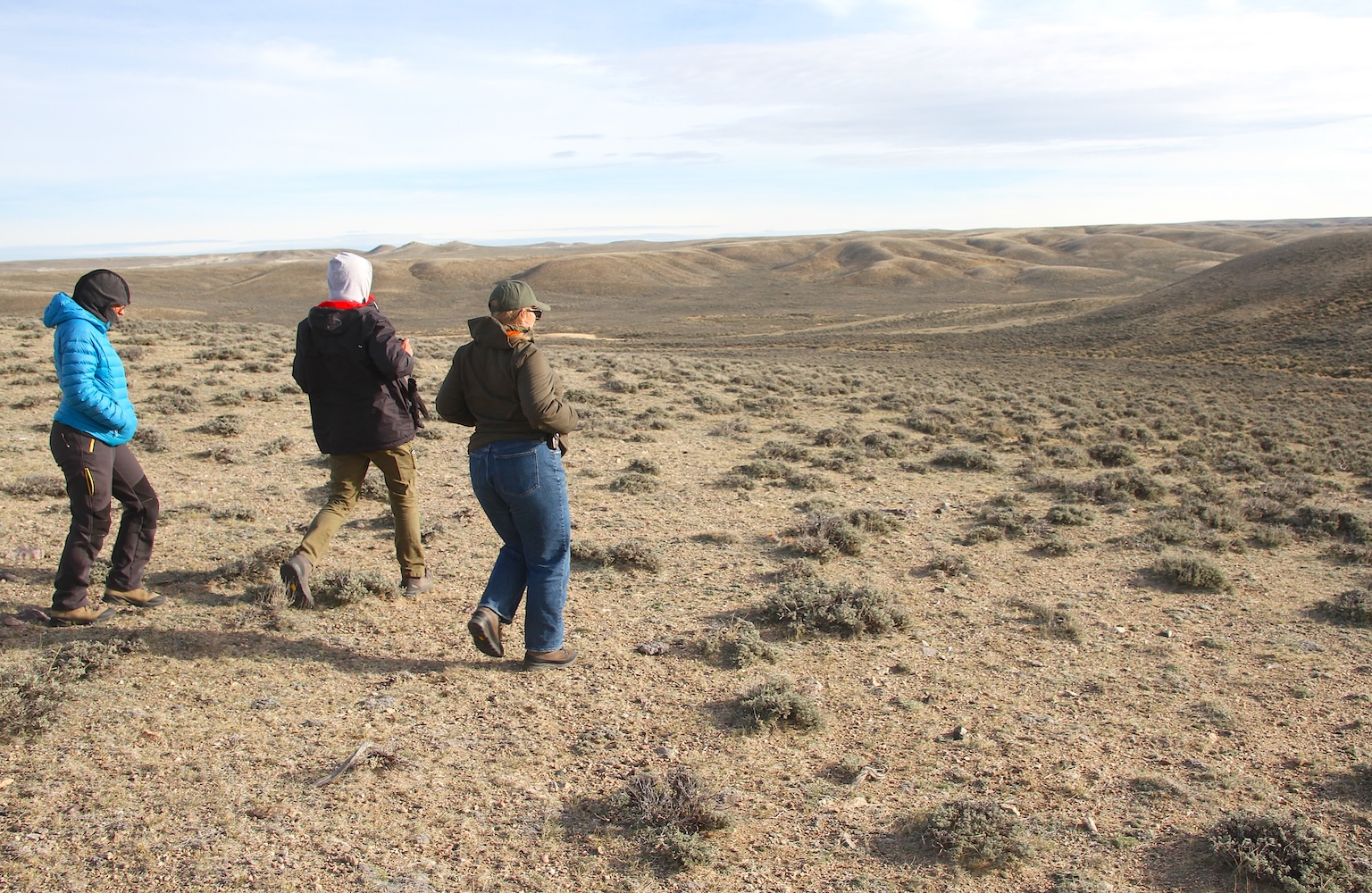
University of Idaho and Wyoming Game and Fish Department pygmy rabbit researchers descend into a Red Desert draw where sagebrush grows in thick — ideal pygmy rabbit habitat — in March 2026. (Mike Koshmrl/WyoFile)

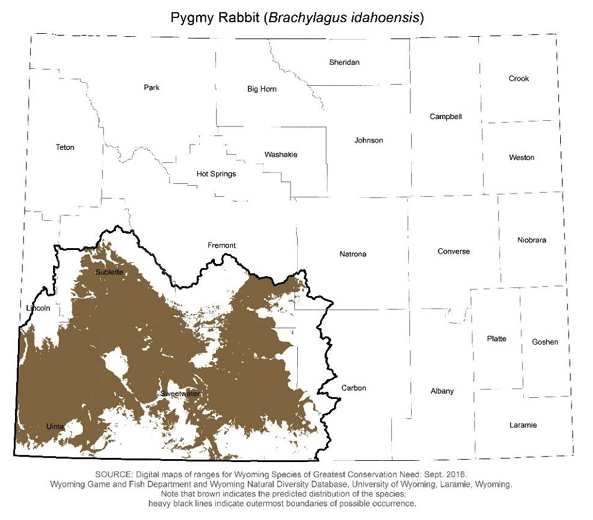
In Wyoming, where pygmy rabbits are a “species of greatest conservation need,” biologists say that populations have fared pretty well relative to other parts of the animal’s range. Earlier this year, biologists searched for pygmy rabbits in 108 different locations and found signs of them at about half those sites. The species has been documented in Wyoming’s southwest corner, with observations in Uinta, Lincoln, Sublette, Sweetwater, Fremont, Carbon and Natrona counties. 

This map illustrates the predicted distribution of pygmy rabbits in Wyoming. (Wyoming Game and Fish Department)

Still, threats to pygmy rabbits are many. They’re thermally sensitive and could potentially lose parts of their range as the West heats up. Energy development and sagebrush treatments intended to help other species can also reduce their habitat. When the Fish and Wildlife Service found that listing pygmy rabbits “may be warranted” in 2024, the agency cited “the compound effects of fire, cheatgrass, and climate change. ”

“They are an indicator species for the health of the whole ecosystem,” Anderson said. “If pygmy rabbits aren’t there, it’s a sign that something’s wrong with the sagebrush-steppe — much like the sage grouse.” 

Environmental groups previously petitioned to list pygmy rabbits in 2003. Although the Fish and Wildlife Service forwent protections for the broader species, the agency did assign an “endangered” status for an isolated, genetically distinct population in Washington.

Judges intervene in Endangered Species Act deadline disputes with some regularity. 

In December 2024, for example, U.S. District Court of Wyoming Judge Alan Johnson gave the Biden administration’s Fish and Wildlife Service 45 days to decide on the status of grizzly bears.

The resulting proposal intended to keep grizzlies listed as threatened in the Yellowstone region and across their Lower 48 range, though the Trump administration has delayed finalizing that plan and was granted an extension to make its final decision by Dec. 18. 

The post Endangered Species Act protections for pygmy rabbits? Groups sue Trump administration over missed deadlines. appeared first on WyoFile .

‘I’m now a desperate mother’: Clay County’s only daycare center is closing as Morrisey looks to cut assistance for childcare

‘I’m now a desperate mother’: Clay County’s only daycare center is closing as Morrisey looks to cut assistance for childcare

About a week after Mountain State Spotlight wrote about Clay County’s only childcare center, House Speaker Roger Hanshaw visited Taylor Tots Daycare to hear firsthand about challenges faced by the childcare provider in his district. 

Workers at the Wallback center told Hanshaw about rising costs, a lack of available staff and the growing difficulty families faced in finding care in the county. 

Hanshaw told the staff he wanted to continue discussions about the challenges facing the childcare industry and to schedule another meeting.

But Taylor Tots will close at the end of June, leaving Clay County without a licensed childcare center for infants and toddlers.

Owner Allie Taylor said she made the difficult decision to close because it became too expensive to operate, and she isn’t sure what’s next for her, her staff or the parents she serves. 

“Parents are panicked because we were the only ones around,” she said. 

The closure comes as West Virginia’s childcare system faces mounting pressure, leaving thousands of children without access to care and many families with few options. Over 200 centers have closed within the past two years.


At the same time, Gov. Patrick Morrisey said the state’s primary fund for assisting needy families has been supporting programs it can no longer afford. 

He said he would be specifically looking for changes with childcare assistance, among other areas, as officials search for millions of dollars in budget savings.

In 2023, West Virginia spent about $22 million in funding on childcare assistance, making it the assistance program’s second-largest spending category.

Providers across West Virginia say low worker pay, staffing shortages and rising operational costs have made it increasingly difficult to keep centers open, especially in rural communities where families already have limited options for care.

Taylor Tots served up to 27 children in a county where more than 90% of young children lack access to care.

“We’ve had to send parents information for centers in Kanawha and Braxton counties,” Taylor said. “We gave them a month, and we hope it’s enough time.” 

Morrisey is reviewing childcare funding 

Last week, the Morrisey administration announced it was searching for savings within the state’s Temporary Assistance for Needy Families program, commonly known as TANF. 

During a press conference, Gov. Morrisey announced his administration had identified millions in potential savings through agency audits. 

As part of that process, he said he discovered West Virginia’s TANF program was facing a $43 million funding gap. 

Kelly Allen, director of the West Virginia Center on Budget and Policy, said on social media that she was concerned about lawmakers and the governor needing to use TANF funding reserves to keep the state budget flat. 

She said the money could be used for multiple programs, but it is primarily for child welfare. But because lawmakers haven’t put enough regular state funding into childcare, the state is now using that money to plug budget holes that years of underfunding created. 

Childcare providers have repeatedly warned that cuts to subsidies or unstable funding could make it harder for low-income families to afford care and place more financial pressure on centers already struggling to stay open.

But House Finance Chair Del. Vernon Criss, R-Wood, said lawmakers weren’t warned during state budget discussions about major TANF funding problems. 

Criss questioned whether the administration’s projected shortfall represented an immediate budget emergency.

“I’m inclined to believe this is an artificial crisis,” he said. 

House Speaker Roger Hanshaw, R-Clay, slams the gavel at the end of a special session in 2024. Photo by Perry Bennett / WV Legislative Photography

The debate over the assistance funding comes as West Virginia’s childcare system has already struggled. Over 28,000 children lack access to childcare across the state, while families struggle to afford care costs and providers are underfunded. 

Hanshaw said two years ago that childcare was one of his top priorities for the Legislative session. But he introduced no legislation to fix it, and though he is the speaker of the House with a Republican supermajority, the legislature passed no childcare proposals, and the 2024 session ended without any plan to help parents and providers. 

During this year’s Legislative session, a Mountain State Spotlight reporter stopped Hanshaw outside the House chamber and asked him how state leaders planned to address child care shortages. 

He requested we direct our questions to his spokesperson. She did not respond to our questions.

Hanshaw did not respond to additional requests for comment this week about the center’s closure.

For parents like April Taylor, the closure leaves more uncertainty about how they will continue working while finding care for their children. April Taylor is a nurse who needs care for the seven-month-old child she is fostering.

Without another center nearby, she said, she has no other options. 

“I’m now a desperate mother.” 

Henry Culvyhouse contributed reporting.

‘I’m now a desperate mother’: Clay County’s only daycare center is closing as Morrisey looks to cut assistance for childcare appeared first on Mountain State Spotlight, West Virginia’s civic newsroom.

Jekyll Island plans could increase hotel capacity by more than 13%

Jekyll Island plans could increase hotel capacity by more than 13%

Plans for more hotel rooms and parking on Jekyll meet resistance from conservationists.

The Current is an inclusive nonprofit, non-partisan news organization providing in-depth watchdog journalism for Savannah and Coastal Georgia’s communities.

School districts face ‘Adirondack Paradox’

School districts face ‘Adirondack Paradox’

This month, as communities across the Adirondacks vote on school budgets, many districts are under varying degrees of stress. Some districts maintained current levels of education by draining savings, while others cut spending and/or asked taxpayers for significant help—some with more success than others.

A school in Bloomingdale is closing, while another in Au Sable Forks is threatened. Schools must live with the state’s 2% tax cap, even though the cost of gas, electricity and healthcare are spiking at far higher rates.

However, there is a potential solution—address a quirk in the state funding formula that, particularly since COVID-19, has inordinately punished Adirondack communities.

The small district of Northville on the southern edge of the Adirondack Park, with a graduating class of 42, is trying to rally support among other Adirondack districts and put the matter before the state education department.

Northville, on the shores of Great Sacandaga Lake, is by most measures an exemplary system. It will likely have a graduation rate of 100% this year, it teaches advanced technical skills, and it saves families with college-bound kids thousands of dollars in tuition.

“Northville, being a small district, is doing amazing work,” said Superintendent Sarah Chauncey. “We’ve got kids who are going off to college with one year under their belt. So their parents have actually saved money because they’re saving a whole year of college.”

But a quality education isn’t cheap, and the Northville budget is feeling the strain of a state funding formula that does not account for vacation-town hardships. 

At root, the issue is that the economic health of the Adirondacks looks good on paper, while the reality is just the opposite.

Chauncey and her supporters call it the Adirondack Paradox, and its effects spill beyond the  schoolyard. For example, in a region where there is so much wealth, how can local institutions be so poor? In communities where there are so many vacant homes, how can there be no place to live? In a world of such natural abundance, how have human populations failed to keep up?

After taking the job four years ago, Chauncey, who has a background in data and technology, quickly identified the reason so many school systems are struggling.

“About a year or so in, we knew that (state funding) was a real problem, and we wanted to understand the problem,” she said. “And what we found is that it wasn’t just a Northville problem, so I backed out and started looking at the Adirondacks as a whole.”

RELATED READING: Dealing with decades of decline in enrollment, Adirondack schools are finding new ways to serve students—and do more with less

The state aid formula, in theory, helps poorer communities while asking wealthier ones to pay more of their own way. It looks at two things: the value of property in a district and the incomes of residents who live there. Across most districts in the state, those two numbers track together, since people who earn more tend to live in pricier homes. The formula assumes the property inside a district belongs to the people who live there.

The Adirondacks break that assumption. Great Sacandaga Lake has 115 miles of shoreline lined with vacation homes. Most belong to seasonal owners who live elsewhere, pay their income taxes elsewhere and don’t send children to Northville schools. To the state aid formula, those homes still count as Northville wealth. The families who actually live here, though, earn a median household income thousands of dollars below the state average of $84,578.

The result shows up in the state’s wealth-per-pupil calculations. Northville’s property wealth per pupil comes to about $1.6 million. In Johnstown, just outside the park to the south, it’s about $407,000. The state pays nearly 60% of Johnstown’s school budget. In Northville, it pays 36%.

Making it worse, many seasonal properties have encroached on the supply of housing for working families. With nowhere to live, these families have disappeared, which depresses state aid even more, because enrollment is another factor in assessing a district’s allocation.

“We’re seeing limited revenue growth at a time our expenses are rising rapidly. … Yes, we may be land-wealthy, but that’s not necessarily a reflection of the students and families that we serve.”

AuSable Valley School District Superintendent Mike Francia

AuSable Valley School District, which straddles the Essex-Clinton county line, is facing similar challenges. Rating services such as Niche and U.S. News and World Report rank it slightly above average for the quality of its education. But its sweeping, 250-square-mile territory serves a number of impoverished communities, which hurts its reputation in the eyes of some parents, who send their kids to other districts or to private schools or opt to homeschool.

This, along with the transition of housing into vacation properties, has hollowed out the student population; incoming classes were once in the 80s and are now in the 60s.

AuSable Valley School District suffers from the same property value problems as Northville, with lots of expensive houses that diminish state aid.

Because of these factors, state funding for the AuSable Valley has cratered, and the system is in crisis, eliminating teaching positions, cutting bus runs and consolidating classrooms. A facilities committee is currently studying whether it can afford to maintain its elementary school in Au Sable Forks. 

State aid annual increases have shrunk from $657,600 in 2024-25 to $134,000 this year—and it’s only that much because of state-imposed floors to funding. That’s just a 1% increase over a year ago. “We’re seeing limited revenue growth at a time our expenses are rising rapidly,” said Superintendent Mike Francia. “Yes, we may be land-wealthy, but that’s not necessarily a reflection of the students and families that we serve.”

Because funding from the state has failed to keep up, AuSable Valley cut $1.3 million from its current budget proposal and asked taxpayers for a 12% increase in the levy; breaking the cap required approval of 60% of the voters, but only 45% voted in favor.

Unlike AuSable Valley, Northville decided not to risk voter wrath, but the bottom-line issues are the same: Schools aren’t able to raise their revenues, even as the providers they depend on are raising theirs.

“Our (tax) cap this year is 2.7%, but look at all our other costs,” Chauncey said. “The BOCES administrative budget that we all have to share in is up 3.5% because nothing keeps them within the cap. Our healthcare costs are going up. Our retirement costs are going up—all the things that it takes to run a school.” 

Healthcare can be particularly vexing. In AuSable Valley, more than one-fourth of the educational budget goes straight to covering healthcare costs for current and retired employees. Cutting benefits is not an option, because teachers are scarce and neighboring school districts must compete fiercely for their services.

Northville through the years has reacted to these financial stresses by paring its budget, but this year it’s drawn a line in the sand, spending $1.5 million in reserves, which will fund academics, extracurriculars and athletics at their current levels.

“We can do this for two years, and within these two years, we’re going to work very hard, to say, ‘You need to recognize this problem—New York, state legislators, everybody needs to recognize you’ve got an excellent school district that deserves to be here.’ This school district is an excellent district that serves an excellent community. Let’s try to get things to change.”

New law makes room for state-funded psychedelics research in Oklahoma

The Oklahoma State Capitol building.
The Oklahoma State Capitol(Ryan LaCroix / KOSU )

In a continuing wave of support among Republican policymakers, Oklahoma legislators passed a new law that will allow state funds to be used for clinical research with the psychedelic drug ibogaine.

The law was signed by Gov. Kevin Stitt in May, despite his earlier calls for the reversal of the legalization of medical marijuana, another plant with purported medicinal benefits.

The Oklahoma Breakthrough Therapy Act, or House Bill 3834, authorizes the State Department of Health to enter into contracts with drug developers to conduct clinical trials for ibogaine-based therapies. The bill was sponsored by Rep. Stan May, R-Broken Arrow, and Sen. Avery Frix, R-Muskogee.

Ibogaine is a psychedelic compound derived from a shrub native to parts of Africa, and has been used during spiritual and healing ceremonies for centuries. The drug has shown observational promise in promoting neurological repair and interrupting substance abuse disorders and opioid withdrawal.

It has garnered support from powerful figures on the political right, including the former Governor of Texas, Rick Perry, who champions ibogaine’s power to help veterans suffering from post-traumatic stress disorder.

In an op-ed in the Washington Post and on an episode of influential host Joe Rogan’s podcast, Perry described how he learned about the drug and came to accept it. Ibogaine treatment healed Morgan Luttrell from combat trauma and substance abuse, Perry said. The U.S. Representative lived with Perry and his wife in the governor’s mansion after coming home from war.

“[Ibogaine], I believe, [is] the most powerful way to affect the most people in a positive way than anything that I’ve ever seen in my 40 years of public service,” Perry said on Rogan’s podcast. “I am completely and absolutely convinced that the data will back up what we are talking about.”

Perry’s chronicled support for ibogaine was solidified by the launch of his nonprofit, Americans for Ibogaine, in June 2025. The group helped write the ibogaine bill passed this year in Oklahoma, and similar legislation in more than a dozen other states.

Ibogaine is a Schedule 1 controlled substance under federal law, meaning it is not approved for medical use and is illegal to manufacture, distribute or possess. Reclassification would require either congressional action or approval from the Food and Drug Administration. Americans for Ibogaine aims to build momentum using successful clinical trials at the state level. Texas recently launched its own research program into ibogaine with a $50 million price tag.

President Donald Trump has lauded Texas’s efforts. On April 18, he signed an executive order to facilitate research into psychedelic drugs, including ibogaine, as a way to treat mental health illnesses. The move came with a promise to allocate at least $50 million to states like Texas and now, Oklahoma, that agree to support clinical studies.

W. Bryan Hubbard, the CEO of Americans for Ibogaine, Rogan and Luttrell stood behind Trump in the Oval Office while he signed the order. A week later, the FDA accelerated approval for some psychedelic treatments for serious mental illness.

Americans have been making a silent trek to Mexico for years to get ibogaine treatment. The drug is unregulated on the other side of the border, and clinics that boast safe experiences are popping up.

In addition to flight costs, clinics themselves can be expensive. On an episode of The Daily, a podcast from The New York Times, politics reporter Robert Draper said he spent $8,350 on the retreat-like experience he got at a clinic called Ambio Life Sciences.

The powerful drug also comes with risks. Ibogaine lengthens the time between heartbeats, and a user who gets the wrong dosage, is taking other drugs, or whose heart rate is not being monitored during the treatment, can go into cardiac arrest.

If ibogaine treatment can interrupt substance dependence, a person practicing abstinence is also at higher risk of injury or death if they return to drugs in the future. Other medications for opioid use disorder, including buprenorphine and methadone, mitigate the risk by maintaining the patient’s level of opioid tolerance as they heal.

Other critics argue the strongest predictor of sustained recovery from addiction is social support and “recovery capital,” including safe housing, employment opportunities and access to health care. They say efforts to strengthen psychedelic research don’t negate impending restrictions on Medicaid and food assistance.

The Oklahoma Breakthrough Therapy Act did not include any funding. Instead, it set up a revolving fund to receive future allocations, potential federal funds or donations to help pay for ibogaine research in the state. The research is also required to take place in Oklahoma, with any recouped funds from intellectual property funneled back to the state.

Drug developers that contract with the health department must match the state’s financial investment and submit detailed reports on patient safety and FDA approval.

The law received support from the Inter-Tribal Council of the Five Civilized Tribes and moved through the legislature without a hitch.

Lawmakers who pushed for the bill argue that traditional addiction treatment methods fall short and emphasize ibogaine’s potential to help veterans, police officers and other people on the front lines.

Is it illegal to take native goose eggs?

Is it illegal to take native goose eggs?

Yes.

Native geese are protected by federal and state law; it is illegal to take or destroy their nests or eggs in Oklahoma, though exceptions exist for Canada geese.

Oklahoma statutes prohibit taking or destroying the nests or eggs of any game bird, including geese.  Federally, the Migratory Bird Treaty Act protects species of birds that occur naturally in the U.S. or its territories. 

Though this includes the Canada Goose, because it sometimes threatens public health and property, the federal government issues permits that allow for certain methods of population control. 

The Oklahoma Department of Wildlife Conservation holds such a permit, and the operators it further certifies are also allowed to conduct nest and egg control work in certain urban areas. 

Some individuals, such as landowners, are permitted to engage in egg control after self-registering with the U.S. Fish and Wildlife Service. In Oklahoma, this requires no further state permit.

This fact brief is responsive to conversations such as this one.

Oklahoma Watch partners with Gigafact to produce fact briefs — bite-sized fact checks of trending claims.

Sources

The post Is it illegal to take native goose eggs? appeared first on Oklahoma Watch.

‘Nine Little Indians’ tells story from South Dakota’s Native boarding schools

'Nine Little Indians' tells story from South Dakota's Native boarding schools

A documentary about nine sisters who attended a boarding school for Native American children in South Dakota and later underwent a lengthy legal battle with the Catholic Diocese of Sioux Falls will premiere globally this month.

Nine Little Indians” follows the Charbonneau sisters, who are members of the Turtle Mountain Band of Chippewa Indians. They attended St. Paul’s Indian Mission School, also known as Marty Indian School, in Marty, South Dakota. All nine sisters said they experienced abuse at the hands of priests and nuns at the school.

Native American children were sent to boarding schools as early as the mid-19th century. Many boarding schools were affiliated with religious groups, and many were directly funded or supported by the federal government through the Indian Civilization Fund Act. That legislation allowed for funding to religious groups that wanted to open schools for Native Americans in an effort to introduce tribes to the “arts of civilization.”

“We cracked 7.5 million (total) views on the trailer in two weeks and a day. Viral, for a documentary, is considered 500,000 views. If that doesn’t speak to the interest in this topic, I don’t know what does. We have no help, we have no marketing budget. This is happening organically.”
— Shannon Kring, director of “Nine Little Indians”

Shannon Kring, the film’s director, has worked with Indigenous communities across the world and directed the 2021 documentary “End of the Line: The Women of Standing Rock.” That film chronicles the yearslong fight of the Standing Rock Sioux and other Native American people against the Dakota Access Pipeline.

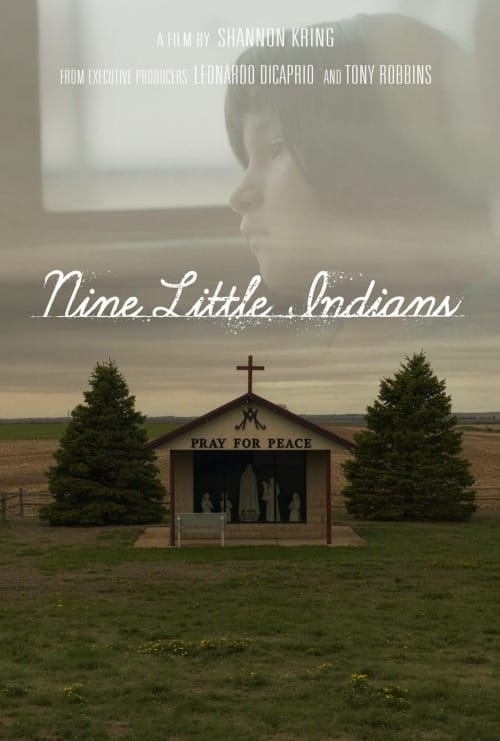
For “Nine Little Indians,” Kring worked with executive producers actor Leonardo DiCaprio and motivational speaker and author Tony Robbins.

Documentary hopes to demonstrate truth of boarding school history

While the documentary is an explicit portrait of the sisters’ experience, chronicling their journey and struggles in the South Dakota legal system, it also takes a broader stroke to the nationwide impact of Indian boarding schools.

Marsha Small (Northern Cheyenne), a geophysical surveyor, is featured throughout the film as she searches for unmarked graves in the area of Marty Indian School using ground penetrating radar. Small has conducted similar searches at other boarding schools across the nation and has helped to create protocols for surveying burial sites.

Searching for graves is an unfortunate reality of the ongoing work investigating boarding schools. At least 3,000 children died in Native American boarding schools in the United States between 1828 and 1970, according to an investigation by the Washington Post.

'Nine Little Indians' tells story from South Dakota's Native boarding schools
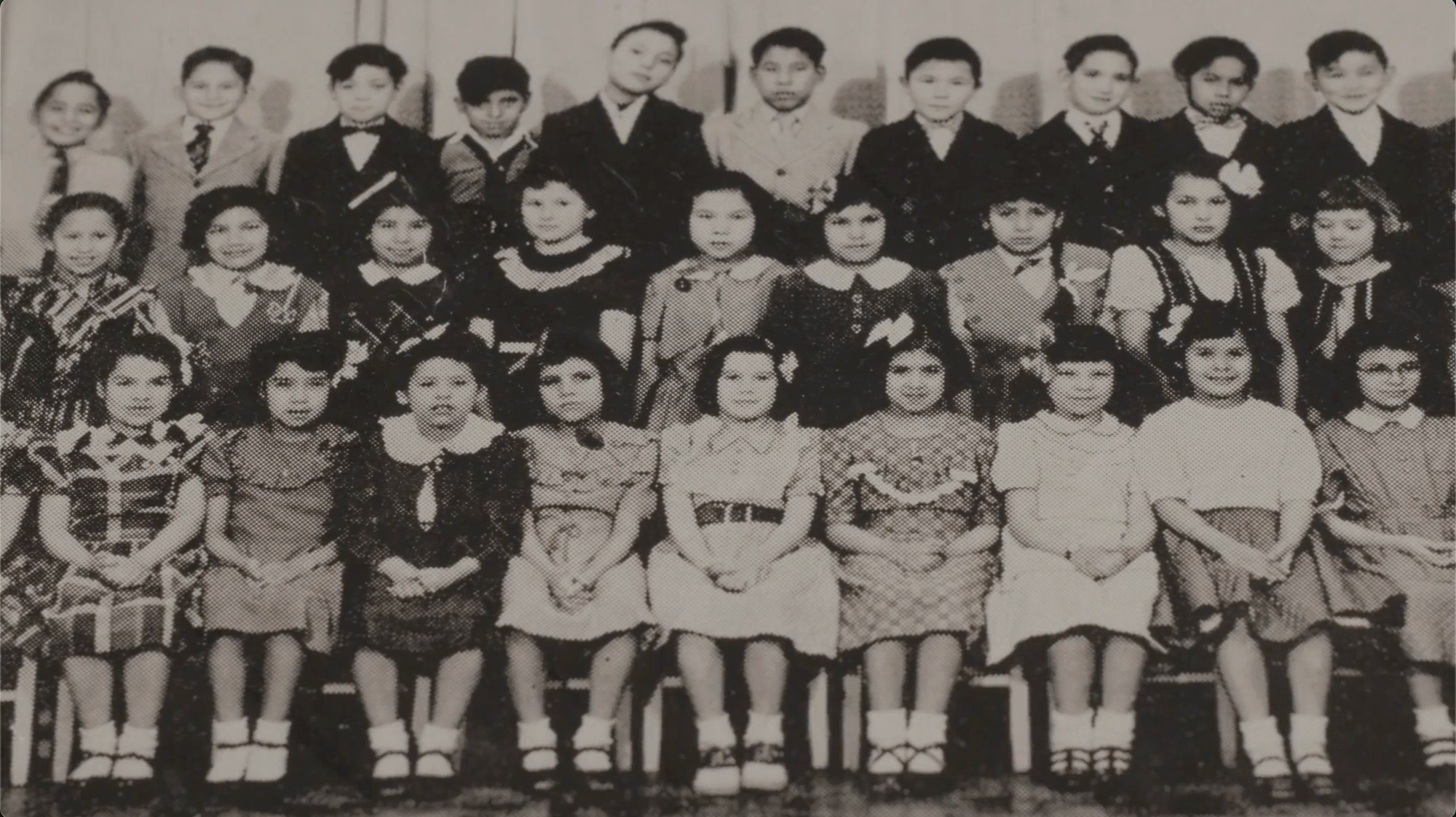
A class photo of students at the St. Paul’s Indian Mission School in Marty, S.D., featured in “Nine Little Indians.”

Kring told News Watch that she wants the film to be a “healing tool” for all of those who were involved in the boarding school system, as well as their descendants, and acknowledged that it will likely bring up difficult feelings for many who have experiences at boarding schools, even outside of South Dakota.

Kring said that conversations throughout the film’s production and release rollout indicate a general unawareness of the country’s boarding school system. An important part of ensuring the film’s salience is hitting on the scale and scope of the system, she said.

Just 10 states in the country did not have any Native American boarding schools, and a study from the National Native American Boarding School Healing Coalition said that the United States had a total of 526 schools. At their peak in 1926, around 83% of Native American children were enrolled in a boarding school, according to scholar David Wallace Adams.

“When we’re out pitching this in whatever form we’re doing it, we keep hitting those numbers, explaining that (there were) more than 500 schools. Saying things like, ‘These were government and church-run, and sometimes both, schools.’ People have such limited awareness of this that I keep saying to people, ‘How would you explain it to a kid?’” Kring said.


The film will premiere at Lincoln Center in New York City on Wednesday, May 27. The sold-out showing will also feature a panel discussion with Kring, Small, Yvonne “Pat” Charbonneau, one of the victims from Yankton, and George DiCaprio, Leonardo DiCaprio’s father.

Darrell Red Cloud, a Lakota historian and the great-great grandson of Chief Red Cloud, will open the premiere with a prayer song. Kring told News Watch that the premiere will also include a recitation of the Lord’s Prayer.

'Nine Little Indians' tells story from South Dakota's Native boarding schools
The poster for “Nine Little Indians,” directed by Shannon Kring and executive produced by Leonardo DiCaprio and Tony Robbins.

Kring also plans showings in South Dakota this summer. She said that she hopes the documentary will resonate even with those who don’t have connections to the boarding school system. She has seen a significant public interest in the topic.

“We cracked 7.5 million (total) views on the trailer in two weeks and a day. Viral, for a documentary, is considered 500,000 views. If that doesn’t speak to the interest in this topic, I don’t know what does. We have no help, we have no marketing budget. This is happening organically,” Kring said.

In South Dakota, boarding school history runs deep

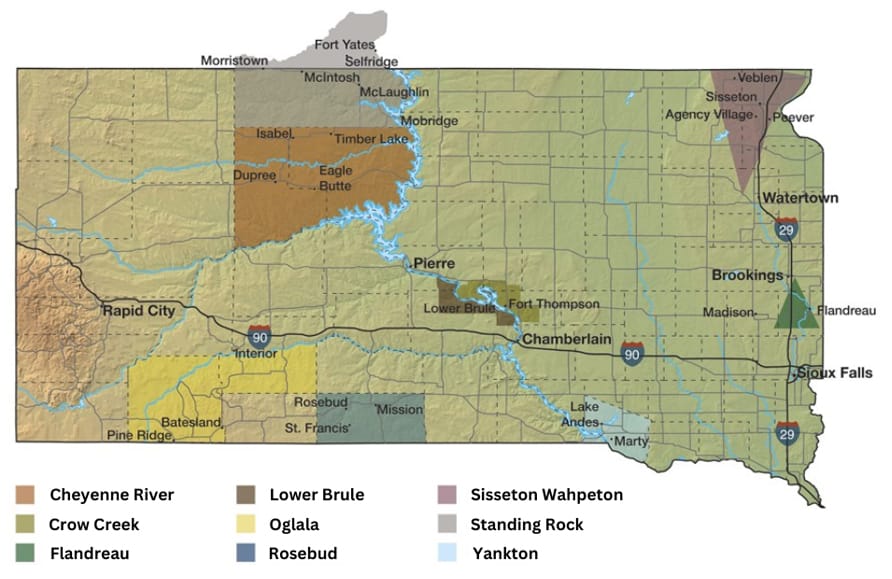
All of the nine tribes in South Dakota had boarding schools operate on their reservations, and several existed outside of tribal lands.

Research from the National Native American Boarding School Healing Coalition said that at least 35 boarding schools operated in South Dakota. 

The National Native American Boarding School Healing Coalition (NABS) is also doing its part to preserve the stories of those who attended Indian boarding schools throughout the United States. The organization, which was founded in 2012, is near the end of its two-year oral history project funded by the Department of the Interior.

That initiative has involved nearly 400 survivors of boarding schools across the United States sitting down with historians to share their experiences at the schools in video interviews, which will be stored in a permanent, public archive of survivor stories.

A guide to South Dakota’s 9 Native American tribes
The governance, geography, people and economy of South Dakota’s nine Native American reservations and tribes.
'Nine Little Indians' tells story from South Dakota's Native boarding schools

It has only been in recent years that the federal government, including the Department of the Interior, has acknowledged its role in the crisis.

In 2021, then-secretary of the Department of the Interior Deb Haaland (Laguna Pueblo) announced the creation of the Federal Indian Boarding School Initiative, which is “a comprehensive effort to recognize the troubled legacy of federal Indian boarding school policies.”

In 2024, former President Joe Biden issued an formal apology for the boarding school system, calling it “a sin on our soul.”

Get South Dakota news and information in a free email on weekdays. Cancel any time.


Subscribe

Charlee Brissette (Sault St. Marie Ojibwe), co-director of the oral history project, told News Watch that heightened public awareness of the history of boarding schools has allowed for more survivors to come forward. It illustrates the vast, often-unexplored scope of the system, she said.

“Once it was put on a public platform in a national way is when survivors really started feeling safer to talk about it. We’ve heard many times that, for decades, they didn’t talk about it because nobody believed them,” Brissette said.

'Nine Little Indians' tells story from South Dakota's Native boarding schools
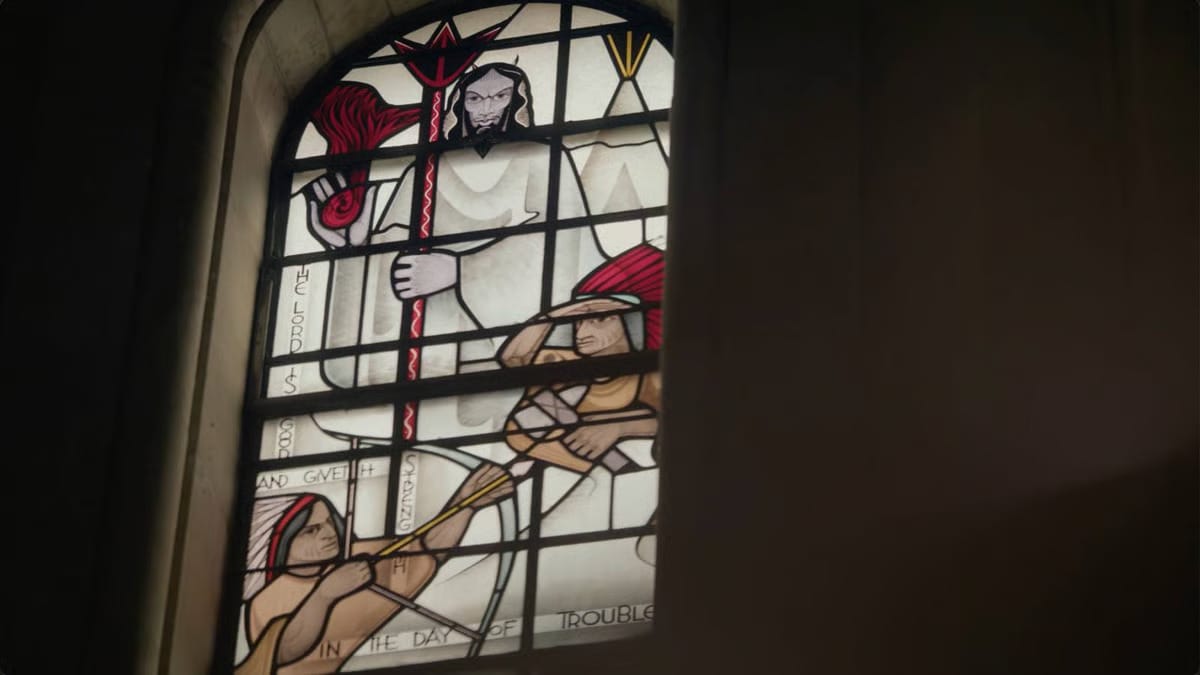
A stained glass window, featuring biblical and Native American imagery, at Marty Indian School in Marty, S.D., featured in “Nine Little Indians.”

Brisette said that hearing real stories, like those told in “Nine Little Indians” and in the oral history project, can allow for a much more potent understanding of the system – especially considering survivors are still alive today.

“It really tries to re-humanize it because we can look at stats, we can read books and we can read articles about what’s happened. For many people in Indian Country, we all have an idea, we all have this inherent knowledge of boarding schools and what they’ve done to our communities and our families,” Brisette said.

“But to be able to witness firsthand stories from survivors … we’re able to see a face of somebody who’s been directly impacted. We’re able to hear exactly what they’ve gone through, and how that experience has impacted their life and shaped them as a person.”

Moving forward rooted in reconciliation, collaboration

The legacy of boarding schools also lives on in many of the institutions that currently educate Indigenous children in South Dakota. Oftentimes, those legacies are just as complex as the schools that shaped them.

Some modern-day schools are on or near the land that former boarding schools operated on. Some former boarding schools transferred to tribal ownership and now operate in a different capacity. Some boarding schools are still open, albeit with very different practices than their historical counterparts.

That leads to further conversations about how best to move forward. Bissette said it should be up to tribes and survivors.

Indian rodeo: Documenting 1 of South Dakota’s oldest traditions
How a lifelong statehouse lobbyist also captures the nuances of rural and reservation rodeos. “I fear I’m documenting the end of something.”
'Nine Little Indians' tells story from South Dakota's Native boarding schools

“Even the question of ‘When did the last boarding school close?’ … Well, there’s still some open, you know? So it’s hard. You’ve got to look at it individually, not as a broad perspective because it’s like, ‘Is it tribally controlled now? Is it the tribe that took it over?’ That’s the main thing,” Brissette said.

“It’s school by school. It’s hard to have an overall opinion on them as a whole. We support what survivors want and what tribes want. It’s really up to the tribal nations to determine what’s best for their people, if it’s in a jurisdiction that works for their tribe.”

It is very likely that through both the oral history project and “Nine Little Indians,” public awareness of the ongoing impact of boarding schools will grow. There is, of course, a desire for an increased national understanding of the boarding school system. Generally, though, these initiatives’ greatest goals center around widespread healing for survivors and their communities.

'Nine Little Indians' tells story from South Dakota's Native boarding schools

Partner with South Dakota News Watch and support fact-based news and information.


Donate

Co-director of the oral history project Lacey Kinnart (Sault St. Marie Ojibwe) told News Watch that oftentimes, allowing someone to speak about their boarding school experience is the most important step in addressing any trauma from the experience.

“We definitely can’t understate the change that can happen for an individual by sharing their story. We’ve seen it. Every single week, at least one person says, ‘I feel such a relief by sharing my story,'” Kinnart said.

“So many people, too, throughout the years have said, ‘I’ve waited 64 years,’ or, ‘I’ve waited 70 years to share my story.’ And it’s the first time they’re sharing their story. It is huge, to have the courage and to get to a point where they want to share their story.”


Molly Wetsch is South Dakota News Watch’s Native and rural communities reporter. Wetsch was born and raised in South Dakota and is a descendant of the Cheyenne River Sioux Tribe. Her maternal grandfather attended Indian boarding schools in South Dakota: the Holy Rosary Mission School (now Maȟpíya Lúta) on the Pine Ridge Reservation and St. Joseph’s Indian School in Chamberlain.

South Dakota News Watch is an independent nonprofit. Read, donate and subscribe for free at sdnewswatch.org. Contact reporter/Report for America corps member Molly Wetsch: 605-531-7382/molly.wetsch@sdnewswatch.org.

Hawaiʻi Teachers Win Raises, But Some Schools Are Still Crumbling

Teachers say lawmakers made significant progress boosting educator morale and retention this session, but debates about campus repairs and construction are ongoing.

Childcare in West Virginia is costly, scarce and workers are poorly paid. Here’s what the data shows.

Childcare in West Virginia is costly, scarce and workers are poorly paid. Here’s what the data shows.

West Virginia’s childcare system is under growing strain: The cost of care is more than many families can afford, the wages for childcare workers are inadequate and the number of spots for kids is shrinking. 

Providers are struggling to hire workers, expand capacity and keep their doors open, leaving more than 28,000 children without access to care.

Business leaders, providers and parents say the shortage is a workforce issue, keeping some parents from working and making it harder for employers to retain staff.

The problem persists as West Virginia continues trying to increase the number of people actively working and participating in the labor force, which remains the lowest in the nation.

Here are a few challenges faced by West Virginia’s childcare industry and the families it serves, visualized in three charts:

Childcare consumes a significant share of household income

The average cost of childcare in West Virginia can set families back over $10,000 a year, almost a fifth of the state’s median household income.

To help families afford the cost, the federal Child Care and Development Block Grant subsidizes care based on household income through West Virginia’s Connect program

Those payments are sent directly to childcare providers as reimbursements from the state.

About 6,500 children receive subsidies for care through the program. Families whose childcare is subsidized pay an average of $120 a month

Childcare workers earn less than a living wage

Though the cost of childcare is high, childcare workers aren’t reaping the benefits. 

One of the biggest challenges facing West Virginia’s childcare industry is retaining workers.

The median hourly wage for childcare workers in the state is about $13 an hour, according to federal labor data. That is only slightly higher than the median wage for fast food and counter workers and well below the estimated living wage.

A living wage is the measure of how much it would cost to support a household with at least one full-time income. In West Virginia, it’s about $20 an hour for a single adult with no children. 

Providers say low wages make it difficult to recruit workers into an industry already facing high turnover and staffing shortages.

The shortages can have ripple effects throughout the system. When providers cannot hire enough workers, they may have to close classrooms, reduce enrollment or stop expanding, even when demand remains high.

Part of the reason workers aren’t paid competitively is reimbursement rates.

The state reimburses childcare centers serving infants and toddlers with subsidies 42% of what it costs to provide care.  

But those rates don’t often reflect the actual cost of care for childcare centers. That means centers are often reimbursed for less, which lowers revenues and leaves centers less to pay workers. 

And recent changes to how the state reimburses for childcare have cost some providers thousands of dollars a month, while the Trump administration works to rewrite Biden-era rules that helped steady the industry. 

Several other states have created programs offering childcare workers stipends, free healthcare or free childcare in an effort to buoy their workforce.

Many counties lack enough childcare access

Childcare access varies widely across West Virginia. 

In some counties, the demand for childcare outpaces the supply of licensed providers, leaving children without care and parents stuck on months-long waiting lists. 

In rural central West Virginia, multiple counties only have one or two providers to serve hundreds of children. For example, Calhoun, Clay and Wirt counties have some of the highest gaps of access. 

In Clay County, parents only have one provider. That means, if the center is full, parents have to drive out of the county for care. 

Meanwhile, over 200 childcare centers in the state have closed since 2024. 

Other states have found innovative ways to address the challenges of a lack of childcare. 

Michigan lawmakers implemented a cost-share program that would help parents afford care by splitting costs with employers, providers and the state. And New Mexico became the first state in the country to provide universal free childcare for low-income families, funded by oil and gas industry revenue. 

Business leaders at the West Virginia Chamber of Commerce have argued for expanding childcare access to increase the number of parents in the workforce. 

They have offered several proposals to lawmakers, many of which have not been put on committee agendas by the Republican supermajority or signed into law. 

Bob Fehrenbacher. Photo courtesy West Virginia Legislature.

But lawmakers did pass a bill that would expand the state’s childcare tax credit and clarify how providers are reimbursed.

Del. Bob Fehrenbacher, the bill’s sponsor, said the lack of childcare access for families has increasingly affected the state’s economy and workforce. 

He said lawmakers are still trying to understand the true cost of providing childcare in the state and whether providers are being reimbursed enough to remain sustainable.

“And if there is a gap — and I expect there to be a gap — what do we do about that?” he said.

Childcare in West Virginia is costly, scarce and workers are poorly paid. Here’s what the data shows. appeared first on Mountain State Spotlight, West Virginia’s civic newsroom.