Oklahoma’s ag economy remains split between crops and cattle
Cows near Lexington, Oklahoma, take refuge in the shade on a hot day.(Graycen Wheeler / KOSU )
It’s still a tale of two agricultural economies.
This spring, the Federal Reserve Bank of Kansas City has published several reports on the U.S. agricultural economy, looking at the first part of the year. In its most recent report, economists write that U.S. agriculture is facing challenges but as a whole, it’s relatively stable.
In the first quarter, farmers growing crops had slim chances of turning a profit, but ranchers saw continued high beef prices and farm real estate remained solid. The Federal Reserve’s April Agricultural Finance Update shows producers took out more loans to start 2026.
There’s uncertainty paired with erratic commodity, energy and fertilizer markets. Despite the hurdles, economists say the value of farmland remains strong, and government payments have provided some support.
“I don’t think that overall, the agricultural economy is in necessarily a historic situation,” Reserve economist Cortney Cowley said. “I think there’s still, when you consider that 80% of farm balance sheets are still made up of farm real estate, and farm real estate values are still very solid.”
In Oklahoma, there are producers who raise only crops or only rear cattle, but many have diversified operations, growing both crops and livestock.
Because of the cattle industry, the state has been more stable compared to other crop-heavy states in the region. At the same time, Cowley said there is weakness and concern, even in Oklahoma, on the crop side, especially for producers who raise crops exclusively.
A farmer in northwest Oklahoma harvests wheat as the sun sets over the field.(Todd Johnson / Oklahoma State University Agriculture)
Increase of livestock loans
Large operating and livestock loans drove the increase in leading, according to the finance update.
“Why this is important for Oklahoma is because 50% of our farm revenues come from cattle production, primarily beef cattle production,” Cowley said. “So we’re seeing, those feeder livestock lending increase alongside larger loan sizes that have also grown with higher cattle prices.”
Those steep cattle prices result in pricier ground beef, chuck roasts and ribeye steaks at the grocery store. The cost of beef has been at an all-time high, and the cost keeps climbing, reaching about $6.90 per pound on average for ground beef last month.
Prices are high because droughts have shrunk the national cattle herd and consumer demand remains high. Although ranchers are seeing gains, other players in the beef supply chain are facing lows and taking out loans to afford cattle.
But there was not much lending activity for breeding livestock. Cowley said this tells her many ranchers are not holding back cows to raise more calves. For consumers, this means the historically low inventory and high prices could continue for longer.
But that doesn’t mean producers who rear cattle are out of the woods, Cowley said. They are still facing high input costs and uncertainty.
“Then they’re also facing, you know, seeing the operating lines also increase because we’re seeing input costs kind of across the supply chain for all inputs increase, particularly following the closure of the Strait of Hormuz and the conflict in Iran,” Cowley said.
Uncertainty in crops
Economists write for the past three years, the opportunities for crop producers to make a profit have been few and far between.
Pairing that with higher production costs, low prices, and recent erratic energy and fertilizer markets results in uncertainty, according to the reserve’s Economic Bulletin from last week.
The U.S. War in Iran caused prices to soar for the fuel needed to run machinery and for fertilizer for crops.
However, farm-level estimates of their ability to pay debts and liquidity hint that most “farms remain in a sound financial position,” according to the Federal Reserve.
The data show a moderate decline in liquidity, but reserve economists note it may be partly due to the strength of the beef cattle sector, as well as crop and dairy farms with diversified operations, including raising beef cattle.
Government payments and steady off-farm income provided support, too.
“The distribution of farm leverage is near historic norms, and liquidity is strong for many operations,” according to the Federal Reserve Bank of Kansas City.( Federal Reserve Bank of Kansas City)
Farmland values also helped in limiting financial stress. But if conditions in the crop sector continue, it could put more pressure on producers.
“Government payments, non-farm income, and strong cattle revenues in many regions have supported incomes and liquidity, while farm real estate values continue to support solvency,” according to the reserve. “However, prolonged weakness in crop profitability could weigh further on farm finances, making the stability of farmland values critical for the sector.”
Steadier farm incomes
In the reverse’s latest Agricultural Credit Survey from last week, borrowing power showed signs of gradual declines with repayment rates, debt carried over and loan restructuring similar to one year ago.
They write concerns about fertilizer and fuel costs staying through early May. Although input costs might increase, an improvement in crop prices has loosened some pressure on margins.
In Oklahoma, respondents reported improved farm incomes but lenders also reported loan demand increased sharply in the state.
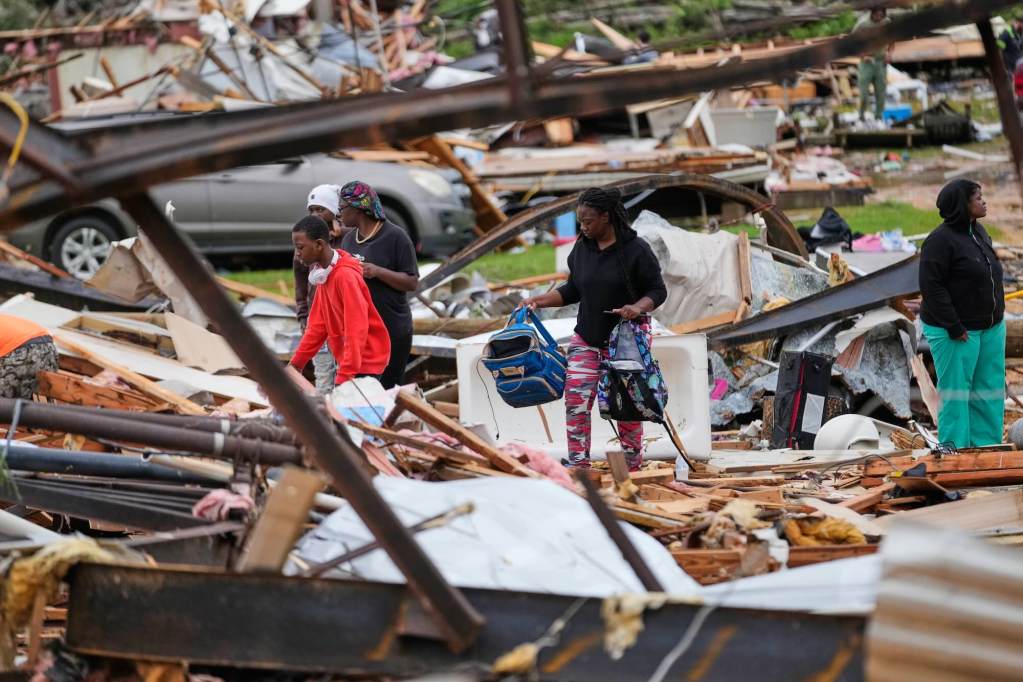
Mississippi Governor Requests Major Disaster Declaration for Five Counties After May Storms, Tornadoes
Mississippi Gov. Tate Reeves requested a federal major disaster declaration to address recent storm and tornado damage in Southwest Mississippi and the Pine Belt. The request would make five counties eligible for individual and public assistance under FEMA.
Feds greenlight Wyoming’s plan to spend $205M on healthcare initiatives
Federal administrators with the Centers for Medicare and Medicaid Services have given final approval to Wyoming’s $205 million plan to fortify its precarious rural healthcare network.
The money is for the state’s Year 1 application to the Trump administration’s Rural Health Transformation Fund. Wyoming stands to receive hundreds of millions more through 2030 from the $50 billion initiative.
“This $205 million investment gives hospitals and clinics across Wyoming new opportunities to improve the healthcare services our communities rely on,” Wyoming’s U.S. Sen. John Barrasso said in a press release from Gov. Mark Gordon’s office. The Wyoming doctor and Republican majority whip championed the Rural Transformation Fund as a sensible solution while railing against the expansion of Affordable Care Act subsidies that expired in December. “I look forward to seeing the innovative ways Wyoming uses these resources to recruit and train health providers and strengthen healthcare across our state.”
Wyoming’s final application outlines an array of proposals to prop up hospitals, build workforce and bolster preventative health. They include regionalizing emergency medical services, establishing clinical workforce training grants and creating financial incentives to persuade small designated “Critical Access Hospitals” to focus on essential community services of an emergency department, an ambulance service and a delivery facility for babies.
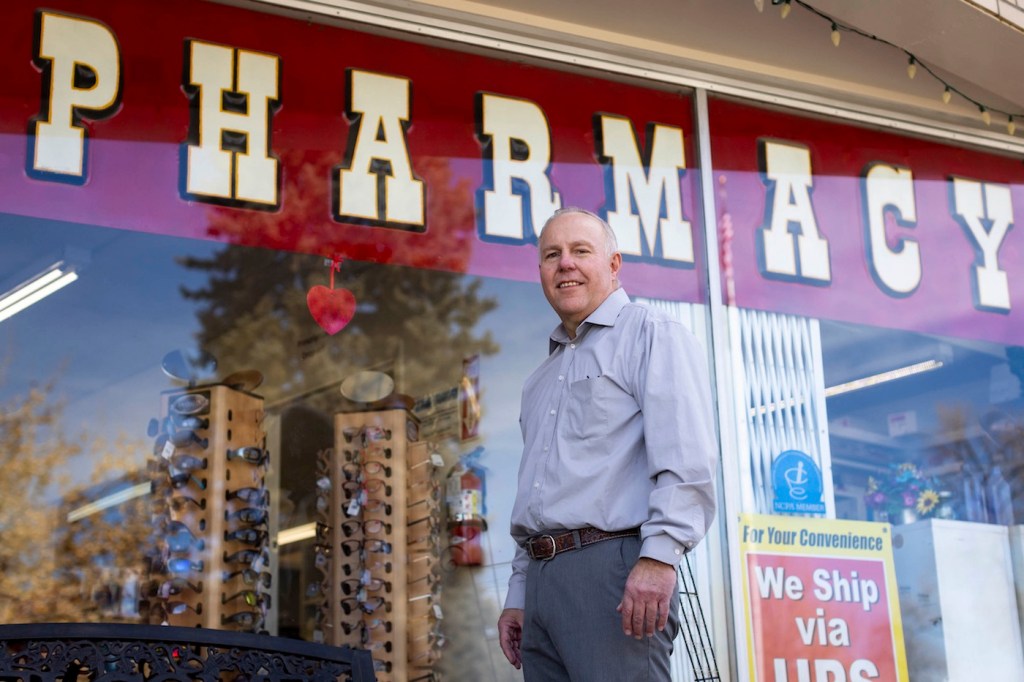
Craig Jones stands for a portrait in front of Basin Pharmacy in Basin on Feb. 21, 2024. It’s the key healthcare access point for the town of about 1,300 people and the surrounding area. (AP Photo/Mike Clark)
However, the final application that the Centers for Medicare and Medicaid Services approved omitted two significant proposals from the original application: a state-operated public insurance plan for healthcare emergencies and a system of investments that could generate revenue for the measures in perpetuity.
The state ditched the health insurance plan, dubbed “BearCare,” after legislators frowned on the idea. The so-called “perpetuity” was dropped, meanwhile, after it did not pass muster with federal administrators and certain “esoteric federal regulations,” Wyoming Department of Health Director Stefan Johansson told the Legislature’s Labor, Health and Social Services Committee last week.
Even without these two components, Wyoming’s plan focuses on providing and sustaining basic care in its rural and frontier communities, Johansson said in a press release, which was the No. 1 priority that emerged from providers, public and stakeholder groups. “We are excited to begin implementing this program, which is a unique opportunity to transform the economics of basic care and incentivize the services we know our rural constituents need.”
How we got here
The Rural Health Transformation Program was created by President Donald Trump’s 2025 One Big Beautiful Bill Act.
Wyoming Department of Health staff gathered input and drafted an 84-page application, outlining the state’s priorities: building the state’s healthcare workforce; improving residents’ metabolic, cardiovascular and behavioral health; and using technology to improve chronic disease management and bring care closer to home. Some of the initiatives proposed to address those include:
Build cooperative agreements for EMS agencies to work together on a regional basis.
Stand up a grant process for technology to improve care delivery.
Fund annual awards to cover educational costs for individuals interested in joining one of four clinical pipelines: nursing, EMS, behavioral health and physician.
Add more slots to Wyoming’s existing accredited programs for postgraduate medical education, likely in new sites.
Implement the Presidential Fitness Test in Wyoming’s primary and secondary schools.
Limit the state’s SNAP benefits to healthy food purchases, not including things like sodas and candy.
The Centers for Medicare and Medicaid Services announced in December that all 50 states will receive awards in 2026 under the program. Wyoming was awarded $205 million.
That kicked off a deeper scrutiny of the application by federal administrators, who took issue with the perpetuity fund as an allowable cost, Johansson said.
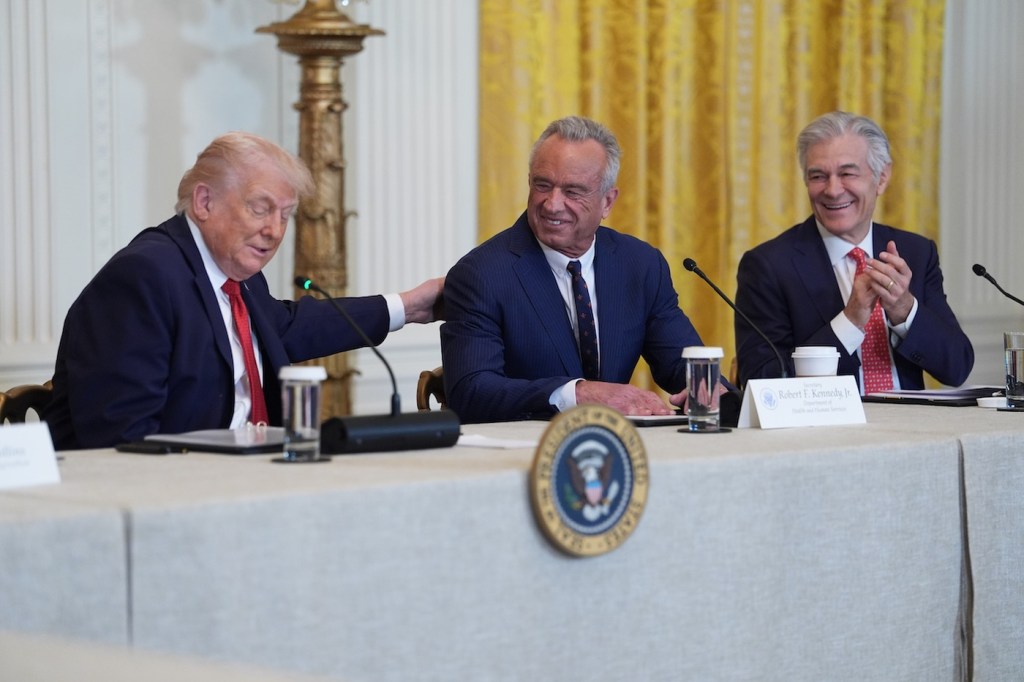
President Donald Trump attends an event to promote investment in rural healthcare in the White House on Jan. 16, 2026, in Washington. He is joined by Secretary of Health and Human Services Robert F. Kennedy, Jr., and Mehmet Oz, administrator for the Centers for Medicare and Medicaid Services. (AP Photo/Evan Vucci)
The state’s application identified the perpetuity as core to Wyoming’s sustainability plan. Similar to Wyoming’s Permanent Mineral Trust Fund, this “perpetuity” would use investments to continually generate revenue for healthcare programs, the application said.
When Johansson told the legislative committee last week that the feds would not allow the perpetuity, he urged lawmakers to keep the concept on the table for a future federal opportunity or even a state-driven initiative.
“It’s just a very unique and Wyoming-specific financing vehicle that I think could be very productive and fruitful for the state,” when it comes to sustaining basic healthcare services in Wyoming, Johansson said.
What’s next
Though Wyoming leaders are celebrating the approval, it will also require a lot of work in a short timeframe. Wyoming must obligate Year 1 program funds by the end of October. That means drafting contracts, hiring staff, requesting proposals, making approvals and obligating funds. State workers, contractors and healthcare providers will have to hustle to lay the groundwork for programs they hope will shore up healthcare for the long term.
Future funding under the program will be based on the state’s implementation process and performance, according to the Centers for Medicare and Medicaid Services.
With limited public involvement, Montana Land Board overhauls land-swap process
The Montana Land Board voted Monday to overhaul the process it uses to evaluate land-swap proposals. This is the first time the Land Board has made sweeping changes to Montana’s land-swap policy in more than 20years, and it happened with limited public notice.
State Auditor James Brown introduced the proposal. Jack Connors, the chief lawyer working for the State Auditor’s Office, described the change as a “red-tape reduction” initiative that eliminates “unnecessary bureaucracy.” Brown added that it will address water- and corner-crossing related disputes and create multiple opportunities for interested parties to comment, thereby adding transparency to the process.
But opponents pointed out that the proposal itself didn’t incorporate a robust public notice and comment period. They argued, unsuccessfully, for more time to evaluate it.
“This is big,” said Kevin Farron with Montana Wildlife Federation. “This is opaque. This is something that was given to the public seven days ago in its full form … A 30-day scoping and comment period should be the very least that we should be getting out of this.”
Gov. Greg Gianforte’s motion to add a 30-day comment period to Brown’s proposal failed on a 3-2 vote. At the close of Monday’s meeting, the board voted Brown’s proposal through, 4-0. Gianforte abstained from the final vote.
Land swaps allow state land managers to exchange public land for private land of “equal or greater value” to the state, which uses revenue from its trust land to support public schools and other government programs. There are more than 5 million acres of state trust lands in Montana that are administered by the Land Board, in coordination with the Montana Department of Natural Resources and Conservation. The Land Board, which is composed of Montana’s top five elected officials, has the authority to approve exchanges, which are often used to consolidate land ownership in areas where public and private land are interspersed in a checkerboard pattern that creates public access challenges.
Key pieces of Brown’s plan adhere to the existing policy and the state laws from which they flow. But there are some notable shifts in the use of consultants and in the process for evaluating a property’s economic and recreational value.
One section of the policy, for example, specifies that while trust land should generally “be valued for its highest and best use,” considerations will be made for “limiting factors.” It instructs the DNRC to apply a “commercially reasonable discount” for state lands lacking a documented legal access — e.g., land that is in the checkerboard.
Another change pertains to a state law specifying that state lands with bodies of water that have significant public use — or access to navigable lakes and streams — can only be swapped for private land with similar water resources. Brown’s policy narrows the definition to specify that the state water resources must have a “documented history of being meaningfully used for crop irrigation, livestock watering, fishing, recreational floating activities or waterfowl hunting” to be subject to that law.
Multiple opponents appeared to reference the East Crazy Inspiration Divide Land Exchange in their comments as evidence of what can go wrong when powerful landowners use paid consultants to broker deals with public agencies. That agreement was executed with help from a pair of real estate consultants and a public relations professional hired by the Yellowstone Club, the private ski and golf club near Big Sky and one of the parties to the exchange. The Forest Service authorized the swap in January of 2025.
“Recent third-party brokered land exchanges in Montana have produced deals where the public received high-elevation terrain of limited utility, while giving up productive lower-elevation land and established recreational access,” argued Russell Fruits with the Montana chapter of Backcountry Hunters and Anglers during comment on the proposal. “Those outcomes are not accidents. They’re what happens when no one is in the room to independently be accountable to the public.”
The proposal drew support from several well-known lobbyists who frequent the halls of the Capitol, including Raylee Honeycutt with the Montana Stockgrowers Association, Clayton Elliott with Trout Unlimited, Ben Lamb with the Montana Conservation Society and former Democratic lawmaker Tom Jacobson, who lobbied for eight entities during the 2025 Legislature, including the Taylor Luther Group, which represents the interests of some of Montana’s highest-profile businesses and landowners.
“Montana’s Constitutional guarantees are unchanged: land values must at least be equal [and] acreage as close to equal as possible,” Jacobson said. “Land swaps are not inherently bad. Controversy arises from lack of early public input, and this policy directly fixes this. I ask for a do pass.”
Discussion among the all-Republican Land Board was tense during the board’s hourlong meeting. Brown enumerated his attempts to engage DNRC in the policy revision and expressed frustration with the agency’s unresponsiveness. Gianforte interrupted 10 minutes into Brown’s comment, directing him to stop repeating himself and wrap up his thoughts.
Attorney General Austin Knudsen supported the proposal, arguing that Brown and his office had used “thoughtful outreach” to garner support from unlikely allies.
“Clayton, I’m not sure I’ve ever seen a time when you and stockgrowers may be on the same sheet of music,” he said, referring to Clayton Elliott with Trout Unlimited. “I think this puts the power back where it needs to be, which is with the five of us right here and not inside the bureaucracy [of the DNRC].”
Secretary of State Christi Jacobsen said little during the Monday meeting. Susie Hedalen with the Office of Public Instruction voted to approve the change, arguing that issues arising from the use of consultants “can always be proposed for us to review again.”
Why Should Delaware Care? Delaware has some of the highest healthcare costs in the country. Nearly a decade ago, the state began measuring how much it spends on healthcare in an effort to tamp down costs on consumers and the state budget. But since tracking that goal began in 2018, the state has continued to blow past self-imposed spending goals.
Healthcare spending in Delaware is yet again on the rise.
Earlier this month, state officials announced that medical spending by consumers topped $11.3 billion in 2024, a more than an $876 million jump from the prior year. It was their first report since lawmakers defanged one of the few entities able to use this data to bring down costs.
Every year, a group of state revenue analysts predicts the level at which they believe healthcare costs will burden Delaware taxpayers – called healthcare benchmarks – in an effort to keep growth contained.
Delaware has blown past its self-imposed healthcare spending goals nearly every year since its inception in 2018. According to the state report, 2024 spending rose nearly three times higher than the state’s benchmark goal of a 3% increase.
Some of the highest spending in 2024 included hospital inpatient spending at $2.2 billion, prescription drug benefits at $2 billion and hospital outpatient spending at $1.8 billion.
In almost every category, spending increased by at least 6%, with some categories as high as 15%. The state pulled its spending numbers from claims data from different insurers including the private commercial plans, the Veterans’ Health Administration, Medicaid and Medicare.
Officials announced the spending hike during a Delaware Health Care Commission meeting on May 7, where they also discussed how costs continue to rise while the state continues to fall behind on different quality benchmarks like the prevalence of obesity and cancer screenings.
Following the meeting, the state’s health secretary called the growth “unsustainable.”
“What we are doing isn’t working, and we need to take rapid steps to transform the way care is delivered and paid for,” Delaware Department of Health and Social Services Secretary Christen Linke Young said in a LinkedIn post.
History of the benchmark
In 2018, then-Gov. John Carney created the healthcare benchmark by signing two executive orders. One of the orders also formed a subcommittee on the Delaware Economic and Financial Advisory Council (DEFAC) responsible to study that spending and recommend a manageable level of increases.
In 2022, state lawmakers passed a bill codifying many of the initiatives created by Carney’s executive order. Delaware is one of eight states with a government-mandated benchmark meant to stem healthcare prices, including neighbors Maryland and New Jersey.
Years later, Delaware officials introduced legislation that would have given an oversight board the ability to hold hospitals accountable to the annual benchmark by, in part, vetoing hospital budgets it deemed excessive.
That law, House Bill 350, was challenged in court by ChristianaCare in 2024, ending in a settlement nearly a year and a half later that watered down the board’s power to enforce the benchmark.
That new law, Senate Bill 213, was signed into law earlier this year by Gov. Matt Meyer.
Before SB 213, the Diamond State Hospital Cost Review Board’s oversight – the board with the power to reject excessive hospital budgets – would have followed a four-step process.
Hospitals would submit detailed financial documents, which board members would review. If they deemed hospital spending to be too large, they would put the facility on a “performance improvement plan.”
If a hospital failed to correct its overspending, the board could then modify or veto its budget.
When SB 213 became law, the board no longer had the power to modify or veto hospital budgets of hospitals it deemed to be too profligate. After ChristianaCare sued the state over the constitutionality of those powers, a judge was set to examine that question, should the lawsuit have continued.
The new bill also made technical adjustments to language in the original HB 350, including renaming the performance improvement plan, a “benchmark compliance plan.”
At the center of those plans are whether hospitals keep their spending below the annual benchmark for how much DEFAC believes healthcare should cost Delawareans.
If a hospital’s spending exceeds the state’s projected benchmark, the cost review board now would require it to send in a compliance plan outlining how it intends to bring prices down.
The law also introduces “meaningful cost containment arrangement” plans, which are described as “contracts between hospitals and payers” meant to hold the hospitals responsible for controlling health care spending in a specific area.
Hospitals can enter these agreements and be exempt from the benchmark plans for one year, the law said. But it does not exempt them from the financial reporting requirements outlined in the law, like sharing budget information and labor costs.
The amendments are primarily technical, but the one with the most substance would require hospital CEOs to attest to whether their companies are in compliance with their meaningful cost containment arrangement plans.
Health Care Commission meeting
At the May 7 Delaware Health Care Commission meeting, members discussed the growing costs to patients and the continued explosion of expenditures each year.
Christen Linke Young, a former Biden and Obama Administration official, will serve as Delaware’s Secretary of the Department of Health and Social Services. | SPOTLIGHT DELAWARE PHOTO BY NICK STONESIFER
Young, Delaware’s health secretary, said she agreed with another member of the commission who said Delawareans are not receiving the maximum value from the healthcare system.
“We are spending more money every year, and we are not getting what the people of Delaware want and should be getting from our health care system,” Young said during the meeting.
Young added the state is pushing to make changes to how patients pay for care and incentivize treatment that keeps patients healthy, instead of billing for every procedure they receive, effective or not, as is done now.
The conversation then shifted to primary care, and the difficulties of scheduling time with a provider. Commissioners’ remarks come as lawmakers are set to weigh a primary care reform bill aimed at rewarding providers that keep patients healthy and away from costly trips to emergency rooms.
But the bill faced strong opposition from the state’s hospital systems that do not support price cap provisions included in the legislation meant to tamp down the costs on patients and the state.
Lawmakers in the state Senate unanimously passed that bill, Senate Bill 1, on Tuesday.
Border Wall Plans Threaten Rural Infrastructure and Cross-Border Life in Big Bend
Federal plans to build a steel border wall across remote stretches of West Texas are now taking shape in the Big Bend region, despite a lack of federal transparency surrounding the project. Even as officials originally confirmed that no physical border wall will be built through Big Bend National Park and Big Bend Ranch State Park, construction is advancing just west of the parks, threatening rural border communities whose economies and cultures are built on cross-border ties.
Last week, the federal government also moved to accelerate that broader buildout. U.S. Customs and Border Protection awarded a $1.7 billion contract for a “border wall in Big Bend Texas,” alongside a separate contract tied to environmental monitoring for construction activity in the region.
At the same time, the Trump administration waived dozens of environmental and cultural protection laws to fast-track new border roads, vehicle barriers, and surveillance infrastructure across parts of the Big Bend region, including protected stretches of the Rio Grande corridor. With few public details released, residents and conservation groups said the process has remained opaque, fueling uncertainty about the long-term fate of the region’s ecosystems, tourism economy, and protected public lands.
Local residents warn that the impacts will not stop at the park boundaries; increased infrastructure and nearby wall construction could still disrupt ecosystems and daily life across the region.
That concern is especially acute in Presidio, a rural border town of roughly 3,000 residents west of the parks, where federal plans for new steel barriers are still moving forward. The majority-Hispanic community faces a poverty rate approaching 40%, far above the statewide rate of about 14%, and depends heavily on cross-border economies with Ojinaga, the larger Mexican city directly across the river. For many in Presidio, the proposed wall would transform their daily lives.
Maps from US Customs and Border Control have offered few details about how construction could affect the international checkpoint, and residents say they still have little clarity about the future of border crossings.
“People are surviving here in Presidio,” said Denisse Carrera, a Presidio resident. “We depend on Mexico for a lot of our necessities. That’s where we get groceries and other things we can’t always find here because we only have one grocery store. Sometimes it’s also more affordable in Mexico. Yet they want to spend $17 million per mile on this wall, which I think is about 575% more than our city’s annual budget.”
A $1.2 billion federal contract awarded for border wall construction in Presidio County would cost an estimated $17 million per mile. The Big Bend Sector, which the Department of Homeland Security defines as a 500-mile stretch of border in Far West Texas, has long been one of the quietest regions along the border, consistently recording some of the lowest rates of migrant apprehensions and smuggling activity.
But even if the crossing remains, the wall construction alone could threaten access to Ojinaga.
Historically, floods have damaged local levees and forced closures of the international bridge connecting Presidio and Ojinaga. Residents and local officials warned that a 30-foot steel wall along the Rio Grande could worsen future floods by trapping debris and interfering with the city’s already-fragile flood-control system in a region prone to flash flooding and river surges. They said federal agencies have yet to provide adequate engineering or hydrology studies despite the area’s history of devastating floods.
In response, the city commissioned an independent flood-risk assessment and has continued pressing federal officials for answers.
“The City of Presidio is partnering with the Presidio Municipal Development District on this study because protecting the people who live here, on both sides of the river, is our job, and right now, no one else is doing it,” said Presidio Mayor John Ferguson, in a press release. “We have asked the federal agencies responsible for this levee for straight answers about what is being proposed, and we have not gotten them.”
Across the broader Big Bend region, concerns about safety and environmental damage have only intensified as new border infrastructure has already begun appearing along the river.
In October 2025, the U.S. Army and Border Patrol installed miles of concertina razor wire along the Rio Grande in Presidio, underneath the international bridge, prompting criticism from locals who worry the razor wire could come loose during the river’s annual summer floods.
“I think that that wire could go downstream easily,” said Erin Little, owner of the Big Bend Boating and Hiking Company. “And I think it threatens anybody who’s in the water.”
Erin Little outside of the Big Bend Boating and Hiking Company in Terlingua, Texas. (Photo by Anya Petrone Slepyan/The Daily Yonder)
Charlie Angell, owner of Angell Expeditions and a longtime Rio Grande river guide, said the dangers could extend deep into the canyon systems of Big Bend.
“These logs that float down during flash floods are going to catch in that razor, rip out chunks of it, and keep floating downstream, going into all the canyons in the state park and all the canyons in the national park. And then anytime somebody jumps in the river to cool off, they’re gonna get slashed,” Angell said. “It’s not a matter of if, but when.”
To many residents, the militarization of the river feels disconnected from the reality of life in the Big Bend.
“Razor wire is for war zones, and this is one of the most peaceful places I’ve ever set foot in,” said Tony Drewry, a Rio Grande River guide with Angell Expeditions.
Kayaks outside of the Big Bend Boating and Hiking Company in Terlingua, Texas. (Photo by Anya Petrone Slepyan/The Daily Yonder)
Beyond environmental concerns, residents also fear the wall could undermine Presidio’s delicate but growing tourism economy.
In October 2024, Presidio resident Yosdy Valdivia opened an art gallery, Galería Raíces, hoping to contribute to her community’s growing tourism industry. Now, she worries the wall could undermine those efforts before they fully begin.
“I’m barely getting started with this dream of mine, and this [wall] would kill tourism. This will kill the town,” Valdivia said. “So I just don’t know how they’re not really taking the business and wildlife and all that into consideration.”
Like many residents in Presidio, Valdivia’s personal life is deeply intertwined with Ojinaga.
Yosdy Valdivia at Galería Raíces in Presidio, Texas. (Photo by Anya Petrone Slepyan/The Daily Yonder)
“[The border] is my everyday life. I go to Ojinaga every day for groceries, visiting family, and for school. I have my son at the daycare. My family lives there, it feels like we are in the same town,” Valdivia said. “I’m still in shock trying to imagine a wall here.”
Compared to other Far West Texas towns, Presidio’s community opposition has been relatively subdued, a tone that some attribute to fear around the current immigration landscape.
In April, the city of Presidio passed a resolution opposing construction of the border wall.
“We had a lady in the audience who did not speak English, and so we had the whole resolution in Spanish, because our Presidio community needs to get more engaged,” said Mayor Ferguson at a Presidio County Commissioners meeting in April. “I think they’re intimidated.”
Valdivia works alongside the No Big Bend Border Wall coalition and is also relying on the cross-border connection to spread awareness and reach out to the Spanish-speaking residents.
“We’re planning to do some radio commercials in Ojinaga,” Valdivia said. “We don’t listen to the Marfa radio here, because we mostly speak Spanish. So we listen to the radio in Ojinaga.”
“A lot of people are afraid of the government. They think they’re going to remove their green cards, or I don’t know how they think it’s going to affect them, but they’re truly scared,” said Valdivia.
For Mayor Ferguson, that fear has heightened his responsibility to the community.
“For those of us who have that authority and that representation, we need to come together immediately and fly into action and represent everybody here in the Big Bend,” Mayor Ferguson said.
Presidio resident Denisse Carrera said she hopes these voices in Presidio are heard across the state and country. With the scale of disruption only growing, Carrera said she often thinks about what’s at stake.
“I’ve been seeing the Milky Way every morning,” Carrera said. “And I just keep thinking why do they want to take this away?”
We don’t compete. We complete. How collaboration strengthens local news
Reading Time: 2minutes
One of the quieter truths about journalism is that, despite the stereotype of relentless competition between newsrooms, some of our best work depends on collaboration.
Bolts editor Daniel Nichanian and I have long discussed ways our organizations might work together, considering how our missions overlap. Both newsrooms aim to help people better understand the systems and decisions shaping their lives. So when Daniel asked about our interest in the story, the answer was obvious: absolutely.
The story reported by Pascal Sabino was strong. We offered a few minor suggestions, shared a photo from our archives and published the piece on Friday with two added photos from WPR photojournalist Angela Major — bringing the reporting to Wisconsin Watch audiences. Early engagement suggests the story is resonating.
What struck me most is how ordinary this kind of partnership has become in nonprofit journalism and even among some for-profits.
At the same time, local and statewide outlets across Wisconsin republished original Wisconsin Watch reporting for their own audiences.
Every collaboration works a little differently. Sometimes it means sharing reporting resources. Sometimes it means sharing expertise or audience reach. But the biggest beneficiary is always the public. These partnerships give readers more vetted, deeply reported information that helps communities stay strong, informed and connected.
And for that, I am grateful.
Wisconsin Watch is a nonprofit, nonpartisan newsroom. Subscribe to our newsletters for original stories and our Friday news roundup.
Vermont rejected the federal government’s vaccine rollbacks. But doctors are still seeing their impact.
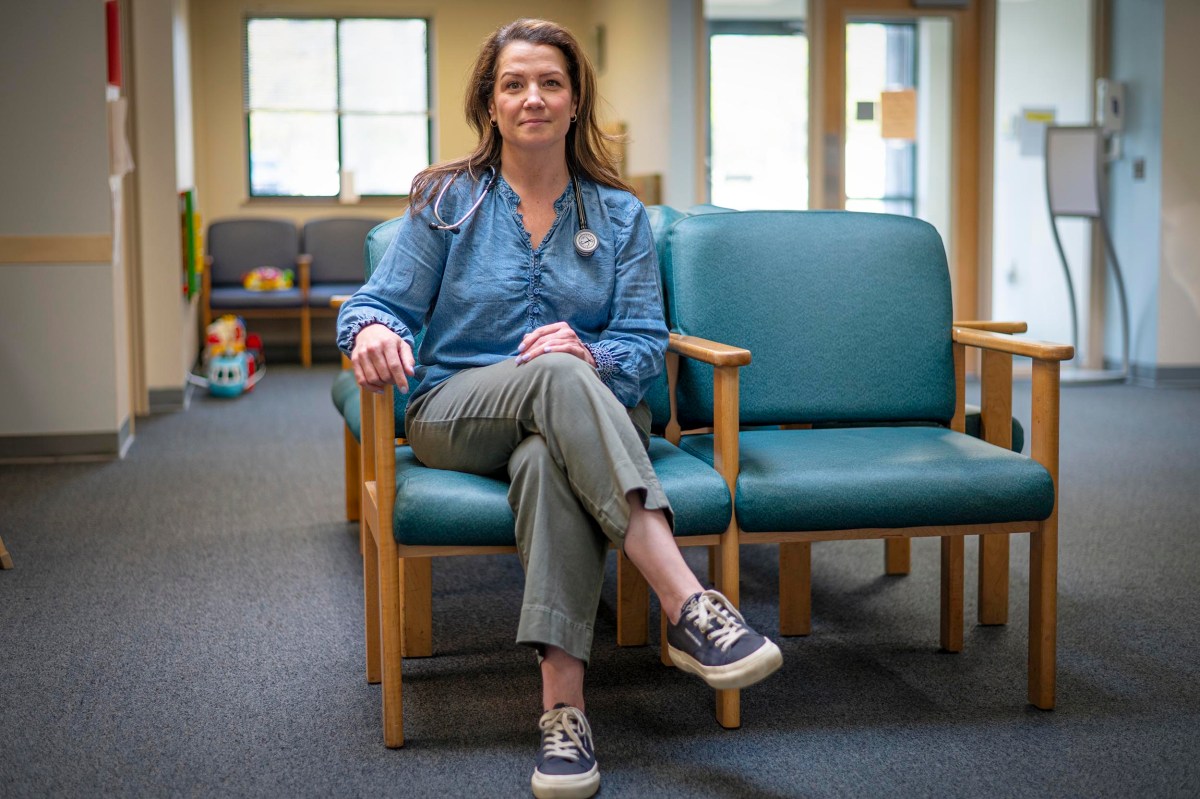
Dr. Tracy Tyson at Monarch Maples Pediatrics in St. Albans on Tuesday, May 12, 2026. Photo by Glenn Russell/VTDigger
Dr. Tracy Tyson, a pediatrician in St. Albans, has seen the prevalence of vaccine skepticism rise and fall in waves: first with the advent of social media in the early 2010s and then during the Covid-19 pandemic. The third wave came as soon as Robert F. Kennedy Jr. took the helm of the U.S. Department of Health and Human Services, she said.
“More now than ever before in my career, (parents) want to make up their own schedule,” Tyson said. “They want to do things differently if they do them at all. They want to decide when the vaccines are due, or, sadly, they just completely refuse vaccinations and don’t ask you questions.”
In the face of these federal changes, Vermont has doubled down on its commitment to the vaccination schedule in place before Kennedy took over, one still recommended by the American Academy of Pediatrics and other physician groups. In March, Gov. Phil Scott signed legislation that insulates the state against further federal changes to vaccine policy. The law allows the state to purchase vaccines from sources other than the CDC — previously the only source — and mandates insurers will cover the cost of vaccines.
Still, pediatricians are seeing the impacts of federal changes find their way into the clinic.
Merideth Plumpton, who runs the immunization program for the Vermont Department of Health, said primary care clinics across the state are reporting more parents hesitant to vaccinate their kids. And, Plumpton added, the nature of the conversations has shifted drastically from community well-being to individual autonomy.
It will take time to see if and how this change in attitude shakes out in actual vaccine uptake, Plumpton said, since the full breadth of the pediatric schedule is administered over years.
The rate of Hepatitis B immunizations administered at birth has dropped slightly in Vermont. In December, the CDC formally stopped recommending the birth dose. From 2021 to 2024, around 86% of Vermont infants received the vaccine within the first three days of life; in 2025, that rate dropped to 80%.
Vermont’s vaccination rate against other illnesses remains high and in line with previous national trends: In December 2025, 90% of the state’s 2-year-olds received their vaccines for polio and measles, mumps and rubella. National data is less up-to-date, but CDC data from 2018 showed that 92.5% of 2-year-olds had their polio vaccine, while 90.8% got their MMR immunization.
“I don’t think that we are significantly different than the rest of the country,” Tyson, the pediatrician, said. “I think that (vaccine hesitancy in Vermont) is more widespread than people realize, and I think it hit us harder than I even expected.”
When Tyson encounters a family hesitant about vaccinating their child or confused about what is still recommended and available, she holds a vaccine counseling session, often midvisit.
She said she talks to patients as if they are her own family members: She tells them how she approaches vaccine science and that she immunizes her kids on the pre-RFK Jr. schedule. In those conversations, she often directs them to the Children’s Hospital of Philadelphia website, which she says has clear, digestible information on vaccine science. Out of the 70,000 vaccinations she’s given over the 20 years in her career, she said she’s never seen any adverse outcomes.
Health and Human Services Secretary Robert F. Kennedy Jr. stands among young students during an event announcing proposed changes to SNAP and food dye legislation, Friday, March 28, 2025, in Martinsburg, W. Va. (AP Photo/Stephanie Scarbrough)
“I’ve never held a family’s hand while they got through a vaccine injury, but I’ve held their hand when (their child) died from vaccine preventable illnesses,” she said.
The counseling sessions are exhaustive, sometimes emotional conversations in an already packed day, slotted alongside discussions of nutrition, sleep, family issues, screenings for depression and anxiety and medical exams, in a 20-minute visit.
“I’m always running behind, running into my lunch break,” Tyson said.
She said she used to do this vaccine counseling once a month but now has these conversations at least once a day. “There are days when it feels like half my time is discussing vaccine hesitancy,” she said.
Up until 2026, she did not have to bill insurers for these conversations. Instead, insurers’ payments were pooled into fixed monthly sums, as part of an experimental primary care payment reform in Vermont that sunset at the end of 2025. Now, Tyson is back to billing for each individual service she provides — or doing it uncompensated.
But as Vermont’s clinics transition back to a fee-for-service model, it’s been a slow and confusing process to incorporate billing for these sessions. The American Medical Association recognizes the vaccine counseling sessions as distinct, billable services. Both BlueCross BlueShield of Vermont and Medicaid said they reimburse for these vaccine counseling appointments where an immunization is not administered.
But, unaware of the patient’s cost share and concerned about saddling them with extra costs, Tyson said her office only bills for them in situations where the conversation runs especially long. When she has listed vaccine counseling on a bill of services, families have become frustrated to see it there, she said.
Footing the bill for her time in these shorter conversations hasn’t begun to affect the practice financially yet, but it could eventually, Tyson said.
Dr. Ashley Miller runs her own pediatric practice in Royalton. She agreed with Tyson that working in a fee-for-service model once again makes it that much harder to afford difficult conversations like those surrounding vaccines.
Miller sees half the number of patients she did when working at a larger hospital. She spends 30 minutes, rather than 15 on each visit. It’s a pay cut, but one she says is worth it in order to spend more time connecting with patients, she said.
Still, discussions of vaccination safety and hesitancy take some of the joy out of practicing, she said.
What’s worse is when there’s no discussion at all.
“The hardest thing for me is when families come in and they just say, ‘No, we’re not going to do that,’” Miller said. Over the last two years, she’s seen more of this “full-stop” approach.
Dr. Joe Nasca, a longtime pediatrician in Georgia, seeks out longer, individualized conversations with his patients. It’s scary, he knows, to be a first-time parent, presented with the enormous responsibility of keeping a baby alive, all while being besieged by an onslaught of often-conflicting information about how to do so.
He estimates about 75%-80% of his patients in Franklin County come in and say, “You know, Doc, whatever you think is best, that’s what I’m going to do.” But the number of families worried about vaccination has increased since the pandemic.
He gives them guidance using a metaphor of bronze, silver and gold levels of immunity. The CDC’s current, slimmed-down vaccine schedule is bronze; adding a few more vaccines back into that schedule would be silver; and getting everything — a pre-Kennedy schedule — that’s golden.
Nasca acknowledged that some of his patients are demographically and geographically less at risk for some diseases that some regular-schedule vaccines prevent, like Hepatitis B at birth or rotavirus.
But that level of tailoring is extremely difficult for one doctor juggling thousands of patients.
Nasca now works with other doctors in Georgia Pediatrics, but earlier in his career, he was a one-man show. In those days, he had to refuse treating patients who were unvaccinated.
He had 2,000 patients in his roster, used paper documentation and took calls from parents at any hour of the day. It was too stressful, he said, to field calls at home in the middle of the night and need to weigh whether a fever in an unvaccinated child could mean a cold or life-threatening meningitis. He remembered his early days in medicine doing spinal taps on feverish children to test for meningitis.
It was too much for one person to balance. He had to stop seeing about 20 patients who were not vaccinated at that time.
Nasca doesn’t think that parents refuse vaccination for any reason beyond love for their child, but it’s a decision that’s hard for him to square. Recently, he asked a parent he knew well, “Why is it that you don’t want to immunize your child?”
“She said it’s not a rational decision. She said it’s an emotional decision,” Nasca said, “I think that’s probably the root of it. It becomes an emotional decision for a lot of people.”
AT&T Withdraws Controversial Kaua‘i Cell Tower Plan
Community members on the North Shore overwhelmingly opposed a plan to build a cell tower less than 50 feet from one resident’s bedroom window.
Proposed Transmission Line in Central Texas Leaves No Community Unscathed
For months, rural communities across Central Texas have been fighting to stop the development of a high-voltage transmission line that would cut through their communities to power oil, gas, and data centers in West Texas. Now, landowners are navigating a fast-paced and highly-technical legal process, where efforts to protect one property may ultimately shift the burden to another.
“It’s just a giant extension cord from Central Texas to the Permian Basin,” said Beth Kunz, a landowner in Burnet County. “We don’t see any of the power, but we sure have to pay for it with our land and resources.”
The line would carve easements upwards of 200 feet wide through rural properties. With no substations planned along the route, none of the electricity would reach the communities it passes through, leaving landowners to shoulder the costs of infrastructure that solely benefits distant oil fields and data centers.
On March 26, Oncor Electric Delivery and the Lower Colorado River Authority Transmission Services filed an application with the Public Utility Commission of Texas to build a 765-kilovolt transmission line connecting Schleicher County to Bell County. The proposal outlines 122 possible routes stretching roughly 214 to 244 miles, with additional variations possible if different segments are combined. The Public Utility Commission of Texas, a five-person committee appointed by Governor Greg Abbott, can select any of those routes, meaning no community along the corridor is definitively in—or out—of its path. Their decision deadline is September 22.
Mia Sarot has been spearheading the community organizing in Burnet County, where multiple possible routes criss-cross neighborhoods, including her own. For months, she has been holding community meetings, sharing information with county residents through presentations and roundtables, and appearing before state and county officials to press for intervention.
“I didn’t even know what a transmission line was last summer,” Sarot said. But then her neighbors started receiving packets in the mail notifying them that their properties were within the possible paths of the transmission line. In August, a neighbor stopped Sarot in her driveway to ask for support. Soon after, community members started expressing concerns about how the line would affect the ecosystem, residents’ health, local property values, and utility prices. “Now I work on this stuff 80 hours a week.”
Sarot has been hosting community meetings and outreach events to help residents file to intervene in the transmission line. The intervention process lets affected people formally join a Public Utility Commission (PUC) case, submit input, and seek records, by filing a written request within 30 days of the application filing.
As of April 27, over a thousand parties have filed a motion to intervene, including private landowners, local environmental groups, The Comanche Nation, livestock companies, and local governments, including Burnet County.
A County Caught in the Crosshairs
All of the possible routes run through Burnet County, just at various sections of the county.
“There is a concern that we’ll end up wasting taxpayer money on things that may not be of fruition because all three lines are going to stay in Burnet County,” said Burnet County Judge Bryan Wilson during an April 1 meeting reported by The Daily Trib. “But that doesn’t necessarily mean that we shouldn’t advocate for our citizens, our landowners, and the health and safety of our community.”
The process for these transmission lines has been fast-tracked. In 2023, the Texas Legislature passed a bill that led to new rules under the Texas PUC’s Permian Basin Reliability Plan, cutting the approval timeline from one year to 180 days. The condensed schedule leaves less time for citizens and local governments to assess impacts, submit input, and engage in the decision-making process.
In the rapid scramble to defend themselves, Burnet County residents have come to realize that protecting their home could mean hurting their neighbors’ home.
Ron Boultinghouse can trace his family history in Burnet County back to 1853. Almost 40 years ago, he purchased a home near Lake Victor, which is now in the line of one of the proposed segments.
“I don’t want that line on top of anybody else, but I don’t want it on top of me,” Boultinghouse said. “I’m not real sure how to say that – ‘I’d rather it be on your place than on my place.’ Nobody should have to say that. It shouldn’t be that way at all.”
Susan Warren, who has lived on a working ranch in Burnet County since 1973, said unless the plans for the transmission line are paused and re-evaluated, this process is designed to create tension and division among neighbors.
“This is just really difficult because you’re pitting one neighbor against another,” said Warren. “I don’t know how you get around this. You’re just, you’re pushing it from one neighbor to the others, and that just seems so unfair, but that’s really what’s going to happen if they pick another line versus ours.”
The compressed timeline has left many residents on the defensive, worried about how the line could reshape every aspect of their lives, and eyeing other alternative routes.
Like Sarot, Warren spends hours every day helping her neighbors file intervention paperwork, keeping up with new filings, and sharing information with her community—time she only has since she recently retired.
“The short timeframe makes fighting this near impossible. I think if there was a longer period of time, some of the people who were sick, home schooling, and caring for elderly family members might have a little more opportunity to participate,” Warren said. “When you slam it down to 30 days and they already have those very hard life things going on, having the energy to fight is near impossible to squeeze in.”
For Boultinghouse, the commitment is firm. “I’ll be darned if I am not fighting this thing until the end,” he said.
Residents say that even if the transmission line doesn’t run directly through their property, its presence anywhere in the county will still affect their daily lives.
Warren is no stranger to large-scale infrastructure projects. Last year, the Matterhorn Express gas pipeline was installed across her ranch, cutting through hay fields, disrupting cattle grazing, and raising concerns about livestock safety. Now, a compressor station tied to that pipeline operates in her neighborhood, bringing persistent noise and new worries about its proximity to a proposed high-voltage transmission line.
Her concerns don’t end there. Warren also lives near the Firefly Aerospace test site, a 200-acre rocket testing and manufacturing facility in Briggs, Texas, where an explosion occurred last year. With rocket testing, natural gas infrastructure, and the prospect of new transmission lines converging in the same area, she says it feels impossible to escape the risks.
“It doesn’t matter if you live in the area where the transmission line is, the risk of danger is still here,” Warren said.
“I have loved ones and friends that live along each of those routes and that would suffer from this,” Sarot said. “I think everyone will still be affected. It’s changing the infrastructure for your county and for your area and for your neighbor.”
Sarot added that whatever happens next will shape the trajectory of future infrastructure development.
Under Public Utility Regulatory Act (PURA) guidelines, Texas prioritizes routing new transmission lines along existing corridors, like roads, railways, or other utility paths, to reduce disruption and simplify permitting. Once a line is built this way, it can make it easier for future projects to follow the same path, gradually forming a larger energy corridor.
“You’re essentially creating a corridor that invites additional infrastructure such as smaller transmission lines, substations, data centers, and battery storage, because those projects tend to follow ultra high-voltage transmission,” Sarot said. “That’s when people further away from these routes will really feel the impact, years from now, when additional infrastructure and new facilities could be proposed along these routes. But by then, the groundwork has already been laid. The time to fight is now.”
And once the transmission line is developed, there won’t be a chance to reassess.
“Once you build it, you can’t undo it,” Warren said.
A sign outside one of the properties that will be affected by the transmission in Burnet County, Texas. (Photo by Madeline de Figueiredo/The Daily Yonder)
The Rural Costs
Designed to support surging energy demand in the Permian Basin, the project would cost an estimated $1.6 billion to $1.9 billion, with nearly $400 million more allocated for substation and system upgrades.
No public analysis has outlined how the proposed transmission buildout would affect customer bills. However, estimates suggest Oncor’s planned line could lead to a notable increase. Residential rates are projected to rise by about 29%, adding more than $200 per year for the average household.
“We will end up paying for the line for decades in our monthly electric bills,” said Clare Nelson, a Burnet County resident who has been advocating against the transmission line. “And if we need more AC, if there’s a harsh winter and we need more power, we will not benefit at all.”
Warren said nobody is immune from the costs of the line.
“The sad part about it is, it ultimately affects every single body who lays their head down in the state of Texas, because you’re going to pay for it in your electric rates,” Warren said. “It’s disheartening.”
As of the end of 2025, data centers dominated Oncor’s backlog of requests for new power connections. A 2026 report showed 650 pending commercial and industrial projects, including roughly 255 gigawatts tied to data centers—far exceeding the approximately 18 gigawatts requested by other industries. One gigawatt can power upwards of 700,000 homes, meaning 255 gigawatts could power nearly 180 million homes.
High-voltage transmission lines can also affect local water systems. Construction disturbs soil, increasing erosion and sending sediment into nearby streams, while ongoing vegetation clearing reduces shade, raises water temperatures, and can accelerate evaporation from exposed water and soils. Cleared corridors and access roads may also alter natural drainage patterns and speed up stormwater runoff, increasing the risk of flooding.
In March, Burnet County raised their drought stage to level three, signaling below-average groundwater levels. Residents described collecting water in buckets while waiting for showers to warm up, using condensation catchers, and taking other conservation measures. Even so, they worry that new infrastructure could further strain already limited water supplies, along with the livestock, honeybees, and other plants and animals that define Central Texas ecosystems.
Melissa Duckworth, a landowner in Burnet County and a certified Texas Master Naturalist, has filed to intervene. One of the proposed segments cuts through her property near the San Gabriel River which recently flooded last July.
Melissa Duckworth and Mia Sarot look out over the banks of the San Gabriel in Burnet County, Texas. (Photo by Madeline de Figueiredo/The Daily Yonder)
The riverbanks were in full bloom as Duckworth warned that clearing an easement would disrupt habitat and drive away local wildlife. “We’ve had a lot of quail. They love bunch grasses, especially the Little Bluestem. So they come right back through here and lay their eggs since they are groundnesters,” Duckworth said. “But the easement would wipe a lot of this out and the quail would just leave.”
Duckworth said that nothing about this process feels promising.
“I don’t feel good about anything,” Duckworth said. “I know some people are feeling better, but I think it can be a bait and switch thing. I think there’s maybe a chance they won’t choose this segment [that we live on], but I am not confident.”