7.5 million pounds of chemicals released by South Dakota industries in 2024
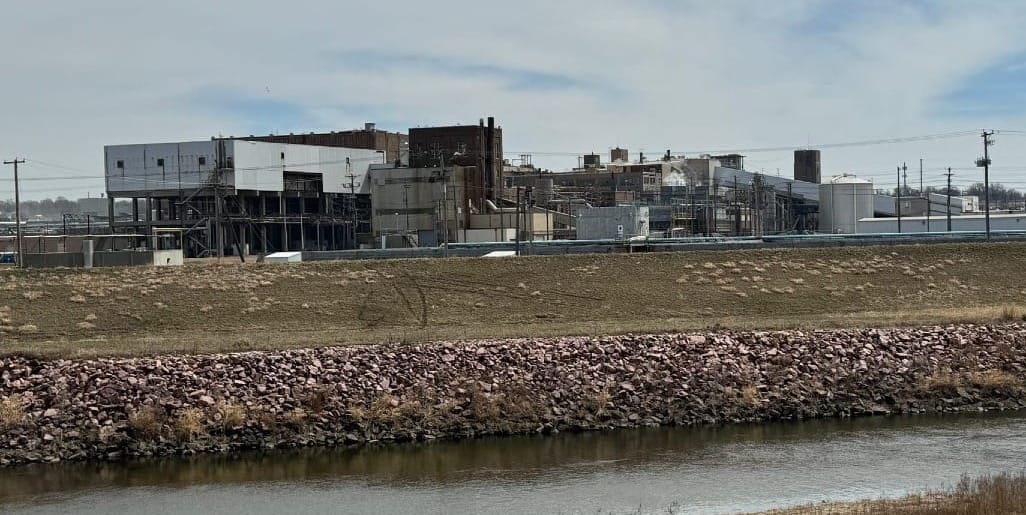
7.5 million pounds of chemicals released by SD industry in 2024Newly released federal data show that South Dakota businesses and industries released nearly 7.5 million pounds of toxic chemicals in the air, water and land in 2024 but also reveal that long-time leading polluter Smithfield Foods in Sioux Falls drastically cut its releases.

The numbers come from the Environmental Protection Agency’s annual Toxic Release Inventory (TRI), a report listing generation and release amounts of more than a dozen different toxic chemicals by industry and government in all U.S. states and territories.

The 2024 data for South Dakota reveal a few key data points, including:

  • The most commonly released chemicals include nitrates into water, hexane into the air and lead onto land surfaces. Nitrates are used in food production, hexane is a byproduct of feed and fuel production and lead results from mining operations.
  • South Dakota is in the lowest 10% of states and territories in terms of chemical release levels and is the lowest among all neighboring states.
  • Recycling of chemical wastes and byproducts is on the rise in South Dakota and across the country as companies work to reduce their chemical footprints.
  • In a major shift, gold and silver mining company Wharf Resources of Lead overtook Smithfield Foods as the state’s biggest releaser of toxic chemicals. Smithfield, a pork processor located on the Big Sioux River, installed a $45 million wastewater treatment facility in 2023 and saw a 77% reduction in nitrates and ammonia released by the plant in 2024.

The purpose of the TRI is to inform the public about industrial chemical releases and to aid companies in tracking and ideally reducing wastes or being more aggressive in waste treatment and handling, EPA spokesman Jeffrey Landis wrote to News Watch in an email.

The TRI is not a comprehensive list of all chemical releases because it does not include agricultural runoff or bacterial releases, the EPA said. Most of the chemicals listed in the TRI have been treated prior to release. And most releases are done within permit limits set by state and federal regulators, the agency said.

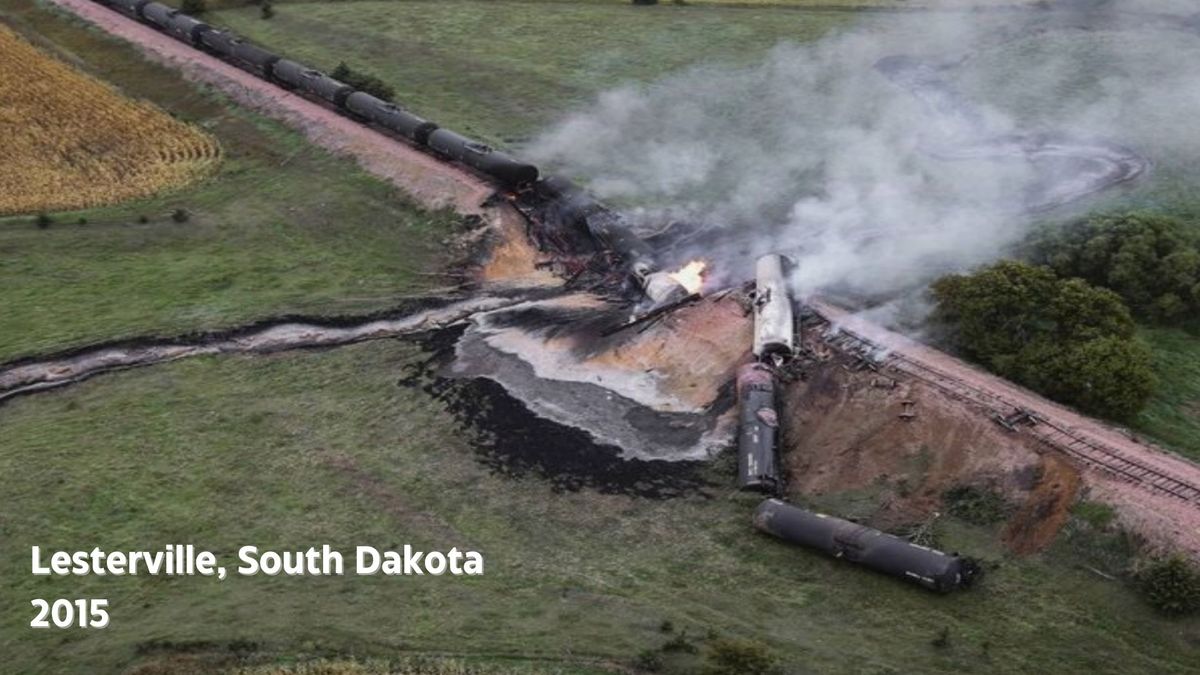
11 billion-pound mystery: The chemicals South Dakota trains carry
Each year, trains carry nearly 11 billion pounds of chemicals through South Dakota cities and countryside, much of it on century-old tracks.
7.5 million pounds of chemicals released by SD industry in 2024

Jay Gilbertson, manager of the East Dakota Water Development District, is a longtime advocate of pollution reduction. Lowering industrial emissions is an important goal, Gilbertson said, while acknowledging that producing goods or processing foods will create waste or byproducts.

“If you want to have those economic development opportunities and the products that result, hardly any process is free of emissions of some sort, so it’s not a big surprise these companies are major emitters of chemicals,” Gilbertson said. “It is pollution. But it is pollution taking place under the watchful eye of regulators.”

Millions of pounds but still on the low side

In all, 107 South Dakota industries and businesses and five governmental entities tracked by the TRI released nearly 7.5 million pounds of chemicals in the air, water or land surfaces including landfills. The 2024 release total represents a slight increase from 2023, when 7.2 million pounds were released.

About 30% of the chemicals are released into the water, 28% into the air, 27% onto land and 14% in off-site locations or other disposal methods. Of the 340 chemical releases noted in the 2024 TRI, 95 of those included carcinogenic materials.

The top South Dakota releasers in 2024, what they released and where, according to the TRI:

  1. Wharf Resources gold mine at Lead: lead and other chemicals onto land
  2. Smithfield Foods pork processing plant in Sioux Falls: nitrates and ammonia into the Big Sioux River
  3. Novita Aurora of Brookings County, an animal nutrition company: hexane into the air
  4. Workhorse Cabs/Crenlo Engineering of Watertown, which manufactures large machinery cabs: manganese/chromium to the air and off-site facilities
  5. South Dakota Soybean Processors of Volga: hexane into the air

South Dakota’s generation of 24.3 million pounds of chemicals and release of 7.5 million pounds in 2024 were both the lowest levels among all neighboring states, likely due to the state’s relatively small number of large industrial companies.

The highest releases were in Montana, where 52.3 million pounds of chemicals were released. North Dakota was second in the release level at 49.3 million pounds, followed by Iowa with 34 million pounds.

The highest individual chemical release in the nation in 2024 was at Red Dog Operations mine in Kotzebue, Alaska, where 380.8 million pounds of zinc were released. In the Great Plains, the single largest release of 17.5 million pounds of ammonia took place at Basin Electric Antelope Valley Station in Mercer, North Dakota.

Wharf mine seeks to limit releases

The 2024 data indicate that Wharf, a mining operation owned by Chicago-based Coeur Mining, released nearly 2.7 million pounds of eight separate chemicals in 2024.

The top chemical released was 2.4 million pounds of lead and lead compounds, which were released onto the land. Other chemicals released by Wharf include nitrates, chromium, manganese, methanol, sodium nitrate and cyanide compounds, according to the TRI.

Wharf’s chemical releases reached a peak in 2024 and rose by 37% compared to 2023 when less than 2 million pounds were released. EPA data show the company has increased its waste treatment efforts during the past two years but has not implemented new pollution prevention methods since 2006.

Join other South Dakotans and support statewide storytelling.


Donate

Jasmine McCauley, environmental manager for Coeur Resources, said the company takes numerous steps and uses the latest technology to minimize the release of chemicals during its mining processes.

She added that some chemical release amounts in the TRI could be misleading in terms of where waste products end up.

For instance, the lead and lead compounds listed in the TRI are shown as being deposited in landfills, when in reality the lead is in the earth prior to mining and is put back onto the land within the mine site after valuable minerals are extracted, McCauley said.

Other chemicals released by Wharf are treated prior to release, including nitrates present in effluent that is discharged into Annie Creek along the mine property. Wharf has 100 monitoring wells it checks monthly to ensure compliance with state and federal regulations, she said. The company also works to “scrub” mercury from materials released during the mining process.

“We do quite a bit to manage our footprint and we have permits from several regulatory agencies, so we make sure our footprint doesn’t impact anyone downstream,” McCauley said. “It’s important that we do this responsibly.”

Hexane released by feed and fuel producer

The third highest chemical releases in South Dakota in 2024 occurred at Novita Aurora, a feed and sustainable fuel production company located in Brookings County.

Don Endres, CEO of Novita LLC, said the company that employs about 70 people has found new uses for distillers grains, a waste product of the ethanol process.
7.5 million pounds of chemicals released by SD industry in 2024
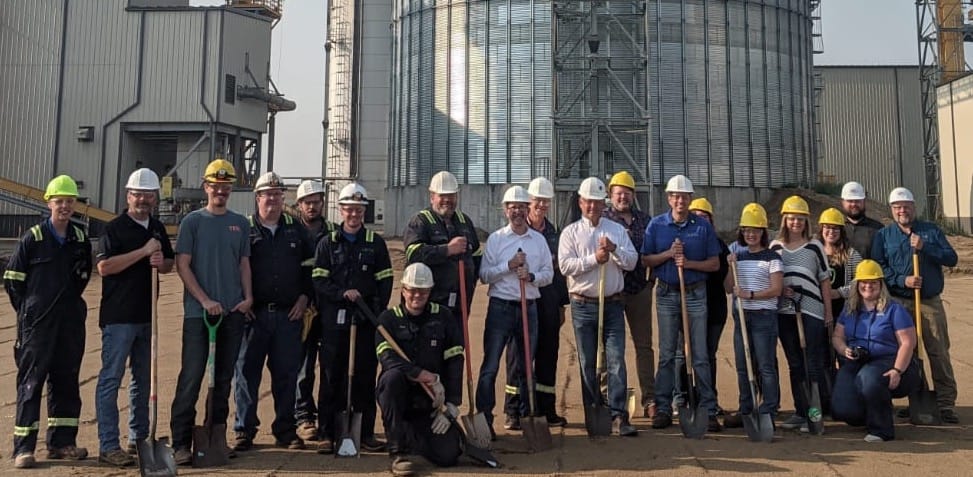
Novita Aurora in Aurora, S.D., held a groundbreaking in 2021 of a new storage facility at its plant in Brookings County. (Photo: Courtesy Novita Aurora)

The company re-purposes distillers grains by using a solvent to remove corn oil embedded within the grains as part of a process to convert the grains to livestock meal, he said. The extracted oil is then used as an additive to renewable diesel fuel.

The solvent includes hexane, a volatile chemical compound that is toxic to humans. Some of the hexane is released into the air, and some of it remains in the oil used in the diesel fuel, he said.

The TRI indicates Novita released 459,000 pounds of hexane in 2024, a reduction from 755,000 pounds released in 2023.

Endres said the year-over-year reduction in hexane release — which came even as production levels increased — is indicative of the company’s ongoing efforts to reduce its chemical releases which come as a result of making cleaner fuels for cars and trucks.

“We’re very aware of (the TRI) and are continuing to make improvements over time,” he told News Watch. “To the extent society needs fuel, we want to continue to be more efficient and have less of a carbon footprint in total.”

Smithfield sees major decline in releases

In response to new state permit requirements in 2020 that included a limit on nitrate releases, Smithfield in May 2023 opened a $45 million water treatment facility at the plant next to Falls Park in Sioux Falls.

Prior to that, the company spent another $10 million on pollution reduction systems, said Jason Lindquist, director of environmental health and safety at Smithfield.

Smithfield, which slaughters nearly 20,000 hogs a day and processes a daily flow of 3 million gallons of wastewater, saw its total chemical releases drop from 5.27 million pounds in 2021 to 1.13 million pounds in 2024, according to the TRI. Last year, the company released 1.1 million pounds of nitrates and 51,400 pounds of ammonia, both major reductions from 2022.
7.5 million pounds of chemicals released by SD industry in 2024
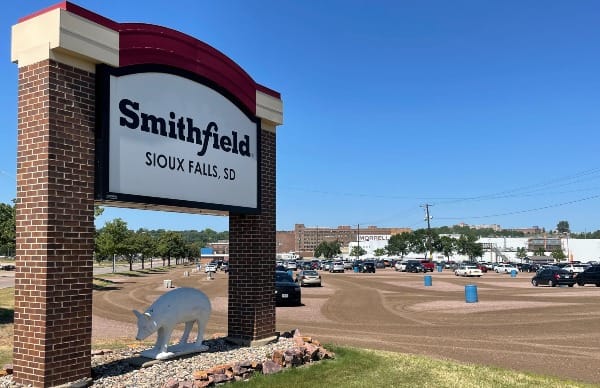
A new wastewater treatment facility at the Smithfield Foods plant in Sioux Falls, S.D., shown here in 2022, has helped cut back on chemical releases by the plant. (Photo: Bart Pfankuch / South Dakota News Watch)

The new treatment system takes the nitrates drawn from ammonia and uses a denitrifying system to biologically convert them to nitrogen gas, which is much less harmful.

“From a wastewater perspective, going through denitrification and the addition of the new plant made us more effective at reducing nitrates and ammonia,” Lindquist said. “Smithfield is committed to 100% compliance 100% of the time, and that’s not just a tagline because we work our tails off to meet those permit requirements.”

Environmental groups the Sierra Club and Dakota Rural Action did not respond to emails seeking comment.

Gilbertson, the water manager, praised the efforts of Smithfield to reduce nitrate releases into the Big Sioux River. But he noted that the reduction is small in comparison to nutrient loads coming from agricultural operations and industrial facilities along the river and in municipal wastewater effluent dumped by Sioux Falls and other cities.

“The idea that the Big Sioux River will become a crystal clear trout stream is an aspirational goal, but it’s probably unrealistic,” Gilbertson said. “And yet, we have waters in South Dakota, many lakes and rivers, where we have an excess of nutrients in them, so anything to reduce that load is a good thing.”

This story was produced by South Dakota News Watch, an independent, nonprofit organization. Read more stories and donate at sdnewswatch.org and sign up for an email to get stories when they’re published. Contact Bart Pfankuch at bart.pfankuch@sdnewswatch.org.
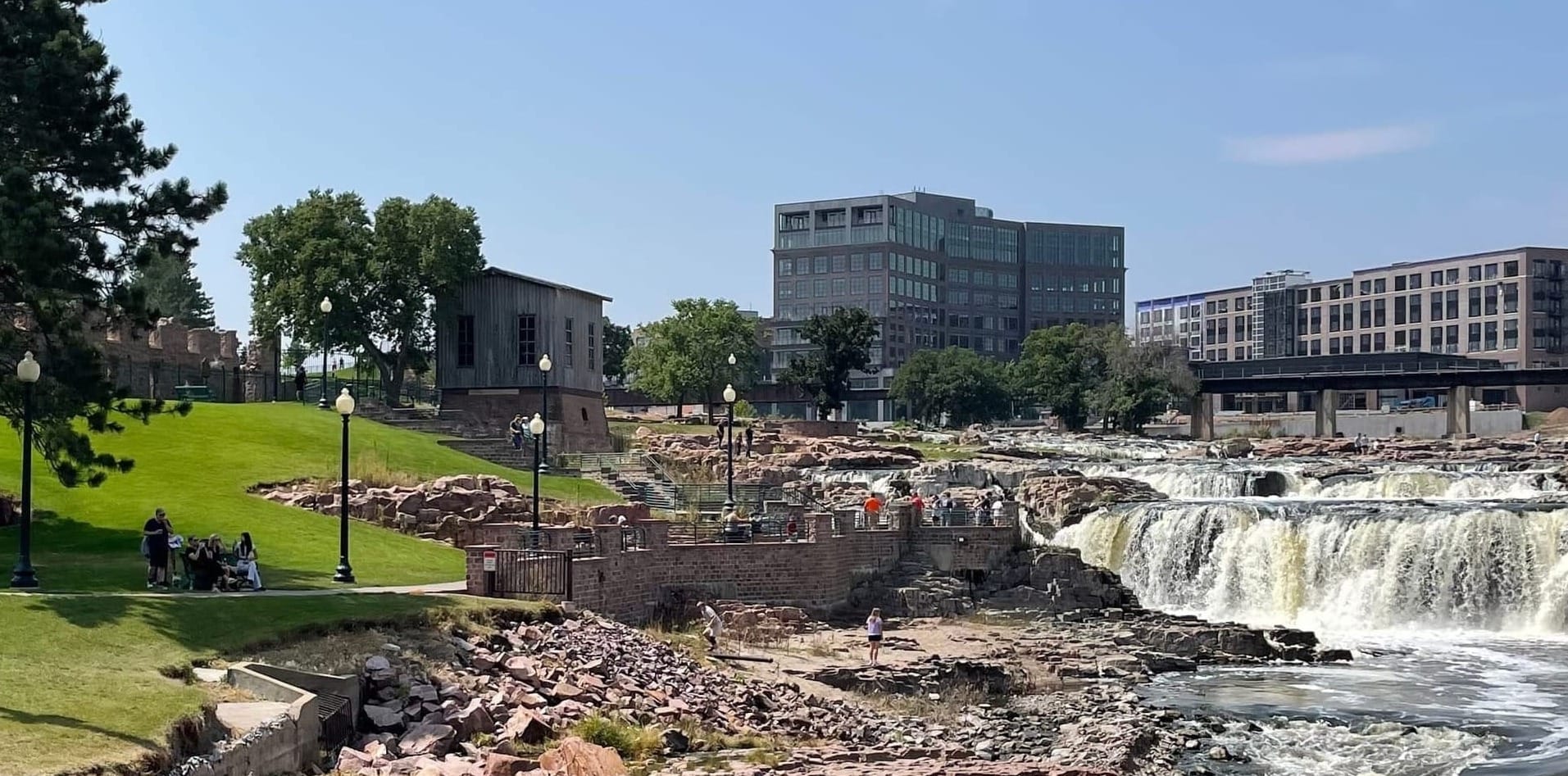
Half of South Dakotans now live in 2 metro areas

Half of South Dakotans now live in 2 metro areasMelissa Avelino is a data journalism student at Augustana University. In this series, she looks at the changing face of South Dakota using U.S. Census Data.


South Dakota’s only two formal metro areas are now home to roughly half the state’s population, according to the latest U.S Census data.

Over the past few decades, Rapid City and Sioux Falls have ballooned into burgeoning population centers drawing newcomers from around South Dakota and elsewhere who want to move there and settle down.

South Dakota’s rural migration cycle: Not just moving out, many are moving in
Why some South Dakotans leave rural areas and also why they return or choose to move there for the first time.
Half of South Dakotans now live in 2 metro areas

As of 2025, Sioux Falls’ city population was an estimated 219,588 and its metro area was 308,266 residents as of 2023, according to the Census. Rapid City just topped 85,000 residents, with a metro population of 156,227, as of 2024.

The share of the state population living in Sioux Falls and Rapid City metro areas was 47% in 2018. That increased to 50% in 2023, an estimated 464,493 in both areas combined, about half of South Dakota’s 920,000 estimated population in 2024.

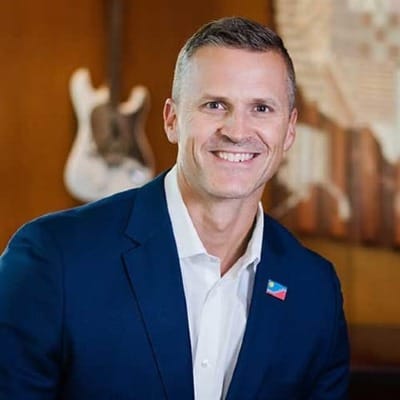
Sioux Falls Mayor Paul TenHaken said the city’s growth is happening organically, and there is no number as a goal.

“What we’re trying to do is be really smart and intentional with that growth,” he said. “Because you can also have too much growth that creates a strain on the infrastructure.”

TenHaken, whose two terms end in 2026, said it is important to make sure that all the right resources are in place as the city grows by 2.5% to 3% every year.

Lincoln County, which comprises the south part of the Sioux Falls metro area, increased its population by 8.2% since 2020 and remains one of the fastest-growing in the state.

Jason Salamun, who has been the mayor of Rapid City since 2023, measures the growth of the city as a trend that will naturally happen because the city is a place where people feel safe and can prosper.

“The goal is to keep this community special,” Salamun said. “I believe that more people will be attracted to the lifestyle that we enjoy here.”

Rapid City grew by 10,000 people since 2020.

The data

The U.S Census Bureau estimates the Sioux Falls Metropolitan Statistical Area (MSA) population increased by 7.6% since 2020. It includes five counties: Minnehaha, Lincoln, McCook and Turner in South Dakota and Rock in Minnesota.

The Rapid City metro area had an estimated population growth of 6% since 2020. It includes Pennington and Meade counties.


Half of South Dakotans now live in 2 metro areas

The following map explores the principal cities in the Sioux Falls metro area and tracks the population trends since 2000. Click on the circles to see the numbers.

The following map explores the principal cities in the Rapid City metro area and tracks the population trends since 2000.

Some reasons for the growth

Brianna Easton, a graphic designer who moved to Rapid City seven years ago, said its main appeal lies in its environment and proximity to the Black Hills.

“People find Rapid City attractive because of the bigger-city-type feel – big enough that you don’t run into the same people all the time,” Easton said.

Such quality of life is a big reason people move, said Kara Harders, the community vitality field specialist for South Dakota State University Extension in Brookings.

She’s conducting a non-scientific survey that’s filled out by people when they move from one place in South Dakota to another. It indicates that 75% of those newcomers did not move because of a job.

“Once I found those things, I realized I thought I wanted to move where I live now and then I started looking for a job,” Harders said of the newcomer survey results. “If I had been looking just for a job, there’s a pretty good chance I wouldn’t have ended up here. I had to be focused on other things and then look for the job.”

That is what Easton’s brother, Matthew Weber, found two years ago when he decided to move from his hometown of Aberdeen after college graduation to Sioux Falls.

Half of South Dakotans now live in 2 metro areas
Matthew Weber (right) with his family. (Photo: Courtesy Matthew Weber)

“I was trying to figure out a way to move to Sioux Falls and then this job kind of lined up for me,” Weber said.

1992 magazine article prompted a surge

Money Magazine ranked Sioux Falls as the best place to live in America in 1992, which put it on the national map as an attractive place to move.

One year later, Susan Schrader, a retired sociologist who has lived in Sioux Falls since 1978, was coming back from working on her doctorate in Minneapolis and first noticed that the city was growing.

“Augustana now is really, in many ways, eventually going to become an inner city university, a lot of growth already,” Scharader said. “Certainly, since then, the city has just exploded.”

Join other South Dakotans and support statewide storytelling.


Donate

Weber sees Sioux Falls as a place where people can experience that city vibe and opportunities with a smaller ratio feel.

“Sioux Falls is growing and stuff like that but still small enough where it’s more, maybe like, digestible for new people,” Weber said.

“There’s a lot more like community events going on, like different events for different groups of people,” he said. “And definitely some more food options here.”

Michael Mullin moved to Sioux Falls to teach history at Augustana University in 1988. For him, the growth has been an opportunity to diversify the city and make things better.

Part of this growth is because of young people and the city leaders’ focus on keeping Sioux Falls’ local identity, with a concern for neighbors and looking for improvements for everyone.

“The city also has a ‘young’ people vibe,'” he said. “Young professionals are driving the city for the better.”

Quality of life and opportunities

Mayor TenHaken said the quality of life in Sioux Falls is due to parks, low crime, affordable housing, good infrastructure and good schools. That’s why people have been attracted to it, and the metro area is projected to be about 500,000 people in 25 years, he said.

“If you’re looking at a city where you wanted to move to, you want things to do,” TenHaken said. “You want arts and culture and restaurants and activities.”

Rapid City draws people differently, and everything starts with the visit of 3.9 million visitors each year, Salamun said.

“The great outdoors here certainly enhances our quality of life. Folks come here and they start to look around, they start to wonder what it’s like to live here,” he said. “Because of the lifestyle that we have here, the freedoms that we enjoy.”

Half of South Dakotans now live in 2 metro areas
Brianna Easton paddles on a lake in the Black Hills. (Photo: Brianna Easton)

Easton loves the idea of balance in her lifestyle, living in a bigger city in South Dakota and having the Black Hills right in her backyard.

“I can go out and hike anytime and go paddleboarding whenever I want,” she said.

Infrastructure to preserve its identity

TenHaken emphasizes the importance of work on the infrastructure not only to accommodate the growth but also to preserve the city’s character.

“The best way to preserve our identity is to bake that DNA of the community into subcultures within the community,” he said. “Making it true that the things that have made us great over the years, when we were small, are still things that we continue to do.

Half of South Dakotans now live in 2 metro areas
Sioux Falls Mayor Paul TenHaken (Photo: City Of Sioux Falls)

“We luckily have been very strategic in some of our investments, and we have a water supply for the next several decades,” TenHaken said. “We have to balance the assets and the resources we have with the economic impact. So we treat those resources just like any natural resource that we have to protect and preserve.”

To Salamun, what makes Rapid City special is not just its abundant natural beauty but also its residents.

Half of South Dakotans now live in 2 metro areas
Rapid City Mayor Jason Salamun (Photo: City Of Rapid City)

“(As) long as we keep to our strong values, that we are warm and welcoming, that we try to do the right thing at all times, we will continue to be a community that is remarkable,” he said. “And for me, I think that’s really what it boils down to the people.”

This story was produced by South Dakota News Watch, an independent, nonprofit organization. Read more stories and donate at sdnewswatch.org and sign up for an email to get stories when they’re published. Melissa Avelino dos Santos is a student from Rio Branco, Acre, Brazil, at Augustana University in Sioux Falls. She is a summer 2025 intern at SDNW with support from the Nonprofit Newsroom Internship Program created by The Scripps Howard Fund and the Institute for Nonprofit News. Contact Melissa: melissa.avelino@sdnewswatch.org.

Tribal radio funding expected by early 2026: BIA

Tribal radio funding expected by early 2026: BIAThe Bureau of Indian Affairs plans to provide the first of the promised grants for tribal radio stations by the end of this year or early next, a department spokesperson told News Watch late Tuesday.

“The Department of the Interior and U.S. Indian Affairs are working to accelerate the implementation of a grant program to support tribal radio stations, utilizing existing program structures and staffing to ensure timely execution,” the statement said.

Congress approved and President Donald Trump signed a bill last month canceling about $1.1 billion that had been approved for public broadcasting, including South Dakota Public Broadcasting and all non-commercial tribal radio stations.

The White House said the public media system is politically biased and an unnecessary expense. Last week, the Corporation for Public Broadcasting announced that it would be winding down its operations over the next six months, with most employees leaving by Sept. 30.

South Dakota U.S. Sen. Mike Rounds voted in support of the funding cut but made a deal with the Trump administration that will help tribal public radio providers stay in operation for the coming fiscal year.

He secured $9.4 million that ensures CPB’s Radio Community Service grants awarded to public tribal radio stations will be fulfilled for the 35 public tribal radio stations in 11 states. That includes the four in South Dakota that received $820,760 last year and serve five of the nine reservations:

  • KILI-FM, Pine Ridge Indian Reservation
  • KOYA-FM, Rosebud Indian Reservation
  • KDKO-FM, Yankton Indian Reservation
  • KLND-FM, Standing Rock and Cheyenne River Indian reservations

South Dakota’s tribal radio stations cover some of the state’s most remote corners and communities, where cellular phone service can be spotty and radio is often the only way to receive emergency communications and warnings.

“They really do provide a special kind of service that a lot of the rest of us just kind of take for granted,” Rounds told News Watch.

The deal promised funding for the coming financial year, but discussions have not yet been had for future appropriations, Rounds said. The rescission also cuts CPB’s funding of Native Public Media, which provides assistance like FCC compliance guides and broadcast leadership training for Indigenous-led television and radio stations.

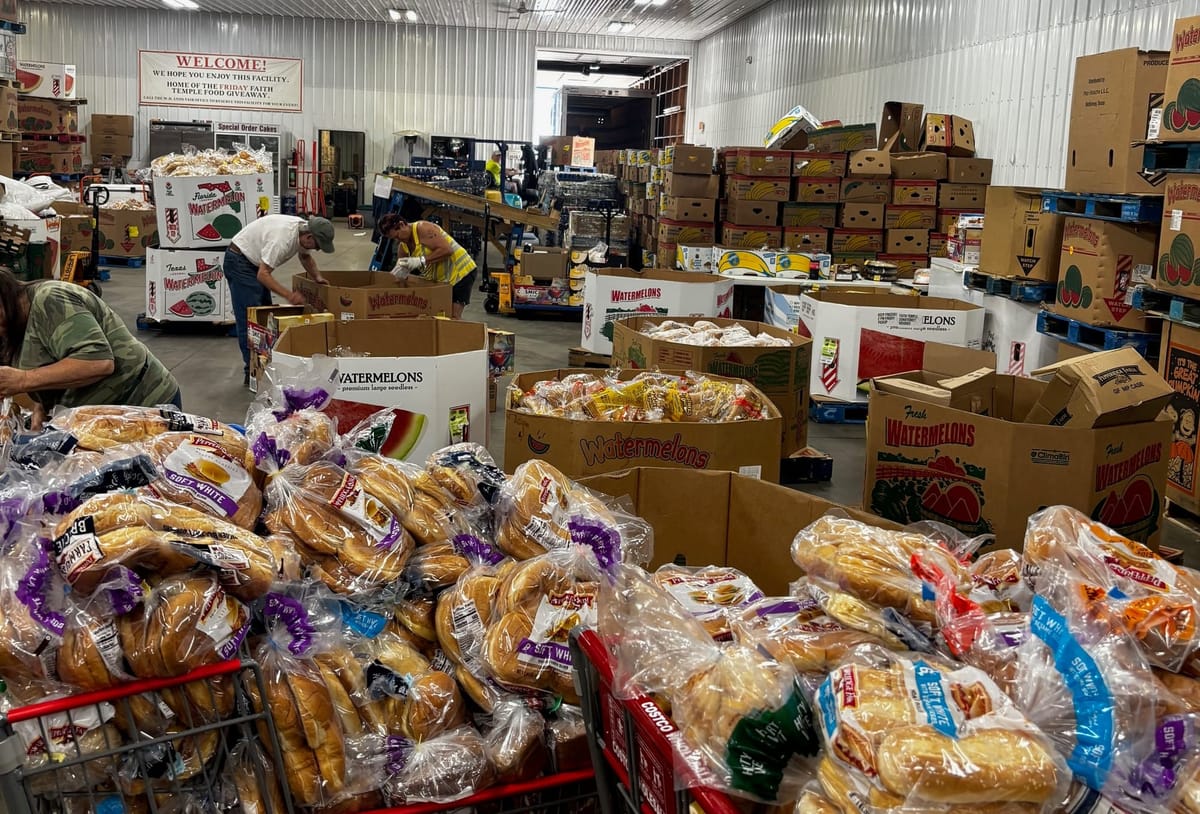
How nonprofits are teaming up to fight hunger in South Dakota
113,000 South Dakotans in 2023 were considered food insecure, and South Dakota Healthy Nutrition Collaborative aims to fix that.
Tribal radio funding expected by early 2026: BIA

Rounds said 92% of public tribal radio stations’ funding comes from the federal government, which puts them in a particularly fragile position.

“When the rescission was announced, I had told our leadership team that I could support a lot of the rescissions, but we would have to make arrangements to take care of these folks that I thought were getting caught, and they weren’t part of the problem. They were literally caught in the crossfire,” Rounds said.

Crucial services to rural communities

KILI Radio, which broadcasts from Porcupine on the Pine Ridge Indian Reservation, was the first tribal radio station in the country.

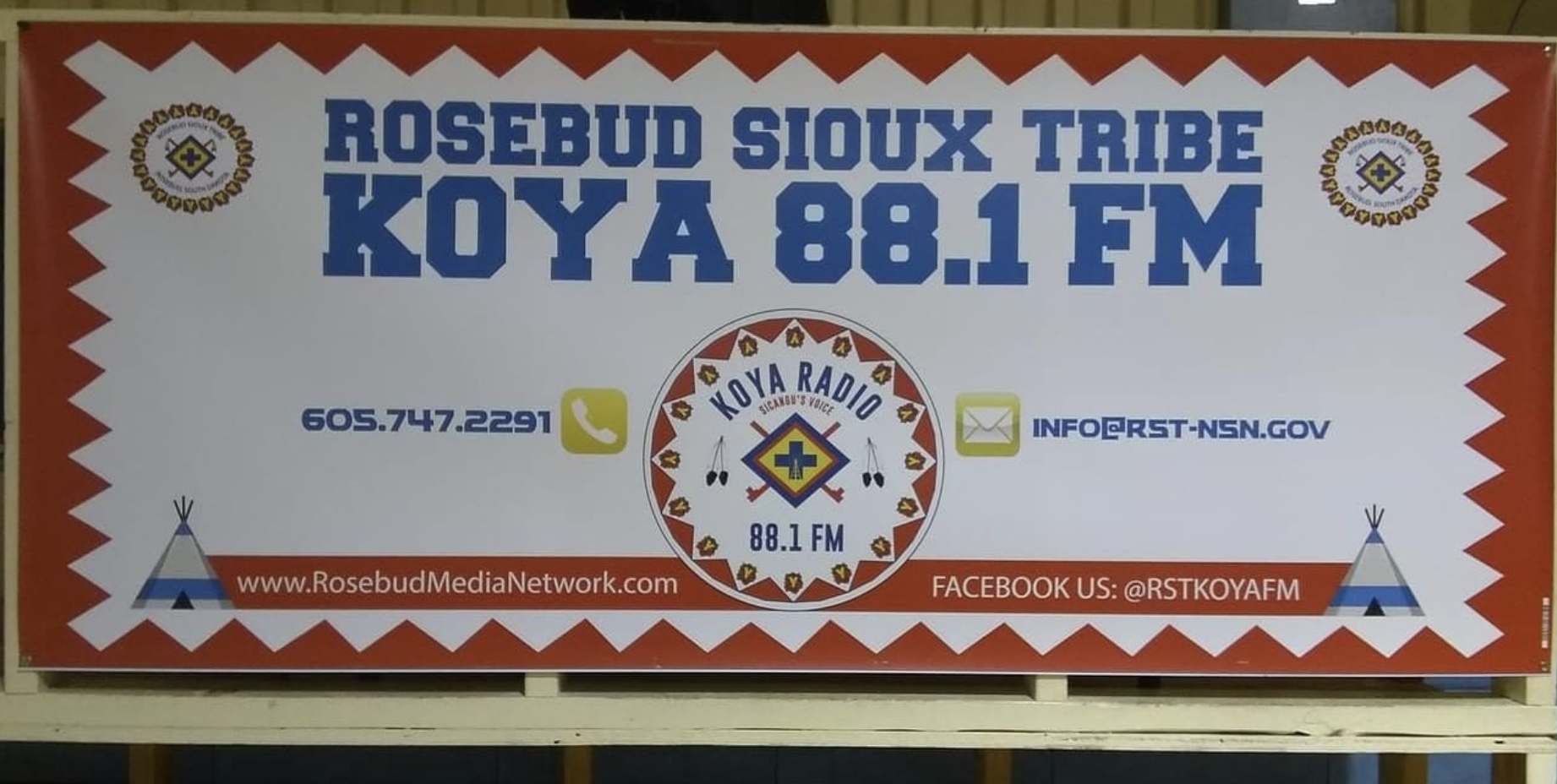
To the east, KOYA-FM, the Rosebud Sioux Tribe’s public radio station, broadcasts from St. Francis. John Miller manages the station that hosts regular daily news, Lakota prayer and other educational programs like National Native News and the American Indian Living Health Show. Last year, it received $199,617 from the CPB Radio Community Service grant.

Tribal radio funding expected by early 2026: BIA
KOYA Radio’s logo in its broadcast studio on the Rosebud Indian Reservation, S.D. (Photo: John Miller)

The station was also recently awarded nearly a half-million dollars in reimbursement funding under a collaborative grant between the Federal Emergency Management Agency and the CPB to install “Next Generation Warning Systems.”

That grant was intended to allow KOYA to replace and upgrade critical infrastructure like generators, antenna arrays and other station technology that ensures functionality in emergency situations, Miller told News Watch.

Rounds said that, to his knowledge, those grants were not included in the $9.4 million funding package, which means it’s unlikely to come through.

Join other South Dakotans and support statewide storytelling.


Donate

Miller referenced back-to-back winter storms that hit the reservation in winter 2023 as one of the reasons the station applied for the grant. Those storms packing subzero temperatures caused several deaths due to blocked-off roads and power loss and impacted the radio station’s ability to transmit.

In emergency situations, radio plays a critical role as one of the most reliable solutions to dispersing information. During tornadoes and hail storms on the reservation earlier this summer, KOYA kept listeners updated on the storm’s movement and damage potential.

Tribal radio funding expected by early 2026: BIA
A banner at KOYA-FM in St. Francis, S.D. (Photo: John Miller)

“When you have almost two or three hundred users online, you know people are paying attention to what you’re doing,” Miller said. “There’s a ton of weather-related apps that people can turn to. But here on the Rosebud, people turn to us. They still have those apps, but they turn to us. And they expect the best.”

Upgrades were scheduled to be finished by Sept. 30 of this year, but multiple issues with FEMA cuts and hesitance as to whether that grant money would be available caused delays. Now, Miller is unsure whether the upgrades will happen at all.

Tribal radio funding expected by early 2026: BIA
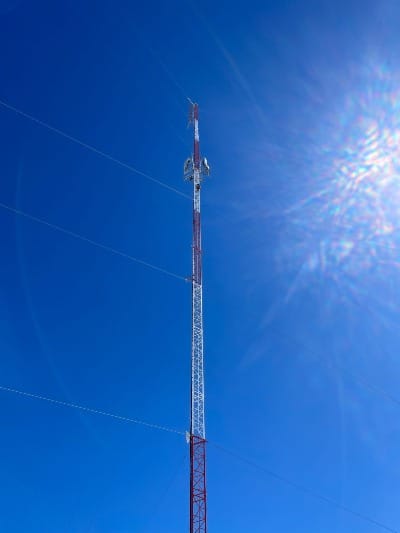
KOYA Radio’s broadcast tower in St. Francis, S.D. (Photo: John Miller)

The funding that has been secured for tribal radio means that Miller is hopeful for KOYA’s continued operation. But he’s hesitant to start celebrating just yet.

“I will believe it when I see it,” Miller said, regarding future support for tribal radio in the federal government. “It’s too early to make any kind of assumptions, but we are taking a proactive role to try to find ways to raise money.”

Miller said that the cuts have taken a toll on KOYA’s team of five who manage the station.

“It’s really disheartening when you put your 110% in and then you have to fight this other battle as well,” Miller said. “I’m hoping for the best, but I’m planning for the worst.”

Tribal radio funding expected by early 2026: BIA

Generally, though, Miller is positive.

He’s spent nearly 40 years working and volunteering for KOYA in some capacity, and since being promoted to station manager has seen the community’s love for public tribal radio. He estimates that KOYA reaches between 7,000 and 9,000 households both on and off the reservation.

“We’re all a big family. There’s a lot of our tribal folks here that live way out in the country. They live alone – a lot of our elders or other people in general. And we recognize them in a unique way,” Miller said.

SDPB getting creative in funding solutions

The federal cuts will cost SDPB $2.3 million in its annual budget.

Ryan Howlett, CEO of Friends of SDPB, the organization’s fundraising arm, told News Watch that the CPB’s closure has contributed to growing concerns about public radio’s continued operation.

The CPB provides services to public radio stations through licensing support and digital transformation guidance as well as grant programs like the Next Generation Warning System, which SDPB received. It was the largest award in the country, at $3.3 million.

Did state’s congressional delegation vote to defund public broadcasting?
A fact brief that refutes or confirms a claim with supporting information and additional evidence and context.
Tribal radio funding expected by early 2026: BIA

“There are a bunch of questions about how we will physically operate without the CPB,” Howlett said. “The public broadcasting system can continue to move forward and broadcast without the Corporation for Public Broadcasting. But it is going to be a very tumultuous 12 months while the new format of public broadcasting gets figured out.”

Public radio stations will need to get creative over the next few months, he said.

“We’re not going to leave any method off the table. We’re not going to leave any revenue method unturned,” Howlett said. “We still believe that we’re vital to the media ecosystem of South Dakota. We are going to rely on our corporate partners for support and we’re going to continue to ask for the support of our donors.”

The Associated Press contributed to this story that was produced by South Dakota News Watch, an independent, nonprofit organization. Read more stories and donate at sdnewswatch.org and sign up for an email for statewide stories. Investigative reporter Molly Wetsch is a Report for America corps member covering rural and Indigenous issues. Contact her at molly.wetsch@sdnewswatch.org.

A village for all ages: how one intergenerational campus is redefining aging and early learning in South Dakota

A monastery’s legacy lives on through an intergenerational campus that reimagines care across the lifespan.

“We were never designed for empires. We were made for the village. For soil beneath our feet. For eyes that see us. For relationships where we are known—not followed, not marketed to, but truly seen. For circles that remember how to care.” — Angell Deer

This belief—that we thrive through care, connection, and community—has always lived at the heart of The Village of Harmony Hill. Today, that heart beats louder, as children and elders grow side-by-side.

A New Chapter of Care: Harmony Hill Breaks Ground on a Generational Legacy

On a sunlit evening, the air at The Village of Harmony Hill was filled with something extraordinary: the squeals of toddlers, the quiet pride of community leaders, and the knowing smiles of women who have dedicated their lives to service. In that moment, the mission of the Sisters of the Mother of God Monastery came full circle—not ending, but expanding.

Their vision, planted decades ago in the sacred soil of Watertown, South Dakota, has grown into something no one could have imagined: the county’s largest early learning program for children from birth through 4thgrade, built on the grounds of a monastery known for elder care. But to those who know the Sisters, it makes perfect sense. “We’ve always been about care,” said Sister Barb Younger, Prioress of the Mother of God Monastery. “Whether it’s infants or elders, our mission is to serve life at every stage.”

From Monastery to Model Community

What began as a quiet religious community has become a 485-acre campus unlike anything else in the region. The Village of Harmony Hill now brings together a Catholic religious community, a nonprofit organization, senior living, and early childhood education—each woven into one layered, faith-rooted mission of holistic care.

More than just buildings or programs, The Village of Harmony Hill is a living model of intergenerational community. Children at Our Little Village Learning Center reach for helping hands just steps away from the very monastery where generations of Sisters once quietly lived out their mission of service. Retired residents stroll past playgrounds where children laugh, climb, and explore. Moments of everyday joy now unfold in places once reserved for contemplation and quiet purpose—bridging the past and present in gentle, meaningful ways.

This isn’t just a childcare center—it’s a strategy. By anchoring an early learning program within an aging services campus, the Sisters are meeting the community where its needs are most urgent—and most interconnected.

By offering on-campus childcare, The Village of Harmony Hill is not only supporting working families, but also retaining caregivers, attracting new team members, and easing workforce shortages. This effort directly strengthens elder care by sustaining the caregiving workforce and infusing it with renewed purpose. Just as importantly, it revitalizes the Sisters’ faith-centered legacy—ensuring that as their population ages, their mission continues to serve life at every stage.

Michael Klatt, Strategic Advisor and Chief Operating Officer at The Village of Harmony Hill, noted that what makes this project so unique is that most aging services providers wouldn’t attempt it. “But we believe in building an aspirational aging services model—one that inspires hope, supports working families, and brings new energy to senior care through intergenerational connection.”

A Vision Rooted in All Stages of Life

At the heart of Harmony Hill’s expansion lies a belief that care should never be confined to a single generation. The Sisters of the Mother of God Monastery have long devoted themselves to aging services—but with the addition of Our Little Village Learning Center, their mission has come full circle.

“This isn’t just a childcare center—it’s part of our campus vision,” said Sister Barb Younger, Prioress of the Mother of God Monastery. “It’s intergenerational. It’s deeply rooted in what the Sisters have always stood for.”

That vision lives not only in the architecture of the 485-acre campus, but in its spirit—where elders and children share space, purpose, and even laughter. Sister Barb captured this beautifully, noting that the presence of both children and elders on campus creates a spectrum of wisdom and wonder—“from the innocent insight of a child to the lived experience of a senior.” She reflected that this intergenerational design gives us “great bookends,” and that “how we fill in the rest matters. What an honor it is to bring meaning and purpose to people of all ages.”

A Community-Wide Commitment

The journey to opening Our Little Village Learning Center wasn’t without challenges. It took a coalition of state, city, and county leaders, nonprofit partners, donors, and business owners coming together to address a community crisis.

When a beloved local childcare center faced closure, the Sisters turned to a guiding question that has shaped their ministry for decades: “How can we serve?” With a campus already meeting healthcare and senior living needs, adding a childcare center aligned seamlessly with their intergenerational vision. But early momentum proved slow, and funding was uncertain.

Everything changed when the Sisters stepped forward—pledging $500,000 of their own funds and donating both the building and land. Their act of faith became a catalyst to change. Soon after, city and county officials, the South Dakota Works loan program, and numerous local businesses and individuals stepped forward in support of their vision, igniting one of the most significant community investments in Watertown’s recent history.

Watertown Mayor Ried Holien captured the spirit of the moment during the grand opening, reflecting, “In the Bible, God rejoices to see the work begin… I’m pretty sure that today, God is going to rejoice in seeing the work mostly done. I’m just so thankful to see this begin and the blessing that it’s going to be for years to come.”

The Road Ahead

Krista Beauchamp, Senior Living Administrator, reflected on the significance of this evolution: “With the addition of Our Little Village Learning Center, The Village of Harmony Hill is now a place where people of all ages can thrive together. Few healthcare environments can claim that. It brings joy, purpose, and connection in ways that are deeply human and profoundly healing.”

It also underscores the legacy the Sisters are leaving in Watertown: not just in ministries past, but in the continued, evolving care that will define the 485-acre Harmony Hill campus for decades to come.

More development is already on the horizon. And just as they have for generations, the Sisters remain faithfully focused on what’s next—listening closely for the knock, and answering with open hands.

“The Sisters want to influence a legacy that reflects their work, but asks us how we can make a difference in the lives of others. If we can use this land and resources to continue investing in our team, develop the best in leaders and strengthen governance, we can carry out their vision and mission. There will come a day when the last nun departs from this earth in this community. We need to be ready to say we are prepared and ready to carry forward on that day and do our very best to honor their legacy. — Michael Klatt, Strategic Advisor and Chief Operating Officer, The Village of Harmony Hill

And so, The Village of Harmony Hill continues—quietly bold, deeply rooted, and preparing to carry forward a legacy of care that will shape generations to come.

###

Contact:
Brittany Petrik
The Village of Harmony Hill
701-426-3741
create@villagewatertown.org

Disclaimer: The views and opinions expressed in this article are those of the authors and do not necessarily reflect the official policy or position of RNS or Religion News Foundation.

SDSU loses $86M in federal research funding

SDSU loses M in federal research fundingBROOKINGS, S.D. – South Dakota State University lost an $86 million livestock research grant as part of recent federal spending cuts, making South Dakota the state with the highest per-student loss of research grants, the Center for American Progress reported.

However, without that grant, the overall impacts of the Trump administration’s cuts to higher education in South Dakota are relatively minimal.

The state’s high average loss can be attributed to relatively low numbers of undergraduate and graduate students in South Dakota as well as the one large grant rescinded earlier this year.

The other South Dakota schools that had research funding cut include the University of South Dakota in Vermillion, South Dakota School of Mines and Technology in Rapid City and Oglala Lakota College in Kyle. Combined, they lost around $1.6 million in unused funds, according to the report.

More than $1,700 per student, which includes the SDSU grant, was “targeted for termination” by the Trump administration in South Dakota, according to the report.

“Targeted for termination” means grants the administration intends to terminate, said Greta Bedekovics, co-author of the article and associate director of democracy policy at the Center for American Progress, a policy institute focused on conservation.

The list of grants was compiled by cross-referencing lists of cancelled or rescinded grants from doge.gov, a spreadsheet of canceled grants from the U.S. Health and Human Services and the U.S. Treasury Department’s usaspending.gov, Bedekovics said.

Join other South Dakotans and support statewide storytelling.


Donate

Daniel Scholl, vice president of research and economic development at SDSU, told News Watch the research funding situation is ever-changing, and exact impacts are unknown as the federal government prepares the 2026 budget.

“There are a lot of different ways it could shake out, so the pathway is not clear,” he said.

“The things that are going on in the federal events are how to handle changes in the current fiscal year’s budget. That affects what’s available to us to support students and to carry out research,” Scholl said. “Secondly, what are they going to do with the FY26 budget? It all reduces to those two things.”

Here are the specific cuts:

  • South Dakota State University: An $86 million U.S. Department of Agriculture grant that aimed to support beef and bison producers in grazing techniques to have a positive environmental impact. Around $17.5 million was already spent but $68.5 million was unused.
  • University of South Dakota: A $150,000 National Endowment for the Humanities grant to use artificial intelligence to create tags for digitized cultural heritage materials at USD. Around $106,000 was unused.
  • South Dakota School of Mines and Technology: SDSMT had four grants that were terminated: One nearly $1 million National Science Foundation grant, which had $188,987 unused; a $1.25 million grant from the South Dakota Health and Human Services Center for Disease Control that had $1 million in unused funds; and two Institute of Museum and Library Services grants totaling $267,099, with more than $104,000 unused funds.
  • Oglala Lakota College: A $205,000 grant from the National Endowment for the Humanities that would have gone to cataloging and digitizing interviews with Lakota elders from four reservations. Over $201,000 was unused.

SDSU project would have supported beef, bison producers

The U.S. Department of Agriculture gave $2.8 billion to fund 70 projects for the climate-smart commodities initiative grant in 2023. The Center of Excellence in Bison Studies at SDSU’s West River Research and Extension facility in Rapid City received $86 million, one of the largest sums of money that was given in the initiative.

The SDSU project was intended to support beef and bison producers in grazing and land management strategies, said Kristi Cammack, director of SDSU West River Research and Extension.

Much of the work from that grant has stopped, Scholl said.

SDSU loses $86M in federal research funding
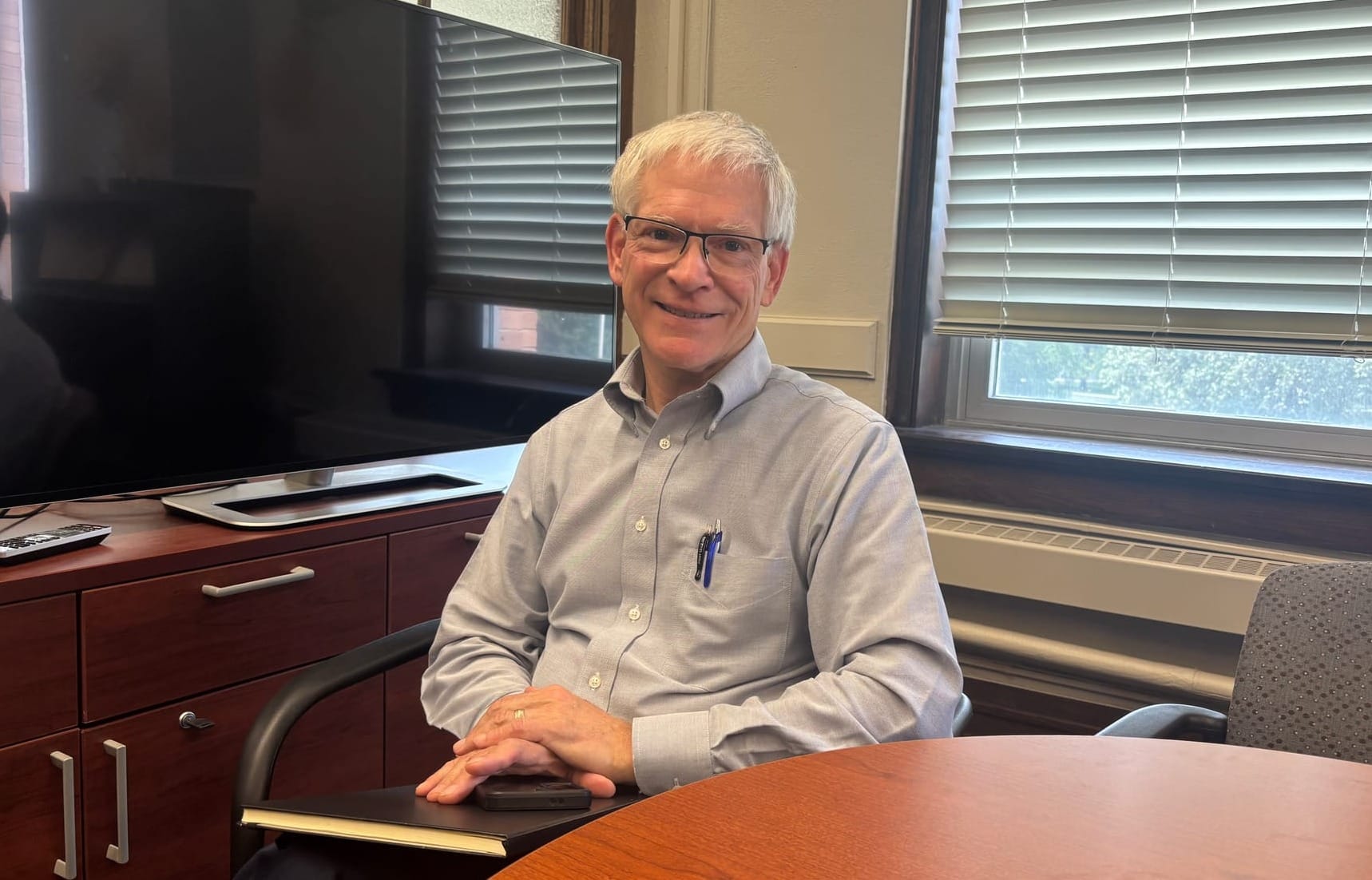
Daniel Scholl, vice president of research and economic development at SDSU, is shown in his office on July 28, 2025, in Brookings, S.D. (Photo: Emily DeCock / South Dakota News Watch)

“It has impacted people’s plans for their research education in one way or another. And that’s important, even if someone hasn’t lost their job, but they’ve had to experience a change,” Scholl said. “Even if it was an opportunity for them to shift their direction and shift gears, it’s still disruption. And I think that’s the important point. It’s been disruptive to some people’s career preparation and career growth.”

Neither Scholl nor Cammack could comment on the direct impacts that losing the grant had on staffing.

Regents: ‘Difficult financial times’

More than $100 million of the Board of Regent’s $911 million budget comes from the federal government.

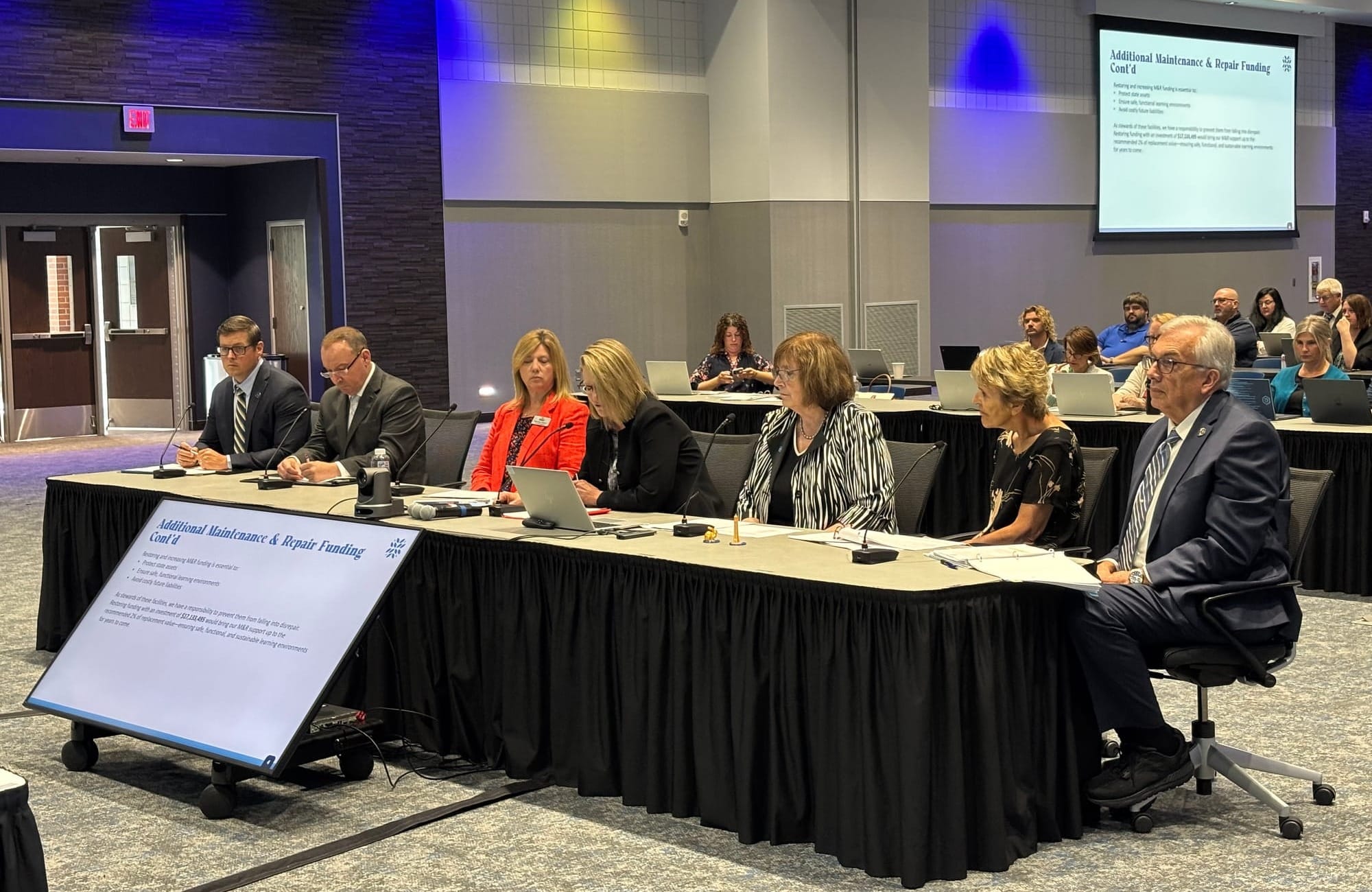
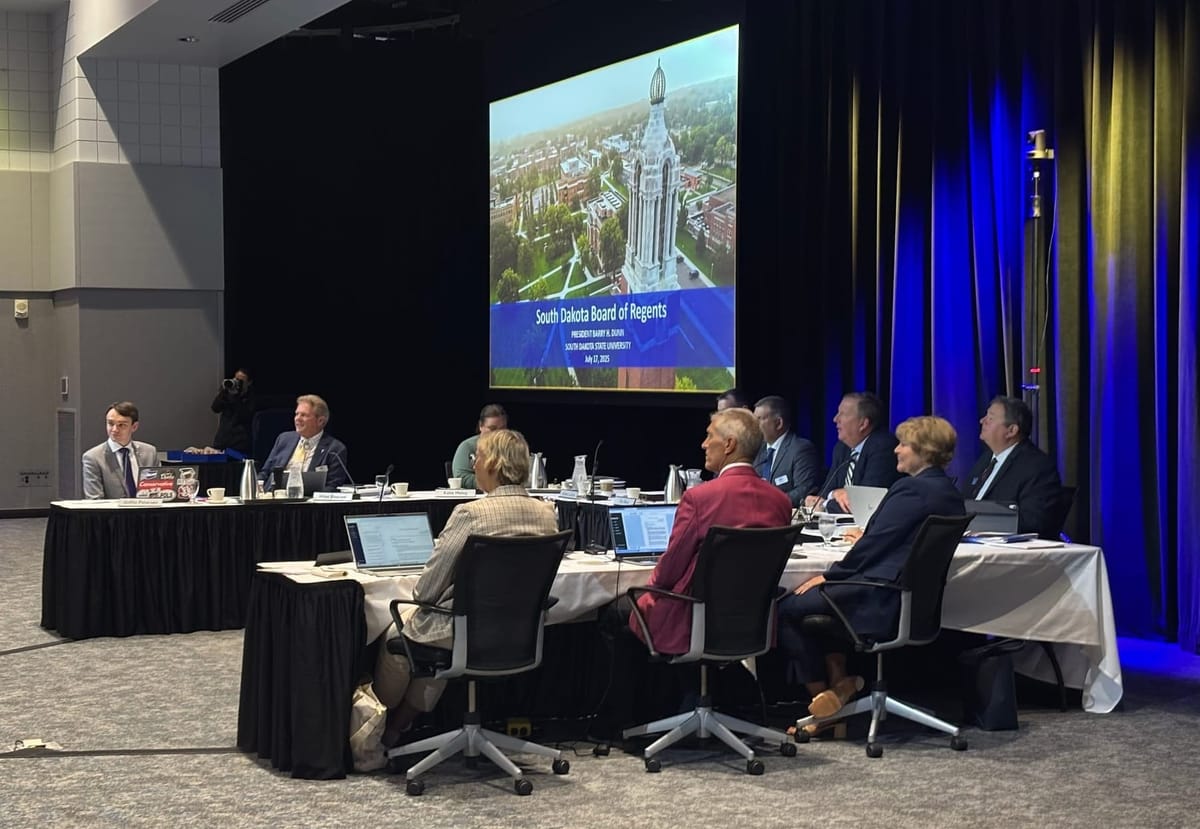
At the July 17 Board of Regents (BOR) meeting at SDSU, Heather Forney, BOR vice president of finance and administration, and the six public university presidents laid out their fiscal year 2027 requests. They asked for a nearly $32 million increase of their base budget that starts in July 2026.

SDSU loses $86M in federal research funding
From left: SDSMT president Brian Tande, BHSU president Steve Elliott, SDBOR VP of finance and administration Heather Forney, USD president Sheila Gestring, DSU president Jose-Marie Griffiths, NSU interim president Laurie Nichols and SDSU president Barry Dunn presenting their budget requests at the July 17, 2025, South Dakota Board of Regents meeting in Brookings, S.D. (Photo: Emily DeCock / South Dakota News Watch)

“We are very aware of the fiscal restraints that the state of South Dakota will be facing in fiscal year 27 and trying to be very conscious of that,” Forney said at the meeting.

In anticipation of an unsure year of funding, the regental schools put together a concentrated request. No additional money for capital projects was requested for FY27.

SD Regents approves ‘seismic shift’ to allow guns on campus
Vote aligns policy with a state law passed this year to allow concealed carry weapons on state’s 10 universities and tech schools.
SDSU loses $86M in federal research funding

The president of the South Dakota Board of Regents, Tim Rave, acknowledged the precarious state of funding in the July meeting as well.

“We are going to have some difficult financial times in the state this year, and so I really appreciate the solidarity and one voice to try and push these priorities through,” Rave said.

“The revenue forecast for ongoing funding is not looking terribly stellar or positive,” said Nathan Lukkes, executive director of the BOR. “There’s a lot of great things and ideas on all of our campuses that we wish we had the ability to fund. That’s just not realistic, looking at the revenue forecast for the state.”

Low endowments could be troublesome

Data from The Associated Press shows the dollar amount of endowments of South Dakota’s four-year public, private and tribal schools.

Endowments are meant to last in perpetuity and fund scholarships, support programs or whatever cause the donor delegates the money toward.

Alissa Matt, assistant vice president for marketing and university relations at USD, said universities cannot take restricted funds and spend them “even when faced with fiscal pressures.”

“As a fiduciary, the foundation is legally obligated to observe donor intent while administering endowments in partnership with USD,” Matt said in an email. “In other words, endowments may not be repurposed, liquidated or ‘tapped’ in any manner inconsistent with donor intent or applicable legal requirements.”

Here are the most recent details available on endowment amounts for South Dakota’s public, private and tribal colleges and universities, according to the AP and schools that responded to a News Watch request for updated numbers.

Public

  • University of South Dakota, Vermillion: fall 2024 enrollment, 10,619; endowment value as of June 30, $338.6 million; endowment per student, $31,886
  • South Dakota State University, Brookings: fall 2023 enrollment, 11,498; endowment value at start of FY2022-23, $215 million; endowment per student, $18,699
  • South Dakota School of Mines and Technology, Rapid City: fall 2023 enrollment, 2,158; endowment value at start of FY2022-23, $108 million; endowment per student, $50,046
  • Northern State University, Aberdeen: fall 2023 enrollment, 3,521; endowment value at start of FY2022-23, $36 million; endowment per student, $10,302
  • Black Hills State University, Spearfish: fall 2025 enrollment, 3,475; endowment value as of FY25, $33 million; endowment per student, $9,490
  • Dakota State University, Madison: fall 2023 enrollment, 3,508; endowment value at start of FY2022-23, $17.4 million; endowment per student, $4,972

Private

  • Augustana University, Sioux Falls: fall 2023 enrollment, 2,158; endowment value at start of FY2022-23, $108 million; endowment per student, $50,046
  • Dakota Wesleyan University, Mitchell: fall 2023 enrollment, 886; endowment value at start of FY2022-23: $38.6 million; endowment per student, $43,581
  • University of Sioux Falls, Sioux Falls: fall 2023 enrollment, 1,509; endowment value at start of FY2022-23: $32 million; endowment per student, $21,211
  • Mount Marty University, Yankton: fall 2023 enrollment, 1,314; endowment value at start of FY2022-23, $30.8 million; endowment per student, $23,471

Tribal

  • Oglala Lakota College, Kyle: fall 2023 enrollment, 1,229; endowment value at start of FY2022-23, $65.6 million; endowment per student, $53,345
  • Sinte Gleska University, Mission: fall 2023 enrollment, 683; endowment value at start of FY2022-23, $2.9 million; endowment per student, $4,276
  • Sisseton Wahpeton College, Agency Village: fall 2023 enrollment, 215; endowment value at start of FY2022-23, $1 million; endowment per student, $5,072

Scholl said SDSU intends to continue to be a leading-edge research university by continually improving how conducts research and provides students with “superior experiential learning opportunities.”

“That’s really what it’s about. It’s another way of teaching,” Scholl said. “It’s another way of educating and in giving students an opportunity to differentiate themselves in the job market by the kinds of experiences that they have here working with leaders in their fields.”

The Associated Press contributed to this story produced by South Dakota News Watch, an independent, nonprofit organization. Read more stories and donate at sdnewswatch.org and sign up for an email to get stories when they’re published. Emily DeCock is a student at South Dakota State University in Brookings. She received the 2025 Jeffrey B. Nelson Investigative Journalism Endowed Internship and Chuck Raasch and Sandy Johnson Scholarship from the SDSU Foundation. Contact her at emily.decock@sdnewswatch.org.

South Dakota’s rural migration cycle: Not just moving out, many are moving in

South Dakota's rural migration cycle: Not just moving out, many are moving in

Melissa Avelino is a data journalism student at Augustana University. In this first of a five-part series, she looks at the changing face of South Dakota using U.S. Census Data.


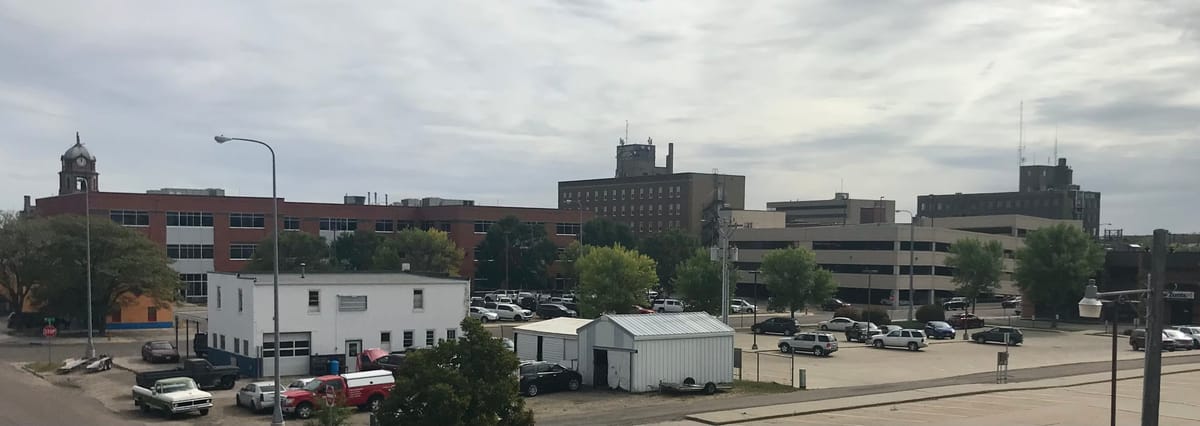
South Dakota’s rural areas have seen a net loss of population over the past three decades, though many of those people who left for cities like Sioux Falls and Rapid City also return to the small towns where they grew up, according to demographic trends.

South Dakota still has more than half its population living in rural areas. However, the U.S. Census Bureau has noticed a migration cycle of South Dakotans over the years.

Ben Winchester, a rural sociologist at the University of Minnesota Extension Department of Community Development, said the narrative that has been painted over the years is that most rural areas are dying.

That doesn’t tell the full story, Winchester said.

Rural population trends are more of a cycle, according to his research as well as work done on a South Dakota newcomer survey by Kara Harders, the community vitality field specialist for SDSU Extension in Brookings.

“The motivations behind someone returning are very different than them starting all over,” said Harders. “They go to college, go live life, and then get married, have kids and come back to take a slower pace of life.”

Winchester said it is important to understand that when the population goes down, people are moving in and out. The movers out of rural communities are not only from the 18- to 25-year-old population but also older people who need medical services at regional centers, he said.

The recent decrease in the rural population is largely because the average household size has gotten smaller in those areas over the past 20 years, Winchester said.

“Our population goes down because of the slow trickle of death,” he said. “It literally is like you might have two older people in the household and one of them passes away, while the surviving spouse stays in that house.”

Join other South Dakotans and support statewide storytelling.


Donate

A factor that also influences this population’s decline in population and household size is referred to as the term “brain gain.”

“Rural areas have not been dying. They grew, we were flooded with people in the ’90s,” Winchester said. “There was a brain gain of people in the ’70s, ’80s and ’90s that filled up almost every vacant home.”

The gain happens when high school kids from rural areas move out after graduation to pursue college, a job or military service in urban areas, he said.

“We are not trying to keep our high school kids. We are attracted to 30-, 40- and 50-year-olds,” he said. “These people have been moving in for the past 50 years, diversifying the economy and bringing leadership to positions.”

One family’s journey

That is what the Weber family has been going through since 2014, when the oldest sibling, Brianna Easton, moved from Aberdeen to Brookings to attend South Dakota State University.

She got a job right after graduation in Sturgis but moved to Rapid City seven years ago. Easton used to commute to Sturgis every day, until she got a job in her new city.

After graduating from Northern State University in Aberdeen, her younger brother, Matthew Weber, also moved and found a job in Sioux Falls.

South Dakota's rural migration cycle: Not just moving out, many are moving in
Siblings Matthew Weber and Brianna Easton at a restaurant in South Dakota. (Photo courtesy Matthew Weber)

“I was like, I kind of want to live somewhere different than Aberdeen,” he said. “Because at that point, I’ve only lived in Aberdeen.”

For different reasons, such as more job opportunities or trying new environments, both siblings now call Rapid City and Sioux Falls home.


The data

According to the most recent estimate from the U.S. Census Bureau, South Dakota’s population was 924,669 in July 2024, an increase of 4.3% since 2020.

South Dakota’s two defined metro areas of Sioux Falls and Rapid City demonstrate expressive growth over the years and now represent roughly half the state’s population, while smaller cities and towns in non-metro areas have a slower growth pace and make up the other half of South Dakotans.

To better visualize where these people are moving in or moving out, the following map tracks each ZIP code’s population trends based on the U.S. Census Bureau data since 2000.


To search and better visualize the trends in your ZIP code, city or county, the following searchable table represents the numbers in charts.


South Dakota's rural migration cycle: Not just moving out, many are moving in

The following graph compares population trends across South Dakota since 2000.


South Dakota's rural migration cycle: Not just moving out, many are moving in


Top takeaways

Here are top takeaways from the data, with analysis and quotes from Census experts and others.

Rural areas continue aging

Another major factor in South Dakota’s net loss of population in rural areas is the large number of older residents, said Weiwei Zhang, an associate professor at SDSU expert in demographics.

When compared to South Dakota’s metro areas, its non-metro region features a larger share of population 65 years old and older, she said.

That group increased from 16.2% of the state’s population in 2013 to 19% in 2023. At the same time, the number of people 25 and younger in those areas fell from 35.3% in 2013 to 34.5% in 2023.

Zhang said the key reasons why people are leaving rural areas can vary by case but are usually related to opportunities for jobs, education, access to services and resources.

South Dakota's rural migration cycle: Not just moving out, many are moving in
Brianna Easton and Matthew Weber as children at their home in Aberdeen. (Photo courtesy of Matthew Weber)

For Benita Weber, she always figured that her daughter, Brianna, would move at some point, but she was not sure about Matthew until he started college, and she realized that maybe Aberdeen was not for him.

South Dakota's rural migration cycle: Not just moving out, many are moving in
Brianna Easton, Benita Weber and Matthew Weber at Benita’s house in Aberdeen, S.D. (Photo courtesy of Benita Weber)

“I don’t know if there are a lot of job opportunities for him here, which there weren’t when he graduated,” said Benita Weber. “As a mom, you just want them to go where they are going to be happy and have an opportunity to get a job out of college.”

Winchester has been researching rural population trends for almost 30 years.

After Harders was introduced five years ago to Winchester’s research in other states, she thought it was time for South Dakota to also have its own newcomers survey.

The newcomers survey aims to report demographic trends to better understand what changes are necessary for the rural communities.

“We just wanted to learn more about what was making people move here, who they were, why they wanted to come, were kind of the nitty gritty details of that,” said Harders.

The data has been analyzed and the results are expected by the end of summer.

Sense of community

Winchester and Harders agree that the main reason why people move in or go back to the rural community is the quality of life that those areas can offer.

“People are not choosing to move into this one small town because they have a job there,” said Winchester. “They are choosing to look at a region, and they pick out schools and parks, and then they start to look for a job.”

That’s what Benita Weber appreciates about Aberdeen. She enjoys the opportunity to get closer to other people living in a small town, to feel safer, and the opportunity to be easier to get around.

“It seems like you get to know the people here, and you get to become friends with them,” she said. “I feel like in bigger cities, it is hard to get to know people.”

Harders said most of the movers feel welcomed in their new communities and believe they will still be living there in five years.

She also said that another main reason why people choose to move back to a small town is that they want to be closer to their family.

“If we were to move somewhere, I think maybe Spearfish, which is where my husband’s parents live,” said Easton. “But otherwise we like Rapid City, so we’re happy here.”

This story was produced by South Dakota News Watch, an independent, nonprofit organization. Read more stories and donate at sdnewswatch.org and sign up for an email to get stories when they’re published. Melissa Avelino dos Santos is a student from Rio Branco, Acre, Brazil, at Augustana University in Sioux Falls. She is a summer 2025 intern at SDNW with support from the Nonprofit Newsroom Internship Program created by The Scripps Howard Fund and the Institute for Nonprofit News. Contact Melissa: melissa.avelino@sdnewswatch.org.

Ranchers found guilty of animal mistreatment and illegal sales

Ranchers found guilty of animal mistreatment and illegal salesMARTIN, S.D. – Two Bennett County ranchers were taken straight from a courtroom to a jail cell in a case that involved mistreatment of cattle and the false branding and attempted sale of animals they did not own.
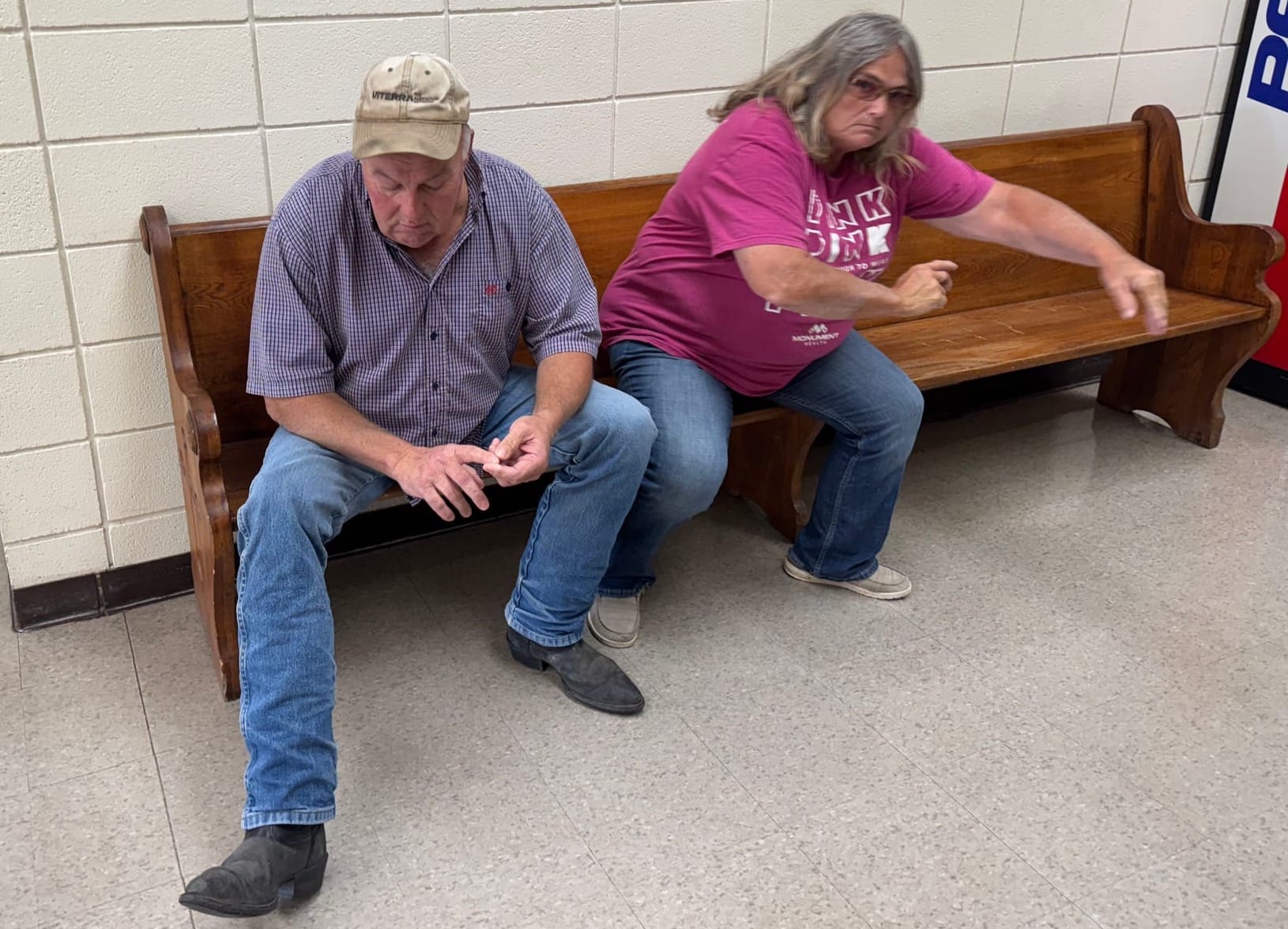

Leland Pauly, 60, and longtime girlfriend Lynda Frost, 56, were both taken to jail on Thursday to begin serving 15-day jail sentences on charges they mistreated numerous cattle under their care on their ranch 10 miles east of Martin.

The case came to light after Dan Schilling, a rancher from Wessington, contracted with Pauly and Frost to feed and care for his cattle at their ranch in Bennett County. After discovering his cattle in poor condition, Schilling filed a complaint with the sheriff in March 2024.

Ranchers found guilty of animal mistreatment and illegal sales

That prompted investigations that have led to numerous criminal charges against Pauly and Frost, and now, criminal convictions on livestock-related fraud and neglect charges for them both in South Dakota and Nebraska.

Pauly comes from a longtime ranch family in Bennett County. And he and Frost are both well known in the cattle industry in central South Dakota and northern Nebraska.

Ranchers found guilty of animal mistreatment and illegal sales
Leland Pauly and Lynda Frost of Martin, S.D., are shown on July 17, 2025, in the Bennett County Courthouse. (Photo: Bart Pfankuch / South Dakota News Watch)

The charges against them came as the pair faced major financial struggles, including a recent bankruptcy and now the possibility of Pauly losing the land his family has owned for generations, according to Pauly’s attorney, Sandy Steffen of Gregory.

Bennett County State’s Attorney Sarah E. Harris said there is no excuse for animal mistreatment or economic fraud, and that she hopes the imposition of jail time will serve as a warning to anyone who abuses cattle or tries to defraud others.

“I grew up on a ranch, and it makes me absolutely sick to think of how these cattle were treated,” Harris told News Watch. “Hopefully other people will see this and think twice before entrusting their cattle or any livestock with these people.”

Couple faced multiple charges in two states

After Schilling made the initial complaint, authorities in the two states took notice.

In April 2024, Pauly and Frost were charged in Bennett County with 25 misdemeanor counts of animal neglect or mistreatment.

That same month, the pair was charged in Keith County, Nebraska, in the illegal branding and sale of cattle owned by Schilling.

Then, in September 2024, Pauly and Frost were charged in South Dakota with four felony counts of misuse or alteration of a cattle brand, a Class 5 felony.

In the Nebraska case, Pauly pleaded no contest in June and was sentenced to probation on a felony charge of illegal sale/trade/disposition of livestock, according to Nebraska court records. Frost was found guilty of a misdemeanor charge of using false documents to misrepresent inspection records on livestock.

In South Dakota, court documents indicate that sometime between May 2023 and March 2024, the pair intended to defraud cattle buyers by “brand(ing) calves belonging to Dan Schilling with Lynda Frost’s lazy F over arrow brand.”

The South Dakota brand alteration charges were dropped as part of a plea deal in which Pauly and Frost agreed to plead no contest to three misdemeanor animal neglect charges.

Video shows weakened cattle

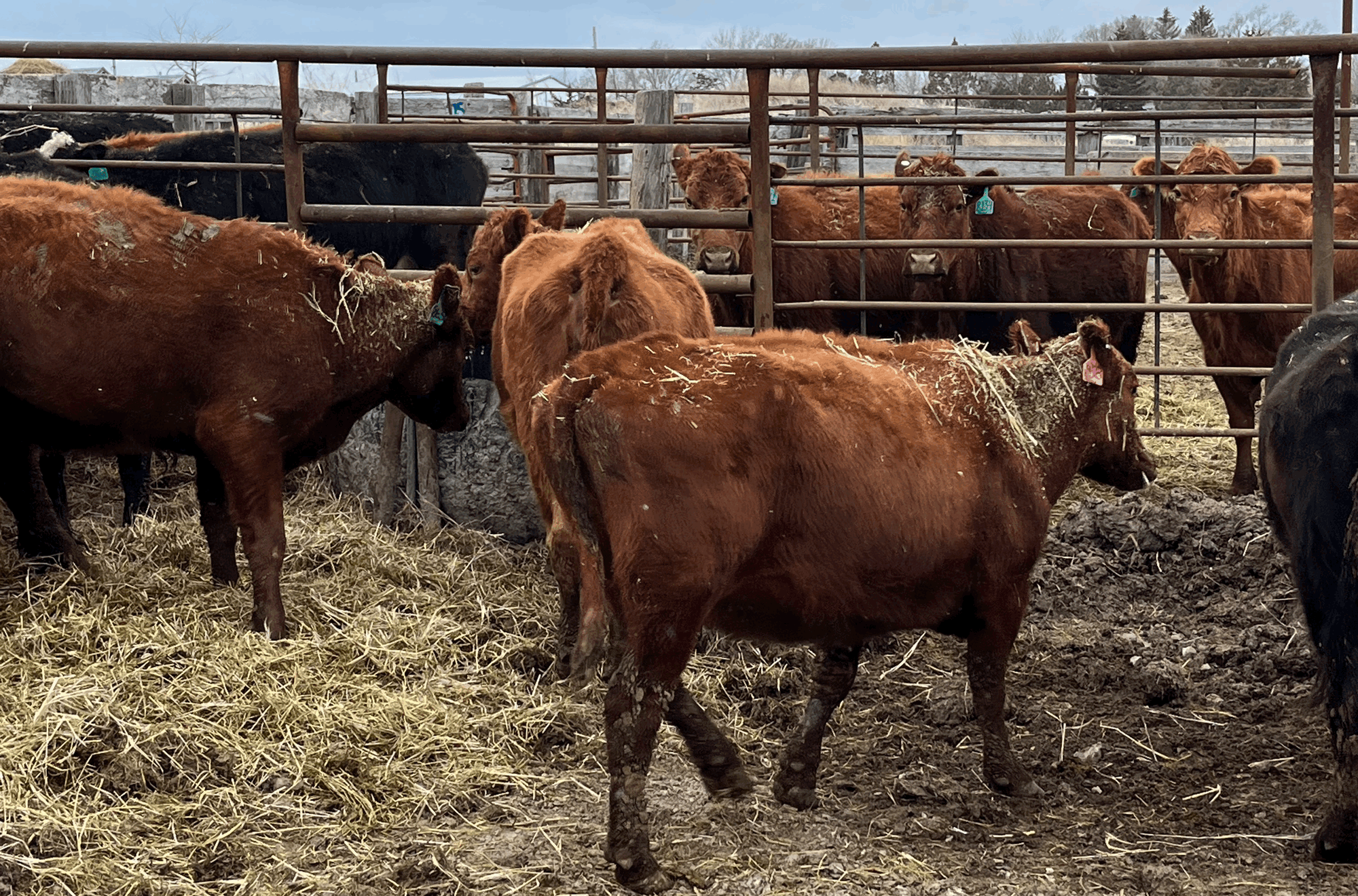
In late March, about 265 head of cattle were seized from the Pauly ranch by the Bennett County Sheriff’s Office. Some of the animals had their skeletons showing due to malnourishment. A cow and two calves died soon after being seized, according to authorities.

A video that was played in the Bennett County Courthouse on Thursday showed one group of seven cattle with their spines, hips and shoulder bones clearly visible. Some appeared unsteady as they walked.

Ranchers found guilty of animal mistreatment and illegal sales
The backbone is clearly visible on this cow, seized from the ranch of Leland Pauly and Lynda Frost in March 2024. (Photo: Courtesy Bennett County State’s Attorney)

Harris told the court her office had tested the feed given to the cattle at the Pauly Ranch and found it had no or very little nutritional value.

“It looked like it was ground up corn stalks and sticks,” Harris told News Watch. “There was no way they could gain weight on that, and it’s probably why they looked so terrible.”

Harris told the court that in the weeks after the cattle were seized and provided good nutrition, many began to gain weight and return to good health. The cattle were ultimately returned to Schilling, the owner.

Join other South Dakotans and support statewide storytelling.


Donate

Bennett County Sheriff Jason Erwin told News Watch that he has never seen a livestock neglect case like this since arriving in the area in 2013.

“I’m not going to say they’re bad people,” said Erwin, who is a neighbor to Pauly and Frost. “But it is shocking to see that.”

Schilling told News Watch that Pauly and Frost committed fraud against him in numerous ways and still owe him about $300,000 in cattle and feed costs they misrepresented.

“It’s been terrible,” he said. “And I’ve spent way too much time and money on this thing.”

Approached by News Watch in the Bennett County Courthouse prior to the hearing on Thursday, Pauly and Frost both declined comment.

Defense sought no fine or jail time

Once the couple was found guilty of neglect, the defense and prosecution made recommendations to Circuit Court Judge Bobbi Rank on sentencing.

Harris, the prosecutor, argued for a 30-day jail sentence and three years of probation for each defendant, noting that two veterinarians who examined the seized cattle rated many only a 2 or 3 on a 1-9 scale of animal health. She pointed out that the cattle were confined by Pauly and Frost and unable to obtain adequate food or water on their own.

Ranchers found guilty of animal mistreatment and illegal sales
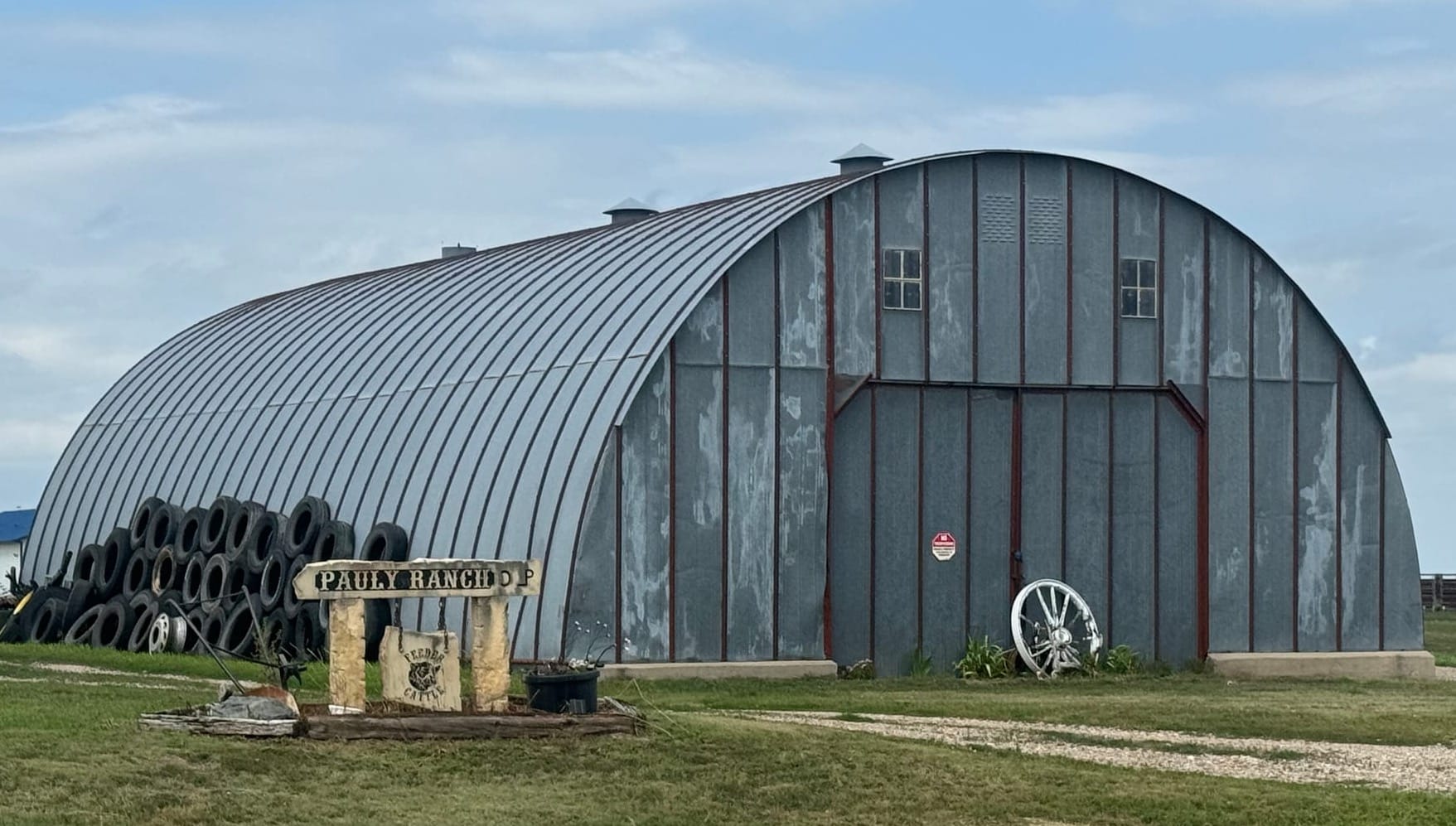
The ranch run by Leland Pauly and Lynda Frost about 10 miles east of Martin, S.D., is shown on July 17, 2025. (Photo: Bart Pfankuch / South Dakota News Watch)

Steffen, Pauly’s attorney, asked the court to require restitution payments but argued for no jail time or fines for her client and his girlfriend.

She said the cows delivered to Pauly and Frost by Schilling were old and already in poor shape upon arrival, a claim that Harris and Schilling denied.

Steffen also noted that despite the recent criminal charges against her client, Pauly’s criminal history was “unremarkable” and does not include prior charges of animal neglect.

“Mr. Pauly has his whole life been caring for cattle,” she said. “But life happened and things went off the rails.”

Judge Rank, however, turned that argument around by noting instead that after so many years of caring for cattle, Pauly and Frost should have known better than to engage in animal neglect.

Medicaid cuts could hit rural health hard in SD
Rural providers expect bad news and potentially ominous outcomes. “It could lead to people being more sick and also some more people dying.”
Ranchers found guilty of animal mistreatment and illegal sales

“This is not a situation where you have some young kid or a city slicker looking to have a hobby farm and they don’t know what they’re doing,” the judge said.

Rank said that a jail term was needed to ensure a strong message was sent regarding the importance of properly caring for livestock in South Dakota. She sentenced Pauly and Frost to 15 days in jail, a year of unsupervised probation, payment of restitution and court costs, and she ordered that they not own cattle for one year.

“Crops and cattle are among the most beloved things (in the state),” she said. “You had critters here who were completely dependent on the defendants for their lives, and for whatever reason, they neglected that duty.”

This story was produced by South Dakota News Watch, an independent, nonprofit organization. Read more stories and donate at sdnewswatch.org and sign up for an email to get stories when they’re published. Contact Bart Pfankuch at bart.pfankuch@sdnewswatch.org.

Medicaid cuts in federal budget could hit rural health hard in SD

Medicaid cuts in federal budget could hit rural health hard in SDWade Erickson doesn’t want to seem like an alarmist.
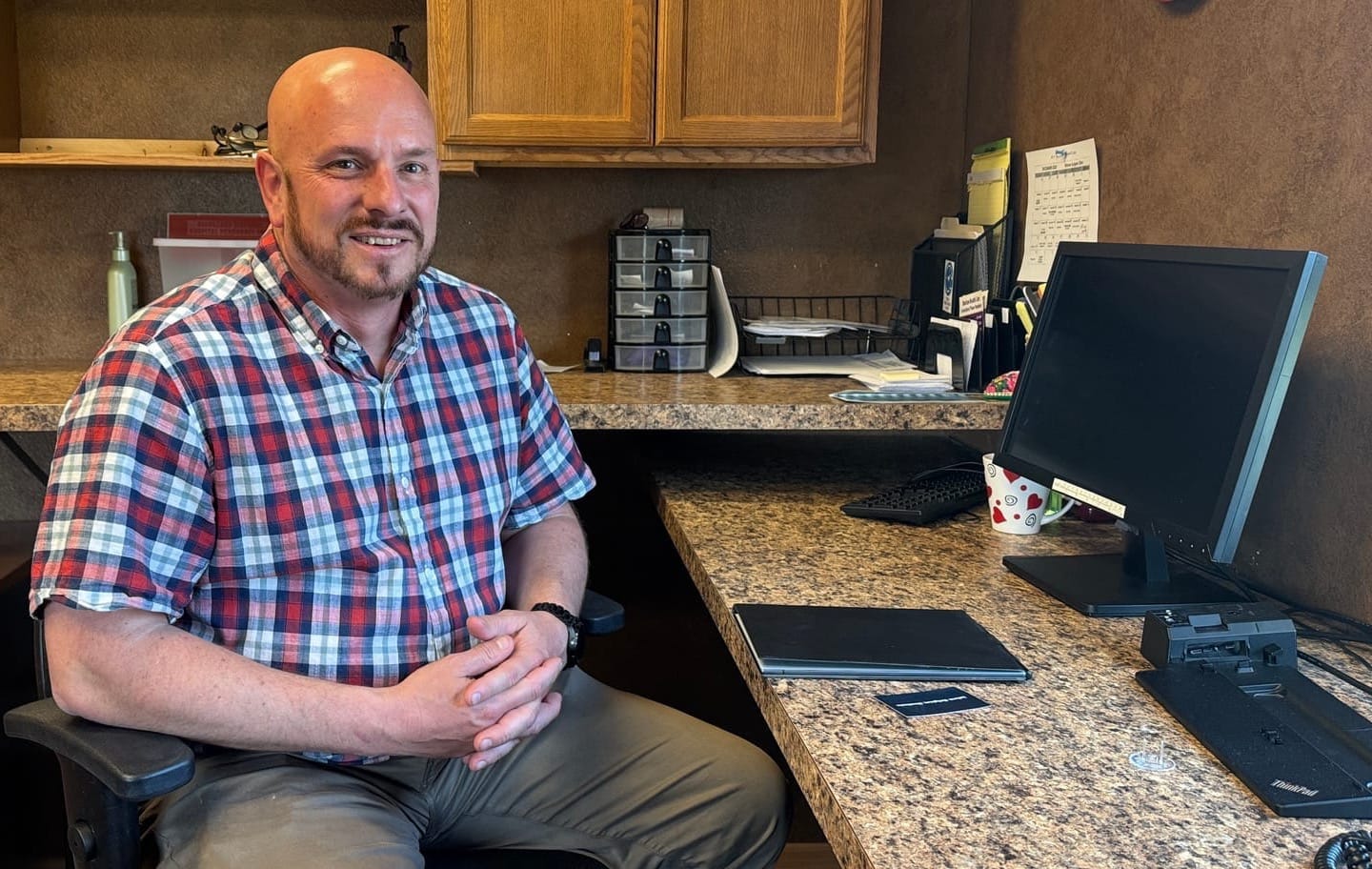
But Erickson, CEO of Horizon Health Care in South Dakota, has serious concerns about how the Medicaid cuts embedded in the giant taxation and budget law signed by President Donald Trump will affect the health of South Dakotans, especially in rural areas.

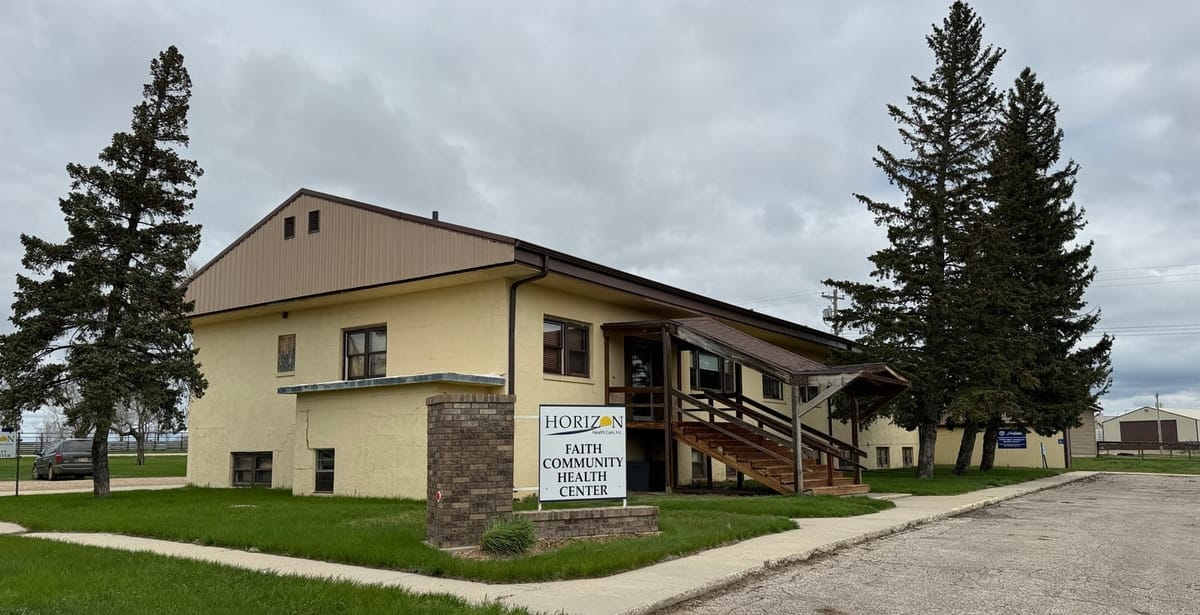
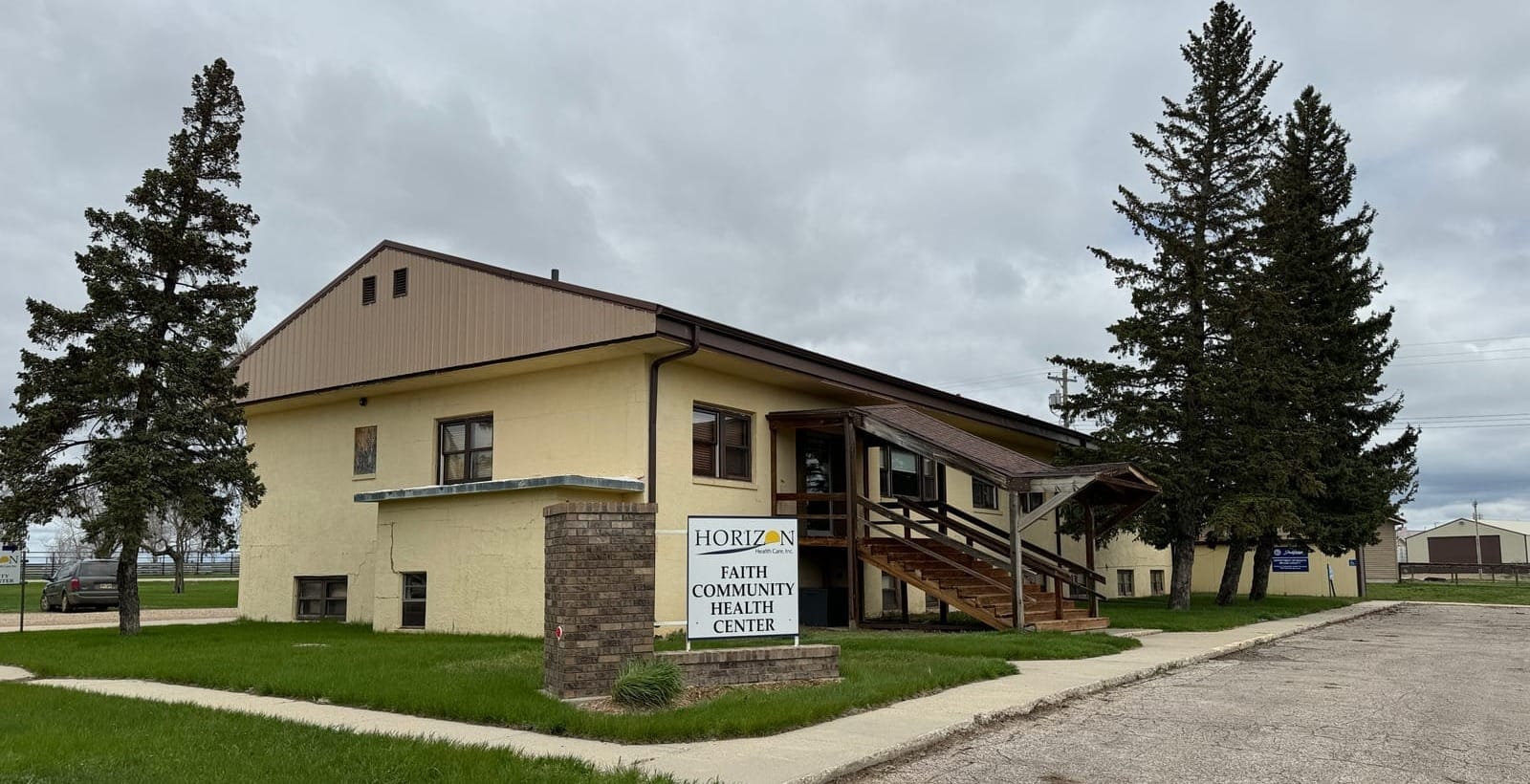
Horizon provides medical care to people across a 28,000 square-mile area of the state. Each year, about 26,000 patients are treated in 80,000 appointments at 19 Horizon Health clinics, dental offices and mental-health centers in South Dakota.

Details are still to come on the cuts to Medicaid, the health insurance program for low-income Americans. But early indications are that the law will cut federal aid to health care by $1 trillion over the next decade.

The nonpartisan Congressional Budget Office estimated that the law will remove 12 million Americans from enrollment in the Medicaid program, many due to new work requirements.

From Erickson’s standpoint, that would impact rural health in two ways.

First, patients who lose Medicaid coverage and are not able to afford medical care from their own pockets will be more likely to delay preventive care or may avoid getting needed medical treatments altogether.

“If people are afraid to access health care because they can’t afford to pay for it, or they stop taking care of their wellness and are no longer catching chronic diseases early to where they can be managed, there’s a very good possibility that it could lead to people being more sick, and also some more people dying before they would otherwise,” Erickson told News Watch.

Medicaid cuts in federal budget could hit rural health hard in SD
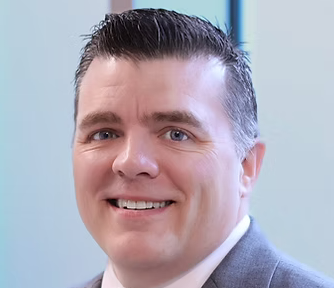
Wade Erickson, CEO of Horizon Health Care, is shown in his system’s clinic in Martin, S.D. in May 2024. (Photo: Bart Pfankuch / South Dakota News Watch)

Secondly, health providers like Horizon, which already run on small or even negative profit margins on some procedures, will see less revenue and could be forced to reduce services.

About 65% of Horizon’s annual budget is funded by the federal government, with roughly 20% coming from Medicaid, which sometimes does not cover the full cost of patient treatments and procedures. Other federal funding sources include Medicare and the annual payment made as part of the Federal Qualified Health Center program.

As a federally qualified center, Horizon cannot turn away any patients. If fewer people are covered by Medicaid, Horizon will have to ask them to pay on a sliding scale or simply provide unreimbursed coverage if the patients cannot afford to pay.

“Just because people lose coverage doesn’t mean they stop getting sick or they should stop taking care of their wellness and chronic conditions,” Erickson said.

“That is super important, that we are able to continue to support that. But without insurance or without a payer source other than themselves, which honestly, people can’t afford it if they’re on Medicaid, so they’ll be uninsured,” he added. “That will just lead to more uncompensated care and make it really difficult for us to maintain services in rural communities.”

Medicaid cuts in federal budget could hit rural health hard in SD
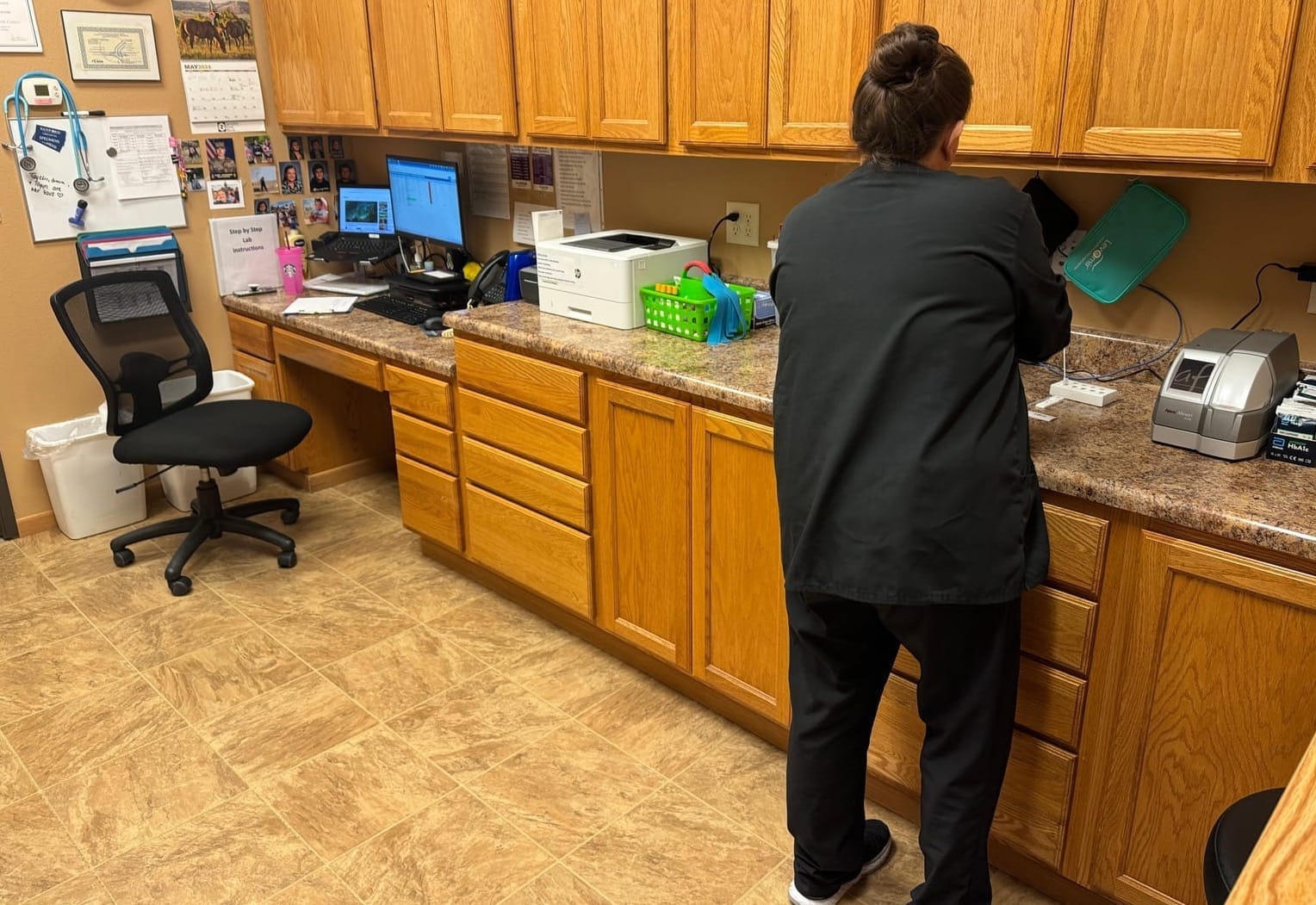
The medical lab at the Horizon Health Care clinic in Martin, S.D., is shown in April 2024. (Photo: Bart Pfankuch / South Dakota News Watch)

Erickson acknowledged that there are many unknowns about how the cuts to Medicaid will play out in the coming years. But he is concerned that reductions in coverage may put rural providers and patients into untenable positions.

“We already have patients who choose whether to get groceries or get their prescriptions, so it’s going to land on the most vulnerable people out there,” he said. “And we have to figure out, how are we going to serve all these new patients who are uninsured?”

Law’s goal is to cut fraud and waste

President Trump and Republican leaders in Congress have said the health care changes in the new budget bill will reduce fraud and waste and ensure that Medicaid is serving those it initially intended: pregnant women, people with disabilities and children.

Cuts in some programs were necessary in order to fund some of Trump’s other priorities, such as increasing immigration enforcement, boosting defense and providing tax cuts.

Medicaid cuts in federal budget could hit rural health hard in SD

The bill includes a $50 billion new fund to help rural hospitals offset revenue losses. But the nonpartisan KFF research institute estimates Medicaid spending in rural areas will fall by $155 billion under the new legislation.

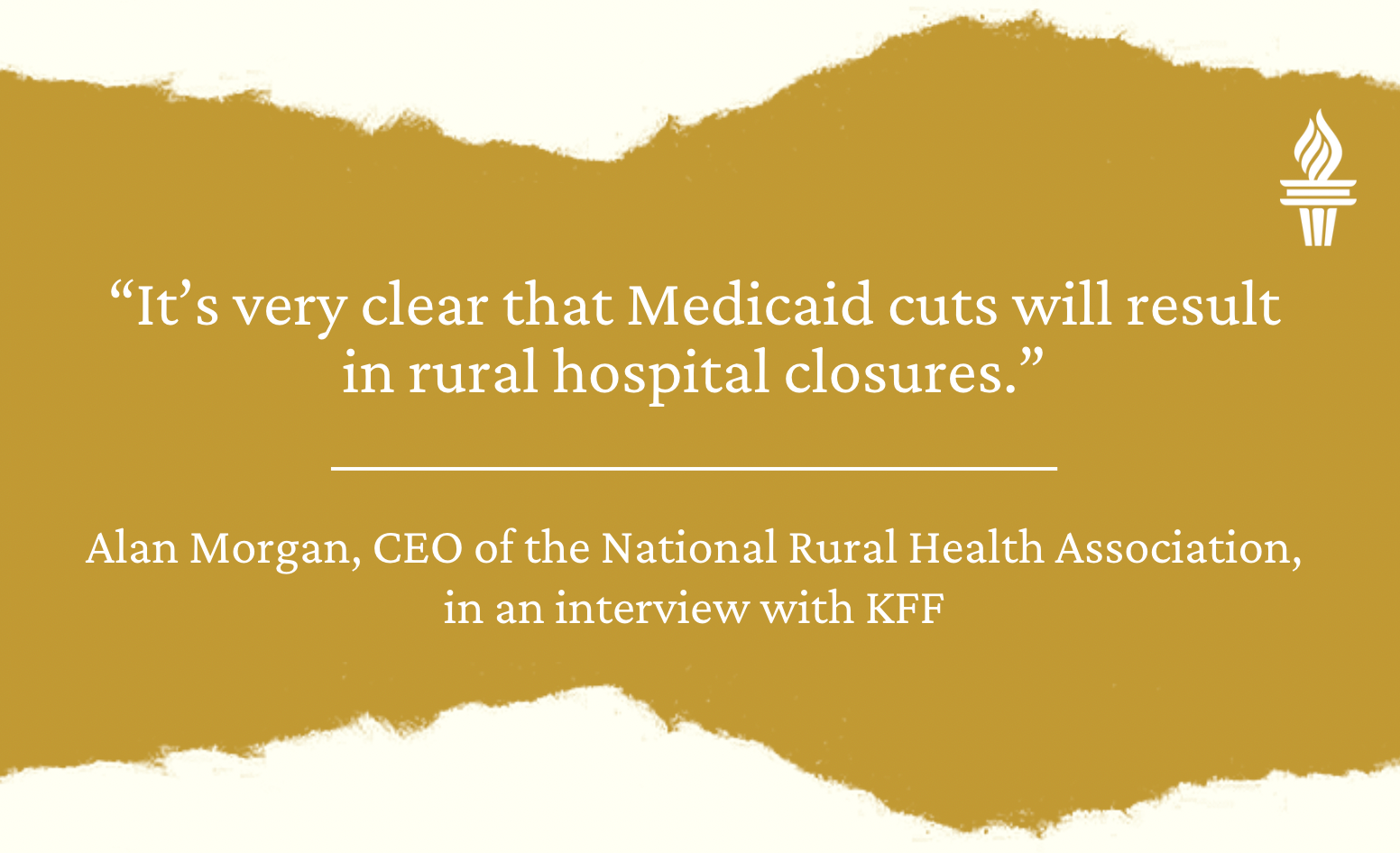
“It’s very clear that Medicaid cuts will result in rural hospital closures,” Alan Morgan, CEO of the National Rural Health Association, a nonprofit advocacy and research organization, told KFF in July.

A $1.65 billion program in SD

Medicaid in South Dakota provides medical, dental, vision and pharmaceutical insurance coverage for qualifying low-income adults and children.

The cost of the Medicaid program in South Dakota in calendar year 2024 was about $1.65 billion, according to data from the Department of Social Services, which administers the program.

DSS officials did not respond to an interview request from News Watch.

Medicaid enrollment and costs in South Dakota rose significantly in July 2023, when voter-approved expanded guidelines kicked in, and both metrics have continued to rise since then.

In June, about 144,300 people were enrolled in Medicaid in South Dakota, with 78,500 children and 65,800 adults covered by the insurance plan. The cost of the program was $155.5 million that month, with the state paying about 40% and the federal government paying around 60%.

While cuts to Medicaid will affect all health care providers across the state, including large health groups in bigger cities, rural providers and patients have fewer options to adapt to changes and as a result may see more acute impacts.

Long-term care industry worries but 1 positive

Providers in the long-term care industry in South Dakota are also trying to determine how the recent budget law will affect their ability to provide care or even remain financially viable, said Mark Deak, executive director of the South Dakota Health Care Association.

The association represents about 170 nursing homes, assisted-living and senior-care homes as well as about 90 vendors and suppliers to the long-term care industry in the state. Many of those facilities, particularly in rural areas, have experienced financial challenges in recent years, leading 10% of nursing homes to close during the early 2020s, Deak said.

While the budget bill does not contain direct cuts to long-term care funding, anticipated reductions in Medicaid funding could squeeze revenues for facilities that on average receive 54% of income from Medicaid enrollees, Deak said.

As a result, care facilities could be hit with revenue challenges, especially in rural areas where workforce is limited and costs can be higher, he said. Meanwhile, potential residents with limited financial resources could find it harder to obtain long-term care.

Join other South Dakotans and support statewide storytelling.


Donate

“Given how tight the margins are, and how tight the budget could get, it just ratchets up the level of anxiety,” Deak said. “Given the overall fiscal pressures, we’re just thinking about what the impacts could be.”

Another less-prominent piece of the legislation, Deak said, will shorten by a month the time period long-term care facilities have to process and be reimbursed for new residents, which also could make it less likely they will take in new low-income residents.

The law did include one big win for long-term care facilities.

It paused a federal staffing level requirement that Deak said would have forced facilities in South Dakota to hire 300 new nurses. That was an expensive and potentially impossible directive to meet given the lack of available workforce, he said.

Waiting and watching in Winner

Brian Williams, CEO of Winner Regional Health, said it’s too early to know how the Medicaid cuts in the federal budget bill will impact his facility and its patients. But he’s staying abreast of funding developments to be prepared if bad news does arrive.

Medicaid cuts in federal budget could hit rural health hard in SD
Brian Williams, CEO of Winner Regional Health

“We do not fully understand how these cuts may or not impact us. But we’re very concerned and we’re keeping a close eye on how this is going to be implemented,” Williams told News Watch. “It  could have a negative impact on our ability to get reimbursement for a lot a services we provide.”

The small, independent health group that includes a hospital, clinic and long-term care facility in south-central South Dakota’s Tripp County has been forced to make tough choices already this year due to revenue challenges.

In February, Winner Regional ended its birthing services, forcing expectant mothers to drive an hour or more to give birth with a doctor present.

Erickson, of Horizon Health Care, said he plans to contact members of Congress to urge them to modify or soften the cuts to Medicaid.

“That’s why we really have to tell our story of the impact of what it’s going to do to people across the country, and in our case, the people of South Dakota.”

This story was produced by South Dakota News Watch, an independent, nonprofit organization. Read more stories and donate at sdnewswatch.org and sign up for an email to get stories when they’re published. Contact Bart Pfankuch at bart.pfankuch@sdnewswatch.org

How Wall is building a model to encourage housing growth

How Wall is building a model to encourage housing growth

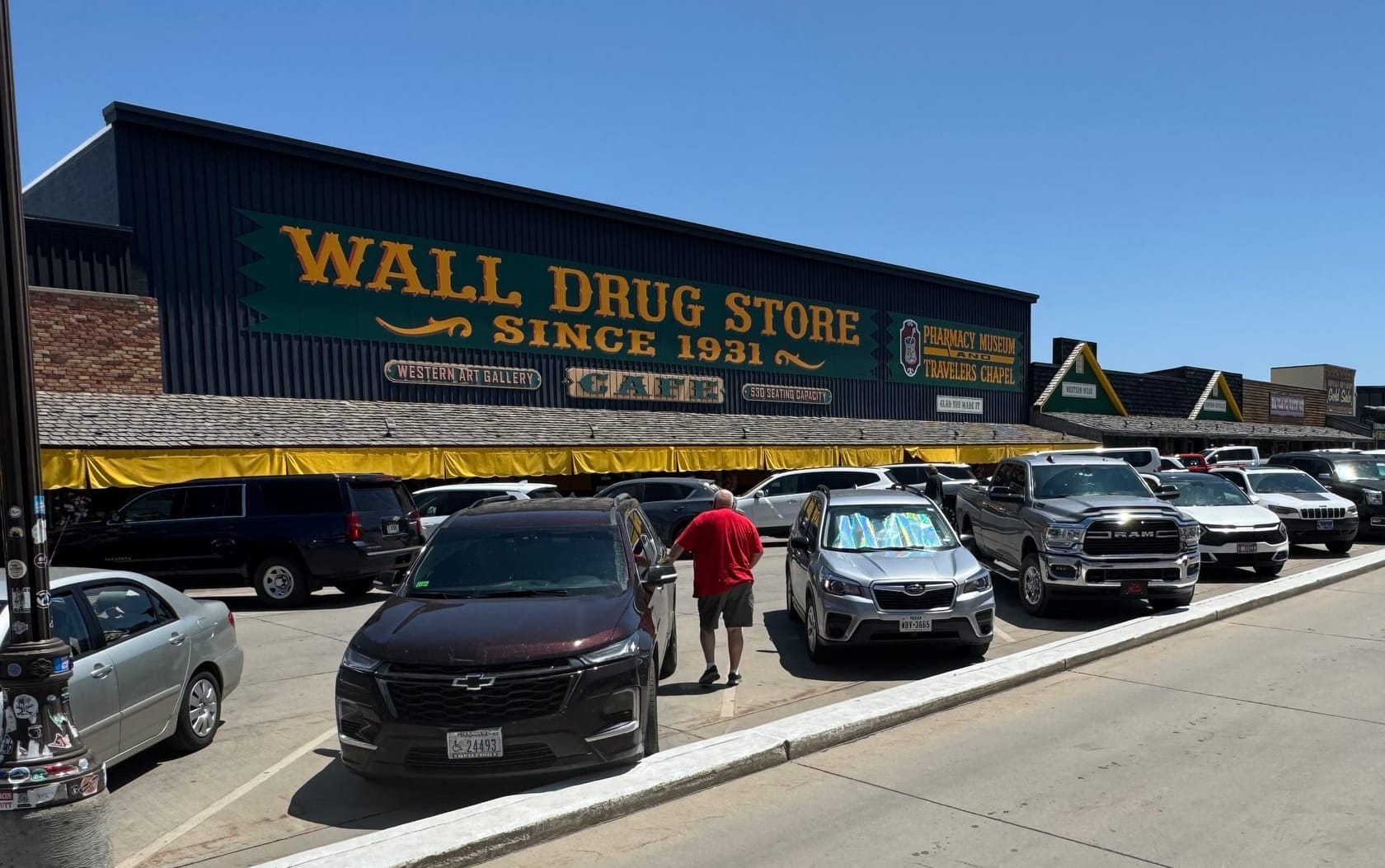
WALL, S.D. – This small western South Dakota town known internationally for Wall Drug and its proximity to Badlands National Park seemed like the perfect place for Ana Komar to fulfill her dream of running a scenic flight business.

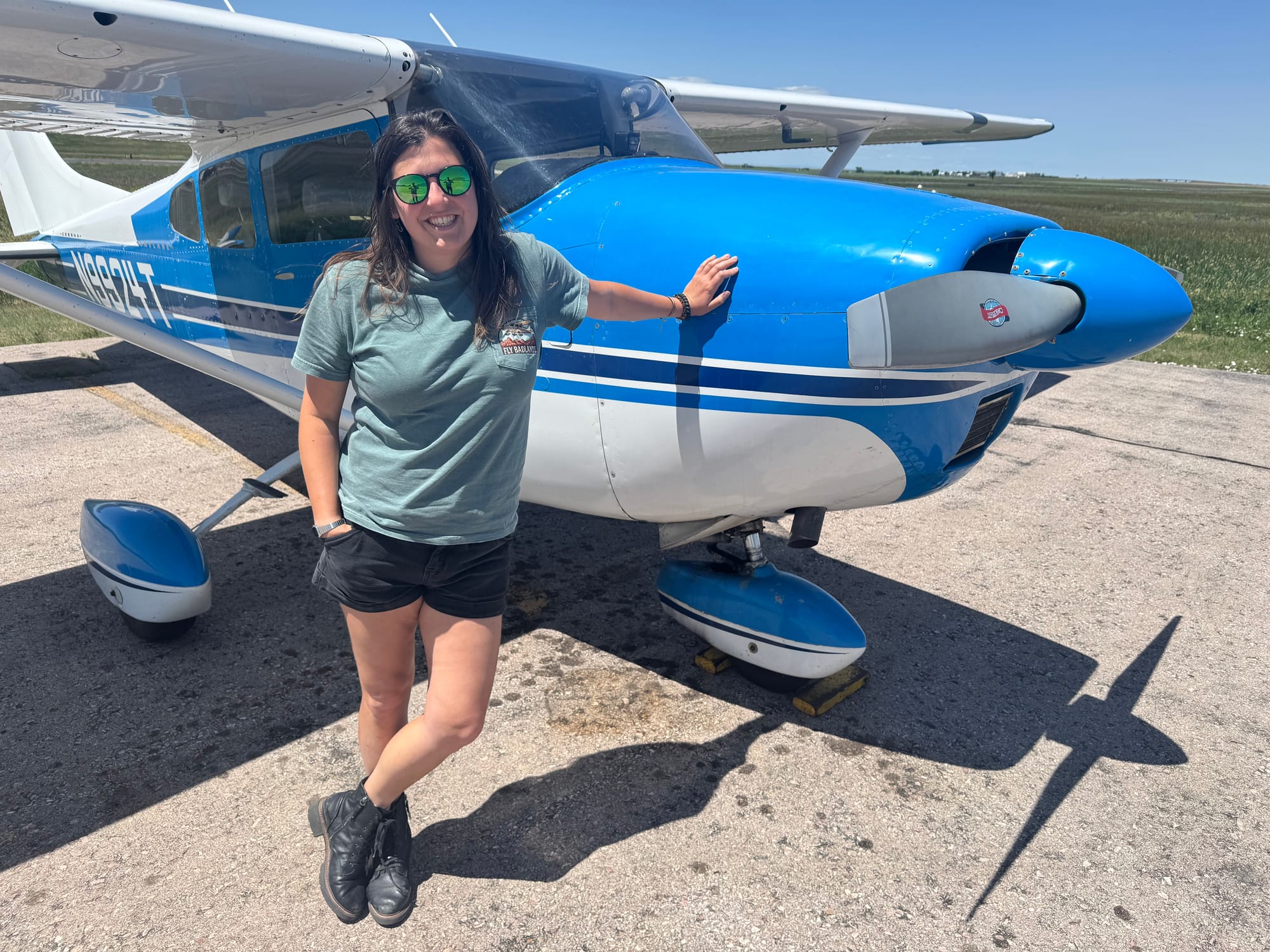
Komar, 30, has been a licensed pilot for five years and owns a four-seat Cessna. She was looking for a spot to use her skills and feed her adventurous spirit and love of natural beauty by launching a business flying tourists over dramatic terrain.

In many ways, Wall was perfect.

How Wall is building a model to encourage housing growth

The local airport is a few miles from the Badlands, its airstrip had just been extended and local leaders were welcoming and helpful, Komar said.

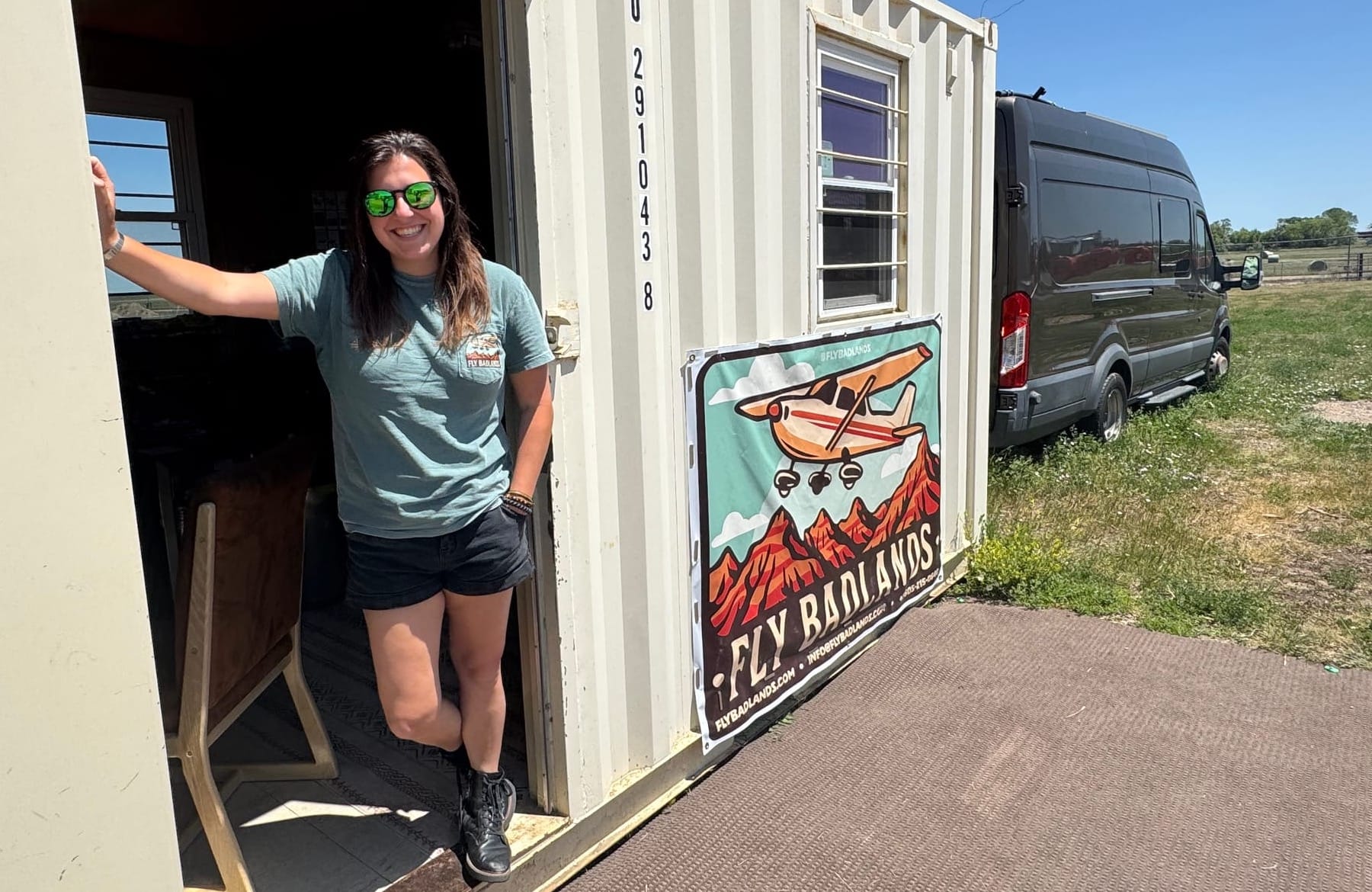
“I called city hall with my idea and they’re like, ‘Come on down, we’ll set up a meeting with the mayor tomorrow,'” said Komar, who ultimately launched the Fly Badlands aerial tour business this spring. “It’s been amazing, just the enthusiasm and the support of people checking in, coming over here to help me. It’s been a real feat of kindness.”

How Wall is building a model to encourage housing growth
Ana Komar and the Cessna she pilots to take tourists over the South Dakota Badlands while parked at the Wall, S.D., airport on June 23, 2025. (Photo: Bart Pfankuch / South Dakota News Watch)

But for all the positives, there’s been one major drawback — a challenge to growth in Wall that is negatively affecting rural towns and small cities across the entire state.

Komar simply could not find housing anywhere in the city of 700 people or in communities nearby.

“I’m forced to live in Rapid City and drive in every day, which is kind of a bummer and a little draining,” Komar said while speaking from her makeshift office in a storage container at the Wall Municipal Airport, 50 miles east of Rapid City.

“That drive every day is time you can’t get back,” she said. “I want to live in a community, to live in a house, to be able to walk downtown to a coffee shop and get to know people.”

For Komar, who’s single, commuting two hours a day hasn’t been a deal-breaker, and she has a van parked at the airport where she can sleep to prepare for a morning tour or to stay after a sunset flight. 

Yet she wonders if the lack of housing is holding Wall back from reaching its full potential.

“If I had a young family and was making a decision whether to start a business in Wall, it would raise real questions.”

How Wall is building a model to encourage housing growth
Ana Komar, owner and operator of Fly Badlands scenic flight tours, shown on June 23, 2025, was unable to find housing in Wall, S.D., and sometimes sleeps in the van she keeps at the airport. (Photo: Bart Pfankuch / South Dakota News Watch)

A shortage of affordable or even available housing is one of the big three challenges to population stability and economic growth in rural South Dakota. A lack of workers and day care are other top reasons new businesses and families find it hard to locate in small cities and towns.

This story is part of a series that South Dakota News Watch will be reporting as part of Engage South Dakota, which uses storytelling, crowdsourcing and community engagement to identify and share solutions in the works or yet to be developed. Each story will include the community’s response, insights to be learned, evidence of whether the ideas are effective and limitations on the efforts.

Response: Teamwork drives housing development

Wall leaders aren’t just hoping new housing suddenly appears.

Through a coordinated effort that includes local government officials, business leaders, residents and some state funding, the city is setting the stage for development of new housing and the potential growth it can bring.

How Wall is building a model to encourage housing growth
Wall, S.D., finance director Carolynn Anderson, shown on June 23, 2025, shows where lots are ready for development in the Wall Industrial Park on the north side of the city. (Photo: Bart Pfankuch / South Dakota News Watch)

The city received money from the Federal Aviation Administration to extend its local airstrip, allowing for greater access by planes and jets.

It has developed an 85-acre, business-ready industrial park north of the airport, though no business has located there yet.

Join other South Dakotans and support statewide storytelling.


Donate

The city has cleared land for new housing and installed infrastructure that will encourage developers to build homes or apartments, said Mayor Mary Williams.

It tore down an old gas station and used the lot to install three homes through the Governor’s House Program.

Wall also received a $1.2 million loan from South Dakota Housing – a state-funded nonprofit lending agency – to build infrastructure for the proposed Echo Valley subdivision on open land south of Interstate 90.

Resident-driven ideas at heart of Engage South Dakota
Pilot project uses storytelling and civic engagement to identify and share solutions to challenges impacting communities across the state.
How Wall is building a model to encourage housing growth

That land, now offered for construction by private developers, can accommodate 24 new homes, 15 of which will be considered affordable, Williams said.

Nearby, the city used other money borrowed from South Dakota Housing to extend a street and connect it to another, creating new buildable lots in the Hansen subdivision that now contain four occupied governor’s homes and two privately-built homes, she said.

“Those homes all went to young couples who have come back home to participate in their family businesses, so that was very successful,” Williams said of the expanded area.

Evidence: Builder shifts to housing

Wall has a stable employment base due to its tourism industry led by Wall Drug and by employers such as local schools and city, county and federal government as well as Golden West Telecommunications and West River Electric Association.

Williams said the positive, welcoming approach to growth has also prompted a few other new businesses to recently locate to Wall, including Dahl Chainsaw Art and Dakota Sky Stone, a manufacturer of Native American influenced jewelry.

How Wall is building a model to encourage housing growth
The city of Wall, S.D., obtained a loan from the South Dakota Housing Development Authority to help pay for infrastructure needed to encourage housing construction in the Echo Valley subdivision south of town. (Photo: Bart Pfankuch / South Dakota News Watch)

John Diedrichs is one of the people seizing on the opportunity to build new housing, partly due to the high demand but also to support the continued growth and stability in his adopted hometown.

Diedrichs owns Cornerstone Industries and Construction Services, with a main focus on building grain bins and other agricultural structures.

He recently moved into the homebuilding space, completing his own family home. He’s planning to build six, two-unit townhomes and a 12-unit apartment building, all in the Echo Valley subdivision south of Interstate 90 where sewer, water and streets are already in place.

He poured the foundation on one townhome in late June and already has one side leased and the second side spoken for by a prospective tenant.

Diedrichs said the city has been “extremely proactive” in helping developers prepare land and in making it easier for builders to get projects started.

Generating new housing opportunities is critical for businesses like his to grow or for new businesses to come to town, he said.

“We don’t hire a lot of people from Wall, and most of them come from other cities or states,” Diedrichs said.

Diedrichs said he can feel the momentum in the town where he has lived since 2010. While it costs more to build housing in a remote small town, and rents are typically lower than in a larger city, Diedrichs said he is committed to helping Wall build a strong future.

“Financially it makes a lot more sense to build in Rapid City, but we want to build in Wall because we’re so entrenched in the community,” he said.

Limitations: Loss of housing and slow growth

Though the efforts so far make the city poised for growth, Wall’s housing offerings remain tight, and a 2022 study commissioned by the city reveals some of the challenges.

It found a slow growth rate, with 20 new single-family homes built from 2010 to 2022. The city lost 56 housing units over that time, a 13% decline attributed to demolitions, loss of rental properties and conversion of some homes and apartments to seasonal rentals.

Meanwhile, the overall housing stock is aging, with a quarter of all units built before 1960.

The city has avoided the significant population declines seen by other similar-sized South Dakota cities, but it has still seen a slow drawdown. The U.S. Census reports the city had 834 residents in 1990, 807 in 2000, 774 in 2010 and 688 in 2023.

Insight: Wall Drug boss says city support is key

Despite those challenges, Wall – like many other small towns – is fortunate to have at least one major employer that provides a foundation on which to build. Wall Drug – made famous worldwide through “miles to” road signs – actively plays a role in making sure its employees have a place to live.

Rick Hustead, the third-generation president of Wall Drug and a member of the Wall City Council, knows firsthand about the housing challenges facing both residents and employers.

How Wall is building a model to encourage housing growth
Rick Hustead, shown in his office in Wall, S.D., on June 23, 2025, is the third-generation president of Wall Drug. (Photo: Bart Pfankuch / South Dakota News Watch)

He and his team at Wall Drug have developed a system for providing housing for the 185 employees who work during summers at the restaurant/retail/leisure complex that takes up a large section of Main Street.

Hustead owns a mobile home park and other housing sites for employees, including the 95 foreign workers who are in Wall on temporary visas this summer and 20 other seasonal employees. Wall Drug has about 70 full-time, non-seasonal staff who mostly reside in Wall, he said.

Hustead, 75, said the city has done a good job of being forward-thinking by aiding developers of new housing and must maintain those efforts to provide buildable land and look for funding sources to aid construction projects.

“The city has been pretty proactive in supplementing new development,” he said. “There’s lots available, but you have to put some money in to help developers.”

Solving South Dakota’s housing problem one idea at a time
How an Aberdeen nonprofit called Homes Are Possible Inc., or HAPI, shares what it has learned to help ease the state’s housing crunch.
How Wall is building a model to encourage housing growth

Besides trying to attract new businesses and the residents they bring, Rochan Burrell, executive director of the Wall Economic Development Corp., is looking 40 miles west.

She’s promoting the city’s housing potential with Ellsworth Air Force Base officials as they prepare for an influx of military and civilian personnel as part of the expansion for the new B-21 bomber program.

“We’ve kind of been the best-kept secret and I’m trying to change that so people know we’re here and that we’re a great community, with great schools and a great place to raise your family,” she said. “I’ve made those relationships and those connections to let them know we’re prepped for growth.”

This story was produced by South Dakota News Watch, an independent, nonprofit organization. Read more stories and donate at sdnewswatch.org and sign up for an email to get stories when they’re published. Contact Bart Pfankuch at bart.pfankuch@sdnewswatch.org.

Fact brief: Does South Dakota have some of the highest rates of DUI arrests in the nation?

Yes.

Fact brief: Does South Dakota have some of the highest rates of DUI arrests in the nation?

Fact brief: Does South Dakota have some of the highest rates of DUI arrests in the nation?

South Dakota ranks at or near the top nationwide for driving under the influence arrests per capita, according to multiple sources from the past few years.

A report compiled by Forbes ranked the state second for DUI risks, citing the highest number of DUI arrests per licensed driver (879 per 100,000) and a high rate of traffic fatalities being caused by drunken drivers (35.14%). Montana ranks No. 1 in the report and Texas No. 3.

Because each source uses different formulas to determine the rankings, South Dakota’s placement varies, but it’s generally high.

Alcohol.org ranks South Dakota as No. 1 by citing data of 938.8 DUI arrests per 100,000 people, over 100 more than North Dakota.

Factors in South Dakota’s consistently high ranking include the Sturgis Motorcycle Rally, frequent sobriety checkpoints, and drivers getting behind the wheel in rural areas and small towns after drinking. 

This fact brief responds to conversations such as this one.

Sources

Forbes, Worst states for drunk driving 2025

SDPB, Study: South Dakota has highest per capita DUI arrest rate in nation 

Alcohol.org, DUIs arrests and fatalities across the US

Kinney Law, South Dakota is one of the worst states for drunk driving

Addiction Group, Updated Drug and Alcohol Statistics for South Dakota


South Dakota News Watch partners with Gigafact to publish fact briefs that refute or confirm a claim with supporting information and additional evidence and context.

Join other South Dakotans and support statewide storytelling.


Donate

This story was produced by South Dakota News Watch, an independent, nonprofit organization. Read more stories and donate at sdnewswatch.org and sign up for an email to get stories when they’re published. Contact Michael Klinski at michael.klinski@sdnewswatch.org.