
Facing a subsidy sunset, Montanans brace for health insurance increases

Facing a subsidy sunset, Montanans brace for health insurance increases

As a self-employed rancher operating a family business in Busby, about an hour and a half east of Billings, Kirby Walborn has purchased his health insurance through the federal Affordable Care Act marketplace for years. 

For the most part, Walborn, 63, said the Obama-era health insurance marketplace has held up to its “affordable” moniker. He estimated that the plan covering him and his wife currently costs about $650 a month in premiums — a slight increase from what Walborn said he paid in 2024. 

But when he logged onto the federal marketplace this month to re-up his family’s plan for 2026, Walborn saw much more than a small price increase: the premiums were set to spike to roughly $2,400 a month — a nearly 270% increase.

About 77,000 Montanans purchased health insurance coverage through the marketplace last year — a key resource for people who don’t have health insurance from an employer and are either too young to qualify for Medicare or make too much to qualify for Medicaid. 

Most of those enrollees, about 67,000, currently qualify for a subsidy to help keep their premiums affordable — the average monthly discount this year is $545. But for many residents, such as the Walborns, enhanced financial support made available during the pandemic is set to expire at the end of 2025, with no alternative affordability plan in place. 

Some of the people health experts say will be hit the hardest by the loss of subsidies include older adults who make more than 400% of the federal poverty level, or about $85,000 for a family of two.

Walborn said he won’t qualify for any subsidy in 2026. For him and other Montanans who spoke to MTFP, the sudden end to the enhanced subsidies has made it financially painful or downright impossible to afford health insurance next year. Some, like Walborn, are scrambling to come up with hundreds or thousands of dollars more a month to pay for insurance. 

“It’s kind of a shocker, but I’m in a bind. I can’t go without,” Walborn said.

Kirby Walborn, right, pictured in May 2024, during branding at his ranch near Busby Credit: Courtesy: Kirby Walborn

Walborn has an iron disorder that requires him to get his blood drawn every few months. He worries about a future cancer diagnosis after a recent MRI identified a lump he needs to have biopsied. And, in his line of work, Walborn has also faced the occasional emergency. This spring, he got into a bit of a tumble with an ATV, he recalled, resulting in a broken pelvis. 

“I’ve got to have the insurance,” Walborn said, noting that it will be more than a year until he becomes eligible for Medicare

Other Montanans, expressing a mix of fear and resignation, told MTFP they are planning to go without any coverage at all.

“I’m not going to get insurance unless the subsidies change. If those don’t continue, there’s no way I could afford it,” said Jacklynn Thiel, 61, a retired state employee who lives in Boulder. 

Thiel said that, with the enhanced subsidies, she currently pays no monthly premium. Next year, her costs for a catastrophic, high-deductible plan is set to increase to $785 a month. Thiel said that difference has made her decide to go without insurance next year. 

“If I have no insurance and then go into the hospital, they’ll still treat me and I’ll claim medical bankruptcy,” she reasoned. “… I think medical bankruptcy is the better option.”

The question about whether to extend the enhanced subsidy policy was at the root of the federal government shutdown that stretched from Oct. 1 to mid-November. Congressional Democrats pushed for an expansion to current subsidies, while Republicans said that debate should happen separately from the vote to fund the government. 

The four members of Montana’s delegation, all Republicans, have expressed fierce opposition to continuing the expanded subsidies, calling them a giveaway to insurance companies that adds fuel to the fire of exponentially increasing health care costs. Some have also long opposed the Affordable Care Act, blaming it for driving up the cost of premiums.

“Nothing has contributed more to increased cost of health care than the Affordable Care Act,” said eastern Montana Rep. Troy Downing, a freshman congressmember and Montana’s former insurance regulator, in a November interview with NBC Montana

When asked in that interview about Montanans impacted by the end of the enhanced subsidy, Downing said that the pandemic-era expanded financial aid has made up a “really small amount” of the total subsidies Montanans receive through the ACA.

“Most of those folks are going to be just fine with or without that,” Downing told the interviewer. 

Walborn, who said he spent most of his life aligned with the Republican party, has more recently found himself rooting for the Democrats, in part because of the issue of health care affordability. He said he was following news of the federal shutdown closely and watched as a faction of Democrats “caved” by voting to reopen the government, punting the debate about insurance subsidies to a later date. 

In the last few weeks, Walborn took time to write to Downing, who represents his congressional district. In his email, he urged the congressmember to extend the enhanced subsidies to “help make health insurance affordable for working Americans like me.”

“Losing that support would mean choosing between healthcare and other basic needs — a choice no American should have to make,” Walborn wrote.

In a mid-November email responding to Walborn, Downing’s office thanked him for his input on the ACA, but noted that the enhanced subsidies were originally passed as a temporary measure during the pandemic.

“Clearly, the pandemic is well behind us,” the email read. 

Other Montanans said they felt politically mobilized by the looming cost increases for health insurance. Timothy Stevens, 58, a longtime conservation advocate who lives in Livingston, said he was closely monitoring the federal shutdown because of its impact on national parks and federal employees. 

But at some point in reading national headlines over the fight between Democrats and Republicans, Stevens recalled, it clicked for him that the health insurance issue was the most central to his own life.

“Then I realized, wait a minute, I’m the person that they’re talking about that they shut the government over,” Stevens said in a November interview. “I am the person who has been receiving this enhanced subsidy.”

Currently, Stevens said he and his wife pay about $1,200 in premiums for a monthly plan, an amount he described as painful “but doable.” With the end of the enhanced subsidy, the same plan would cost his household more than $2,800 a month, he said. The couple has decided to divert money from their retirement contributions to cover the new expense.

Like Walborn, Stevens said he was keeping a close eye on Montana’s congressional representatives for possible solutions. 

“Where is the Montana delegation?” Stevens posed. “This is like a fundamental thing. If we can’t take care of our health care, I mean, like what is this country coming to? And what do these guys care about? Because it sure ain’t me.”

In a November hearing about health insurance policy, Republican members on the Senate Finance Committee proposed other policy fixes for the increasing affordability crisis, including expanding use of pre-tax Health Savings Accounts (HSAs) for users to draw on for routine health care needs. Other Republicans criticized Democrats for taking a “business as usual” approach to the Affordable Care Act by continuing to give subsidies directly to insurance companies. 

During the hearing, Montana Sen. Steve Daines reiterated his frustrations with the Affordable Care Act, or Obamacare, but said little about alternative policies to keep insurance prices down for consumers. 

Sen. Steve Daines, R-Mont., speaks during a hearing of the Senate Committee on Energy and Natural Resources on Capitol Hill on July 10, 2025, in Washington. Credit: Mark Schiefelbein / AP

“I believe any path forward on this issue requires reforms to address the root causes of why? Why does Obamacare perpetuate high costs and instability, as well as the substantial growth in improper enrollment, fraud, and wasteful spending,” Daines said. “In addition to permanent structural reforms to Obamacare, any path forward should expand access to and unleash free market, patient-centered solutions President Trump championed during his first term to provide lower costs, more control, and better care for individuals. I think both sides should agree we need that, and we need it badly.”

A spokesperson for Daines’ office did not respond to a question about specific alternatives the senator supports in place of ACA subsidies. 

Other free market health care reform advocates say there’s promise in the talk of expanding access to HSAs, rather than passing subsidies to insurance companies. Kendall Cotton, president and CEO of the Montana policy group the Frontier Institute, said an early November social media post by Trump calling for health policies to “pay the people, not the insurance companies,” could eventually help Montanans access health care outside of a restrictive insurance plan.

“I think the whole point is you’re putting people in charge of their own health care decisions. They don’t have to be bound by insurance networks,” Cotton said. “… It’s allowing people just to shop for the best health care that they can find at the best value.”

Members of Congress and the Trump administration have so far failed to come forward with a proposal to prevent marketplace enrollees from seeing sharp cost increases in the new year, despite the president considering an extension to subsidies. The deadline for signing up for a plan through the ACA marketplace with a Jan. 1 start date is Dec. 15. 

In Montana, some residents have bitterly accepted the looming price increase, preparing to shuffle money around to make ends meet or going without insurance entirely.

Shelley Eisenrich, a resident of Hot Springs about an hour south of Kalispell, said her wife has decided to forego insurance until she turns 65 next year and becomes eligible for Medicare, the federal program for which Eisenrich already qualifies. 

Her wife’s current plan through the ACA costs about $540 in monthly premiums, Eisenrich said. Next year’s premiums for the same plan are estimated to be closer to $1,200 — a cost the couple says they’re not willing to pay.

Without any chronic conditions, Eisenrich said it makes more sense for her wife to temporarily go without insurance.

“We both agree that she should just wrap herself in bubble wrap for the next seven months,” Eisenrich said.

The post Facing a subsidy sunset, Montanans brace for health insurance increases appeared first on Montana Free Press.

Montana-grown ingredients for your Thanksgiving spread

Montana-grown ingredients for your Thanksgiving spread

With nearly 24,000 farms and ranches operating in Montana, the state’s residents are pitching in to produce a wide variety of food — from beef to chickpeas — for consumers around the world.

But how often are Montanans regularly consuming locally grown products? Some local food advocates say not nearly enough.

“We’re so lucky in Montana to have a true abundance and plethora of foods we can eat year-round,” said Erin Austin, the director of community partners and sales at Abundant Montana. The nonprofit works to promote about 1,100 food producers and businesses in the state in an effort to increase local food consumption. 

Lauren Miller, Montana Free Press, CatchLight Local/Report for America
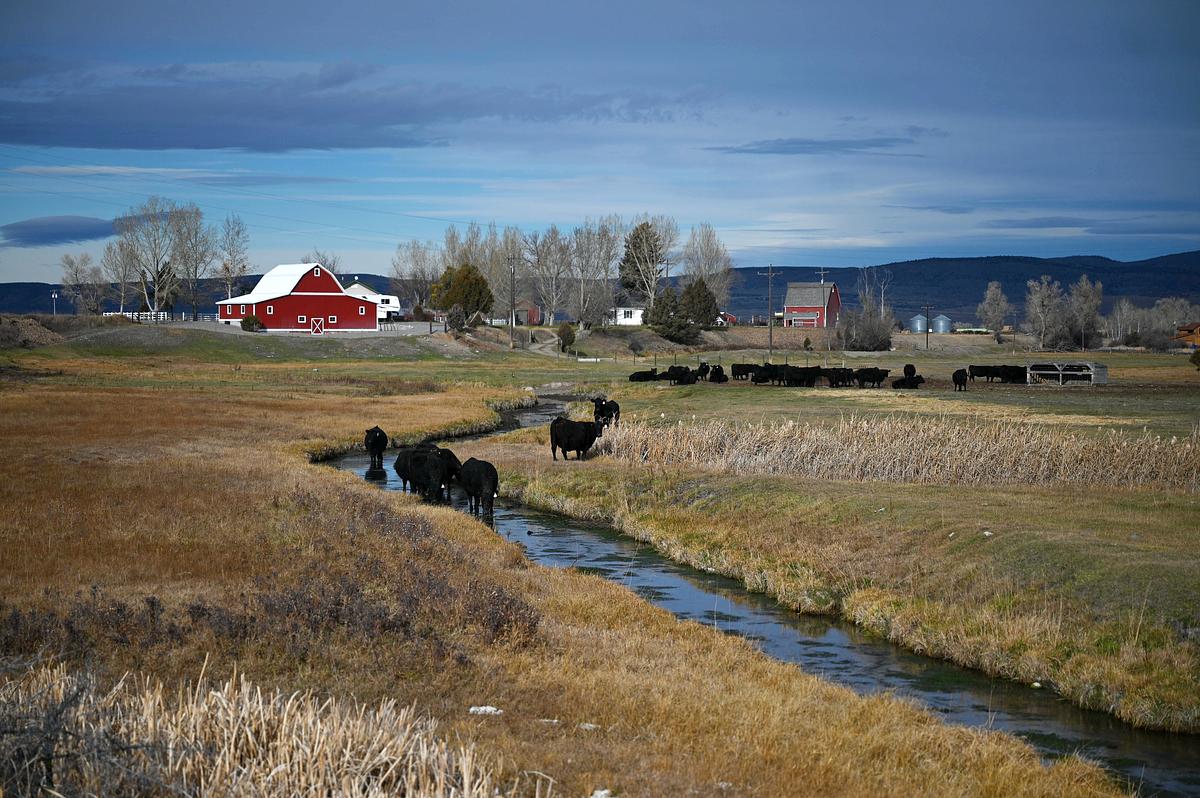
Cattle are pictured Nov. 23 in Manhattan. Credit: Lauren Miller, Montana Free Press, CatchLight Local/Report for America

In the 1950s, Austin said, about 70% of the food Montanans ate came from within the state. As of 2021, she said, that number had dwindled to 3%. The organization is trying to drive that percentage back up, in part by mapping out where Montanans can find nearby growers and ranchers. 

Austin said it’s absolutely possible to make an entire Thanksgiving meal with locally sourced ingredients, even if that means diverging from some traditional recipes. Local food may be more flavorful and nutritious because it was picked at peak ripeness, she said. Those purchases also help fuel the local economy, she added, powering up Montana’s rural and home-grown communities. 

With Thanksgiving around the corner, here are five Montana-made foods that you can add to your festivities.

Montana is well-known for being cattle country, with cows still outnumbering people statewide. The state, however, doesn’t even rank in the top 13 for turkey production, according to the most recent data compiled by the U.S. Department of Agriculture. 

To be fair, there’s no real reason why your Thanksgiving spread couldn’t include Montana beef (or chicken, for that matter), but if you’re on the lookout for a more traditional turkey dinner, Montana growers can help fill the gap.

Flocking Good Farms near the north-central town of Big Sandy is operated by Carissa Bergren and Joe Ostrom as part of the larger Ostrom Acres farm operation. The farm touts its in-house feed that’s free from corn, soy products and GMOs and helps nurture the gaggle of chickens and turkeys. 

After being recently featured by KRTV, a Great Falls television station, Ostrom said the farm’s sales have skyrocketed, leaving only three turkeys remaining as of last week. Ostrom also credited the jump in sales for the two-year-old business to a growing awareness about locally grown food.

“I think people are getting aware of where their food comes from, and they know it’s a better quality food,” Ostrom said. “I’ll just say that it’s gone better than I ever expected.” 

Of course, wild turkey hunting is also legal in Montana, as long as recreators have the proper fees and permits in place. The state has two subspecies — Merriam’s and Eastern — of turkey, though neither is native to the state. The most popular season for hunting wild gobblers is in the spring, but fall hunting is currently underway until Jan. 1. According to Montana’s Fish, Wildlife and Parks Department, popular regions for turkey hunting include the Custer National Forest and parts of Fergus County and the Charles M. Russell National Wildlife Refuge.

In a state that often flexes its exceptionalism (really big sky, full of treasure, etc.), we will admit that our neighbors to the west have some very nice potatoes. But that doesn’t mean Montanans have to shop outside of the state’s borders for this Thanksgiving staple. 

Lauren Miller, Montana Free Press, CatchLight Local/Report for America
Root Cellar Foods delivery trucks are pictured Nov. 23 in Belgrade. The company works with Montana farmers to sell “grains, meat, dairy and value-added goods that are grown, raised and produced in Montana.” Credit: Lauren Miller, Montana Free Press, CatchLight Local/Report for America

In 2023, Montana had almost 12,000 acres planted for seed potatoes, roughly a third of Idaho’s total acreage for the crop. The starch is so popular that the town of Manhattan, about 25 minutes west of Bozeman, hosts an annual Potato Festival every August.

One local resource for finding made-in-Montana spuds is Root Cellar Foods. The food distributor allows for online ordering and local pickup locations and drop-off options around the Gallatin Valley. If you can’t order in advance, several of the growers that work with Root Cellar Foods also advertise their own farm stands that are open regularly with an assortment of products.

Although Montana also doesn’t crack the list of top-10 states for pumpkin production across the country, the Thanksgiving-essential squash is bountiful at farm operations around the state. (Some growers are certainly trying to stand out in their field, so to speak, with a 1,591-pound pumpkin breaking Montana’s state record this year for largest pumpkin ever recorded.)

That said, baking isn’t everyone’s area of expertise, even with high-quality local ingredients. If you’re near the town of Belt, just southeast of Great Falls, the team at Ever Westward Farm is taking orders for homemade Buttermilk Cardamom Pumpkin Pie available for pickup at its farm stand. 

Other types of Montana-grown squash can grace your Thanksgiving tables in the form of more savory dishes, too. Butternut, acorn and delicata are just some of the varieties of squash available from Winter Kissed Farm in Stevensville, a farm operation that focuses on CSA distribution within the Bitterroot Valley and beyond.

Perhaps unsurprisingly, one area of the agricultural sector where Montana shines is in its diversity of nutritious grains grown across much of the central and eastern part of the state. 

Two crops that could provide the foundation for a Thanksgiving salad or side dish are Montana lentils and chickpeas, some of the state’s most common pulse crops. A lentil salad for the holiday can also include many other grown-in-Montana ingredients, including squash, greens and root vegetables. Cooked chickpeas can be ground down into hummus for an appetizer or featured in a heartier vegetarian side dish

Prairie Roots, the marketing enterprise of Sather Ranch, LLC in northeast Montana, about an hour north of Glasgow, carries both chickpeas and lentils, along with an assortment of other grain products. They offer delivery to nearby towns along the Hi-Line, including Malta, Hinsdale, Glasgow, Nashua and Wolf Point. 

Cranberries, the accent fruit traditionally used to contrast savory poultry or stuffing, aren’t very easy to produce in Montana because of its dry climate. But other berries are bountiful and ready to use in jams, syrups, sauces or baked inside pies for Thanksgiving. 

Catherine McNeil, the former president of the Montana Berry Growers Association and the operator of Apple Bar Orchard near Helena, is particularly fond of haskaps. The oblong, dusty blue berries are also known as honeyberries. But McNeil said many Montanans don’t know about them, or how versatile they can be in cooking and baking. 

“Some people have used [haskaps] with pork,” she said. “I’ve used them with meatballs. … I’ve never tried them with poultry; that’s not saying I wouldn’t. For sure, I think they would go great.”

McNeil also pointed to Township Road Farm in Worden, just northeast of Billings, as another berry grower offering a range of products, including elderberries, currants and chokecherries, that could enhance Thanksgiving meals. 

The post Montana-grown ingredients for your Thanksgiving spread appeared first on Montana Free Press.
Groups push back on Montana’s ‘data center boom’ in petition before utility commission

Groups push back on Montana’s ‘data center boom’ in petition before utility commission

A group of nonprofits is petitioning Montana’s utility board to tighten its oversight of NorthWestern Energy, arguing existing customers could foot the bill for the utility’s plan to provide data centers with electricity.

Nine groups working on energy, conservation, social justice and affordability issues on Tuesday asked the Public Service Commission to impose rules on NorthWestern so its 413,000-plus residential customers won’t be forced to shoulder the cost of new power plants and transmission lines to power data centers.

Here’s what we know about the data centers in question, how Montana law intersects with the debate and what the petitioners are asking the PSC to do in response.

NorthWestern Energy has signed letters of intent to supply power to three data centers, according to the complaint. If all goes according to the forecasted demand, by 2030, NorthWestern will supply 1,400 megawatts of power to these data centers to meet their needs. That’s roughly equivalent to the annual electricity needs of more than 1 million homes and more than double the 759 megawatts of power NorthWestern’s existing customers require on a typical day.

NorthWestern has signed agreements with Atlas Power, which seeks 75 megawatt of power for a facility in Butte starting in 2026 and and another 75 megawatts by 2030; Sabey Data Center Properties, which would initially require 50 megawatts to power a 600-acre campus planned for Butte and eventually expand its use to 250 megawatts; and Quantica Infrastructure, which wants to secure 175 megawatts for a project in Yellowstone County by late 2027 and increase its electrical footprint to 1,000 megawatts by 2030.

At least two of the aforementioned data centers are still very much in the planning stage. Yellowstone County’s planning department told MTFP last week that Quantica has not submitted a proposal for the project to the county. A land deal associated with the Sabey facility has not yet been finalized. Another project that’s drawn public interest, a 600-megawatt proposal that TAC Data Centers considered building in the Great Falls area, appears to have faltered.

According to the complaint, NorthWestern currently owns or has standing contracts for about 2,100 megawatts of power. It will acquire 592 additional megawatts of power from the Colstrip coal-fired power plant on Jan. 1, although it already has plans for some of that additional electricity.

The petitioners argue that NorthWestern’s plan to sign electricity service agreements before garnering regulatory approval is “unreasonable, insufficient and contrary to Montana law.”

More specifically, they argue that NorthWestern has “short circuited” the public’s right to know what the company is doing. The petitioners also say NorthWestern is inappropriately blocking oversight by, for example, moving to shield the letters of intent from public review. The PSC has the authority to ensure NorthWestern won’t shift new costs to its ratepayers, who are unable to shop around for power from other utilities, the petitioners contend.

The petitioners are Big Sky 55+, Butte Watchdogs for Social and Environmental Justice, Climate Smart Missoula, Golden Triangle Resource Council, Helena Interfaith Climate Advocates, Honor the Earth, Montana Environmental Information Center, Montana Public Interest Research Group and NW Energy Coalition.

Shannon James, Montana Environmental Information Center’s climate and campaigns organizer, said in a press release Tuesday that Montana should learn from other states’ missteps and avoid a hands-off approach to data center regulation.

“Communities across the country have suffered when large, noisy data centers move into their neighborhoods, raising their power bills and taking their water,” James said. “Montana has a chance to get ahead of the curve and protect existing utility customers from having to pay for expensive new fossil fuel power plants so NorthWestern Energy can cater to wealthy tech companies.”

The petition asks the PSC to create a separate customer class for data centers, complete with a separate tariff, or rate structure, for the power they buy. In addition to establishing a unique formula for data centers’ power bills, a specialized tariff could stipulate that data centers give NorthWestern plenty of notice before changing their power usage. That could “provide more predictability” to the utility and shield its other customers from undue risk, the complaint reads.

If the PSC grants the request, the petitioners will have an opportunity to ask NorthWestern about its plans in a quasi-judicial public hearing. The groups will also have the opportunity to call experts to testify about potential impacts to NorthWestern’s customers if data centers tie into NorthWestern’s grid.

The petition references a Montana law outlining the process for large new customers to secure electrical service from a regulated utility. That law says that a new retail customer can’t purchase more than 5 megawatts of power from a public utility unless it first demonstrates to the PSC “that the provision of electricity supply service … will not adversely impact the public utility’s other customers over the long term.”

The petition also highlights sections of Montana law that establish the authority and duties of the PSC, which is made up of five elected officials. In keeping with a two-decade trend, the PSC is an all-Republican board.

The laws in question give the PSC the authority to “inquire into the management of the business of all public utilities,” and obtain “all necessary information to enable the commission to perform its duties.” It also authorizes the PSC to “inspect the books, accounts, papers, records and memoranda of any public utility and examine, under oath, any officer, agent, or employee of the public utility in relation to its business and affairs.”

Jo Dee Black, a spokesperson for NorthWestern Energy, wrote in an email to MTFP on Tuesday that the company has committed to establishing a tariff specifically for large-load customers. She added that contracts for new data center customers will be submitted to the PSC “as they are executed.”

“New commercial customers with large energy loads, including data centers, will pay their fair share of integration and service costs,” Black wrote. “Infrastructure investments will ultimately mean a larger, more resilient energy system in Montana, however, new large load customers, such as data centers, will have to pay for their costs to integrate with the energy system.” 

Black didn’t directly answer MTFP’s question regarding the number of agreements NorthWestern has signed with data centers, offering only that the company “has the three Letters of Intent” referenced in the petitioners’ complaint.

If the PSC grants the’ request, parties to the proceeding — the petitioners, NorthWestern Energy and other organizations or individuals that the PSC clears for participation — will start building a case for commissioners to review. The PSC could issue an order based on the case, with or without first scheduling a hearing.

The post Groups push back on Montana’s ‘data center boom’ in petition before utility commission appeared first on Montana Free Press.

‘It just snowballs’: Montanans describe how the freeze on federal food aid impacted them

The Helena Food Share, pictured on Oct. 29, 2025, offers both perishable and nonperishable items and helps thousands of local residents fill gaps in food needs. Credit: Lauren Miller / Montana Free Press, CatchLight Local/Report for America

In late October, roughly 77,000 Montanans found out that their main source of food aid for the next month wasn’t coming. At the start of November, more than $13 million in federal nutrition assistance allocations was slated to replenish accounts of Montanans enrolled in the Supplemental Nutrition Assistance Program, or SNAP. The federal government shutdown brought the flow of benefits to an abrupt halt.

While such federal budget hiatuses have occurred before, the decision by President Donald Trump’s administration not to tap into emergency reserves to distribute SNAP benefits to more than 41 million Americans defied precedent. Federal authorities have leveraged other ways to fund the program during past shutdowns. This time was different.

In Montana, where state government officials opted not to backfill benefits like some other states did, families went without their typical food aid for roughly two weeks. Partial benefits trickled onto Montanans’ EBT cards on Nov. 9, at the order of federal judges. After the shutdown ended on Nov. 12, the Montana Department of Public Health and Human Services promised to backfill the rest of the month’s benefits. But ultimately the delay in funds has had a cascading effect on low-income Montanans’ budgets, anti-hunger advocates told Montana Free Press, revealing just how close to the margins many are living.  

“It’s great that benefits are being backfilled. However, our communities still experienced significant harm and hunger,” said Kiera Condon, advocacy specialist with the Montana Food Bank Network, the umbrella organization for more than 300 food pantries and distribution sites across the state, noting that SNAP benefits can’t be used to pay for rent or other essentials. “We just really hope that something like this never happens again.”

MTFP asked Montanans to share how they were navigating the temporary lapse in food aid. We heard back from nearly 20 people during the first two weeks of November, before they knew when benefits would restart.

Here’s some of what they told us.

Broccoli and french fries on Christy York’s kitchen table in mid-November. Credit: Christy York

Name: Christy York, 48

Town: Great Falls

Household: Three children, ages 10, 16 and 17

Typical SNAP allocation: Roughly $600

Impact of food aid freeze: 

“Before this mess happened, I was working on saving money because my Jeep needs work … [Now] the money I was saving to get my car worked on, gone. Just gone.”

“When they took the groceries, that just put the nail in the proverbial coffin.”

“I’m down to my last $30 bucks.”

Message for lawmakers: 

“I get that both sides of the fence are all mad at each other, but I don’t really care. Because I didn’t do anything wrong.”

“It’ll end up coming out of my paycheck. Which then, in return, ends up affecting the roof over mine and my children’s heads. And it just snowballs and snowballs.”

K.A.*, Butte

“[Getting a partial SNAP payment] was great, and I so appreciate it, but the money that we had put aside to pay for things, like keeping our motor home warm and fuel and stuff, that had already been spent. You don’t get that back.”

Eileen Pryor, Troy

“Food is more of a necessity than therapy if we get down to things.”

Amber Peden, Helena

Frozen meat donated to Debra Bear in November. Credit: Debra Bear

Name: Debra Bear, 65

Town: Poplar

Household: Daughter, 48, and granddaughter, 7

Typical SNAP allocation: Roughly $270

Impact of food aid freeze: 

“Our pastor brought us over some meat.” 

“When I saw $98 [in partial benefits], I thought, ‘Well, that’s better than nothing.’”

“Really, God brought me through.”

Strategy for shopping on a tight budget: 

“Whenever something’s on sale, buy it in bulk.”

“[My pastor] goes on a run every two weeks [to a donation center in Great Falls] … It’s all frozen, and it’s pretty outdated by about 10 days, maybe or seven days, but it’s still good. Lots of hamburger. Lots of chicken.”

Debra Bear, Poplar

“[Pasta] at the store, it was 60 cents a box. I went and got about 40 bucks worth of pasta … Lots of pasta. Lots of rice.”

Christy York, Great Falls

“It was bread, milk, eggs, peanut butter. Like, really good staples that you need … They had a thing of pancake mix in [the donation box]. They had flour.”

 K.A.*, Butte

One of Amber Peden’s children slices limes donated from the Helena Food Share to go with a dinner of spinach and cheese quesadillas. Credit: Amber Peden
Squash donated to Amber Peden from neighbors garden during the government shut down is seen in November. Credit: Amber Peden

Name: Amber Peden, 41

Town: Helena

Household: Three children, ages 11, 13 and 17

Typical SNAP allocation: Roughly $900

Impact of food aid freeze: 

“We have a family meeting every Friday. I just told the kids our food budget is going to be a lot less this month … I had them each tell me one thing they couldn’t live without, food-wise. And I told them, ‘I’ll make sure you have that one thing, and then here’s what we need for nutrition.’”

“I feel like I’m playing a week-by-week food game. I tend to like to think long term but that’s not really what is available right at this moment.”

“We’re not sure that we’ll be able to visit family over Christmas.”

Budget saving hacks: 

“Folks that do have gardens that know that we’re on a tight budget will usually offer us some of what they’re growing … That’s really cool when they think of me.”

“[I asked the kids] ‘What do you have that you don’t need or no longer play with? What do we have in storage that you’re no longer using?’ … I posted those things to sell [on Facebook Marketplace.]”

Trading goods with neighbors. 

Grocery shopping online to compare prices. 

Digging into the back of the pantry.

Looking for food giveaways at local nonprofits. 

Skipping meals so the kids have more.

Canceling health care appointments. 

Making bread at home. 

Selling plasma for money.

Applying for new jobs. 

Uptown Butte is pictured in March of 2020. Credit: Tracy / Flickr

Name:  K.A.*

Town: Butte

Household: Four children, ages 4, 4, 8 and 10 

Typical SNAP allocation: Roughly $900

Impact of food aid freeze: 

“We were going into the weekend and I didn’t have any food for my kids [because] I had already spent the money I had for rent on groceries, and we were out [of food]. I mean, my kids are all growing. And unfortunately, a decent amount of money doesn’t seem to go very far when it comes to groceries anymore.”

“My 10-year-old is, to an extent, very understanding and is very mature for her age … they shouldn’t have to understand that. It’s not their responsibility. Children are supposed to be raised sweet and innocent and [with] not a care in the world … And this month, they had to worry about that. Because one night, my 10-year-old was like, ‘No, Mom, I’m good. I don’t have to eat tonight. Sissy can have that.’ And it was literally a piece of bread with peanut butter on it. We shouldn’t have to live in a world like that.”

The toll it took:

“As adults and as parents, we sacrifice anything and everything for our children. And at the end of the day, I will starve to death and die for my children. If I don’t eat for a week, I don’t eat for a week so my kids can eat. At the end of the day, when they cut those benefits for families, it wasn’t that it impacted the parents … As adults, we know how to get by. But it is not fair to the children.”

*This interviewee requested her full name be withheld out of concerns of being reported to child protective services for struggling to provide food for her children. MTFP verified details of her story through social media posts and other records.

The post ‘It just snowballs’: Montanans describe how the freeze on federal food aid impacted them appeared first on Montana Free Press.

One theory on why Montana has a disproportionate number of veterans 

Zeke Lloyd for MTFP

As Montanans pause this Veterans Day to honor those who served, it’s worth noting just how many of our neighbors have served in the U.S. Armed Forces. Montana ranks among the top states in the nation for veterans per capita.

According to 2023 data from the Veterans Administration, Montana ranks third per capita, behind only Alaska and Virginia, for the number of veterans who call the state home. According to those stats, roughly 1 in 13 Montanans has served in the military. That’s 88,543 residents overall.

Located across the Bering Strait from Russia, Alaska’s ranking stems from its strategic location and several major military installations. Virginia’s is explainable by its dense network of bases, government and defense employers adjacent to Washington, D.C.

Montana, with its single active Air Force base, Malmstrom in Great Falls, has a less-visible presence in terms of active-duty military personnel, with 3,432 active service men and women stationed in Montana as of June 2025 as opposed to 20,671 in Alaska and 122,254 in Virginia. Recruiting figures also show Montana is middle-of-the-pack in terms of the fraction of residents who sign up for active-duty service.

One theory is that Montana is an attractive destination for veterans as they retire from active military service.

Dr. Elizabeth Barrs, a retired Army officer and the director of the University of Montana’s Defense Critical Language & Culture Program, said in an interview that, while she isn’t aware of any hard data on the subject, anecdotally she hears that the state’s recreational options are a draw.

“I think a lot of service members are drawn to outdoor activities,” she said. “The military is an adrenaline-filled career and I think people are looking to fill that.” 

Barrs also cited housing that has historically been less expensive than other states, veterans’ resources like Fort Harrison and a number of new VA clinics across the state as well as an active Special Forces Association chapter. 

As she commemorates Veterans Day this year, Barrs said she’s thinking about the military as an example of engaged citizenship.

 “I hope that Americans focus on what joins us together. In our military, millions of young people from every walk of life come together to serve one common ideal — the Constitution,” she said. “I wish Americans would look to that as an example.”

The post One theory on why Montana has a disproportionate number of veterans  appeared first on Montana Free Press.

Can you win an election by two votes in Montana? Yes. It just happened.

Katie Fairbanks for MTFP

In Billings, the state’s largest city in the state’s largest county, about 200 votes decided the 30,000-vote race for mayor this week. In Helena, city Commissioner Emily Dean defeated fellow Commissioner Andy Shirtliff for mayor by 203 votes, roughly 2% of the nearly 11,000 ballots cast. In Laurel, a small town west of Billings, 25 votes separated two mayoral candidates in a 1,100-vote election. In central Montana’s Petroleum County, the smallest in the state by population, a candidate lost the county commission race by 17 votes. And in the northwest Montana town of Rexford, a town council race was decided by a two-vote margin. 

Close races could leave a person wondering: How many votes do you need to win a Montana election? Just one, actually.

But state statute allows the loser to request recounts with any margin less than or equal to 0.5% of votes cast in the race. So in a race with more than 200 voters that was decided by one vote, election officials would likely be tasked with conducting a recount.

If a race is decided by 0.25%, the elections office foots the bill for the recount. If the margin is between 0.25% and 0.5%, the defeated candidate would have to pay.

No major Montana races are currently eligible for a recount, though vote counts are considered unofficial until canvassing is completed later this month. But a recount did happen this time last year.

After Park County Republican Marty Malone trailed then-candidate Scott Rosenzweig by 20 votes in a race for the state Legislature, Malone requested a recount. It didn’t save him. The final tally: Rosenzweig 3,802, Malone 3,785.

So how does it feel to lose by less than 1%? Montana Free Press asked marketing professional Kassi Strong, who was running for city council in Billings’ Ward 2 on Tuesday. Strong lost to former county commissioner Denis Pitman by 109 votes.

“Part of me feels like, ‘Man, was there something I could have done just a little better to pick up that small amount of votes?’”

Recent Montana races have been even tighter.

In 2021, two incidents of voter fraud stumped election officials in Phillips County when a mayoral race was decided by two votes. Incumbent Angel Arocha, who had the lead going into the confusion, won. 

In 2023, Missoula’s City Council Ward 6 race ended in a tie — 1,476 to 1,476. The choice fell to the city council, which picked Sandra Vasecka over Sean Patrick McCoy

Tuesday’s election was a rematch between the two Missoula candidates. About the same number of people voted. The final result? McCoy 1,764, Vasecka 1,163

The post Can you win an election by two votes in Montana? Yes. It just happened. appeared first on Montana Free Press.

Democratic candidates emphasize ranch roots and military experience in Montana’s western House primary

Democratic candidates emphasize ranch roots and military experience in Montana’s western House primary

Things are about to get unusually western for Democrats in Montana’s more competitive U.S. House seat. 

One month after pledging to fight for more of the state’s rural vote, Democrats have fielded not one but two western House district candidates with ranch roots and military experience.

Russell Cleveland, 40, of rural Stevensville, who has been a candidate since March, drew a challenger Thursday in Simms native Matt Rains. Both tout ranching family roots and Republican parents. Cleveland is a former aviation electrician in the U.S. Navy. Rains is a West Point graduate and Army Black Hawk helicopter pilot. 

Cleveland lives on a ranch property near St. Regis. Rains, 45, lives on a production livestock ranch near Simms, which isn’t in the western district. Members of the House don’t have to reside in the district they represent. 

If Montana voters have a type, rural and veteran could be it. Three of the four Republicans who comprise Montana’s congressional delegation are veterans. In the 2024 U.S. Senate race, Republican political newcomer Tim Sheehy, a Navy veteran who owns a cattle ranch, defeated Democratic former U.S. Sen. Jon Tester, a dryland farmer who had prevailed in three previous elections despite winning more than 50% of the vote only once. Tester was the last statewide Democrat officeholder in Montana when he lost that race.

The one non-veteran in Montana’s federal delegation currently is two-term U.S. Sen. Steve Daines, who is on the ballot in 2026. 

“No, I don’t think we have a type,” Rains said of Montana voters. “Ten percent of the population are veterans of some degree or another. So, I mean, it’s probably one of the most identifiable components of who we are as Montanans. So, it’s important. But in terms of the type, no, I mean calling yourself a veteran, I mean, that’s a huge spectrum.”

The western U.S. House district race is likely to be the state’s most competitive federal race of 2026. Cleveland in town hall meetings and Rains’s introductory literature tell voters that Tester prevailed in western Montana in his 2024 bid while losing the state as a whole by 43,000 votes. 

“He won this district. So, he didn’t lose it all,” Cleveland told a Bozeman audience in late September. In rural Montana, Cleveland tells his audience that even in the more urban western part of the state, agriculture matters. 

“So, we still have a huge agricultural presence, especially in southwest Montana. Dillon and places like that, huge cattle ranches. So, it still impacts us, maybe not to the extent of eastern Montana, but public lands play into that, too,” he said. 

State election data shows Tester picking up 1,729 more votes than Sheehy in the 16 counties of the western U.S. House district and 49.4% of the district’s vote overall, with Green Party and Libertarian candidates making up the difference.

The 2024 western district House race between incumbent Republican Ryan Zinke and two-time Democratic challenger Monica Tranel was less competitive, with Zinke picking up nearly 25,000 more votes, a 7-percentage point advantage. Support for the Republican was better in 2024 than in 2022, the first year the newly created district was on the ballot.

Appealing to rural voters was a recurring message at a recent state Democratic Party convention in Livingston last month. Tester phoned in to caution against focusing on “blue districts.”

“The Democratic Party is in trouble. We have done it to ourselves. We have focused on blue districts and not on other districts throughout the state,” Tester told conventioneers. “We are seen in polling as woke and weak.”

The party’s new chair, former Missoula state senator Shannon O’Brien, said “We don’t just provide lip service for our rural Democrats, we really travel, go out, and get to them — listen to them — and recruit candidates.” 

The trend in Montana Democratic candidates for U.S. House has long been not only urban, but female. Ten of the party’s 16 general election candidates for U.S. House since 2000 have been women, who took some of the most bruising outcomes in Montana statewide elections. Montana’s eastern House district favors Republicans by as much as 20 points. 

The post Democratic candidates emphasize ranch roots and military experience in Montana’s western House primary appeared first on Montana Free Press.

Multiple-use Muddle: Federal Shutdown Leaves Collaborative Projects in Lurch

For the first time, Montana officially celebrates Indigenous Peoples’ Day 

People celebrate Indigenous Peoples Day at Caras Park in Missoula Oct. 9, 2023. Credit: Nora Mabie / MTFP

Though people have celebrated Indigenous Peoples’ Day in Montana for years, Monday marks the first time the state has officially commemorated the day as a legal holiday. 

After a group of state lawmakers and advocates spent a decade urging recognition of the holiday, Republican Gov. Greg Gianforte signed Senate Bill 224 into law this spring, establishing Indigenous Peoples’ Day as an official state holiday alongside Columbus Day.

“I’m really excited,” said Marsha Small, cofounder of the advocacy group Indigenous Peoples Day Montana. She and other supporters of SB 224 told state lawmakers during the 2025 legislative session that Indigenous Peoples’ Day is about celebrating ancestry. 

“This isn’t a political stunt,” she said. “I want people to look out their door and recognize their neighbors and talk to their neighbors. There’s so much hate right now. And this is about communities working together for a better horizon.”

Sen. Shane Morigeau, D-Missoula, who sponsored SB 224, said state recognition of the holiday is a symbol of respect. 

“As young people, when you know your history, your culture, and you take pride in your identity, it empowers those kids to be more self-confident and to be more productive over time,” he said. “And all of these little things add up. … It does matter, and I think that it’s going to make a big difference over time.”

He and Small plan to celebrate the day by participating in a community round dance at Peets Hill in Bozeman. There, Small said, members of Indigenous Peoples Day Montana will “take their bows because they worked hard to get this passed.”

While Indigenous Peoples’ Day is not a federal holiday, Montana joins a growing list of more than a dozen states and at least 200 cities that officially recognize the day. Former President Joe Biden in 2021 issued the first presidential proclamation recognizing Indigenous Peoples’ Day. Last spring, however, President Donald Trump wrote on Truth Social that he is “bringing Columbus Day back,” and Oct. 9 he issued a proclamation recognizing Columbus Day — already a federal holiday — calling Christopher Columbus “a true American hero.”

Asked about the president’s proclamation, Small said people can celebrate whatever holiday they want.

“I just want this day to be about healing and moving forward,” she said. “This is about getting people to get along instead of constant fighting. I’m bored of that.”

Responding to Italian American prejudice in 1892, U.S. President Benjamin Harrison proclaimed the 400th anniversary of Columbus’ arrival in America as a national holiday. Celebrations continued across the country annually, and in 1937 Columbus Day officially became a national holiday

“As Columbus Day went from being locally recognized to becoming a national holiday, that really solidified [Italian Americans’] connection and their centrality to this national narrative, this national story,” said Rosalyn LaPier, a history professor at the University of Illinois Urbana-Champaign. “It helped the Italian Americans be seen not in a prejudicial light and be part of the United States.”

By 1992 — the 500th anniversary of Columbus’ arrival — LaPier, who is Blackfeet and Métis, noted that Indigenous activists were increasingly voicing opposition to the holiday. 

“They were saying, ‘Wait a minute, why are we celebrating the discovery of America? We were already here. We should be celebrating the Native people who have been here for centuries,’” she said. 

Cities and states in the 1990s began recognizing Indigenous Peoples’ Day in place of Columbus Day. And the holiday received renewed national attention in 2020 after a Minnesota police officer killed George Floyd, sparking national outrage and a racial justice movement. 

“That’s when you saw a lot of pushback against different statues of Confederate generals, for example,” LaPier said. “You saw pushback again against Christopher Columbus. And a lot of the Columbus statues that were in different places in the United States, people started taking them down.”

That tension reached the state Capitol when members of Montana’s American Indian Caucus and other advocates urged lawmakers to recognize Indigenous Peoples’ Day. Over the last decade, state lawmakers have cited various reasons for opposing the establishment of a state-recognized holiday in October. Some took issue with past legislation that would have eliminated Columbus Day, arguing that Columbus is an important historical figure. In 2023, lawmakers criticized Morigeau for speaking about the atrocities Columbus committed against Native Americans when he advocated for a similar bill.

Sen. Shane Morigeau, D-Missoula, sponsored Senate Bill 224 to establish Indigenous Peoples’ Day in Montana.
Credit: John Stember / MTFP

That experience, Morigeau said, informed his and other advocates’ strategy going into the most recent legislative session. 

“What we decided was, we’re going to focus more on what we can control, and what we can control is what our day is,” he said. “Let’s focus on what our day is and the fact that we have this beautiful, inclusive holiday that is being celebrated all across the state for years now. Let’s find a way to keep this really positive.”

That message proved effective when Gianforte signed the bill into law last spring

“It’s a positive thing for Montana,” Morigeau said. “I think it’s a positive thing for us to learn about each other, to better understand each other.”

INDIGENOUS PEOPLES’ DAY EVENTS IN MONTANA

  • Bozeman: Elouise Cobell Arbor dedication at Montana State University, 11 a.m.; Round dance at Peets Hill, 5 p.m.
  • Missoula: Beartracks Celebration Powwow at Caras Park, 2 p.m.
  • Great Falls: Guest speakers, fry bread contest at Great Falls College, 4 p.m.
  • Butte: Proclamation at the Butte-Silver Bow courthouse, noon
  • Billings: “You’re No Indian” screening, 3 p.m., and round dance, 5 p.m.,  Montana State University Billings
  • Glendive: Cultural activities and celebration all day at Dawson Community College

For more event information, visit IndigenousPeoplesDayMontana.org.

The post For the first time, Montana officially celebrates Indigenous Peoples’ Day  appeared first on Montana Free Press.

Missoula’s Community Medical Center expands maternity care as St. Patrick Hospital closes its delivery unit

Missoula’s Community Medical Center expands maternity care as St. Patrick Hospital closes its delivery unit

After a decade during which both of Missoula’s two hospitals delivered babies, only one will continue to do so after Friday, part of a nationwide trend of declining maternity care. 

Providence St. Patrick Hospital will close its Family Maternity Center, effective Oct. 10, because of “external challenges” including a declining number of births at the hospital and workforce shortages, hospital officials wrote in a June press release announcing the decision. 

Missoula’s other hospital, Community Medical Center, which delivered about 1,300 babies last year, has spent several months preparing to take on most of St. Patrick’s 400 to 450 annual births, said Hollie Nagel, Community’s chief nursing officer. 

“All this was decided independent of us,” she said. “We’re going to continue to do what we need to do to care for our community. We’ve done maternity care for a long time, we’ve been known for it, and will add to it.” 

St. Patrick Hospital, run by Catholic nonprofit health care organization Providence, reopened its $5 million maternity center in 2015 after a 40-year hiatus, the Missoulian reported at the time. Western Montana Clinic, an independent provider, housed its obstetrics and gynecology department at the hospital, and only clinic doctors delivered babies there. The clinic has since moved its OB-GYN department to Community Medical Center’s campus and will begin seeing patients there Oct. 13.

“Missoula and surrounding communities will continue to receive excellent obstetric and gynecologic care from the physicians at Western Montana Clinic,” said Krissy Petersen, chief nursing officer for Providence Montana, in an emailed statement. “Providence St. Patrick Hospital will miss our Family Maternity Center colleagues; we are grateful for their compassion and dedication. About one-third of the care team have new positions and will remain with Providence.” 

When Providence announced the closure, Western Montana Clinic OB-GYNs released a letter criticizing what they described as lack of consultation with the clinic and providers.

In a letter to St. Patrick administrators, the Family Maternity Center staff members expressed “disappointment and concern” regarding the closure and the short notice.

Western Montana Clinic President Dirk Gottman told Montana Free Press the new collaboration with Community came together quickly and said the hospital has worked closely with the clinic during the transition. 

The clinic sent letters and messages through its electronic health records system to all OB-GYN patients notifying them of the move, which was also discussed during appointments, Gottman said. At least 90 patients with due dates in October, November and December initially expected to give birth at St. Patrick Hospital and had to change plans, he said. 

Expecting mothers could tour the Women and Newborns Unit, including birthing rooms, at Community Medical Center in Missoula on Thursday, Oct. 2, 2025. The hospital is preparing to take on more than 400 additional births per year after Providence St. Patrick Hospital closes its Family Maternity Center Oct. 10.
Credit: Katie Fairbanks / MTFP

“Our OB-GYNs provide excellent care,” Gottman said. “We are doing our best and have made every effort to make sure that care is seamless and the transition is not noticed. We’re obviously in a different location, and we will have our offices and ability to see patients up and running and will continue to provide the same excellent care.” 

Western Montana Clinic patient Mercedes Courchesne-Stedman found out she was pregnant just days after Providence announced its closure. The Missoula nursing student told MTFP the providers she initially asked about the change did not know where the clinic would be moving and said there seemed to be a lack of communication with patients. As of Oct. 1, Courchesne-Stedman wasn’t aware of the date the clinic was moving to Community’s campus. 

“With already stressing about being pregnant, figuring out nursing school and not knowing where my doctor is going … I kinda feel like we’re just winging it,” she said. “I don’t feel like it’s healthy for an expecting mother.” 

Courchesne-Stedman said she initially chose St. Patrick Hospital because her sister gave birth there, and a family member suggested it because she has a high-risk pregnancy. Finding a doctor who is accepting new high-risk patients was “a huge issue,” but she eventually found one, Courchesne-Stedman said. 

Community’s Chief Nursing Officer Nagel said she wants hesitant patients to know that the hospital’s staff “do this work every day, we do this work well … and we want them to feel safe with us.” 

“I’m kind of excited about the opportunity to change perceptions for someone who maybe doesn’t want to be here,” Nagel said. “Our mission is making the community healthier. This is one more way we get to do that.” 

Community’s Women and Newborns Unit includes OB-GYNs as well as maternal-fetal medicine and family medicine doctors, Nagel said. The hospital has a neonatal intensive care unit that has long received transfers from St. Patrick and other hospitals in the region, she said. 

While Community Medical Center saw a dip in its number of annual births following the opening of St. Pat’s maternity center in 2015, births have gone up about 5% to 7% annually over the last five years, Nagel said. To prepare for the St. Pat’s closure, Community created a transition team to determine equipment and staffing needs as well as contingency and surge plans, she said. 

The hospital has in-network agreements with all major insurance providers and plans and is working with St. Patrick Hospital to ensure a smooth transition for patients and providers, said Megan Condra, Community’s director of marketing and community relations. 

Community Medical Center also hired 20 new obstetrics staff and increased operating room staff for the anticipated increase in gynecological surgeries, Condra said. 

Beth Maurer, a labor and delivery charge nurse at Community, told MTFP Oct. 2 that she was training a former St. Pat’s nurse and that other providers who used to work at Community have returned. 

“We’re excited to have their experience,” she said. 

Gottman, with Western Montana Clinic, said Community has been welcoming and accommodating to his clinic’s five doctors and two nurse practitioners. While there are lots of opinions regarding Missoula’s hospitals, Gottman said he is not concerned about returning to Community being the only local hospital with a birthing facility. Concentrating expertise in one location allows more people to be familiar with emergencies or things that could go wrong, he said. 

However, an overall closure of obstetrics units nationwide is concerning because it limits women’s health care choices, Gottman said. 

Between 2010 and 2022, 238 rural hospitals and 299 urban hospitals nationwide stopped offering obstetric care, according to a study of nearly 5,000 hospitals published in 2024. During that time, 26 rural hospitals and 112 urban hospitals added obstetrics services, the study found. 

About 35% of U.S. counties don’t have a birthing facility or obstetric clinician, according to a 2024 March of Dimes report. Six in 10 of such “maternity care deserts” are in rural areas.

Since 2020, more than 100 rural hospitals have either stopped delivering babies or announced plans to end the service by 2025, according to a report by the Center for Healthcare Quality and Payment Reform. That includes Clark Fork Valley Hospital in Plains, located northwest of Missoula, about 25 miles east of Thompson Falls. The critical access hospital ended obstetric delivery services Jan. 1, 2024, because of declining births and difficulties in recruiting staff to provide around-the-clock coverage, according to the hospital’s announcement. 

Logan Health-Cut Bank, located north of Great Falls near the Blackfeet Indian Reservation, also ceased delivery services in recent years, said Katy Mack, the Montana Hospital Association’s vice president of communications and member engagement.

Labor and delivery is an expensive and challenging service for hospitals to support in any Montana community, especially those where populations and birth volumes have decreased, Mack said. Workforce shortages, the high cost of constant care and the rising cost of supplies, equipment and medications put economic pressure on hospitals, she said. 

“Even larger hospitals tend to subsidize these services in order to ensure the service remains in the community,” Mack said. “The overall financial health of our hospitals is critical to ensuring they can continue to operate services that run at a loss.” 

The post Missoula’s Community Medical Center expands maternity care as St. Patrick Hospital closes its delivery unit appeared first on Montana Free Press.