Bozeman housing market cools, but a stable market hasn’t meant an affordable one 

Bozeman housing market cools, but a stable market hasn’t meant an affordable one 

It feels like a distant era now, but it wasn’t that long ago that signs of Bozeman’s crushing housing crisis were unavoidable. 

As rents and housing prices skyrocketed during the pandemic, businesses struggled with staffing, the number of people living on city streets grew and homes put on the market were sometimes gone in hours, often bought sight unseen by out-of-staters looking to fulfill their western COVID-escapism dreams.

More than half a decade removed from the pandemic’s start, Bozeman’s housing market has cooled significantly. 

For-sale signs are staying on Bozeman lawns for weeks or months as the average time for-sale properties spend on the market lengthens. 

The median single-family home sale price in Bozeman in February was $715,000, down from a high of $898,000 in May 2023. The median sale price for condos was $480,000. Compared to last February, the median single-family home price was just 0.4% higher, and the condo median sale dropped by 4.9%. 

Rents have also moderated as thousands of new apartments pushed the area’s vacancy rates into the double digits, an unheard-of scenario just a few years ago.

That prices are now holding steady, or even dropping, year over year, is a big shift.

“The market seems to be correcting a little bit, and I think there’s a little bit more hope on the horizon,” Mark Egge, a local housing advocate and member of the city’s Community Development Board, told Montana Free Press.

“I don’t have any friends who have moved out of town in the last year because their landlord increased their rent by $200,” he added.

But a more stable market doesn’t necessarily mean an affordable one. 

“Now (we’re) in this spot where there’s quote-unquote stability, but it’s not a good stability,” Bozeman Mayor Joey Morrison said. “It’s a stability that’s still extremely expensive.”  

The average rent across all unit housing types for the last quarter of 2025 was just north of $2,000, according to SterlingCRE Advisors, which tracks market trends in Bozeman. Nearly 40% of all sales for single-family homes in the last six months in the greater Bozeman area (excluding Belgrade) were more than $1 million, the company reported.

In that same geographic area over the last half year, just 8% of sales came in between $450,000 and $600,000, according to data pulled from the Big Sky Country Multiple Listing Service. 

Housing advocates and policy makers agree that one of the most pressing gaps in Bozeman’s housing market is enough supply for entry-level home ownership. 

The city and developers have taken advantage of federal dollars to subsidize below-market-rate rental projects, resulting in hundreds of new units already online and 1,400 more in the development pipeline. Most new rental developments in Bozeman have at least some vacancies, and many are offering incentives to entice would-be tenants.

But no similar program exists for new for-sale units, and the cost of building in Bozeman, spurred by high land, labor and material costs, means building new units without significant subsidies is an uphill battle. 

Morrison said the city is considering whether to ask taxpayers on this year’s ballot to support housing efforts. It would be the city’s second attempt at a housing levy in recent memory — a similar ask failed in 2021 by a margin of 277 votes. 

“I think it’s hard to really imagine how we get our arms around this without new revenue,” Morrison said. 

Though the moderation in home prices has some in Bozeman encouraged that prices could fall significantly, housing professionals say not to hold your breath.

Matt Ryan, a Realtor with Bozeman Real Estate, said that, though there are concerns about inflation, the market is fairly active in early 2026. He has twice as many listings this year as he did a year ago, and most of his fellow agents at his firm have upcoming listings, which is more active than in previous years. Ryan and Mark Corner, the Southwest Montana Realtors president, both said they don’t predict any upcoming crash. Bozeman will continue to be a desirable place to live. 

“We’ve entered the phase where Bozeman is beachfront property, you know, and it’s desirable, and people want it,” Ryan said. 

Data from the Southwest Montana Realtors shows that, at least for single-family homes, the market still favors the seller. The month’s supply of inventory metric measures the market balance of inventory versus sales. Longer than six months is generally considered a buyer’s market. Below six months, and sellers hold more cards.  

In February, there was a 3.7-month supply of single-family home inventory, though the data showed a 6.2-month supply for condos in Bozeman. 

Prices remain high, though. An economic report commissioned by the city in 2025 found that homeowners need to make 182% of the area median income — or about $220,000 a year — to afford the median home in Bozeman. 

Those stubbornly high housing prices are keeping some wanna-be-first-time-homebuyers in the rental market longer, said Lila Fleishman, the community development director with Bozeman’s Human Resources Development Council.

“We’re seeing some of that pressure of people that would prefer to be homeowners, that are just renting for longer,” Fleishman said. 

That pressure, said David Fine, with the city’s economic development department, is part of the reason why he doesn’t foresee rents in Bozeman dropping significantly in the future. 

“There’s a huge hole in the market between what’s affordable in terms of market-rate rent and what’s an affordable payment in terms of affordable homeownership,” Fine told MTFP. “That gap between, you know, $2,500 a month for a two-bedroom, right, and that affordable home payment is pretty big for a lot of people.”

For now, there are plenty of market-rate apartments for renters to choose from in Bozeman. 

In Bozeman, about 1,900 multifamily units were built between 2024 and mid-2025, lifting the vacancy rate in that market to 18% at one point last year.

The vacancy rate has dropped by a percentage point per quarter since the third quarter of 2025 and is now about 12%, said Kara Hogan, with real estate firm Sterling CRE.

The relatively high vacancy rate and resulting moderation to market rents have pushed some developers to slow down on projects, Hogan said, and if the continued demand for units holds, Sterling predicts the vacancy rate could drop to 6% by the end of 2026. 

“It’s definitely going to come down to the degree of what it will come down to; time will tell,” Hogan said. 

Supporting more income-restricted units was the “relatively low-hanging fruit” of addressing the housing crisis, Fine said. 

Now, the city is eyeing a patch of land it owns in west Bozeman to build below-market, for-sale homes off the Fowler Avenue corridor.

After the city presented concept plans, neighbor pushback prompted the city to pursue a consensus-building process, which Fine said is taking place this year. 

Demand for below-market homes remains high. Nathan Stein is the executive director of the Headwaters Community Housing Trust, which has built 62 homes in the Bridger View neighborhood of Bozeman and has sold half at below-market prices. 

They received hundreds of applications from potential buyers for the first round of homes in the development, and still receive between 20 and 50 for every home that becomes available, with some repeat applicants.

Home ownership is seen as a crucial step in American life, Stein pointed out.  

“If middle-income households in Bozeman don’t see that in their future, they’re going to go somewhere else where they do,” Stein said. “I think everyone in Bozeman can relate to that because they know someone, a friend or a family member or colleague who left Bozeman, and it’s because they didn’t think they were going to be able to own a home.” 

“If we don’t address that, then we’re going to end up as a hollowed out community with a stressed and small and transient middle class.”

The post Bozeman housing market cools, but a stable market hasn’t meant an affordable one  appeared first on Montana Free Press.

Wildfire forecast, part 2: As fire season bears down, fractured federal wildland fire service complicates efforts

Wildfire forecast, part 2: As fire season bears down, fractured federal wildland fire service complicates efforts

EDITOR’S NOTE: As Greater Yellowstone braces for what is lining up to be a serious wildfire summer, Mountain Journal in this three-part series examines what the federal firefighting system will look like and the conditions it faces. Part 1 reviews fire weather forecasts which show unusual conditions headed this way. Part 2 inquires about the staffing and structure of federal wildfire services after a year of political tumult. And Part 3 looks at the plans working through Congress to restructure a firefighting system that’s been in place for decades.


Last week, a panel of Montana state officials asked their federal colleagues how plans for this summer’s wildfire season are shaping up. The responses they got left many in the room frustrated.

Website for Mountain Journal
This story also appeared in Mountain Journal

“Everybody has lots of serious questions about this new Wildland Fire Service,” Missoula Democratic Senator Willis Curdy said during the Environmental Quality Council meeting on March 25. “I personally have really serious questions where we’re headed.”

Wildfires burned 1.4 million acres before the first day of spring this year. The federal officials at the meeting agreed an “active season” was on the horizon. But only a fraction of an anticipated consolidation of federal wildfire agencies has taken place, leaving most of the responses and resources the same as they’ve been for decades. And the few federal changes which have occurred got dubious reception from the Montana officials.

“We’re not looking at 2026 as the year we go in and make significant changes to policy,” Brad Shoemaker, U.S. Interior Department Wildland Fire Service fuels specialist, told the EQC. “What you saw in 2024 and 2025 is how we’ll operate.”

Last year, President Donald Trump issued an Executive Order directing the U.S. departments of Interior and Agriculture to combine their multiple wildland firefighting programs into a consolidated single agency. “The Federal Government can empower State and local leaders by streamlining Federal wildfire capabilities to improve their effectiveness and promoting commonsense, technology-enabled local strategies for land management and wildfire response and mitigation,” the order read.

But most of the plan stalled last fall when Congress refused to authorize or fund it. After facing bipartisan skepticism in both House and Senate appropriations committees, the 2026 federal budget ordered a study to examine the potential benefits of a consolidated wildfire service. Those results aren’t expected before 2027.

The United States has a long list of federal agencies overseeing its 640 million acres of public lands. Although from a city sidewalk it might appear like the same landscape of trees and grass, those agencies have different missions and methods of managing their holdings. The Forest Service in the Department of Agriculture and Interior Department’s Bureau of Land Management each own slightly more than 170 million acres in the Lower 48 states (they own another 22 million and 71.3 million acres in Alaska, respectively). Those two agencies have somewhat similar responsibilities for producing timber, grazing livestock, and providing recreation among other open-space activities. They also protect their forests and grasslands from wildfire with legions of ground crews, aircraft and equipment.

But Interior has several additional land management agencies, the largest of which are the National Park Service, Fish and Wildlife Service and Bureau of Indian Affairs. Each has its own significantly different firefighting priorities. For example, BIA might want to protect commercial timber stands from a forest fire on a Tribal reservation, while NPS might view a similar blaze in a national park as a necessary ecological service. FWS administers 12.6 million acres of wildlife refuges in the Lower 48, all of which have different habitat needs than either national parks or reservation timberlands.

The Windy Rock Fire west of Helena, Montana, started in August of 2025 and burned more than 6,000 before it was fully contained two months later. Credit: Jeremiah Maghan

In January, Interior officials announced they had put about 4,000 firefighters into their portion of a new Wildland Fire Service. That combines formerly separate crews housed in the BLM, NPS, FWS and BIA. But it does not include the Agriculture Department’s Forest Service personnel or resources. And it does not change the structure of the National Interagency Fire Center, which has been standardizing training, incident command and dispatch duties for decades.

“The Forest Service has the largest and most prepared firefighting force in the world,” Forest Service Region 1 interim Forester Troy Heithecker told the EQC. “Wildfire seasons are hotter, they’re longer, Montana’s forests are impacted by insect and disease outbreaks [and] they’re drought-stressed. We feel those conditions are only expected to worsen over time without continued action and innovation in how we work together across jurisdictions.”

The agency would be cooperating with Interior to cut bureaucratic delays and standardize firefighting activities, he explained, but it would “maintain the strong coordination that already exists.” He added the Forest Service would participate in a congressionally required study of the potential benefits of a combined Wildland Fire Service.

Aaron Thompson of the Interior Department Northern Rockies Coordinating Group told lawmakers WFS would speed up getting resources to fires, standardize fuels-management projects and improve communications.

“Instead of four duty officers getting resources responding to a fire, we’ll now only have one,” Thompson said. “We won’t know what kind of successes that will bring until we get through a season or two as we evaluate the new service.”

Curdy, who is EQC’s vice chairman, said his 38 years’ experience as a wildland firefighter, pilot and supervisor left him skeptical of Interior’s plan. As an example, he noted all those agency duty officers already work together in the same National Interagency Fire Center dispatch offices.

A firefighter on the Bivens Creek Fire northwest of Ennis, Montana, sharpens his chainsaw in August 2025. Credit: Beaverhead-Deerlodge National Forest

“I don’t see anything you offer that’s going to be more efficient,” Curdy said. “Convince me.” 

Thompson added that other problems such as incompatible information technology, expense handling and contracting would also see improvements. And Shoemaker said closer cooperation would unify the ways different agencies manage similar landscapes. For example, after a wildfire on BLM land, that agency first starts an emergency stabilization approach to repair urgent damage, and works up a 3- to 5-year remediation plan. The Forest Service puts both stabilization and remediation into a single 18-month response.

Consolidating federal firefighting has been an active topic for many non-governmental organizations. Luke Mayfield, past president of Grassroots Wildland Firefighters, told a recent Zoom gathering of the group’s membership that supporting a consolidated federal firefighting service remained a top priority. But he cautioned that all land-management responsibilities needed to be included: “It’s not just a suppression agency, but a holistic wildland fire management agency,” Mayfield said. “Otherwise, we’re just trying to squeeze more blood out of the same stone.”

Many observers and former agency leaders appear more critical of the consolidation. National Association of Forest Service Retirees Chairman Bill Avey recently released a list of concerns, including how “diverting Forest Service budget to the new [Wildland Fire Service] raises serious questions about the agency’s ability to meet its broader mission, including timber and other natural resource management targets.” He added that spending billions on creating a new bureaucracy would not get at the root causes of catastrophic wildland fire, which he argued were overly dense forests, wildland-urban interface development, and changing weather patterns.

Ed Shepard is a retired BLM deputy director of fire and aviation and now works on policy issues for the Public Lands Foundation. He said his colleagues also have apprehension about concentrating wildfire resources.

“Our concern has been when you take fire and separate it from land management, you really create problems that I don’t think they really anticipate by doing this,” Shepard told Mountain Journal. “When you start meshing in fuels treatments, emergency rehabilitation and management post-fire, you need a lot of people involved,” he said. “There’s resource people, foresters, range management specialists, wildlife biologists, hydrologists, fuels management specialists — all working together.”

Many of those people work full time in those disciplines and also are qualified to fight fire.

“They’re the BLM militia,” Sheperd said. “If you move them to wildland fire, then you don’t have them for habitat restoration, timber sales and things like that. You’ve lost those people when you really need them.”

During the Environmental Quality Council session, Missoula Democratic Representative Tom France raised a larger worry about federal capabilities. As the overall Forest Service workforce has shrunk over the past year, he asked how the agency could handle its non-fire requirements and duties. Consolidation could further stress new mandates such as increased timber harvest, he said.

A USDA spokesperson told Mountain Journal that about 28,000 Forest Service responders are ready to mobilize in 2026, including 11,364 wildland firefighters backed up by a combination of full-time and seasonal staff. That number was 101 percent of the target hiring goal, according to the agency.

“Our preparations for the 2026 fire season are on track or ahead of schedule,” the spokesman wrote in an email. “The Forest Service is working with the Department of the Interior to reduce administrative barriers, streamline the overall function of the interagency wildfire response system and advance the policies set forth in the President’s Executive Order 14308. With our significant wildland fire response capabilities, we stand ready to support the Department of the Interior as it establishes the new U.S. Wildland Fire Service.”

The post Wildfire forecast, part 2: As fire season bears down, fractured federal wildland fire service complicates efforts appeared first on Montana Free Press.

Federal rural health funding could trigger service cuts

Federal rural health funding could trigger service cuts

BIG SANDY — The emergency department at Big Sandy Medical Center is one room with a single curtain between two beds.

Website for KFF Health News
This story also appeared in KFF Health News

It’s one of the many parts of the 25-bed rural hospital that need updating, former CEO Ron Wiens said.

He said the hospital, an essential service in its namesake town of nearly 800 residents in the state’s sprawling north-central high plains, needs at least $1 million for deferred maintenance, including a failing HVAC system. But the facility has struggled to make payroll each month and can’t afford to make all the fixes, Wiens said.

Built by farmers and ranchers in 1965, Big Sandy Medical Center began with nine beds. Today, a similar community effort — donations and grants to plug financial holes each year — keeps it afloat.

Wiens, who recently left his position at the hospital, said he wishes Big Sandy could get funding from Montana’s share of the $50 billion federal Rural Health Transformation Program to renovate the hospital and direct payments to help secure its future. The state received more than $233 million in its first-year award.

But the hospital may not get the kind of help he sought.

That’s because the five-year program focuses on new, creative ways to improve access to rural health care, not on directly funding services and renovations. And Montana is one of at least 10 states whose leaders say projects launched under the federal program could lead rural hospitals to cut services so they can continue to afford to offer emergency and other essential care.

Ron Wiens, former CEO of Big Sandy Medical Center, worries Montana’s plan for its Rural Health Transformation Program funding will lead to cuts at such facilities. Part of the state’s plan for the money says it will pay rural hospitals for “right-sizing” certain inpatient services. Credit: Aaron Bolton/MTPR

Congressional Republicans created the fund as a last-minute sweetener to their One Big Beautiful Bill Act, signed into law last summer. The funding was intended to offset disproportionate fallout anticipated in rural communities from the law, which is expected to slash Medicaid spending by nearly $1 trillion over 10 years.

Montana’s application includes programs to make it easier for rural residents to get medical care and live a healthy lifestyle. For example, it says funding can be used to start community gardens, train paramedics to make home visits, open school-based clinics, or bring mobile clinics to rural areas.

The application also says rural Montana hospitals can receive payments for implementing recommendations, “including right-sizing select inpatient services” to match demand. In some cases, it says, right-sizing might mean “downsizing.” The state says hospitals will have input and recommendations will be specific to each facility.

“That’s what has all the hospitals on pins and needles, words like restructuring, reducing inpatient beds. Everybody is going, ‘What is this going to look like?’” Wiens said.

The Montana Department of Public Health and Human Services declined to answer questions about how it will carry out its right-sizing efforts.

Big Sandy cattle rancher Shane Chauvet doesn’t want any services cut.

He credits Big Sandy Medical Center with saving his life after a flying piece of metal nearly cut off his arm during a windstorm a few years back.

“I looked over, saw it coming, and whack!” Chauvet recalled.

His wife drove him to the hospital, where they frantically pounded on the ER door while Chauvet’s blood pooled on the ground.

Because of the storm, staffers worked on Chauvet with no power and no ability to summon a helicopter. He was then taken by ambulance 80 miles through intense rain and hail to a larger hospital.

Chauvet understands the state’s plan doesn’t call for eliminating emergency care, but he worries that reducing other services would set off a downward spiral for the hospital and his town.

In Oklahoma, realigning clinical services could mean “shutting down service lines,” according to its application to the federal program. And in Wyoming, any facility that receives funding must agree to “reduce unprofitable, duplicative or nonessential service lines,” according to its rural health law.

Erica and Shane Chauvet’s ranch overlooks the small town of Big Sandy, Montana. Shane credits the local hospital for saving his life after an accident. He says he used to think of the hospital as a luxury for such a small town but now considers the facility essential to the community’s survival. Credit: Aaron Bolton/MTPR

Monique McBride, business operations administrator at the Wyoming Department of Health, said the department interprets right-sizing as helping rural hospitals provide essential services — such as emergency departments, ambulance services, and labor and delivery units — while maintaining long-term, financial stability.

“This might involve limiting some elective procedures that could be done at lower cost in higher-volume facilities. The main distinction here is time-sensitive emergencies vs. ‘shoppable’ services,” she said.

Seven of the 10 states — Nebraska, North Dakota, Tennessee, Kansas, Nevada, South Carolina, and Washington — where rural hospital service cuts are on the table say they’ll help pay for hospitals to convert to Rural Emergency Hospitals. The recently created federal designation requires hospitals to halt inpatient services and offers enhanced payments to help them maintain emergency and outpatient care.

At least 15 additional states wrote that they’ll use the federal funding to right-size, evaluate, or adjust services — which could mean adding or taking away services, or transitioning them to a telehealth or outpatient setting.

Brock Slabach, chief operations officer of the National Rural Health Association, said, “There’s a proper concern from rural hospital administrators that this funding is not going to where it was intended.”

He said cutting services that lose money could backfire in the long run. For example, he said, halting labor and delivery care might drive more people out of small towns, further reducing hospitals’ patient numbers and revenue.

The type of hospital services that states will assess matters, said Tony Shih, a senior adviser at the Commonwealth Fund, a nonprofit focused on making health care more equitable.

“If the end result is that high-margin services are taken away from local hospitals with nothing given back in return, it can be financially harmful,” he said.

Shih noted that states’ plans to add more outpatient care could prove beneficial for patients. It’ll take time to know which states help stabilize rural hospitals, he said.

Rural hospital leaders say they know which changes would keep their facilities open and that states shouldn’t suggest or mandate service cuts and other changes on their behalf.

Josh Hannes, who oversees rural health policy at the Colorado Hospital Association, said “top-down” directives won’t work.

He said the association’s members believe they can find efficiencies and are eager to collaborate. But “a state agency shouldn’t be making those determinations,” he said.

Hannes said members are worried Colorado’s plan to classify rural health facilities as a “hub, spoke, or telehealth node” will compel service reductions. The classification will help determine “which services are sustainable locally and which are best provided regionally or through telehealth,” according to its program application.

Spokespeople for the Colorado and Oklahoma health departments said no facility will be forced to end services. But Oklahoma spokesperson Rachel Klein said some facilities might choose to do so as part of a broader effort to make sure they’re meeting community needs while remaining financially stable.

“A hospital might shift certain services to a nearby regional provider with higher patient volume and specialized staff while expanding other local services,” such as primary, outpatient, or community-based care, she said.

Wiens and Darrell Messersmith, CEO of Dahl Memorial Hospital in the southeastern Montana town of Ekalaka, said they worry the only way hospitals will get their share of funding is to cut services or become Rural Emergency Hospitals that don’t offer inpatient services.

“I would hate to see things shift toward a pack-and-ship facility,” Messersmith said. “Right now, we function quite well as an inpatient facility.”

Not all Montana health leaders are worried.

Ed Buttrey, president and CEO of the Montana Hospital Association, said he thinks his state’s plan could help rural hospitals become financially sustainable and survive Medicaid cuts. Buttrey is also a Republican state lawmaker.

Chauvet, the Big Sandy rancher, said his perspective on whether remote towns like his should have a hospital is forever changed because of his accident.

“I always would say, ‘Oh, they’re nice to have,’ but now I look at the hospital and say, ‘That’s essential to our community,’” he said.

The post Federal rural health funding could trigger service cuts appeared first on Montana Free Press.

‘A slippery slope’: Quest to build affordable housing in national forest raises alarm

‘A slippery slope’: Quest to build affordable housing in national forest raises alarm
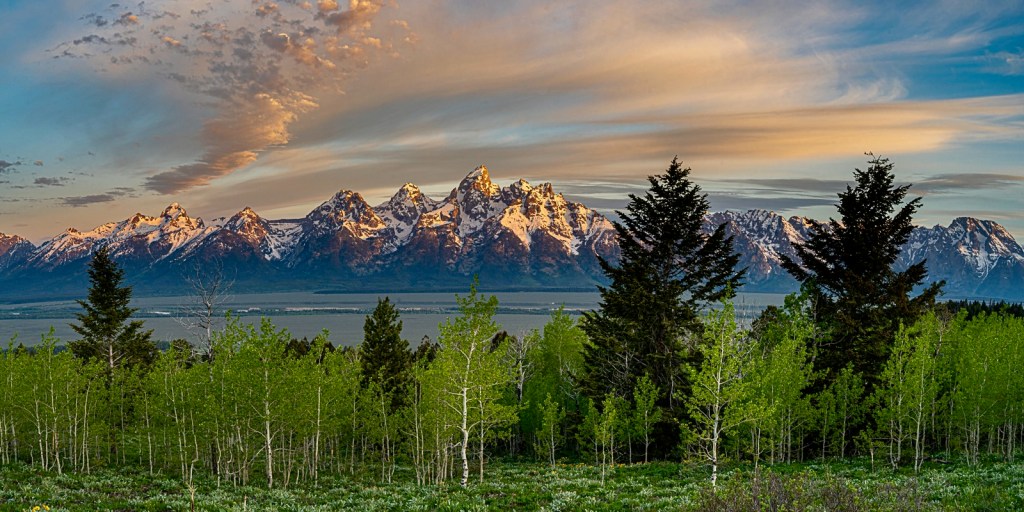
A view of public lands in Teton County, taken from north of Jackson, Wyoming, and looking west from Bridger-Teton National Forest land into Grand Teton National Park. Credit: Howie Garber

As threats to divest and develop public lands from the federal government are ramping up, public lands supporters are on edge. Now, a new plan to use federal land in the Greater Yellowstone Ecosystem to house private-sector workers is at the center of hot-button issues around extreme economic inequality, underfunded federal agencies and long-held land-use ethics.

Website for Mountain Journal
This story also appeared in Mountain Journal

A proposed housing project on public land in Jackson, Wyoming, is set to be the first of its kind in the nation. Run by a nonprofit developer, the project would build housing on the Bridger-Teton National Forest for U.S. Forest Service staff and for private-sector employees on federal land under a special-use permit. 

The use of administrative parcels to house Forest Service employees in the forest where they work is commonplace across the country. However, private-sector workers living on public land — and paying rent to a private entity — under a SUP sets a new national public land-use precedent. That fact has galvanized opposition from a number of residents and organizations, who believe it presents an undesirable blueprint for development and private benefit on public land. 

The Nelson Drive trailhead in east Jackson is set to be the site of a 36-unit affordable housing development. Some groups say the private employee benefit crosses the line of how public land is used. Credit: Pearl Spurlock / Jackson Hole News and Guide

The project consists of 7.5 acres of BTNF land located at the Nelson Trailhead on the east boundary of the town of Jackson. The nonprofit developer is the Jackson Hole Community Housing Trust, which will pay to construct and manage 13 rental units for Forest Service employees. In exchange, the Forest Service would allow an additional 23 rental units to be constructed and managed by the Housing Trust, and which would be made available to private sector workers in Teton County meeting income qualifications for affordable housing.

Since its unveiling in September of 2025, however, the scope and potential implications of the project have divided the local community between those who support affordable housing construction in any capacity, and those who believe the public land aspect of this project means it should be limited to federal workers only on federal land. In addition, local residents and conservation nonprofits have highlighted a lack of public transparency, knowledge, and public comment around an important precedent: public land as affordable housing for private sector workers under a SUP.

“The slippery slope of using federally protected wild land to expand the urban boundary of Jackson in order to subsidize housing that includes underpaid private sector employees is, frankly, terrifying for the future of Jackson Hole,” local resident Judd Grossman told the Town Council during public comment in a December meeting about town employees possibly living on the land. 

The project was created by BTNF Forest Supervisor Chad Hudson and Housing Trust Director Anne Cresswell to build some of the needed forest units, and then use the rest of the land to construct housing for other community employers and members. A red-hot, extremely expensive real estate market fueled by wealthy buyers and developers who scoop up existing homes and land to redevelop for the luxury market have made it nearly impossible for many local residents to buy or rent a home.

To help alleviate pressure on federal workers, the construction for the Forest Service homes would be paid for by the Housing Trust with $12 million in philanthropic dollars which have already been secured, according to the Housing Trust. Those 13 units were subject to a 2009 environmental assessment and approved in 2012 with a Finding of No Significant Impact, indicating the surrounding forest and wildlife habitat would not be negatively impacted. 

In order to accommodate the involvement and management by the Housing Trust and the additional units, Forest Supervisor Hudson issued a 30-year SUP to the Housing Trust, the first in the nation for a private housing development on public land. 

“The slippery slope of using federally protected wild land to expand the urban boundary of Jackson in order to subsidize housing that includes underpaid private sector employees is, frankly, terrifying for the future of Jackson Hole.”

Judd GrossmaN, Jackson resident

For the Jackson Hole Conservation Alliance, which supports the federal housing component, the private employee benefit crosses the line of how public land is used. “We caution against a project that puts private-sector employees, whose work benefits private employers, on public land,” said Catherine Hughes, conservation director for the Alliance. “We do not want to be the gateway community that opens the door to this kind of public-land use.”

The Housing Trust says it has raised more than $12 million in philanthropy and grants, which the nonprofit says is enough to pay for constructing the Forest Service units. According to the Bridger Teton’s Jackson District Ranger Todd Stiles, the forest needs more than 13 units for employee housing. Cresswell did not respond to a request for comment on her funding model or whether more philanthropic fundraising was possible so the BTNF could fill more of its own housing needs on its parcel.    

However, to fund the rest of the 23 units, the Housing Trust planned to ask the town of Jackson as well as Teton County, Wyoming, to each chip in $4 million ($8.1 million total) for public housing to help complete the project. That money would guarantee the right to rent six units each for public-sector town and county employees. Additional monthly rent will be paid to the Housing Trust. The right to rent equates to $675,000 per unit, or more than twice as much as some other affordable projects cost in Teton County. 

In early December, the Housing Supply Board, which provides guidance to both the town and county government on affordable housing, recommended against using public funds for the Nelson Drive project because of lack of long-term security on a 30-year permit, and the high cost of each unit. Cresswell told the board the project’s extra 23 units would go ahead as designed with or without public money for town and county employees. At the December 2025 Town Council meeting in Jackson, elected officials voted to fund the six units anyway. 

According to the Housing Trust, an unnamed nonprofit has donated money for six more of the units to house the unnamed nonprofit’s employees, and the remaining five units would be filled by the Housing Trust from the general applicant pool of local workers. Supporters of the project consider it a clever, win-win action among ever-increasing housing woes, in a way that allows the BTNF to keep 13 more of its employees in Jackson and includes other workers, some of whom currently commute from outlying towns like Victor, Idaho, which is 30 miles away, or Pinedale, Wyoming, at about 80 miles. 

A packed room listens as Anne Cresswell, the Housing Trust’s executive director, addresses the Jackson Town Council in December. Neighbors of the project are challenging the project’s size and the public process leading to this point. Credit: Kathryn Ziesig / Jackson Hole News and Guide

“This proposal is not luxury development on remote public lands, which we would oppose,” Clare Stumpf, executive director of the housing advocacy group, Shelter JH, said in a phone interview with Mountain Journal. “As we understand it, the Forest Service does not have the financial capacity to build housing. This project is a symbiotic arrangement: the Forest Service contributes land it already manages for administrative use, and the Community Housing Trust and the Town of Jackson (among other supporters) enable the creation of homes that would otherwise remain unfunded and unrealized.” 

Other residents are more lukewarm but see little alternative in the face of intense pressure and housing costs. “I don’t think it’s right to expand in that direction,” said Sara Kirkpatrick, a teacher at Jackson Elementary School in an interview. “But where shall we live? Where do we go? All the homes we used to rent and live in sit empty, remodeled and owned by some third or fourth homeowner, and it makes everything else so expensive,” added Kirkpatrick, who is currently searching with her husband for a larger home to accommodate their two growing children. “We should stop approving all these luxury condos and developments.”

Kirkpatrick’s husband, Chris, took a different stance. “Looks like ugly condos on forest service land,” he said, “but it’s housing, so I’m for it.” 

The Teton County Board of Commissioners had expressed more skepticism around the price tag and public-land issue than the Jackson Town Council (though neither entity has jurisdiction over how federal public land is used). On March 3, 2026, commissioners reviewed the plan and unanimously denied the funding request given the high price tag for rental rights on top of paying rent to the Housing Trust. “The price is way out of line, and I also oppose using USFS land to provide housing for the private sector,” said Commissioner Luther Propst. The best path forward to provide all the BTNF Propst suggested, would be to turn to community philanthropy to raise money to build out all the units the BTNF needs.

The project is now mired in litigation. A lawsuit filed in federal court in early January by local attorney and Nelson Drive neighbor Michael Clement challenges the permitting process. Clement alleges in a 56-page complaint that the project inclusion of 23 non-forest service units is not allowed in the scope of a special-use permit, the public was not given enough notice, and seeks to stop the project moving forward as currently designed with private sector homes. The Housing Trust had planned to tentatively break ground in spring of 2026, but that timeline is now uncertain, given the current litigation. 

This project is a symbiotic arrangement: the Forest Service contributes land it already manages for administrative use, and the Community Housing Trust and the Town of Jackson (among other supporters) enable the creation of homes that would otherwise remain unfunded and unrealized.”

Clare Stumpf, executive director, Shelter JH

Nelson Drive is not the first project to place private employees on federal public land, although it is the first to do so under a special-use permit. In Summit County, Colorado, a partnership between Summit County, the town of Dillon, and the White River National Forest to build 162 homes on 11 acres of administrative land formerly used to store equipment is in the works. That project was developed under a provision in the 2018 federal Farm Bill to allow leasing federal administrative sites to local governments for affordable housing. 

In return for a 50-year ground lease on the land, the county will construct a new administration building for the forest and Forest Service employee homes. Remaining units will be open to county residents who meet the affordable housing income requirement. Summit County will manage and run the project. 

“It is a public-public partnership, the development process was very public, with open houses, scoping, and NEPA process,” said Adrienne Saia Isaac, communications director for Summit County. Nonetheless, the “free land” aspect is not a silver bullet, nor is it an easy avenue, either, Isaac said. “We are trying diverse housing initiatives, but a big problem is wages have not kept up with cost of housing, and the USFS is vastly underfunded. In this project, we haven’t broken ground — we are still figuring out the financing.” 

In Teton County, where balancing a long history of conservation, an intact ecosystem and wildlife habitat preservation with the ever-growing demand for growth is an increasingly sore spot, the one point that has so riled up opposition is also the very same point that supporters of Nelson Drive find attractive.

Local resident Mandy Dornan summed up opposition succinctly when she addressed town councilors in December. “I don’t agree that local employers or nonprofits should be able to house their employees on federal land,” Dornan said. “I just think it’s a slippery slope.”

The parameters of that very concern, however, is the part the Housing Trust’s executive director Cresswell told the Jackson Hole News and Guide last September she is most proud of. “This really is the pinnacle of my 22-year career,” she said. “This project is about creating a new model that we hope will be a model for communities across the country that are struggling to house their essential forest employees.”  

The post ‘A slippery slope’: Quest to build affordable housing in national forest raises alarm appeared first on Montana Free Press.

Poll: Montanans deeply divided on federal immigration enforcement

Poll: Montanans deeply divided on federal immigration enforcement

This piece is part of MTFP’s 2026 poll week, where we’re exploring data on how Montana voters feel about their elected officials, environmental concerns, immigration enforcement and other issues.

One-hundred percent of Montana Democrats expressed disapproval of Republican President Donald Trump’s approach to immigration in a Montana Free Press-Eagleton poll conducted in late December and early January — while 94% of Montana Republicans expressed support. 

Regardless of political party, an overwhelming majority of Montana voters, 85%, expressed strong feelings one way or the other about the issue. About 49% of respondents overall said they strongly approved and another 37% strongly disapproved, leaving only about 15% without a strong stance on the issue. 

The poll was conducted before the fatal shootings of U.S. citizens Renee Good and Alex Pretti intensified protests over immigration enforcement actions in Minneapolis. It was also before the Jan. 25 arrest of business owner Roberto Orozco-Ramirez in the small eastern Montana town of Froid.

Republicans were substantially more likely to support Trump’s immigration policies than Democrats or independents. 

While 86% of Republicans “strongly approve” and another 8% “somewhat approve” of Trump’s approach to immigration, 0% of Democrats approved at all or had no opinion. Independents, meanwhile, were split at 51% “strongly disapprove” and 27% “strongly approve.”

About half of poll respondents also said they strongly supported collaboration between federal immigration authorities and Montana Highway Patrol. A similar number supported federal immigration authorities collaborating with both county sheriff’s offices and local police departments. 

Collaboration between U.S. Immigration and Customs Enforcement and local government has become a contested issue in Helena, which is under investigation by Montana Attorney General Austin Knudsen over whether the city commission’s resolution to restrict police from cooperating with ICE violates a 2021 bill that banned sanctuary cities

The MTFP-Eagleton poll surveyed 801 registered voters through telephone interviews and text-to-web questionnaires. Data was collected from Dec. 23, 2025 to Jan. 3, 2026. The poll, which was weighted to reflect the demographics of the state’s voters, has an overall margin of error of plus or minus 4.1 percentage points.

This piece is part of the Montana Insights project, which is commissioning rounds of polling to help MTFP readers understand public sentiment on key Montana policy issues. Further findings from the Dec. 2025-Jan. 2026 poll are available here.

The post Poll: Montanans deeply divided on federal immigration enforcement appeared first on Montana Free Press.

Lawsuit challenges feds’ authorization of Bull Mountains Mine expansion

Lawsuit challenges feds’ authorization of Bull Mountains Mine expansion

Environmental groups on Tuesday filed a challenge to an expansion of the Bull Mountains coal mine in central Montana, arguing that the federal government has used a “sham” energy emergency to cut the public out of the environmental review process required by federal law. 

The Center for Biological Diversity and Montana Environmental Information Center wrote in their lawsuit that the mine has “devastated” the Bull Mountains’ ranching community near Roundup by dewatering groundwater resources and forcing ranchers off their land. 

In their 42-page filing, the plaintiffs argue that the Interior Department’s Office of Surface Mining rushed its environmental review to facilitate Signal Peak Energy’s access to 24 million tons of Bureau of Land Management-owned coal. Landowners frustrated by the mine’s impacts to the region’s land, water, wildlife and air quality say federal law requires a more rigorous study of the expansion’s ecological, social and economic effects.

The plaintiffs are asking a federal district court in Billings to nix the expansion until the federal government produces an environmental review that complies with the National Environmental Policy Act and the Administrative Procedure Act.

Bull Mountain rancher and Northern Plains Resource Council member Steve Charter stands next to a large subsidence crack resulting from underground coal mining by Signal Peak Energy. Credit: Courtesy of Northern Plains Resource Council

Signal Peak has a longwall mining operation that requires a 10,000-pound machine to remove the Mammoth coal seam in miles-long panels. But the excavation of that subsurface material has created subsidence cracks in the earth, some of them several feet across, dozens of feet deep and hundreds of meters long.

“It was well known by both miners and regulators that a longwall mine would dewater the Bull Mountains, driving generational ranching families off their land to enrich three out-of-state corporations sending coal overseas,” Pat Thiele, a landowner in the Bull Mountains and member of the plaintiff organizations, wrote in a press release about the lawsuit. “Nobody with any authority cares.”

Signal Peak, which has operated the Bull Mountains Mine since 2008, did not respond to Montana Free Press’ request for comment on the litigation.

The expedited expansion is the product of an executive order President Donald Trump issued the first day of his second term that declared a “national energy emergency” and directed federal agencies to “identify and exercise any lawful emergency authorities” to facilitate the development of fossil fuels, uranium, critical minerals and geothermal heat. The order also asserts that selling energy resources to international allies helps the U.S. “compete with hostile foreign powers,” which will in turn “support international peace and security.”

A reconfiguration of the National Environmental Policy Act followed, including an Interior Department directive that agencies such as the Office of Surface Mining and the Bureau of Land Management turn around permitting decisions, which often take years, in just 28 days if requested by an applicant.

Federal regulators authorized the expansion of the Bull Mountains Mine under that new regulatory framework. On May 6, Signal Peak requested the expedited environmental review. Within a month, the Interior Department had released a final environmental impact statement and issued a record of decision authorizing the 247-acre expansion.

The vast majority of the coal extracted from the Bull Mountains Mine is bound for overseas markets including Japan and South Korea, according to the lawsuit. Plaintiffs argue that this fact, considered alongside the rise in domestic fossil fuel extraction and the Trump administration’s aversion to renewable energy resources such as wind and solar, throws the legitimacy of Trump’s energy emergency into question.

The plaintiffs also claim Signal Peak has a disconcerting record of flaunting federal environmental and worker-safety laws and that several of its former executives engaged in crimes ranging from cocaine trafficking and bribery to firearms violations. As such, the company should not be eligible for a fast-tracked review, they say.

“The Trump administration rubber-stamped an expansion for a mine with an alarming history,” Earthjustice attorney Shiloh Hernandez, who is representing the plaintiffs in the litigation, wrote in the release. “The sham energy emergency that this approval was based on does not exist, and even if it did, shipping coal overseas wouldn’t help to address it. The agency has again failed to faithfully follow the science, so we’ll see them in court.”

NEPA, the act passed by Congress in 1970 and signed into law by President Richard Nixon, requires federal agencies to take a “hard look” at environmental impacts associated with large federal land projects and use the “best available science” in its analysis. NEPA reviews often include information on endangered species habitat, anticipated shifts to water quantity and quality, an estimation of a project’s employment footprint, and a catalogue of potentially affected cultural and historical sites.

Signal Peak, which employs about 250 people, has pursued multiple avenues to facilitate its access to additional coal. Multiple lawsuits going back over a decade have thwarted those efforts. In 2023, a federal judge in Missoula blocked a 7,100-acre expansion on the grounds that the government had conducted an inadequate review of climate and water impacts. The mine responded by turning to state-owned coal within its footprint. 

Congress has also come to Signal Peak’s aid: Last May the Senate Energy and Natural Resources Committee tucked an 800-acre expansion of the mine the company had requested in 2020 into President Trump’s megabill, which also lowered coal royalty rates from 12.5% to 7%, reducing the revenue that federally owned coal generates for the nation’s coffers. 

The post Lawsuit challenges feds’ authorization of Bull Mountains Mine expansion appeared first on Montana Free Press.

Montana voters overwhelmingly view cost as a major mental health care hurdle

Montana voters overwhelmingly view cost as a major mental health care hurdle

A majority of Montana voters said they see cost and insurance as significant barriers to accessing mental health care — a larger share than those who named physical distance as a major hurdle.

According to a new Montana Free Press-Eagleton Poll, conducted in late 2025 and early 2026, 67% of respondents cited “cost of services” as a major problem when it comes to accessing care. A smaller share, 42%, cited the stigma associated with receiving care as a major problem, while 47% said the same about the travel distance necessary to access services.

Mental health and addiction crises are not uncommon in Montana, with experts describing their causes as complex, entangled and difficult to solve. The state had the second-highest suicide rate in the country in 2023, according to the Centers for Disease Control and Prevention.

Additionally, residents who live in rural areas must often travel hours to reach health care services, and some behavioral health services aren’t available within Montana’s borders at all. Given the state’s strong bootstraps mentality, many mental health care advocates also commonly say stigma deters Montanans from speaking up about mental illness.

That perception breaks down differently between genders. According to the poll results, 35% of men said they saw stigma as a major challenge for mental health access, while that percentage was substantially higher, 50%, for women.

Poll respondents overall, though, named cost and insurance as major problems in greater numbers.

In another part of the poll, 43% of respondents said they had health insurance coverage through their employer or their spouse’s employer, while 29% said they were insured through Medicare. Just six percent of respondents said they were covered through Medicaid, the health insurance plan for low-income adults. 

According to a 2021 state-level overview by KFF, a national health policy research firm, Montanans with mental health issues insured through large employer health plans had higher average health spending compared to enrollees without those diagnoses, paying roughly $8,800 annually compared to $3,800. 

Brenda Kneeland, the CEO of the Eastern Montana Community Mental Health Center in Miles City, said she’s not surprised that cost and insurance coverage are perceived as major barriers for Montanans seeking mental health care. She said her organization often helps patients navigate insurance gaps, especially if they’ve been disenrolled from Medicaid coverage because of paperwork or documentation errors. People with employer-based insurance, she added, are also not immune from cost struggles.

“Just because they have health insurance through an employer, that doesn’t always mean that there are strong behavioral health benefits tied to the plan,” Kneeland said.

Matt Kuntz, the director of NAMI Montana, a mental health advocacy coalition, said he thinks stigma has been gradually decreasing around mental health issues over the past decade. Kuntz linked some of that change in sentiment to the fact that many military veterans of the Iraq and Afghanistan wars, as well as their friends and family members, have become well-acquainted with the need for accessible mental health care treatment.

“We’ve been having a lot more conversations about mental health in the last decade or two. And I think it’s a more positive conversation,” Kuntz said. 

In recent years, high-profile public officials in Montana have launched projects aimed at destigmatizing mental health and addiction treatment, and advocated for policy fixes to make that type of health care more accessible. 

Since taking office in 2021, Gov. Greg Gianforte, a Republican, has rolled out a series of initiatives aimed at improving access to treatment for mental health issues and substance use disorder. One of those efforts, a roughly $300 million funding scheme dubbed the Behavioral Health System for Future Generations, held a statewide listening tour about filling treatment gaps for mental health and addiction. Another, the Angel Initiative, works with local law enforcement departments to help route people to addiction treatment services. 

At an October meeting between Gianforte and local law enforcement officials, Sweet Grass County Sheriff Alan Ronneberg described mental health as an issue at the root of many people’s struggles, including those with substance use disorder.

“When we’re talking about mental health, not everybody with mental health problems has an addiction problem, but everybody with an addiction problem has a mental health problem,” Ronneberg said. “We need to recognize that.”

The MTFP-Eagleton poll surveyed 801 registered voters through telephone interviews and text-to-web questionnaires. Data was collected from Dec. 23, 2025 to Jan. 3, 2026. The poll, which was weighted to reflect the demographics of the state’s voters, has an overall margin of error of plus or minus 4.1 percentage points.

This piece is part of the Montana Insights project, which commissioned a poll to help MTFP readers understand public sentiment on key Montana policy issues. 

The post Montana voters overwhelmingly view cost as a major mental health care hurdle appeared first on Montana Free Press.

Poll week: How Montanans feel about sales tax, immigration and state officials

Poll week: How Montanans feel about sales tax, immigration and state officials

It’s poll week here at Montana Free Press.

We’re publishing results from an MTFP-Eagleton poll we’ve conducted in late December and early January as part of our ongoing Montana Insights project, examining Montana voters’ opinions on everything from a statewide sales tax (not popular) to the geographic of eastern Montana (mixed takes) and the president’s immigration agenda (quite controversial). 

We’ll be rolling out those and other poll results over several days in the form of stories on our website, montanafreepress.org — and rounding up some of the most interesting takeaways with updates to this post between March 2 and March 6, 2026.

Here’s what we’ve got:

Nearly half of respondents, 48% indicated that they “strongly” oppose a statewide sales tax even if the revenue is used to reduce property tax bills. That sentiment was firmly bipartisan, with only 34% of Republicans, 38% of Democrats and 32% of independents voicing support for a sales tax.

Montana voters named cost as a major perceived barrier to mental health care access. Fewer respondents rated physical distance and stigma as a significant hurdle.

A question on how to divide Montana’s eastern region from its western one didn’t produce a clear consensus. The top selections for a dividing line were quite literally hundreds of miles apart — Billings and the Continental Divide.

The post Poll week: How Montanans feel about sales tax, immigration and state officials appeared first on Montana Free Press.

The first-in-the-nation TikTok ban that wasn’t

The first-in-the-nation TikTik ban that wasn’t

A Montana judge has mooted the state’s would-be TikTok ban before it could block a single viral video.  

U.S. District Court Judge Donald Molloy on Feb. 20 concluded the case over the legality of the Montana Legislature’s TikTok ban, which had been paused since Molloy temporarily blocked its implementation in 2023. 

Several Montana users of the popular social media platform, along with TikTok’s Chinese owner, ByteDance, filed lawsuits days after the ban law was signed. That civil litigation was later combined into a single case against the state, defended by Attorney General Austin Knudsen. The challenge alleged the law violated the First Amendment and overstepped the authority of state government by wading into national security issues. 

Molloy dismissed the case on the basis of a clause in the law, which Gov. Greg Gianforte signed in May 2023, that voided the ban if ByteDance sold a majority share of TikTok to a non-Chinese company. That change of ownership occurred in January

The 2023 Legislature’s TikTok ban grew out of concerns about Chinese access to Americans’ data. It was the first statewide attempt to ban TikTok in the United States. 

In a statement on Feb. 20, Knudsen lauded the transfer of ownership that led to the case’s dismissal.

“President Trump, with his years of business and negotiation experience, worked diligently and succeeded in finding the right American company to purchase TikTok and make sure that Montanans and Americans will no longer be spied on by a foreign adversary,” Knudsen wrote. “Today’s dismissal ends years of litigation, brought on by TikTok, and will stop wasting taxpayers’ money.”

The state Department of Justice did not respond to a Montana Free Press request for an interview for this story.

Knudsen’s office signaled its support for the Montana law banning TikTok when it was first heard in the Legislature in February 2023. Department of Justice Crime Information Bureau Chief Anne Dormandy testified in support of the bill at its initial hearing. 

“There are grave concerns with the popular app related to national security and China’s influence through TikTok,” Dormandy said. 

The bill passed out of the Legislature with mostly Republican support. Gianforte expressed concerns that the bill’s language might subject it to a legal challenge, but ultimately signed it in spring 2023. The law immediately drew multiple court challenges. Before the ban could take effect as scheduled in January 2024, Molloy blocked it in November 2023. 

That year marked an uptick in the federal government’s scrutiny of TikTok over national security concerns. The Biden administration mandated that agency employees delete the app from government-issued mobile devices in February. And in March, members of Congress peppered TikTok CEO Zi Chew with questions about data privacy during a marathon hearing.  

While Montana’s ban languished in court, Biden signed a law in 2024 banning the social media app unless ByteDance sold it within the following 270 days. That law survived a slew of legal challenges, and TikTok ultimately blocked American users for a few hours on Jan. 18, 2025, a day before the federal law required it to. On Jan. 19, Trump assured the company he would issue an executive order that would extend ByteDance’s window to sell. He did.

In 2025, Trump extended the sale window on four separate occasions, allowing TikTok to continue to operate in the U.S. The company finalized a deal on Jan. 23, 2026. 

ByteDance retains 19.9% ownership of TikTok. Other investors with substantial shares include technology conglomerate Oracle, private equity firm Silver Lake, and United Arab Emirates-owned investment company MGX. 

That deal made Montana’s 2023 state law moot based on a clause in the state legislation voiding the ban if majority ownership was transferred away from a federally designated “foreign adversary.”

But some legal experts are casting doubt about whether that transfer actually mitigates concerns of Chinese access to Americans’ data.

Timothy Edgar, a cybersecurity expert at Brown University and Harvard Law School, filed an amicus brief in 2024 that argued against forcing ByteDance to divest from TikTok on constitutional grounds. 

Edgar said data privacy concerns had been better addressed at the end of Trump’s first term and early in the presidency of Joe Biden, when pressure from the executive branch forced TikTok to negotiate terms with the Committee on Foreign Investment in the United States. 

“I felt that those restrictions were really quite significant, and no other social media company in the world has ever done anything like that,” Edgar said. Edgar said the forced sale that made Montana’s ban moot could give users a false sense of security. 

“I actually worry that there’s going to be less oversight of TikTok’s data, less pressure to uphold some of the requirements in that data safeguarding agreement that they had,” Edgar said. “And so, in a way, we’re in a worse position now than we were when TikTok was owned by ByteDance.”

Edgar emphasized that potential security risks remain, despite the company diluting its Chinese ownership.

“They focused on the wrong thing,” Edgar said about the supporters of the forced sale. “They focused on who owns the company instead of on what are the real risks? How would a country like China get ahold of data? And what are we going to do to protect our personal data against China? And, you know, TikTok is certainly one potential vulnerability, but there are so many others.”

The post The first-in-the-nation TikTik ban that wasn’t appeared first on Montana Free Press.

Employees, locals ‘blindsided’ by looming closure of historic Izaak Walton Inn

Employees, locals ‘blindsided’ by looming closure of historic Izaak Walton Inn

ESSEX — Over the winter, those in the tiny mountain hamlet of Essex, on the southern edge of Glacier National Park, said something felt amiss around LOGE Glacier, the beloved old railroad lodge better known as the Izaak Walton Inn. Perhaps it was the lackluster snow covering the cross-country trails or the recent departure of a popular employee at the inn, they thought. Even when the trail-grooming machine the inn had been leasing this winter was suddenly repossessed a few weeks ago, locals hoped that maybe someone had made a mistake and missed a payment. 

Regardless of what they thought, no one expected that the inn was just weeks away from shutting down as a result of “significant” financial challenges for its Washington-based parent company, which had purchased and remodeled the inn just a few years ago

Now locals in Essex are wondering what their community will do without its beloved gathering spot, and employees are wondering where they will go once their jobs are eliminated and employee housing is shuttered. 

“We were all blindsided,” said Fantasia Knight, a housekeeper at the inn since LOGE reopened it in 2024. “A lot of us moved our entire lives up here, and some of us have nowhere else to go.”

While there are a number of historic lodges in and around Glacier National Park, few are as connected to their communities as the Izaak Walton Inn. While there are more than 30 rooms in the lodge itself, plus a number of rail cars-turned-cabins scattered across the grounds, on a Friday or Saturday night, you were just as likely to run into a local bellied up to the basement bar as you were a tourist. 

While Essex has built a reputation in recent years as a haven for outdoor recreation, it began as a railroad town. Shortly after the Great Northern Railway built its main line over nearby Marias Pass, Essex became a “helper station,” where extra locomotives were added to trains for the climb over the mountain. It was also where plows were stationed to keep the tracks clear in winter. Every winter, the Great Northern would have about 200 railroaders based in Essex. But in 1935, the “beanery” that fed and housed those workers burned down. For a few years, the railroad had its employees stay in old boxcars, but the accommodations were far from attractive, and managers had difficulty finding people willing to work out of Essex during the winter.

In 1939, the railroad made a deal with the Addison Miller Company to construct a hotel and lunch room next to the tracks in Essex. The Izaak Walton Inn opened later that year. While the inn’s primary purpose was to serve railroaders, the evocative name honoring a popular 17th-century outdoorsman and the Tudor Revival style were meant to attract tourists as well. Located about halfway between West Glacier and East Glacier Park, the Izaak Walton earned the nickname “the inn between” and was known as a quiet oasis away from the park’s busier east and west sides.

In 1957, the Addison Miller Company sold it, and the inn passed through several private owners. One of the most consequential was the Veilleux family, which owned it from the early 1980s until 2006. During their tenure, the family helped develop a system of cross-country ski trails and leveraged the inn’s railroad connection by buying old cabooses and converting them into cabins. The family even sought permission from the railroads to paint the cabooses into the appropriate colors, logos and all, representing the companies that operated in Montana. Over the years, the inn became popular with outdoor and railroad enthusiasts alike. In 2006, the inn was sold to Brian Kelly, who helped the business grow by acquiring a nearby motel and a cafe within Glacier Park. In 2022, Kelly put the inn and surrounding property up for sale, and nine months later, it sold to LOGE Camps for $13.5 million. 

While the inn had been renamed, the Izaak Walton Hotel sign survived on the exterior. The name was also used for the inn’s restaurant.
Credit: Justin Franz / MTFP

LOGE Camps (pronounced “Lodge” and standing for “Live Outside, Go Explore”) was founded in 2016 with the mission to find “forgotten motels near our favorite towns and trails, and bring them back to life.” Suggesting that the Izaak Walton was “forgotten” irked some locals and long-time visitors, and eyebrows raised even further in 2023, when the hospitality company announced they were shutting the inn down for a major renovation. As part of that, the company held an auction in which it sold hundreds of pieces of memorabilia from the walls, along with furniture and just about anything else that wasn’t nailed down. After the auction, the inn closed, and over the next year, LOGE undertook a major renovation, including upgrades to the water and heating systems, new wiring and a brand-new kitchen. Some of those upgrades, management later admitted, were not part of the initial plan but were required (most notably the outdated electrical system). 

But with the inn, along with its restaurant and bar, closed, many locals found themselves without a centralized gathering spot, said Brian and Lisa McKoen, whose family has owned a cabin near the inn for decades. 

“Without the inn, it’s just a remote neighborhood,” Brian McKoen told Montana Free Press this week. “With the inn, it’s a community.” 

“The energy was completely different when the inn was closed,” Lisa McKoen added. “It was kind of sad and lonely to go up there. There was a desolate energy about the place.” 

That lonely era came to an end when the inn reopened under a new name, LOGE Glacier, in the fall of 2024. Inside, guests and locals found refreshed rooms with new furniture and modern amenities. Some of the railroad memorabilia from the inn’s previous iteration had also been squirreled away before the auction and made an appearance inside the hallways and downstairs bar. 

“Without the inn, it’s just a remote neighborhood. With the inn, it’s a community.”

Brian McKoen, part-time Essex resident 

“We knew we had something special here,” general manager Lucas Hillman told the Flathead Beacon in late 2024. “You don’t buy a place like this and then change everything.”

Locals said that Hillman and the rest of the LOGE staff made a concerted effort to be good neighbors and invite the locals to the inn by hosting trivia nights and other community events. While some changes irritated locals — like painting the old cabooses a generic blue, no longer picking up guests from the Amtrak station in Essex and a limited menu in the restaurant — they generally gave the local management positive marks, said longtime resident Larry Epstein.

“When it reopened, it quickly became our community center again,” he said. 

Meanwhile, LOGE was rapidly expanding across the region, opening locations in Washington, California and Colorado. It also opened a hotel in Missoula, and said it saw additional opportunities in Montana

On January 4, 2026, Amtrak’s Empire Builder passenger train is seen passing the lodge.
Credit: Justin Franz / MTFP

But the company was struggling financially. According to a report from the Flathead Beacon, which broke the news late last week that LOGE Glacier was closing, the company’s board of directors discovered in late 2025 that the company was in “significant distress” and lacked the money to continue operating. According to emails reviewed by the Beacon, LOGE CEO Cale Genenbacher had told the board that the company had refinanced one of its properties. But in reality, LOGE had repurchased it after the lender foreclosed on the property, according to the Beacon. Genenbacher resigned in November, and last month the company retained a chief restructuring officer and insolvency counsel, who typically guide a company through restructuring or bankruptcy. 

In January, LOGE’s board of directors decided to begin winding down operations. 

“The board did not make this decision lightly, but this was required due to a lack of cash flow at the property level and the inability to continue paying required operating costs,” the board wrote in an email, according to the Beacon. “The company is doing everything in its power to look for ways to continue maximizing value in these properties, but cannot risk additional liability that would come from missing payroll obligations or other obligations to critical vendors.”

LOGE did not respond to a request for comment from MTFP.

Last week, word spread that LOGE properties across the region were closing, including the hotel and cafe in Missoula. Knight, the housekeeper, said she and the rest of the staff were informed last Friday that they were losing their jobs. 

“We were shocked,” she said. 

While some LOGE properties have already closed, the Izaak Walton is expected to remain open until March 1. Knight said she suspected the facility in Essex is staying open longer because it has two weddings scheduled for the end of this month. While LOGE has informed the 17 full-time employees that they will be out of work at the end of this month, Knight said it has provided little additional information.

“We have been getting a lot of phone calls, but we don’t have a lot of answers,” she said.

Knight said that she and the rest of the staff are committed to one another and to finishing the job they were hired to do. But they’re also trying to figure out what’s next. Most full-time staff live in employee housing, which will also be closed, so most people will not be able to stay in Essex. Knight said she was unsure where she would go. Some were unsure how they would leave town, as not everyone owns a car. Others were dealing with the logistics of moving with the pets they had brought with them to Essex. Knight has organized a GoFundMe to raise money that will be split among the employees to help with moving expenses. As of Wednesday night, it had raised about $1,300. 

Local residents told MTFP that they were concerned about the staff, many of whom had become friends over the years. But they were also wondering what would happen to the community of Essex now that the inn at its heart is once again about to be closed, this time, with no firm plans about its future. Thane Johnson, an attorney who splits his time between Helena and Essex, said the inn is in great shape and would be an attractive business for a new owner. Although if LOGE declares bankruptcy, Johnson said it could be months before the legal issues are resolved and the inn is reopened. Others expressed concern about the impact of an extended closure on a historic building in a rugged environment. 

“It would be devastating if no one bought it,” Johnson said. “Our community would survive — we’re close-knit — but there would be a hole in that community.”

In-depth, independent reporting on the stories impacting your community from reporters who know your town.

The post Employees, locals ‘blindsided’ by looming closure of historic Izaak Walton Inn appeared first on Montana Free Press.