
Behavioral teletherapy for students in rural Maine brings ‘hope to the hallways’
Students and staff in rural Maine are using teletherapy to help access much-needed behavioral health services.
Baileyville, Maine (pop. 1,318), was experiencing a youth mental health crisis in their community and a severe shortage of mental health providers.
The problem reached a precipice in 2021 and 2022, said Kate Perkins, deputy director for U.S. program development at MCD Global Health. Of the more than 4,500 fully or conditionally registered clinical social workers in Maine, fewer than 4,000 live in the state, and fewer than 50 in Washington County.
“One of the things that we were seeing is the result of Covid,” Patricia Metta, superintendent of AOS 90 school district, which includes the Woodland Elementary and Woodland Junior-Senior High School, told the Daily Yonder. “We saw kids not returning back to school, many of them had gotten so used to being in their homes for at least a year, that their social issues, they couldn’t handle being social. They didn’t know how to deal with social issues.”
There were also several suicides, both within the school system and the community at large, she said.
[irp posts=”18516″]
The country as a whole is grappling with a lack of physicians, but it is more acute in rural areas. A 2021 Association of American Medical Colleges (AAMC) study found that the U.S. could see a shortage of between 37,800 and 124,000 physicians by 2034.
To combat the negative health effects, a collaborative effort coordinated by MCD Global Health now gives students and staff at Woodland Elementary and Woodland Junior-Senior High School in Baileyville, and across the county’s AOS 90 school district, access to virtual behavioral health services and other needed resources.
A $500,000 matching grant from Point32Health Foundation helped the community get started on the initiative. Additional funding helped the program reach a total of $1.5 million in resources.
Since the program began, 30 students have been matched with behavioral health providers in person and virtually. The program is on track to serve a total of 80 students by July 31, 2023. The school district has 380 students across four schools.
“We do see kids reaching out for help. They’re asking to see their provider. They’re asking for their teletherapy sessions,” Metta said. “We see them talking to people. And we do believe that eventually that will lessen their anxiety. And we are seeing kids come to school more. Attendance has really improved.”
[irp posts=”22491″]
The program started through a community assessment in August 2021 that found access to behavioral health resources as an urgent need, Metta said. Initially, officials put teletherapy equipment in both schools and weren’t sure what the result would be, she added.
“We thought, there’s a couple of kids that will take advantage of it,” she said. “Well, since then, we’ve lost our full-time provider. And every day we’re picking up more and more kids on teletherapy…And if they can’t relate well with the in-house provider, then they have the option of teletherapy as well. So it’s a win-win for everybody.”
Jessica Melhiser, children’s program manager at Aroostook Mental Health Services Inc. and care navigator for the program, said in a statement that the program has transformed health and well-being for students and families in the communities.
“Students are getting the support they need and sharing the benefits with their classmates, their families, and others who need help. It brings hope to the hallways,” she said.
[irp posts=”23008″]
Perkins said they haven’t solved all the problems, nor are they trying to.
“What we have done is rebuild confidence and re-ignite belief that it can get better,” she said. “The early work was really slow. It took a long time to build trust. It took the local leaders seeing us deliver, in terms of getting matching funds or equipment, for them to believe us when we said that this or that was viable and could get funded.”
Metta said the program had initiated other positive movements, like creating a food pantry and a garden for students.
“I think as a result of the teletherapy program, and the community, the rural community getting involved, that’s what it took, in order for this to be successful.”
This story was originally published in the Daily Yonder. For more rural reporting and small-town stories from across the U.S. visit dailyyonder.com.
The post Behavioral teletherapy for students in rural Maine brings ‘hope to the hallways’ appeared first on The Maine Monitor.
Behavioral Teletherapy for Students in Rural Maine Brings ‘Hope to the Hallways’

Students and staff in rural Maine are using teletherapy to help access much-needed behavioral health services.
Baileyville, Maine (pop. 1,318), was experiencing a youth mental health crisis in their community and a severe shortage of mental health providers. The problem reached a precipice in 2021 and 2022, said Kate Perkins, deputy director for U.S. program development at MCD Global Health. Of the more than 4,500 fully or conditionally registered clinical social workers in Maine, fewer than 4,000 live in the state, and fewer than 50 in Washington County, the easternmost county in Maine where Baileyville is located.
“One of the things that we were seeing is the result of Covid,” Patricia Metta, superintendent of AOS 90 school district, which includes the Woodland Elementary and Woodland Junior-Senior High School, told the Daily Yonder. “We saw kids not returning back to school, many of them had gotten so used to being in their homes for at least a year, that their social issues, they couldn’t handle being social. They didn’t know how to deal with social issues.”
There were also several suicides, both within the school system and the community at large, she said.
The country as a whole is grappling with a lack of physicians, but it is more acute in rural areas. A 2021 Association of American Medical Colleges (AAMC) study found that the U.S. could see a shortage of between 37,800 and 124,000 physicians by 2034.
To combat the negative health effects, a collaborative effort coordinated by MCD Global Health now gives students and staff at Woodland Elementary and Woodland Junior-Senior High School in Baileyville, and across the county’s AOS 90 school district, access to virtual behavioral health services and other needed resources. A $500,000 matching grant from Point32Health Foundation helped the community get started on the initiative. Additional funding helped the program reach a total of $1.5 million in resources.
Since the program began, 30 students have been matched with behavioral health providers in person and virtually. The program is on track to serve a total of 80 students by July 31, 2023. The school district has 380 students across four schools.
“We do see kids reaching out for help. They’re asking to see their provider. They’re asking for their teletherapy sessions,” Metta said. “We see them talking to people. And we do believe that eventually that will lessen their anxiety. And we are seeing kids come to school more. Attendance has really improved.”
The program started through a community assessment in August 2021 that found access to behavioral health resources as an urgent need, Metta said. Initially, officials put teletherapy equipment in both schools and weren’t sure what the result would be, she added.
“We thought, there’s a couple of kids that will take advantage of it,” she said. “Well, since then, we’ve lost our full-time provider. And every day we’re picking up more and more kids on teletherapy…And if they can’t relate well with the in-house provider, then they have the option of teletherapy as well. So it’s a win-win for everybody.”
Jessica Melhiser, children’s program manager at Aroostook Mental Health Services Inc. and care navigator for the program, said in a statement that the program has transformed health and well-being for students and families in the communities.
“Students are getting the support they need and sharing the benefits with their classmates, their families, and others who need help. It brings hope to the hallways,” she said.
Perkins said they haven’t solved all the problems, nor are they trying to.
“What we have done is rebuild confidence and re-ignite belief that it can get better,” she said. “The early work was really slow. It took a long time to build trust. It took the local leaders seeing us deliver, in terms of getting matching funds or equipment, for them to believe us when we said that this or that was viable and could get funded.”
Metta said the program had initiated other positive movements, like creating a food pantry and a garden for students.
“I think as a result of the teletherapy program, and the community, the rural community getting involved, that’s what it took, in order for this to be successful.”
The post Behavioral Teletherapy for Students in Rural Maine Brings ‘Hope to the Hallways’ appeared first on The Daily Yonder.
A landscape dotted with pastures, grazing sheep … and self-storage facilities
Meandering country roads skirt a half-dozen pristine lakes and waterways along Moosehorn National Wildlife Refuge in the Washington County town of Charlotte, home to 334 year-round residents. All along the way, lush woodlots, furrowed fields and blueberry barrens, bursting in orange and raspberry sherbet-colored blossoms, tell the rich story of this 200-year-old agricultural community.
But the bucolic journey comes to a jarring halt across the road from the town’s old grange and white-steepled church. In a former pasture, atop a sprawling gravel pad, is a row of new, steel self-storage buildings, sporting 76 bright-blue garage doors.
“Used to be a time, you could stand in the pulpit talking about Jesus being a good shepherd and look out the window to see sheep grazing right there,” said Ernest James, a town selectman for 40 years – and from time to time the assessor, road commissioner and cemetery caretaker.
But changing lifestyles are driving the demand for self–storage facilities, with more than 50,000 scattered across the country, according to Forbes. At last count, and climbing, Maine had 211 facilities, reports SelfStorage.com, an online self-storage comparison and reservation site. Garages, attics and basements are overflowing, and the self-storage industry is reaping the benefits.
There are about a dozen self-storage facilities scattered throughout Washington County from Princeton in the northwest to Steuben near the Hancock County line. There are at least a couple of new ones planned, including one in Machias, as well as expansions at existing facilities. But some town officials say those numbers might be low because many facilities have no vacancies, therefore no longer advertise.
Stephen and Paula Farrar are Calais business owners who said they researched the industry for a few years before building their units in 2022. The couple, who live a stone’s throw from their 76-unit facility in Charlotte, run the business with their son Jamie and his wife Lea.
Since the facilities require little maintenance other than snow plowing, investing in a self-storage business — north of $400,000 at current construction prices, according to Farrar’s estimates — made good business sense to him.
“We’re getting a bit older and we’re getting ready to retire, so it seemed like something that would be easier than most kinds of rentals to manage,” Stephen Farrar said.
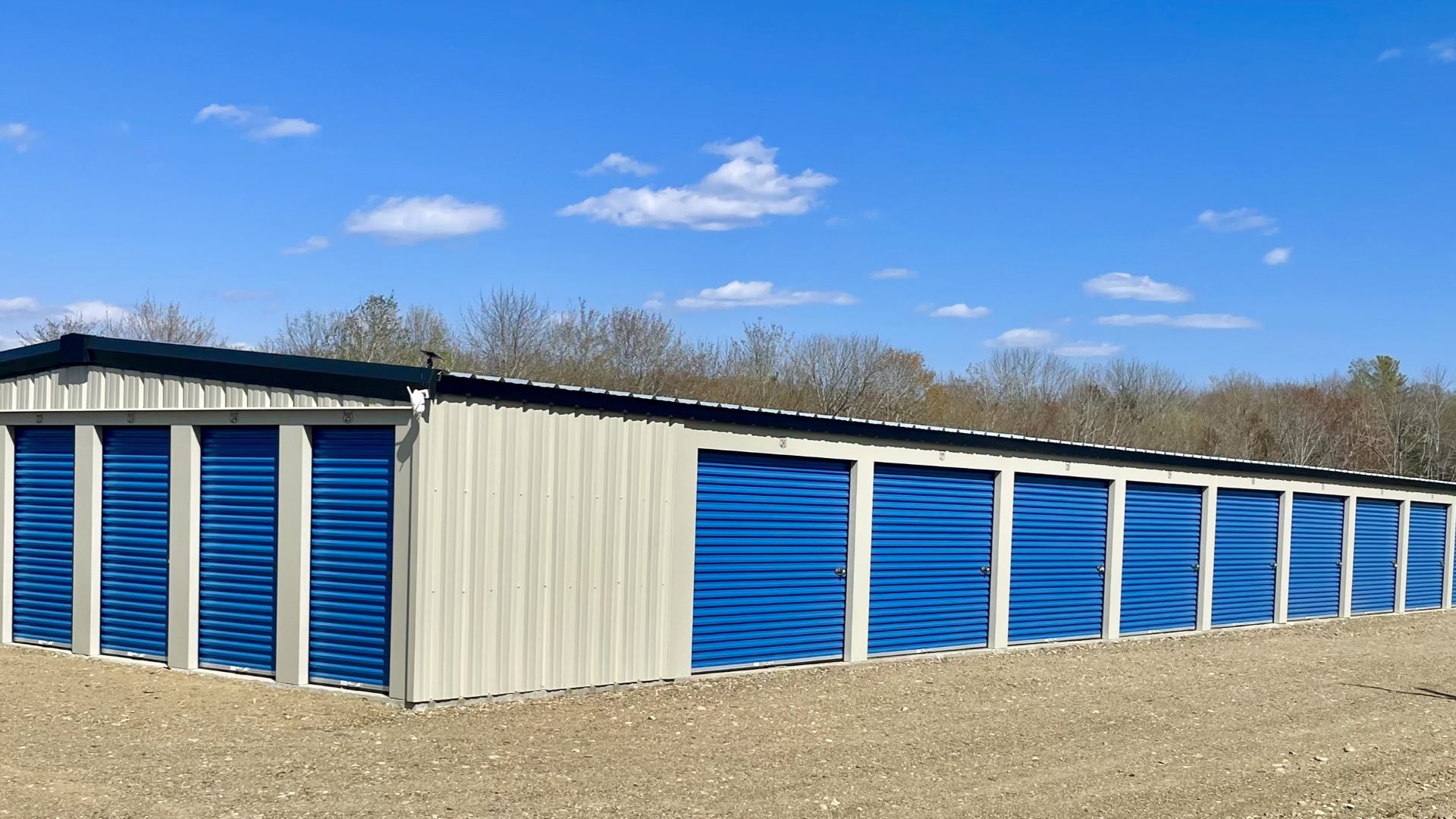
The family outsources much of that management, including rental reservations and payments, to a company that does all of it for them online.
Companies such as Easy Storage Solutions provide packages that include management software, call answering, online marketing, search engine optimization and tenant insurance plans. There are online companies that do the research, then offer from-the-ground-up packages, including building schematics, customizable business plans, financial spreadsheets, and “how-to” guides.
According to Mordor Intelligence Research, as reported in Forbes, the self-storage market reached $87.65 billion in 2019 and continues to grow. Although the owners interviewed for this story declined to say how much they earn, MRA reports that in Maine the income for the units, which vary in size, range on average from $90 to $163 per unit, per month.
The facilities also are proving to be a good deal for municipalities, according to several officials, including James, the Charlotte selectman. James, a farmer with over 600 acres not far from the self-storage facility, laments the changing landscape, but as a selectman said he sees the benefit of a self-storage business, especially in a small town like Charlotte.
Built less than a year ago, the facility has not been assessed so James couldn’t say how much it will add to the town’s coffers. But similar facilities bring in fairly substantial tax revenues for Washington County towns.
Thirty-three miles away, the town of Lubec has been collecting just under $4,000 a year in taxes from Lubec Safe Space Storage, built about two decades ago, according to treasurer and tax collector Suzette Francis. The facility on Route 189, owned by Christopher and Rachel Goodwin of Pembroke, sits next to the Eastland Motel, with a fence and row of apple trees in between.
Heather Henry Tenan, the motel co-owner with her husband, said the facility has been an excellent neighbor.
“If anything, it has given our business a little boost,” Henry Tenan said. “Oftentimes, (people) that lease a storage unit stay with us at the motel while they work on unit contents.”
She added that she and her husband even rented a unit themselves when they had a motel storage emergency. Although the motel pays more in taxes than the storage facility, around $7,000 a year after lot size and assessed value are considered, Francis said the tax revenue from the two businesses is comparable.
Tax assessor Jacqueline Robbins, who calculates property values for Lubec and several other towns in the county, said the facilities are a steady source of tax revenue.
“They certainly don’t require much,” said Robbins. “They don’t require anything in the way of education or even police, and that kind of thing. They just kind of sit there and give us some tax dollars.”
East Machias Self-Storage on Route 1, among the oldest self-storage businesses in the county, has brought East Machias thousands of dollars in taxes each year, just over $5,000 this year, according to the town clerk’s office.
Another facility, built last year by former BBS Lobster Company owner Blair West of Machiasport, is also on Route 1 in East Machias. West paid roughly $2,600 in the latest tax bill, based on an assessment of the property and the original 100 units.
West, who does much of the construction and all of the management himself, is grading land for an additional 45-unit building. As soon as that goes up, West said he’ll get working on another building in the back, for a total of 200 units.
“It’s been amazing. I’ve saturated the market for the larger units, but I do have a waiting list for smaller sizes. That’s why I’m putting in this building,” West said while catching his breath after raking trenches at the site.
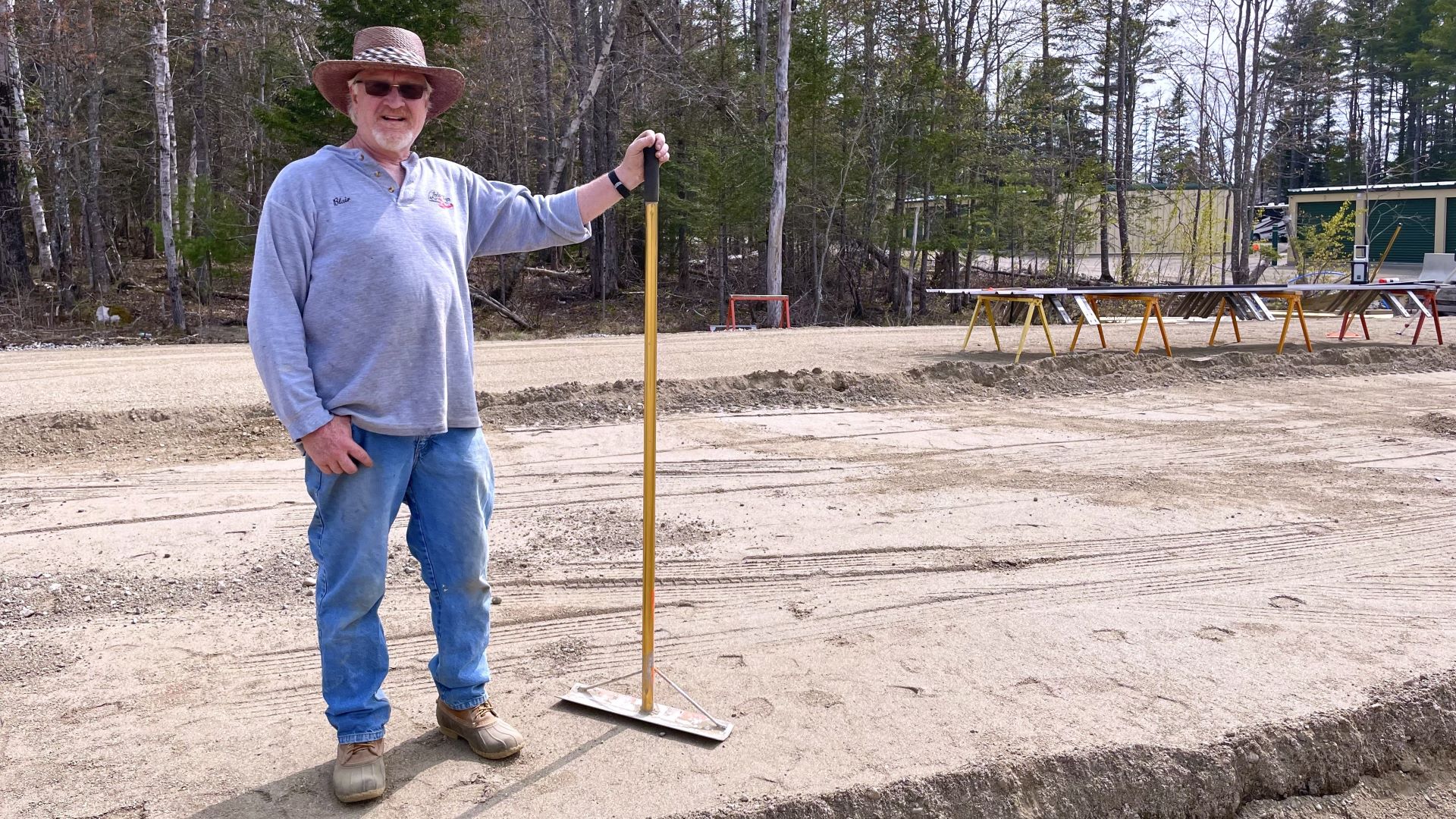
According to West, the only way to make a decent profit, or be able to hire help, is to scale up. In the meantime, he handles everything from construction to hauling stuff to the dump if tenants are delinquent. Some facility owners occasionally call on the local used furniture store, Re Find Furnishings, to help with those situations.
“We do clean out storage units from time to time when it’s needed,” said Channing Johnson, who works for West and is the daughter of the former owner. “We have gotten some very nice and valuable items from these units.”
But who exactly are all of these people with so much stuff and nowhere to put it? Municipal officials and facility owners say there are a mix of tenants with myriad reasons for renting, ranging from a surge in Downeast newcomers to those displaced by the county’s housing shortage. Then there are residents who flow in and out with the seasons along Washington County’s increasingly popular Bold Coast.
Betty Jean and Stim Wilcox temporarily borrowed space in one of the two units their friend rents in East Machias. The retired couple recently decided to sell their home and soon will head to California to be near family. Betty Jean said they had to find storage in a hurry to make the house more attractive to buyers.
“We’ve packed up some things that we’ll eventually be taking with us and put in the unit for now,’’ Betty Jean said. “This way there isn’t so much clutter in the house when we show it.”
Still others, facility owners said, might store motorcycles, ATVs and even cars, drained of any fuel, in larger units over the winter. Traveling the length of Washington County, code enforcer Kevin Brody, who serves several towns, said he frequently sees people putting their units to creative use.
“Just driving by the storage units in Columbia Falls, there’s always somebody every Saturday and Sunday having a yard sale out of their storage unit,” Brody said.
Brody said that type of use doesn’t violate state or municipal codes. He said the structures are simple to deal with for the most part because they don’t have electrical wiring, water or plumbing. Rain runoff, the biggest issue, is easily mitigated with retention systems and additional drainage.
When there is an issue, Brody said he’s happy to work with the owners he described as mostly hard-working people trying to make money by providing a service people seem to need.
Sign up to receive The Maine Monitor’s free newsletter, Downeast Monitor, that focuses on Washington County news.
Know of a Washington County story we should cover? Send us an email: contact@themainemonitor.org.
The post A landscape dotted with pastures, grazing sheep … and self-storage facilities appeared first on The Maine Monitor.
Officials say nearly 7,000 Maine voters may have inadvertently registered for new No Labels party
Northern Maine Medical Center to close obstetrics unit
About 100 asylum-seekers arrived in Sanford last week. The city says it can’t take any more.
Amid border slowdown, Calais quietly reinvents itself
Hooked on heating oil: Pushing for heat pumps and weatherization
 Efficient electric heat pumps can help replace the oil Maine depends on, but many homes need complex insulation overhauls or extra aid.
The post Hooked on heating oil: Pushing for heat pumps and weatherization appeared first on The Maine Monitor.
Ham radio operators air a grievance: Leave our hobby alone
 The construction of several antennas in Jonesboro stirs up some controversy among ham radio operators, and so does a proposed bill in Augusta.
The post Ham radio operators air a grievance: Leave our hobby alone appeared first on The Maine Monitor.