After nearly nine months and eight meetings, Maine Recovery Council hasn’t spent any of the millions available from opioid settlement cases
In a brightly lit conference room on the first floor of the Department of Health and Human Services in Augusta on Thursday, the Maine Recovery Council met for the eighth time in as many months and, perhaps for the first time, discussed how it should spend nearly $118 million in settlement funds from companies accused of fueling the opioid epidemic.
The 15-member council is charged with overseeing distribution of half of Maine’s $235 million share in settlement funds. With bankruptcy proceedings pending for two drug manufacturers — Purdue Pharma and Endo International – there may be even more money on the way.
The council already has $17 million in payments but has yet to spend any of it. Instead it has spent 8 1/2 months working through administrative and bureaucratic details, such as establishing bylaws and creating subcommittees. Some of that work is ongoing. Early allotments from the half of the settlements that isn’t controlled by the recovery council have begun to be distributed.
Meanwhile, an average of 12 Mainers weekly died of a drug overdose in the first six months of this year, according to the June monthly overdose report. More than 4,700 nonfatal overdoses were reported in the same period.
[irp posts=”27516″]
At Thursday’s meeting, some members expressed frustration at the slow pace of their work. Gordon Smith, Gov. Janet Mills’ director of opioid response, put it bluntly: “I don’t think any of us want to be here in November on the first anniversary date of receiving this money and say that we haven’t spent any of it.
“Pretty soon people are going to look at Maine and say they’re falling behind.”
Council chair Pat Kimball said Friday that “although I think you could sense some frustration, I think it was a meeting that needed to take place in regards to people really, really (starting) to ask those questions, and where are we and how do we do this.”
Asked why administrative items, like a conflict of interest policy — which is still not finalized — weren’t completed sooner, Kimball said “it’s growing pains.”
The council wants to get the money out there, she said, but also needs to do it responsibly.
“We know it’s not going to be perfect.”
Courtney Gary-Allen, the organizing director for the Maine Recovery Advocacy Project, said Friday she feels the urgency for the council to ramp up its work.
“I think that as a person who spends a lot of time on the front lines of the addiction crisis, and watching my friends and family die, often I am frustrated with the amount of time that it takes us to get money out the door and choose the people that need most.”
At the same time, “I think that the decisions of this first council are going to be some of the most impactful decisions for the next 18 years,” she said.
Likewise, Chastity Tuell said Friday she believes “everybody wants to get the money out to where it needs to go as quick as possible. But we also want to do it right.”
As frustrating as it might be, “I feel really confident that we’re covering all of our bases to do it right,” she said.
Gary-Allen, Tuell and others said Thursday that the council was still missing critical input from the public and other stakeholders.
“I just don’t feel like I can make those decisions without also not just hearing from the state about what they say we need, but also hearing from communities and making sure that we have a public process for applications,” Gary-Allen said.
The council has not had a public listening session, said Liz Blackwell-Moore, the public health director for Cumberland County.
Blackwell-Moore volunteered to take the lead on writing and distributing a public survey. Kimball said she hopes it will go out next month so the council can discuss the results at its October meeting.
That will “help us decide on priorities,” she said.
In the meantime, the finance committee is working on an annual budget, she said, and the programs and grants committee should meet for the first time soon.
Kimball said she remains hopeful that the council can award its first tranche of money by the end of the year.
Third town opposes national wildlife refuge, another puts off a commitment
A third Franklin County town signed on this week to a letter to Maine’s congressional delegation opposing a national wildlife refuge in the western Maine mountains, while a separate town abstained from a commitment.
The Wilton Board of Selectpersons unanimously approved the letter Tuesday and the Carrabassett Valley Select Board decided not to take a stance after a discussion with a federal official and an opposition member.
The two approaches — one town voicing objection, the other adopting a wait-and-see outlook — reflect broader trends by local officials, residents and recreationists in the area.
Those staunchly against the refuge have said state and local conservation efforts in the area are sufficient. They are wary of federal oversight, which they say could limit hunting and recreation access; others say it’s too soon to decide either way.
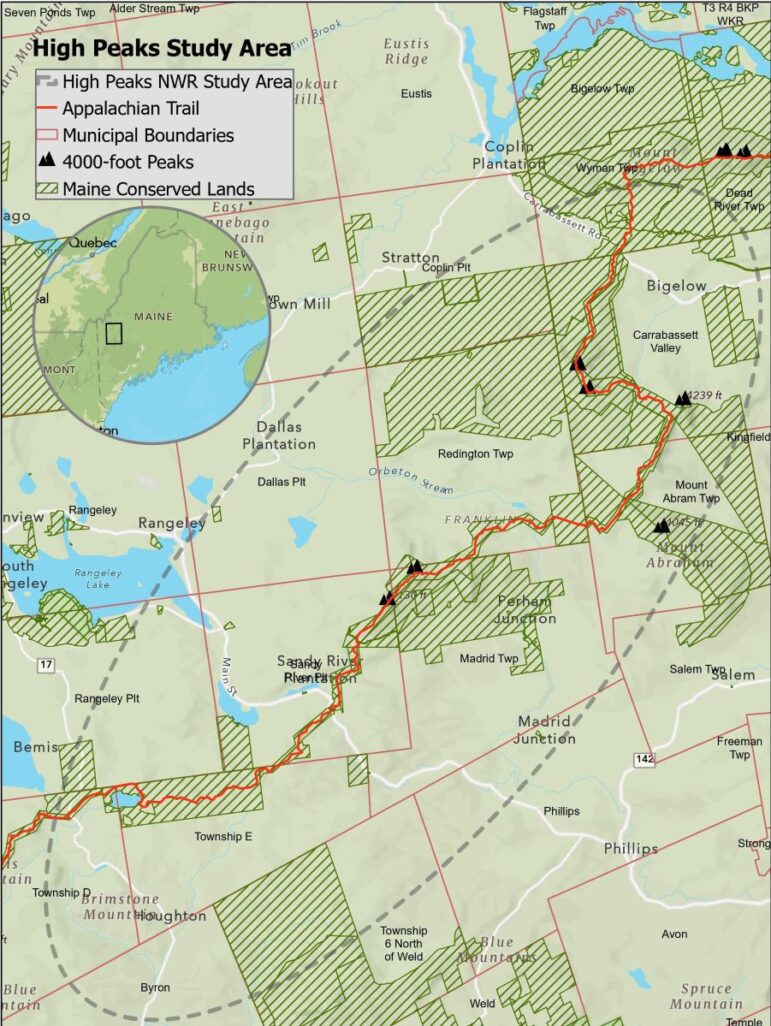
The U.S. Fish and Wildlife Service this spring began exploring the creation of a roughly 200,000-acre refuge straddling the Appalachian Trail in the High Peaks region.
Ultimately the area would likely be pared down to between 5,000 and 15,000 acres, according to Nancy Perlson, a local conservation consultant working with the Fish and Wildlife Service.
[irp posts=”27055″]
The High Peaks region encompasses some of the highest mountains in Maine and one of the state’s largest roadless expanses.
Paul Casey, a Fish and Wildlife official managing the process, has said the refuge would provide more opportunity for conservation and protection of local wildlife than the state currently offers.
Over the past few months, the agency has held a series of “scoping sessions” in Rangeley, Farmington and Carrabassett Valley to hear public input.
A formal proposal is expected by this fall and would be followed by a 45-day public comment period.
Along with Wilton, other Franklin County officials have begun voicing opposition to the proposal.
In May, the Eustis Select Board voted unanimously to oppose it and was followed in June by the Franklin County Commission, which voted 2-0-1 in opposition, with one abstention.
Both the town and county went on to sign the opposition letter, which Franklin County Commissioner Bob Carlton said was written by a coalition of citizens who oppose the refuge.
The town of Avon’s select board also signed the letter, a town official said Friday.
Carlton and Tom Saviello, a former state representative and Wilton selectperson, attended Wilton’s meeting Tuesday to lay out their arguments against the proposal and present the letter.
“We all want to protect the High Peaks, there’s no question about it,” Carlton said. “We want to keep what’s there, we want to keep it open for all the things we like to do,” like hunting, fishing, ATVing and snowmobiling.
Carlton said ATVs wouldn’t be allowed on the refuge, and certain hunting methods would be restricted — including bear hunting with bait and using lead ammunition on small birds and game.
“All of a sudden we have a piece of land … that we can do what we want and we follow the state of Maine laws and regulations,” Carlton said. “Now we’re saying, ‘Come here, but these are the rules you have to follow,’ so it’s restricted right off the bat.”
“The developed areas are not being considered,” said an official with the US Fish and Wildlife Service.
Saviello, who said he supported an earlier USFWS refuge proposal in 2013, emphasized that the current proposal would pull control from local residents and center it in Washington as opposed to Augusta.
“If there’s a problem in the refuge, with access and so forth, where do you have to go? Washington D.C.,” Saviello said. “If there’s a problem on public lands today, you go to Augusta, you go to your legislator, you have a voice that’s very strong if it’s managed by the state.”
Casey, the USFWS official managing the process, is based in New Hampshire, where he is the manager of the Umbagog National Wildlife Refuge, which includes parts of western Maine.
Selectperson Mike Wells agreed with Saviello, saying the refuge would dilute local input.
“The closer it is to home, the more of a voice we have,” Wells said.
The Carrabassett Valley Select Board took no action following a similar conversation with Carlton, as well as Casey and Perlson.
Though two select board members said they were apprehensive of the proposal, another expressed being uncomfortable with voting in opposition that night, adding that he thinks the community wants to know more, according to the Daily Bulldog.
That sentiment is reflected in a recent editorial by Will Lund, editor of The Maine Sportsman magazine.
Lund wrote in the August edition that fellow recreationists should hear out the USFWS and not jump to conclusions while the refuge proposal is in such early planning days.
“The easiest position to take on such proposals is an automatic ‘No,’ since many of us have a healthy distrust of the federal government in any form,” Lund wrote. “However, in our view it does not make sense to shut down the conversation.”
Lund went on to refute claims that the refuge would outlaw hunting, fishing, general public access and the rights of current private landowners.
In regard to snowmobile and ATV use, Lund wrote that the USFWS knows no proposal would be supported unless it called for continuation of snowmobile and other motorized travel.
He also asks outdoorspeople to consider whether private landowners will commit to public access in the future, rounding the editorial out with a contemplative approach to what the USFWS is proposing.
“To be clear, we are not supporting establishment of a refuge. How could we?” Lund wrote.
“There has been no written, detailed plan put forth that draws the boundary on a map, or that takes into consideration the input the Service has received,” and other questions need addressing, he added.
“However, it’s important to keep talking. It’s challenging to think in the long terms that are required to ensure access to land for our children and our children’s children. However, when land is developed, it’s gone forever. Let’s hear the feds out on this one.”
Sign up for our periodic newsletter to stay informed of Franklin, Somerset and Oxford county news.
The world’s richest known lithium deposit lies deep in the woods of western Maine, in a yawning, sparkling mouth of white and brown rocks that looks like a landslide carved into the side of Plumbago Mountain.
Mary Freeman and her husband Gary found the deposit five years ago while hunting for tourmaline, a striking, multi-colored gemstone found in the region.
The Freemans make their living selling lab supplies through the Florida-based company they founded 40 years ago, Awareness Technology. But their true love is digging for gemstones, which has brought them for years to Mary’s home state of Maine, the site of some of the best tourmaline hunting in the world.
Since the early 1990s, they’ve been buying up property parcels, studying core samples and old geological maps to determine where to try digging next, then spending hundreds of thousands of dollars a year on blasting and equipment. The couple has dug more than a mile of tunnels in pursuit of beautiful stones, and many of their finds — like blue elbaite and rich multi-colored tourmaline — have wound up on display at the Maine Mineral & Gem Museum in nearby Bethel.
Now, the Freemans want to expand this pit, near the town of Newry, Maine, so they can mine spodumene, crystals that contain the lithium the U.S. needs for the clean energy transition. The timing of their discovery, in what has been named Plumbago North, is remarkable; the Freemans have stumbled across one of the only hard-rock sources of lithium in the U.S. at a time when the material is desperately needed for the clean energy transition.
By 2040, the world will need at least 1.1 million metric tons of lithium annually, more than ten times what it currently produces, according to projections by the International Energy Agency.
Should the Maine deposit be mined, it could be worth as much as $1.5 billion, a huge windfall for the Freemans and a boon to the Biden Administration’s efforts to jumpstart more domestic mining, processing, and recycling of critical minerals such as lithium, cobalt, and rare earth elements to reduce the U.S.’ dependence on China. This is one of the few lithium deposits in the U.S. currently found in hard rock, which means it is higher-quality and faster to process than lithium mined from brine.
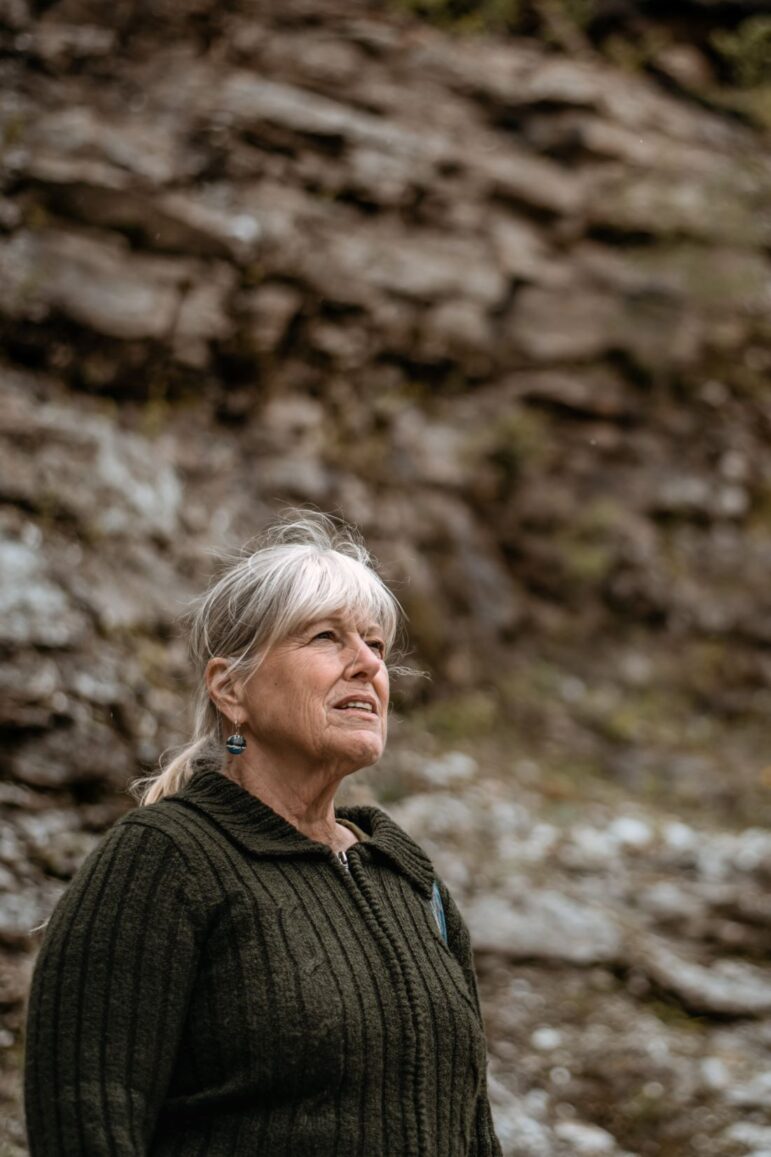
“I consider myself an environmentalist,” says Mary, who on a recent rainy visit to the test quarry, was wearing jeans, a sweater, and hiking boots, her white hair pulled into a low ponytail. Most of the country’s critical minerals are mined elsewhere and processed in China, she adds. “I think (the U.S.) should try to be a little bit more self-sufficient.”
[irp posts=”19969″]
But like just about everywhere in the U.S. where new mines have been proposed, there is strong opposition here. Maine has some of the strictest mining and water quality standards in the country, and prohibits digging for metals in open pits larger than three acres. There have not been any active metal mines in the state for decades, and no company has applied for a permit since a particularly strict law passed in 2017.
As more companies begin prospecting in Maine and searching for sizable nickel, copper, and silver deposits, towns are beginning to pass their own bans on industrial mining.
“This is a story that has been played out in Maine for generations,” says Bill Pluecker, a member of the state’s House of Representatives, whose hometown of Warren — a 45-minute drive from the capital city of Augusta — recently voted overwhelmingly in favor of a temporary ban on industrial metal mining after a Canadian company came looking for minerals near a beloved local pond. “We build industries based on the needs of populations not living here and then the bottom drops out, leaving us struggling again to pick up the pieces.”
Mainers often invoke the Callahan Mine in the coastal town of Brooksville as a warning. Tailings from the mine, which operated for several years in the late 1960s, were disposed of in a pile next to a salt marsh and creek. The former mine is now a Superfund site, and a 2013 study by researchers at Dartmouth College found widespread evidence of toxic metals in nearby sediment, water and fish. Cleanup costs, borne by taxpayers, are estimated between $23 million and $45 million.
“Our gold rush mentality regarding oil has fueled the climate crisis,” says State Rep. Margaret O’Neil, who presented a bill last session that would have halted lithium mining for five years while the state worked out rules (the legislation ultimately failed). “As we facilitate our transition away from fossil fuels, we must examine the risks of lithium mining and consider whether the benefits of mining here in Maine justify the harms.”
Lithium-bearing spodumene crystals at the Maine Mineral and Gem Museum. Photo by Kate Cough.
The Freemans point out that they plan to dig for the spodumene, then ship it out of state for processing, so there would be no chemical ponds or tailings piles. They liken the excavation of the minerals to quarrying for granite or limestone, which enjoys a long, rich history in Maine.
Advocates for mining in the U.S. argue that, since the country outsources most of its mining to places with less strict environmental and labor regulations, those harms are currently being born by foreign residents, while putting U.S. manufacturers in the precarious position of depending on faraway sources for the minerals they need. Though there are more than 12,000 active mines in the U.S., the bulk of them are for stone, coal, sand, and gravel.
There is only one operational lithium mine in the U.S., in Nevada, and one operational rare earth element mine, in Mountain Pass, Calif., meaning that the U.S. is dependent on other countries for the materials essential for clean energy technologies like batteries, wind turbines, and solar panels. Even after they’re mined, those materials currently have to be shipped to China for processing since the U.S. does not have any processing facilities.
“If we’re talking about critical metals and materials, we’re so far behind that it’s crazy,” says Corby Anderson, a professor at the Colorado School of Mines. “It’s the dichotomy of the current administration — they have incentives for electric vehicles and all these things, but they need materials like graphite, manganese, nickel, cobalt, lithium, and copper. The only one we mine and refine in this country is copper.”
The COVID-19 pandemic laid bare the problems of faraway supply chains; as U.S. consumers shopped online in their homes, the goods they bought, mostly from Asia, experienced lengthy delays at clogged ports. What’s more, diplomatic tensions with China motivated the U.S. government to seek other potential sources for mining, material processing, and recycling.
That’s why, in the pandemic’s aftermath, the Biden Administration launched an initiative to secure a Made in America supply chain for critical minerals. It included billions in funding for companies trying to mine and process critical minerals domestically.
Mary Freeman holds a spodumene crystal picked from the pit. “It’s the morphology that really excites me,” Freeman said of her love for gemstones. Photo by Garrick Hoffman.
The rocks in Plumbago North would seem to help provide a domestic supply chain for critical minerals; they are thought to be among the largest specimens of spodumene ever found, with crystals of such high quality that in addition to batteries, they could be used to make scientific glassware or computer screens, where the lithium metal would help lower the melting temperature.
The Freemans are just two of the hundreds of people prospecting for critical materials across the country as the U.S. tries to strengthen the domestic supply chain.
According to an analysis by Patrick Donnelly, the Great Basin Director for the Center for Biological Diversity, a nonprofit environmental organization, more than 100 companies have staked claims for lithium deposits in the American West. Companies also have applied for permits to mine cobalt in Idaho, nickel and copper in Minnesota, and lithium in North Carolina.
Geologists say there’s also likely a lot more lithium in spodumene deposits across New England. Communities that haven’t had working mines in years may soon find themselves a key source for lithium and other minerals needed for car batteries, solar panels, and many of the objects people will need more of to transition themselves off polluting fossil fuels.
There are good reasons for U.S. communities to have healthy skepticism about mining projects; there is no shortage of examples of a company coming into a community, mining until doing so becomes too expensive, then leaving a polluted site for someone else to clean up. There are more than 50,000 abandoned mines in the western United States alone, 80% of which still need to be remediated. Passage of landmark environmental laws like the Clean Air Act of 1970 and the Clean Water Act of 1972 hasn’t made mining safe enough, environmentalists say.
“All mines pollute in one way or another, and mines are really bad at predicting how much they’re going to pollute,” says Jan Morrill, who studies mining at the environmental group Earthworks, which recently found that 76% of mining companies in the U.S. polluted groundwater after saying they wouldn’t.
One of the most problematic parts of mines is the tailings, or waste, Morrill says: Companies extract the minerals they need, then are left with a giant pile of rock, liquid, and chemicals that they store in ponds or behind dams that sometimes prove unstable. These tailings have caused landslides, excessive dust, and water pollution; more than 300 mine tailing dams have failed worldwide over the last century, according to Christopher Sergeant, a research scientist at the University of Montana.
It is not uncommon for tailings to leak into water, in fact, there is a permit that mine owners can get in case they find their projections were wrong and they need to discharge into U.S. waters.
Even “modern mines” that adhere to the latest U.S. standards — which are among the strictest in the world — still pollute, Earthworks has found. Though there are, theoretically, non-polluting ways to store mine tailings, doing so is much more expensive and mine operators have largely not paid to do so, Morrill says. That’s because, says Aimee Boulanger, executive director of the Initiative for Responsible Mining Assurance, “laws and markets have not fully incentivized companies to do that.”
Indeed, the Biden initiative to increase domestic mining includes, for example, a $700 million loan for Ioneer, a company planning a lithium mine on Rhyolite Ridge in Nevada, where environmental groups say the mine, as proposed, would cause the extinction of an endangered species called Tiehm’s buckwheat. The Administration is also spending $115 million to help Talon Nickel build a battery minerals processing facility in North Dakota, but the potential mine they would source from, in Minnesota, is opposed by Indigenous groups and environmentalists who fear it could contaminate wells in the area.
Still, the U.S. has a more rigorous regulatory environment than many other countries, she says, and there are domestic mines that even some environmentalists support, like the Stillwater Mine in Montana. Community organizations there signed a Good Neighbor Agreement in 2000 with the Sibanye-Stillwater Mining Company allowing the firm to extract platinum and palladium — while also establishing clear and enforceable water standards, restrictions to minimize local traffic, and third-party auditors to ensure the mine adheres to the standards it set out. The mine is now one of the top employers and private-sector income generators in Montana.
But advocates had to force the Agreement; three grassroots organizations sued to stop the construction of the mine, and after a year of negotiations, the mining company and grassroots groups agreed to the contract instead of going to court.
With support from elected officials trying to find ways to mine more critical minerals in the U.S., companies may not feel the need to make similar promises to the local community.
Are you interested in news from Franklin and Somerset counties?
Environmental concerns aren’t the only problem with mining, Morrill says. The history of mining in the U.S. is linked to colonialism; Christopher Columbus was looking for gold when he stumbled across North America, and as Europeans expanded into the continent, they took land from Indigenous people to mine for gold, silver, and other metals.
Today, mining in the U.S. often encroaches on Indigenous land. Under mining laws in the U.S. that date to 1872, anyone can stake a claim on federal public lands and apply for permits to start mining if they find “valuable” mineral deposits there. Most lithium, cobalt, and nickel mines are within 35 miles of a Native American reservation, Morrill says, largely because in the aftermath of the 1849 gold rush, the U.S. military removed tribes to reservations not far from mineral deposits in the West. In one particularly controversial project, the mining company Rio Tinto wants to build a copper mine on Oak Flat, Ariz., a desert area adjacent to an Apache reservation that Indigenous groups have used for centuries to conduct cultural ceremonies.
Yet fears about the effects of climate change are escalating the pressure on local communities to get out of the way of mines, says Thea Riofrancos, an associate professor of political science at Providence College who studies mining and the green energy transition. She and other scholars have questioned whether projections that the world will face lithium shortages by 2025 are accurate; recycling more batteries and transitioning away from private vehicles to more public transportation, for example, could reduce our long-term need for lithium-ion energy storage.
“We should think about what is driving this demand, why does this rush feel so intensive, why is there not a version where we are going to try and do this transition with the least amount of mining possible?” Riofrancos says.
Most environmentalists agree that the 1872 mining law needs to be updated and there are several bills in Congress that would do so. The Clean Energy Minerals Reform Act of 2023, for example, introduced by Sen. Martin Heinrich (D-NM) in May, would require more tribal consultation and change how mining is approved on federal lands.
Finding a way to mine in the U.S. could help address a moral quandary, that we consume these materials but ask other countries to bear the brunt of their extraction, says Boulanger, with IRMA.
“There’s an argument to be made that if we’re going to use these materials, and we live in the most consumptive country in the world, we shouldn’t be making other countries be the bank account of our natural resources,” she says.
If lawmakers and regulators can’t agree on how to mine on U.S. soil, it could leave the U.S. susceptible to essentially outsourcing its mining problems to less-regulated countries. For example, last October, the Department of Energy used the Bipartisan Infrastructure Law to give a $141.7 million grant to Piedmont Lithium, which is building a plant in Tennessee to expand U.S. supply of lithium hydroxide, used in long-range batteries for electric vehicles.
In March, Blue Orca Capital, a hedge fund, said it was “shorting,” or betting against the stock of Piedmont Lithium, alleging that the spodumene the firm plans to refine into lithium at its Tennessee facility was guaranteed by bribes to the son of a high-level politician in Ghana — ”because of corruption,” those raw materials are likely to never come to fruition, the hedge fund says. Piedmont denies the allegations and says in a statement provided to TIME that the Minerals Income Investment Fund of Ghana told the company that it has valid licenses and permits for all its current activities.
Most of the proposed critical materials mines in the U.S. are not near a big population center — or economic activity, and some communities are in favor of a mine for the jobs it would create. But the proposed locations could instead lead to situations where sparsely populated communities don’t learn about a planned mine until it’s too late to stop it. “It can feel really fast — all of a sudden an enormous project is being proposed next door to you, it took years for the company to prospect but you didn’t hear about it ‘til now,” says Riofrancos.
The Freemans’ mine is not one of these projects. Though it is five miles from the nearest town, Maine is going through an extensive review process to decide whether to let the couple keep digging. Earlier in 2023, there were seven bills in the legislature regarding the potential of mining lithium in Maine.
Lawmakers ultimately settled on legislation that may open the door to extracting the Freemans’ lithium by allowing larger open pit metal mines, so long as developers can prove they won’t pollute groundwater and the local environment. But the new law will require changing the state’s mining regulations, which may mean it could be years before the couple is able to start digging in earnest.
[irp posts=”26982″]
The Freemans say their mine would not pollute the surrounding land and water, as the chemical composition of the crystals and the rocks around them is such that they would not dissolve into dangerous acid when exposed to air and water. Geologists that TIME/Maine Monitor spoke with agree with that assessment. Further, the crystals, says Mary, would be shipped out of state in large chunks for processing, so there would be no chemical ponds or tailings.
Many geologists agree that the Freemans’ proposal would not be as disruptive as other proposed mines across the country. Other metals (like nickel, silver, and zinc) typically occur in bands of rock deep below the surface that contain iron sulfides, which create sulfuric acid when exposed to air and water, polluting waterways for decades, a phenomenon known as acid mine drainage. Some spodumene crystals at Plumbago North, by contrast, have been naturally exposed to air and water for hundreds of millions of years and not broken down.
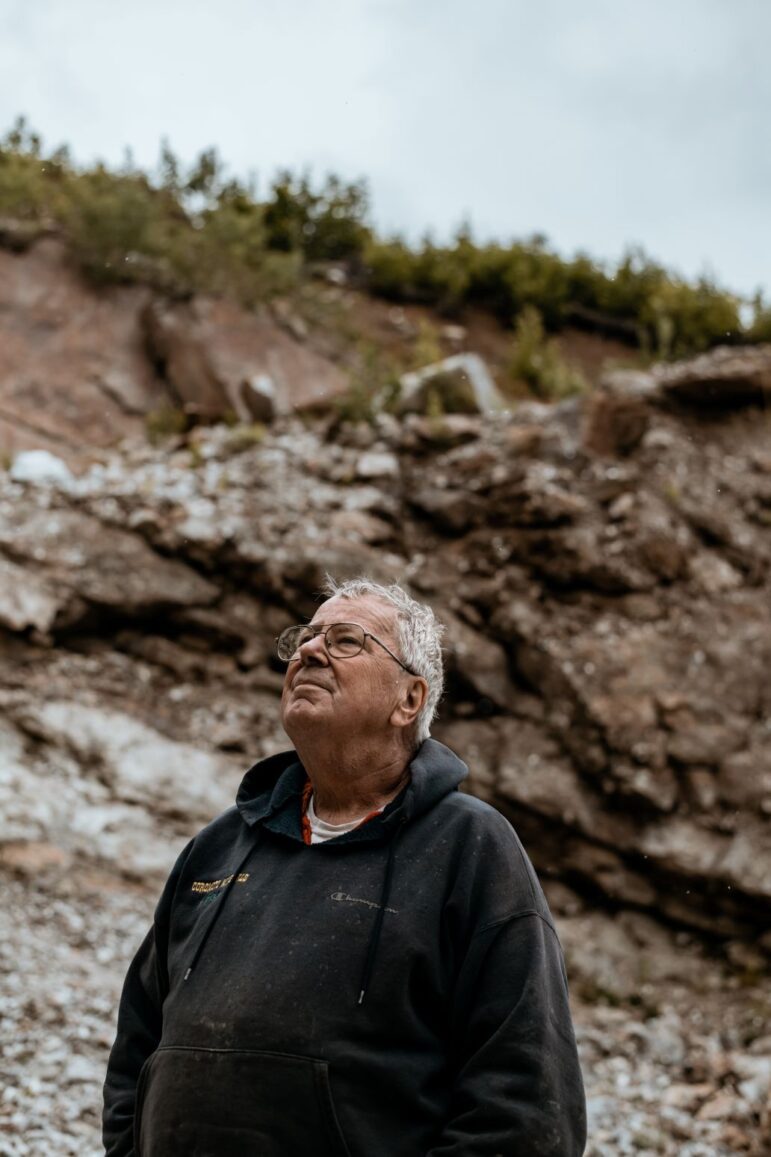
On a visit to the test quarry this spring, Gary Freeman pointed out one large piece of spodumene lying at the bottom of a nearby brook, the water over it rushing fast and clear, not the rusty orange of an acid-contaminated stream. (The waterway is known, fittingly, as Spodumene Brook.) “The water is so good Poland Spring wants to bottle it and sell it,” says Mary.
Gary Freeman. Photo by Garrick Hoffman.
Mary Freeman. Photo by Garrick Hoffman.
Still, Morrill, of Earthworks, says there’s just not enough research about the effects of hard rock spodumene mining to say for sure that the mine wouldn’t harm the environment. Since so many people in Maine depend on recreation and tourism for their livelihoods, she says, it makes the most sense to keep protective regulations in place.
Maine’s Department of Environmental Protection has rejected the Freemans’ request to consider the land a quarry, and is instead classifying spodumene as a metallic mineral. As the law stands, the Freemans will have to apply for permits under Maine’s 2017 Metallic Mineral Mining Act, a costly process (the application processing fee alone is $500,000) that would take years.
Meanwhile, the local community is divided. After all, in Maine it’s not difficult to find people still living with the long-term damage of older mines. On the other hand, many Mainers are pragmatic and understand the state has long, dark winters, and will need battery storage for any renewable energy it generates on sunny or windy days. The alternative is to continue relying on fossil fuels, which would exacerbate climate change.
Myles Felch, curator at the Maine Mineral and Gem Museum, is one of these practical Mainers. He was raised in Union, where a groundswell of opposition has formed to resist a proposal by Canada-based Exiro Minerals to look for nickel near a beloved local pond. Felch isn’t thrilled with the prospect, but also knows we can’t continue to be so detached from the minerals we use in our daily life.
“I love the place where I grew up and I wouldn’t want anything to ever happen to it,” said Felch. But “You need mineral resources,” said Felch. “Most people were probably texting ‘stop the mine’ with a nickel cobalt battery in their phones.”
Maine homeschooling numbers remain high following a pandemic spike
In the fall of 2016, Jessica Coakley became increasingly concerned that her son, Braden, was falling behind in school. The fourth grader had an Individualized Education Program, requiring certain services for students like him with different learning needs.
But his mother worried it was not enough.
“I was feeling like the teachers and the principals and the people weren’t listening to me,” said Coakley, who lives in Bradley, just north of Bangor. “I would go to these IEP meetings and I’d be crying when I’d leave because I just felt so frustrated.”
When her son’s state test scores came back, they showed he was testing at a first-grade level — three years behind where he should have been, Coakley said. His self-esteem was suffering.
Left with dwindling options, Coakley, who had gone to school herself for a year and a half to become a teacher, decided to teach him at home. Although she was skeptical and scared, she remembers thinking to herself, “All right, well, I can’t do any worse.”
Thousands of families are making the same choice in Maine and around the country, leading to a sharp increase in homeschooling that skyrocketed during the pandemic and has remained a popular option.
In the 2019-20 school year, just under 6,800 students were homeschooled in Maine. The following year, that number almost doubled to 12,048.
While the population of homeschooled students has declined year-over-year since then, state records show that this past school year there were still about 10,100 students learning from home — a 50% increase from 2019-20. Because of a shift in the way this information is tracked, accurate data from before that year is not available.
In just under a quarter of districts across the state, there are now more students being homeschooled than there were in the 2020-21 year, during the height of the pandemic-era increase.
Experts, parents and advocates cite a number of reasons for the dramatic increase. Like the Coakleys, some families have pulled their kids with disabilities because they worry their needs aren’t being met. Others have religious or moral objections to material taught in public schools.
Maine’s rural landscape means that for some students, there isn’t a lot of choice: It’s the local public school or homeschool. For still others, in-person schooling feels untenable because of bullying or social anxiety.
State officials hope more students return to the classroom.
“Public schools are critical to our democracy,” said Marcus Mrowka, Director of Communications at the Maine DOE, “and a way that kids can come together and learn the skills that they need to thrive. So we would hope that more parents would choose to send their kids back to public schools in the years ahead, and we are providing those supports to schools and to educators in order to make Maine public schools the best places they can be for schools.”
Experts say for at least some families, the pandemic showed them for the first time that they could homeschool.
“In the nearer term, what we see are families who maybe never considered homeschooling in the past,” said Heath Brown, associate professor of public policy at City University of New York, John Jay College, and the CUNY Graduate Center, and author of Homeschooling the Right: How Conservative Education Activism Erodes the State. But, “because of the pandemic they were compelled to experience it, and some felt like it was an approach to education they preferred.”
Brown pointed to shifts in technology, such as the availability of online curriculum, that made homeschooling more accessible, academically and financially. Thus, today’s homeschooling population is far more diverse racially, ethnically, and along class lines than it was historically. He also noted changes in state laws that made it easier for families to pursue this option.
“Homeschooling organizations have been very effective, especially at the state level, for pushing for more lenient laws, laws that make it easier to homeschool,” he said. “As a result, homeschooling has become quite attractive to many families.”
He categorized Maine homeschooling laws as “middle of the pack,” neither the most lenient nor the most restrictive in the country.
Here’s how it works: Within 10 calendar days of beginning home instruction, Maine parents or guardians must provide the school system with a written notice of intent. They pledge to provide at least 175 days of instruction in specific subject areas, including English, social studies and library skills. And at the end of each school year, they choose from a list of assessments to demonstrate their child’s academic progress.
Jay Robinson, superintendent of MSAD 72, based in Fryeburg, said the vast majority of homeschooling parents in his district opt to have a certified teacher review a portfolio of their child’s work when the school year wraps up.
In November of 2016, Jessica Coakley pulled her son, Braden, from their local public school and began homeschooling him. The first year involved a lot of catch up, but with time, she said, he thrived. Courtesy photo.
Before the pandemic, Robinson said, about 75 students of the approximately 1,500 in his district were turning to home instruction. Once the pandemic hit, that almost doubled to about 130, where it’s hovered since.
As his district shifted back to in-person learning, Robinson heard from parents worried their kids would bring the virus home to at-risk family members. He believes this drove most of the homeschooling spike, although the numbers still haven’t returned to pre-pandemic levels. He also wonders if the rise of the culture wars and book bans might be playing a role in a parent’s choice to homeschool, although he had not heard that in his own district.
Angela Grimberg, executive director of Coalition for Responsible Home Education, said her organization has incorporated Maine’s annual review process into its model legislation, arguing that all states should have a similar one. Nationwide, she’s concerned there is not enough accountability surrounding homeschooling.
“We’re seeing that across the states, they are still trying to deregulate homeschooling,” Grimberg said, “even as prior policies weren’t enough to protect these children.”
The most severe cases, she said, can lead to severe abuse and neglect, and deregulation can also lead to an inadequate education. She noted this is not typical of most homeschool parents, but hopes to “protect what’s valuable about homeschooling while mitigating the risks for severe outcomes.”
When homeschooling is done responsibly, Grimberg said, it can be immensely beneficial, especially for students with disabilities and those facing discrimination.
Maine law dictates that home instruction students are eligible to receive special education and related services at their local public school. They may also enroll in and audit some public school classes as well as extracurricular activities. School districts are then eligible for funding to support students receiving on-site instruction.
Robinson, the superintendent, said educators in his district maintain relationships with families who don’t want to partake in the whole school program but still want their kids present for extracurricular activities and upper-level academic classes.
Trish Hutchins, regional representative for Homeschoolers of Maine, a statewide, ministry-based organization, said access to these supports varies by district. Largely it is “welcomed and encouraged.”
During the pandemic, Hutchins said, parents of students with special needs found themselves implementing their kids’ IEPs at home. While schools can be limited by staff and funding, she said, at home these students may receive closer attention and custom-designed curriculum.
Jake Langlais, the superintendent of Lewiston Public Schools, worries that academic needs are not always met in this context. He is concerned that there are a number of students being homeschooled who are “getting no education whatsoever.”
In the 2021-22 school year, there were 5,182 students in Lewiston public schools. That same year, around 220 students received home instruction, more than double the number in the 2019-20 year. By this past school year, about 170 students continued to learn from home.
While recognizing there’s “fantastic” homeschooling across the state, he also noted, “there are so many benefits — so, so many benefits — to public school (that you) can’t fabricate in a homeschool.” He pointed to unique skills and socialization students receive in a school building.
“There’s a lot of ways you can build up resiliency and routine in a school that are harder to create outside of school,” he said.
A rise in homeschooling can also impact school funding.
“If my enrollment is down 100 students — because of homeschooling or private schooling — that has serious impacts,” he said, especially in smaller districts.
The Covid Surge
When Jessica Coakley, the mom from Bradley, decided to shift her son to homeschooling in 2016, she scoured the internet for resources. She quickly realized they were spread out and challenging to aggregate. So she created a Facebook page, “Homeschooling in ME,” to help other parents and guardians.
“I started the page with the hope that we could start this small community,” Coakley said.
The group grew slowly to about 300 members. Coakley liked the sense of community it provided. Parents traded tips about science curriculum, the best resources from Khan Academy, which creates online educational tools, and where to locate textbooks on Ebay.
When the pandemic hit, the small community quickly grew. Coakley saw another uptick after the implementation of vaccine mandates. Now the page is home to over 3,000 members.
Hutchins, the Homeschoolers of Maine representative, saw a similar spike. Occasionally before the pandemic, she would receive calls from families in crisis who needed to abruptly shift to homeschooling. But when 2020 hit, she said, suddenly that was happening all the time. She was in constant crisis management.
[irp posts=”18459″]
Coakley said today she hears from a whole range of parents who decided to homeschool their kids. A sizable minority of the posts she sees in her group are from parents of kids with special needs or facing discrimination.
“There are thousands of reasons why people homeschool in Maine,” Coakley said. “It’s incredible. I think that’s the craziest thing about this community is that we all homeschool our kids, but we all do it for entirely different reasons.”
She said the increase in homeschooling generally has helped shatter preconceived notions about who homeschools and why. Many of these stereotypes initially made her hesitant as well. “When I was mulling over my decision,” she said, “I was scared I was going to ruin his life.”
But instead, the time at home gave Coakley’s son an opportunity to catch up academically and build his confidence. He learned math skills through cooking classes and took piano lessons. It was a challenging first year, but by his fourth year at home he was doing well.
Before eighth grade, Coakley told his mother that he was ready to return to the traditional classroom. She was nervous but agreed. His initial transition back was an adjustment because he learned to take all of his classes on the computer. But his teachers were supportive and he loved being back in the classroom.
This fall, Coakley will enter his sophomore year of high school. Ultimately, his mother said, being at home and learning in a small environment gave him the tools to return and thrive.
“I’m super proud,” she said. “Look what we did. We did this together.”
Legislature shores up finances of emergency medical service providers around the state
As part of a larger budget deal, state legislators have approved $31 million in funding that will provide breathing room for the roughly 275 emergency medical services (EMS) statewide, some on the verge of collapse. The aid will be distributed in two batches, 40% possibly by October for emergency relief and 60% thereafterin the form of grants.
Renée Gray, the newly appointed Washington County manager and also the ambulance chief for Moosabec Ambulance Service in Jonesport-Beals, said the relief cannot come soon enough. One Washington County ambulance service closed earlier this year and others have merged due to low staffing and depleted revenues.
[irp posts=”25931″]
“The people that work in this field are problem solvers, and they’ll kill themselves trying to fix this problem. That’s basically what’s happened – EMS has finally revealed its holes,” Gray said.
The long-negotiated funding — EMS officials originally requested $70 million — got caught up in a legislative battle over a proposed budget addition to the governor’s $9.9 billion, two-year budget that was approved in March.
A blue-ribbon commission, formed last year to study the issue, made recommendations to the legislature. Rick Petrie, the interim executive director for Atlantic Partnership EMS, a statewide EMS collaborative, was a leading advocate in the effort to secure state funding.
“It’s not what we would have hoped because the blue-ribbon commission was pretty clear that EMS providers needed $70 million,’’ Petrie said. “OK, so we compromised, but now let’s turn this (money) out really quickly with very little red tape.”
How much red tape there might be is unknown because no further details about the allocations were announced. Also, the budget measure did not pass by a two-thirds majority that would have allowed it to go into effect immediately. The budget addition, which still needs the governor’s signature, passed 80-58 on Thursday in the House and by a 22-9 vote in the Senate.
Still, Petrie said approval of the funding indicates that lawmakers recognize providers are struggling and seem to understand that $31 million is merely a down payment toward building a better system.
Another promising sign, he said, is that the commission will reconvene, possibly this summer, to further assess EMS needs statewide.
House Speaker Rachel Talbot Ross in a statement agreed that access to emergency medical response services across Maine is an essential part of the state’s healthcare system that must be funded, although she did not say if that will be with continued state support.
“In some cases, it’s quite literally a life-or-death situation,” said Talbot Ross. “The funding in this budget will be a major step forward to help services stay open, attract new providers to the field and start the process of redefining what emergency medical services look like in Maine.”
The Maine Bureau of EMS, which operates within the Department of Public Safety, will be key in determining how the money is divided, according to Petrie. Maine EMS had urged lawmakers to support not only the emergency funding, but additional funds to assist EMS and ambulance services as they shift into new funding and operational models.
With few exceptions, EMS providers across all 16 counties have been largely, but inadequately, self-funded by low insurance reimbursements and small taxpayer contributions from individual cities and towns.
They are often staffed with underpaid EMTs, paramedics or volunteers.
[irp posts=”25984″]
Sam Hurley, the Maine EMS director, said that model is no longer sustainable. Although optimistic, Hurley agrees the devil is in the details.
“Maine EMS is excited that the governor’s office and Maine Legislature have identified the needs of the EMS system in Maine as a funding priority. That said, we too are anxiously awaiting the final action of the Legislature as to the specific language surrounding any funding introduced to the system,” Hurley said.
In May, Maine EMS released its 2035 EMS Vision & Plan, outlining what it sees as the steps needed to achieve true sustainability over the next 12 years for the state’s roughly 275 EMS providers that are operating at a loss or barely breaking even.
Many EMS providers are struggling due to a host of factors, including lagging reimbursement rates, recruitment and retention challenges, training, and an aging and rural population.
As a result, some services are routinely “out of service” when an ambulance can’t be fully staffed. Some other providers, such as Petit Manan in Washington County, which served Milbridge and Steuben, have ceased operations.
But it’s not only rural EMS providers that are suffering.
A University of Southern Maine national study released in May by the Maine Rural Health Research Center revealed that 15 of the 16 Maine counties have so-called ambulance deserts, where people are located more than 25 minutes from an ambulance station. In the Northeast, Maine was ranked as the second-worst ambulance desert state, behind only Vermont, where every county contains at least one.
Only Androscoggin County has an adequate number of ambulance stations to provide reliable, fast responses. Even higher-density counties such as Cumberland, encompassing Portland and its environs, and Penobscot, which includes Bangor, have pockets that lack adequate ambulance response times, according to the MRHRC geographic disparities study.
Petrie said he got a call this past week from the service chief for “a fairly large metropolitan department in the state,” saying they were drowning in overtime expenses trying to cover the increasing number of calls and mutual aid requests. Petrie said the money would be allocated to any EMS department providing 911 response that shows it needs help — even metropolitan departments.
He said that the situation in rural communities is even more dire. Petrie said he knows that in places like Washington County and Aroostook County — virtually anywhere north of Augusta — EMS departments are “barely there” and doing everything they can to hold on.
“This money will be a lifeline to them while we work out the longer term,” Petrie said.
He and other EMS officials said the solution is multi-pronged, requiring state assistance, better insurance reimbursements, realistic financial contributions from municipalities being served and a more regional approach, with fewer, more robust, strategically located providers.
That assessment was echoed by Yvonne Jonk, associate research professor at the University of Southern Maine and deputy director of the Maine Rural Health Research Center. Jonk, the lead researcher for the ambulance deserts study, said the data proves that regionalized services are needed, particularly in rural areas with large geographic footprints and low populations.
“With regionalization you’re able to triage and determine the optimal location of an ambulance service, and to have each other’s backs instead of all this ad hoc community goodwill,” Jonk said.
Slowly, EMS providers and municipalities are heeding that warning, organizing and financially supporting regional services such as the new Bold Coast EMS department in Washington County, pressed into a regional model out of necessity after the closure of Petit Manan and regular staffing shortages in the Cherryfield ambulance department.
Bold Coast EMS opened June 12 with an inter-local agreement between the towns of Cherryfield, Milbridge and Steuben, each paying an equal share of the roughly half million-dollar annual operating budget. The smaller outlying towns of Beddington and Dubois kick in a donation for their coverage.
Mariah Curtis, the former Cherryfield service chief who is also a full-time nurse, is service chief for the new consolidated ambulance department. She said they are entirely taxpayer funded and didn’t bank on getting any state support.
“We built it to be self-sufficient, just with our community supporting us, and they’re very receptive to that,” Curtis said. “We will be open and appreciate anything we can get that makes the burden less on our taxpayers, but we don’t need it to bail us out.”
Bold Coast employs four full-time people during the day and uses part-time, on-call EMTs at night. The pay is $20 an hour for an EMT with 100% employer-paid health insurance and a zero deductible policy, all of which Curtis said keeps morale high.
The regional service is the second of its kind in Washington County; the first was Downeast EMS, which serviced the far eastern half of the county, with nine ambulances out of bases in Baileyville, Lubec and Eastport. Answering about 1,900 calls last year, Downeast EMS has operated in the black for the past decade.
Regionalism advocates say the local examples show there is strength in numbers. Data presented to the blue ribbon commission showed that of ambulance services performing less than 1,800 calls per year, most run less than 500, losing roughly $2,000 per call, largely due to poor insurance reimbursements.
Seventy percent of all ambulance runs in Maine are paid for by Medicare or Mainecare. Those services only reimburse 85 percent of the cost.
But there also is a glimmer of hope on that front coming out of the Legislature. Private insurers will begin paying higher reimbursements, according to Petrie. He’s hopeful that the next session and the blue-ribbon commission will make changes to the government reimbursement rates as well. He said that is critical, especially in places like Washington County.
“I believe that the blue-ribbon commission coming together again will start to attack those issues, or start down that pathway,” Petrie said. “They are going to have to come up with a fairly significant, radical way to deliver EMS up there — and the hospitals need to be involved as well.”
Sign up for the Downeast Monitor, a free newsletter produced by The Maine Monitor, to stay informed of what’s happening in Washington County.
Machias reaching a “critical mass” for growth, boosters say
If you ask Bill Kitchen what’s going well in Machias, you’ll need to sit back because you’ll be listening for a while.
Kitchen is a passionate booster for the shire town of Washington County. In fact, five years ago, during his campaign for a seat on board of selectmen, Kitchen penned an op-ed titled, “What’s Right with Machias.”
He won in a landslide, and he hasn’t changed his position yet.
“I knew it had become fashionable to say how downtrodden and poor we are in Machias, and once you slip into that, it’s very hard to get out of,” said Kitchen, who for two years has served as Machias town manager. “The point of that letter was to say, look, most of the pieces are already in place.”
Those pieces include what Kitchen calls the town’s “signature assets,” like the Machias Dike, where vendors set up impromptu flea markets along Route 1, and Bad Little Falls Park, which wraps around twin waterfalls in the center of town, and the Machias Wild Blueberry Festival, now in its 46th year and set for Aug. 18-20.
They also include key infrastructure, like the expanding Machias airport, where planning is underway to construct a longer runway, as well as Down East Community Hospital, and the University of Maine at Machias, standing high on College Hill since 1909.
[irp posts=”23900″]
Even with these assets, Kitchen acknowledges that by another measure, Machias is a poor town. In fact, according to the latest five-year data from American Community Survey, it’s the poorest town in Maine, with an average median income hovering just above $20,000 a year, compared to almost $65,000 statewide. At least in part, Machias’ low number is explained by the concentration of low-income housing units located near the services it offers.
But no matter the reason, it’s a number that motivates Kitchen. Working in his office just a stone’s throw from the Middle and Machias rivers, he waves his arm across a map of Machias, the smallest town in Washington County, and lays out the question he’s always working to answer —how can he create a more vibrant Machias without raising taxes?
“Here we are, the service center of this county that is bigger than some states, and yet we’ve only got 14.8 square miles to work with. And a lot of that is already in use by entities that pay little or no taxes,” Kitchen said. “There are very limited amounts of space in which to build, assuming you have people that want to build here.”
Chris Meroff wants to build in Machias. He fell in love with the area in the late 1990s while visiting with his grandparents. For years now, he’s made his home here for five months of the year, spending the rest of his time in Austin, Texas, running his 30-plus businesses and venture capital firm.
But one day, Meroff and his wife would like to retire to Machias. Before they can, he says, he has some investments to make, and his end goal is nothing short of “flipping Machias.”
“I love the people, I love the land, and I love the scenery, and we want to put our money to work here,” said Meroff. “I have flipped homes, I have flipped businesses, and now for me, it’s time to flip Main Street.”
The Meroffs’ investments in Machias are already almost too numerous to count and still growing.
Four years ago, they started work on a 65-acre farm in the rural Kennebec District, where today they operate the Coffee + Crisp Cafe at West Branch Farm, overlooking West Branch Little Kennebec Bay and acres of blueberry barrens. Below it sprawls a large white tent, which will host multiple weddings this summer, until it is replaced by a two-story event venue modeled on a 1925 chicken barn.
A you-pick apple orchard is planted, an enormous catering kitchen is under construction now, mini-cattle and ducks are en route for the petting zoo, and a master organic gardener has been retained to oversee next year’s gardens, which will supply all of it, including a mercantile for shoppers, with food.
To say nothing of Meroff’s near-term plans for a drive-through coffee shop, a large Machias lumber mill, or the creation of a global lifestyle brand, Maine Woods Outfitters, planned for another retail location in Machias and, quite possibly, to be the subject of a reality TV show.
“Machias’s downtown is why I’m doing this,” said Meroff. “We’ve seen this work in rural towns in Texas that have the same isolation issues, but they don’t have bones like Machias.”
Valdine Atwood, widely acknowledged as the unofficial town historian of Machias, knows everything about its good bones.
Fittingly, her home stands downtown near Machias’ best-known historic site, the Burnham Tavern, where in 1775 local patriots hatched plans to capture a British warship and its crew. They succeeded, and the Battle of the Margaretta is now celebrated as the first naval battle of the American Revolution. Every June, the Machias Historical Society sponsors the Margaretta Days Festival and Craft Fair, complete with reenactments of the famous battle.
When she and her family moved to Machias in 1962, Atwood recalls large numbers of retail shops lining Main Street, including two dress shops and two shoe stores, plus the local bureau of the Bangor Daily News, where she and six others reported the news from Washington County.
“You did not have to leave Machias at all to get what you needed,” Atwood recalled. “At one time, there were five car dealerships in Machias.”
David Whitney agrees that, like almost everywhere, today there is less retail on Main Street, but says there is also growth happening here. And Whitney has a lengthy perspective. His family moved Downeast in the 1700s, and his grandparents and his father operated one of the car dealerships at the base of College Hill.
Today he runs Whitney’s Tri-Town Marine in the same location, selling boats and, more recently, lots of ATVs, including the Argo line, which features a popular amphibious model.
“We’ve added this Argo dealership, and we are hovering between fourth and fifth in volume across North America out of 300 dealerships,” Whitney said. “And we’ve been at it for less than a year.”
Some of those sales are to locals, but many are not. That’s a model Whitney and many other local business owners aim for because it brings in outside money and employ local people.
“Most of the revenues that we generate in all of my companies come from outside Washington County,” said Whitney, who also owns Machias Glassworks, Downeast Packaging Solutions, and Whitney Wreath, a large balsam wreath company which enabled him to move home from Boston for good, in his early 20s.
“And since that time, I have struggled happily. And the struggles are real, and they are continual, and they are many,” said Whitney. “But first and foremost, my entrepreneurial attitude has always been one of optimism. I’ve listened to local pessimistic viewpoints, and I’ll have nothing of it.”
Whitney’s optimistic outlook and diversified business strategy are shared by many investing time and money in Machias today, like Sandi Malagara and her husband Ryan, who moved here from Connecticut almost 20 years ago.
[irp posts=”23106″]
They run multiple businesses from Crows Nest Shops on Dublin Street, including a gift shop, Expressions Floral, a gourmet bakery, an electronics store, a shipping outlet, and the headquarters for Ryan’s drone videography business, Drones Eye View, in steady demand by Maine realtors.
“Right from the beginning, we’ve looked around to see what was missing. We asked, ‘What can’t we get here?’” Sandi recalled. “And then we would fill that need. Then once we’d gotten that piece established, we’d say, ‘What else?’”
This year, the Malagaras have added ATV rental to their business list, including an Argo they purchased from Whitney’s Tri-Town. They join another new business, Downeast Adventures, which this spring opened an ATV rental company to cater to a growing sector interested in the Downeast Sunrise Trail, an 87-mile multi-use offroad trail that carries walkers, bikers, and ATV riders from Ellsworth to Calais, by way of downtown Machias. The trail was at the center of June’s Machias ATV Jamboree.
Diversification was also on Ben Edwards’ mind when, in 2019, he decided to start a business on his family’s 200-year-old Machias farm, Schoppee Farm. Visiting from England, where he worked, Edwards met and fell in love with his now-wife, Allison, and knew he wanted to make his living in Machias in a way that might help the region, too.
“I’ve always been concerned about Machias’s primary revenue-generating industries, like blueberries and lobsters. We have no control over pricing, no manufacturing, and we take the smallest piece of the pie,” said Edwards. “I knew I wanted to form a primary industry that generated revenue from outside Downeast Maine, and the farm seemed like my platform to do that.”
Today the Edwards have diversified Machias’ business portfolio with their organic line of CBD oil products grown and manufactured on the farm. But a few close calls with state hemp legislation showed Edwards they needed to diversify their own offerings, too.
“I had been looking for other business opportunities because I realized how fragile my position was. An act of the legislature could put us out of business,” Ben recalled. “That’s what led me to purchase the elderberry business last summer.”
Now, as owners of Seattle Elderberry, Schoppee Farm manufactures its products, too, sourcing organic elderberries from other Maine farmers while they work toward growing their own. But they’re not stopping there. This summer, in the farm’s original milking shed, they’ll open a cafe, including a French-inspired bakery, enlisting the talents of Chef Ross Florance.
“One of the things I thought I was giving up when I moved here was a cafe,” said Edwards, who recently sat down with Meroff to share ideas. “The overall attitude of collaboration in Machias is entirely different from what I remember as a child, and I think it looks better than I have ever seen it. That might be in contrast to things looking relatively dire, but I think what Bill [Kitchen] and some of the other local people have done has not only turned things around but really built some momentum for Machias.”
In June, Edwards was elected to the Machias Board of Selectmen, where he joins another local son who moved home to invest in Machias. Selectman Jake Patryn works as director of operations for Acadian Seaplants and, together with his fiancée Morgan-Lea Fogg, farms sugar kelp and manufactures a line of kelp products under the brand Nautical Farms.
“When we showed up saying we were going to start a seaweed farm, people thought we were insane. But now there’s a growing interest, which is exciting,” said Fogg. “There’s a need to figure out how to continue our working waterfront that doesn’t rely on only one product.”
In June, Patryn and Fogg opened their first storefront stocking Nautical Farms’ line of kelp-based food and bath products, as well as books and other seaweed-related gifts.
For Patryn, doubling down on Machias was an easy decision.
“Machias has always been a part of me. I knew I didn’t want to leave again, so I started to think, how can I get more involved?” Patryn said, recalling what led him to run for selectman. “A big part of it is Bill Kitchen. I have a lot of respect for Bill, and as a leader, he really makes me want to be there beside him and help in any way that I can.”
Kitchen, whose background is not in municipal management but corporate and brand strategy, says he thinks of himself as Machias’ cheerleader, facilitator, and expediter rolled into one.
“It’s my job to get everybody to believe to a point where they are willing to invest their money and their time because it takes both,” he said. “Nobody wants to rearrange the deck chairs on the Titanic. I think that for a long time, people felt this was a listing ship, and that’s changed. I think we have reached a point of critical mass.”
This article first appeared inThe Working Waterfront, a publication of the Island Institute, and was republished with permission.
Five takeaways from an investigation into Maine’s assisted living facilities
Building Publicly Owned Broadband Starts with a Low-Tech Approach: Community Buy-in
This story is part of a series.
On a Tuesday afternoon, standing in front of the Islesboro Sewing Circle on an island off Maine’s MidCoast, Jane Wherren holds up items recently completed by members for the annual fundraiser. The president of one of the nation’s oldest sewing circles, called simply “circle” by locals, Wherren begins every meeting with show and tell. As sewing machines hum and knitting needles click, a dozen women glance up from their work to watch. “Look at these potholders with blueberry pie.” A woman calls out, “Who knitted those cute mother and baby socks?”
Standing in a 120-year-old building with one of the oldest sewing groups in the nation, you’d almost think you had stepped back in time. Then a voice calls out, “Those are gorgeous, can you zoom in?”
Sewing Circle president, Jane Wherren, displays completed items for annual sale to Zoom attendees. (Photo by Carolyn Campbell)
The voice isn’t coming from the women in the room; it’s coming from a computer held by the circle’s secretary. To zoom in the woman walks closer to Wherren, turning the screen to capture the purses. Later in the meeting, when women sing happy birthday to one of its members, women both online and in person sing along.
“We’ve been having hybrid meetings since the pandemic,” Wherren said. “We still do. We want to include everyone from our community, whether they’re homebound, in another state, or just unable to attend. Soon we’ll be teaching online sewing classes.”
Ten years ago, long before today’s unprecedented amounts of federal funding in rural Internet infrastructure, Roger Heinen watched Islesboro’s population drop precipitously. “We were facing an existential crisis,” he said. “There’s nothing like young people moving away to threaten the survival of an island community.”
In 2014, Heinen formed a small volunteer coalition to come up with a solution for the island of under 600 year-round residents.
“Our coalition spent two years talking to lobstermen, selectmen, the hunting club, the school, and power brokers like the sewing circle,” he said.
In 2016, voters approved a $3.8 million bond to fund the construction of a fiber-to-the-premises infrastructure capable of speeds of 1 gigabit per second. By 2018, Islesboro Municipal Broadband construction was complete and service was installed for all home and business subscribers.
“Getting the network off the ground was the hardest work I ever did,” Heinen said. “We (the town) knew that at the end of the day when the last ferry left, there was no government to save us. We were on our own.”
It’s been nearly five years since Islesboro’s Municipal Broadband connected those first subscribers. Today, as unprecedented federal and state funding is funneled into high-speed broadband access, increasing numbers of coalitions are attempting to build publicly owned networks. In the last two years, numerous attempts in rural Maine have failed. Lack of financial resources is often cited as a factor. Some say campaigns by large telecommunications companies to undermine broadband utilities are another reason.
Heinen says another issue is the most important barrier to getting municipal broadband off the ground.
“When I talk to towns, I tell them money is not the primary issue,” he said. “What’s most critical is the ability to create strong social capital. There is money out there. There are technical and financial consultants out there. Social capital building, though, that must come from the inside.”
Peggy Schaffer, Maine’s first director for broadband funding, now a strategic consultant and board member on the American Association for Public Broadband, echoed Heinen’s advice.
“Though there is no clear path to success, strong community engagement is at the heart of most successful publicly owned utilities,” Schaffer said.
In June, one of Maine’s newest town-owned fiber optic networks, Leeds Broadband, will start marketing their service after nearly four years of navigating the murky challenges of garnering support and overcoming incumbent provider opposition. Joe McLean, the organizer of the network, building community understanding and support was important at every stage of the process.
PowerPoint presentation at Eastport City Council meeting. (Photo by Carolyn Campbell)
“It’s been a long haul of hard work,” he said. “We’ve done a lot of coalition building as we’ve worked alongside our selectmen. Each stage has another level of community buy-in, from basic education to the benefits of high-speed internet, to why we can offer it cheaper and better.”
Both Heinen and McLean said the political disagreement between local elected officials and publicly owned broadband committees can be another impediment to implementation. “I’ve watched broadband committees who are on a completely different page with their selectmen and other people in town, arguing about the two different ideas rather than just getting to one good idea and trying to push it,” McLean said.
Having worked with dozens of coalitions promoting publicly owned broadband, Schaffer said one of the biggest mistakes coalitions make is presenting fiber-optic broadband as very technical.
“In reality, it’s a very human infrastructure,” she said. “When asking for money for publicly owned networks, committees need to realize that just because they’ve picked the right technology for their community, that doesn’t mean the community is going to buy into it.”
There’s no substitute for spending time to build local support, she said.
“There’s so much work to do, committees often forget the importance of public outreach. If committees don’t (get buy-in), when the cable companies and the Spectrums come with their flyers, mailers, newspaper ads, and online attacks, run by people who make their living running these reaching people on a seemingly personal level, it’s too late to start to build support.”
Relieved to have weathered some of these incumbent campaigns, McLean’s team is excited to begin marketing. “We’ll be putting up displays in the town office, at the farmers’ market, and other events around town,” he said. “We want everyone to understand that with this nonprofit model, the more people sign up the cheaper it can be. We are going to focus on being a local provider for our local community. We want people to know that in comparison to the incumbent provider, we can provide far better service for far less.”
Schaffer said the benefits of building strong social capital as part of municipal broadband projects are worth the effort. “We see it across the country,” she said. “Community-owned networks … put revenues back into the community. They increase speed and service while reducing prices. For communities who can bring these networks to fruition, the profits always exceed the costs. The challenge is getting the community on board.”
Hooked on heating oil: Maine’s reliance on a dirty, expensive fuel
Maine will receive at least $235 million in settlements from companies accused of fueling the opioid crisis
Maine stands to receive at least $235 million over the next nearly two decades as the result of national settlements with some of the companies accused of supercharging the opioid epidemic.
The settlements end years of litigation filed by dozens of states and other plaintiffs against the companies, alleging they led a misleading, dangerous and ultimately deadly campaign for more than two decades to put pharmaceutical opioids into the medicine cabinets of people across the country.
This campaign, the plaintiffs say, created the opioid crisis and contributed to the situation that saw 105,000 people die of drug overdoses in the United States last year, largely fueled by increasingly lethal drugs like the synthetic opioid fentanyl. More than 932,000 people have died from a drug overdose between 1999 and 2020, according to the latest data from the U.S. Centers for Disease Control and Prevention. Nearly two-thirds of those deaths involved an opioid.
“Our communities have suffered tremendously,” Maine Attorney General Aaron Frey said in a statement last December.
“While no amount of money can ever remedy the pain experienced by so many, I’m hopeful that a settlement could mean more funds for critical treatment, prevention and recovery efforts that can make a meaningful difference in lives across the state,” he said.
The complicated task of how to distribute the money to municipalities, recovery groups and others has begun in Maine. The state has received approximately $28 million with millions more expected.
The Maine Monitor examined the web of legal agreements and spoke to key players to understand who stands to benefit from this money and why it matters.
Purdue Pharma’s role
To understand the significance of these settlements, it requires going back to December 1995, when the U.S. Food and Drug Administration approved OxyContin, Purdue Pharma’s extended-release formulation of the powerful synthetic opioid oxycodone.
The formulation doled out the drug every 12 hours instead of every four to six. The FDA by its own admission said at the time it believed this formulation “would result in less abuse potential, since the drug would be absorbed slowly and there would not be an immediate ‘rush’ or high that would promote abuse.”
Oxycodone, however, is a highly addictive substance, one-and-a-half times more powerful than morphine and hydrocodone. And someone looking to get that rush could easily bypass the controlled-release mechanism by crushing or dissolving the pills, which ranged from 10 to 160 milligrams, to snort or inject.
The FDA said there was “no evidence to suggest at the time” that doing so “would become widespread and lead to a high level of abuse.”
Over the years, Purdue spent hundreds of millions of dollars on an aggressive marketing campaign. Drug representatives camped out in doctor’s offices to offer lavish lunches, free gifts and a chance to hear about Purdue’s new wonder drug. Unsealed documents show the manufacturer often targeted primary care physicians with little to no formal training in pain medicine.
They encouraged providers, many initially reluctant to prescribe an opioid painkiller, to think of pain as the “Fifth Vital Sign” and pushed the misleading claim that “less than 1% of patients” treated with an opioid became addicted, according to court documents and reporting.
In 1997, just one year after OxyContin came on the market, 30 people in Maine died from a pharmaceutical drug overdose, 16 involving opioids, according to reports from the University of Maine Margaret Chase Smith Policy Center. In all, 34 Mainers died from a drug overdose that year.
Last year, 715 Mainers died of drug overdoses. Slightly more than a fifth, or 155 deaths, involved pharmaceutical opioids, alone or in combination with other drugs. Illicitly manufactured fentanyl, which first showed up in toxicology reports in Maine in 2013, claimed nearly 80% of drug deaths in 2022. There were 9,859 reported nonfatal overdoses, though that number is likely higher.
This April alone there were nearly 800 fatal and nonfatal overdoses in Maine.
“Purdue and the Sackler defendants misled Maine consumers, and in doing so played a significant role in accelerating the opioid epidemic,” Frey said in a June 2019 statement announcing he had filed a complaint against the OxyContin manufacturer and its billionaire owners, members of the Sackler family.
“Our complaint alleges that their unrelenting sales visits to doctors and deceptive practices led to a marked increase in opioid prescriptions, and a corresponding increase in the number of Mainers suffering from opioid use disorder,” he said.
In filing suit, Maine joined nearly every other state, plus about 2,000 local and tribal governments, in pursuing legal action against Purdue, Frey said.
The settlements
Maine’s suit was just one of thousands of complaints filed against Purdue and other companies accused of fueling the opioid epidemic. The lawsuits have been playing out in courts across the country for years. Nationwide, they have led to some $50 billion in settlements.
In 2017, a federal judicial panel ordered that thousands of pending lawsuits be consolidated into a massive multidistrict litigation case called the National Prescription Opiate Litigation. In 2021, a $26 billion settlement agreement was reached with the “big three” wholesale pharmaceutical companies who distribute 80-90% of all prescription drugs in the United States — McKesson Corporation, AmerisourceBergen and Cardinal Health — and pharmaceutical manufacturer Johnson & Johnson and its subsidiary, Janssen Pharmaceuticals.
Maine signed on to the agreement and in January 2022 executed a “Memorandum of Understanding” with political subdivisions — counties, towns and cities — and separate MOU with school districts that were part of the consolidated opiate litigation case. Maine stands to receive at least $130 million over the next nearly two decades from this batch of settlements involving the “Big Three” and Johnson & Johnson.
Litigation against Purdue has yet to reach its conclusion. In September 2019, the company filed for Chapter 11 bankruptcy, just days after reaching a tentative settlement with more than 2,000 local governments. Purdue’s bankruptcy case remains caught up in appeals, with the latest decision in a federal appeals court, granting members of the Sackler family legal immunity, coming down late last month.
Separately, Maine was part of a multistate agreement with manufacturer Mallinckrodt, which filed for Chapter 11 bankruptcy in 2020. Maine is slated to receive $5.8 million over nine years under that agreement, which will also be governed by the MOUs.
About $819,000 in payments have already been made to Maine in the Mallinckrodt case, though future payments may be in limbo: Earlier this month, Mallinckrodt floated the possibility that the company could file for a second bankruptcy.
In March, Frey announced another $100 million in payments as part of five additional settlements reached earlier this year. The settlements are with manufacturers Teva and Allergan, and three retailers, CVS, Walgreens and Walmart.
Frey’s office confirmed earlier this month that 100% of eligible subdivisions — all 16 of Maine’s counties, and 23 cities and towns — have signed on to the five additional agreements, which will pay out over 15 years.
One pending settlement remains: Endo International, a manufacturer, filed for Chapter 11 bankruptcy last August. While the restructuring process remains in progress, Frey’s office said last week it expects about $500 million to be distributed to states, though the exact allocation hasn’t been determined.
“There’s a lot of money here and there’s also a lot to learn in regards to how the money can be spent and what the money can be spent on,” Pat Kimball, the chair of the Maine Recovery Council, which oversees half of the money coming into the state, said earlier this month.
Another $3.3 million will go to Maine’s five federally recognized tribes over 15 years as part of a separate set of agreements between Native American tribes and tribal health organizations and the same companies. The Maine Monitor’s analysis does not include those agreements.
‘Due diligence’
Although payments from the Distributors and Johnson & Johnson settlements brought in approximately $28 million since last year, some recipients are getting restless with the slow progress to actually put dollars toward combating the opioid crisis, according to some involved in the process.
Yet the Maine Recovery Council — which has yet to disburse any of the approximately $14.5 million already in its coffers — insists it’s doing “due diligence,” Kimball, the council chair, said earlier this month.
A Hermon resident, Kimball retired in 2016 after 15 years as executive director of Wellspring in Bangor, which provides inpatient and outpatient mental health and substance use disorder counseling.
“As frustrated as everyone is, including the Council members, it takes time,” Kimball said. “And we’re trying to push it as quickly as we can, but at the same time being responsible to make sure that these dollars are well spent.”
The council has met nearly every month since its first meeting last November, though the MOU only requires they meet twice annually. At its latest meeting June 8, the council was still settling into its role overseeing what will amount to nearly $118 million in settlement payments over the next decade and a half, spending most of the meeting discussing officer elections, potential subcommittees and a remote meeting policy.
There was no discussion during the 90-minute meeting on how to disburse the funds and to whom.
Kimball said the council is focused on “getting ourselves organized” and “getting to know what’s going on around the state” to understand where funding gaps exist.
“Part of it is that we want to spend this money, we want it to get to people, we want to save lives. But at the same time we don’t want to put money where money has already been spent,” she said.
The council needs to create a “fair process as to how people can tell us, to share with us, what their needs are.”
Asked about a timeline for when the council expects to have a process to begin disbursing funds, Kimball said her goal would be by the fall.
“I’m not sometimes a patient woman. Sometimes I think the process is slow. But I also know from experience that slow and steady wins that race,” she said.
Because the direct share subdivisions do not have public reporting requirements, it is not immediately clear how each of the 39 counties, cities and towns have spent or plan to spend the $9 million already paid out.
Council members at the June 8 meeting said they heard from some counties and towns that they don’t know where to even begin.
“There’s a lot of collaboration, a lot of conversations that need to be taking place,” said Bruce Noddin, the founder and executive director of the Maine Prisoner Re-Entry Network.
“Municipalities are in the dark right now. They have no idea what they’re doing and they’re just begging for somebody to give them some guidance. And they want to collaborate,” he said.
A spokesperson for the Office of the Attorney General said they have spent a portion of the approximately $5.8 million it received as of the spring, but did not provide a detailed breakdown.
“The Attorney General will continue to work closely with the legislature, the Mills administration, community partners and impacted communities to use the settlement funds allocated to the Office to enhance treatment, prevention, recovery and harm reduction efforts across the state,” according to a statement provided by spokesperson Danna Hayes.
“The AG has already committed over $4 million to expand family drug court dockets and the OPTIONS program, in addition to the naloxone the Office has been purchasing and distributing to law enforcement agencies across Maine since 2016. The OAG’s share of the settlement funding is, by design, intended to be flexible and responsive to meet urgent programming and resource needs and as such, the OAG will be paying close attention to opportunities to make an impact for Maine communities.”
Who are the settlement agreements with, and how much money will Maine receive?
The “big three” wholesale pharmaceutical companies, Texas-based McKesson Corporation, Pennsylvania-based AmerisourceBergen and Ohio-based Cardinal Health, collectively known as the “Distributors,” will pay $106.7 million to Maine over 18 years. Payments began last fall and total about $10.7 million so far.
New Jersey-based pharmaceutical manufacturer Johnson & Johnson and its subsidiary, Belgium-based Janssen Pharmaceuticals, will pay $24.6 million over nine years. Payments began last fall and total about $16.8 million so far.
Maine expects to receive about $5.8 million as part of manufacturer Mallinckrodt’s bankruptcy restructuring plan, which has its operational headquarters in Missouri. The state has already received $819,000.
Allergan, a global pharmaceutical manufacturer headquartered in Ireland, will pay $11.3 million over seven years beginning this year.
Teva, an Israeli multinational pharmaceutical manufacturer, will pay $20.5 million over 13 years beginning this year.
Rhode Island-based CVS Pharmacy, the largest pharmacy chain in the U.S., will pay $25 million over 10 years beginning this year.
Illinois-based Walgreens, the second-largest pharmacy chain in the U.S., will pay $27.3 million over 15 years starting this year.
Walmart, the Arkansas-based multinational retail corporation and pharmacy chain, will pay its entire $14.2 million settlement this year.
Who controls the money?
Maine has two memoranda of understanding with the political subdivisions and school districts that were independent of the Attorney General’s complaints party to the multidistrict litigation.
These MOUs determine which bank accounts the money is deposited into, how the money can be allocated or spent and any oversight. The settlement payments, with some caveats, are divided as such:
20% to the Office of the Attorney General, which will oversee the “state fund.”
30% to the litigating subdivisions (the “subdivision fund”), otherwise known as “direct share subdivisions.” Payments from the settling companies or trusts go directly to these 39 counties, cities and towns.
50% to the Maine Recovery Council, which oversees the Maine Recovery Fund, or “abatement fund.” (More on this later.)
The caveats:
To pay for litigating subdivisions’ attorney fees, the settlement agreements for the Distributors and Johnson & Johnson state that 7% of their payments must go into a “backstop fund.” Each subdivision’s allocation is calculated from the net total (the total subdivision fund minus the backstop fund.)
Per the MOU with school administrative districts, at least 3% of the Maine Recovery Fund must go to school districts for special education purposes. The MOU states that any school district can apply, but the 30 litigating school districts will be given a “reasonable plus factor in consideration of grants.”
What’s the Maine Recovery Council?
The 15-member Maine Recovery Council will oversee the Recovery Fund, which accounts for 50% of all payments coming to Maine. Gov. Janet Mills signed into law LD 1722 in April 2022, establishing the council. The MOUs govern the scope and power of the council.
The members are appointed by the governor, Senate President, House Speaker, litigating subdivisions and the Office of the Attorney General, and are limited to two consecutive two-year terms.
The council’s primary task is to distribute the Recovery Fund and ensure that the funds are being spent in compliance with the MOU. While it has no rulemaking authority, the MOU also tasks the council with facilitating “collaboration” among the state, subdivisions and other “stakeholders for the purposes of sharing data, outcomes, strategies and other relevant information related to abating the opioid crisis in Maine.”
How can the money be spent?
The settlement funds must be used for opioid abatement strategies. Examples of abatement strategies are treatment and prevention, such as the expansion of medication-assisted treatment for uninsured individuals or harm reduction initiatives, like education on and distribution of the opioid overdose-reversing drug naloxone. Other strategies include research, training and technical assistance.
The state subdivision MOU provides a list of potential strategies that come directly from the National Opioid Settlement and filings from the Purdue Pharma bankruptcy case.
Does spending have to be publicly reported?
Only 15 states have explicitly promised to publicly report 100% of their settlement expenditures, according to a 50-state survey from OpioidSettlementTracker.com author Christine Minhee. Maine is not one of them.
Maine has only committed to publicly reporting on 50% of its settlement expenditures, all from the Maine Recovery Council, which oversees the Maine Recovery Fund. The council is required to develop a “centralized public dashboard or other repository for publication of expenditure data,” according to the MOU. The council can request fund recipients submit certain data, including on outcomes to support this.
The Recovery Fund also appears to be the only bucket of money with any reporting requirements. This includes various annual reports to the state legislature from the Attorney General, whose office provides legal counsel and administrative support to the council.
There are no requirements under Maine law or the MOUs that the Office of the Attorney General or the direct share subdivisions publicly disclose how they are spending settlement money.