Trump made meatpacking investigation a campaign promise but antitrust staff has been gutted

Trump made meatpacking investigation a campaign promise but antitrust staff has been gutted

Cory Hart, a lifelong beef farmer from Chaseley, North Dakota, has seen more of his fellow ranchers leave or retire from the business in the past two decades than at any time before, with no new producers entering the business.

Hart, 63, who operates a finishing feedlot and raises his own herd alongside his two sons, said the volatility of the beef industry, from high retail beef prices to historically low cattle inventory, makes it an unpredictable business.

One of the biggest changes in recent years is that most of his livestock is being bought by three of the four major meatpackers in the country, who combined control roughly four-fifths of U.S. beef production.

“We’re an independent feedlot, so you’re at the mercy of the big guys,” he said.

Beef cattle are pictured at Cory Hart’s North Dakota feedlot. photo courtesy of Cory Hart

But Hart was hopeful last year when President Trump directed the U.S. Department of Justice to investigate the nation’s largest meatpacking companies, whom he accused of collusion and price-fixing. 

“Packers need to cover expenses, but excessive profits are harmful to American producers and consumers,” Hart said. 

Trump’s call for an investigation came as his administration faced mounting pressure over the rising cost of beef and other grocery staples, despite campaign promises to lower food prices.

But while the federal government has long investigated corporate monopolies and forced companies to break up, including in the energy, telecommunications and technology sectors, its history of investigating the nation’s consolidated meat industry has rarely led to significant changes, according to legal and agricultural experts.

And in the months before Trump’s call for an investigation, his administration had already slashed budgets and staffing for the offices responsible for protecting farmers and consumers against consolidated power in the agriculture sector, according to an Investigate Midwest analysis.

Past investigations and charges have often resulted only in fines and settlements, which companies see as the cost of doing business, said Joe Maxwell, chief strategy officer for Farm Action, a nonpartisan watchdog organization advocating for accountability from government and corporate agriculture.

“There was a day in America where the actors themselves were also held accountable,” Maxwell said. “Decision makers (need) to feel the hand of the government coming around their necks.”

Today, four companies control 85% of the nation’s beef supply: Cargill, JBS, Tyson Foods and National Beef.

Tyson Foods, JBS, Cargill and National Beef own dozens of meat brands sold in U.S. grocery stores, as shown in this illustration from Farm Action. Note: National Beef is owned by the Brazilian company Marfrig. Chart by Farm Action, April 2025

These companies have outsized power compared to domestic producers and smaller processors, often brokering deals with major retailers to serve as primary providers of protein for national and international grocery stores. Many also receive major federal subsidies to supply meat for school meal programs and Department of Defense food purchasing. 

Trump called out “foreign-owned” companies in his announcement of the ongoing meatpacking investigation, a reference to JBS, the world’s largest meat company, which is Brazilian-owned and headquartered, and a dominant player in U.S. beef. Trump’s inaugural PAC accepted $5 million from the major poultry company Pilgrim’s Pride, a subsidiary of JBS. 

Meat companies have lobbied and donated millions of dollars to elected officials and presidential candidates for decades, carving out their business interests at the highest levels of government, from Trump’s JBS connection to Bill Clinton’s home-state affinity for Tyson Foods.

The federal government has attempted to mitigate the risks of owning small meatpacking and processing companies, but agriculture groups and processors have called the efforts a band-aid approach.

“We need to beef up the resources of those divisions in charge of investigations, give them tools and staffing they need to take on multi-billion dollar global companies,” Maxwell said “Otherwise this president is not serious about taking on monopoly power and stopping the price gouging that consumers are seeing in the grocery store.”

Dulling the blade

Before Trump called for an investigation into giant meat companies, his administration often worked to reverse policies aimed at curbing agricultural consolidation.

During the first Trump administration, the U.S. Department of Agriculture erased a slew of proposals and rule changes to protect poultry and pork producers from deceptive contracts.

These rule changes were written by the Grain Inspection, Packers and Stockyards Administration — or GIPSA— which, at the time, enforced the landmark Packers and Stockyards Act.

The legislation was crafted in 1921 to prevent unfair markets and contracts for cattle producers at the height of the nation’s booming meatpacking sector in the early 20th century. The industry’s poor working conditions and consolidated power were showcased in Upton Sinclair’s 1906 “The Jungle.”  A century later, livestock producers and meatpacking workers are facing similar realities. 

GIPSA was merged into the USDA’s Agricultural Marketing Agency in 2017, and since then, the Packers and Stockyards Division has handled livestock cases. 

While the Packers and Stockyards Division had a stagnant budget under the first Trump administration, the department saw budget growth under the Biden administration.

But since Trump took office again last year, the division has seen a 22% decrease in its annual budget, from $31 million to $24 million. This annual budget is nearly the same as what the division was allotted during Trump’s first term.

Recent cuts are largely due to sweeping decisions made at the USDA under the direction of the Department of Government Efficiency, or DOGE, which had an outsized influence on the department during the first months of the new administration.

In a statement, the USDA told Investigate Midwest that the division has experienced staff losses in recent years, but did not provide insight into why these staff or budget cuts have occurred. 

“Despite these challenges, the Division remains committed to fulfilling its mission, with approximately 67 employees currently working diligently to carry out its responsibilities and ensure fair and competitive markets,” the statement said. 

The Department of Justice’s Antitrust Enforcement office is also at a low for staffing, which could affect the newly launched investigation into meatpacking companies, as well as other industries, including airlines, technologies and healthcare. 

The DOJ antitrust office has seen a 20% decrease in staff levels during Trump’s second term. The number of attorneys working at the division is currently nearing pre-COVID levels, at just over 400 attorneys.

With a history of past investigations that haven’t moved the needle in the industry, former Deputy Assistant Attorney General Michael Kades said the agencies have to get creative.

“You have the Packers and Stockyards Act, which the USDA and the DOJ can jointly enforce. Within the two agencies, a common view is that courts have made it too hard to enforce the statute, and I don’t think that’s right,” Kades said. “If someone wants to be aggressive and creative, they can push back on it, something we did successfully in the Biden administration.”

Kades worked under the Biden administration in the DOJ’s antitrust office. He said that agencies have been too willing to accept claims made by packing companies that everything they do promotes efficiency, while disregarding the upstream effects on small and independent ranches and feedlots. 

“If someone investigates the industry with this in mind, you may well get a different result, but if they’re just going to do the same thing they’ve done in the past, they’re going to come to the same conclusion,” he said.

Hart, the North Dakota cattle rancher, said a novel approach would be if the DOJ expanded its investigation into wholesalers, grocery stores and retailers when analyzing the wide gap between retail prices and the price ranchers are paid for their cattle.

In February, DOJ Assistant Attorney General Gail Slater resigned, sparking concern among antitrust advocates that the department would now be ill-equipped to go after major corporate consolidation, a promise made throughout the Trump campaign.

Slater’s departure came just before a major settlement was announced between the department and ticketing entertainment companies Ticketmaster and LiveNation for concerns of antitrust behavior and price-gouging, with some corporate accountability groups calling for congressional investigations into “pay-to-play” actions within the department. 

The DOJ’s ability to coordinate with state attorneys general offices has also been weakened.

Agriculture Secretary Brooke Rollins quietly dismantled a federal-state antitrust partnership in September 2025, according to the investigative policy newsroom The Capital Forum. The program, launched in 2023, included $15 million to support state-led investigations into  consolidation across the food supply chain.

“Ending the partnership with state AGs threatens competition and is contrary to President Trump’s stated goals of lowering food prices, helping struggling independent farmers, and promoting national security,” the Monopoly Buster Caucus, a group of congressional members focused on consolidated power, wrote to the USDA in a Dec. 18, 2025, letter.

In a statement, USDA said it ended the program to focus on its original objectives that directly advance its core mission.

“Redirecting USDA’s limited competition resources allows us to strengthen programs that have the greatest impact for farmers, ranchers, and rural communities, meet USDA’s goals, and ensure financial assistance effectively implements agency priorities. USDA remains committed to protecting American farmers,” the statement said. 

The DOJ declined to comment for this story, citing the ongoing investigation. 

Senate Majority Leader Chuck Schumer introduced a bill in early March to lower grocery prices and break up meat monopolies. The bill would require meatpackers to source cattle from more independent ranchers and would allow only large packers to sell one type of protein. 

“The pernicious stranglehold of the meatpacking monopoly has weakened our supply chains and price-gouged consumers at the grocery store,” Schumer, a New York Democrat, said in a statement announcing the bill. 

Industry groups believe the legislation would decimate the industry. 

“This proposal is absurd,” said Meat Institute President and CEO Julie Anna Potts in a statement. 

 “Schumer’s bill and other efforts to villainize meat packers is simply reckless election year pandering that threatens to damage a crucial industry at the center of every American meal.”

The past and future of policing meat

Just before the Trump administration announced its latest investigation, it closed a similar investigation without taking any action.

National Beef, one of the four largest beef firms in the country, and Tyson Foods, a major beef packer and the largest chicken processing company, described how both were subject to a DOJ investigation that ended in September 2025, according to Securities and Exchange Commission filings.

“(National Beef) has been subject to a civil investigation by the United States Department of Justice and approximately 30 state attorneys general regarding industry cattle procurement and other industry practices,” a December 2025 SEC filing from National Beef states. “In September of 2025 the Company was notified the DOJ was closing its investigation, and then in November of 2025 the DOJ initiated a new civil antitrust investigation.”

Tyson Foods also reported similar action for their beef sector, according to the company’s filings, noting that they have received civil investigative demands from the DOJ’s Civil Antitrust Division related to the company’s beef industry.

In addition to ongoing antitrust investigations, beef companies have been subject to numerous civil and class-action suits in recent years. 

SEC filings show that National Beef is a defendant in five class action lawsuits, alleging violations of the Sherman Antitrust Act, the Packers and Stockyards Act, the Commodity Exchange Act, and various state laws. The company has been accused of antitrust practices such as wage-fixing and suppressing the price paid for cattle. 

Tyson Foods is a major player in the beef, chicken and pork sectors, and has been subject to numerous class action lawsuits since 2021 regarding antitrust behaviors. The company disclosed that it has been subject to roughly $700 million in charges related to all three of its protein sectors, as well as wage rate litigation during its fiscal year 2025, according to SEC filings.

The company generated $54 billion in sales in 2025, resulting in gross profit of roughly $3 billion.

Andy Green, former senior advisor on fair and competitive markets during the Biden administration, said a number of the larger meatpackers in the country have already been dealing with and settling out of court various claims of collusion, antitrust and price-fixing, noting there may be new evidence available. But the question remains as to why the current executive order and Trump investigation appear to be so limited in their approach, Green said. 

“The full toolkit of the Packers and Stockyards Act, and not just the Sherman Act, would include market manipulation and unfair methods of competition, along with undue preferences and unjust discrimination,” he said. “Is the Trump administration looking at that? I don’t know, but from the face of the executive order, it seems like they have taken a narrower scope focused only on price fixing and collusion.”

Green added that over the last three decades, different administrations and incidents have led the agencies to look into consolidated power in the meat industry — from early GIPSA inspections under the Obama administration to the first Trump administration’s meat supply chain investigation after a 2019 fire at a Tyson packing plant in Kansas — and still nothing substantial has come from these investigations.  

“This is a problem that has emerged over forty years,” Green said. “You can’t solve it in four months, let alone barely even four years.” 

The post Trump made meatpacking investigation a campaign promise but antitrust staff has been gutted appeared first on Investigate Midwest.
Rural and Small Town Americans Show Up for No Kings Rallies

Rural and Small Town Americans Show Up for No Kings Rallies

In red swath of rural Delaware, protesters make their voices heard

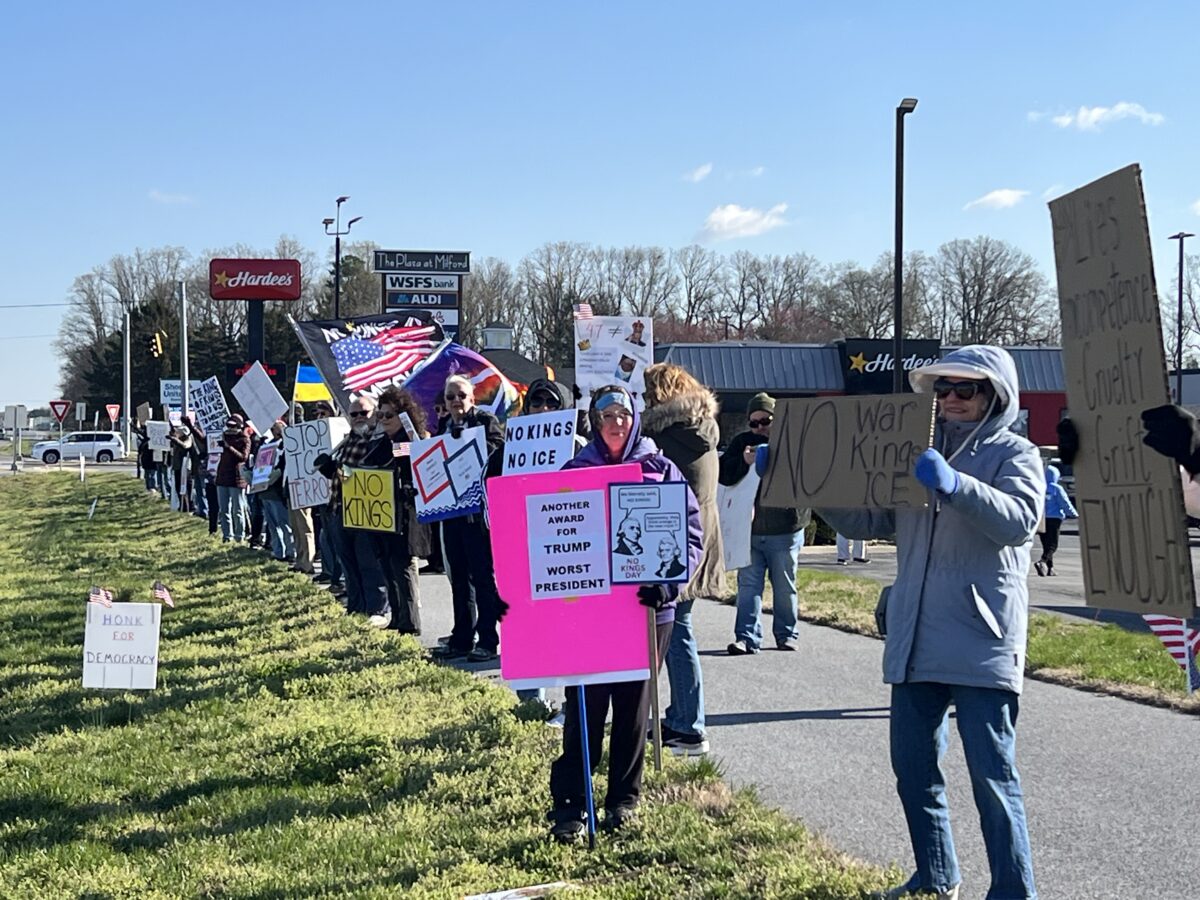
On a cold, sunny Saturday on March 28 in Milford, Delaware, the No Kings protest site is mostly empty just before the official 9 a.m. start time. But as if on cue, a throng of people bearing signs and small American flags begin emerging from cars into the shopping plaza parking lot, collecting along the nearby highway in the biting wind.

Milford is a small but rapidly growing city of more than 11,000 in the southern part of the state. Delaware is solidly blue—whether or not Joe Biden is running for president—but the further south you go, from the urban north, the more quickly it turns purple and then red. People not from Delaware sometimes express incredulity that the state is large enough for a cultural divide, but its southernmost county, Sussex, is far more rural and has been solidly Trump country despite the state’s Democrat-dominated General Assembly. The farming industry here also draws heavily on migrant workers, some permanent and others on temporary work visas.

Despite the agitated tenor of the demonstrators’ signs, the atmosphere at the morning’s protest is cheerful and upbeat. By 10 a.m., the crowd is about 170 strong, stringing out along a strip of chain stores that include a Starbucks and a Chick-Fil-A.

Signs wave at the passing traffic on Route 113, a main north-south thoroughfare, with messages like, “The Constitution is not optional,” “All of my outrage can’t fit on this sign,” “Fight fascism,” and of course, many variants of “No kings.”


Keep an Independent Mind

Sign up to receive twice-weekly Barn Raiser updates on original, independent reporting from rural and small town America.

mail

Passing vehicles frequently wave back and honk support, but some of the area’s Trump supporters make themselves known as well.

“Hey, we got our first ‘Number 1,’ ” a protester jokes, alluding to a passing middle finger flashed at protestors.

“Go home, you idiots!” one man yells out the window across six lanes of traffic, to cheers and jeers from the protesters. “Asshole,” one says. Another protester reports seeing a driver giving a middle finger while his passenger slouched down and shielded their face, apparently not on board with the sentiment. One passing driver attempts to juggle controlling a large U-Haul truck and take a photo of the protesters.

The reaction from passing vehicles was about 90% positive, says Bob Stone, a 76-year-old former aircraft mechanic originally from the Denver area, who moved here to be close to his grandkids. He lives in Seaford, a slightly smaller city to the southwest and one more firmly in red Sussex County. “I used to go to Seaford [to protest], but there was only a neighbor of mine and me, and that was it,” he says.

According to The Guardian, more than 8 million people came to protest at more than 3,300 No Kings events across the U.S. and in more than a dozen countries. Organizers estimate nearly half of the No Kings events were held in traditionally “red” or battleground states, with many in rural areas.

A military veteran protests at the No Kings rally in Milford, Delaware. (Andrew Sharp)

Saturday’s No Kings crowd in Milford was about four times the size of the usual sign-waving group that has been gathering here, he estimates. Stone has been protesting Trump since 2016, and bears a sign reading, “Make ‘1984’ fiction again.” “We’re not going to lose our democracy,” he says, “and peaceful protest is as democratic as it gets. Get on your soapbox and you can voice your opinion.”

Stone knows first-hand that voters make mistakes. “I may be one of the few that voted for Nixon and admit it,” he says good naturedly. “I didn’t vote for him the second time.”

Milford resident Mary McGraw, a retired social studies teacher, identifies herself as a descendant of Patrick Henry (seventh great-grandfather), the Revolutionary orator famous for saying, “Give me liberty or give me death.”

She is concerned about the future of her children and grandchildren. She thinks Donald Trump is taking powers a president never should have, exactly the kind of abuse that drove her famous ancestor to be an anti-Federalist. “I think that our forefathers foresaw this,” she says. “They anticipated what was going to happen. And I’m glad to see all these people out here taking a stand.” Her sign reads, “Stop the cruelty. Stop the chaos. Stop the corruption.”

The demographics of the crowd skew older, almost all retirement aged. One exception is Brayden Shockley, age 20, from the nearby town of Felton. “Everybody’s got jobs,” he says, describing one obstacle to young people demonstrating. He also notes that the lack of youth might have something to do with the southern Delaware location. (One young man shouting from the window of a passing car seemed to be distinctly on the other side of the divide.)

“I just think it’s really important to fight for what you think is right,” Shockley says. “There’s a lot going on in this country, and it’s going to affect young people the most. So I really feel like it’s important for people in my generation to come out here and protest.”

His sign reads, “A president shouldn’t divide his people.” Politics has become toxic, Shockley says, and Trump is fueling the fire.

— Andrew Sharp

A tale of two Midwest county seats

Saturday’s No Kings rallies—the third of Trump’s second term—were the largest yet. Just as important as the big city protests that drew millions of resolute Americans were the rallies in small towns and rural communities scattered across the country.

On Friday, March 27, community members in Albert Lea, Minnesota—a small, increasingly diverse town of 18,000 that is 90 minutes south of Minneapolis—held a sign making party at the Union Center in preparation for their No Kings rally the next day. Topics ranged from the march’s theme (“No Kings” and “Save Democracy”), to recent events (“No ICE, No War”), to the perennial favorite (“Do Not Panic: Organize”) to everything in between.

Lifelong peace activist Tom Hansen supports No Kings protestors in Albert Lea, Minnesota. (Cara Letofsky)

The next morning, the sign-makers are joined by an estimated 300 neighbors in the town’s largest protest yet of community members frustrated with what is happening in our country. They take to the streets knowing 60% of their neighbors in Freeborn County, where Albert Lea is the county seat, voted for Trump in 2024. Mary, one of the lead organizers, starts the rally explaining how the arrival of Immigration and Customs Enforcement (ICE) agents in town affected the community. ICE “brought fear to our community,” she says. “People were not able to go to work. Some businesses needed to close for a few days,” impacting their livelihood and the local economy.

First-time No Kings demonstrators in the crowd, included Joel, a retired grandfather. His family members in Minneapolis were directly affected by the ICE surge there. “What the federal government is doing, it’s just not how we’re supposed to treat each other,” he says, adding that the cost of the war in the Middle East and increased funding to ICE as other reasons for showing up.

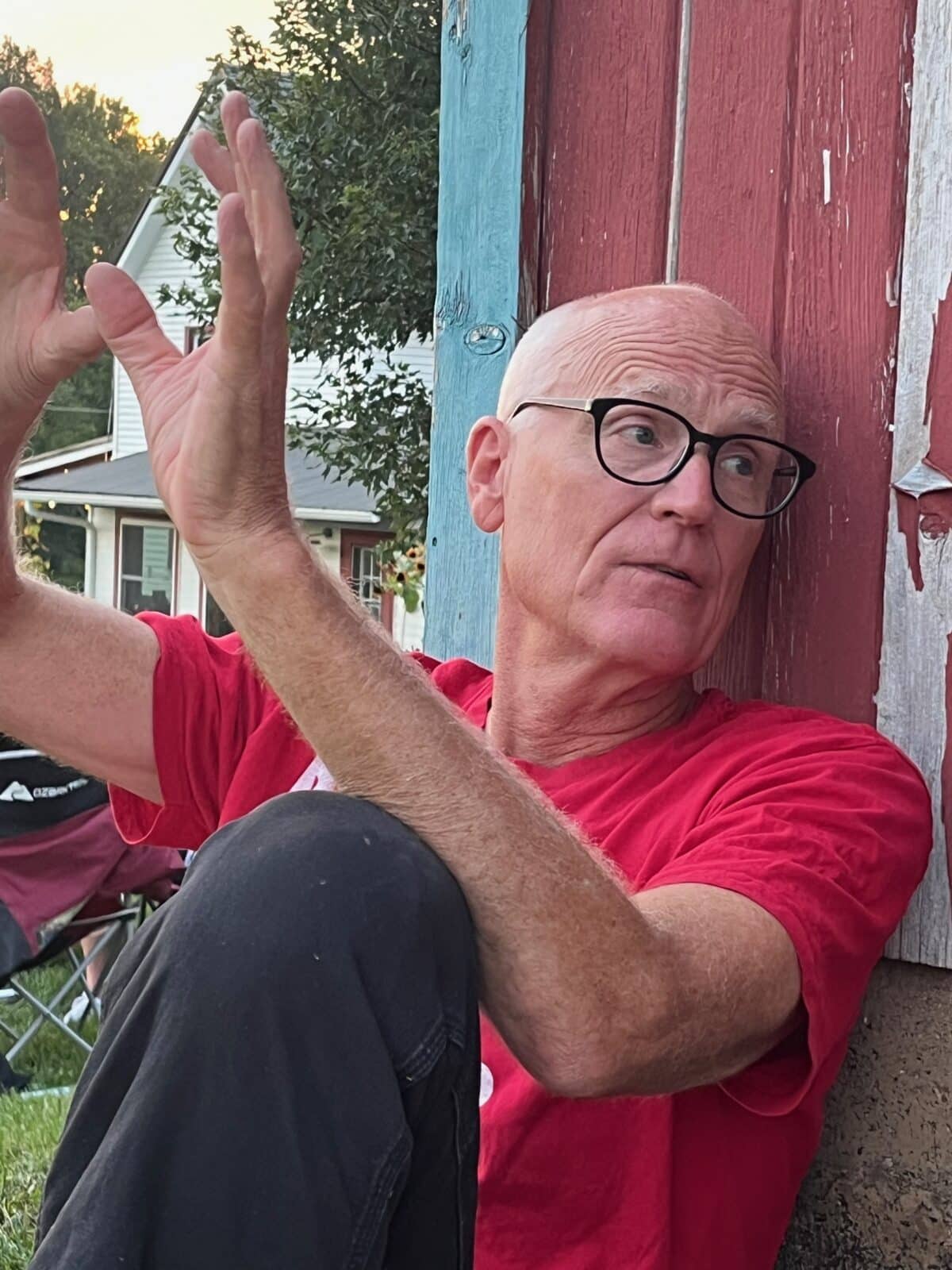
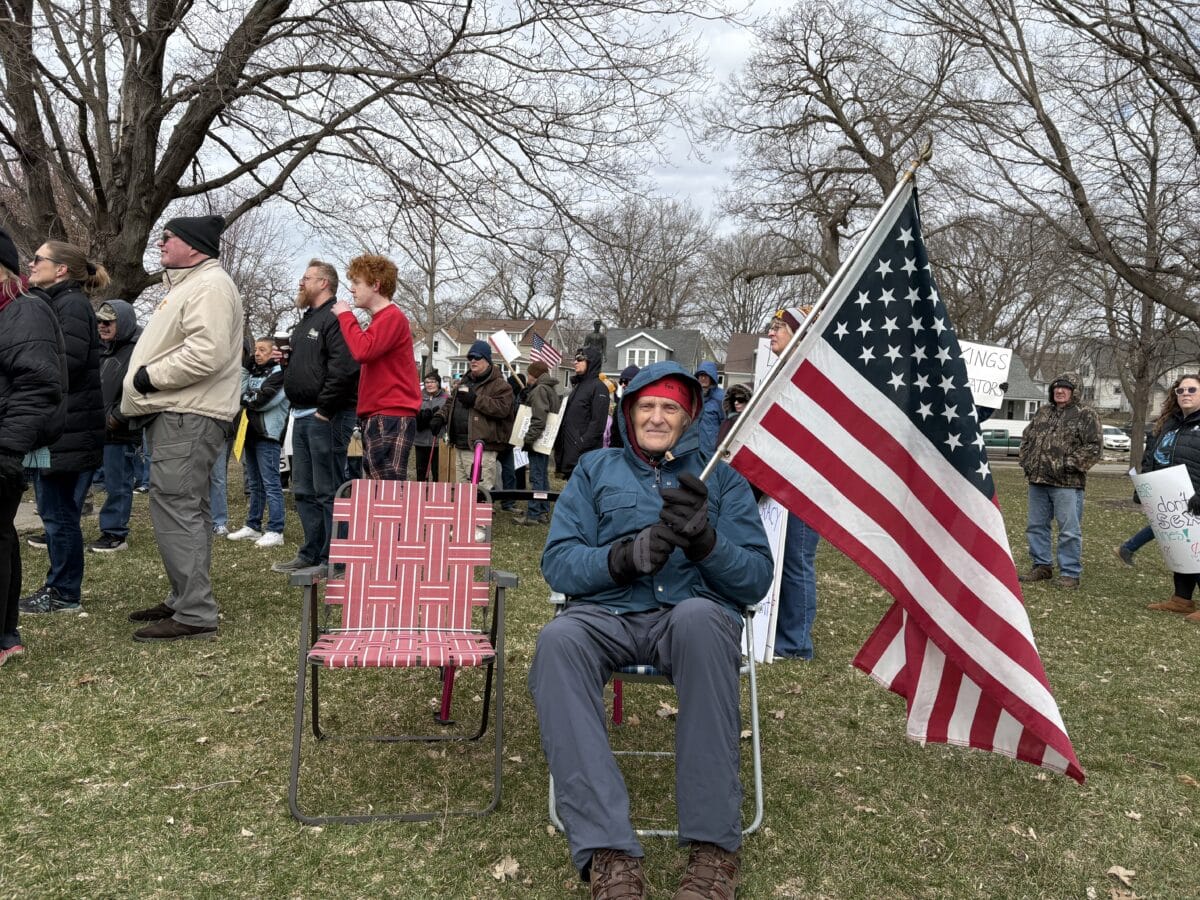
Also attending is self-described, lifelong peace activist, Tom Hansen, who spent the rally sitting in a folding chair holding an American flag. “I love America,” he says, as the speakers lead chants of “no war” while the cars driving by honk in support.

About 40 miles down the highway, in Mason City, Iowa, organizers of North Iowa Fights Back are kicking off the town’s rally and march. North Iowa Fights Back is a woman-centered group that organically grew out of the concern for each other and for other marginalized community members after the 2024 election. In that election, Cerro Gordo County, Iowa, where Mason City is the county seat, swung 55% in favor of Trump.

At the No Kings rally in Mason City, Iowa, emcee Tiff Mussman with North Iowa Fights Back kicks off the day’s rally and march. (Cara Letofsky)

In addition to organizing community-wide rallies and raising money to support members of the community in need, the group activates people to participate in civic life. “Voting is your super-power,” rally emcee Tiff Mussman, points out as the League of Women Voter volunteers in the crowd get ready to register people on the voter rolls then and there.

Like in Albert Lea, the event attracts a variety of people. Labor union members are there, as are people newer to the resistance. One older woman sports a red handknit tasseled hat that has become a sign of the resistance. She begins to choke up when this Barn Raiser reporter asks her why she showed up to the rally. One of her first reasons: “My father served in the Navy in the South Pacific. He was willing to give his life to fight against what is happening right now,” she says quietly. “Now I’m afraid for my kids and grandkids.”

While many in the crowd show up to stand against “all of it,” the signs reflect the weight of what people are concerned about. “Be truthful! No more lies! Enough!” “The files aren’t in Iran,” “I need to be able to tell my children I did not stay silent,” and “They want to mold America to their cruelty.”

The mood was somber. Then the Singing Resistance began and the rally attendees began to march out of the park, bringing the message of hope, joy and community empowerment out into the world.

— Cara Letofsky

The post Rural and Small Town Americans Show Up for No Kings Rallies appeared first on Barn Raiser.

What Rural America Can Learn from Haitian Immigrants

What Rural America Can Learn from Haitian Immigrants

This is the sixth article in the Barn Raiser series “Rethinking Immigration and Health on Maryland’s Eastern Shore,” drawn from the author’s research for her book Landscapes of Care: Immigration and Health in Rural America.

It took months to convince Junior to talk to me. He was busy, working full-time at a manufacturing plant and caring for his young family in his spare time. His family was apprehensive about him speaking with a stranger—an anthropologist, no less—eager to record personal details. Finding time for an academic interested in Haitian life on Maryland’s Eastern Shore was a distant priority.

When he finally agreed, it was clear he still wasn’t convinced our conversation was a good idea. He was polite but guarded. And when he began describing his years where he first worked at the local poultry processing plant, I understood why.

“Still now, when I think about it, I hate the fact that I started working at the chicken plant,” he told me. “It was not a good experience. I did not like the people. I did not like the way they treated me. I did not like the way that the supervisor was treating me.”

Junior’s story—and the stories of other Haitian workers I interviewed during my decade of research on Maryland’s Eastern Shore—reveals something that rarely makes it into conversations about immigration: the human costs it takes to do the work that keeps rural economies running, and what it means to survive.

But his story also reveals something else: a model of resistance and self-determination that rural America would do well to learn from.

‘They consider us like their slaves’

Haitian immigrants on the Eastern Shore often find their way to the poultry processing plants that dominate the local economy. For newly arrived Haitians, the plants are often the only option. Most come to the Eastern Shore because of severe economic precarity in Haiti or other parts of the United States where work has dried up. As Roseline, a Haitian immigrant who has lived in the area for nearly 30 years, explained: “I think a lot of immigrants come here because there is a lot of factory work.” Without transportation, English skills, or established networks, the poultry plants—which actively recruit immigrant workers—become the default. The conditions are brutal—but the alternative is no work at all.

“You take the chicken by the leg, and then you hang it on a hook, and it keeps going,” Junior said of the assembly line. Workers move in unison, one body filling in for another when someone falls behind. The pace never stops.

But the hardest part, Junior explained, wasn’t the work itself. It was the rigid racial hierarchy within the plant—white administrators at the top; African American supervisors in the middle; Haitian workers at the bottom.

“Your boss is yelling at you, and you have to keep hanging at a very fast speed,” Junior told me. “And then when you slow down because you are human and you get tired, she will come riding at you on the bike and yell, ‘What are you doing? Why did you stop?’ ” He paused. “Especially when you are Haitian, they do not expect you to stop.”


Keep an Independent Mind

Sign up to receive twice-weekly Barn Raiser updates on original, independent reporting from rural and small town America.

mail

Vanessa, another Haitian worker, described the toll through tears, rapidly waving her hands up and down to demonstrate the knife work: “Like this, like this! It’s in the same place, the same kind of work, same chicken, same pressure.” She struggled to find words adequate to the experience. “It is really painful, physically. They consider us, Haitians, like their slaves because they need our blood, our bodies.”

Daniel, who spent five years in the plants, used the same metaphor: “Working at a chicken plant, Haitian people call it like a slavery job, but you get paid for it. That is what it is. It is hard, and they do not really treat the people right. It is very controlling.”

The comparison to slavery isn’t rhetorical excess. It reflects how Haitian workers understand their position—essential to the functioning of the industry, yet treated as infinitely replaceable. Their labor creates value; their bodies absorb harm; their humanity goes unrecognized.

Learning to say ‘no’

What made Haitian workers particularly vulnerable, Junior explained, was language. Managers took advantage of workers who couldn’t speak English, who didn’t know their rights, who couldn’t push back:

They always take advantage of the Haitians because they do not know the system. They do not know that they got the right to say, “That is over my limit.” My first year, I did not have a lot of English, so everything they do, everything they said, I had to agree with them just because I did not have the language to explain myself and say, “That is not fair.” So that is the year I suffered the most.

Then something shifted.

“The second year, I started picking up some English and then saying ‘no’ and explaining why I think this is not fair. They did not like me because I could say ‘No.’ ”

Junior describes this small act—learning to say “no” in English—as transformative. “I think that the first time I said ‘no’ is the first time things started to get better. I remember all of the guys in the line started treating me different because I can talk to them now. They no longer talk behind my back because I answer when they say something.”

This is resistance: not dramatic confrontation, but the steady accumulation of small refusals. Learning the word that allows you to set a limit. Finding your voice in a system designed to silence you.

The cost of survival

Junior eventually quit the poultry plant. “One day I came and said, ‘That is enough.’ It is time for me to wake up and do something different—go to school and try to change my life.” Soon, he found work in a manufacturing plant. Although not paradise, it represents something the poultry plant never offered: a way out.

Still, he remained tied to the poultry industry, usually the only form of work available to Haitians in the area, including his mother. And the consequences of that economy extend far beyond the plant floor.

Junior’s father never could bring himself to work there. When he first interviewed for a job, he became scared about the pace of work and the occupational risks. Without access to that employment, he had no means of making a living in America. Going back and forth to Haiti every six months became his only option.

It cost him his life. Junior’s father died in the 2010 Haiti earthquake.

This is what we don’t see when we talk about immigrant labor in the abstract: the impossible choices, the risks absorbed by families, the way an economy built on disposable workers disposes of people in ways that ripple across borders and generations.

What rural America could learn

Haitian workers I interviewed understood their situation with devastating clarity. They knew the system was designed to extract maximum value from their labor while minimizing their humanity. And yet they found ways to resist, to support each other, to maintain dignity in conditions designed to strip it away.

“We try to be united,” one worker told me. “A lot of the other people do not like us. They do not like Haitians. Especially at work, they do not like us.” Solidarity emerged not despite of exclusion but because of it.

Rural America is facing its own crisis of abandonment—hospitals closing, young people leaving, economies hollowing out, the sense of being written off by distant powers. The conditions are different, but the experience of being treated as disposable isn’t entirely unfamiliar.

What can rural communities learn from immigrants who have developed sophisticated strategies for surviving exactly that condition?

They might learn that resistance doesn’t require dramatic gestures—sometimes it’s as simple as learning to say “no.” They might learn that when formal systems fail, informal networks of mutual support become essential infrastructure. They might learn that dignity isn’t something granted by employers or governments; it’s something you claim for yourself, in community with others.

Junior’s story doesn’t have a triumphant ending. He got out of the plant, but his mother still works there. The system that killed his father continues to operate. The racial hierarchies that made his life miserable remain intact.

But he found a way to change his own life. He refused the logic of his own disposability. He learned the word that let him set a limit.

“The first time I said ‘no’ is the first time things started to get better.”

That’s not nothing. In fact, it might be everything.

The post What Rural America Can Learn from Haitian Immigrants appeared first on Barn Raiser.

A Strategy to Heal America’s Rural-Urban Divide

A Strategy to Heal America’s Rural-Urban Divide

For much of the 20th century, rural and urban voters often aligned in their support for presidential candidates. In 1976, when Jimmy Carter was elected, rural and urban residents voted within one percentage point of each other. But since then, the gap has widened. In 1996, Bill Clinton won 48% of rural counties; in 2024, Donald Trump won 93% of rural counties.

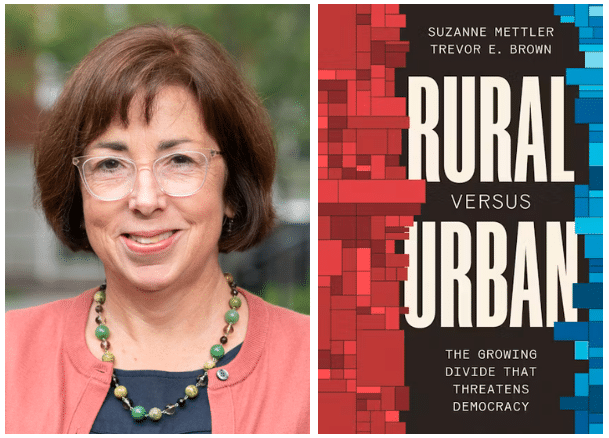
The story of how and why rural America became so lopsidedly Republican—and why the work of local organizers and elected Democratic Party officials is vital for restoring a rural civic landscape not dominated by single-party rule—is the subject of a recent book Rural Versus Urban: The Growing Divide That Threatens Democracy (Princeton University Press, 2025) by political scientists Suzanne Mettler and Trevor E. Brown.

The book combines five decades of analysis spanning thousands of counties, with on-the-ground interviews focused on counties in a few key states—Michigan, Ohio, North Carolina and Georgia. In short order, Mettler and Brown dispel the misperception that the rural-urban divide is grounded in policy positions, whether about government spending or social issues such as abortion and gun rights. While those differences matter, in Mettler and Brown’s view, partisan polarization doesn’t translate to ideological polarization. It’s more a matter of perceived identity, which has shifted dramatically since the late 1990s.

The consequences of this shift on American democracy are strikingly apparent to the 39 county Democratic and Republican chairs Mettler and Brown interviewed. The authors write, “Many Democratic county chairs told us about local supporters of the party who’ve become afraid to put political signs in their yard or sign a petition, for fear of losing friends, the services of repairmen or even their job.”

Mettler, a professor of American Institutions at Cornell University, talked with Barn Raiser about the historical developments that produced this divide, as well as counter-trends, such as the success of Howard Dean’s 50-state strategy, and more recent party-building efforts going on today that may hold the keys to reviving and saving American democracy.

Your book argues that rural-urban tensions aren’t new to American politics. Rather, the erosion of the New Deal political order, which focused on integrating rural America into a modernizing economy, resulted in the economic decline of rural America, and the political alienation that followed. And, if American democracy is to function as it should, we need to revive something analogous to New Deal programs to materially reintegrate rural America. Is that a fair reading of your argument?

I pretty much agree with it. One thing I would qualify slightly is when you say the rural/urban divide is “not new.” I would say if you go back through American history, you can find times where there were certainly social and cultural tensions between rural and urban places, and sometimes there were political divides, but they did not divide the whole country. This is the first time that rural places have lined up in one party and urban places in the other party. That’s unique and that’s what begins to emerge in the 1990s, but everything else you said I like.

How did the New Deal help farmers and rural communities survive the Great Depression and sustain a decent way of life for decades after?

Lots of different policies helped people. You had subsidies to help farmers with their crops, along with the Farm Security Administration. But there were also a lot of policies that helped all rural people. For example, the Tennessee Valley Authority and the Rural Electrification Administration brought electricity to rural places. This is really striking. Urban places had been acquiring electricity in the years before that, and rural places were really left behind. So these policies were quite dramatic. Places went from no electricity at all to suddenly the lights are lit. All kinds of things become possible through mechanization with electricity. That transforms people’s lives.

Even as late as 1980, your data shows rural and urban private employment grew equally fast, but things began to change in the Reagan era due to deregulation and the ending of antitrust enforcement. How did that hit rural communities?

In urban areas these things mattered as well, but urban areas were able to adapt more easily, and they were able to develop new aspects of their economy, whereas it just really gutted rural communities. You had all kinds of small businesses that went under with the rise of big-box stores. That ends up gutting all these little towns and villages sprinkled across the rural landscape. Other forms of deregulation were problematic for rural places, because you just don’t have the diversity of things going on in the economy that helps rural places. It’s also that they’re so far away. Airline deregulation was particularly harmful for rural places. We quote in the book Sen. Robert Byrd (D) who had voted for such deregulation, and later regrets it because of the impact it had. Here is what he said in 1986:

[T]his is one Senator who regrets that he voted for airline deregulation. It has penalized States like West Virginia, where many of the airlines pulled out quickly following deregulation and the prices zoomed into the stratosphere—doubled, tripled and, in some instances, quadrupled. So we have poorer air service and much more costly air service than we in West Virginia had prior to deregulation. I admit my error; I confess my unwisdom, and I am truly sorry for having voted for deregulation. I would welcome the opportunity to vote for reregulation because we people in the rural States are paying the bill.

That was followed in the 1990s by trade-driven losses in manufacturing with the North American Free Trade Agreement (NAFTA). This again hit rural communities hard and crippled union power. What impacts did it have materially on rural America, and politically how did it erode trust in the Democratic Party?

I would not have realized before we did the research how much rural places relied upon manufacturing. Deindustrialization began earlier in urban places, and sometimes plants moved to rural places, because it was cheaper to operate or there was less unionization, etc. But there were a lot of rural counties in the Midwest with strong unions in manufacturing. So this really goes under in the 1990s and early 2000, and it does as our trade policies become more open.

NAFTA was just a very visible instance of this. Rural people saw that Bill Clinton, a Democratic president, was signing this into law. While most Democrats in Congress voted against NAFTA, the fact that the president voted for it made it look like the Democrats were abandoning them. In so many places since the New Deal, rural people had seen the Democrats as the party that had their backs. And suddenly, it didn’t seem that way anymore.

It’s also the case there was a big fight over NAFTA, and the Democrats were divided. I had the opportunity to interview Rep. Richard Gephardt (who represented Missouri’s 3rd Congressional District) who had been really leading the opposition to NAFTA. Bill Clinton said, “Well I’ll send you to Mexico, work out a deal with them that will take care of our workers and the environment.” And Gephardt goes to Mexico, comes back with no deal. So he and David Bonior (House Majority Whip at the time representing Michigan’s 12th Congressional District) led the congressional opposition. And there were labor groups in the country that were all opposed to it and other kinds of organizations. But ultimately it gets enacted, and the Democratic president, Bill Clinton, signs it into law. So in other words, Democrats themselves helped make it very visible and then it really hurt the party.


Keep an Independent Mind

Sign up to receive twice-weekly Barn Raiser updates on original, independent reporting from rural and small town America.

mail

As both party’s organizational structures weakened and unions were decimated, the GOP benefited from aligned movements. Your book highlights the growth of evangelical churches, the anti-abortion movement and the guns rights movement. Why are such organizations so important to this story and how did these intensify the geographic political divide?

Political parties at the organizational level have been getting weaker for decades because of the same kinds of reasons that civic organizations generally have—the kind of story that Robert Putnam tells in Bowling Alone (published in 2000). But parties can be helped by civic organizations that “connect the dots” for citizens—organizations that play a role in their everyday lives and convey to them which party is best representing their interests and values. Labor unions used to do this for the Democratic Party. But with deindustrialization, there’s many fewer strongly organized work places, so that’s not happening as much. And that has really hurt in a lot of rural areas, particularly in the Midwest.

Meanwhile the Republican Party has been helped by the growing involvement in politics of groups like evangelical churches and gun groups affiliated with the National Rifle Association. These are like your local rod and gun club and shooting ranges, where people have to go if they buy a gun, and they need to be licensed so they have to go through some training. Here they’re learning the NRA’s message about protecting the Second Amendment, and it’s the Republican Party that’s helping you with that. So these groups point the way for voters to the Republican Party. That’s helped that party out, and these groups are more prevalent on a per capita basis in rural areas than in urban areas. So they’ve made a real difference in cementing this divide.

We see this divide starting in the 1990s, due to these political economic changes, and then growing in the early 2000s, for reasons related to what we call “elite overreach,” and then becoming cemented by these organizational dynamics.

This concentration of power doesn’t necessarily benefit rural people, however. Why is that?

Rural places have not become better off since consolidating in support of the Republican Party. Prioritizing social issues like abortion—of which there just slightly more in rural places, on a per capita basis, than urban places—may be satisfying to some folks.] And yet there’s not transformative economic change that’s happening. So the Republican party does not seem to be helping out rural areas economically.

Rural people do benefit from redistributive policies.

Right. We looked carefully at all sorts of federals social welfare policies, and it turns out that rural counties rely upon them at least as much, and in many instances more than urban counties, as a percentage of income coming into the county.

There are more senior citizens per capita in rural places than urban and so, not surprisingly, there’s more Social Security and Medicare going to those places. Rural places depend heavily upon Medicaid, and SNAP (the Supplemental Nutrition Assistance Program) and so on. And yet, that does not seem to make rural people feel more warmly toward the Democrats, even though the Democrats really created most of these policies and have done the most to protect, sustain and expand them over time.

What rural people are looking for is a stronger economy and good jobs, health care and education, etc. Whether it’s for rural people or urban people, that’s what really bestows dignity on people.

Your book looks at how political power is distributed across rural America, favoring the power of the GOP, and how that is amplified through structures of the American constitutional system—the Electoral College, Congress, the courts. Could you hit a few of those highlights?

I appreciate you catching the argument we’re making that rural people themselves are not empowered by this. American political institutions have always given more political leverage to less populated places, and this is true through the Electoral College and the structure of the U.S. Senate, for example.

Every state, regardless of population, gets two senators. California has something like 66 times the population of Wyoming, but they both get two senators. So that gets repeated across all of these rural places, and that means that the U.S. Senate over-represents those states with less populations. In the past, this didn’t matter that much, because both parties had some strength in rural areas, so they checked each other. That advantage didn’t give rural areas, or less populated states generally, more political representation. But now it does, because for the first time in our history, rural areas across the nation have come together in the Republican Party. So one party gets all that benefit. 

Republicans in the Senate these days tend to be from states that represent less than a majority of U.S. citizens. Political scientists have done a lot to document that less populated states in the U.S. Senate get more of the federal budget process, for example. This not only has an impact on policy making, it also means that the judiciary, which relies upon confirmation of judges by the Senate, is very much shaped by that. So, in other words, it leads to what you could call minoritarian power, where a minority of Americans have an outsized voice in in our political process.

Your book sees a way forward that lies in party-building, and in the key role county chairs play. Howard Dean’s 50-state strategy, which he implemented as chair of the Democratic National Committee from 2005-2009, provides a model of what’s possible. Dean started off as a county chair in Chittenden County, Vermont. What impact did the 50-state strategy have? And how are county chairs doing important work in the current environment?

One of the really fascinating parts of this book project was traveling around the country, particularly in four states, and interviewing county party chairs, both Republicans and Democrats. A lot of those counties have changed from voting for Democrats primarily in the 20th century to now voting for Republicans. We found that the Democratic Party chairs are really struggling, and not surprisingly, for all the reasons I mentioned and there’s been kind of a downward spiral for them. As the Republicans do better in elections, it becomes harder and harder for them to field candidates to create a slate of candidates. That goes all the way down the local races. And when that’s the case, local Democrats are less likely to come out and vote. They’ll say to the county chair, “Why should I bother to vote? We don’t even have a full slate of candidates.” And so you get a vicious cycle.

So it’s still the case that—even with this big divide in presidential elections—one out of three rural voters will vote for the Democratic candidate. But they need to be doing better in order to be competitive, and that capacity is there.

It was fascinating to interview county chairs in Georgia. This was not too long after Raphael Warnock and Jon Ossoff had won their statewide races for U.S. Senate. A lot of the rural county chairs felt that they had really helped those victories for the Democrats. They would say, “If we do nothing, the Democratic candidate hereby gets 34%, but we work our tails off, we can get them up to 37% of the vote in our county.” And they did that in county after county. And that extra margin of the vote helped get the Democrats across the finish line. That shows how, even though the Senate seems very formidable for Democrats to win, if they work hard on statewide races to just lose rural counties by less, they can win Senate seats. It becomes less of a heavy lift than transforming congressional districts.

So what happened with Howard Dean?

Generally speaking, this rural urban divide has been growing since the 1990s and yet there’s this interesting exception to the rule for a few years there. In 2005 Howard Dean becomes the head of the DNC. And his 50-state strategy is designed to work everywhere, to organize the party at the grassroots level. He’d been a county chair himself in Vermont, so he knew all about this. And he cared particularly about rural places. There were county chairs I interviewed in northern Michigan who still remembered when Howard Dean had gotten them all organized through the whole region of the lower Peninsula in northern Michigan and how effective that was.

Howard Dean is there doing that 2005-2006. You get to the midterms in 2006 and Democrats win back control Congress. This is during the second administration of George W. Bush. And then in 2008, Barack Obama wins the presidency and of course Obama himself did a lot of organizing in rural places. His Organizing for America (later, Organizing for Action) really built on top of what Howard Dean had already been establishing. Obama won in places that now Democrats say, “Oh we couldn’t possibly win there.” And that’s not all that long ago. So it shows the power of organizing. Sadly, that whole system came apart. And the DNC has not focused on organizing and Obama’s organization really became just like a mailing list of the DNC.

My co-author’s and my takeaway is that party building is needed. What’s needed is for the Democratic Party to have full-time, long-term organizers hired from rural places to organize in rural places. And they need to start out by listening, by asking rural people, “What your needs here? What would you like a political party to be doing for you? Why are local people upset with the Democratic Party? And what can we do to regain your trust?” And then to work hard over the long term to rebuild relationships. We think that is a very doable goal.

But it’s not going to happen if Democrats aren’t there on the ground. Right now, there are these county chairs, they are these valiant individuals, a lot of them are retired people. And some of them are really older, they’ll say, “You know I’m in my 70s. But I’m the younger member of the group that shows up for meetings. My officers are in their 90s.” And so they need help. Party building is really important.

In some places you have young people who’ve come into the Democratic Party, in other places the younger people are in other organizations that don’t align with the party. They may be working on climate change or gun safety, but they are doing are doing it as nonpartisan groups. Could you talk about the diversity of what you found?

This is true, generally, not only in rural places. A lot of Americans, and particularly younger Americans, are quite fed up with parties. They see parties as part of the problem, not part of the solution. What we as political scientists—speaking on behalf of the discipline generally—know is that political parties actually make democracy stronger. They present alternatives to voters and they help voters from one election to the next know which party is on their side generally, which party can represent them on the issues that they care about. And they do the organizational work of getting out the vote. So, for those reasons and many others, parties are important. But there’s been a real anti-party feeling because people associate them with the ardent polarization of our times.

Some of the county chairs told us there’s younger people here and they’re engaged politically but they don’t want to be part of the party. And I think that’s okay as long as groups will work in coalition with the party. But it would also really help for the parties to have more organizers who are younger people.

There were some counties that we visited, where you had a lot of recent retirees, and some people who were not retired, who joined together as a team to revitalize the party. Some of those were the counties where they seemed the most successful. Instead of there being just one leader, they had a bunch of people with different strengths and talents they were bringing to the table. And they had more fun because they’re working together.

Fun is a really overlooked important factor in politics to keep people engaged even when it’s hard over the long term.

Is there anything you would like to add?

Some of the most moving county chairs that I spoke with were people who would stress that this takes a lot of patience. It takes a lot of listening, and having conversations with people. That can really make a difference over the long haul—building relationships and listening. That shouldn’t be underestimated.

We tend to assume today that everyone’s mind is just made up, that nothing’s going to change. But that’s not true. Most people’s views on issues are more fluid. We just got into this terrible state of “us versus them” politics that does not have much to do with policy positions. It’s more about your team versus my team, and the geographic aspect of the rural-urban divide exacerbates that. If you feel like everyone you know is part of one party, then it’s easier to demonize those other people you don’t know who live in another place, who belong to another party. But in fact there are members of both parties everywhere.

People gravitate to one or the other everywhere. So rebuilding relationships and listening and conversations are really important.

In April 2025, In April, DNC Chair Ken Martin and Association of State Democratic Committees President Jane Kleeb announced their “Organize Everywhere, Win Anywhere” strategy. This new “50-State Strategy”(57 counting territories) promises to revive struggling state party infrastructure to help local Democrats compete, including shifting more resources from the DNC to state parties. Have you followed this development, or have you reconnected with any county chairs about it?

I have not been back in touch with county chairs in the past year. I am also curious about whether the DNC’s newly-promised funds are having an impact. It certainly sounds like a good strategy, but are the funds really helping out with organizing in rural areas? I’m very curious about this myself. Apologies that I don’t have an answer.

Finally, what’s the most important question I didn’t ask? And what’s the answer?

One thing we didn’t talk about and that was the elite overreach dynamic. You have the pulling apart in the 1990s of place-based inequality. But then in the subsequent period, rural people start to think of Democrats as these people who live far away in cities and urban metropolitan areas, and who are better off than themselves, and who seem to like to tell them what to do. On policy after policy, rural people often support the basic idea of the policy on its merits, but they don’t like the way it’s implemented, because they feel that it controls their lives and their communities in ways they don’t like. They feel that they were not consulted in the process, and the people who created the policy didn’t have an understanding of their communities and what would work well there.

This grows with the educational divide between rural and urban places. It used to be that highly educated people in the United States were more likely to be Republicans, but by the 1990s, they become more likely to be Democrats. Then in the early 2000s, in rural places where most people have not gotten college degrees, they change from being more likely to be Democrats to more likely to be Republicans. And we see that as being in reaction to what’s happened already to the Democratic Party in urban places.

An illustration of a policy area where people feel like they’re being told what to do, is in the siting of wind and solar installations.

Interesting studies from all over the country told a similar story, where rural communities feel that what happens is that the developer comes in and they cut a deal with a big landowner in the area and they get all sorts of waivers from standard public policies to do this. And then only after it’s all settled does the local community learn about it. And they feel that they got sidelined. They feel that they didn’t have a voice and they would’ve liked some aspects of it to have happened on terms they set or that they agreed to.

This is happening in so many places. Somebody in Indiana in one of the studies said, “It’s not that I’m against wind power. I’m against how it was done here.” It’s very hard for urbanites to understand. Urbanites can sit back and say oh that’s all NIMBYism, but urbanites are the ones who can benefit from all of that wind and solar, and to rural people it seems really extractive, the way it’s done. But we need this for the future, for the future of the planet. So we have to get past this rural-urban divide and we have to listen to each other.

The post A Strategy to Heal America’s Rural-Urban Divide appeared first on Barn Raiser.

Argentina rarely sold beef to the US. Now, the country surpasses major trade partners.

Argentina rarely sold beef to the US. Now, the country surpasses major trade partners.

A decade ago, the United States imported less than half a million dollars’ worth of beef products from Argentina. Since 2016, those imports have topped $1 billion.

Brazil, now a leading exporter of beef products to the U.S., also did not sell into the country before 2016. Since then, the country has surpassed long-term trade partners such as Japan, Honduras and Uruguay.

This shift has raised concerns among beef cattle ranchers, as the country relies more on South America for products while the national beef inventory is in freefall.

President Trump announced new federal trade policies on Feb. 6 that allow Argentina to send the country four times as much select beef as it already does, setting the country up for record growth in American markets. Cattle groups and elected officials have lambasted this decision.

“Instead of imports that sideline American ranchers, we should be focused on solutions that cut red tape, lower production costs, and support growing our cattle herd,” said Deb Fisher, the Republican Senator representing Nebraska, in a statement.

United States Cattlemen’s Association president Justin Tupper said in a statement that the organization is concerned with the scale of the imports as well as verifying the origin of the imports.

“We must continue to focus on how we can rebuild our U.S. cattle herd,” he said. “Any trade agreement must be structured in a way that does not undermine U.S. cattle producers’ ability to compete and does not compromise the integrity of our supply.”

Data Harvest (formerly Graphic of the Week) is Investigate Midwest’s way of making complex agricultural data easy to understand. Through engaging graphics, charts, and maps, we break down key trends to help readers quickly grasp the forces shaping farming, food systems, and rural communities. Want us to explore other data trends? Let us know here.

The post Argentina rarely sold beef to the US. Now, the country surpasses major trade partners. appeared first on Investigate Midwest.
Rural History Teachers Choose Education Over Politics

Rural History Teachers Choose Education Over Politics

In a recent essay, Atlantic writer Clint Smith argues that without an understanding of our shared history, the “American experiment, as we understand it, will end.” In classrooms across the country, and without doubt one near you, social studies teachers are working tirelessly to prevent this. Many could use a lifeline.

Since 2020, hundreds of federal, state, and local laws across the United States have censored history education, banned books, and outlawed concepts and ideas deemed “controversial” or “divisive,” criminalizing whole groups of people and those who humanize them.

One 2025 study published in the Journal of Curriculum and Pedagogy found censorship laws did real and measurable harm to young people and educators. The harm varied “from experienced teachers leaving the field, to students learning an inaccurate or incomplete version of history, to marginalized students experiencing further marginalization and attacks on their identities.”

What about rural students?

Rural schools go beyond education in the classroom. As anyone who’s attended a rural high school football game knows, rural schools are community hubs and places that inspire civic engagement. Rural schools are less socioeconomically segregated than urban schools. Smaller class sizes mean students attending rural schools are more likely to receive individualized support from educators. Unlike their urban or suburban colleagues who might specialize in one or two classes, rural teachers are often tasked with mastering and teaching a variety of content areas.

Katy Swalwell, co-author of Social Studies for a Better World

When it comes to history education, rural schools face unique challenges. The educational resources that social studies educators draw from often give rural people short shrift. Katy Swalwell, 45, co-author of the book Social Studies for a Better World, says this is partially because history textbooks have an “urban-centric bias.” When rural people and places are mentioned in these texts, if at all, it is often with derision or as a stereotyped monolith. After their inclusion in westward expansion, alongside the erasure of Native histories and justification for Native genocide, rural places are often highlighted only as a backdrop.

“If the only time students learn about rurality is during the era of Industrialization, when people are moving from the countryside to cities, that leaves so much out,” says Swalwell. For rural students, this means they learn to see their homes only as places to escape from. It means their neighborhoods are not worth caring for. It teaches them that when it comes to what’s important enough for textbooks, they themselves don’t make the cut.

How we teach and learn about the past shapes how we understand ourselves and the future. “We have to do with the past only as we can make it useful to the present and to the future,” is how Frederick Douglass put it in 1852. In the United States, since the signing of the Declaration of Independence 250 years ago, our history remains contested. With the founding document’s ink long dry but the nation still young, Douglass appealed to these documents for liberties denied in his present.

Decades later, the United Daughters of the Confederacy countered Douglass, justifying oppression by their appeals to particular imagined pasts. Back and forth the debates over history see saw: Carter G. Woodson in the 1920s demanding what would eventually become Black History month. The John Birch Society in the 1960s banning history textbooks. The 1619 Project. The 1776 Commission. Today, the descendants of all of these traditions carry on—Moms for Liberty traveling the deep worn channels of the Daughters of Confederacy, while good public school teachers persist in the refreshing streams of those like Douglass and Woodson. It is in underfunded rural schools where these streams often crash in angry waves.

Despite the strong odds against rural schools, magic still happens in them.

I spoke with rural history teachers in Iowa, Illinois, Minnesota, Ohio and Alabama about the current debate over history education. These educators’ work reveals an incredible resilience; they’re creating potent possibilities amidst considerable constraints.

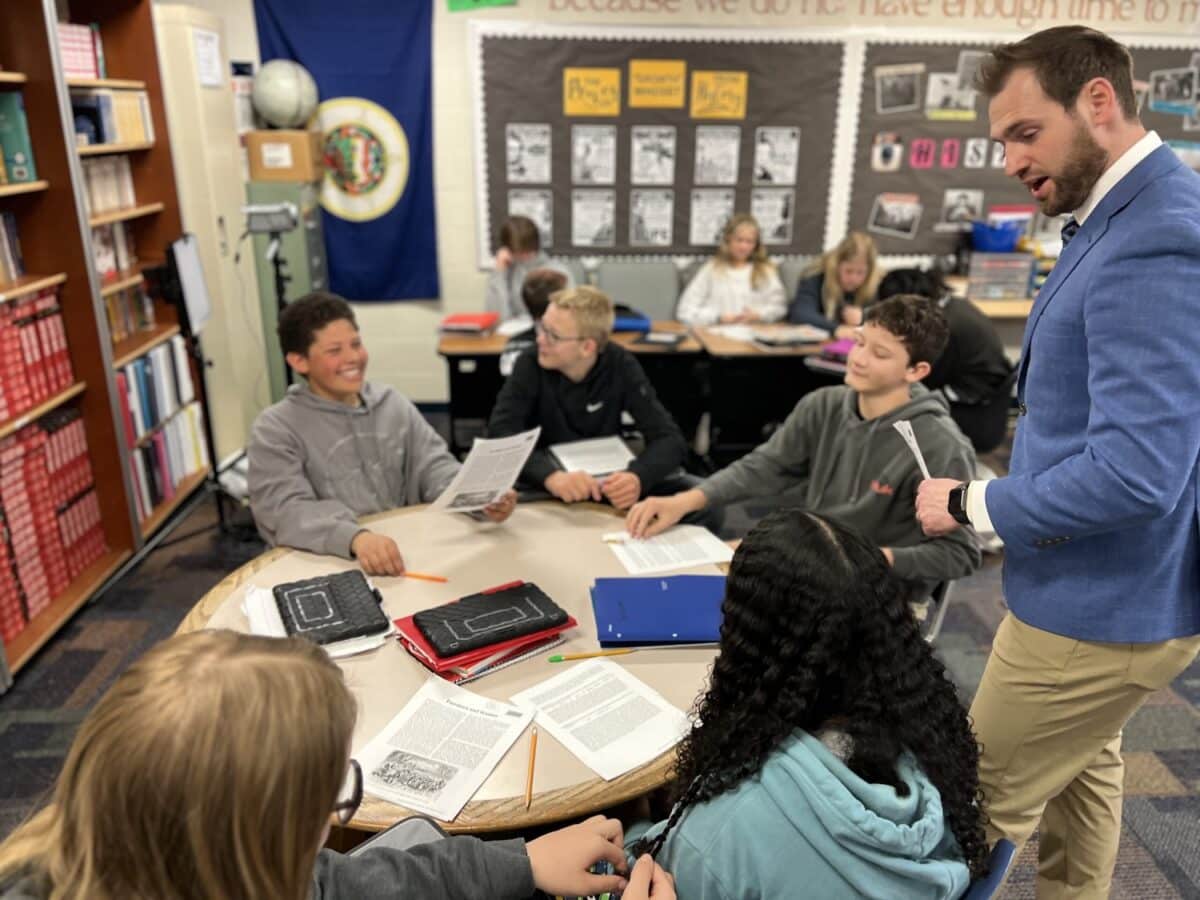
Dan Stevenson, 48, is in his 19th year of teaching social studies in southeast Iowa’s rural Muscatine County. He has a tattoo on his body and has painted his 8th grade classroom walls with three words, “We the People… .”

Early in the academic year, Stevenson encourages students to look at colonial U.S. history and ask who was and wasn’t included in the Constitution’s preamble. Charismatic, patriotic, and principled, Stevenson has broad community and district support for his work. Yet, he has abandoned some classroom resources that examine direct legacies of historical injustice.

There is much to fear for teachers like Stevenson: running afoul of vague state laws like Iowa’s “divisive concepts” law criminalizing teaching that makes students feel discomfort, getting doxed by far-right media, or accidentally saying “gay” in a state that criminalizes such words. These fears don’t dictate Stevenson’s approach, but they’re something he considers.

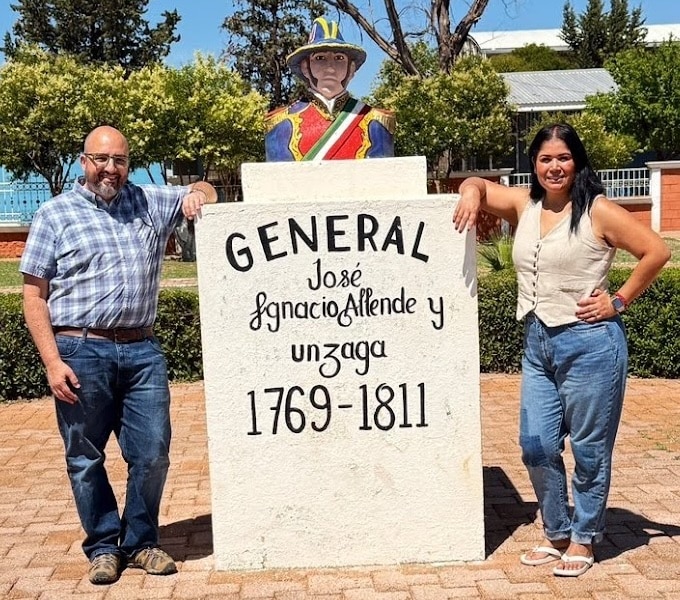
Dan Stevenson and his fiance Lupe Hernandez visiting a school in Ignacio Allende, Durango, Mexico, where they will lead a teacher exchange in the summer of 2026. (Photo by retired teacher Felipe Ruelas)

The 1980s farm crisis hit Iowa hard. According to the State Historical Society of Iowa, by the end of the decade, one in four Iowa farms were no longer in operation. More rural banks failed in 1985 than in any year since the Great Depression.

Stevenson tells me about a former student who talked about the farmhouse that she lived in with her family. She knew her family had lost a good portion of their farmland before she was born, and later sold many acres more to afford upkeep on their farmhouse. The student was embarrassed about it.

Stevenson asked his student if she had heard about the farm crisis and how hundreds of small farmers were driven off their land by federal economic policies that placed no value on family farms. She hadn’t. The class then explored the causes of the farm crisis. Some students cried when they watched a music video for John Cougar Mellencamp’s “Rain on the Scarecrow,” written in 1985 about the emotional and economic toll of the crisis.

If we don’t understand how the past has formed our present life, we might assume the wrong conclusions about our spot in society. We may believe it is because of our ancestors’ failings, or, conversely, their imagined self-made successes.

Thief River Falls principal rallys his community

In Thief River Falls, a town of 8,749 in northern Minnesota’s Pennington County, 70 miles south of the Canadian border, Josh Watne, 33, currently serves as principal of Franklin Middle School. His district, like many rural districts, serves as a hub for surrounding communities despite receiving a fraction of funding compared to neighboring districts. If not for a recently passed local referendum, his school’s future may have been in jeopardy.

Watne says that during that referendum campaign, there were “a lot of people coming out of the woodwork saying ‘the [public school] system is broken. Quit funding failing systems.’ “ Rhetoric like this catches on because its disseminated through billionaire backed propaganda machines. Americans for Prosperity, a Koch-backed libertarian group, has even initiated lawsuits to prevent communities from funding their schools. More often, well-paid, anti-government consultants spread their message through Facebook, mailers and local news outlets. By the time they leave town, whether or not they prevent school funding, they leave in their wake ruined relationships and a broken trust in local government. But schools are broke, not inherently broken. Now an award-winning educator for the same district that nurtured him, Watne’s story testifies not to schools’ failures, but their success.

“People like me aren’t supposed to end up here with something like this,” Watne said as he accepted a statewide Educator of Excellence award issued in 2025 by the Minnesota Rural Education Association. Watne says that he received free and reduced lunch and was raised by a young, single mother. “Nearly every connection I have today came from the school system,” he says. He then recounts the type of ongoing support that comes only from tight-knit, rural communities and schools.

It was teachers who taught him how to navigate the world, who helped him realize what he was capable of and who mentored him. It was coaches and choir directors who helped him find his voice and strength. Through school connections, it was community leaders who helped him get his first job. The three graduate degrees Watne earned were only possible because of a solid foundation provided by the rural school he once attended and now helps lead. And it was the people tied to this rural school that kept him safe and supported.

“Anytime I’ve fallen, they didn’t let me hit the ground, or at least I didn’t have to fall too far,” Watne said to the crowd attending his award recognition. “This is not only the benefit of public education but a specific advantage of rural education—our connections are deeper and the impact is much stronger, which is a reason people come back to our towns. It’s why I did.”

When adequately funded, rural schools are a boon to their communities and the lifeblood of democracy. Against the ongoing efforts to undermine the “existence of public schools, at least in rural America,” Watne sees a potential safeguard in historical thinking. During the first two failed attempts to pass the local referendum crucial to his school’s survival, Watne recalls the challenge of cutting through online misinformation and a loathsome attitude toward taxes. Civic reasoning, critical thinking, and empathy were all bedrock practices in Watne’s social studies classroom. These were also the key to unlocking public support for their underfunded rural school.

When it came to passing a funding referendum, organizing was needed as a counter-balance to the well-oiled libertarian propaganda machines and the true believers these inspired. Debates sprang up in community meetings, town halls, and Facebook.groups.  Some people were convinced by circular arguments that imagined schools to be doing poorly and therefore saw them as undeserving of the funding that might improve them. Others saw their personal needs as trumping those of the community.

Watne took his role of educator outside the classroom and spoke of the costs if the referendum passed: $11 a month for those with homes worth $100,000. He also spoke of the costs if the referendum failed: the students’ and community’s future. Websites were made, memes shared, and hard conversations were pursued to address the myths promulgated by the propagandists. Eventually, a critical mass of community members, including those identifying as political centrists, came together to support their public schools and pass the referendum.

A few powerful people set state standards

State history standards—and how those standards are shaped by moneyed political organizations—reveal how a few powerful people exercise undue influence over our collective memory and language.

Historian Timothy Messer-Kruse suggests that state history standards are only the most recent venue in a longer conservative, Christian Nationalist campaign to replace “democracy” with “republic,” as a description of the United States in both language and practice. While the country was certainly established as a Democratic Republic, undemocratic forces have long sought to emphasize the word Republic in order to undermine the practice of Democracy. Building on the work of segregationists threatened by an inclusive Democracy, the conspiratorial John Birch Society made billboards and wrote books in the 1950s and ’60s declaring that America is “a Republic… not a democracy. Let’s keep it that way!” This distinction, notes researcher Mike Caulfield, “is largely one created in the 1950s, not the 1780s.”

Alabama’s 2024 state history standards, updated for the first time in 14 years, plainly reveal the effectiveness of this larger project. In Alabama schools, for example, students no longer learn that the United States is a “Constitutional Democracy,” it is instead a “Constitutional Republic.”

But Alabama’s new social studies standards do more than reflect linguistic shifts influenced by far-right interests. Some educators are excited about the new standards.

Professor Jeremy Clabough says that the new Alabama standards present teachers with an opportunity because they emphasize inquiry and critical thinking.

Jeremy Clabough, 43, grew up in rural eastern Tennessee and taught at middle and high schools there before his current position as Associate Professor of Curriculum Instruction in University of Alabama-Birmingham’s School of Education. In Alabama, Clabough works with rural, urban and suburban teachers in addition to his own research and teaching. Clabough says the new Alabama standards present teachers with an opportunity—in part because they emphasize inquiry and critical thinking, encourage the practice of critical media literacy, allow for the identification of causes, and require analysis of complex texts.

Unlike history standards in some states that emphasize rote memorization, Alabama’s new standards now require students to practice thinking like a social scientist—asking them to evaluate, analyze and synthesize facts and different perspectives and form their own arguments. But Clabough is skeptical whether Alabama schools are adequately prepared for this shift in method—a challenge made harder by rural schools’ lack of adequate funding.

The processes of developing state educational standards vary widely. What these processes have in common is that standards reflect popular prejudices, power relations and social positions as much as they are an objective standard of how to teach history. A 2024 study of an education standards committee in the U.S. northeast found that the process is rife with political influence.

In the late 1990s, presaging Alabama’s recently revised standards, Virginia Republicans attempted to “water down or remove standards related to the Civil Rights Movement,” wrote the study authors. Similarly, in the early 2000s, Missouri politicians removed words like “diversity” from their standards, masking a value-laden process as neutral. Both of these moves supported legislator’s political aims more than codified accurate history.

Part of the reason undemocratic politics are so influential in this arena is because wealthy ideologues literally paid for that influence. Through funding astroturf organizations like Moms for Liberty, bankrolling local school board races, and purchasing influence with lobbyists and the politicians themselves, billionaire backers attempt to bend state standards and schools toward their own personal far-right interests.

History teachers face political pressure

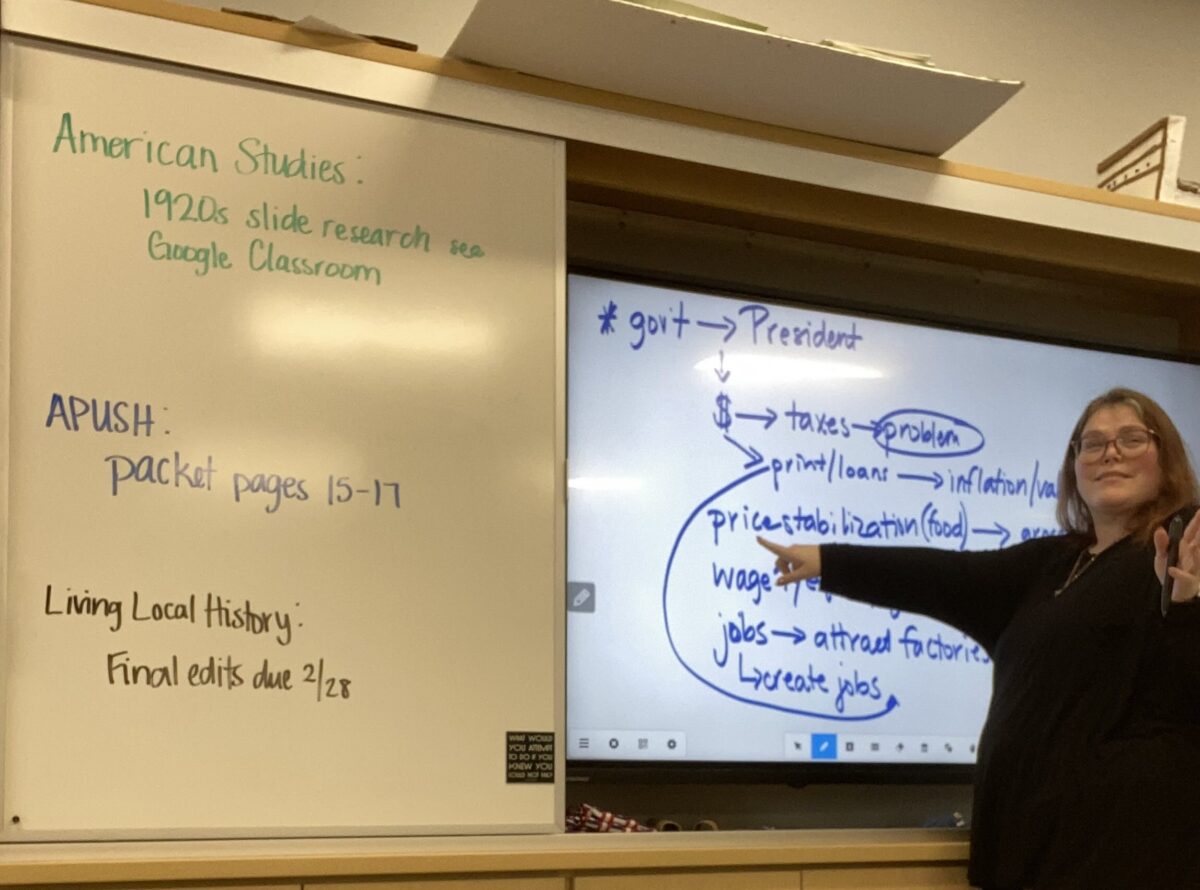
“Students want to make sense of things that adults are talking about,” says Heather Stambaugh. Stambaugh, 39, teaches history in the mostly rural Clark County, Ohio, at the same high school from which she graduated.

Heather Stambaugh teaches history in Clark County, Ohio, in the same high school she graduated from.

When she was her student’s age, history education helped expand her world and sense of self. Today, she says, empowering students in similar ways is what gets her out of bed each morning. Stambaugh says part of her job is to enable them to become empathic world citizens and critical thinkers. “I enjoy getting to see students start to formulate their own opinions, to see what they like, who they want to be and how they want to become that.”

Ohio, Stambaugh’s home state, is not one of the 23 states that has explicitly banned particular topics or history lessons in K-12 schools. But while GOP state legislators failed in their efforts to censor K-12 history curriculum, they have wrested control of schools away from educators and the communities they serve and instead granted oversight to a State Board of Education panel now consisting entirely of political appointees instead of a mix of elected and appointed members.

The 19 members of the current state school board, who have a combined 300(!) years of experience in education, will now be replaced by five people, who will be appointed by Republican Gov. Mike DeWine. As college students take to the streets to protest similar new undemocratic moves, including statewide initiatives curtailing academic freedom and shuttering university departments, high school students in Stambaugh’s class practice historical literacy skills, learning to draw their own conclusions and decide what historical traditions they want to continue.

Stambaugh’s students, like so many, were disoriented by the January 6th insurrection, but in history class they found parallels with the disputed election of 1876. Though worlds and generations apart, both elections saw allegations of voter fraud, disputes over whether everyone’s vote was or should be counted, voter intimidation, and threats of violence. In 1876, anti-Black voter suppression affected the vote. In 2021, the counting of Black and progressive voters sparked reactionary violence. Despite the bickering and dishonesty of elected officials, Stambaugh says students saw that common people have always found pathways to work for good.

Stambaugh says that students also found inspiration in the history of local Ohioans involved with the Underground Railroad. On field trips Stambaugh arranged, the kids “started out chasing ghosts, but then really got into the history of it.” Touring the historic home of mill-owner Daniel Hertzler, the docent showed students a room likely used to hide people escaping slavery. Everyday folks like Ohio conductors on the Underground Railroad George and Sarah Gammon, who courageously resisted unjust laws in the service of humanity, certainly offer examples for us today.

Yet, recently in the eyes of conservative politicians, such stories have been twisted into unproductive demagoguery. Failed Ohio bills sought to criminalize teaching about the racism that was the target of Ohio’s abolitionists. While these bills dind’t pass, their ahistorical bent lives on. Community members question teachers like Stambaugh, skeptical of history education because of ginned up political fears. Questions become attacks. Education becomes indoctrination. Patriotism becomes nationalism.

“These parents aren’t mad that we’re teaching history,” Stambaugh says. “They’re mad because their children might not subscribe to their way of thinking.”

One Iowa teacher I spoke with noticed that a strain of far-right partisan identity has become more salient among the high school students he instructs, to the detriment of their own learning. “My first year teaching was 2016 and people came in with MAGA hats,” says Michael, 33, the only social studies teacher at his rural, eastern Iowa high school. (Michael asked to be identified only by his first name.) “Now, it’s stickers on the laptops,” he says, “it’s become a consumer brand as much as a political identity.”

While Michael teaches history in a way that encourages questions and critical thinking, lessons that plant those seeds of critical thinking are less likely to find fertile ground with students whose identities are shaped by partisan talking points. “The more apt the criticism, the more [students] have to reject it to preserve their identity,” he says.

A good history education helps young people become fuller versions of themselves, but only if society allows teachers to engage in open and honest dialogue.

The day after the January 6 attack on the Capitol in 2021, Michael talked with his students about Trump’s allegations of voter fraud, the limited evidence supporting those claims and the affront to democratic norms. The next day he was called to the principal’s office. Parents had raised concerns about what Michael had said about “all Republicans.” He hadn’t, and offered to show his principal a transcript of everything he had shared with students. Thankfully, Michael’s principal was supportive.

The pressures Michael navigates play out differently in other rural schools.

Jay Bickford, 49, taught in rural Iowa middle and high schools before his current role as professor of education at Eastern Illinois University, where he works with rural teachers across the U.S. Compared to when he first entered education 25 years ago, Bickford notes many more teachers today feel unsupported by their communities and districts. This lack of support sometimes results in teachers flattening their curriculum or approach, and sometimes it results in their leaving the classroom.

One 4th grade teacher he worked with in Alabama discarded a lesson on local history because it touched on local racism. He’s seen other teachers, wanting to avoid conservative complaints, leave the classroom. One became an athletic director, another a building administrator.

Those teachers who remain, like Stambaugh in her Ohio social studies classroom, are not free from the chilling effects of history censorship. Stambaugh says she was asked at a birthday party recently whether she’s teaching the “right history.” For the first time in 16 years, she has begun using a textbook in order to stave off these types of complaints. And during her work writing professional learning standards she and her colleagues keep a thesaurus handy so they might avoid using words that trigger state censors.

Teaching is exhausting  “sometimes in the scariest way”

Stambaugh describes teaching as exhausting, “sometimes in the best way and sometimes in the scariest way.” She says:

It’s heartbreaking to have that lie of indoctrination perpetuated. We’re not the ones in that business. There is a whole business of indoctrinating but it’s not in schools. It’s on phones. We just want to love them, and teach them, and enable them to live wonderful lives.

A middle school teacher in rural Iowa echoed Stambaugh’s concerns and hopes. Jayme Kallaus, 40, also teaches in the same district, Highland Community Schools, from which she graduated high school. Her family has lived in the area for three generations and it was important to Kallaus to return home to pass on the gift she received through her schooling.

Now in her 19th year teaching social studies, Kallaus relishes the informal and relationship-dependent conversations afforded those teaching in rural communities. She recalls students who were eager to talk about partisan politics. She asked them questions, not as a rebuttal, but to encourage their own thinking. The students were surprised to talk to an adult who didn’t want to tell them what opinions are best but invited them to think more about their own.

Still, she isn’t free from the pressures facing teachers across the country. “

I hate the word indoctrination. It feels like as an educator you lose your sense of identity because you try to give multiple perspectives and you’re worried about what you say being taken completely out of context. I don’t know that it’s necessarily fear but it’s something that takes up half your brain space. Half of it is planning and half is thinking, contingency-wise, that if somebody pushes back on this, ‘how am I going to defend it?’

Like every educator I spoke with, Kallaus takes pains to present history in all its complexity, encouraging students to develop their own informed stances through critical thinking.

That is a big task teaching in states like Iowa, which in 2021 outlawed lessons highlighting systemic racism or sexism (topics deemed “divisive concepts”). Still, Kallaus, like any good educator, recognizes that depriving students of opportunities to think about systems of injustice deprives them of realizing their full potential—and in turn our full potential as a society.

Kallaus hopes her students “are able to make decisions based on being informed and what they feel is right for them and others around them.” History helps them see how interconnected we all are, and how pressure in one area or against one group might be intimately tied to others.

She tells her students, “You can always have your own likes and dislikes, but think things through. What are people doing that you like? What are people doing that you don’t like? And where can you leverage your power to make things better?”

Retired teacher Steve Peterson at Luna Valley Farm in Decorah, Iowa. (Beth Lynch)

One recently retired teacher I spoke with, Steve Peterson, 65, spent 24 years teaching elementary school in rural Iowa. In the 1990s, right before Peterson entered the classroom, Klan members marched in Dubuque, Iowa. Citizens organized to resist the group, hosting their own march and events. Hundreds showed up to counter the handful of Klan members.

The community also sponsored a remediation program to reckon with its racism. Peterson was part of that community education program, working closely with classroom teachers. Entering education seemed a way he could continue to encourage students to act more like those who marched against racism instead of those who marched for it.

He remembers exploring with his students histories of the 1960s, when so many white people angrily protested integrating swimming pools. His elementary students wanted to know why. He says, the easy, and incomplete answer, would have been to individualize this, to write off those hateful actors as bad people and irredeemable racists. Instead, in language accessible for elementary students, Peterson walked through how systems socialize people into enacting white supremacy. This gave students the power to follow the models of those courageous people who worked against the systemic oppression of Jim Crow.

“We’re going to encounter these types of things too,” Peterson remembers telling students. It won’t be the same as it was 60 years ago, but there will be times when people “do something that seems totally abnormal to us. And so what’s the right thing to do in that situation?” Reflecting on this lesson and the current pressures around history education, Peterson says, “We do students a disservice if we make racism, sexism, etc. into a personal thing about bad people rather than showing them there’s a system in place.”

Peterson worries that pressures against accurate history education are evolving—the boogeyman of DEI (diversity, equity and inclusion) now replacing CRT (critical race theory)—but he finds hope in the fact that history itself offers us models of resistance.

Thief River Falls community comes together

In Thief River Falls, Minnesota, where principal Josh Watne is paying back his community for the gift public schools gave him, there are signs of a new way forward. Aside from a blip during the pandemic around the manufactured CRT scare, there has been little community pressure around how history is taught. Watne outlines three factors behind this:

  • The district has established procedures and transparency inviting community input on curriculum in a way that balances input with standards, best practices, and professional judgements of educators.
  • The community has seen the demonstrable benefits of engaging in critical histories and diverse perspectives.
  • The district’s administration and board is direct with the community about the needs of its children and how these might be met.

It also helps that Minnesota offers robust support for teachers and schools relative to states with Republican-dominant legislatures. In fact, conservative community members have seen firsthand the benefits that come from engaging in social issues around diversity and history. The school district’s students, through programs with the high school choir that address social justice and history, have been able to share the stage with renowned artists and scholars and have performed at Lincoln Center and on Broadway.

Outside of the choir, parents see how lessons like those from the Zinn Education Project prepared by Watne inspire empathy building, critical thinking and historical literacy skills. These practices spill beyond the classroom walls and parents see the value of history education. “Some of the [negative] stuff you hear about we don’t have,” says Watne. “People making those kinds of waves don’t get very far.” The benefits of robust public schools speak for themselves.

The post Rural History Teachers Choose Education Over Politics appeared first on Barn Raiser.

Farm bankruptcies jumped 46% in 2025 as debt loads and costs rise

Farm bankruptcies jumped 46% in 2025 as debt loads and costs rise

Chapter 12 farm bankruptcies rose 46% in 2025 — to 315 filings compared to 216 in 2024, marking the third year in a row that filings increased, according to the American Farm Bureau Federation. 

The Midwest accounted for 121 filings, followed by the Southeast with 105, and together representing more than two-thirds of cases nationwide. Filings in both regions increased by roughly 70% compared with the previous year, based on the AFBF’s analysis of U.S. courts data.

The increase comes at a time of expanded borrowing, too: Operating loan volumes rose sharply in 2025, and the average size of farm operating loan increased by 30% from the year before, according to a survey conducted by the Federal Reserve Bank of Kansas City. The survey found that farmers took on more credit as production costs rose and cash on hand tightened.

The rise in filings follows a period of historically low farm bankruptcies. Chapter 12 bankruptcy rates in 2022 were the lowest recorded since 2004, according to the USDA’s Economic Research Service. As borrowing increased and costs remained elevated in subsequent years, the rebound in filings points to growing pressure for producers heading into 2026.

Data Harvest (formerly Graphic of the Week) is Investigate Midwest’s way of making complex agricultural data easy to understand. Through engaging graphics, charts, and maps, we break down key trends to help readers quickly grasp the forces shaping farming, food systems, and rural communities. Want us to explore other data trends? Let us know here.

The post Farm bankruptcies jumped 46% in 2025 as debt loads and costs rise appeared first on Investigate Midwest.
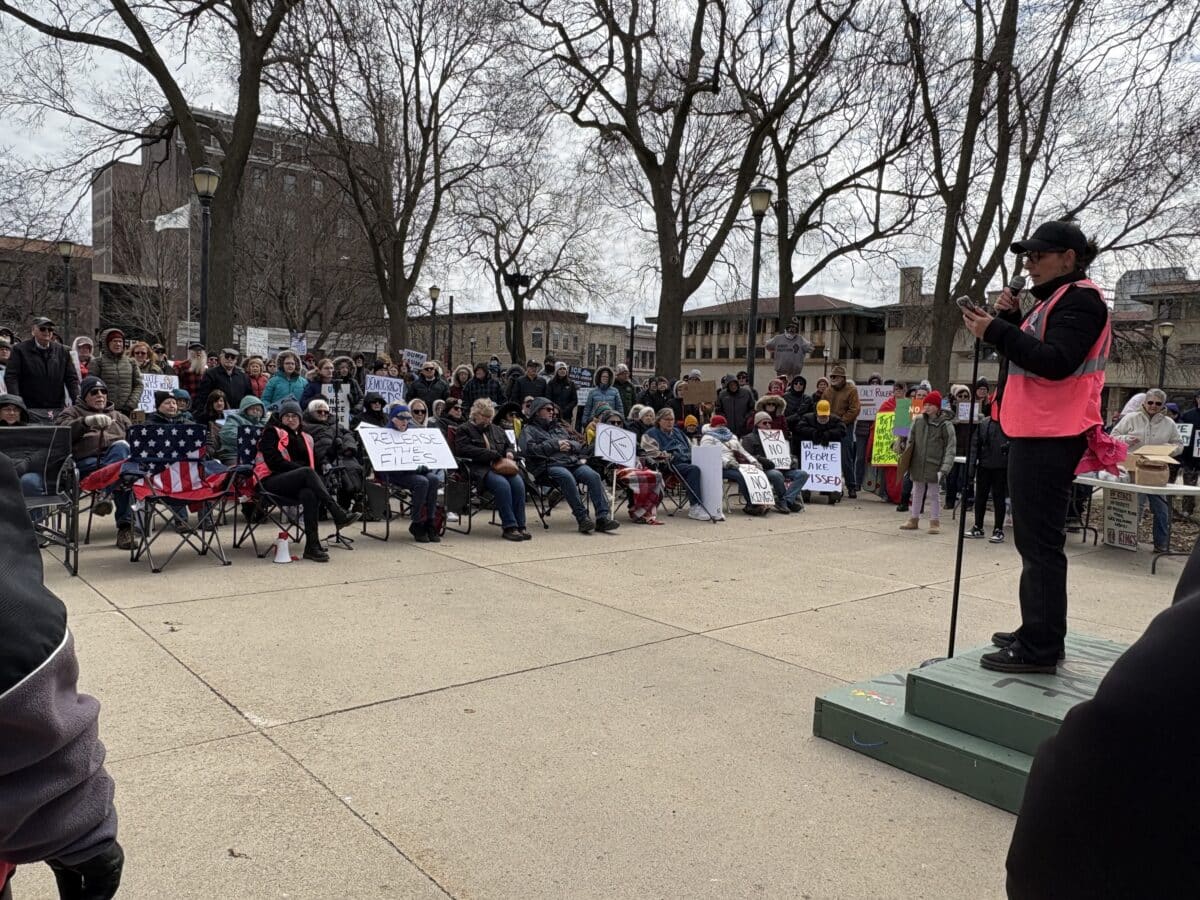
What’s going on at the Mary Davis Home: An explanation

In Iowa, many rivers and lakes improve briefly, then fall back into impairment

In Iowa, many rivers and lakes improve briefly, then fall back into impairment

When Kim Hagemann moved to Iowa in the late 1980s, the state’s lakes and parks were among the first places she explored.

She had come from Wisconsin to attend graduate school at Iowa State University, newly married and short on money. For recreation, Hagemann and her husband drove to public lakes and parks across the state, places that, on paper, defined Iowa’s natural landscape.

But the outings quickly became discouraging. “After you’ve gone to your third park and it’s smelly and there’s nobody on the beaches, you start to get discouraged,” she recalled.

Nearly four decades later, Hagemann, now retired and living in rural Polk County, said her view of Iowa’s water has not improved. “Here we are in 2025, and the water is actually worse,” she said during an interview last month.

Hagemann’s experience mirrors what state data shows.

An analysis by Investigate Midwest, based on the Iowa Department of Natural Resources’ biennial impaired and delisted waters lists, shows that progress in removing river segments from the impaired waters list has been limited over the past eight years.

While 2018 marked a high point, when 12% of impaired river segments were delisted, subsequent cycles saw far smaller shares, with about 2% delisted in 2020 and roughly 7% in 2022.

Lake segments showed a different pattern. Beginning in 2020, a higher proportion of impaired lake segments were reported as partially or fully recovered, with 32% delisted in 2020 and 35% in 2022.

However, being removed from the impaired waters list does not necessarily mean a river or lake has fully recovered.

Of the 17 rivers and lakes removed from the 2016 impaired water report, seven showed only partial improvement, continuing to struggle with certain uses or pollutants even as conditions improved elsewhere. A similar pattern emerged in 2022. Of the 54 river and lake segments removed after meeting water-quality standards, 22 had not fully recovered. 

In those cases, impairments persisted across multiple designated uses, within a single use affected by more than one pollutant, or across multiple uses affected by multiple pollutants.

The analysis excluded fish kill events, which are considered isolated incidents rather than indicators of long-term water-quality conditions.

Michael Schmidt, general counsel at the Iowa Environmental Council (IEC), said the pattern reflects how water pollution is — and is not — regulated.

Under the federal Clean Water Act, most farm field runoff is treated as nonpoint-source pollution and is generally exempt from the permit requirements that govern industrial and municipal “point source” discharges. As a result, Schmidt said, improvements tied to regulated point sources tend to persist, while pollution from agriculture can fluctuate with weather and farming practices.

Polluted runoff occurs when rain or melting snow flows across the land instead of soaking into the soil, carrying fertilizers, manure and other contaminants along the way. Those pollutants are eventually washed into rivers, lakes, wetlands and other waterways, and in some cases into underground sources of drinking water. According to the Environmental Protection Agency, runoff from agricultural land is the leading cause of impairments in rivers and lakes.

“You might have water that is cleaner in dry years, so it gets delisted, and then is more polluted in wet years and gets relisted,” Schmidt said.

One lake, Schmidt said, illustrates how those wins can crumble.

At Lake Darling in southeast Iowa, the state undertook a major restoration project funded by federal, state and local sources, investing about $13 million, including almost $7.3 million for watershed and in-lake improvements.

A 2024 study by Drake University, commissioned by the Iowa Department of Natural Resources, found that conditions within the lake,  including low oxygen levels and elevated phosphorus near the bottom during summer months,  may be contributing to recurring algal blooms. 

“The growth of cyanobacteria in the lake and E. coli in beach sands is likely being driven by nutrient loading from the watershed,” the report said, adding that the implementation of best management practices would help ensure long-term water-quality improvements.

The problem, Schmidt said, was not the work done within the lake itself, but what remained upstream.

“We just addressed what was in the lake,” he said, but “we didn’t clean up the pollution sources upstream.”

A section of ADA fishing trail is seen as a pontoon boat navigates the water at Lake Darling State Park in Brighton, Iowa, on Wednesday, Sept. 17, 2014. photo by Jim Slosiarek, The Gazette

Last year, Investigative Midwest reported that nearly eight out of 10 river segments in Iowa have remained continuously impaired for at least a decade, according to an analysis of state reports. During the same period, 43% of lake segments experienced similar long-term impairment.

In fact, 65 river segments (15%) and six lake segments (11%) have fallen short of a key water quality standard for a specific use and impairment for at least 20 years.

Taken together, the data suggest that while some Iowa waters show signs of improvement, lasting recovery remains elusive, and that for many rivers and lakes, coming off the impaired list is not the end of the story.

State monitoring captures only part of what is happening in Iowa’s waterways.

The Iowa DNR assesses slightly more than half of the state’s designated water bodies. In 2024, 27% of these segments were classified as healthy waters, while just over half were categorized as impaired. Meanwhile, slightly more than one-fifth require further investigation, as they are identified as “potentially impaired.”

Heather Wilson, the Midwest Save Our Streams coordinator at the Izaak Walton League of America, a nonprofit focused on the conservation and sustainable use of natural resources, said Iowa’s water pollution crisis is not new, but that last year feels different.

She said the issue has drawn an unusual level of public engagement.

Riprap protects the shoreline from erosion during a rededication ceremony for Lake Darling State Park in Brighton, Iowa, on Wednesday, Sept. 17, 2014. photo by Jim Slosiarek, The Gazette

“More than any year [2025], citizens and people who are part of these grassroots organizations should feel more empowered than ever,” Wilson said. “More and more people are becoming engaged.”

Wilson pointed to a surge in public participation following a series of high-profile events, including the lawn-watering ban in central Iowa, the release of the Central Iowa Source Water Research Assessment, and the fish kills in the Nishnabotna River in southwestern Iowa. Through the league’s Nitrate Watch program, she said, the number of volunteers requesting test kits and reporting data has increased significantly.

“What that represents is people who are becoming more informed,” she said. “They’re learning about their local water quality and the impacts that that might have on their health.”

Lawmaker changes strategy in pushing for new regulations to improve Iowa lakes and rivers

Despite years of analysis and repeated findings, Schmidt said, many of the policy debates around water quality have gone unresolved.

“The legislature has not been interested in doing more, at least the legislative leadership, or the majority of the legislature, has not taken action,” Schmidt said.

Schmidt said the state has long known what would reduce nutrient pollution. Iowa’s Nutrient Reduction Strategy, adopted in 2013, outlined a path forward, but progress has been limited and legislative action has not followed.

The strategy aims to cut annual nitrogen and phosphorus losses by 45%. For agriculture, which is considered a nonpoint source of pollution, the strategy relies on the voluntary adoption of conservation practices intended to reduce the amount of nutrients that leave farm fields into nearby waterways. For point sources, including certain municipalities and industrial facilities, the strategy calls for evaluations of existing nutrient controls and, where feasible, upgrades to treatment capacity.

“We identified what we should do to reduce nutrients in 2013,” Schmidt said. “We are not making great progress, so we need to be doing more.”

That lack of movement has been visible in recent legislative sessions. Last February, Sen. Art Staed, a Democrat from Cedar Rapids, again introduced the Clean Water for Iowa Act, a bill he had previously proposed that would require large animal feeding operations to obtain water pollution permits and conduct effluent monitoring. As in prior years, the proposals did not advance.

For 2026, Staed said he is trying a different strategy after repeated legislative setbacks. Instead of reintroducing a single water-quality bill, he said he is breaking the proposal into at least a dozen narrower measures, focused on better monitoring of the water-quality system, stricter enforcement, giving the Department of Natural Resources more authority and improved field practices, including buffers between row-crop farmland and waterways.

Staed said the bills are still being drafted and that the volume of legislation this year has slowed the process, but expects most to be ready to file next week. The goal, he said, is to move individual provisions that could attract bipartisan support, as broader reforms have continued to stall.

“It is my fundamental belief that all Iowans deserve access to clean water. If there’s one bit of silver lining to come from our state’s current predicament, it’s that water quality is now front of mind for far more Iowans than in recent memory,” he said. 

“The question now to lawmakers in 2026 is whether or not we can meet the moment.”

Concerns about water quality have increasingly intersected with broader public-health anxieties in Iowa. The state has the second-highest age-adjusted rate of new cancers diagnosed and is one of only two states with a rising age-adjusted rate of new cancers. While advances in treatment have increased the number of cancer survivors, researchers and physicians have warned that the trend also brings rising costs and renewed urgency to better understand potential environmental risk factors.

Those concerns gained momentum in 2025 among community groups, researchers, advocates and lawmakers, as questions mounted about how pollution could affect long-term health outcomes. This month, at the opening meeting of the Iowa Senate Natural Resources and Environment Committee, water quality dominated lawmakers’ remarks.

Staed, a member of the committee, said the heightened attention reflects growing political awareness but no meaningful change. “They’ve done a lot,” he said, referring to state leaders’ water-quality initiatives. “But it’s not enough to change the trajectory of nitrates in the water, the quality of water, and of course, rare cancer rates, and so on, that might be part of it.”

Looking ahead to the 2026 legislative session, which began Jan. 12, advocacy groups including the IEC have outlined a short list of priorities they say could shape the debate over water-quality policy.

At the top of the list is restoring funding for Iowa’s water monitoring network, the Iowa Water Quality Information System. The network, led by the University of Iowa with support from federal agencies, uses real-time sensors to track nitrates, phosphorus and other pollutants at about 60 sites statewide.

State funding for the system ended in 2023, forcing the network to rely on temporary private and local support. Sensor coverage has since declined, and university officials have warned the system could be shut down by mid-2026 without new funding.

The council is urging lawmakers to restore funding for the Iowa water monitoring network. About $600,000 a year is needed to support the system. The original appropriation was $500,000, which would not be sufficient to fully reinstate the network’s previous capacity of 70 sensors; the IEC cited inflation as the reason the higher annual amount is now required.

Kerri Johannsen, senior director of policy and programs at the IEC, said restoring funding for water monitoring network is the group’s top priority this year.

“It’s common sense,” Johannsen said. “[It’s] essential to even have a benchmark …  know where we’re going and if what we’re doing is working.”

Johannsen said the council is also pushing for expanded monitoring tied to pollution sources, including closer oversight of large animal feeding operations to detect whether waste is leaking into groundwater. Without consistent monitoring, she said, it is difficult to identify problems early or stop pollution where it is occurring.

Another priority is protecting Iowa’s waterways from coal-plant pollution, including proposals to restrict or prohibit coal-ash discharges into state waters.

Staed said public pressure on water quality issues is unlikely to fade.

“This issue isn’t going away,” he said. “Our farmers want to be good stewards of the land, and their voluntary efforts have helped, but the state needs to do more. More and more Iowans are speaking up on this issue and I’m hopeful that their voices can finally lead to a shift at the Capitol; that we can finally begin to address the problem and bring clean water to Iowans in every corner of the state.”

The post In Iowa, many rivers and lakes improve briefly, then fall back into impairment appeared first on Investigate Midwest.
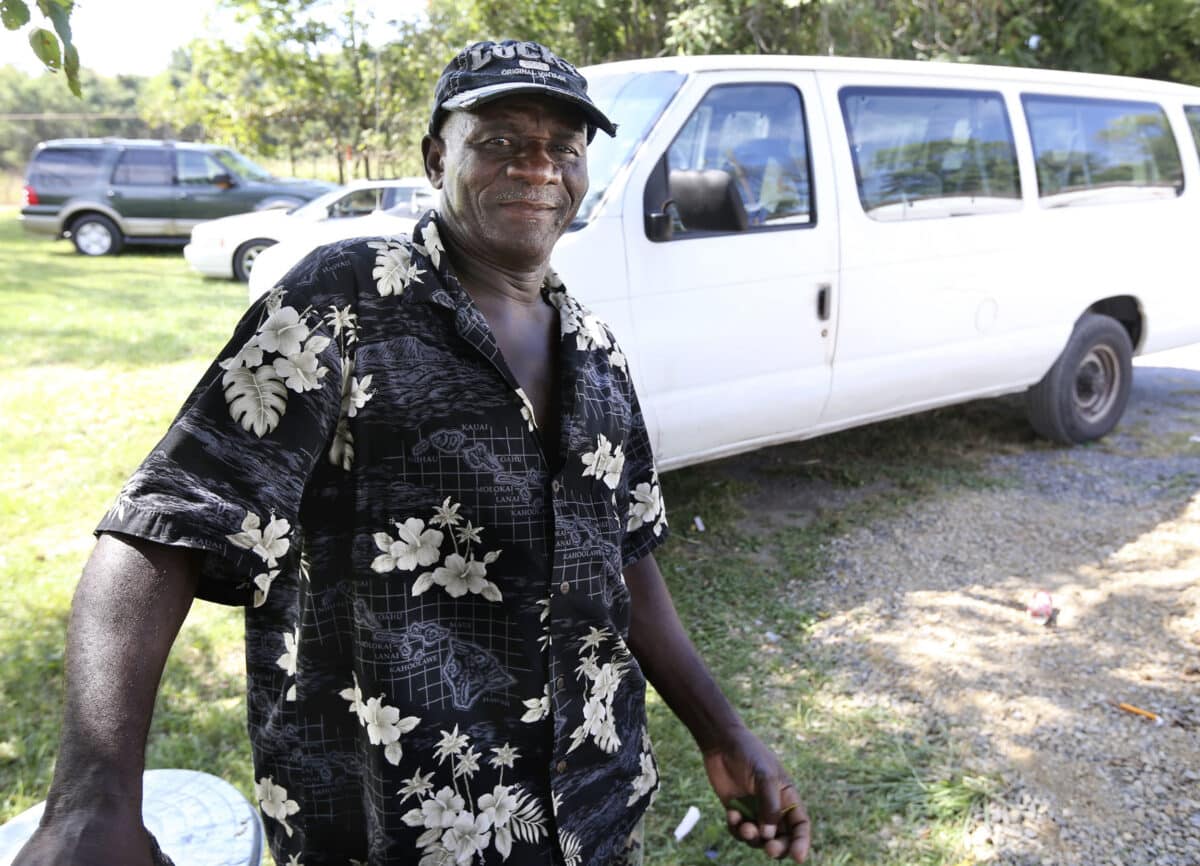
Midwest and Southwest states see major increase in temporary H-2A workers, despite slow growth in program

Every state in the country has seen an increase in temporary agricultural visa workers since 2018. These workers enter the country on H-2A visas, which allow companies and farms to hire seasonal labor. 

Southwest states such as Texas and New Mexico have seen drastic increases in the number of workers actively laboring in the state since workplace data became available in 2018. New Mexico started with just 308 visa workers harvesting crops in 2018. Last year, the state had 2,431 H-2A workers.

H-2A visas continue to increase year over year, but the program’s overall number of new visas slowed from 2024 to 2025, when the increase was less than a single percentage point.

These visas have a documented history of wage theft and poor working conditions. Workers come to the country under the visa program and rarely speak out about labor abuses, as their status is directly tied to their employment.

The Trump administration has supported H-2A visas and other temporary visa programs. Last year, the U.S. Department of Labor created an Office of Immigration Policy to help employers meet labor needs.

This slowdown in new visa holders comes at a time when the administration has carried out deportation raids across the country, many of which have affected agricultural and food processing operations. The Trump administration has also announced bans on visa programs affecting dozens of countries worldwide.

Data Harvest (formerly Graphic of the Week) is Investigate Midwest’s way of making complex agricultural data easy to understand. Through engaging graphics, charts, and maps, we break down key trends to help readers quickly grasp the forces shaping farming, food systems, and rural communities. Want us to explore other data trends? Let us know here.

The post Midwest and Southwest states see major increase in temporary H-2A workers, despite slow growth in program appeared first on Investigate Midwest.