Feral Cats, ICE And Overtourism: Kauaʻi County Mayoral Candidates’ Q&As
6 candidates answer key questions facing the incoming mayor of the Garden Isle.

6 candidates answer key questions facing the incoming mayor of the Garden Isle.


Alaska saw an unprecedented wave of school closures this year. District officials grappling with severe budget shortfalls have opted to close 12 elementary and middle schools across the state — in Anchorage, Wasilla, Sutton, Seward, Sterling, Soldotna, Kasilof and Ketchikan.
With those closures, hundreds of students and staff will bus or commute to new schools next year, class sizes will grow as grades are combined and districts across the state are cutting programs, teachers, health aides, custodians, sports, library services and extracurriculars like music.
Officials in four districts say the closures were incredibly complex and difficult decisions but necessary to combat millions in budget shortfalls and years of state funding not meeting districts’ surging costs to operate schools.
“It was an incredibly trying time,” said Randy Trani, superintendent of the Matanuska-Susitna Borough School District that closed three elementary schools this year to address a $28 million budget shortfall. “Non-winnable… we did this to save teaching positions,” he said.
“This is devastating to everyone,” said Kylie Wilcox, a Soldotna mother of five. Her middle and high schoolers attended River City Academy, one of four schools closed on the Kenai Peninsula. “The district does not want to do this, the administration doesn’t want to do this, we just, it’s the reality of what we’re working with.”
At the same time, superintendents said it’s still unclear whether the closures and cuts have balanced district budgets because Gov. Mike Dunleavy has yet to sign off on next year’s increased budget for education funding. Last year, lawmakers flew back to Juneau for a special session, overruled Dunleavy’s veto and restored an education funding increase in a historic override vote in August, just weeks ahead of the first day of school.
This year, the Alaska Legislature approved one-time additional funding of $144 million for K-12 schools, including $29 million to offset rising energy costs, to total $1.8 billion approved for education next year. Lawmakers passed a budget with higher-than-expected state oil revenues driven by the Iran war, which is now before Dunleavy for his consideration.
Education Commissioner Deena Bishop said that the state has seen declining enrollment for more than 15 years, and as a result districts close schools due to what she called “excess capacity.” Bishop has served as commissioner under the Dunleavy administration since August 2023.

“We’ve had several schools at 50% capacity, 55% capacity, that were within two miles of each other. And understanding that you want to use the majority of your money, you don’t want to put into facilities — the majority of your money you want to put into classrooms,” she said. “And so decisions, you know, things were weighed, and districts, hopefully working with their parents and communities, made decisions that they felt were the correct ones.”
Bishop said more families are opting for homeschool programs, and districts need to figure out how to provide education services for families that want choices for more flexibility.
Nearly one in six Alaska students were homeschooled last year, totaling an estimated 23,600 students, according to data compiled by the Association of Alaska School Boards.
“So we can’t really be upset that, you know, ‘Oh no, they’re not going to our schools,’” Bishop said. “Obviously they’re going to a school that their needs are met, if they’ve chosen that, so how do we work with it? You know, what does education look like, and what does it look like in serving a community? And more and more we’ll find that one size doesn’t fit all that schools really want to offer, and districts are starting to offer different programs.”
Alaska students have the option to enroll in homeschool or correspondence programs across the state, not necessarily with the district where they reside. While district officials say they are working to adapt and provide homeschool education services, districts receive less state funding per homeschool student which is contributing to district-wide deficits.
The Matanuska-Susitna Borough School District, the state’s second largest district with almost 20,000 students, faced a $28 million budget deficit this year, prompting cuts across the district.
The school board closed Meadow Lakes and Larson elementary schools in Wasilla and Glacier View School in Sutton, affecting roughly 415 students and dozens of staff.
That comes after the district cut roughly 160 staff positions last year, said Superintendent Randy Trani. He said the district would have had to cut an additional 225 positions this year, which was unworkable.
“The very last thing that we wanted to do was lay off teachers, and the second last thing we wanted to do was close schools, but we’re to the point where if we didn’t close schools, it was only going to result in more teacher layoffs,” he said.
Trani said the district went through a process of evaluating schools based on a number of metrics, including number of students, costs to maintain and opportunities to bus students to schools nearby, in order to decide which schools to close. “The schools that we were forced to shut down were fantastic schools. This wasn’t a decision on academic merit. This was a decision about logistics and being forced into a really impossible choice,” he said.
Trani said closing the three schools wasn’t even enough to make up for the budget shortfall and the district had to cut deeper.
The school board considered various scenarios from cutting sports programs to transitioning to a four-day school week, Trani said, which were rejected by the school board. “These are all horrible choices,” he said.
While the Matanuska-Susitna Borough continues to have the fastest growing population in the state, Trani said declining birth rates combined with an ongoing wave of families opting to homeschool is leaving the district with declining enrollment of full-time students and reduced funding for the district. Roughly 3,200 students, or 16% of the district’s students, were enrolled in Mat-Su correspondence programs this year.
Trani said another cost driver had been double digit increases to healthcare insurance costs resulting in roughly $6 million more to the deficit, bumping it to $28 million.
But he emphasized the largest driver of the deficit was insufficient state funding. “State funding has not kept up with inflationary pressures, and it is by far the biggest driver,” he said. “Unless there is a long term fix to how K-12 education is funded this problem is going to continue.”
Ketchikan serves roughly 1,800 students in the Southeast Alaska island community that is only accessible by plane or boat. This year, the district enacted major cuts, including 76 staff positions across the district to address a $3 million budget shortfall, plus $5 million in debt to the local borough. It closed two of the four elementary schools.

The district closed Point Higgins and Fawn Mountain elementary schools, leaving one elementary, one middle and one high school in the community.
Niki Suomala, a third generation Ketchikan resident, attended Point Higgins elementary school, located 15 miles north of town. She said it was a special experience for her two children to go there — until the closure.
Her kids will be in the second and sixth grades next year, and they plan to commute into town for school. She said there were some tears at the news, but she said her children are adapting. She said she’s disappointed overall, but feels compassion for the district.
“It’s like, gosh, couldn’t we see this? Couldn’t we have seen this coming, and couldn’t we have tried to do something different?” she said. “But I also feel compassion, because I don’t know the answer to that question.”
Sheri Boehlert, the interim superintendent of Ketchikan Gateway Borough School District, also served as the principal of Point Higgins, spoke by phone after a full week of packing up and clearing out the schools. She said the reaction to the closures has been mixed: while there’s some in the community who want to see deeper cuts to balance budgets, there’s also a lot of grief in saying goodbye to neighborhood schools.
“It’s hard to dismantle something that was a big part of your career,” she said. “But on the flip side of that, the staff and community has really, by and large, been overwhelmingly supportive. We have tons of volunteers that are helping teachers pack and move, and they’re going to make something great at the next school for students, and there’s optimism out there.”
Class sizes will be effectively doubling in Ketchikan, Boehlert said, from about 15 students to class numbers in the twenties for elementary school and thirty students or more in the middle and high schools.
Boelert said the district has seen rising costs to operate, including for fuel, utilities and special education services. She said in particular the cost of staff health insurance is up 112% this year. Previous cost overruns for health insurance discovered last year created the over $5 million debt to the borough which the district will pay over over the next several years. “That is a unique situation,” Boehlert said. “They need their money back.”
Boehlert said with essentially flat state funding not meeting cost increases, the district cut roughly 26% of staff this year: “So it’s teachers, it’s principals, it’s custodians, health aides, like maintenance staff. No work group was unaffected.”
Even so, with the debt repayment, and this year’s state budgets still uncertain, Boehlert said Ketchikan faces more cuts across the district — unless there’s a significant population increase.
“We have a difficult road ahead of us in Ketchikan,” she said.
In the Kenai Peninsula Borough, the state’s third largest school district stretches across roughly 25,000 square miles — an area about the size of West Virginia — and serves nearly 8,400 students.
This year, the district faced an $8.5 million budget shortfall, after an $17 million deficit last year. The district is still in the midst of budget negotiations and determining cuts. An additional $3.3 million from the local borough and yet-to-be-determined one-time state funding this year may restore some programs, but officials opted to close four schools.
The district closed River City Academy in Soldotna, Tustumena Elementary School in Kasilof and Sterling Elementary School, sending students to other schools in Soldotna and Kenai. On the eastern side, the district closed Seward Middle School where classes will be consolidated into the elementary and high schools.
“The response was overwhelmingly that parents do not want these schools to close down. Communities did not want the schools to close down,” said Kari Dendurent, assistant superintendent of the Kenai Peninsula School District.
One of those parents is Kylie Wilcox, a mother of five living in Soldotna. Two of her children attended River City Academy, which was a standards-based school serving grades seven through 12. She said they liked the supportive environment and had hoped to continue through high school there.
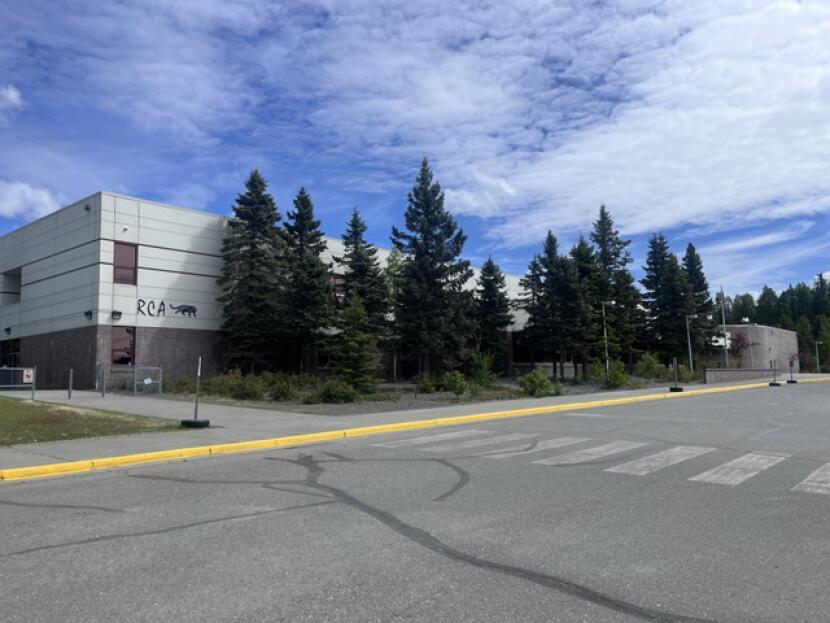
“They were starting to make friends at River City, and so they were really sad, like ‘I’ve got to start over again.’” she said. “And they were angry. They talked a lot about, you know, ‘why can’t they just give money to schools? Don’t they think that we’re worth it?’ My oldest was upset enough that they were willing to testify in the district meeting as well. I was really, really proud of them for doing that.”
Dendurent, the assistant superintendent, said the district worked through a transition plan to help students and families plan where to attend schools next year. She said some teachers from River City Academy transferred to Skyview and will be in homerooms with former students. She said it’s a difficult process with cuts across the district, including reading programs, library aides, English language learning programs, swimming pools and others.
“It’s very, very difficult, and it impacts everybody, and the other part that also makes it difficult is we are in contract negotiations right now with our certified and our classified employees as well,” she said.
Dendurent said the district has seen more students and families opt for homeschool programs, resulting in less state funding for the district. “It’s a borough issue, it’s a state issue, and it’s a national issue with declining enrollment,” she said.
She said rising health care costs is also a major factor for the district budget, as well as fuel and utilities costs. Even with the school closures, Dendurent said the district’s financial picture is still uncertain. “Predictable, sustainable funding is what I think all of us are looking for,” she said.
Wilcox said she has empathy for district officials and they handled the process fairly well, but wishes there was more support from the Kenai Peninsula Borough and from state leaders. She said her family is still evaluating options, but will likely homeschool her two middle and high school age students, with her 10th grader also pursuing classes at the Kenai Peninsula College.
“Honestly it feels sometimes like there are people in our state government that would rather see public schools fail, and rather see more homeschool and private school options happen for kids. And I feel like that’s not going to serve all of Alaska’s kids,” she said.
“Like, homeschool is a great option for a lot of people. I am a homeschool graduate,” she added. “But I know that there are families where that’s just simply not an option, and they deserve the support of the state for their child’s education, that’s one of our rights.”
In the state’s urban center, the Anchorage School District made severe cuts this year to address a $90 million deficit and opted to close three elementary schools. It is the largest school district that serves nearly 42,000 students.
The closures were at Fire Lake, Lake Otis and Campbell STEM elementary schools. A parent group filed a lawsuit challenging the district’s decision to close Campbell STEM, which is still under dispute. It’s the only one of the three schools without plans to move a charter school into the building.
Andy Ratliff, the district’s financial officer, said closing the three schools accounted for just a fraction of the deficit, and cuts were made across the district — including almost 500 staff positions, or about 10% of the district’s staff.
“We reduced millions of dollars in administrative costs. We’ve increased our class sizes by four. We reduced a lot of our IT positions, maintenance, everything,” he said. “Mental health, our teaching and learning department was cut by like 45 or 55%. Yeah, I mean it’s just kind of all across the board, even into our special education realm.”
Ratliff said the district has spent down its savings, and the small increase in state funding last year didn’t meet the district’s rising costs. He said health insurance rose in the double digits and now is about 20% of the total budget. “It’s really just this inconsistent funding that’s really just kind of dictated by the state that has put us in this position,” he said.
Ratliff noted the state’s energy relief funds are contingent on oil revenues and likely won’t reach districts until September. He said the uncertainty of funding this late in the year is challenging for staffing and determining what cuts if any can be restored.
“They did approve money, but we don’t have it yet,” he said. “So it’s hard for districts to do any sort of restoring of the cuts that they’ve made at this point.”
District officials said the Legislature’s boost of $700 per student in the state’s funding formula last year was welcome, but did not significantly affect districts’ overall financial challenges.

The 12 school closures this year comes after five schools were closed last year in Kodiak, the Kenai Peninsula Borough and Fairbanks.
Many district officials, education advocates and lawmakers have emphasized that state funding has not kept pace for years with school districts’ needs and costs for providing public education.
But Bishop, education commissioner for the Dunleavy administration, rejected the notion that school funding has been flat.
“Over time in our state, because of the fluctuations of how we get resources to provide to schools, I think that’s exactly why money is either in the formula or out of the formula, but over time you will see that generally there’s been an increase in funds every year,” she said.
She acknowledged the rising costs of school districts, and said at the same time the governor and Legislature have competing priorities for the state budget. “Everybody in the state has to look at the picture as a whole,” she said.
“Hopefully when we can create new revenue, continue to really thrive in schools and innovate programs to match needs that families are seeking, that we’ll be able to move into the future,” she said.
This year, lawmakers seemed to have less appetite for taking on another education funding battle with Dunleavy, particularly among competing priorities of election reform and reviving the state’s pension system. Both initiatives were vetoed by Dunleavy and a legislative veto override effort failed for both. Citing increased oil revenues due to the Iran war, the Legislature passed $144 million in additional one-time funding and nearly $150 million for K-12 school maintenance and repairs.
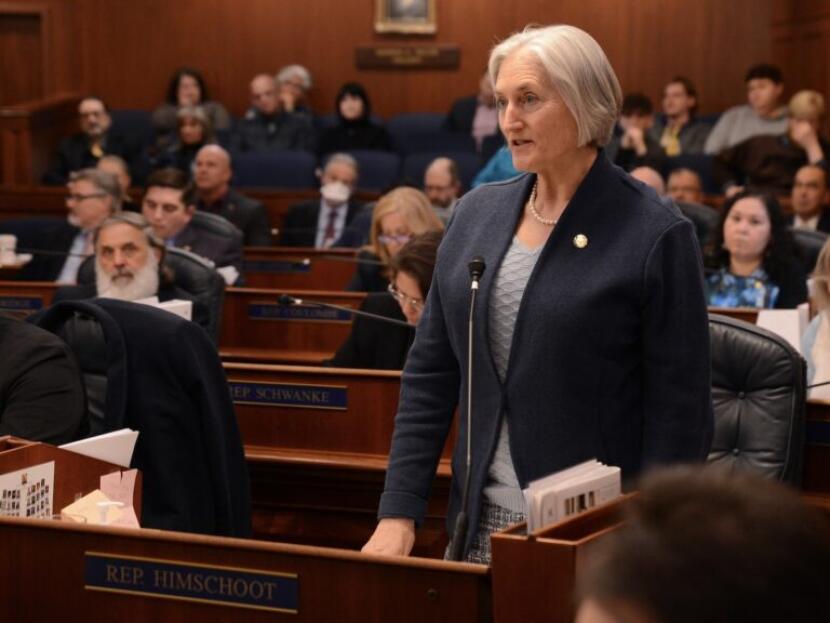
Rep. Rebecca Himschoot, I-Sitka, is a former teacher and vocal proponent of increasing education funding. She co-chairs the bipartisan task force on education funding launched last year.
“Closing a school feels like a death, and it is,” Himschoot said.
Himschoot pointed to budget problems, loss of enrollment and the shift to homeschool, but said the state, in her view, is not funding education as it should.
Himschoot said the task force is investigating short and long term funding solutions. The state approved an adequacy study this year to determine how much funding is needed to support schools, to be completed in the next few years. Another bill to allow districts to budget based on a three year average of student counts, failed in the Legislature this year, but Himschoot said the policy is likely to be revived next year to allow districts to set budgets earlier in the year. “It would take some of the uncertainty out and I think that’s going to have an impact on outcomes,” she said.
She said the task force is continuing its work looking at the problems and funding mechanisms, gathering input and evaluating solutions to address issues in the funding formula, major maintenance and rising costs like health care. Recommendations are due next January.
“The pain is felt by the students. That’s a straight line from state funding to what students get or don’t get,” she said. “It keeps me awake at night.”

Six months after President Donald Trump warned states not to regulate artificial intelligence, some are forging ahead with their own laws anyway. Nearly all such efforts in the Oklahoma Legislature have hit a dead end.
Trump’s move to restrain states’ actions on AI drew criticism from members of both political parties and from civil liberties and consumer rights groups, who worried that banning state regulation would amount to a gift to AI giants, which enjoy little to no oversight.
Trump has made AI a top national and economic security priority, and he said that letting states clutter the regulatory playing field for an industry that’s spending trillions of dollars and driving the economy is too risky in the race with China for AI superiority.
But the president’s executive order didn’t seem to discourage states, including Illinois, Colorado, Connecticut, and California, from trying to regulate the use of AI.
More bills have been introduced this year than last, including by Republicans. Justine Gluck, policy director of the Future of Privacy Forum, a nonprofit that advocates for data privacy in technology and whose members are from industry, academia and civic groups, told the Associated Press.
But some Republican-led states, including Florida, Utah and Oklahoma, have held back.
State Rep. Carl Newton, R-Cherokee, authored a bill in 2025 that would have prohibited deepfake images of a candidate or political party on the state or local ballot within 90 days of an election.
It never even got a committee hearing.
“I think the knowledge part of the AI – we hate to limit that so we can get the usefulness out of it,” Newton said. “But I think AI shouldn’t be used to hoodwink people into thinking something’s true that’s not. I think there’s some appetite for that kind of law.”
In early June, Gov. Stitt said on CNN that he was considering calling a special legislative session to address the use of artificial intelligence in campaign advertisements to prevent voters from being misled about candidates’ positions and political alliances.
“When I started seeing some AI-generated ads politically attacking people, putting them in different situations with people, I just thought, listen, we need to make sure that the voters have accurate information and the truth still matters in Oklahoma,” Stitt told the outlet on June 8.
Proposed this year, House Bill 3299 included strict guidelines for digital and synthetic material in political ads.
It would also have made it unlawful to create and distribute digitized or synthetic media depicting another person’s name, image, voice or likeness in any context without written consent when done with the intent to cause emotional, financial, reputational or physical harm.
It passed out of the House’s Judiciary and Public Safety Oversight Committee at the end of February, but that was as far as it got.
It included both a misdemeanor penalty for a first offense of up to one year in county jail and a $1,000 fine, or an elevated felony penalty if the offense causes financial harm exceeding $25,000, or if the media is used for extortion, coercion, blackmail, or to obtain anything of value through threats
Political advertising rules required disclosures for the use of digitally or synthetically altered images, with a penalty of a misdemeanor punishable by one year in jail or a $2,500 fine for failing to disclose the use of AI in a political ad.
Hays could not be reached for an interview this week.
This year, Rep. Cody Maynard, R-Durant, filed a three-bill legislative package establishing what he said would be commonsense safeguards for the use of artificial intelligence in Oklahoma.
All three cleared the Oklahoma State House of Representatives, but that was the end of the line for them.
“I had to do a lot of education with people on why we need these, but they got caught up in the Senate this year,” Maynard said. “I’ll say this – a lot of bills got caught up in the Senate this year.”
Maynard’s proposed measures sought to clarify that artificial intelligence systems are not persons and cannot hold legal rights the same as employees of businesses or spouses entitled to filing joint tax returns; to ensure state agencies use AI responsibly with human oversight and disclosure to the public; and to try to protect minors from harmful AI chatbots and social AI companions.
Since Trump’s executive order includes exceptions for measures intended to protect children and none of Maynard’s bills sought to regulate business use of AI, he doesn’t believe any of his proposals would have run afoul of the president’s wishes.
And Maynard hasn’t given up hope for his ideas.
“People are concerned about AI,” he said. “You know, the destroying of somebody’s name with something that is fake is very distressing, and AI has gotten so good that you can’t almost tell anymore that it isn’t real. It’s fair to say I will be looking at ways to bring back some of these ideas to craft new versions in the future.
“I only get 8 bills to run each year, so I have to pick those 8 very carefully,” Maynard said.
One of the only exceptions to Oklahoma’s lack of AI regulations is Senate Bill 1734, which just created the Oklahoma Responsible Technology in Schools Act.
Authored by State Sen. Ally Seifried, R-Claremore, and signed into law by the governor on May 12, the new law establishes guardrails on the use of artificial intelligence in public schools and requires parents to be notified annually about how the technology is used in their child’s classroom.
The measure requires teachers to review anything AI produces before using it in the classroom, for state education officials to establish guidance to local schools, and for local school boards to adopt their own AI policies, and it prohibits the use of AI tools as the primary basis for grading or student promotion or retention decisions.
Presidential Power Versus State Power
Trump issued an executive order directing the attorney general to create a task force to challenge state laws that are more than “minimally burdensome,” and directed the Commerce Department to draw up a list of problematic regulations. It also threatened to restrict funding from a broadband deployment program and other grant programs to states with AI laws.
The White House said it wouldn’t target state laws that seek to prevent fraud and protect consumers and children.
In the meantime, the Trump administration released a national policy framework in which it urged Congress to preempt state AI laws that are out of step with its regulatory worldview and to pass legislation to protect children, intellectual property rights and free speech. In recent days, a new bipartisan draft proposal in the House met withering criticism from key Democrats and Republicans.
The White House has given no indication that it has made good on its threat to enforce the president’s executive order by going to court against a state’s AI law or withholding money. In a statement, it said the Trump administration is eager to work with partners to enact its policy framework.
Many states haven’t been dissuaded from trying to regulate how AI is used.
In Illinois, legislation on the desk of Democratic Gov. JB Pritzker piggybacked on elements of laws passed last year in California and New York that require developers of large advanced AI models to create protocols to prevent their systems from causing a catastrophe, such as a biological weapons attack, power outage or large-scale hack.
Illinois also added a requirement that AI developers must have an independent auditor review whether they comply with their own policies. Analysts see it as a step toward requiring AI developers to take greater accountability for their products.
This kind of legislation is expected to expand to other states.
A growing number of states, including a mix of Republican- and Democratic-led states, including Colorado, Connecticut, Idaho, Iowa, Nebraska and Oregon, passed new laws this year to restrict how AI chatbots interact with people, especially children.
In many cases, states want companies to tell people when they are interacting with AI instead of a human. Many want chatbots to be restricted in how they interact with minors, parents to have control over their child’s access, and data given to chatbots to be kept private.
In recent weeks, Connecticut enacted provisions for companion chatbots that sustain an ongoing relationship with a human. Under them, chatbots must not be able to interact with someone under 18, unless it is programmed against encouraging self-destructive behavior and provides parents with tools to manage the child’s use.
Last month, Colorado required companies that deploy AI systems in important areas such as employment, education, housing or banking to tell people when it’s being used to influence a decision about them.
In Connecticut, lawmakers required employers who use employment-related AI systems to tell employees or job applicants that they are interacting with AI.
Meanwhile, Connecticut, Washington and Utah required AI developers to embed data into digital content that will allow users to determine whether the content — such as photos or video — has been created or altered by AI.

Andrea Eger covers a variety of topics for Oklahoma Watch. Contact her at aeger@oklahomawatch.org.
The post Oklahoma Holding Back on AI Regulations Amid Trump’s Order for States Not to Stifle the New Technology appeared first on Oklahoma Watch.

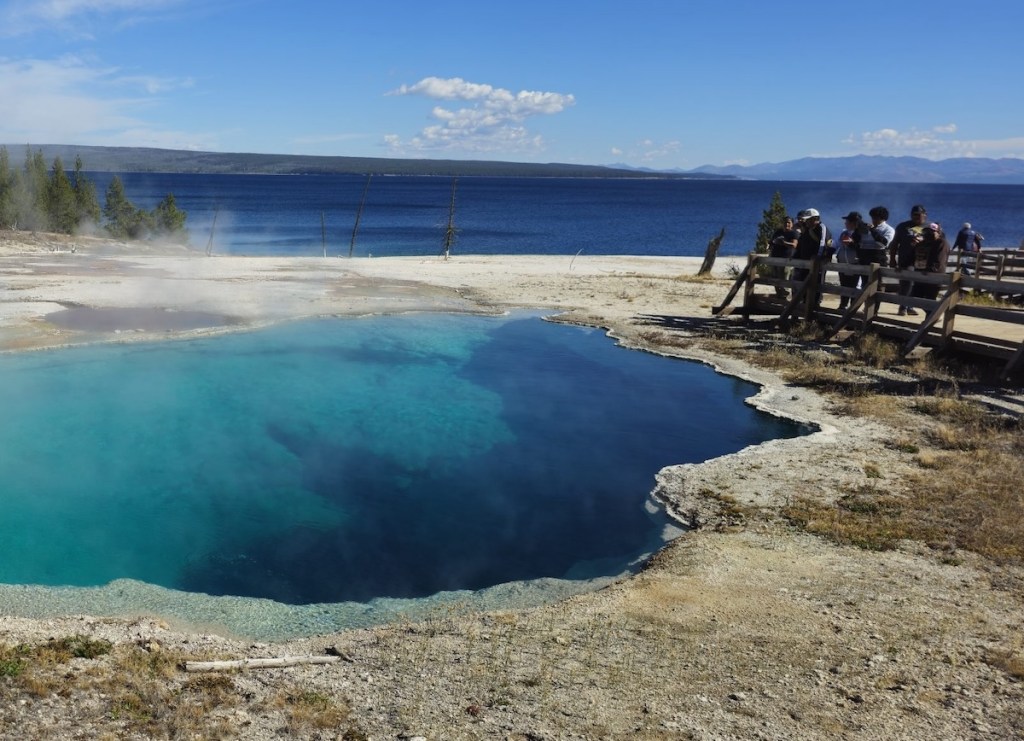
JACKSON—Visitors to Grand Teton and Yellowstone national parks left more than 500 comments in response to a Department of the Interior call for feedback on signage that disparages American history.
None of those comments, collected between May 2025 and January 2026, expressed concern about history being represented in a biased way.
“What I saw in the comments that were specifically on Grand Teton were overwhelming support for the history exhibits, and even additional information,” said Allison Michalski, the National Parks Conservation Association’s senior program manager for Grand Teton.
The comments left at Grand Teton and Yellowstone were a small portion of 35,000 comments released in late May through a lawsuit brought against the Interior Department by the Sierra Club. The goal was to gain access to the comments via a public records request.
The saga that led to the collection of comments began more than a year earlier.
In March 2025, President Donald Trump issued an executive order titled “Restoring Truth and Sanity to American History.” The order sought to remove materials that “inappropriately disparage Americans past or living” and to instead “focus on the greatness of the achievements and progress of the American people.”
Interior Secretary Doug Burgum released a follow-up secretarial order in May 2025, ordering that parks post signs with QR codes for visitors to use to report negative information and history and establishing a process for reviewing materials. In Yellowstone and Grand Teton, comments began rolling in around mid-June.

Burgum’s order also instructed park staff to flag any materials that may be misaligned with the department’s priorities for interpretive materials. The National Park Service subsequently removed materials at several parks, including a sign in Grand Teton that included details of how an explorer depicted in the Craig Thomas Discovery and Visitor Center participated in, and bragged about, a massacre of Native Americans. That sign was removed sometime before Jan. 28.
Yellowstone did not have any interpretive materials removed, said Michelle Uberuaga, the National Park Conservation Association’s Yellowstone senior program manager.
The issue of interpretive materials in the parks has reemerged in recent weeks, as litigation filed in response to the federal government’s actions to remove historical materials winds through the legal system.
On Friday, about two weeks after the comments left at parks were released via lawsuit, a federal judge in Massachusetts ordered the National Park Service to restore and reinstall any materials that have been removed since May 20, 2025. The order also prohibited the removal of any other interpretive materials while litigation is pending.
That order came as part of a lawsuit filed by the National Parks Conservation Association and other organizations against the Interior Department in February.
The Interior Department will have to report to the court the steps it has taken to comply with the order. The department also will be required to provide the court weekly status reports on compliance with the order thereafter.
Judge Angel Kelley of the United States District Court for the District of Massachusetts cited the comments collected via a QR code in her order.
“Tens of thousands of public comments submitted through QR codes at park sites have criticized the Defendants’ actions, demonstrating that these materials instead promote the public’s ability to form stronger connections with park resources,” she wrote.
The department does not plan to back down.
“The ruling is from a Biden appointed judge,” an Interior spokesperson wrote in an email. “The department is looking at our appeal options.”
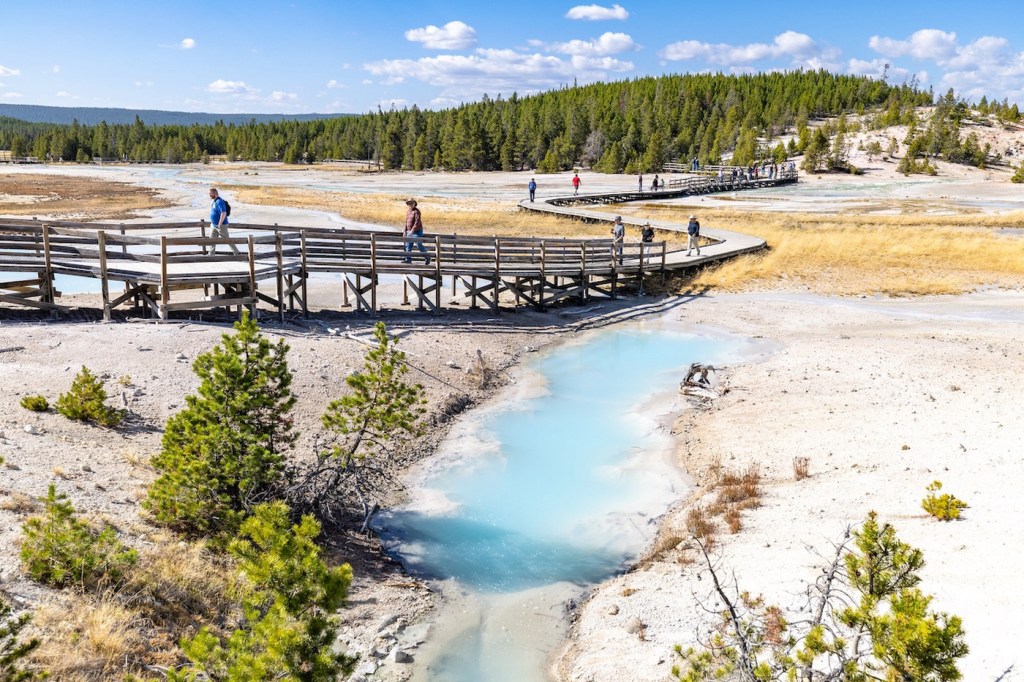
The signs posted at national parks solicited feedback on areas that need repair and services that need improvement. They also ask for intel on “signs or other information that are negative about either past or living Americans” or that “fail to emphasize the beauty, grandeur and abundance of landscapes and other natural features.”
Commenters were taken to a page that allowed them to categorize their comments into those three categories, or about “something else.”
Commenters were given a generous 10,000 characters with which to express their thoughts.
Yellowstone netted 324 comments and visitors in Grand Teton left about 202, a small percentage of the millions of visitors who visited in the eight-month period.
Most expressed frustration with the administration’s public lands policies, including the attempt to revise signage and other interpretive materials, staffing cuts and proposed budget cuts. The comment period coincided with last summer’s proposed public lands sale in the U.S. Senate. Though the proposal would not have impacted national parks, many comments included concerns about that as well.
Some used colorful language, including profanity, to express their grievances.
Parks advocates were not surprised to see unanimous support for the national parks and their staffs.
“Yellowstone has done different use surveys in the past and it is overwhelming that people are having very positive experiences,” Uberuaga said. “I think putting QR codes out just gave people the opportunity to say that.”

Commenters, specifically at Grand Teton, reported positive interactions with staff, in conversations, Junior Ranger programs, on ranger-led hikes and at ranger talks. At least 11 comments referenced positive experiences at educational programming, on topics including wolves, bears, geology, astronomy and anthropology.
“For the public, those rangers are not only critical protectors of those resources, but they’re also keepers of the stories,” Michalski said.
The comments included a small number of critical comments about other aspects of park operations. Two comments left at Grand Teton criticized bathrooms, including those at the Colter Bay Campground and vault toilets generally. Another comment, however, specifically shouted out the park’s “very clean” bathrooms.
Two comments left at Grand Teton also expressed concern about traffic in the park and suggested using buses to relieve congestion.
“Traffic jams are taking away the pleasure and serenity of park visits,” one commenter wrote. “Some interventions must be put into place.”
A few other comments complained about not seeing moose and bears where they were supposed to be, though it’s unclear whether they were tongue-in-cheek.
Some Yellowstone commenters believed the impacts of last year’s layoffs are noticeable.
“There are less rangers to control things and it feels chaotic in the park,” one commenter wrote.
Another wrote that, of all the parks, Yellowstone “feels like it needs double the staff.”
Uberuaga does not think that impacts to park staffing have impacted the visitor experience.
“I really would expect visitors to get to have a positive experience that is fairly normal,” she said. “It’s all the behind the scenes stuff that I think is where people are hurting.”
The lawsuit over the removal of materials in the park is still in its early stages.
Kelley, the federal judge assigned to the National Parks Conservation Association’s lawsuit, ordered the reinstatement of the materials on the belief that the plaintiffs are likely to succeed in court. Their arguments opposing the department’s actions include that they were arbitrary, against the law and an overreach of its authority.
The judge found that the department’s explanation that it could not disregard the president’s executive order did not constitute rational decision-making.
Kelley also found that the actions, if not halted while litigation is pending, would cause “irreparable harm.”
The Trump administration argued that the harm was not irreparable, as evidenced by the fact that the plaintiffs took several months to seek a temporary suspension of the policy. That policy had been in place since May 2025, and the plaintiffs did not request the suspension until March 2026.
Kelley found that the plaintiffs’ actions were not unduly delayed, given that the department did not ramp up its efforts at removing exhibits until early 2026. She ultimately favored the plaintiffs.
The order degrades “the public’s trust in the government, as the Executive Order ignores congressional directives and carelessly razes decades of efforts in the pursuit of its unilateral agenda,” she wrote. “These harms are, in all senses of the word, irreparable.”
The Interior Department, for its part, maintains that the order was not intended to whitewash or erase history.
The order directed a review of material “to ensure parks tell the full and accurate story of American history, including subjects that were minimized or omitted under the Biden administration,” a department spokesperson wrote in an email.
That includes slavery and the treatment of Native Americans, the spokesperson said.
The point of the order was to identify materials and signage that might “warrant clarification,” according to the spokesperson.
The post Grand Teton, Yellowstone visitors find no ideological bias in signage appeared first on WyoFile .

Wildfire risk is predicted to stay elevated through June in the Upper Midwest from drought and high winds. That’s risky for the region’s pristine inland lakes, but land managers are working to reduce wildfire risk in the Northwoods with controlled burns.
Some experts are advocating for increasing the use of this centuries-old method of prescribed fire to create more resilient ecosystems.
Chris Filstrup knows how severe fire changes freshwater in Minnesota’s wilderness. He’s a lake scientist at the University of Minnesota Natural Resources Research Institute and investigates the consequences of the 2021 Greenwood Fire for remote lakes. Along with a team of researchers, Filstrup continually samples lakes in the burnscar each summer for water quality issues like high levels of phosphorus, carbon and nitrogen.
According to a study Filstrup published in the journal Geological Research Letters, charred lakes have higher nutrient levels than their unburned counterparts. Those degraded waterways are still brown and murky – the color of tea, Filstrup said.
Yet, each watershed of the 15 fire-affected lakes Filstrup studies responded differently to the Greenwood Fire. For some, the flames incinerated entire shorelines. For others, the fire was further back, scorching only a small slice of the watershed. Filstrup found that the more severe fires caused worse damage because hotter flames burn more vegetation and disturbs the soil. That allows more nutrients to flow into lakes.
“Anything we can do to reduce the potential severity of those fires would be a good thing,” Filstrup said.
Prescribed burns – low intensity fires planned by land managers – prevent the likelihood of catastrophic wildfires by reducing fuel loads. When fire catches in areas with dead trees, dense shrubbery and overgrown vegetation, flames have more to feed on and spread quickly.
These less severe fires can harm water quality, but those impacts are temporary, especially compared to intense wildfires.
“If you have higher severity fire, you kill all the [tree] canopies,” Ge Sun, a U.S. Forest Service research hydrologist, said. “They get too hot. The soil is burned bare, too, and it’s difficult for the vegetation to grow back. But that’s not the case for prescribed fire.”
When trees burn, the whole water cycle of the forest changes. Trees put water back into the atmosphere through a process called evapotranspiration. Roots also store water in the soil and filter it, taking out some of the impurities before it flows into lakes. With fewer trees, more water ends up flowing into waterways instead of the atmosphere or groundwater, and it holds more contaminants.
Despite the potential for prescribed fire to protect water quality by reducing the chances of catastrophic fire, little research has actually investigated how this tool affects lakes.
Peter Caldwell is trying to understand those consequences for forested watersheds. At an experimental forest in North Carolina called the Coweeta Hydrologic Laboratory, Caldwell – who, like Sun, is a Forest Service hydrologist – is collaborating on a study launched in 2019 to find out if prescribed fires can be used without causing water issues.
“We’ve got some early results that suggest that because these are low severity fires, those impacts are very small and short-lived,” Caldwell said.
Low severity fires kill only the forest understory, which can recover quickly, Sun said. Besides, many species depend on fire to thrive, such as blueberries and jack pines in northern Minnesota. These species adapted to fire because it’s a regular, natural phenomenon.
Fire will happen in forests across the continent with or without people, Sun said.

Fire suppression
In much of the country, including Minnesota’s Superior National Forest and the Boundary Waters Canoe Area Wilderness, people have been managing the land with controlled fire for centuries.
Nisogaabokwe Melonee Montano dedicates much of her time understanding the relationship between fire and land. She’s a doctoral student at the University of Minnesota and an enrolled member of the Red Cliff Band of Lake Superior Ojibwe.
“The Indigenous people, when you look at pre-colonization, across the entire landscape had been using fire to survive, to caretake our lands,” Montano said in a Friends of the Boundary Waters webinar.
“When people had come into the Boundary Waters as a new area for them, they saw it for its beauty and all of those other things,” Montano said. “It was in that state because it was being taken care of by the Anishinaabeg people by things like fire. Fire has always been a part of that ecosystem.”
For instance, the open old growth red and white pine stands surrounding the shorelines of lakes in the wilderness area exist because of fire stewardship.

“That was the world that existed before colonial settlers arrived in North America,” historian Char Miller said. He studies the history of the Forest Service and wrote a book about fire suppression called “Burn Scars.”
Many fire-dependent ecosystems in the Great Lakes haven’t seen flames in decades. Cultural and controlled burns abruptly stopped because of colonization, leaving only wildland fires for a century.
Part of that halt was fear-based. After waves of catastrophic blazes in the late 1800s, like the Great Chicago Fire and the Peshtigo Fire in Wisconsin, the federal government began enforcing strict fire suppression policies. That included the fires Indigenous communities practiced for centuries before.
But Miller said fire suppression policies were also racially motivated, meant to disrupt the lives of native people. Taking away fire disrupted their social, economic and religious lives, and Miller said documents from Spanish missionaries, Franciscans and other settlers explicitly supported that.
“Settler colonialism has many guises,” Miller said, “but around fire, it’s very clear it’s got one voice and that is: Suppress the fire, and you suppress the Indigenous people.”
Climate change is mostly to blame for increasing wildfires, Montano said, but the forced removal of the Anishinaabeg people plays a role. They could no longer steward the land as they had for generations.
Evan Larson, a professor at the University of Wisconsin-Platteville, studies tree rings to understand the history of fire on the landscape. He said during the webinar that the relationship between people, fire and the rest of the ecosystem was disturbed by colonization.
Larson said bringing more fire to the landscape is essential in places like the Boundary Waters, where the bar to conduct prescribed burns is much higher than places like Superior National Forest due to its Wilderness Act status.
“If we think about reciprocity and we recognize that these are fire dependent systems,” Larson said, “we have an increasing responsibility to tend to these places with fire because of the way the landscape has changed, because of the changes that we are seeing everywhere.”
The disruption in regular fire is hurting ecosystem resilience. For example, those open pine stands along lakes in the Boundary Waters become more susceptible to drought and climate change the denser they become. Fire keeps them open and thin.

Prescribed Fire
Teresa Floberg said using prescribed fire as a tool is a necessary part of living in a fire-dependent landscape. She works with Superior National Forest and other stakeholders in northeast Minnesota as the Ely Fireshed Coordinator for nonprofit Dovetail Partners.
Controlled fires are happening. Over the last three decades, the Forest Service has been slowly upping its prescribed burns – including in Superior National Forest. This year, the agency has eighteen prescribed fires across 5,483 acres planned for the northern Minnesota forest to reduce fuel loads, manage vegetation and maintain wildlife habitats.
Tribes in northern Minnesota collaborate with the Forest Service on some prescribed fires in Superior National Forest, including the Boise Forte Band of Chippewa. Cody Swanson, the band’s Forest Programs Manager, said that’s only a fraction of the burns they do. Outside the forest, the unit conducts low-acreage prescribed fires to protect homes and buildings on the reservation. They’re also bringing back cultural burns for blueberries and medicinal plants and plan to expand that practice.
Recently, the Boise Band acquired 28,000 acres near the reservation boundaries that once belonged to a timber company. The band’s Natural Resources Management has to clear out dead and downed trees, along with some other preparation, so they can reintroduce fire practices on a larger scale.
“Reintroducing fire will reintroduce a lot of the different bearberry, red osier dogwood, juneberry, raspberry, all these different medicines that people historically have used here,” Swanson said. “It’s huge that we’ll be able to reintroduce fire on the landscape in areas that might not have had it for hundreds of years.”
Reintroducing more fire is a goal for a lot of stakeholders in the region, including Dovetail Partners. But Floberg said getting fire on the ground in northern Minnesota is challenging.
For one thing, prescribed fires require a lot of preparation, especially in the fuel-riddled region.
“Fuel has to be removed prior to doing a prescribed burn,” Floberg said. “It relies on removing that thick understory, those really flammable trees that could bring even a low intensity fire up into the canopy.”
Sometimes accidents happen. In early June, the Birch Bay Fire that burned more than 30 acres near Ely was likely started by chainsaw operations while Forest Service crews were prepping for a prescribed fire. Hot engines, exhaust and flying sparks could have caught dry grass or pine needles aflame.
Resources are also lacking. There’s a shortage of qualified burners in the state, Floberg said, and conducting burns is expensive.
“There often isn’t a budget at the federal level to do that necessary fuels reduction work to then even be able to consider reintroducing a prescribed fire,” Floberg said.
The financial burden deters private landowners. Floberg said many homeowners in the area want to set prescribed fire on their forested property, but many can’t afford the thousands of dollars price tag to treat even an acre.
Still, the cost to run a prescribed burn versus suppress a wildfire is significantly smaller. It’s a preventative measure, and the dollars can be difficult to justify.
“The upfront cost will save huge expenses down the road,” Floberg said. “It’s just, we’re reactionary. We respond to crises and recovery.”
This article is the second of two parts. See part one here.
The post Setting Fires On Purpose to Cut Risk of Catastrophic Wildfires appeared first on Circle of Blue.
Most Americans loathe data centers. Recent polling found that Democrats and Republicans alike would oppose having one in their neighborhood, and hundreds of communities across the country have fought against them, citing fears about noise, water contamination, and energy bills. After years spent courting tech companies, many politicians are now vowing to protect their constituents from their development. In just the past month, policymakers in New York, Texas, Pennsylvania, and Utah have proposed limits on the facilities. For the AI startups and others racing to secure more computing power, the question seems to be not which projects will face opposition, but which won’t.
A project unveiled this week in California’s Central Valley suggests a potential answer. California Resources Corporation, the state’s largest oil company, wants to build a 600,000-square-foot data center campus in the Elk Hills oil field about two hours north of Los Angeles. It hopes to avoid the nationwide backlash from communities that have watched the outfits developing these sprawling operations swallow up farmland or install diesel generators near residential neighborhoods.
It’s part of a new trend in the AI boom. More developers are proposing to build data centers in or near active oil and gas fields, which tend to sit far from densely populated areas and boast ready access to power. Projects are being planned in Texas, where the prolific Permian Basin oil patch has an abundance of natural gas, which can be used to generate electricity, and in Pennsylvania, which is already a leading producer of natural gas from shale. These projects are seen as a way of juicing revenues for legacy producers, even as the California project is unfolding in a state that has been trying to phase out fossil fuels.
California Resources Corporation executives have framed the deal, announced Monday, as a “responsible development” approach to the AI buildout.
“By repurposing an existing industrial site, creating jobs and tax revenue in Kern County, utilizing dedicated on-site power, and employing one of the industry’s most water-efficient cooling systems, the project is designed to support California’s growing digital infrastructure needs while minimizing impacts on local communities,” said Chris Gould, the company’s chief sustainability officer and the head of its carbon capture venture, in a statement to Grist.
The Elk Hills location has an obvious strategic benefit for CRC and Beacon, the data center developer collaborating on the project. The proposed Golden Valley Technology Hub will sit on 100 acres within an oil field that stretches across tens of thousands of acres, and will sit more than a mile from the nearest homes. The project will also face strict environmental review, which could take about a year. CRC has already held a number of community meetings with residents of nearby Taft and Buttonwillow and has promised to provide financial support for community groups and public infrastructure like roads.
Building in a century-old oil zone could sidestep the common furor over the impacts of data centers, which can require massive amounts of electricity and water and can also emit a lot of noise, said Gabriel Collins, an expert on energy and water issues who serves as a research fellow at Rice University’s Center for Energy Studies.
“Where you stand on these things depends on where you sit,” said Collins, who has studied the potential of Texas’ enormous Permian Basin to support data centers. “If you’re already out in the middle of an area that’s seen heavy industrial activity for a long time, there’s already a precedent, and folks there will probably find it easier to deal with.” In its permit application for the project, CRC included around 150 signatures from nearby residents who support the data center. At least five names on the list are affiliated with the local oil industry.
Ready access to electricity is the most important asset for these operations, something CRC’s oil field already has. It runs on a 550-megawatt natural gas power plant that has long been used to generate steam for drilling operations. Elk Hills no longer produces as much crude as it once did, so the power plant is running below capacity. The proposed data center will be able to run almost exclusively on that excess energy. (As for water, the company says the data center will use a closed-loop cooling system that will consume enough to fill an Olympic swimming pool over the course of 10 years. It also plans to erect noise barriers around the site.)
While the Kern County data center will rely on fossil fuels when many others draw power from the wind or sun, CRC is expanding its business to focus on carbon capture. Just this year it launched a first-of-its-kind system that captures CO2 emitted by another oilfield gas plant and stores it in depleted wells, and plans to build such a system for the plant that will supply the data center. Although the existing system absorbs about 7 percent of the plant’s total emissions, CRC has the storage space to capture several hundred times as much carbon underground.
For oil producers in the Permian, data centers represent a market for natural gas that might otherwise be burned or vented to the atmosphere as a byproduct of drilling. Chevron signed a deal to supply methane to a Microsoft data center in west Texas, and oil service companies Schlumberger and Halliburton assist data center developers with energy and construction. Collins said the model makes even more sense for a declining field like Elk Hills, where production has fallen and CRC no longer needs as much electricity.
“In the Permian Basin, it’s a different dynamic, because the oil field and the data centers are gonna compete with each other for power,” said Collins. “If you have a declining oil field and you had that big captive asset there, then plugging it in to run digital infrastructure instead makes a lot of sense.”

California has seen gasoline demand fall about 15 percent over the last decade, and crude production has fallen by more than half during that time, due in part to strict regulations rolled out by Governor Gavin Newsom. State lawmakers struck a deal last year to stabilize in-state production as part of an effort to avoid gasoline price spikes, but few experts expect production to reach previous levels.
As a result, CRC is looking beyond oil for its future. It has invested billions in carbon capture projects across the state, and executives have said that they expect revenue from such efforts to become essential as oil demand declines in California. The company acquired two of its largest competitors, Aera and Berry, over the past two years, and now accounts for nearly two-thirds of the state’s production. A senior executive last year likened the company to Equinor, the Norwegian state oil company that produces both oil and wind power.
The data center could advance this transition. CRC says the project would create at least 1,500 union construction jobs, as many as 250 permanent jobs, and ample tax revenues. The number of oil and gas jobs in Kern County has declined from around 12,000 to around 6,000 since 2015, and oil assets account for around 10 percent of its property tax income, compared to 30 percent a decade ago. CRC’s previous carbon capture project earned a stamp of approval from Newsom, long an opponent of oil, who called it “proof that innovation and ambition are the California way.” (His office said decisions about the data center should be left to Kern County.)
Many climate groups in California have opposed CRC’s carbon capture push. The environmental law firm Earthjustice has said the carbon storage project would “open the door to a range of new polluting facilities that could be built from scratch.” It also said carbon capture could increase emissions by prolonging the life of the Elk Hills oil field or leading to more gas power production. Earthjustice, the Center for Biological Diversity, and a number of other groups sued the county over its approval of the carbon capture project. Neither organization responded to a request for comment on the data center.
But CRC seems to see tech and oil as natural partners. It signed an agreement last year to capture carbon from a nearby gas power plant owned by a Canadian company. That power plant, which can produce twice as much electricity as the one at Elk Hills, could in theory support another data center.
This story was originally published by Grist with the headline A solution to data center backlash? Put them in oil fields. on Jun 18, 2026.

Three weeks after giving birth, Christine’s face and ankles became swollen at night. The 37-year-old Black woman from Robeson County became short of breath just walking to the kitchen, and lying flat made her feel like she couldn’t breathe. She had developed postpartum cardiomyopathy.
Jamila, a 27-year-old Black woman from a rural eastern North Carolina county, became dependent on pain-relieving pills after surviving a car accident. She wanted to stop before her second child was born, so she confided in her doctor. But she was not given a referral to an addiction specialist to help her safely manage her pregnancy.
Ayana, another Black woman in Charlotte, was near the end of her pregnancy when she told her doctor she wasn’t feeling well. It took three more visits — the last with a different provider — to discover that her organs were failing.
These anecdotes are representative of many cases that Dr. Michele Benoit-Wilson, a board-certified OB-GYN and founder of HerHealthMD, has seen during her 26 years in women’s reproductive care.
“[The] stories are fictional, but every detail is drawn from real data, real conditions and real failures of the system that was supposed to protect them,” Benoit-Wilson said. “Christine, Jamila, Ayana — three different women, three different counties, three different causes, but one number connects them.”
That connection brought lawmakers and advocates together last week to recognize Black Maternal Health Day and push for greater investment in addressing the issue.
In the U.S., Black women are three times more likely to die from pregnancy-related causes than their white counterparts. The leading cause of these deaths is mental health conditions, including overdose and suicide. Benoit-Wilson said substance use disorder causes more maternal fatalities than heart disease, hemorrhage and infection combined.
Moreover, The American Heart Association reports that Black women may be more than three times more likely to develop postpartum cardiomyopathy — a weakening of the heart muscle that leads to a decreased ability to pump blood — compared to their white counterparts.
According to Benoit-Wilson, Black women experience these complications at higher rates due to systemic barriers and unconscious racial prejudice.
“Bias and discrimination were found to be contributing factors in 70 percent of maternal deaths in the most recent report of the North Carolina Maternal Mortality Review Committee,” Benoit-Wilson said. The report was published in 2024.
“Whether the impact comes from a chronic stress that systematic racism imposes on Black women’s bodies over a lifetime, or from the interpersonal bias that can play out in a single clinical encounter — the evidence is clear. Implicit bias in health care leads to worse outcomes,” Benoit-Wilson said. “For Black women, it can mean the difference between life and death.”
North Carolina has struggled with maternal and infant health for years with little improvement; the state recently received a D+ in the 2025 report card from the March of the Dimes. North Carolina has the 11th highest infant mortality rate in the United States despite decades of effort directed toward improving it.
Multiple lawmakers have advanced a variety of maternal and infant health-related bills in recent legislative sessions; among them are two Durham Democrats, Sen. Natalie Murdock and Rep. Zack Hawkins, who spoke last week.
Hawkins said expanding access to doulas and ensuring that health care providers receive training to recognize and challenge unconscious bias are vital to improving Black maternal and infant health outcomes.
“The charge is on all of us until every mother has equal opportunity to survive pregnancy, deliver safely and return home to her family,” Hawkins said. “Our work is not done.”
The General Assembly passed a bill in 2023 that allowed experienced certified nurse midwives to practice without physician supervision if they have completed at least 24 months and 4,000 hours of clinical practice, something the nurse midwives had been campaigning for for years. (The same bill also tightened North Carolina’s restrictions on abortion.) The change to rules governing midwifery was intended to expand access to maternity care in underserved areas.
The number of certified nurse midwives the year the legislation passed was 425, with 392 of those being in a collaborative practice. Since then, the number has grown to 501 — and just over half (257) are practicing independently, according to the Sheps Center for Health Services Research.
Now lawmakers are considering expanding access to doulas through Medicaid.
Doulas are trained support people who help a woman physically and emotionally before, during and after childbirth. Doula services — especially those provided to Black mothers by Black women — have been shown to combat the societal, racial and financial factors that can keep new mothers from being healthy and successful. A 2016 study conducted by researchers from the University of Minnesota School of Public Health found that women with a doula had a 22 percent lower risk of preterm birth.
The bill, Senate Bill 463 Medicaid Coverage for Doula Services, would require the North Carolina Department of Health and Human Services to seek federal approval to add doula services to the state’s Medicaid program. Other proposed bills and solutions include:
Some bills have gotten bipartisan support, but most proposals have been sent to committees where they never receive a hearing. Murdock has filed the MOMnibus bill in some variation four times since 2020, with some disagreements coming down to funding and reimbursement rates.
“We may disagree on that reimbursement rate, but we do have an agreement with a number of members that these are things that we know that work. It’s just a matter of having the political will to move them forward,” Murdock said.
Whether political will or partisan disagreement, the sticking point often appears to be differing funding priorities and weighing cuts to the Medicaid program, in particular this past year after the One Big Beautiful Bill Act reduced federal health care funding over the coming decade.
Among affected programs was the Perinatal Quality Collaborative of North Carolina, which coordinated hospital teams that work to improve care for mothers and newborns. The program began winding down operations last year after losing its roughly $905,000 annual budget tied to Medicaid funding.
The program operated in dozens of hospitals statewide since 2009. Republican lawmakers Rep. Grant Campbell (Kannapolis), a longtime OB-GYN, and Sen. Jim Burgin have been vocal proponents of restoring the program and its funding.
Campbell said that the initiative was “incredibly inexpensive” while improving outcomes.
Many of the other proposals before lawmakers would require new state spending, increased Medicaid reimbursement rates or long-term commitments to workforce development — priorities that will compete with other demands in the state budget when it is proposed. With Republican majorities in both chambers, budget discussions will mostly fall to Republican members.
“I get frustrated because both of those members [Burgin and Campbell] are in the majority party. They have the ability to fund that program if they wanted to, or to advocate for that in budget negotiations. I’m not in those rooms,” Rep. Julie von Haefen (D-Raleigh) responded when asked if there’s been any bipartisan discussion.
Murdock said she has had “good conversations” with Republican lawmakers about including maternal health provisions in the state budget. She referenced last year’s discussions that led to making Medicaid coverage for 12 months postpartum a permanent feature of the program.
“With Virginia being the first state in the South to sign a comprehensive omnibus package, that is what we dream of, and we know that it is achievable,” Murdock said. “We know the support is there, and we just need the political will to get it across the finish line, and more allies and more support.”
Murdock said initiatives that extend postpartum Medicaid and improve access to care in rural areas help all mothers.
“I think what will likely happen is outcomes will improve with a more holistic approach, but I’m hopeful that in the future we’ll have more programs that are directly targeted to see what we’re getting wrong with our Black moms,” Murdock said.

Burgin said he is exploring additional avenues of care and funding sources.
“A Black infant has a three times higher probability of dying than a white or Hispanic infant, and that’s not acceptable. I’ve been meeting with all kinds of different groups about how we specifically look at that, and what we can do,” he told NC Health News.
Among those conversations are those with recipients of the Rural Transformation Fund, where Burgin said he emphasized a focus on pregnant mothers in rural areas. The Sheps Center estimates that between 12 and 18 rural hospitals have closed over the past decade. Other rural hospitals have eliminated their OB services and delivery, including Harnett County, which Bergin represents.
Burgin said he recently spoke with federal Medicaid officials and plans to visit Washington, D.C., in July to discuss solutions for addressing the disparity. The issue isn’t one he takes lightly or plans on letting fall by the wayside, he said.
“Before I leave the legislature, I want to cut that in half in the Black community, I think that’s a worthy goal,” he said. “We’ve been talking to pediatricians and OB-GYNs, and everybody that’ll talk to us about ‘what do we do’ and ‘how do we target this,’ so I think you’re going to see a lot of movement.”
The post Lawmakers agree North Carolina has a maternal health crisis. So why are reforms stalling? appeared first on North Carolina Health News.

Students at Northeast Middle School in Kansas City used to run into one another “just like bumper cars” as they navigated the halls with eyes fixed on their cellphone screens, said school librarian Paula York.
That changed after a 2025 Missouri law banned students’ personal electronic devices such as cellphones during the entire school day, York said.
“They’re actually looking at people and not running into people. Their focus is much better in school. Their attention span is much better, and they’re learning that … they have to have manners, because they can’t hide behind a screen,” she said.
In contrast, Ruskin High School Principal Ernest Fields couldn’t think of any positive effects of the new law.
“Cellphone usage during instructional time is what the main problem is,” he said. “To ban it even during personal time, I think that’s an overreach.”
Fields said enforcing the law during class time has itself become a distraction. He said some students beat the ban by bringing multiple phones, distracting themselves with laptops instead or hiding in the bathroom to check messages.
“Students do have real tasks outside of school,” he said. “They end up having to take care of their little brothers and sisters. They have jobs they call. … It’s just not as easy as saying, ‘Just take it away.’”
You would be hard-pressed to find someone who thinks students should be distracted by technology during class.
But after the first school year under Missouri’s new law, there’s no firm agreement on where schools should draw the line on electronic devices, or whether the state was right to make that decision for them.
Some teachers and administrators said they appreciate the legal backup to existing school policies and see benefits to students socializing instead of scrolling during lunch and other breaks.
Others described downsides. They say that the law can unnecessarily restrict helpful uses of technology such as communicating with parents or employers or using personal devices to make up for the shortcomings of school-issued technology.
Christy Moreno, the national organizing director for the National Parents’ Union, said the policy and advocacy group polled parents and found that most support “balanced approaches” that allow students some access to their phones in case of emergency or during breaks.
“It’s not like parents want their kids to have access to playing games on their phone or sharing memes on social media,” she said. But “we’re not in a place where we can trust schools to communicate with us in a timely and effective manner.”
Missouri’s law restricting cellphone use in school doesn’t actually include the word “cellphone.” Instead, it refers to “electronic personal communication devices” and defines that as “a portable device that is used to initiate, receive, store, or view communication, information, images, or data electronically.”
That definition could also apply to other devices including smart watches, tablets and laptops not issued by the school.
Public school districts and charter schools must make policies about those personal devices that stop students from using or displaying them during the whole school day, not only during class but also during study halls, meals and breaks.
The policies must include exceptions if the devices are needed to accommodate disabilities, health issues or special education needs. They can also include exceptions for emergencies and when students are directed to use the devices for an educational purpose.
The law doesn’t say the devices have to be left at home or locked up.
Individual districts and charter schools can set stricter policies, and some have experimented with keeping students’ phones in locking Yondr-brand bags. But several local districts are simply requiring that devices be silenced and kept out of sight, meaning that many students would still have phones accessible in case of an emergency or if needed before or after school.
Missouri’s ban on personal electronic devices is part of a nationwide wave of legislation.
According to a report card from a coalition of groups that support cellphone restrictions in schools, 24 states and Washington, D.C., have adopted “bell to bell” bans on using cellphones.
Kansas’ 2026 ban is one of the newest and one of the strictest. It’s one of only four states to specify that cellphones can’t be accessible to students at all during school, according to the report.
An additional eight states prohibit cellphones during class time only, and nine require a cellphone policy but don’t specify what it should include. Cellphone bills have failed in four states and are pending in four others. Only Montana has not introduced a bill.
Before Missouri’s law went into effect, schools were grappling with how to handle cellphones.
In 2023, a Kansas City charter high school, DeLaSalle Education Center, decided to lock up students’ cellphones in Yondr pouches during the whole school day.
The following year, the school said the policy had been a success but that it was considering making it less strict outside of class time in response to student feedback.
Other schools were less strict. Some let teachers set policies for their classrooms. Some allowed students to use their phones during lunch and/or breaks between classes. But while Missouri’s law goes further than some policies, it also helps reinforce existing measures.
York, the KCPS librarian, will enter her 40th year as an educator this fall. She said some younger teachers at KCPS were more open to incorporating phones into assignments, but then struggled to get the students to put them away.
“We had kind of a war between the younger teachers and the old crusty ones like me,” she said.
York — who was referred to speak to The Beacon by the district’s director of communications, Shain Bergan — thinks most teachers came around to the stricter rules after the ban went into place.
“They call it ‘the backup,’ because we tell the kids, ‘Well, it’s a state law. That’s just the way it is,’” she said.
Independence School District teachers and a student described a strictly enforced ban on phones except during lunch before the state law. Students who didn’t comply could be “Yondr-ed” or have their phones confiscated.
Jorjana Pohlman, president of the Independence National Education Association, the district teachers union, said the state law brought a “sigh of relief” from many teachers because they could refer back to the state law rather than feeling like the “bad guy.”
Nathan Muckey, principal of Lee’s Summit High School, said that before the law passed he already had a strong stance that cellphones should not be impeding learning, though they were allowed during breaks between classes and lunch.
Having the cellphone ban in state law made conversations with students more straightforward, he said, and helps teachers hold the same firm line on technology.
“Teachers don’t have to play good cop, bad cop anymore. It’s everyone’s on the same page,” he said. “If kids are saying, ‘Well, Mrs. X, Y and Z (are) allowing us to do this,’ well, they’re violating the law at that point.”
Fields, the Ruskin High principal in the Hickman Mills School District, also thinks teachers appreciate having the law as backup when telling students to put their phones away.
“It pushes it back on someone else instead of the teacher having the power,” he said.
But Fields said that goes against his philosophy that teachers are more likely to enforce rules they make themselves. He previously allowed teachers to set their own cellphone policies and promised to back them up on discipline as long as they’d made expectations clear.
If rules are imposed from above, “they don’t want to enforce it with fidelity, because it’s not really their thing, it’s someone else’s rule,” he said. “If it’s your rule, you have a passion about it, and you’re going to enforce your rule in your classroom.”
After the ban on personal electronic devices in school went into effect, Jacob Gragg found a practical application for his debate skills.
While cellphones were the primary target of the bans, Gragg and his friends at William Chrisman High School in Independence were dismayed to learn that they were also barred from using laptops that weren’t issued by the school.
A 2026 graduate who is headed to debate nationals this summer before starting at Washington University in St. Louis in the fall, Gragg said the policy particularly affected high achievers.
Many tasks related to Advanced Placement or dual-credit courses, extracurriculars or college applications aren’t possible on the school-issued Chromebooks, he said.
For example, students might need to view YouTube lectures from a college professor, use dual-factor authentication to log in to the College Board website, open large files for college applications or run Mac-based programs for debate preparation.
“Pretty much all of the students who try to push themselves really hard, they just don’t use” the school computers, Gragg said. “Even on a cheap personal device, it’s just 100 times better than the stuff that they give us.”
Gragg said after students advocated for themselves — including some who spoke at a school board meeting — the issue was resolved about six weeks into the school year.
The district didn’t apologize, he said. It simply reiterated its existing policy and quietly began interpreting it more flexibly.
In response to an interview request, the Independence School District sent a statement.
“The Independence School District has long supported a balanced approach to student electronic device use, prioritizing both safety and learning before the State Legislature’s cellphone restrictions,” according to the statement.
“Under ISD policy, students may use electronic devices for educational purposes when authorized by a teacher or school official as part of planned instruction. This has not changed and preserves teacher autonomy in supporting student learning while ensuring devices remain available when needed for safety and communication.”
After the personal laptop issue was resolved, Gragg said he saw both positive and negative effects of the law. He thinks socialization increased during lunch, but having to go to the office to get an important message from a parent felt like a burden.
Other restrictions — in Independence and elsewhere — have remained tighter than some educators and parents prefer.
Sarah Nelson, a high school English teacher in Independence who also serves on the Missouri National Education Association board and as the high school at-large representative for the Independence National Education Association, said the more complete ban from the state is an adjustment for families who were used to being able to communicate during the day.
“It requires discipline on the students’ part and the parents’ part not to rely on them being able to access that technology all day,” she said, “and sometimes that’s just not feasible. It also creates a hardship on the office when you have to send students down to the office to call a parent, or the parent has to call the office to send a message to their kids.”
Moreno, the National Parents Union advocate, said it’s important for students to be able to contact emergency services or stay in touch with parents.
She suggested phone companies could develop a “school mode” — similar to airplane mode — that automatically limits distracting apps within the bounds of a school but still allows students to make 911 calls, access educational programs and reach a few important contacts.
When Carter Taylor sees “cheesy posts” from people who stepped into a school and were delighted to hear the voices of children no longer engrossed by their phones, she’s skeptical.
“First of all, I do not believe that you actually spend any time in a school if that’s your reaction, because these kids are always talking,” said Taylor, an elementary teacher for Kansas City Public Schools and legislative chair of the district’s teachers union.
It reminds her of overblown claims that “the world is healing” during pandemic-era reports of wildlife sightings — some of them false — such as dolphins in the Venetian canals.
When they “scapegoat” phones, “It feels like someone trying to preach to me instead of actually engaging in the issues that cause the deficits that they saw in the first place,” she said.
Taylor said she opposed the ban because teachers already restricted phones during class time, and she thinks phones can be used for prosocial behavior at other times.
She said politicians are trying to use the phone ban to address issues such as low test scores and gun violence rather than tackling the issues directly through funding and legislation.
“They’re the ones who have the power to make sure we have resources … and they won’t do that,” she said. “They blame everything on these phones, but these were problems before the phones, and there’s still problems after the phones.”
National research shows the intended benefits of cellphone bans haven’t panned out so far, Moreno said. She pointed to a study comparing 40,000 schools, some of which used Yondr bags to lock up phones. It found strict phone bans did reduce cellphone use but didn’t lead to higher test scores, better attendance or changed perceptions of online bullying.
The bans were initially linked to increased suspensions and worse student well-being, though those areas improved with time.
Moreno said parents and caregivers often didn’t get adequate input into bans, and now “the evidence is not there to support academic gains or any student well-being marker.”
Some educators, especially in older grades, say the reputed benefits for socialization and focus are real to an extent.
York said conflict used to be heightened on Mondays after students had spent the weekend insulting each other online, but that is no longer the case.
“I think it’s because they’re not on their devices almost eight hours a day when they’re at school,” she said, “so they’re learning how to talk with people, they’re learning how to interact with each other.”
In Independence, Nelson said she doesn’t know what disciplinary issues look like from the administration’s perspective but that she has observed a reduction in conflict.
“For students who really struggle with it, if they’re on their phone, they’re either addicted to it, or they’re usually stirring the pot of drama that they don’t need to be stirring during the school day,” she said.
But Nelson and other sources said students also need to be taught how to use — or not use — technology responsibly, even when they do have access to it.
When adults are excited about students playing card games after the personal devices ban, Moreno said, she wonders, “Why were they not doing that before?”
“We need better classroom management training. We need to make sure that our teachers are equipped to teach responsible use of technology,” she said. “It’s not just about banning something, it should be about embracing it positively and regulating it wisely.”
Nelson said she intentionally started encouraging interactive activities like playing Uno before the law change, as students returned from COVID-19 social distancing.
Merely taking away cellphones does have some effects on socialization, she said, but isn’t the whole picture.
“If you don’t have phones at lunch, what are you going to do? Sit there and just stare at each other in silence?” she asked. Students are “in a way forced to talk to people … But I think a part of it is also teachers finding ways for students to interact with one another that doesn’t require technology.”
The post A year into Missouri’s ban on cellphones in school, opinions are divided appeared first on The Beacon.

Wildfire risk is high in the upper Great Lakes, and research shows that large, scorching wildfires spell trouble for lakes in the region’s remote watersheds.
The reason: Vegetation burns in the fire. Scorching, high temperatures make the soil hydrophobic, which causes erosion and more runoff into lakes. Plants are no longer there to filter the sediment seeping into waterways. One region of concern is northern Minnesota where fires are blazing in dry and windy conditions.
In early June, lightning caused three wildfires in the Boundary Waters Canoe Area Wilderness, prompting a campfire ban. Two more fires recently sparked in Ely, leading to emergency evacuations. In mid-May, the Flanders Fire east of Breezy Point charred more than 1,700 acres in about a week.
The multiple blazes are evidence that elevated fire risk is becoming the new norm for the region, according to Teresa Floberg. She’s the Ely Fireshed Coordinator for environmental think tank Dovetail Partners and works with Superior National Forest.
“When you look at wildfire risk maps for northern Minnesota, northern Wisconsin, northern Michigan, that wildfire risk resembles the West,” Floberg said. “Same level of risk factors, and potential for intensity.”
That risk, of course, isn’t unique to the North Woods. This year, wildfire experts predict a severe fire season nationwide as drought grips most of the country. As of mid-June, the National Interagency Coordination Center reported that more than 2.5 million acres have burned in wildfires across the U.S. – nearly double the 10-year average.
The causes have been gradually accumulating for more than a century. Climate change – balmier summers, shorter winters, unexpectedly dry and windy days – is largely to blame. That, and more than a century of federal fire suppression policies. Decades of fuel buildup in forests, like downed trees and dense undergrowth, feed the flames, growing wildfires to catastrophic dimensions.
Extinguishing wildfires comes with a hefty price tag. Northern Minnesota wildfires last year alone required an $8.7 million emergency response from the state’s National Guard and firefighting staff.
Chris Filstrup is an expert on how wildfires are affecting northern Minnesota’s remote lakes.
Five years ago, while the Greenwood Fire burned across more than 26,800 acres of northeast Minnesota, the lake scientist became enthralled with what that summer’s largest and most destructive wildfire was doing to the thousands of pristine lakes residing in its warpath across Superior National Forest.
Filstrup poured over previous research investigating how fire affects watersheds. There were few studies, and those he found overwhelmingly featured the Western half of the United States.
“We need to be studying this in the Midwest due to all the differences in vegetation, landscape, hydrology and weather patterns that likely affect how lakes respond to fires,” Filstrup said. “We have very different systems here.”
Sam Reed agrees. Reed is the climate conservation manager at advocacy organization Friends of the Boundary Waters, where he is reviewing all of the climate impact research in the greater Quetico-Superior Ecosystem. Fire has been largely excluded from that work.
“The relationship between fire and freshwater is something that needs way more attention, both from a research perspective and a policy perspective,” Reed said. “We need to be thinking about how it affects our amazing freshwater resources.”
Filstrup is one of the leaders closing that knowledge gap.
Along with a team of researchers, Filstrup received rapid funding from the National Science Foundation to find out the consequences of wildfires for the Upper Midwest’s inland lakes. When they began studying Superior National Forest watersheds the following May after the fire, much of the landscape was still charred. Filstrup said it was like stepping onto a different planet. The lakes within the burn scar were – and still are – the color of sweet tea with few plants along the shores. Pre-fire, they were clear, home to an assortment of flora and largely unaffected by contamination.
In the years since the Greenwood Fire, Filstrup and the lab he directs at the University of Minnesota continue to monitor the lakes every summer.
“You can see the landscape rejuvenating. You can start seeing those soils stabilize again. You can start seeing the regrowth of vegetation, which is really cool,” Filstrup said. “But lots of these lakes, when it comes to water quality, really haven’t recovered yet.”
During their initial study, Filstrup and the other scientists sampled lakes scorched by the fire and some outside of the burn scar. The researchers found that lakes in the burned stretches of the forest had higher levels of phosphorus, nitrogen and carbon than their untouched counterparts. The water was more murky and acidic. This all means degraded water quality.
Though researchers didn’t see an increase in algae growth in the studied lakes, increased nutrients can boost algae growth, which can trigger algae blooms – the rapid overgrowth of the organism seen in places like Green Bay or the western Lake Erie basin.
That green sludge can deplete loads of oxygen from the water when it dies and block sunlight to the plant communities at the bottom of the lake that would normally bind to nutrients. Without that vegetation, the nitrogen and phosphorus stay in the water and can fuel algae blooms, and Filstrup said they could see fish kills due to low oxygen levels.
Plus, extinguishing wildfires can come at a risk to water quality. Increasing fire intensity and frequency means firefighting agencies are using more retardants to put flames out. Those red plumes dumped from planes can contaminate waterways with chemicals like heavy metals, fertilizers and phosphorus.
“My concern was that all these really prized, cherished ecosystems like the Boundary Waters Canoe Area Wilderness and Superior National Forest are going to start changing towards lakes that you tend to see in highly urbanized or highly agricultural areas, or areas where you just have a lot of human pressures within that watershed,” Filstrup said.
When Filstrup first began analyzing these lakes, he said there were arguments over how much fire actually affects water quality. Some said it was a minor disturbance, that the lakes would recover by the next year on their own.
“Five years after the fire, these lakes are still showing those similar characteristics of having more nutrients, being browner, having water that’s turbid and you can’t see through as clearly,” Filstrup said. “These are sustained impacts, and this is the result that’s shocking a lot of people because they thought this wasn’t something that we necessarily had to manage for.”
It’s not just the lakes that are affected.
Degraded ecosystems could have drastic consequences for the Minnesotan economy. Outdoor recreation in the northeast region alone generated more than $1.3 billion in economic output in 2024.
“If you start changing the quality of water in these ecosystems, people aren’t going to travel as far to visit them,” Filstrup said. “If people aren’t traveling to get there, they’re not spending along the way.”
Part two reports on how Minnesotans look to controlled fires to protect watersheds.
The post When Forests Burn, Lakes Suffer appeared first on Circle of Blue.