New migration data shows an uptick of people moving into some rural areas
Want more news on Virginia’s population trends? We’ve collected all our coverage here.
Danville, I have good news for you.
Don’t get too excited because I have some key caveats to wrap this good news in. But it is good news.
First, though, I have to put things in context. We’ll start here: Every year the Internal Revenue Service releases figures on where people are filing their income taxes from, and how those figures differed from the year before. Put another way, we can look at those IRS stats to see migration trends — where people are moving in, where people are moving out.
In some ways, this data might be better data than the Census Bureau headcount. Not everyone files an income tax form, of course, so the data’s not perfect, but guess what: No data is. This is still a good hard number on migration trends that, when combined with other population data, helps us get a better picture of what’s happening. So that’s the first caveat: Don’t rely completely on this, but this is important stuff.
The states in green saw more people move in than move out between 2020 and 2021. The states in red saw more people move out than move in. Source: IRS.
Last week, I reported the big headline for Virginia: For the ninth year in a row, these IRS stats show more people moving out of Virginia than moving in. That doesn’t mean the state is losing population. Census Bureau data shows that births outnumber deaths, and this net out-migration, so Virginia’s population is still growing, just more slowly than before. I’ll look at birth rates another day; for now we’ll just focus on people who are moving into or out of the state.
The figures last week also showed that Virginia’s net out-migration is driven by Northern Virginia. From 2020 to 2021, Virginia had a deficit of 7,224 people from more people moving out than moving in. In Fairfax County alone, the net out-migration was 14,588 people.
I promised then I’d dig deeper into this data, so here we go.
Here’s something else important to know: These are the first figures we have since the pandemic began so we get our first real look at what effect that might have had. If there’s a Zoom-era migration, here’s where we might expect to see it.
Also: We shouldn’t hang too much on the data for any one year in these migration trends. A lot of population data is like the stock market. Sometimes it goes up, sometimes it goes down. The important thing is to look at trends, not every wiggle and jiggle.
Yes, I realize those two things seem contradictory: Hey, this information is a big deal! Hey, don’t take it that seriously! I also realize you’ve read all this way and you’re thinking like the woman in that 1980s Wendy’s commercial: Where’s the beef? You’ve seen prescriptions with fewer warnings than all this.
Just hang on, OK? We’re almost there. We have just one more warning: Don’t pay attention to places with universities. The pandemic may have played havoc with those places’ stats, with colleges emptying out to go virtual. Montgomery County shows up as suffering from net out-migration, but nobody who has been there really believes that Montgomery County is shriveling up.
All right, it’s finally showtime. Here’s the big picture:
1. Most of Virginia is seeing more people move in than move out.
It’s mostly just Northern Virginia, parts of Hampton Roads and parts of the Richmond area that are the problem. That means …
2. Most of rural Virginia is seeing more people move in than move out.
That runs counter to a lot of what we think but it’s true. And get this:
3. This trend of net in-migration in rural Virginia isn’t all that new.
Many rural localities have been seeing more people move in than move out for several years now, so we can’t specifically attribute these figures to that Zoom migration. However:
4. In some rural localities, we’re seeing in-migration accelerate.
We might be able to attribute that acceleration to the pandemic (and rural broadband). We should probably hold off declaring that, though, until we’ve seen several years of data, not just one — remember, we’re looking for trends, not what might turn out to be one-year blips. Finally:
5. Many of these rural localities will continue to lose population even if there’s an influx of newcomers.
That’s because rural localities tend to be older, and old people tend to die, and those large numbers of deaths outnumber both births and the net number of people moving in.
Now let’s look at some of the specific numbers, some of which might qualify as trends.
Lee County saw seven straight years of net out-migration before things turned around in 2020. That year, Lee County saw a net gain of 128 people from migration. Was that a fluke or the start of a new trend? We won’t know for a few years but in 2021, Lee County saw another net gain from migration, this time of 194 people. Those seem pretty hopeful figures.
Henry County has seen more people move out for 11 of the past 16 years, and when it has seen net in-migration, it’s always been under 100. But then in 2020 Henry County saw net in-migration of 224 and in 2021 that net in-migration went up to 376. Something seems to be going on there, and it’s not the only place.
Grayson County has been pretty even through the years — half the time it’s had net in-migration, half the time it’s had net out-migration, but those numbers have all been about the same. The last four years, though, Grayson has consistently seen net in-migration. In 2018, it showed a net gain of 54 people. In 2019, a net gain of 49. In 2020, a net gain of 74. But in 2021, Grayson’s net in-migration jumped to 125, the biggest ever that I can find (the searchable database goes back 16 years).
Patrick County next door has long had a history of net in-migration but has still lost population for the past two decades because deaths have outnumbered both births and all those newcomers. Those newcomers have also been pretty consistent, year by year. In 2018, the county saw a net gain of 64 people through migration. In 2019, a net gain of 36 people. In 2020, a net gain of 59 people. In 2021, that net in-migration accelerated to 295.
Pittsylvania County, like Grayson County, has seen its migration trends toggle back and forth between people moving in and people moving out over the years, with 2020 being one of those moving-out years. But in 2021, Pittsylvania County saw net in-migration of 302 people — again, the biggest I can find in the records.
That brings us to Danville, which lost people through net out-migration for every year in that IRS database — until 2021, when it showed a net gain of 25 people through migration. That’s not many but it’s better than losing people, and it runs counter to all those other years that preceded it. Once again, maybe this is just a one-year aberration, but in the context of all these other localities, maybe it’s the first data point in a trend. If so that would a) be a big deal and b) not surprise me. Danville hit rock bottom two decades ago when textiles collapsed and has been reinventing itself ever since. Danville now calls itself “the comeback city” and that’s not just hyperbole. If this is, indeed, a trend, this would be some statistical support for that slogan.
While the numbers vary from place to place, the big story is that even before the pandemic, many rural localities were seeing more people move in than move out — and now the pandemic seems to have amped up those trends. We are going to have to adjust our mindset: Rural Virginia isn’t seeing people move away. As reported previously, it’s not even seeing a disproportionate number of young adults move away. Rural Virginia might like to see more people move in (or not, in some cases) and more young adults stay home, but the basic trend lines there are in its favor. What hurts rural Virginia is an aging population that is dying faster than it can be replaced. What hurts Virginia overall is the hemorrhaging from Northern Virginia. We are in the odd position that our state’s economic engine is also right now the main drag on the state’s economy.
So, good news for Danville, but not necessarily the Old Dominion.
A landscape dotted with pastures, grazing sheep … and self-storage facilities
Meandering country roads skirt a half-dozen pristine lakes and waterways along Moosehorn National Wildlife Refuge in the Washington County town of Charlotte, home to 334 year-round residents. All along the way, lush woodlots, furrowed fields and blueberry barrens, bursting in orange and raspberry sherbet-colored blossoms, tell the rich story of this 200-year-old agricultural community.
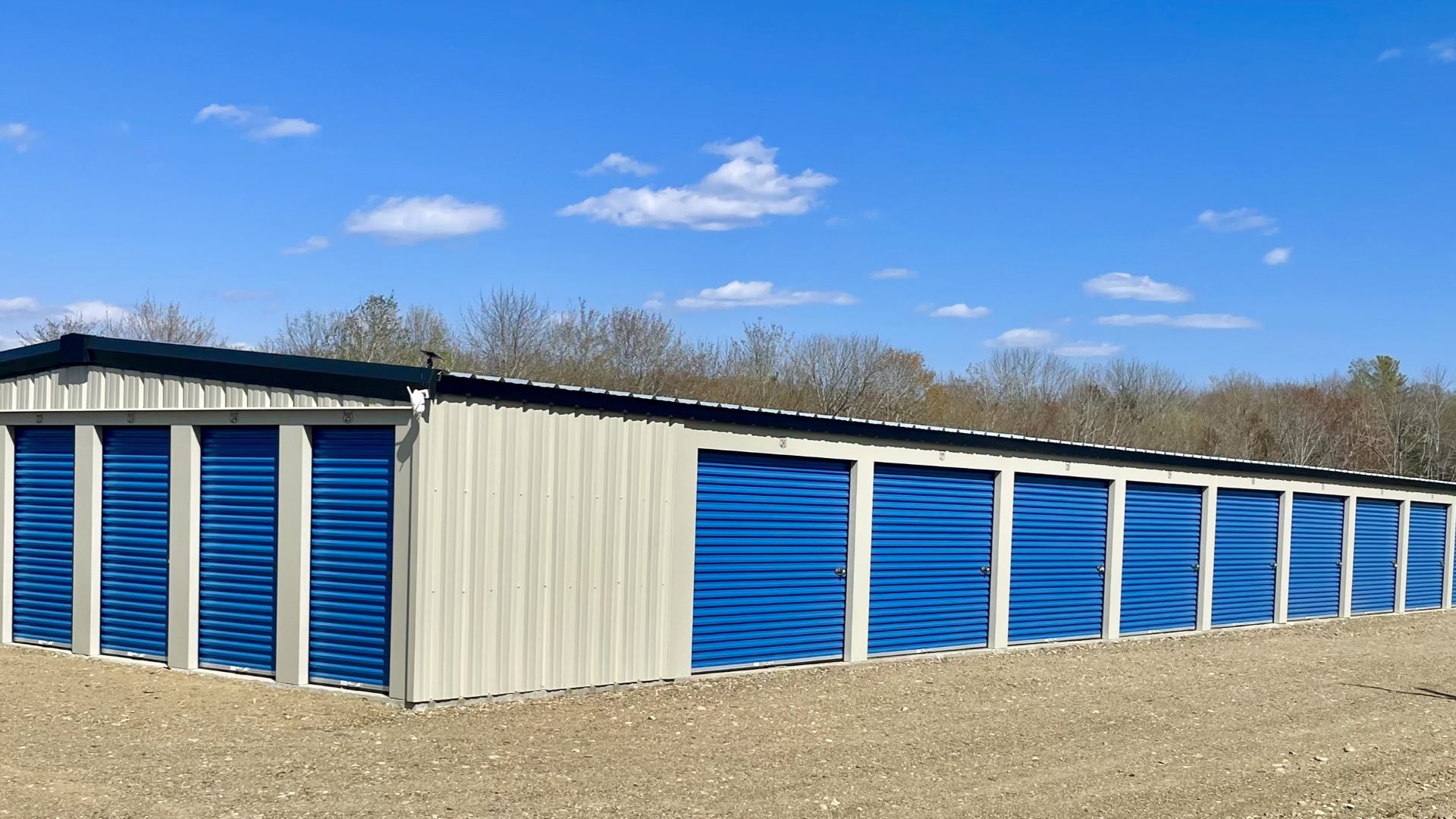
But the bucolic journey comes to a jarring halt across the road from the town’s old grange and white-steepled church. In a former pasture, atop a sprawling gravel pad, is a row of new, steel self-storage buildings, sporting 76 bright-blue garage doors.
“Used to be a time, you could stand in the pulpit talking about Jesus being a good shepherd and look out the window to see sheep grazing right there,” said Ernest James, a town selectman for 40 years – and from time to time the assessor, road commissioner and cemetery caretaker.
But changing lifestyles are driving the demand for self–storage facilities, with more than 50,000 scattered across the country, according to Forbes. At last count, and climbing, Maine had 211 facilities, reports SelfStorage.com, an online self-storage comparison and reservation site. Garages, attics and basements are overflowing, and the self-storage industry is reaping the benefits.
There are about a dozen self-storage facilities scattered throughout Washington County from Princeton in the northwest to Steuben near the Hancock County line. There are at least a couple of new ones planned, including one in Machias, as well as expansions at existing facilities. But some town officials say those numbers might be low because many facilities have no vacancies, therefore no longer advertise.
Stephen and Paula Farrar are Calais business owners who said they researched the industry for a few years before building their units in 2022. The couple, who live a stone’s throw from their 76-unit facility in Charlotte, run the business with their son Jamie and his wife Lea.
Since the facilities require little maintenance other than snow plowing, investing in a self-storage business — north of $400,000 at current construction prices, according to Farrar’s estimates — made good business sense to him.
“We’re getting a bit older and we’re getting ready to retire, so it seemed like something that would be easier than most kinds of rentals to manage,” Stephen Farrar said.
There are about a dozen self-storage facilities scattered throughout Washington County from Princeton in the northwest to Steuben near the Hancock County line. Photo by Joyce Krysak.
The family outsources much of that management, including rental reservations and payments, to a company that does all of it for them online.
Companies such as Easy Storage Solutions provide packages that include management software, call answering, online marketing, search engine optimization and tenant insurance plans. There are online companies that do the research, then offer from-the-ground-up packages, including building schematics, customizable business plans, financial spreadsheets, and “how-to” guides.
According to Mordor Intelligence Research, as reported in Forbes, the self-storage market reached $87.65 billion in 2019 and continues to grow. Although the owners interviewed for this story declined to say how much they earn, MRA reports that in Maine the income for the units, which vary in size, range on average from $90 to $163 per unit, per month.
The facilities also are proving to be a good deal for municipalities, according to several officials, including James, the Charlotte selectman. James, a farmer with over 600 acres not far from the self-storage facility, laments the changing landscape, but as a selectman said he sees the benefit of a self-storage business, especially in a small town like Charlotte.
Built less than a year ago, the facility has not been assessed so James couldn’t say how much it will add to the town’s coffers. But similar facilities bring in fairly substantial tax revenues for Washington County towns.
Thirty-three miles away, the town of Lubec has been collecting just under $4,000 a year in taxes from Lubec Safe Space Storage, built about two decades ago, according to treasurer and tax collector Suzette Francis. The facility on Route 189, owned by Christopher and Rachel Goodwin of Pembroke, sits next to the Eastland Motel, with a fence and row of apple trees in between.
Heather Henry Tenan, the motel co-owner with her husband, said the facility has been an excellent neighbor.
“If anything, it has given our business a little boost,” Henry Tenan said. “Oftentimes, (people) that lease a storage unit stay with us at the motel while they work on unit contents.”
She added that she and her husband even rented a unit themselves when they had a motel storage emergency. Although the motel pays more in taxes than the storage facility, around $7,000 a year after lot size and assessed value are considered, Francis said the tax revenue from the two businesses is comparable.
Tax assessor Jacqueline Robbins, who calculates property values for Lubec and several other towns in the county, said the facilities are a steady source of tax revenue.
“They certainly don’t require much,” said Robbins. “They don’t require anything in the way of education or even police, and that kind of thing. They just kind of sit there and give us some tax dollars.”
East Machias Self-Storage on Route 1, among the oldest self-storage businesses in the county, has brought East Machias thousands of dollars in taxes each year, just over $5,000 this year, according to the town clerk’s office.
Another facility, built last year by former BBS Lobster Company owner Blair West of Machiasport, is also on Route 1 in East Machias. West paid roughly $2,600 in the latest tax bill, based on an assessment of the property and the original 100 units.
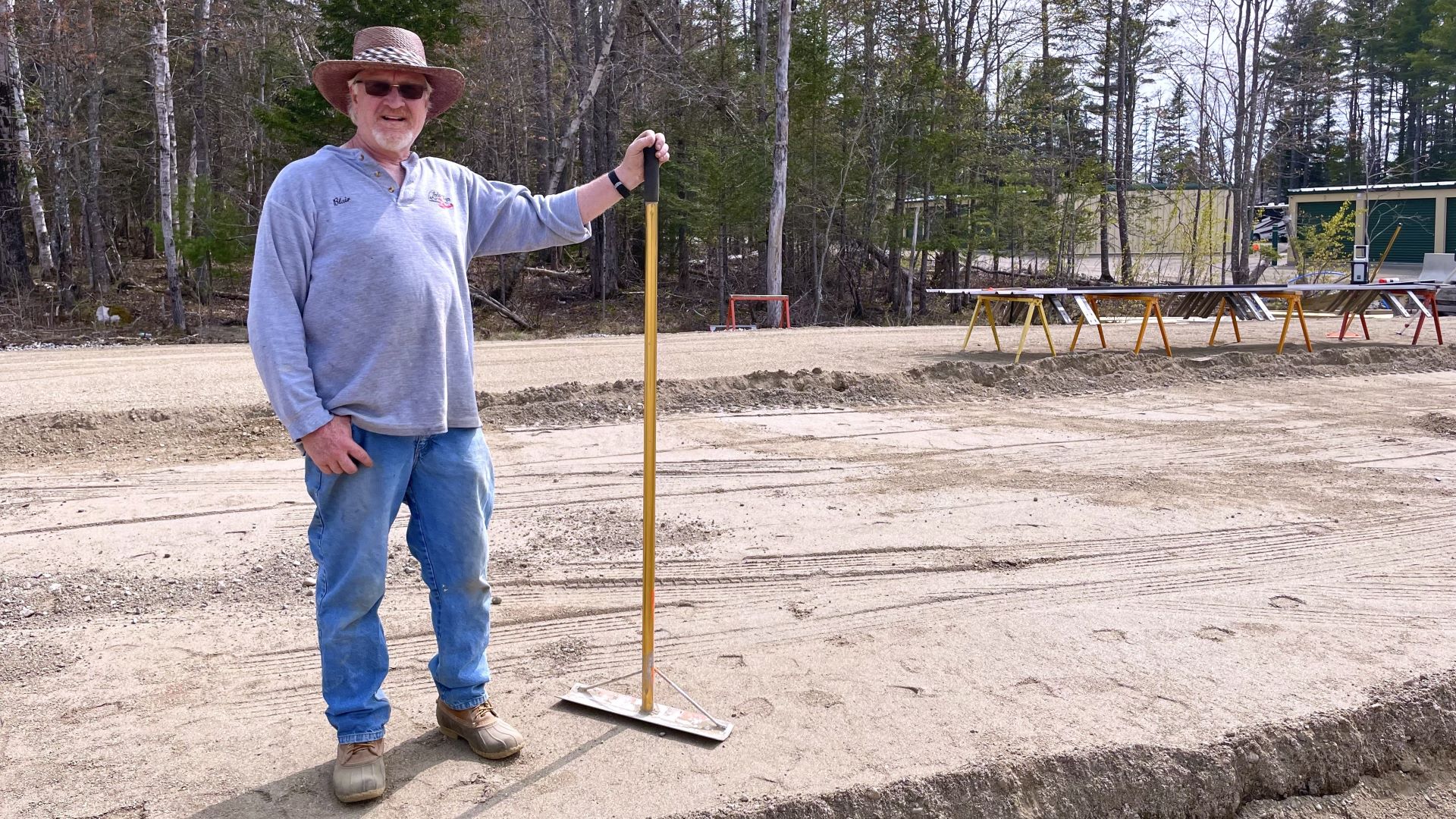
West, who does much of the construction and all of the management himself, is grading land for an additional 45-unit building. As soon as that goes up, West said he’ll get working on another building in the back, for a total of 200 units.
“It’s been amazing. I’ve saturated the market for the larger units, but I do have a waiting list for smaller sizes. That’s why I’m putting in this building,” West said while catching his breath after raking trenches at the site.
Machiasport resident Blair West is grading land for an additional 45-unit building, and plans to construct another building next. Photo by Joyce Kryszak.
According to West, the only way to make a decent profit, or be able to hire help, is to scale up. In the meantime, he handles everything from construction to hauling stuff to the dump if tenants are delinquent. Some facility owners occasionally call on the local used furniture store, Re Find Furnishings, to help with those situations.
“We do clean out storage units from time to time when it’s needed,” said Channing Johnson, who works for West and is the daughter of the former owner. “We have gotten some very nice and valuable items from these units.”
But who exactly are all of these people with so much stuff and nowhere to put it? Municipal officials and facility owners say there are a mix of tenants with myriad reasons for renting, ranging from a surge in Downeast newcomers to those displaced by the county’s housing shortage. Then there are residents who flow in and out with the seasons along Washington County’s increasingly popular Bold Coast.
Betty Jean and Stim Wilcox temporarily borrowed space in one of the two units their friend rents in East Machias. The retired couple recently decided to sell their home and soon will head to California to be near family. Betty Jean said they had to find storage in a hurry to make the house more attractive to buyers.
“We’ve packed up some things that we’ll eventually be taking with us and put in the unit for now,’’ Betty Jean said. “This way there isn’t so much clutter in the house when we show it.”
Still others, facility owners said, might store motorcycles, ATVs and even cars, drained of any fuel, in larger units over the winter. Traveling the length of Washington County, code enforcer Kevin Brody, who serves several towns, said he frequently sees people putting their units to creative use.
“Just driving by the storage units in Columbia Falls, there’s always somebody every Saturday and Sunday having a yard sale out of their storage unit,” Brody said.
Brody said that type of use doesn’t violate state or municipal codes. He said the structures are simple to deal with for the most part because they don’t have electrical wiring, water or plumbing. Rain runoff, the biggest issue, is easily mitigated with retention systems and additional drainage.
When there is an issue, Brody said he’s happy to work with the owners he described as mostly hard-working people trying to make money by providing a service people seem to need.
Sign upto receive The Maine Monitor’s free newsletter, Downeast Monitor, that focuses on Washington County news.
No emergency needed: Community paramedics in Wisconsin, elsewhere visit patients at home
Reading Time: 6minutes
Sandra Lane said she has been to the emergency room about eight times this year. The 62-year-old has had multiple falls, struggled with balance and tremors, and experienced severe swelling in her legs.
A paramedic recently arrived at her doorstep again, but this time it wasn’t for an emergency. Jason Frye was there for a home visit as part of a new community paramedicine program.
Frye showed up in an SUV, not an ambulance. He carried a large black medical bag into Lane’s mobile home, which is on the eastern edge of the city, across from open fields and train tracks that snake between the region’s massive open-pit coal mines. Lane sat in an armchair as Frye took her blood pressure, measured her pulse, and hooked her up to a heart-monitoring machine.
“What matters to you in terms of health, goals?” Frye said.
Lane said she wants to become healthy enough to work, garden, and ride her motorcycle again.
Frye, a 44-year-old Navy veteran and former oil field worker, promised to help Lane sign up for physical therapy and offered to find an anti-slip grab bar for her shower.
Community paramedic Jason Frye takes Sandra Lane’s blood pressure during a visit to her home in Gillette, Wyoming. Frye promised to help Lane sign up for physical therapy and offered to find an anti-slip grab bar for her shower. (Arielle Zionts / KFF Health News)
Community paramedicine allows paramedics to use their skills outside of emergency settings. The goal is to help patients access care, maintain or improve their health, and reduce their dependence on costly ambulance rides and ER visits.
Such programs are expanding across the country, including in rural areas, as health care providers, insurers, and state governments recognize the potential benefits to patients, ambulance services, and hospitals.
Community paramedic programs are operating in six cities in Wisconsin: Madison, West Allis, Racine, Menomonee Falls, Reedsburg and Greenfield, said Jennifer Miller, spokesperson for the state Department of Health Services. Eight others are working toward their community EMS provider licensure.
“Some of these programs have supporting data that shows positive outcomes while others are just getting their programs rolling,” Miller said by email. She said such services across the country “have proven success in a variety of patient care programs ranging from fall prevention to chronic disease management.”
Half of programs in rural areas
Gary Wingrove, a Florida-based leader in community paramedicine, said the concept took off in the early 2000s and now includes hundreds of sites. A 2017 survey of 129 programs found that 55% operated in “rural” or “super rural” areas.
Mindy Dessert speaks about her journey to become a community paramedic at the City of Madison Fire Department administration office in Madison, Wis., Thursday, April 20, 2023. Dessert retired at the end of April. (Samantha Madar / Wisconsin State Journal)
Community medicine can be helpful in rural areas where people have less access to health care, said Wingrove, chair of the International Roundtable on Community Paramedicine. “If we can get a community paramedic to their house,” he said, “then we can keep them connected to primary health care and all of the other services that they need.”
Frye works at Campbell County Health, a health care system based in Gillette, a city of about 33,000 in northeastern Wyoming. Leaders of the community paramedicine program plan to expand it into two adjacent, largely rural counties dotted with ranches and coal mines on the rolling prairie that stretches more than 100 miles from the Black Hills to the Bighorn Mountains.
Gillette serves as a medical hub for the region but has shortages of primary care doctors, specialists, and mental health services, according to a community needs assessment. People who live outside the city face additional barriers.
“A lot of them, especially older people, don’t want to come into town. And basically, those tiny communities don’t usually have health care,” Lane said. “I think it’s just kind of a pain for them to drive all the way into town, and unless they have a serious problem, I think they tend to just figure, ‘Well, it’ll work itself out.’”
Not a ‘cookie-cutter’ operation
Community paramedicine programs are customized to the needs and resources of each community.
“It’s not just a cookie-cutter-type operation. It’s like you can really mold it to wherever you need to mold it to,” Frye said.
Most community paramedicine programs rely on paramedics, but some also use emergency medicine technicians, nurses, social workers, and other professionals, according to the 2017 survey. Programs can offer home visits, phone check-ins, or transportation to nonemergency destinations, such as urgent care clinics and mental health centers.
Many programs support people with chronic illnesses, patients recovering from surgeries or hospital stays, or frequent users of 911 and the ER. Other programs focus on public health, behavioral health, hospice care, or post-overdose response.
Community paramedics can provide in-home vaccinations, wound care, ultrasounds, and blood tests.
They can offer exercise and nutrition tips, teach patients how to monitor their symptoms, and help with housing, economic, and social needs that can affect people’s health. For example, paramedics might inspect homes for safety hazards, provide a list of food banks, or connect lonely patients with a senior center.
Transportation a barrier to health care
Paramedics and patients said some rural residents struggle to access health care because of long distances, cost, lack of transportation, or dangerous weather. Some hesitate to seek help out of pride or because they don’t want to be a burden to others. Some limit trips to town during ranching and farming crunch times, such as calving and harvesting seasons.
Delayed care can let health problems fester until they become an emergency.
Advocates say providing in-home care, resources, and education can help patients reduce such crises and associated costs. Fewer emergencies mean fewer ambulance runs and hospital patients. That could help ambulance services and hospitals reduce costs and the time patients wait for help.
A 2022 scholarly review found that more studies are needed but that data so far suggests these programs reduce costs. It also found links to improved health outcomes and decreased use of ambulances and hospitals.
But rural ambulance services, especially volunteer ones, can struggle to staff and fund community paramedicine programs.
Kesa Copps, a co-worker of Frye’s, previously worked as an emergency medical technician in Powder River County, Montana, which has fewer than 2,000 residents. Some people there must drive more than an hour to reach the nearest hospital. The area’s volunteer ambulance service started a community paramedicine program in 2019.
Copps said the program reduced hospital readmissions and extended some elderly patients’ ability to live at home before being admitted to a nursing facility. She visited patients between ambulance runs and had to leave early when a 911 call came in. That’s different from the Campbell County Health model, in which community paramedicine is a full-time position, not split with emergency work.
Adam Johnson, director of the Powder River ambulance service, said the community paramedicine program shut down in 2021 after everyone with the necessary training left the area. Johnson said paramedics are signing up for training to restart the program.
Some ambulance services and health care organizations have piloted community paramedicine programs with the help of state or federal grants. If they find the service saves money, they may decide to continue the program and fund it themselves.
Private insurance companies are increasingly covering community paramedicine, Wingrove said. Wyoming and several other states allow operators to bill Medicaid for the services.
Advocates are now pushing Medicare to expand its limited coverage of community paramedicine, Wingrove said. That would benefit Medicare patients and could spur more private insurers to offer coverage.
The Campbell County Health program’s home visits cost up to $240 per hour and are billed to Medicaid or Medicare, said Frye. That compares with more than $1,300 for an ambulance ride and thousands of dollars for a visit to a hospital ER.
Community paramedicine may soon expand in neighboring South Dakota, another largely rural state.
South Dakota ambulance services have experimented with community paramedicine and lawmakers recently voted to authorize and regulate it.
‘You’re not alone’
Eric Emery, the state representative who introduced the bill, plans to start a program on the sprawling, rural Rosebud Indian Reservation, where he works as a paramedic. He said the operation will focus on diabetes and mental health care.
Community paramedic Jason Frye takes Linda Quitt’s pulse during a home visit in Gillette, Wyoming. Quitt has been navigating diabetes, depression, and a lack of social support after her husband was hospitalized with dementia. Frye said he would see if he could help start a senior walking group that Quitt could join. (Arielle Zionts / KFF Health News)
Emery, a Democrat, said some people struggle to pick up their medication and attend appointments because they lack vehicles or gas money and there’s no public transportation to the hospital. He said some parents and grandparents raising children also struggle to find time to drive to appointments.
“They’re putting the needs of the younger generation or their grandkids before their own,” Emery said.
Back in Gillette, Frye also checked in on Linda Quitt, a 78-year-old facing diabetes, depression, and a lack of social support after her husband was hospitalized with dementia. Quitt said her husband was her walking buddy and helped care for her.
“I had him to wait on me, and now I have nobody,” Quitt said.
Frye said he would see if he could help start a senior walking group that Quitt could join. He told her that socializing can improve health.
Northern Maine Medical Center to close obstetrics unit
County’s new 2041 comprehensive plan up for state review
Oglethorpe County’s new comprehensive plan is nearing adoption.
The county and the cities of Lexington, Arnoldsville, Crawford and Maxeys held a public hearing last Monday to inform the community of the plan itself, as well as the schedule of for adoption.
County Planner McKenzie Spooner said there were only a handful of residents who attended the meeting and watched the Board of Commissioners sign off on the final draft of Comprehensive Plan for 2041.
Community paramedics fill gaps in preventative care needs
GILLETTE—Sandra Lane has been to the emergency room about eight times this year, she said. The 62-year-old has had multiple falls, struggled with balance and tremors and experienced severe swelling in her legs.
A paramedic recently arrived at her doorstep again, but this time it wasn’t for an emergency. Jason Frye was there for a home visit as part of a new community paramedicine program.
Frye showed up in an SUV, not an ambulance. He carried a large black medical bag into Lane’s mobile home, which is on the eastern edge of the city, across from open fields and train tracks that snake between the region’s massive open-pit coal mines. Lane sat in an armchair as Frye took her blood pressure, measured her pulse and hooked her up to a heart-monitoring machine.
“What matters to you in terms of health goals?” Frye asked.
Lane said she wants to become healthy enough to work, garden and ride her motorcycle again.
Frye, a 44-year-old Navy veteran and former oil field worker, promised to help Lane sign up for physical therapy and offered to find an anti-slip grab bar for her shower.
Community paramedicine allows paramedics to use their skills outside of emergency settings. The goal is to help patients access care, maintain or improve their health and reduce their dependence on costly ambulance rides and ER visits.
Such programs are expanding across the country, including in rural areas, as health care providers, insurers and state governments recognize the potential benefits to patients, ambulance services and hospitals.
Filling access needs
Gary Wingrove, a Florida-based leader in community paramedicine, said the concept took off in the early 2000s and now includes hundreds of sites. A 2017 survey of 129 programs found that 55% operated in “rural” or “super rural” areas.
Community medicine can be helpful in rural areas where people have less access to health care, said Wingrove, chair of the International Roundtable on Community Paramedicine. “If we can get a community paramedic to their house,” he said, “then we can keep them connected to primary health care and all of the other services that they need.”
Frye works at Campbell County Health, a health care system based in Gillette, a city of about 33,000 in northeastern Wyoming. Leaders of the community paramedicine program plan to expand it into two adjacent, largely rural counties dotted with ranches and coal mines on the rolling prairie that stretches more than 100 miles from the Black Hills to the Bighorn Mountains.
Jason Frye shows off his emergency-medical-services-themed tattoo. Frye helped start a community paramedicine program that plans to serve three rural counties in northeastern Wyoming. (Arielle Zionts/KFF Health News)
Gillette serves as a medical hub for the region but has shortages of primary care doctors, specialists and mental health services, according to a community needs assessment. People who live outside the city face additional barriers.
“A lot of them, especially older people, don’t want to come into town. And basically, those tiny communities don’t usually have health care,” Lane said. “I think it’s just kind of a pain for them to drive all the way into town, and unless they have a serious problem, I think they tend to just figure, ‘Well, it’ll work itself out.’”
Community paramedicine programs are customized to the needs and resources of each community.
“It’s not just a cookie-cutter-type operation. It’s like you can really mold it to wherever you need to mold it to,” Frye said.
Most community paramedicine programs rely on paramedics, but some also use emergency medicine technicians, nurses, social workers and other professionals, according to the 2017 survey. Programs can offer home visits, phone check-ins or transportation to nonemergency destinations, such as urgent care clinics and mental health centers.
Many programs support people with chronic illnesses, patients recovering from surgeries or hospital stays or frequent users of 911 and the ER. Other programs focus on public health, behavioral health, hospice care or post-overdose response.
Community paramedics can provide in-home vaccinations, wound care, ultrasounds and blood tests.
They can offer exercise and nutrition tips, teach patients how to monitor their symptoms and help with housing, economic and social needs that can affect people’s health. For example, paramedics might inspect homes for safety hazards, provide a list of food banks or connect lonely patients with a senior center.
Paramedics and patients said some rural residents struggle to access health care because of long distances, cost, lack of transportation or dangerous weather. Some hesitate to seek help out of pride or because they don’t want to be a burden to others. Some limit trips to town during ranching and farming crunch times, such as calving and harvesting seasons.
Delayed care can let health problems fester until they become an emergency.
Advocates say providing in-home care, resources and education can help patients reduce such crises and associated costs. Fewer emergencies mean fewer ambulance runs and hospital patients. That could help ambulance services and hospitals reduce costs and the time patients wait for help.
A 2022 scholarly review found that more studies are needed but that data so far suggests these programs reduce costs. It also found links to improved health outcomes and decreased use of ambulances and hospitals.
But rural ambulance services, especially volunteer ones, can struggle to staff and fund community paramedicine programs.
Challenges
Kesa Copps, a co-worker of Frye’s, previously worked as an emergency medical technician in Powder River County, Montana, which has fewer than 2,000 residents. Some people there must drive more than an hour to reach the nearest hospital. The area’s volunteer ambulance service started a community paramedicine program in 2019.
Copps said the program reduced hospital readmissions and extended some elderly patients’ ability to live at home before being admitted to a nursing facility. She visited patients between ambulance runs and had to leave early when a 911 call came in. That’s different from the Campbell County Health model, in which community paramedicine is a full-time position, not split with emergency work.
Adam Johnson, director of the Powder River ambulance service, said the community paramedicine program shut down in 2021 after everyone with the necessary training left the area. Johnson said paramedics are signing up for training to restart the program.
Some ambulance services and health care organizations have piloted community paramedicine programs with the help of state or federal grants. If they find the service saves money, they may decide to continue the program and fund it themselves.
Private insurance companies are increasingly covering community paramedicine, Wingrove said. Wyoming and several other states allow operators to bill Medicaid for the services.
Advocates are now pushing Medicare to expand its limited coverage of community paramedicine, Wingrove said. That would benefit Medicare patients and could spur more private insurers to offer coverage.
Community paramedic Jason Frye takes Linda Gwitt’s pulse during a home visit in Gillette. Gwitt has been navigating diabetes, depression and a lack of social support after her husband was hospitalized with dementia. Frye said he would see if he could help start a senior walking group that Gwitt could join. (Arielle Zionts/KFF Health News)
The Campbell County Health program’s home visits cost up to $240 per hour and are billed to Medicaid or Medicare, Frye said. That compares with more than $1,300 for an ambulance ride and thousands of dollars for a visit to a hospital ER.
Community paramedicine may soon expand in neighboring South Dakota, another largely rural state.
South Dakota ambulance services have experimented with community paramedicine and lawmakers recently voted to authorize and regulate it.
Eric Emery, the state representative who introduced the bill, plans to start a program on the sprawling, rural Rosebud Indian Reservation, where he works as a paramedic. He said the operation will focus on diabetes and mental health care.
Emery, a Democrat, said some people struggle to pick up their medication and attend appointments because they lack vehicles or gas money and there’s no public transportation to the hospital. He said some parents and grandparents raising children also struggle to find time to drive to appointments.
“They’re putting the needs of the younger generation or their grandkids before their own,” Emery said.
Back in Gillette, Frye also checked in on Linda Gwitt, a 78-year-old facing diabetes, depression and a lack of social support after her husband was hospitalized with dementia. Gwitt said her husband was her walking buddy and helped care for her.
“I had him to wait on me, and now I have nobody,” Gwitt said.
Frye said he would see if he could help start a senior walking group that Gwitt could join. He told her socializing can improve health.
“You’re not alone,” Frye told Gwitt.
This story was originally published on KFF Health News, a national newsroom that produces in-depth journalism about health issues and is one of the core operating programs at KFF — an independent source of health policy research, polling and journalism. Learn more about KFF.
Here’s how unusual the population losses in Northern Virginia and Hampton Roads are
You can find all our coverage of Virginia’s changing demographics here.
In January, we reported on Virginia’s new population estimates, which showed that Northern Virginia and Hampton Roads — but especially Northern Virginia — are now losing population while some parts of rural Virginia are now gaining.
Those estimates were a precursor to national estimates, which the U.S. Census Bureau has now released, which gives us an opportunity to see Virginia’s population changes in a national context. So let’s get to it.
The population losses in Northern Virginia and Hampton Roads stand out even more because they are at odds with other Southern metros. Raleigh, Charlotte, Nashville, Atlanta, you name it — all those places gained population. In losing population, Northern Virginia and Hampton Roads have much more in common with Northeastern metros such as New York and Boston that also lost people. I’ve looked before at why this is: High housing costs are typically blamed but this becomes a complicated debate. Gov. Glenn Youngkin says Virginia’s taxes are too high; Del. Vivian Watts, D-Fairfax County, has countered that the state hasn’t invested enough in transportation to ease Northern Virginia’s infamous traffic congestion. We will not resolve that debate today. Whatever the reasons, the important thing to know is that Virginia’s two biggest metro areas are losing population while other big Southern metros are gaining. Virginia’s leaders from both parties might want to ponder why that is.
Virginia’s most popular destination for people moving in — Richmond — isn’t nearly as popular as other places in the Mid-Atlantic. We’ve reported before that more people are moving out of Virginia than are moving in; Youngkin has cited this as a worrisome metric that he regularly monitors. That net out-migration is driven mostly by outflows from Northern Virginia and Hampton Roads, but some places in Virginia are attracting more new residents than they’re losing. The most popular destination is the Richmond metro. In fact, the Richmond metro is now the fastest-growing part of the state. However, Richmond’s population gains due to net in-migration are well below those of other metros in the Mid-Atlantic. Since 2020, Richmond has seen 15,848 new residents through domestic migration. However, 10 other metros in the Mid-Atlantic rank higher. The Charlotte metro leads the way with 63,742, while Myrtle Beach is second with 53,801 and the Raleigh metro is third with 47,750. Some context: “Raleigh, which is about 8 percent larger than the Richmond metro area, attracted over three times more domestic migrants between 2020 and 2022 than Richmond,” says demographer Hamilton Lombard at the Weldon Cooper Center for Public Service at the University of Virginia, “while Myrtle Beach, which is close to a third the size of the Richmond metro area, attracted even more domestic migrants than Raleigh.”
Now, whether that’s a good thing or a bad thing obviously depends on your point of view. Youngkin equates population growth with economic growth and economic growth does, undoubtedly, drive population growth. People don’t move to communities that are economically failing. However, others might say there’s such a thing as too much population growth. I live in a rural community because I don’t want too many people around me, so we can have robust arguments over just how much population growth is too much. On the other hand, a place that’s losing population is clearly a bad thing economically. Maybe people in Richmond are happy with that level of population growth and wouldn’t want to see growth that’s three times or even four times faster — that’s not for me to say. I’m simply pointing out that other places in the Mid-Atlantic are much more popular destinations than Virginia’s most popular destination.
Virginia’s second most popular destination for domestic migration may surprise you: It’s Bristol. Well, technically, the Kingsport-Bristol metro, so there’s more Tennessee in that metro than Virginia. Still, that metro saw a domestic migration of 8,928. That’s more than Durham-Chapel Hill, North Carolina (8,527), and Greensboro-High Point, North Carolina (6,285). Bet you wouldn’t have predicted that. “This lines up well with Realtor.com ranking the Kingsport-Bristol region as having one of the best housing markets in the country,” Lombard says.
For comparison purposes, the Winchester metro is 3,530, the Lynchburg metro is 2,658, the Staunton metro is 1,928, the Roanoke metro is 1,028, the Charlottesville metro is 872, the Danville metro is 545, the Martinsville metro is 348 and the Bluefield metro is 276. It’s noteworthy that those last three metros – all small and less affluent – are in the plus range. By contrast, Hampton Roads shows a loss of 6,754 while the entire Washington metro (covering Northern Virginia, D.C. and parts of Maryland) has a loss of 135,014. As I’ve pointed out before, many parts of rural Virginia may be losing population because deaths outnumber births, but in terms of migration, some places have fixed their population outflows. When Virginia shows more people moving out than moving in, the problem is Northern Virginia and Hampton Roads, not Danville, Martinsville, Bristol and so forth.
Here is domestic migration by county for 2021-2022. Blue represents localities with net in-migration; orange represents counties with net out-migration. Source: U.S. Census Bureau.
“Lifestyle communities” are gaining population fast. Notice that Myrtle Beach has seen more new people move in than any other place in the Mid-Atlantic except for Charlotte. Some other smaller communities rank high on the list. Hilton Head, South Carolina, has gained 12,030, almost as many as Richmond. Asheville, North Carolina, has gained 11,060. This is in line with other data we’ve seen; if the Zoom era allows people to live anywhere they want, many are choosing seaside retreats — or, in the case of Asheville, a place with a reputation as a mountain resort. We see that trend play out in Virginia with population growth along the Chesapeake Bay and, conceivably, some of the population growth in some rural counties along the Blue Ridge is driven by this as well. Ours just aren’t growing as fast as other places.
Virginia is unusual among Southeastern states because it has a lot of rural areas that are losing population. When Virginia’s population estimates came out, it was noteworthy that many — though certainly not all — rural areas showed some population growth. When we look more broadly, through a national lens, we see that we might be missing the forest for the trees, so to speak. In Southside, Southwest and the Alleghany Highlands, we still have a lot of localities that are losing population. However, in North Carolina, South Carolina, Tennessee and Georgia, virtually every locality is gaining population. All you have to do is look at the map to see how Virginia’s southern border acts as a demographic demarcation. In Virginia, we have a checkerboard of rural counties, some gaining, some losing. South of us, there’s much more widespread population growth. Once again, Virginia’s leaders from both parties might want to ponder why that is. Youngkin cites tax differences. I’m not in a position to dispute that, but I will gently point out that taxes are more complicated than that. Tennessee has no income tax, for instance, but the tradeoff is it has the nation’s second highest sales tax rates. In a previous column, I looked more closely at why eastern Tennessee has more population growth than Southwest Virginia; the answers involve geography and historic patterns of development. Whatever the reason, the pattern is clear: Population growth in rural areas is more uneven than in our Southern neighbors.
Migration to rural areas is slowing, but still continuing. “During the height of the pandemic, many small counties experienced higher levels of domestic migration, while many large counties saw lower levels of domestic migration,” the Census Bureau says. “This pattern has reversed between 2021 and 2022, where many of the small counties that experienced increases in domestic migration saw that pattern slow down.” Slow down, but not halt altogether. Demographers are still watching these trends to see if this Zoom-era bump in rural population growth is a temporary phenomenon or something longer-lasting. Nonetheless, the exodus from some metro areas continues. Los Angeles, Chicago, New York, Philadelphia and Detroit, in that order, saw the biggest numbers of people moving out. So who’s gaining?
7. The Sunbelt continues to be where the population growth is. In terms of raw numbers of people moving in, the two biggest gainers are Maricopa County, Arizona (Phoenix), and Harris County, Texas (Houston). The 10 fastest-gaining counties are all in Arizona (one), Texas (six) and Florida (three). There are those who view these growth trends in political terms, making the case that Republican-governed states are gaining and Democratic-governed ones are losing — Illinois and New York are the two classic examples cited, although lately California has joined them. I’m not sure I buy that because there are too many exceptions. Mississippi and West Virginia are governed by Republicans and virtually every county in those states is losing population. Washington state is governed by Democrats and virtually every county there is gaining population. I suspect the reasons are much more nuanced. Party control certainly has something to do with the policies a state enacts (be it the taxes that Youngkin says are too high or the investment that Watts says it too low), but we also have to factor in underlying demographics and economic factors — along with, well, sunshine.
For the first two decades of the 21st century, not even a once-in-a-millennium drought could deter real estate developers from building vast suburban tracts on the wild edges of Western U.S. cities. But in 2021, a reckoning appeared on the horizon. The Colorado River sank to historic lows, winter rains never arrived, and communities from California to Texas found their groundwater wells going dry after decades of overuse.
Western officials had seldom let questions about water availability get in the way of population growth, but suddenly they seemed to have no other choice. Faced with an unprecedented shortage, many local governments tried to pump the brakes on new developments. A small town in Utah halted all new housing permits, fearful that more homes would sap a local river. A suburb of Colorado Springs, Colorado, told developers that it could no longer allow new subdivisions to connect to the city’s water system. Most significantly, the state of Arizona has all but paused new housing in some Phoenix suburbs, citing a shortage of groundwater.
This pivot to conservation was bad news for D.R. Horton, the nation’s largest homebuilding company. Buoyed by pandemic-induced demand for cheap, spacious housing across the West, Horton netted $6 billion constructing more than 80,000 homes last year alone. The company had long been able to assume that if it built a development, someone else would provide water for it — usually a local government eager for tax revenue. All of a sudden, Horton had to find the water itself.
Luckily, there was a third party who could help.
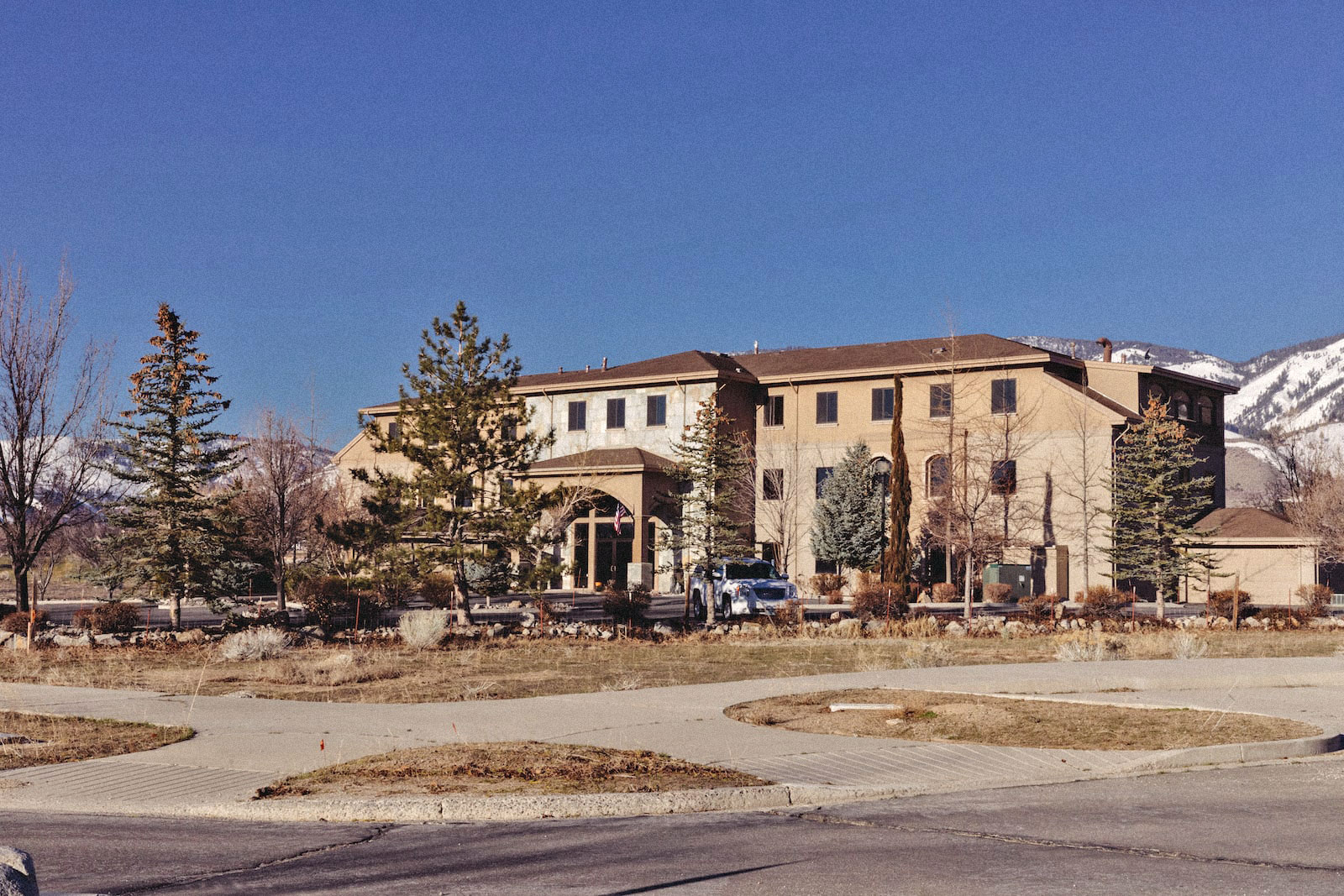
In April of last year, Horton acquired Vidler Water Company, a tiny outfit whose dozen employees worked out of an unassuming faux-Mediterranean office park in Carson City, Nevada. Though Vidler’s annual revenue was less than a tenth of a percent of Horton’s, the real estate titan spent big to snap it up: The price tag on the acquisition was an eye-popping $291 million.
Vidler Water Company’s offices in Carson City, Nevada. The homebuilder D.R. Horton purchased the company last year for almost $300 million. Grist / Mikayla Whitmore
Vidler is an unusual company. It doesn’t actually deliver water to people, nor does it own any facilities for water treatment or desalination. Instead the company functions as a broker for water rights, finding untapped water in rural communities and marketing it to developers and corporations in fast-growing cities and suburbs. For 20 years, the company has bought up remote farmland and drilled wells in bone-dry valleys to amass an enormous private water portfolio, then made tens of millions of dollars by selling that portfolio one piece at a time.
This kind of business inevitably involves some guesswork, and often that guesswork looks like classic real estate speculation: You can make money by bringing water to places where people already want it, but you can make even more money bringing it to places where people will want it in the future. This is exactly what Vidler has tried to do, and it has led the company’s critics to contend that its business model violates the anti-speculation spirit of Western water law.
Indeed, suspicions that Vidler is profiteering off a vulnerable public resource have made the company more than its share of enemies over the years: Top officials have been pilloried in courtrooms and threatened by rural residents, and an early executive once had to jump out a window to escape an angry crowd at a public meeting.
Horton’s purchase of Vidler has no real precedent, but it is a clear indication of where the West is headed. The region has grown twice as fast as the rest of the United States since the 1950s, and national builders like Horton are relying on it to fuel future profits. If these companies want to capitalize on migration to the booming suburbs of Phoenix and Las Vegas, they’ll need to find creative new water supplies that will allow them to keep building even as regulators try to clamp down on unsustainable growth.
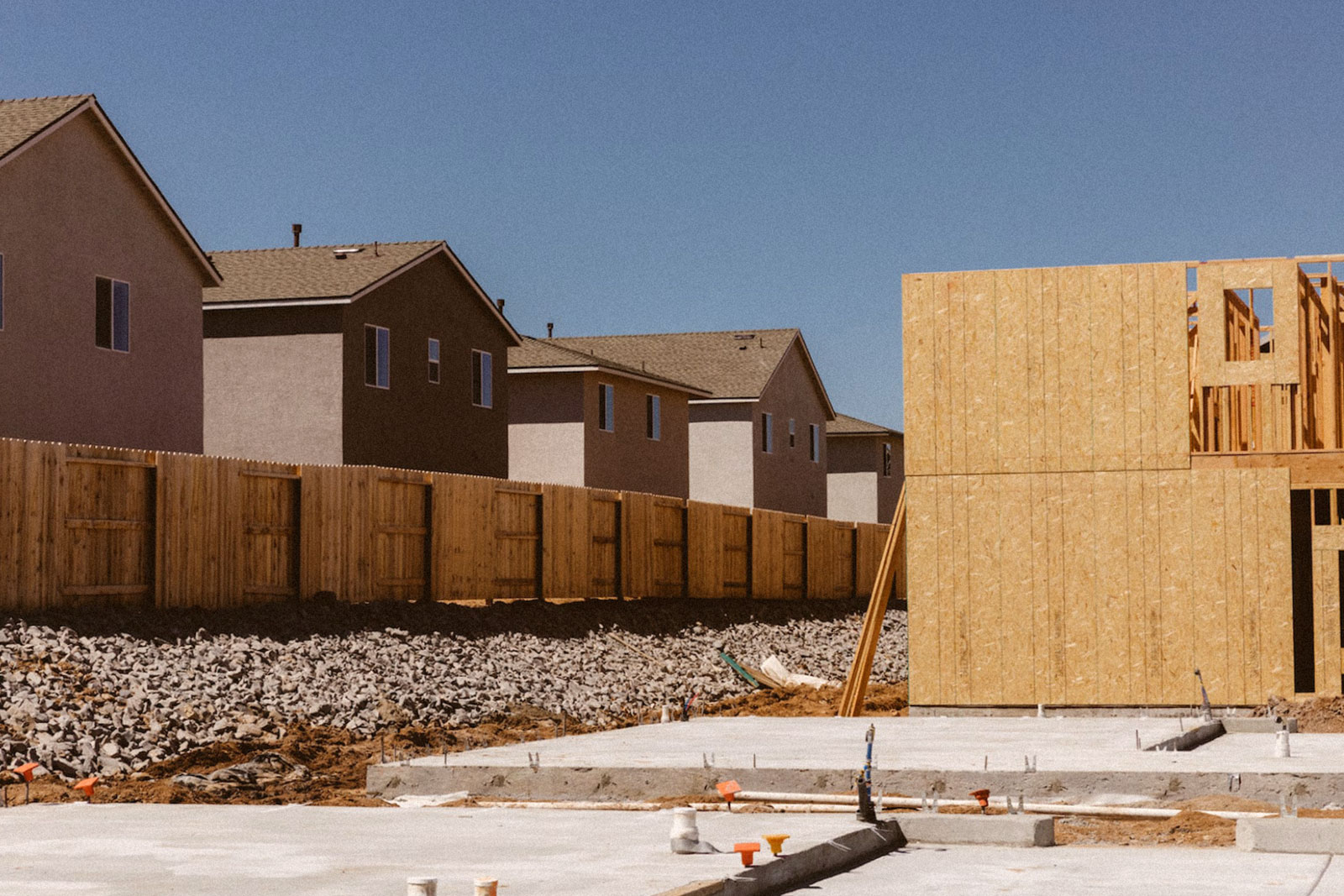
A D.R. Horton housing development in the suburbs north of Reno, Nevada. Vidler owns a pipeline that will soon bring groundwater to the fast-growing area.
Grist / Mikayla Whitmore
In this regard, Vidler is a pioneer. The company was the first in the West to make a business model out of finding and flipping water. In the past few years, a new crop of upstarts has sought to mimic this model, buying up water rights in rural areas and marketing them to developers and suburbs that need them for future growth. These companies include Water Asset Management, which has bought up agricultural land in Colorado to secure water rights, and the investment firm Greenstone, which organized a first-of-its-kind deal to move Colorado River water from farms in western Arizona to a city near Phoenix. Both companies boast former Vidler executives in top leadership positions.
Vidler still stands at the front of the pack, tapping water in hard-to-reach aquifers and pursuing aggressive litigation to push new construction forward. If the company’s tactics become more common, the effects will be far-reaching — not only could rural areas and desert ecosystems see their precious water siphoned off, but thousands of people will buy and occupy homes fed by water sources that may turn out to be unreliable. A major part of Vidler’s strategy has been to pump water from small underground aquifers, squeezing every available drop from finite water banks that may someday run dry, especially as climate change contributes to the long-term aridification of the West.
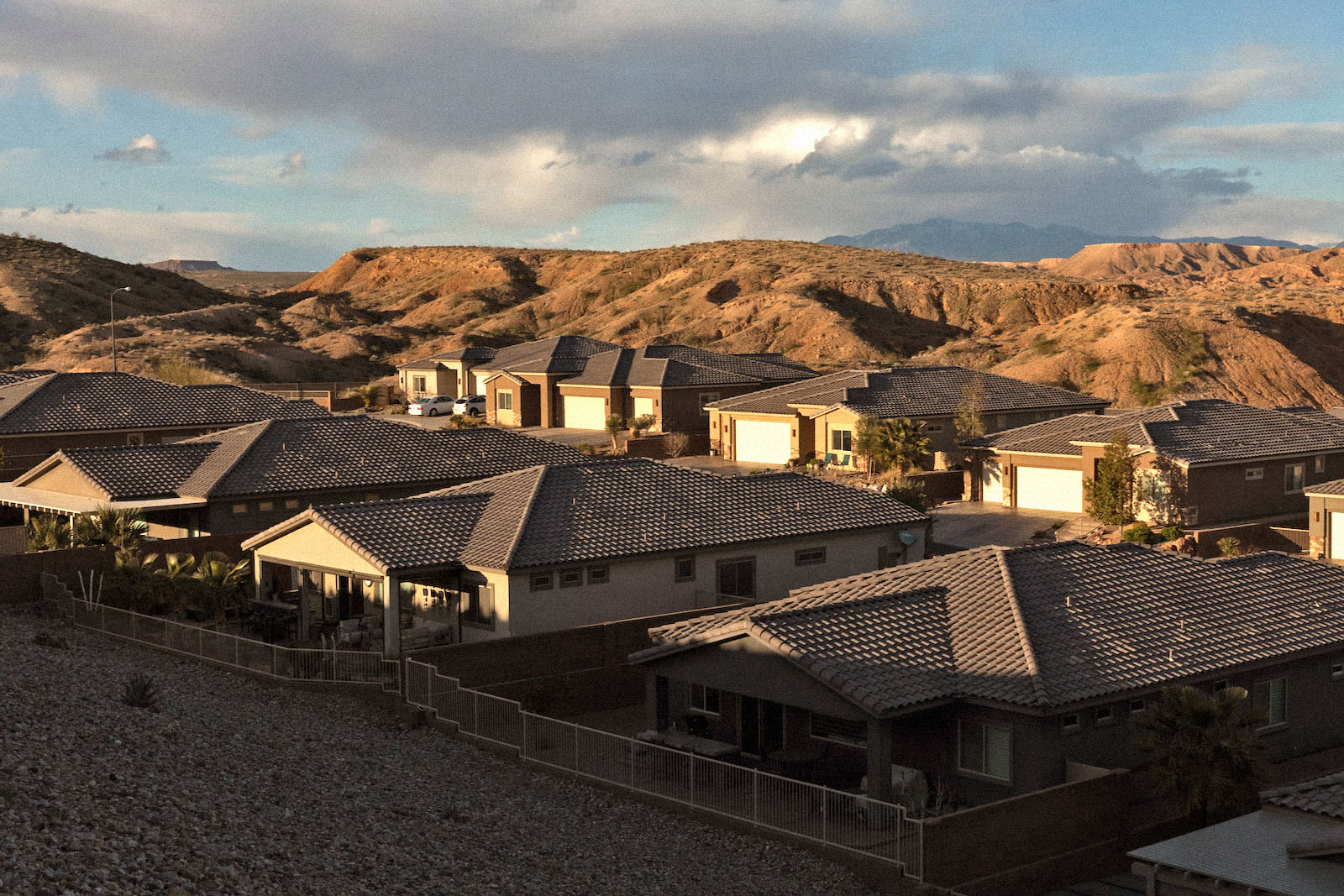
Kevin Brown is the manager of a water utility in the southern Nevada city of Mesquite, where Vidler has been trying for years to build a pipeline that could bring new water to the city. The company has proposed tapping a virgin aquifer and using the water to supply new housing developments on the edge of town, but Brown doubts the pipeline is a good idea. Instead he has focused on reducing water usage across the city and recycling water where he can.
Vacant land in Lincoln County, Nevada, near the city of Mesquite. Vidler owns a large portfolio of water assets in the area that could enable further development.
Grist / Mikayla Whitmore
“In the world we live in, and the market we live in, if you put enough money against it, someone will make it happen,” Brown told Grist. “If these developers aren’t building homes, then they’re going out of business. But at some point, somebody needs to say, ‘You know what, we can’t grow anymore. It’s not sustainable.’”
In most Western states, water is public property regardless of whose land it flows through or sits under. Private entities can only own the right to use that water for a specific purpose. Individuals and companies can apply to use any unclaimed water source, but they have to convince the state government that they plan to put the water to a productive use. By the same token, owners can sell or lease their existing water rights to each other as long as the buyers keep using the water for something.
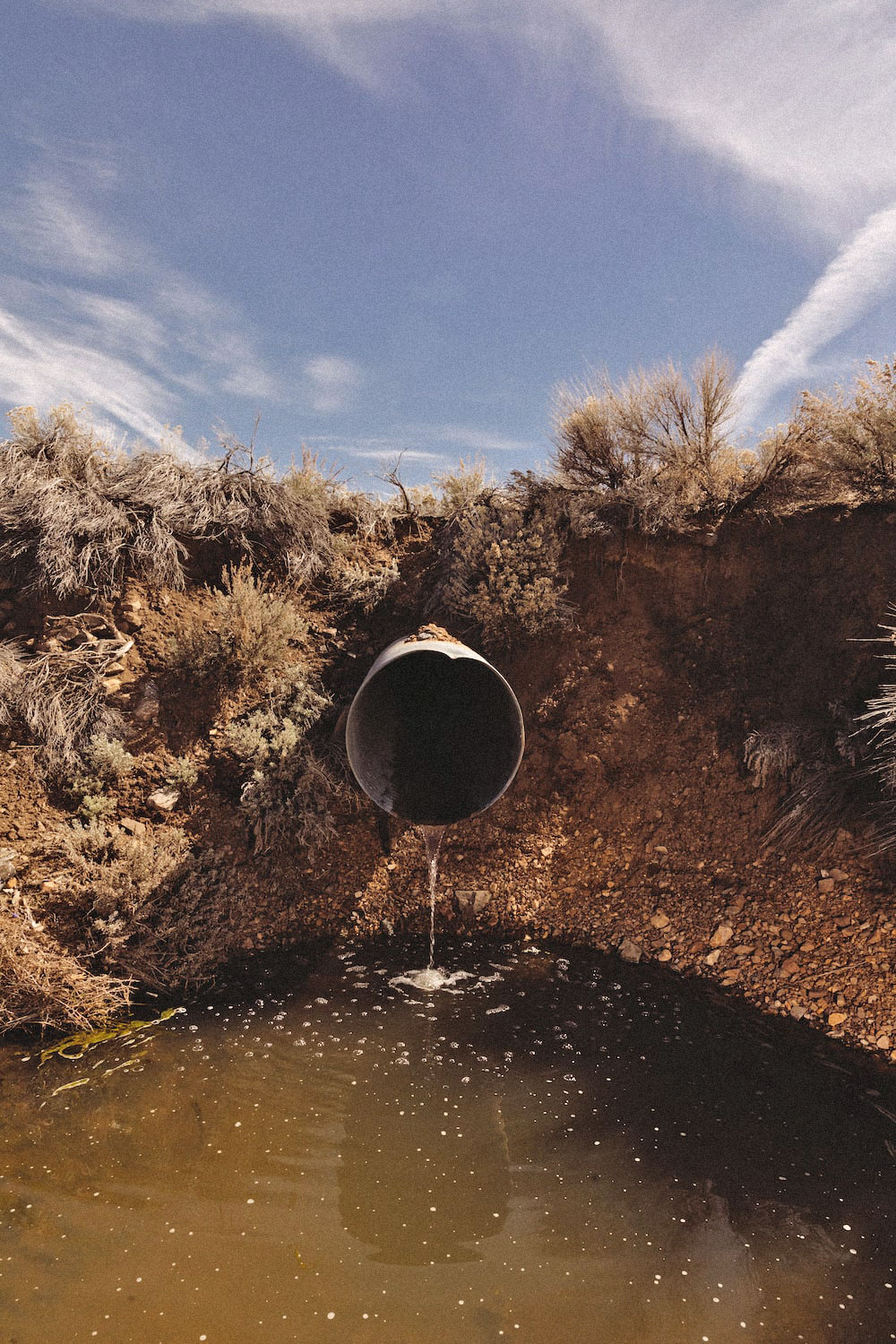
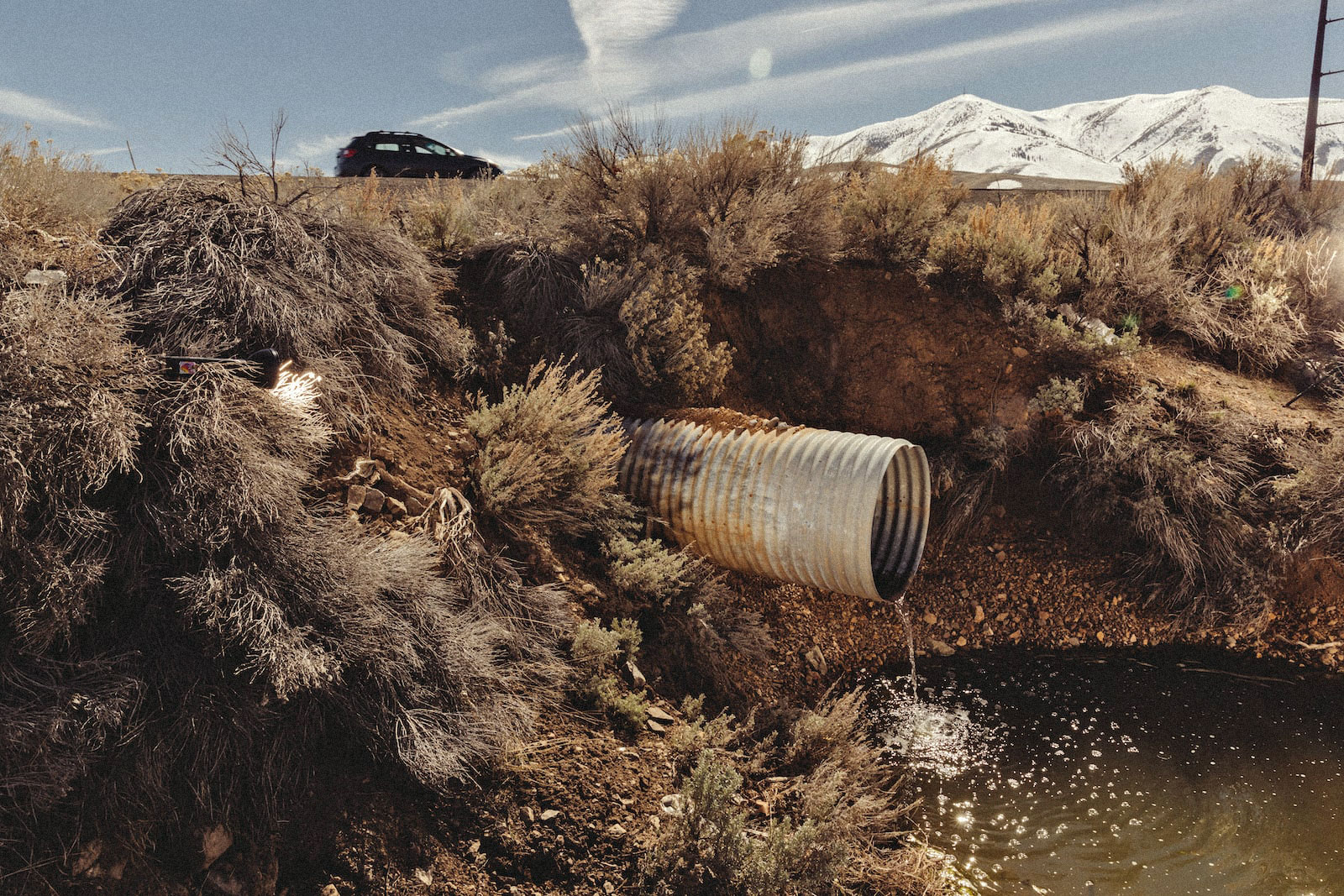
A drainpipe near a D.R. Horton housing development north of Reno, Nevada. Vidler is the first company to make a business out of buying and selling water rights for projects like these.
Grist / Mikayla Whitmore
In this arrangement, the new breed of water brokers has found an opportunity to accumulate assets and generate profits. But the law requires them to tread cautiously.
At the turn of the 20th century, a Transcontinental Mining executive named Rees Vidler tried to dig a tunnel through the heart of the Colorado Rockies. It was supposed to link the mineral-rich mountain towns around Breckenridge with the young Denver metro area, but Vidler never completed the project. The shaft sat unused until an engineer bought it in the 1950s and repurposed it to move water rather than ore. He acquired the rights to river water on the Breckinridge side of the tunnel, built a water pipeline through the shaft, and proposed to sell the river water to people in the fast-growing cities around Denver. The engineer didn’t have any confirmed buyers for the water, but he could store it in a reservoir until he made a sale.
In 1979, the Colorado Supreme Court dealt a blow to that scheme. A judge ruled that the engineer’s water purchases were “grounded on no interest beyond a desire to obtain water for sale.” If Colorado allowed such purchases, it would “encourage those with vast monetary resources to monopolize [water] for personal profit rather than beneficial use,” the court wrote. In other words, speculating on water was unacceptable. Judges in other states soon adopted similar rulings, creating a precedent that some legal scholars have called “the Vidler doctrine.”
About 15 years later, the Vidler tunnel and its water rights fell into the possession of one John Hart, a swashbuckling financier who was beginning a decades-long corporate takeover spree. Hart and his business partner had just taken over the Physicians Insurance Company of Ohio, or PICO. They transformed the moribund Midwestern insurance company into an umbrella corporation for buying and flipping distressed assets, including a Swiss railway operator, an Australian oil company, a million acres of rural land in Nevada, and a canola-seed crushing facility.
The Vidler tunnel’s history gave Hart an idea. He lived near San Diego, which relies in part on the Colorado River, and he could see that water was only going to get more valuable across the region, especially if real estate kept booming. Many farmers who had fallen on hard times were selling their irrigated land to developers, who repurposed irrigation water to supply new homes and golf courses. Hart wanted to profit from this slow transition away from agriculture, and he thought he saw a way to do it: Buy up water rights in the driest states, wait for the rights to rise in value, and sell them later on to developers that needed them for new housing. As long as the population of the West continued to increase, the price of water would increase as well — and with it PICO’s investment profits.
By acting as a broker for water rights, the PICO subsidiary that Hart called Vidler Water Company could get around the anti-speculation doctrine invoked in its very name. The tunnel engineer had sought to hold onto his water rights and make money by selling water to people who needed it. Vidler would just buy and sell the water rights themselves. This amounted to an elegant form of arbitrage: If a water right was worth more to a developer than it was to a farmer, Vidler could profit by flipping the right from the latter to the former.
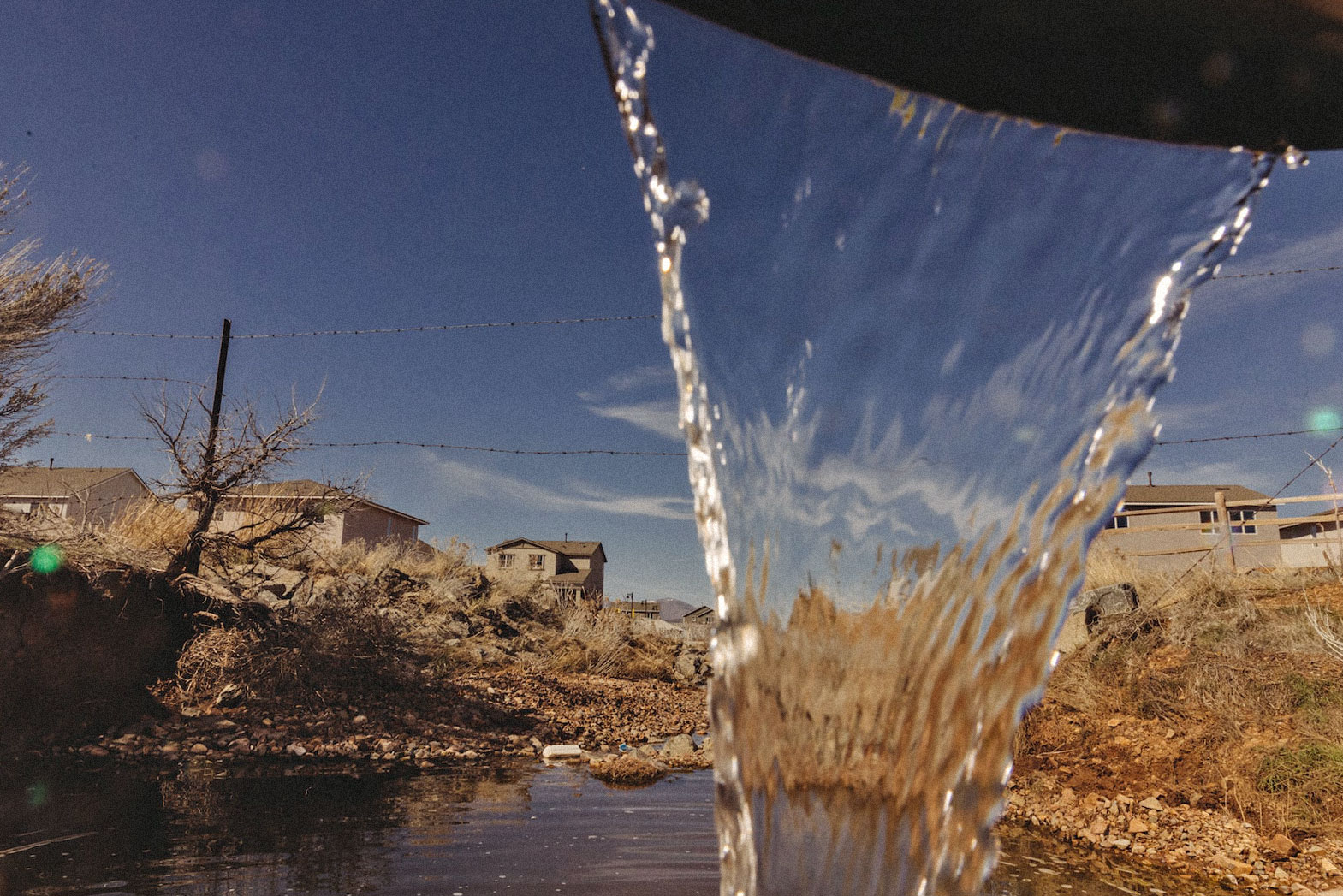
Water falls from a drainpipe at a D.R. Horton development near Reno, Nevada. Most Western states have strict restrictions on who can buy and sell water.
Grist / Mikayla Whitmore
The only problem was that Hart didn’t know very much about the nitty-gritty details of water law, and he knew even less about the science of hydrology. In order for his plan to work, he had to find someone who could handle both. That someone was Dorothy Timian-Palmer, an engineer who had been Carson City’s municipal utilities director for around a decade before Hart poached her in 1997. Timian-Palmer declined to speak with Grist, but several sources who worked with and against Vidler described her as one of the nation’s foremost water experts.
“She is the most knowledgeable person about water in the country,” insisted Hart in an interview. He recalled how he and Timian-Palmer used to attend investment conferences where skeptical audiences heard the legendary oil tycoon T. Boone Pickens talk in vague and confused terms about his water investments. But when Timian-Palmer took the stage, introduced herself as a water engineer, and started rattling off facts about hydrology and hydraulics, all the attendees perked up and started taking notes.
“She’s very smart, very shrewd, and very tough,” said Paul Hultin, a lawyer who sued Vidler over one of its later projects in New Mexico.
Armed with an infusion of cash from PICO, Timian-Palmer and a small group of Nevada-based lawyers and engineers set about flipping water. They bought agricultural water rights along a river in Colorado and sold them to Denver-area developers. They bought tens of thousands of acres of farm- and ranchland in Arizona, Idaho, Nevada, and New Mexico and either sold the water rights to urban utilities, leased them back to farmers, or sold the land to developers. In one case the company made a fivefold profit after six years.
Grist / Jessie Blaeser
When developers wanted to use the water they’d just acquired on former farmland, they could fallow the irrigated fields and start pumping water into their subdivisions and power plants, fueling further housing expansion. Marc Reisner, the journalist who wrote that “water flows uphill towards money” in his seminal book Cadillac Desert, also joined Vidler for a few years as a part-time political consultant, believing the company’s projects could enable growth while avoiding the construction of harmful new reservoirs and dams.
In other cases, Vidler chose to sit on the water it acquired until its value went up. In California and Arizona, the company bought and stored water in so-called “underground storage facilities,” artificial aquifers that serve as subterranean reservoirs. The cities and farmers who typically use these kinds of water banks are usually trying to squirrel away water for use during dry years, but Vidler’s goal was to profit on the gradual increase in water prices.
In California’s agriculture-heavy Central Valley, for instance, the company took partial ownership of an artificial aquifer, then flipped its share to real estate developers and water utilities, making $25 million off the transaction in just a few years. In Arizona, meanwhile, the company built its own large storage facility west of Phoenix and filled it with more than 250,000 acre-feet of water from the Colorado River. (An acre-foot is equivalent to around 326,000 gallons, or roughly enough water to supply two homes for a year.) Vidler executives wrote in a 2004 financial statement that “continued growth of the municipalities surrounding Phoenix” and “the low level of Lake Mead,” the largest Colorado River reservoir, were both “likely to increase demand” for the water.
No one has ever accused the company of breaking the law with these transactions, but its strategy clashed with the legal principles established in the 1979 ruling against the original Vidler tunnel scheme. In order for Vidler to secure new water rights, it had to identify a “beneficial use” for each water source it wanted to claim. The company would tell state regulators that it wanted to use each given water right to supply a power plant, or a suburban development, or a farm. In its own financial statements, though, the company made it clear that using water was merely incidental to the company’s mission.
“Vidler seeks to acquire water rights at prices consistent with their current use, with the expectation of an increase in value if the water right can be converted to a higher use,” the company said in a 2001 annual report. “Vidler’s priority is to develop recurring cash flow from these assets.”
Rural housing in Dayton, Nevada, east of Carson City. Vidler owns water rights in the area and has sought to market them to developers.
Grist / Mikayla Whitmore
Kyle Roerink, a water-conservation advocate who runs the nonprofit Great Basin Water Network, told Grist that he’s observed Vidler trying to find ways around the “beneficial use” doctrine for almost a decade.
“It’s a model where you’re trying to squeeze blood, profits, and water from stone, and they’ve been pretty successful at it,” he said. “[They’re] pushing the boundaries and testing the limits of what the foundational principles of Western water law are. It’s among the most dangerous elements of capitalism at play here.”
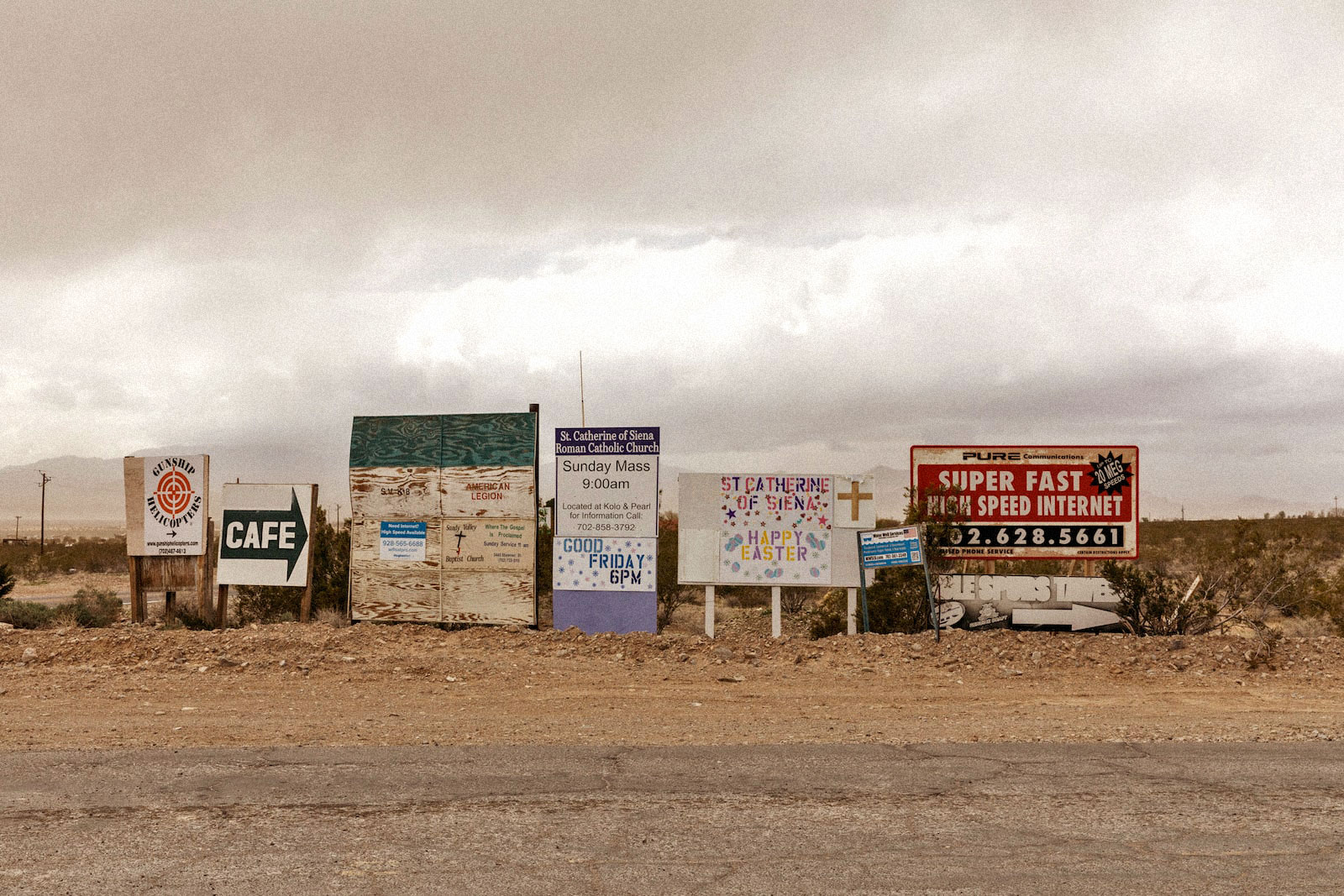
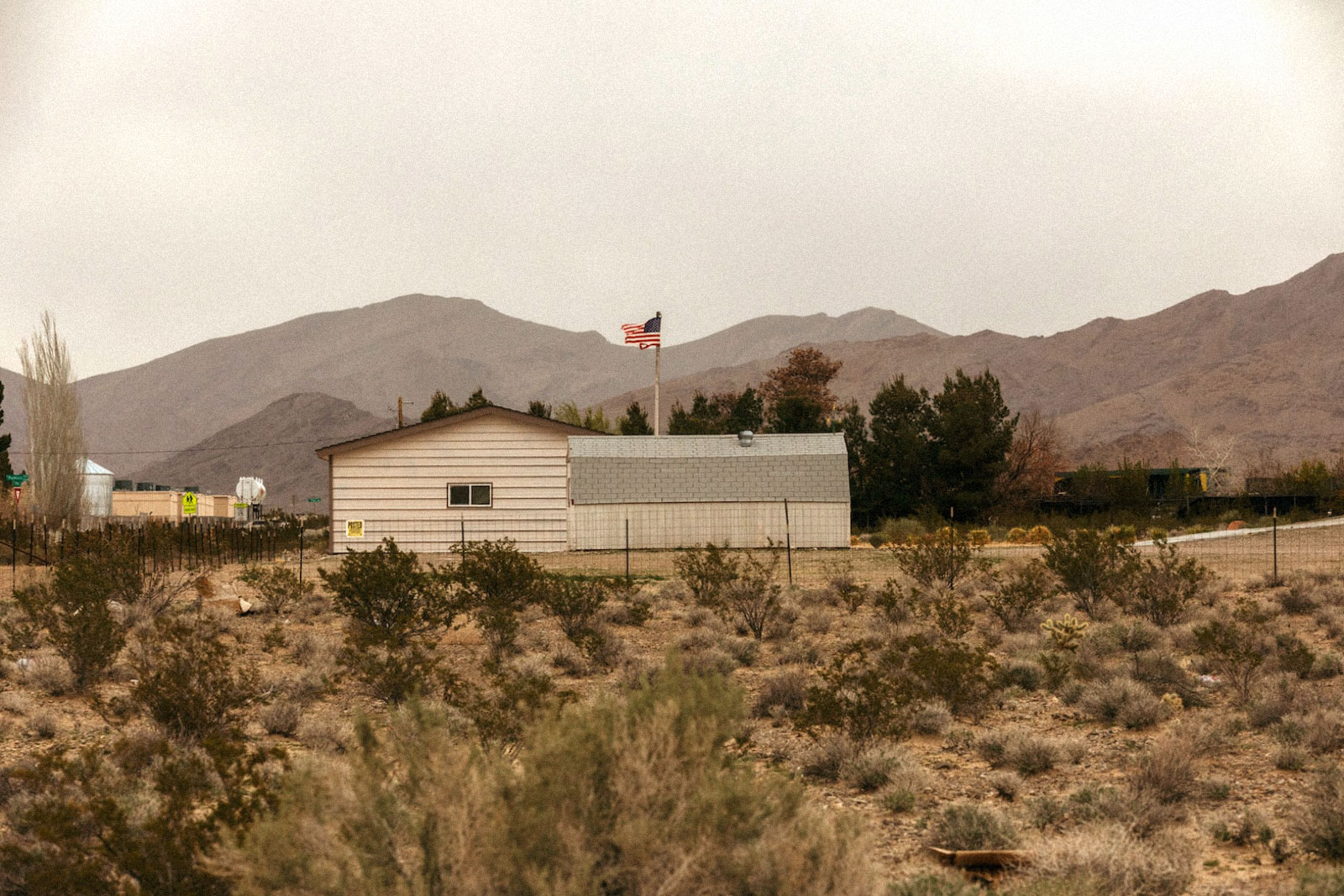
Indeed, Vidler’s loose regard for beneficial-use requirements has sometimes landed the company in hot water. In 1999, Vidler asked Nevada officials for permission to pump around 2,000 acre-feet of groundwater in Sandy Valley, a remote community of trailers and tumbleweeds about an hour southwest of Las Vegas. Vidler claimed to be applying for the water on behalf of a real estate company in Primm, a casino town on the California border. It laid out a far-fetched plan to build a pipeline that would move Sandy Valley’s water down to Primm across 25 miles of mountains, allowing developers to build housing and a theme park. The state government gave Vidler only some of the rights it asked for — but it amounted to almost as much water as the entire town of Sandy Valley used at the time.
Grist / Mikayla Whitmore
A windy day in Sandy Valley, Nevada, a rural community where Vidler tried and failed to export groundwater. Mikayla Whitmore / Grist
Grist / Mikayla Whitmore
Grist / Mikayla Whitmore
When Sandy Valley residents heard about the project, they were furious. The area’s aquifer was already overdrawn thanks to a number of irrigated farms nearby. Residents depended on shallow household wells for their water, and they were terrified that those wells would go dry if the state let Vidler take its share.
“Vidler is a four-letter word here in Sandy Valley,” Al Marquis told me when I visited the town in February. A retired real estate lawyer who sued to stop Vidler on behalf of his town, Marquis is a quintessential Sandy Valley personality: He wears a ten-gallon-hat, flies amateur planes, and writes books of what he calls “cowboy poetry.” He recalled that a Vidler representative who showed up at a public meeting about the application found himself greeted by shouts and death threats from angry residents, who reminded him in no uncertain terms that nearly everyone in the valley owned a firearm.
In 2006, a judge overturned the state government’s decision to grant Vidler’s application, ruling that the company hadn’t proven it could put Sandy Valley’s water to beneficial use. Vidler claimed that the Primm real estate company needed the water to build apartments and a theme park, but the company couldn’t demonstrate that any of that development was really going to happen — the main evidence it had was a one-page wishlist drafted by the real estate company itself. In the absence of a clear beneficial use, the judge wrote, Vidler had no claim to Sandy Valley’s water, and the state had erred in giving the company permission to pump.
A property in Sandy Valley, Nevada. Residents protested Vidler’s attempts to pump groundwater from the area, and a court later blocked the company’s project.
Grist / Mikayla Whitmore
“It appears to me that the company was formed for the sole purpose of speculating in and the hoarding of a public resource,” Marquis told Grist. He hypothesized that Vidler never wanted the water for Primm at all, and instead just wanted to flip it to someone else later on. “I gotta give them credit, in that they had foresight.”
Timian-Palmer and her fellow executives saw that the West didn’t have enough water, and they knew that was good news for Vidler: As drought got worse, the company’s assets would only get more valuable.
As the nation’s housing market boomed in the early 2000s, Vidler evolved. Instead of just buying and selling water rights that were already in use, the company began to search for unclaimed groundwater in remote parts of Nevada. It drilled new wells to bring that water to the surface, built new infrastructure to move it toward big cities like Reno and Las Vegas, and marketed it to developers and utilities. If Vidler could sell a new water source for more than it cost to develop and transport the water, the company would turn a profit.
“There seemed to be a void in terms of developing new supplies of water,” said Hart, explaining the opportunity. “Governments don’t really like to spend money for future citizens or future residents, and developers don’t want the upfront risk of having to go out to develop water for projects somewhere down the road.”
At the same time, major water sources like the Colorado River were showing signs of vulnerability as the region entered its current climate-fueled megadrought, lending more urgency to the search for untapped water. It could take years to secure regulatory approval for new groundwater pumping and even longer to build infrastructure to move that water around. Hart and Timian-Palmer were some of the only people in the West with the capital and expertise needed to pursue this kind of project.
The company’s first major experiment was a public-private partnership with a massive rural county about an hour north of Vegas. Lincoln County is one of the most sparsely populated counties in the nation — its population of 4,500 occupies a land area larger than Massachusetts — but it also boasted a hoard of untapped groundwater, most of which no one had ever tried to use. This water sits in some of the state’s shallowest and most remote aquifers, where it has accreted over thousands of years beneath chalk-white valleys.
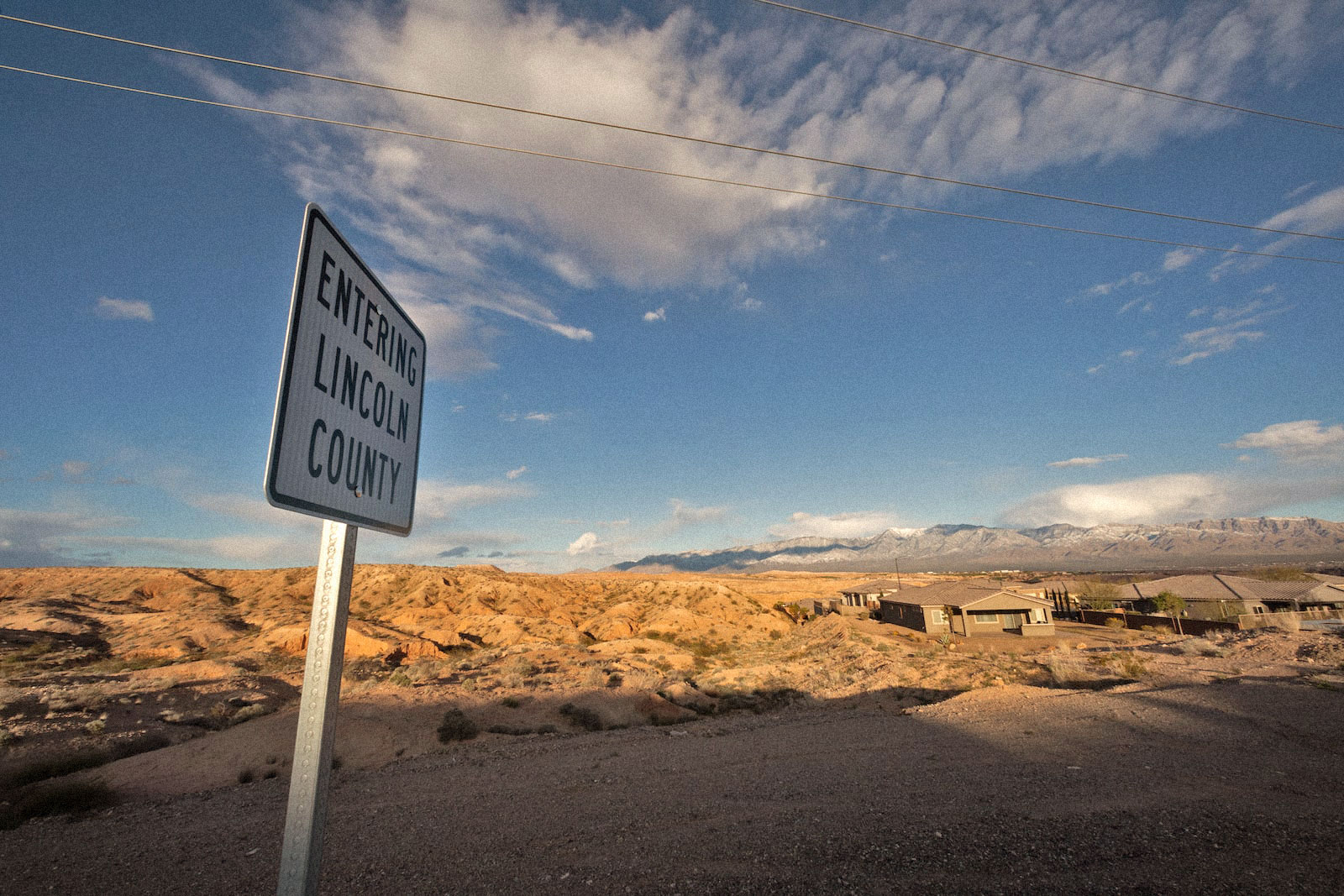
A sign marks the border of Lincoln County, Nevada, where Vidler owns an enormous hoard of untapped groundwater rights.
Grist / Mikayla Whitmore
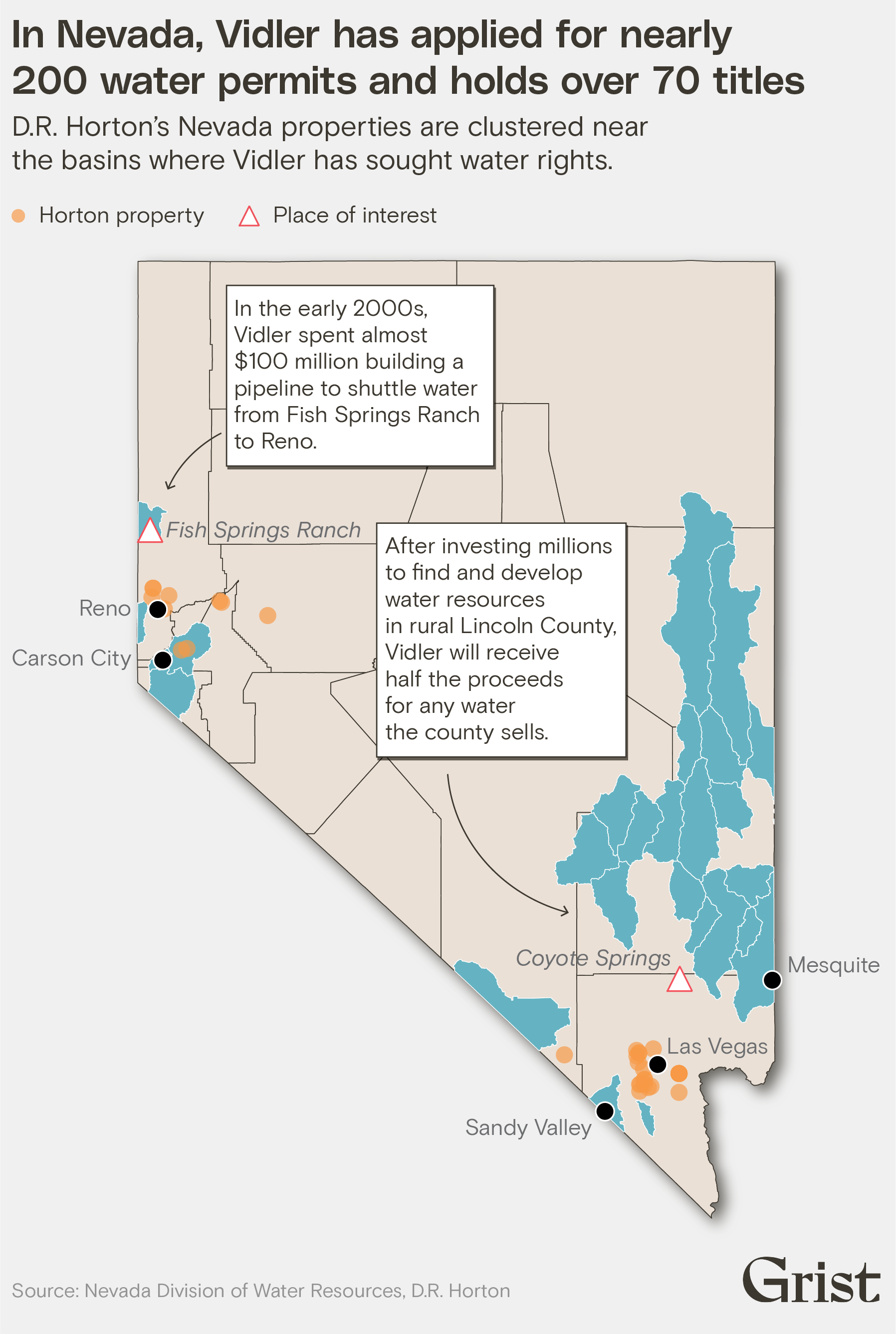
In the late 1980s, Las Vegas’s powerful water utility filed applications for almost all of Lincoln County’s unused water, more than 100,000 acre-feet in total, and proposed to build a pipeline that could bring it to Sin City. Officials in Lincoln County were still trying to fend off the big city when Vidler showed up and offered to act as a white knight. The company said it would invest millions of dollars to find and pump the county’s groundwater resources while also protecting those resources from Las Vegas. In exchange the company would get half the proceeds from any water the county sold.
Depending on whom you ask, this was either a boon for an impoverished rural county or a corporate takeover of a public resource. Wade Poulsen, the county employee who runs the water partnership, told Grist that Vidler had been “fantastic” and claimed that the county “would be nowhere without them.” But conservationists allege that Vidler was mining Lincoln County’s resources for profit.
“Vidler has turned Lincoln County into a water colony,” said Patrick Donnelly, a conservation biologist with the nonprofit Center for Biological Diversity who has litigated against groundwater usage in Nevada. “They own some serious water up there, and there’s this ideology of, ‘This water exists for us to benefit economically from it.’”
A golf course in Mesquite, Nevada. Vidler and Lincoln County have sought to use the county’s water rights to build new suburban communities.
Grist / Mikayla Whitmore
The business thesis for the Lincoln-Vidler partnership was based on the assumption that the growth of Las Vegas would one day extend so far that it crossed the border into Lincoln County, more than 50 miles away from the city’s downtown. In the heady days of the early 2000s housing boom, this seemed like a real possibility; a number of real estate developers had staked out housing projects that could use Lincoln County’s water.
Chief among them was Harvey Whittemore, a friend of the late Senator Harry Reid and powerful casino lobbyist, who agreed to buy 1,000 acre-feet of water rights from Vidler in 2005. Before he went to prison for campaign finance violations in 2014, Whittemore spent more than a decade trying to build a megadevelopment called Coyote Springs in Lincoln County, pitching it as a desert metropolis that would someday contain 160,000 homes.
Highway 93 near Coyote Springs, Nevada, where the casino lobbyist Harvey Whittemore tried to use Vidler’s water to build a massive desert city. Grist / Mikayla Whitmore
He managed to build a golf course on the development site, but a regulatory battle subsequently derailed the project and Whittemore never used Vidler’s water. Whittemore’s green, which was designed by golf legend Jack Nicklaus, still stands by itself on an empty desert highway, flanked by a massive sign announcing the future site of Coyote Springs, which another company is still trying to push forward. A tortoise habitat sits just a few feet away.
“They said at first they were gonna provide water for everybody, but the only people that [the Lincoln County partnership] ever actually tried to develop water for were [real estate developers],” said Louis Benezet, a longtime county resident. He said the water district initially discussed agricultural projects and growth opportunities in the county’s small towns, which were more attractive to county residents, but later focused on exporting water toward Vegas.
Grist / Mikayla Whitmore
New homes under construction in Mesquite, Nevada. Grist / Mikayla Whitmore
Grist / Mikayla Whitmore
Future builders in the area will likely need to acquire water rights from Vidler. Grist / Mikayla Whitmore
Grist / Mikayla Whitmore
Timian-Palmer also pursued a similar strategy in fast-growing Reno in the early 2000s, targeting a property called Fish Springs Ranch about an hour north of the city. The land under the ranch contained enough groundwater for thousands of homes, and officials in the Reno area had long eyed it as a water source that could reduce the city’s reliance on the Truckee River, which drains out of Lake Tahoe. Instead of asking the local utility to help with the costs, as past entrepreneurs had, Vidler used private capital to push the project forward. The company built a pipeline that snaked through 28 miles of hilly terrain, ending in a cluster of valleys that were primed for future construction.
It was a transaction only Timian-Palmer could have managed, and one that demonstrated Vidler’s clout on water issues: Getting permission to build the project required conducting multiple federal environmental reviews, placating officials in multiple states, negotiating with the nearby Pyramid Lake Paiute Tribe, and passing a bill to ratify the details in Congress. Even after spending almost $100 million to permit and build the project, Vidler still stood to profit by selling the water to developers in Reno’s suburbs — there were almost no alternative water sources in the valleys north of Reno, so Vidler would be able to set the price.
Alas, Hart and Timian-Palmer had terrible timing. Just as the company’s projects in Reno and Vegas seemed to be taking off, the U.S. housing market started to wobble, led by a wave of foreclosures in Nevada and other Western states. When the market collapsed, builders and developers nixed all their suburban development projects, sold off their land, and pulled out of their agreements to buy water from Vidler. The company had moved heaven and earth to secure water for Nevada’s future growth, but that growth seemed to evaporate overnight.
“When Vidler started construction on the pipeline project, essentially, all of the water was spoken for,” said John Enloe, an official at the water utility that serves the Reno area. Enloe worked with Vidler on the pipeline project. “By the time construction was completed, the Great Recession hit, and everyone backed out. There just wasn’t a need for the water.”
Undeveloped land in Lincoln County, Nevada. The Great Recession hit just as Vidler’s projects neared completion, and construction in Nevada stopped. Grist / Mikayla Whitmore
Even as the housing market started to rebound from the Great Recession, Vidler spent much of the next decade running up against a very simple problem: The company had spent millions of dollars to develop new water resources across the West, paying to drill test wells and fill out lengthy water-right applications with the state government, but it couldn’t find buyers for all the new water it had developed.
That was in part because regulators had started to question the logic of growth. By the time the Western real estate market surged back to life in the late 2010s, the megadrought that gripped the region was well into its second decade. Major reservoirs in the Sierra Nevada and the Colorado River were bottoming out, and many rural communities were starting to see their wells go dry. This shortage had begun to stoke new concerns about overreliance on groundwater, and Vidler soon found itself facing new opposition from courts and regulators.
In a sign of its commitment to aiding development, Vidler fought back against these restrictions with a vengeance, litigating and lobbying to ensure its projects could move forward.
New homes at a D.R. Horton development north of Reno, Nevada. Vidler has fought in the courts to ensure that new housing can be built in dry areas.
Grist / Mikayla Whitmore
A case in New Mexico demonstrated how aggressive the company could be in snapping up water. In the early 2000s, as Vidler was looking to expand into the state, Timian-Palmer connected with a rancher named Rob Gately. Gately owned a large chunk of land in the mountains east of Albuquerque and was seeking to build a big suburban development on the empty parcel. The area was far from prime real estate: It boasted a few dozen houses scattered across a stretch of wind-blown desert, but nothing else in the way of commerce. At least one other proposed development had already fallen through. Even so, Vidler offered to help Gately secure water. It applied to the New Mexico state government for permission to pump 700 acre-feet of water from the area aquifer, spending almost $6 million during the application process.
But Vidler’s own models showed that water use from the new development would cause water levels in the aquifer to drop, endangering residential wells. “People are already having problems with water, and that’s well-known here,” said Joanne Hilton, a hydrologist who lives in the area around the proposed development site and relies on a household well.
By 2017, residents had taken Vidler to court in an attempt to stop the project. Several key executives had to take the stand, including Timian-Palmer and her longtime right-hand man, executive vice president Steve Hartman. During a series of testy depositions, it emerged that Vidler seemed to be stretching the truth about the “beneficial use” it planned for the water. The company claimed that Gately was the mastermind behind the development, but the Montana holding company he was using for the project had been dissolved and no one from Vidler seemed sure about where he was based.
During one deposition, the lawyer for the area residents asked Hartman if he could provide specifics about how Vidler wanted to use the water. Just what kind of development was Gately trying to build, and how much water would it need? Hartman struggled to answer.
“So assuming that you get the permit and the case becomes final, then at that point you and Mr. Gately are going to sit down and talk about what’s next, is that right?” the lawyer asked.
“Yes,” Hartman said.
“And at this point you have no idea what that is?” the lawyer asked.
“I do not,” Hartman replied.
Two years later, the court tossed out Vidler’s application, ruling that the project would have risked taking water away from area residents and would conflict with New Mexico’s statewide goals for water conservation.
A drainpipe near a D.R. Horton development in an area of Reno where Vidler has substantial water rights. The company has long been a major fixture in Nevada water politics.
Grist / Mikayla Whitmore
Faced with obstacles like these, Vidler had to go on offense. The company donated more than $275,000 to Nevada political candidates between 2008 and 2022, increasing its annual contributions in the years that followed the Great Recession. Hartman became a fixture in the Nevada legislature, lobbying on dozens of water bills, many of them concerned with obscure points of water law. During the present legislative session, as the company prepares to defend its water interests in Lincoln County, it has hired Nevada’s premier lobbying firm, whose other clients include Amazon and Uber.
In recent years, Timian-Palmer and Hartman have tried to scrape value from Vidler’s water assets wherever they can. They sold off some of their banked Arizona water to a golf course in a Phoenix suburb, making a more than threefold profit. They returned to Sandy Valley in 2016 to apply for water on a different patch of land, only to run into trouble once again with Marquis, who discovered that the company hadn’t told an area landowner it was going to apply for the water under his land. In litigation over the Coyote Springs development in Lincoln County, they conducted geological testing to prove that they should be able to tap an aquifer the state had deemed too vulnerable, alleging the existence of an underground fault they named “Dorothy’s Fault,” apparently after Timian-Palmer. They even went so far as to demand that Nevada cut off water deliveries to a town near a basin where Vidler had been prevented from pumping water, arguing that the town shouldn’t get to use water, either.
“They’re engaging in these processes for one reason and one reason only, and that’s to one day make money,” said Roerink, the water conservation advocate.
A subdivision in Mesquite, Nevada, near the border with Lincoln County. Developers and homebuilders have always been Vidler’s best customers and allies. Grist / Mikayla Whitmore
Neither Vidler nor D.R. Horton responded to extensive requests for comment on this story. Dorothy Timian-Palmer initially agreed to an interview in response to a request from Grist, but a Horton spokesperson later said that the company wouldn’t be participating in the story. After Grist visited Vidler’s office in Carson City, a Horton spokesperson offered to respond to a list of questions, but company representatives failed to do so before publication.
Even as Vidler sought buyers for its water rights, PICO went through a shakeup: Shareholders grew dissatisfied with Hart’s high salary and with the slow return on their investments. They ousted Hart and replaced him with a new chairman who soon cut costs, selling off PICO subsidiaries. Vidler’s assets were more difficult to cash out: The company had spent tens of millions of dollars on water projects like the ones near Reno and Albuquerque, and it wasn’t clear when those projects would start making money. The easiest way to make the company’s shareholders whole was for another company to buy Vidler outright.
Timian-Palmer and her fellow executives started trying to find a buyer as early as 2017, when they hired a bank to solicit potential offers, according to a corporate filing. The bank contacted more than 150 different potential buyers, but none of them showed much interest. The main problem was that nobody seemed to be interested in acquiring Vidler wholesale. As the search continued, it became clear that Vidler needed a company that wanted to use its executives’ water expertise, not just sell off the assets Timian-Palmer had acquired — in other words, a company that needed Vidler as much as Vidler needed it.
It took a few more years and a millennium-scale drought, but in the final months of 2021, Vidler found a company that could finally make its development dreams a reality.
D.R. Horton is a tight-lipped company, and it didn’t say much about its purchase of Vidler. In a press release published on the day of the acquisition, the company noted that “Vidler owns a portfolio of premium water rights and other water-related assets … in markets where D.R. Horton operates.” A few weeks later, when a stock analyst asked about the purchase on an earnings call, an executive replied that “we put out pretty much what we’re going to say about Vidler in the press release.”
Even so, the logic of the transaction was apparent: The places where Vidler owned substantial water rights were also places where Horton was building homes. At a shareholder meeting in 2021, Timian-Palmer told investors that Horton was “moving like gangbusters” in the north suburbs of Reno, planning multiple subdivisions that could purchase water from Vidler’s long-dormant Fish Springs Ranch pipeline. The valleys north of Reno are now home to a horde of uniform subdivisions, most of them sandwiched against each other just off the freeway. Many of the largest belong to Horton. If the city’s recent growth spurt continues, Vidler’s pipeline will be the only available water source for future builders.
A culvert at a D.R. Horton development north of Reno, Nevada. Vidler owns significant water rights in parts of the West where Horton is building new homes. Grist / Mikayla Whitmore
Horton is also building several developments east of Carson City on a fast-growing industrial corridor near a Tesla factory. In a 2021 financial statement, Vidler noted that “there are currently few existing sustainable water sources to support future growth and development” in that corridor, except for Vidler’s own supplies. Horton also has numerous active projects in central Arizona, where Vidler has banked almost 300,000 acre-feet of water underground. Together, the two companies have everything they need to capitalize on the West’s post-pandemic population boom.
Vidler has always operated more like a fixer than a financial trader, not just flipping assets but developing new water resources in the driest areas. Several sources who spoke to Grist theorized that this was why Horton paid so much to acquire the company.
A sign advertises new homes at D.R. Horton’s “Mahogany” development outside Reno, Nevada, where future developers will need to buy water from Vidler. Grist / Mikayla Whitmore
“If you’re a homebuilder, your best option is to do what Horton has done — go out and find more supply,” said Grady Gammage, a real estate lawyer who has represented Greenstone, another water broker founded by a former Vidler employee, and several homebuilders. “What Horton is likely thinking is that you’re faced either with doing a deal [to get new water], or trying to build that expertise in-house.”
The future of the West depends on whether, and to what extent, these companies can secure these deals and expertise in the face of new regulatory restrictions and supply constraints.
Nowhere is this dynamic clearer than in the western suburbs of Phoenix, where developers and builders have thrown up tens of thousands of homes that rely on groundwater from fragile aquifers. Earlier this year, Arizona’s new governor released a study that showed the area has much less water available than was previously thought. State law requires developers to show that proposed homes have a hundred-year water supply, and officials have now decreed that there isn’t enough groundwater in the area to provide for any more new subdivisions in the southern and western outskirts of the city.
This has left several gigantic development projects stuck in limbo, including ones with which Horton was involved. It has also forced developers and homebuilders to look for alternate sources of water, including from underground storage facilities like Vidler’s. The company’s biggest underground aquifer contains enough water to supply about 2,000 homes for a hundred years each.
A water drainage lid near Dayton, Nevada, one of the rural communities where Vidler wants to help enable new construction.
Grist / Mikayla Whitmore
“It’s a challenge to find other supplies right now, to say the least,” said Spencer Kamps, vice president of legislative affairs at the Central Arizona Home Builders Association, which advocates for builders and real estate. “A number of investments have been made out in the area under the assumption that there was water available for growth.” But many people in the industry now worry that those assumptions were mistaken.
You wouldn’t know it from visiting the area. Earlier this year, I presented myself as a potential home buyer in the Phoenix suburbs where the state has identified a groundwater shortage, touring several Horton developments. These developments are tight clusters of cookie-cutter homes, surrounded for the most part by empty desert or isolated alfalfa fields. Construction appears to happen rapidly: As I drove through the developments, I found myself slipping back and forth between streets full of finished homes with xeriscaped lawns and streets where construction crews were still hammering at open timber frames.
In speaking with Horton sales representatives on my tours, I asked about water access, saying I’d heard there were issues in the area. The representatives brushed off my concerns, saying they “try to stay out of politics,” or that they “don’t believe they would allow growth out here” if there wasn’t enough water.
A watering hole near a rural section of Dayton, Nevada. The future of the West depends on whether builders and developers can find more water.
Grist / Mikayla Whitmore
That is far from certain. Timian-Palmer and her colleagues have spent decades finding water sources for suburban developments like these. While the homes they helped build will last for many decades, the water that supplies them may not. Without ample rain to replenish them, the small and fragile aquifers that Vidler has tapped could someday empty out, leaving future homeowners high and dry. This has already started to happen in rural parts of the West where agriculture is dominant, and it may ultimately happen to the suburban developments Vidler is now helping to build.
Mike Machado, a former California state senator who served on PICO’s board of directors between 2013 and 2017, said the company’s business model makes him worried for the future of those developments.
“The biggest challenge for Vidler is whether or not the resources they have are renewable,” he told Grist. “It’s great to be able to have these resources, but if all you’re doing is mining them, at some point in time, you’re not going to have them. So that is creating a false sense of security for those that are relying on the resource.”
Horton’s sales representatives in Arizona have no such misgivings. For the moment, at least, the building boom is very much alive.
“If we continue to grow out here, the people living here will have water,” one sales representative told me. “What, are we just not gonna have water when we turn our faucet on?”
Correction:An earlier version of this article incorrectly referred to Patrick Donnelly of the Center for Biological Diversity as an attorney.
For years, farmers milked cows by hand. Now robots and technology do the work.
Chad Kieffer, a third-generation farmer from Utica, Minnesota, has five milkers for his herd of 350 cows.
The milkers are squat, patient, persistent workers. They hum around the mooing cows. They are robots.
In an increasingly automated world, the dairy industry is keeping up. According to Michigan State University, robotic milkers were first introduced in the United States in 2000. Now, according to Hoard’s Dairyman magazine, over 35,000 robotic milking units can be found around the world with thousands in the U.S.
“It’s always changing. It’s like your iPhone getting changed every six months. There’s lots of technology that’s getting researched every day,” said Dana Allen, a fourth-generation dairy farmer from Eyota, Minnesota.
Dairy technology has transformed the industry.
Decades ago, dairy producers milked by hand. Then came buckets, pipelines, parlors, and then parlors with automatic unit removal, rotary parlors, and robots, according to Douglas Reinemann, Ph.D., a researcher at the University of Wisconsin-Madison.
Automation started in Europe. Company DeLaval started using an automated robot system at a farm in Sweden in 1997. Another maker is Lely, based in the Netherlands.
By 2000, automation came to the U.S. The results are significant, farmers and researchers say. Cows feel less stress, farmers are able to be more efficient and they gain time. They also save money on labor.
Now there are 500 to 1,000 U.S. operations using the milking robots, said Reinemann.
The automation is not perfect. Startup costs challenge smaller producers. As there is with most machinery, there also is the need for maintenance.
The robot automatically sucks onto the teats of the cow. (Photo by Ethan Humble, for Investigate Midwest)
Farmers gain time to work
Automated milking systems (AMS) give farmers time to focus on other work, and typically more time on skilled duties. This saves labor, Reinemann said. He also noted that AMS helps farmers ergonomically as they avoid repetitive physical tasks.
Farmers who use AMS appreciate the labor savings.
“The farmers have more time to clean up the farm, work on the crops, and other chores. It may even allow a farmer to attend their kid’s sporting events and in turn, improve their mental health,” said Mariah Busta, executive director of the Iowa State Dairy Association.
But the rate of change is up to the farmer.
“The degree to which a farmer adapts to technology and the speed at which they do it is open for their comfort level,” Allen said. “There is a tremendous amount of technology in agriculture, and I think that’s something the general public doesn’t understand.”
Robots leave cows calmer
Robots, like Kieffer’s, milk cows without the physical presence of a human being, using a robotic arm with the aid of either 3D cameras or laser beams to locate a cow’s teats.
According to the Animal Agriculture Alliance, a nonprofit focused on sustainable ag, the total time needed to milk one cow takes an average of seven minutes with a robot.
Since installing robots, Kieffer has reduced his number of full-time dairy employees from six to three.
“The robot is doing the milking for you, so the cost of the robots has to be offset by labor savings,” he said. The robots can cost more than $200,000 each.
The farmers also said the cows’ comfort is a critical benefit. Reinemann said cows can associate humans with negative interactions, such as a veterinarian checkup or being moved to and from different buildings.
Chad Kieffer
“You’re allowing a cow to do what she wants when she wants. You’re not forcing her somewhere, and she can go get milked,” Kieffer said.
Cows voluntarily can go to the area indoors to be milked, farmers said. The robot system sorts cows that need to be milked based on how much time has elapsed in between milkings. Ear tags assist with sorting.
In Deer Park, Wisconsin, Kristin Quist of Minglewood Dairy keeps about 500 of her herd of 1,200 cows in a robot milking facility. She uses a system that guides the animals through the barn.
“The cow walks through a gate determining if it’s time for them to be milked after reading a tag in her ear,” she said. “If it’s time to be milked, she goes into the robot. If it isn’t, she’s sent to be fed in a different direction.”
Quist compares her newer robot facility to her milking parlor.
“The cows in the robot facility are a lot more laid back,” she said. “In the parlor facility, they are more likely to get up expecting to get milked.”
Regardless of the production method, farmers are producing more milk, primarily because of improved genetics and improved nutrition, researchers said.
Reinemann said research has shown using robots allows cows to remain in the herd longer, which can mean they produce milk longer.
“We won’t be getting any additional land or resources in the coming future, so we need to be efficient with what we have,” Busta said. “Technology is absolutely crucial in helping us continue to be efficient about producing milk in a sustainable way.”
A view of the inner structure of the rotary shows how it supports 50 cows at Gar-Lin Dairy in Eyota, Minnesota. (Photo by Ethan Humble/for Investigate Midwest)
Other farmers opt for rotating platform systems
Farmers seeking an upgrade have other options beyond milking robots.
Rotary milking parlors allow cows to step onto a circulating platform before farmers attach milking units. The system constantly moves cows on and off the platform.
Allen milks her herd of about 1,750 cows on her farm, Gar-Lin Dairy, using a platform. Gar-Lin’s rotary allows 50 cows to step onto the platform at a time.
“Before, we were milking 750 to 800 cows in about seven hours. Now we can milk 1,750 in the same amount of time,” she said.
Allen said that she initially feared the cows would be difficult to get onto the carousel-like platform, but she quickly learned the greater issue would be getting them off.
“There’s not a lot of commotion,” she said. “They actually like riding around on the rotary.”
Marcia Endres
In deciding what type of system a farmer should pursue, a farm of 1,500 to 3,000 cows likely warrants a rotary system, while a herd of 200-300 cows may be better suited for robots, said Marcia Endres, Ph.D., a professor of animal science at the University of Minnesota. With larger herds, a rotary system is more efficient because up to 50 cows can be loaded at once, though it does still require human intervention to get the cows on the platform.
One benefit of technology is more milk. In 1925, the average Iowa cow was giving 4,000 pounds of milk each year, while today’s cow gives 28,000 pounds annually, according to the state dairy association.
Some farmers are weighing the pros and cons of the technology.
Among them is Nick Seitzer, a recent University of Minnesota grad and dairy farmer from St. Peter, Minnesota. He’s thinking about adding a robot to milk his 65 cows. He forecasts about a 10% increase in production if he installs a robot in a free-stall barn.
“The robot would be huge,” Seitzer said. “Fewer people want to do what we’re doing, so it would be nice to have robots that are always there doing the job.”
But the initial cost is high. Seitzer estimates one robot would cost about $250,000, not including the physical infrastructure (such as a potential barn expansion, milk house or other needs) to use it.
A heads-up display monitors the milking progress of the cow compared to its expected yield. (Photo by Ethan Humble, for Investigate Midwest)
On his Utica, Minnesota, farm, Kieffer saw robots as a smart investment. Kieffer typically spends one hour a day doing maintenance, he said.
“Your debt per cow or debt per stall becomes rather large up front, but what I tell people is you’re basically prepaying your labor for seven or eight years,” he said. “It ends up being less than a traditional herd of cows being milked in a parlor.”
With dairy technology rapidly changing, Seitzer has been feeling pressure for his operation to adapt.
“If we don’t, we may not be doing it much longer,” he said.
Dr. Lindsey Borst, a veterinarian who milks 230 cows alongside her family in Rochester, Minnesota, feels differently. Borst has been looking at robots for five to six years.
“I wouldn’t say we’re falling behind. Robots are still fairly new, and they’re not super common yet,” she said. “Sometimes it’s also good to wait because technology is changing so quickly, too.”
Douglas Reinemann
Robots are not the right choice for all farmers, Kieffer, the farmer, and Endres, the University of Minnesota professor, said.
“Don’t put robots in because you don’t like cows. You also have to be mechanically inclined to do preventative maintenance on the robots,” Kieffer said.
Reinemann, the UW professor since 1990 and director of the UW Milking Research and Instruction lab, grew up in the dairyland of Wisconsin.
“For me as a young person, milking cows was so ordinary; there was absolutely nothing interesting about it,” he said. “I started my career in milking technology, and it’s been amazing. The shifts in the technology and how dairy farms are managed, it’s been a lot of change.”
FAFSA Rule Change Cuts Financial Aid for Some Rural Students
Editor’s Note: A version of this story first appeared in Mile Markers, a twice monthly newsletter from Open Campus about the role of colleges in rural America. You can join the mailing list at the bottom of this article to receive future editions in your inbox.
The KD Cattle Company in Shoshoni, Wyoming (Courtesy of Ty McNamee).
Growing up in a working-class family in rural Wyoming, Ty McNamee knew that there was little spare money to pursue his dream of going to college.
“Although we have a farm and ranch, it’s a family business and almost any of the money we make goes back into our operating expenses,” he says.
In order to go to college, he and his twin brother both relied on federal aid. That made all the difference for McNamee, who is now a professor studying rurality and social class in higher education at the University of Mississippi.
Despite being more likely to graduate high school than their urban or suburban peers, rural students are the least likely to attend college.
Experts are worried that rural students will become even less likely to get a college degree, due to changes to the Free Application for Federal Student Aid (FAFSA) that take effect this fall.
Until now, family farms and small businesses have been exempt from the funding formula that decides how much federal financial aid students are eligible to receive.
However, Congress eliminated the exemption in the FAFSA Simplification Act in 2020. Now, the value of a family farm could make it appear on paper like a family can afford to cover more of the cost of college — decreasing the amount in aid they will receive.
Last year, the average family with a small business or farm was expected to contribute up to $7,626 — however, starting this fall they would be expected to cover $41,056 under the new formula, according to a study from the Iowa College Student Aid Commission.
Both Ty and Chase McNamee received their doctorates last year from Teachers College at Columbia University (Courtesy of Ty McNamee).
Sen. Joni Ernst (R-Iowa) is expected to introduce a bill this week to restore the exemption. She and three other senators released a statement in March “raising the alarm” about how families could be negatively affected.
“These farm families, whose businesses are vital to our states’ communities and economies, need tailored guidance to respond to their unique business model,” the bipartisan group wrote in the letter addressed to the Department of Education. (Ernst was joined by fellow Iowa Republican Sen. Chuck Grassley , Michael Bennett (D-Colo.) and Tammy Baldwin (D-Wis.).
(And in case you’re curious, there are about 2.1 million family farms in the U.S., though not every one would necessarily be affected by the FAFSA change.)
It remains to be seen whether the bill will move forward in Congress. But without it, the new requirements will compound the difficulties rural students already have when pursuing higher education, potentially adding to the enrollment challenges colleges are already facing.
“You can’t sell tractors” to to pay for college.
That’s a special concern to Frank Ballman, federal relations director for the National Association of State Student Grant and Aid Programs. The association has lobbied for keeping the family farm and small business exemption.
Ballman’s father grew up on a farm in Kentucky, and was the first and only of his 13 siblings to attend college, thanks to federal funds awarded through the GI bill. Decades later, Ballman can see the impact with many of his rural Kentucky relatives — and their kids — skipping college altogether.
The new FAFSA rule begs the question: How much is a sitting bale of hay worth … and can you price it before this Wyoming cow munches on it? (Courtesy of Ty McNamee).
“If you exclude this generation of farm kids from college, you really create an almost certain tidal wave of future students who lose that tradition of attending,”Ballman says.
More Rural Higher Ed News
Are online colleges worth buying? Rick Seltzer of the Chronicle of Higher Education asks the question, and it’s worth pondering as Arkansas moves toward acquiring the for-profit University of Phoenix. Other rural state university systems could follow suit, using scarce funds to acquire these colleges in the hopes of increasing profits and expanding reach.
Exploring the STARS network. Last newsletter, we noted USC was joining the partnership of 16 universities expanding their rural pipelines. This USA Today piece is a more in-depth exploration of the $20 million program and its billionaire funder Byron Trott, the head of the merchant bank BDT Capital Partners.
Worth watching: Studies on rural student outreach are scarce, so the fact that STARS Network colleges will have to track student engagement, enrollment, and rural-specific programming could lead to more valuable data for rural researchers down the line.
In Germany, a new university targets rural doctors. The first publicly run medical university in Brandenburg will open in 2026 with aims to be “a model for medical care in rural areas.” However, experts are already saying the $2 billion euro project is unlikely to make a dent in the nation’s rural doctor deficit, according to this piece by the British magazine Times Higher Education.
Family farms may have a high net worth on paper but can’t actually sell their farm land or equipment to pay for college.
“If you’re an investor and you have stock, you can sell some of that stock,” says Ritchie Morrow, who works as a financial aid officer for the Nebraska state agency responsible for disbursing state education grants. “If you’re a family farmer, you can’t sell an auger, because you need it to move the corn. You can’t sell a tractor.”
Some argue the change just makes everything more complicated, as the new supposedly simpler FAFSA will require families to quantify the value of things like crops and land on top of other assets. And those vagaries are worsened by the fact that the Department of Education has already said it won’t be issuing instructions on how to calculate their value accurately.
A mistake could prove more than just costly: When families fill out the FAFSA, they are required to sign a statement certifying that they aren’t providing false information.
“What that says to a business owner is ‘Be prepared to go to jail or face a hefty fine,’” Ballmann says.
Ensuring rural students can go to college really matters. Many attend two- or -four year programs with the intention of learning the latest farming innovations and returning to their communities.
That was the case for Luke Carlson, a Nebraska farmer in his forties who left to attend Northwest Missouri State but knew he would return.
Luke has long worked alongside his stereotype-defying father Jim, who voted for former President Donald Trump but is known to quote Al Gore about climate change. (He was protesting the Keystone Pipeline when we first met a few years back, and had recently erected a 2.8-kilowatt solar panel over farmland drillers had tried to seize).
Their family has farmed in Nebraska for over a century, as Luke recently recounted in an article published by Central Valley Ag, a farmer-owned cooperative he serves on the board of.
He and his wife, Sherri, hope their three kids will have the same choices they did — whether it’s pursuing a university education, running the farm, or both.
But as family farms like theirs increasingly die out, are absorbed by corporations, or otherwise struggle to make ends meet their options could be dwindling.
This article first appeared in Mile Markers, a twice monthly newsletter from Open Campus about the role of colleges in rural America. Join the mailing list today to have future editions delivered to your inbox.