
From toothpaste to beer bottles to industrial batteries, the world relies on Wyoming’s ‘white gold’

From toothpaste to beer bottles to industrial batteries, the world relies on Wyoming’s ‘white gold’

GREEN RIVER—After a four-minute elevator descent into the bowels of southwest Wyoming, dropping deep enough to bury the Empire State Building, a Tata Chemicals trona miner drove two Wyoming journalists in a truck 8.5 miles through catacombs, crossing under unaware motorists on Interstate 80 above, to where a crew was using an electric boring machine to chew into a wall of trona.

The visitors — briefed on safety protocols and equipped with underground attire and emergency devices — trudged through fresh mud bubbling with methane. Sections were added to a chartreuse inflatable tube that unrolled like a party favor and blew fresh air at the miners, who had just finished patching a small water line break. 

Beams of light from hard hats swiveled and sparred in the tunnel as the earth moaned and machinery hummed. Soon, the machinery funneled a stream of sandwich-sized chunks of trona onto a fast-moving conveyor that would eventually deliver it to the surface to be processed into a fine, white powder and shipped around the world.

Tata Chemicals Mine Production Supervisor Eric Castillon oversees adjustments to a mobile conveyor at the company’s underground trona mine in southwest Wyoming. (Dustin Bleizeffer/WyoFile)

Have you ever brushed your teeth with toothpaste? Drank beer from a bottle or stared at the road through a car windshield? The white stuff — sodium carbonate (Na₂CO₃) to be precise — calms your heartburn and washes your socks. Check under your sink. Take a look in your bathroom cabinet. Many of those taken-for-granted products you use daily require an ingredient sourced from the depths of southwest Wyoming, and the sweat of underground miners.

Tata’s mine, along with its soda ash processing facilities at the surface, is among four such operations in Wyoming — all clustered in an area near the towns of Green River and Granger. Combined, they produce about 10 million tons of soda ash annually and feed 90% of the nation’s soda ash consumption. Wyoming producers make up more than 14% of the global market, according to the U.S. Geological Survey. Soda ash, in fact, accounts for more than half of Wyoming’s global commodity exports with a whopping $1.3 billion worth of shipments annually, according to industry officials and state economists.

Wyoming coal can’t say that. Not even close. 

Despite the industry’s global importance and massive operations, employing some 2,500 workers in the state, it plods along without much fanfare. Unless you live in the region, you might not even know about trona or its role in everyday life.

“If you’re in Cheyenne and you say ‘trona’ or ‘soda ash,’ a lot of people will say, ‘What’s that?’” said longtime Green River resident Stan Blake who served as House District 39 representative from 2007 to 2020. The business, perhaps, is guilty of being kind of boring, or simply void of political drama, Blake suggested. “It’s just been steady for years and years, so it doesn’t get talked about much.”

An Interstate 80 sign marks the spot where Tata Chemicals’ underground tunnels finger under the roadway where cars and semis are whizzing by 1,600 feet above. The trona mine includes many miles of tunnels from decades of mining. (Dustin Bleizeffer/WyoFile)

It was a mystery, even to many who began their careers in coal mining and wound up at this trona mine. “I wasn’t even aware of trona until I came to Wyoming,” said Mine Electrical Planner Kale Pitt. When asked about the significance of the industry, another Tata miner said, “Other than they make glass and soap out of it, that’s about all I know. It’s a good way to make a living, I guess.”

The miner turned his headlamp and went back to the business at hand.

He was spot on, in Blake’s estimation, who was never a trona miner himself. He spent more than 30 years on the rails and in train yards rather than chipping at trona in Wyoming’s subterranean, but he knows his Green River neighbors and notices toys in driveways.

“The level of lifestyle out here is higher, probably, than a lot of other places in the state,” Blake said. “It seems like everybody’s got a boat and they go out to Flaming Gorge and fish. And everybody — all the miners — like to hunt. The [trona] mines are really, really relevant here in Sweetwater County, that’s for sure.” 

Perhaps less glorious than coal, less loud than oil, there are changes afoot in the trona industry with implications, both good and potentially not so good, for Wyoming.

Optimism and expansion 

Baking soda and Range Rover windshields aside, Wyoming trona mine owners have been scrambling to meet new opportunities while bracing for headwinds.

“The world has an insatiable appetite for soda ash.”

Jon Conrad, Tata Chemicals

On the opportune side, there’s wildly escalating demand for batteries and solar energy panels across the globe, according to industry reports. Though the business of toothpaste and baking soda doesn’t change much, global manufacturers are keen on ramping up production of energy components vital to meeting low-carbon initiatives. They can’t do it without more trona processed into soda ash. And Wyoming has a lot of trona — the largest known deposit in the world, according to industry and federal officials. Ninety percent of the world’s mineable, or “natural,” trona ore is right here in southwest Wyoming, they say.

“The world has an insatiable appetite for soda ash,” said Wyoming Tata’s Director of Governmental Affairs Jon Conrad, also a former Wyoming legislator. By Conrad’s estimation, the industry in Wyoming aims to expand — perhaps even double production in the next eight or so years.

Tata Chemicals’ Director of Governmental Affairs for Wyoming, Jon Conrad, walks toward tanks that store soda ash in preparation for shipping. (Dustin Bleizeffer/WyoFile)

In addition to Tata’s plans to crank out more soda ash while trimming its cost of production, neighboring producer WE Soda — with a larger operation than Tata’s — has launched a multi-billion-dollar expansion that’s crossing permitting milestones. A big part of that effort, “Project West,” will include “solution” mining, or pumping water into the trona deposits to flush the material to the surface rather than sending legions of boat-owning miners underground, according to the company.

Federal regulators also recently advanced permitting for a potential fifth trona operation in the region — Pacific Soda’s proposed Dry Creek Trona Mine project, which would also pull trona via water injection-and-return wells. The operation would create an estimated additional 300 full-time jobs in the region, according to the company.

Miners discuss plans while standing next to a mobile conveyor at Tata Chemicals’ underground trona mine in southwest Wyoming. (Dustin Bleizeffer/WyoFile)

All of that optimism and investment, however, might stand a little broadside to some shifting market and political winds.

Shifting markets

Wyoming’s trona industry has, for decades, won an advantage for producing “natural” soda ash. It’s pretty simple: mine the rocks, crush them, dissolve and dehydrate the mineral and ship it to customers. But for the past couple of decades, China and Turkey have ramped up production of synthetic soda ash — a product derived from flushing sodium carbonate-containing material from more prevalent, less pure deposits.

Synthetic soda ash threatens to beat out natural soda ash on price, according to industry officials. Though Wyoming producers claim their product is superior for both its quality and lower-carbon footprint, natural soda ash producers must find efficiencies to lower their cost of production.

Solution mining is one major cost-efficiency strategy, according to Conrad. Another is finding alternatives to expensive electrical power and other forms of energy. 

A mountain of partially refined trona at Tata Chemicals’ trona mine and soda ash processing facility in southwest Wyoming. (Dustin Bleizeffer/WyoFile)

Mining trona and processing it into soda ash requires a lot of electricity — about a continuous 32 megawatts at Tata Chemicals, according to the company. One megawatt is enough electricity to power about 750 homes. Tata produces about 90% of its own electricity, via coal and natural gas burners, which also generate steam used in the refining process. But the operation relies on utility provider Rocky Mountain Power for the rest of its electricity needs, and those costs keep climbing. Tata wants to reduce or eliminate its reliance on Rocky Mountain Power by incorporating nuclear energy.

Last year, the company inked a letter of intent with BWXT Advanced Technologies to install up to eight nuclear microreactors on site, boosting Tata’s self-produced electrical power to about 40 megawatts — enough to meet expansion plans without increasing its reliance on Rocky Mountain Power. “The microreactors offer a carbon-free, reliable source of energy that can support [Tata Chemicals’] operations and contribute to the state’s energy portfolio,” the company said in a prepared statement.

But even the industry’s best-laid plans to increase its competitive edge could be derailed by politics. President Donald Trump’s tariff wars take particular aim at China, which accounts for about 10% of Wyoming soda ash sales. If the country retaliates with its own tariffs, it could be a major blow to the industry, according to University of Wyoming Associate Professor of Economics Rob Godby. It might even dampen the industry’s plans to expand operations.

“That could be a really significant impact on our [soda ash] exports,” Godby said.

Back underground, Mine Production Supervisor Eric Castillon proudly described a continual process of increasing production efficiencies in a never-ending effort to sustain the company’s competitive edge.

“This is the trona capital of the world,” Castillon said over the hum of a mobile conveyor carrying rock to the surface. “I can see this mine going for another 50 to 100 years. Trona’s not going anywhere, as long as there’s a need for it.”

The post From toothpaste to beer bottles to industrial batteries, the world relies on Wyoming’s ‘white gold’ appeared first on WyoFile .

Trump Budget Proposal Portends Deep Cuts to Public Lands

Trump Budget Proposal Portends Deep Cuts to Public Lands” width=”224″ height=”168″ align=”right” hspace=”10″ alt=”President Donald Trump’s budget proposal includes allocating $1.1 trillion to defense spending while reducing non-defense federal spending by $163 billion” title=”President Donald Trump’s budget proposal includes allocating $1.1 trillion to defense spending while reducing non-defense federal spending by $163 billion” />Recommendations include new consolidated wildfire service, more tasks in state hands, less science.

Read More

Hageman quietly resumes in-person town halls

Hageman quietly resumes in-person town halls

Less than a month after canceling in-person town halls due to safety concerns, Rep. Harriet Hageman has restarted the process, albeit somewhat quietly and with restrictions on who can attend.

Hageman has scheduled a town hall for Thursday in Buffalo and another for the following day in Dayton. She circulated invites for the two events via her newsletter. The town halls are not listed on her website’s events page, and in her newsletter, Hageman said only those who register will be allowed in.

In late March, Hageman announced she was moving her town halls online, shortly after a raucous event in Laramie where she was booed and heckled by people upset by the actions of President Donald Trump and the billionaire Elon Musk. Hageman’s staff at the time cited “credible threats to Hageman, and the related national outbursts of politically motivated violence and attempts at intimidation.”

Hageman’s staff did not immediately respond Tuesday to an email from WyoFile requesting comment on what was behind her quiet return to in-person town halls. 

As of April 22, 2025 at 2:34 p.m. details about upcoming town halls in Buffalo or Dayton were not listed on Rep. Harriet Hageman’s events calendar. (screenshot of https://hageman.house.gov/about/events/calendar)

The two-term lawmaker consistently held such events throughout her time in office. It is only since Trump returned to power that Hageman’s town halls have drawn both national media attention and heat from people upset at the direction the federal government has taken.

Republican lawmakers nationwide have faced anger and indignation from their constituents when they’ve returned from Washington, D.C. to their home states, as the Musk-led DOGE initiative continues to sharply reduce and restructure government programs

On March 20, Hageman faced a crowd of more than 500 people who jeered and swore at the congresswoman during a tense town hall in Laramie. She faced more pushback in Wheatland the next night, and, according to a statement she issued canceling further in-person town halls, “an attendee followed Hageman leaving the venue and initiated a physical confrontation with staff.” Wheatland police had to get involved in that incident, Hageman’s statement said. 

At the time, she said her town halls would remain virtual “at least in the short-term.” 
WyoFile has submitted a public records request for police reports from the Wheatland incident, but has yet to receive any records. 

Hageman cast the people who heckled her in Laramie and elsewhere as organized protesters, and some conservatives falsely suggested they had come into the state from elsewhere to flood the events — or were even paid protesters. Wyoming Democrats pushed back on those assertions and accused Hageman of seeking to dismiss constituents’ deep concerns about the Trump administration’s actions.

Yet, her new, lower-key town halls have not escaped the opposition party’s attention. On Facebook, the Sheridan County Democrats called on their members to sign up to attend the town halls, or bring signs and picket outside. “Be as civil as you can manage,” the post instructed. 

The town hall in Buffalo is being held at the Bomber Mountain Civic Center at 6:30 p.m. Thursday. Those who wish to attend can register here

The town hall in Dayton is being held at 6:30 p.m. at the Dayton Community Center. Those who wish to attend can register here

Hageman’s newsletter invited those who “live in the county in which the town hall is scheduled and would like to attend” to register. It’s unclear if only residents from Johnson and Sheridan counties will be granted entry, and Hageman’s staff did not respond to a WyoFile inquiry on that point.  

The post Hageman quietly resumes in-person town halls appeared first on WyoFile .

Report: Wildlife Refuge System ‘at risk’ with no units fully resourced amid DOGE uncertainty

The nation’s 573 national wildlife refuges are at risk and not a single refuge has the resources it requires, according to a recent U.S. Fish and Wildlife Service inventory. 

Put together, the national wildlife refuge system encompasses 96 million acres, an area larger than Montana, and includes everything from the Arctic National Wildlife Refuge’s 19 million acres in Alaska to the diminutive Bamforth National Wildlife Refuge — a springtime pitstop for migrating waterfowl — on Wyoming’s Laramie Plains. Created 122 years ago under President Theodore Roosevelt, the system now lacks the workforce and other resources necessary to fulfill its mission — “to administer a national network of lands and waters for the conservation, management and, where appropriate, restoration of the fish, wildlife and plant resources and their habitats within the United States for the benefit of present and future generations of Americans” — National Wildlife Refuge System Chief Cynthia Martinez shared on Wednesday.                         

“Capacity right now is at a tipping point that puts both the economic and the conservation vitality of the National Wildlife Refuge System at risk,” Martinez told members of a call hosted by the National Wildlife Refuge Association. 

Cynthia Martinez, pictured, is the chief of the National Wildlife Refuge System. (USFWS)

The inventory, Martinez explained, sorted all 573 refuges into four categories. The first group of refuges was those that have “full required resources” — units that have adequate staff and funding to “fully achieve administration, management and mission goals and objectives” and provide public uses. 

“We acknowledge that we have no units or field stations that currently meet this standard,” Martinez said. 

Meanwhile, 57% of national refuges fall into the second category, defined as having “limited resources” and operating with “a portion of the required staff and funding.” These units can only “partially achieve goals,” she said. 

“This is where we begin to see limited visitor center hours and stations heavily supported by volunteers,” Martinez said. 

The third category of wildlife refuges are those with “insufficient resources.” Some 35% of the agency’s properties fall in this camp, and they “lack sufficient staff and funding” needed to achieve their goals and receive “little or no maintenance or management.” 

Clouds threaten rain over Pathfinder Reservoir, July 2019. The surrounding land is managed by the U.S. Fish and Wildlife Service as a national wildlife refuge. (Dustin Bleizeffer/WyoFile)

A fourth and final category of refuges, 8% of all sites, are those agency leadership considers “shuttered.” The classification means that the federal properties lack “staff and funding necessary to achieve any goals,” Martinez said. 

“Shutter doesn’t mean that the refuge isn’t still providing some level of habitat for species,” she said, “but it is just not receiving the staff or the funding that’s necessary to achieve [its] goals.” 

Martinez’s hour-long briefing with advocates, former staff and “friends groups” that support the U.S. Fish and Wildlife Service was carefully apolitical. She never named President Donald Trump or Elon Musk, the billionaire leading the Department of Government Efficiency, which has been gutting federal workforces and exacerbating conditions for refuges and other federal lands in Wyoming and around the country. 

“We’re still at the beginning of a new administration,” Martinez said. “We’re going to be getting more direction on our priorities of this administration as our new director is voted in.” 

Brian Nesvik, retired Wyoming Game and Fish director, speaks at his fina. Game and Fish Commission meeting in Douglas in September 2024. (Mike Koshmrl/WyoFile)

The likely incoming director is Brian Nesvik, a former Wyoming Game and Fish Department director who’s cleared his first two hurdles in the U.S. Senate confirmation process. 

“He has identified refuges as one of his top five priorities for the Fish and Wildlife Service,” Martinez said. “I’m expecting that we’ll see Brian sometime, hopefully in early, mid-May.” 

If confirmed, Nesvik will be joined by Josh Coursey, a southwestern Wyoming big game hunting advocate who just announced an appointment to the Fish and Wildlife Service.

What about Wyoming’s refuges? 

Although Martinez outlined the status of the National Wildlife Refuge System’s properties in broad strokes, the status of individual refuges remains undisclosed to the public. The list detailing which refuges fall into each category has not seen daylight, according to Desiree Sorenson-Groves, president of the National Wildlife Refuge Association.

“There is no way that’s getting leaked out until I’m sure Brian [Nesvik] has a chance to get in and see it,” she said. 

WyoFile was unable to ascertain which categories Wyoming’s seven federally managed refuges have been assigned to. Agency employees reported that they were unauthorized to talk with the media about the topic.

Wyoming’s refuges include: the 1,166-non-contiguous-acre Bamforth National Wildlife Refuge on the Laramie Plains; the 1,968-acre Cokeville Meadows National Wildlife Refuge along the Bear River; the 1,928-acre Hutton Lake National Wildlife Refuge on the Laramie Plains; the 1,968-acre Mortenson Lake National Wildlife Refuge on the Laramie Plains; the 24,700-acre National Elk Refuge in Jackson Hole; the 16,807-acre Pathfinder National Wildlife Refuge surrounding the reservoir; and the 26,210-acre Seedskadee National Wildlife Refuge that winds along the Green River. (Refuges located on the Laramie Plains are included in the Service’s new Wyoming Toad Conservation Area — a complex that provides habitat for the endangered amphibian.)

On June 18, 2024, the U.S.Fish and Wildlife Service gathered with partners and stakeholders to celebrate the establishment of the Wyoming Toad Conservation Area. (USFWS)

WyoFile was unable to file an interview request with the Fish and Wildlife Service’s Mountain-Prairie Region, which includes Wyoming and seven other states. Its regional communications team has been eliminated and contact information has been scrubbed from its website. Most if not all 12 members of the team accepted a recent buyout offer — the second round of the Deferred Resignation Program — in anticipation of an upcoming “reduction in force,” according to a federal employee familiar with the situation. WyoFile is granting the person anonymity for fear of retaliation.

Part of the reason the entire regional communications team took the buyout is because Interior Secretary Doug Burgum has signaled in a secretarial order that he’s consolidating communications teams throughout his department and dedicated Fish and Wildlife Service teams will cease to exist. 

Other programs within the agency are also being eliminated, according to the source. Earlier this week, members of Fish and Wildlife’s “Science Applications” program showed up to work and were told to go home. 

“They were told the program is being dissolved — I would guess it’s because of the climate work — but they don’t really tell us why,” the source told WyoFile. 

In the wake of the second round of buyouts, the Fish and Wildlife Service as a whole is “pretty gutted,” according to the source.

“Moving ahead with even more cuts, I can’t imagine,” the employee said. “It’s going to be incredibly difficult to function.” 

The U.S. Fish and Wildlife Service’s Lander field office, pictured here in June 2024, is among the seven federal facilities in Wyoming being eliminated by the Elon-Musk-led Department of Government Efficiency. (Mike Koshmrl/WyoFile) 

In Wyoming, cuts have affected many different Fish and Wildlife Service programs: There are plans to close the agency’s tribal office in Lander, a hollowing out of the staff of the Saratoga National Fish Hatchery and blows to black-footed ferret recovery programs. The lack of communications and publicly available information makes it difficult to know if any other programs have been impacted. 

In shambles across the agency

During the National Wildlife Refuge Association call, one attendee asked Martinez about overall reductions in the workforce during the first three months of the Trump administration. Until the second round of buyouts are processed and contracts are signed, “we’re not going to know the true number,” she said. 

But Sorenson-Groves, the association president, has come up with some ballpark numbers for the National Wildlife Refuge System portion of the agency. At the end of 2024, she said, there were roughly 2,350 employees. Although the system manages more acreage than the National Park Service, she pointed out, its workforce was only about a tenth of the size. 

The Green River, a major tributary of the Colorado River, flows through Seedskadee National Wildlife Refuge. (Katie Theule/USFWS Mountain-Prairie/FlickrCC)

The cuts, she said, are expected to reduce the workforce down to 1,800-1,900 by the end of May — when people who are taking early retirements will leave.

“The refuge system will have lost at least 20% of their staff, and it could be more,” Sorenson-Groves told WyoFile. “Other agencies, they’re dealing with that too — like the Forest Service or the BLM or the Park Service, but the refuge system was in a different place already.” 

Wildlife refuges, she said, haven’t been prioritized by Congress or presidential administrations of either party for the last 15 years. During that period, the system lost 30% of its staff, while public visitation throughout the system climbed by 50%.

“People have found refuges and discovered them, which I think is wonderful, but they don’t have the capacity,” Sorenson-Groves said. 

It’s not just the rank-and-file biologists and workers being hemorrhaged. 

A third of Fish and Wildlife’s regional directors have quit, according to the federal employee who WyoFile is granting anonymity. In the Southwest Region, only two of eight members of the leadership team are still on the job, the source said, and the communications leadership and headquarters office are “pretty much wiped out.”

The loss of leadership is an especially painful blow, Sorenson-Groves said. 

“Those are people who have the institutional knowledge and, frankly, the political acumen to work through really complicated issues, whether it’s water or mineral extraction or habitat in highly urbanized areas,” she said. “These are complicated issues. And they’re all leaving.”

The post Report: Wildlife Refuge System ‘at risk’ with no units fully resourced amid DOGE uncertainty appeared first on WyoFile .

Dogs against DOGE: Wyoming canines join protest crowds

Protesters by the hundreds took to the streets of Wyoming towns on April 5 during “Hands Off!” protests. Among those protesting President Donald Trump’s recent actions were veterans and young mothers, adolescents and grandparents.

And dogs. Judging by their presence, many Wyoming canines also have their hackles up over the federal tumult.

Beamish, a 9-year-old Westie terrier, perched on a bench alongside protesters displaying a sign of his own. “Don’t DOGE on me!” it read. Meanwhile, the human protesters nearby held signs expressing dismay at everything from the treatment of Ukraine to large cuts to the federal workforce and threats to Social Security.

Organizers estimate that nearly 500 people showed up to the Lander event, one of many such protests that took place across the state and country. There was a jubilant air to the Lander gathering, and passing vehicles showed ample support with honks — as well as occasional dissent with black exhaust burps.

Organizers estimate nearly 500 people participated in the April 5, 2025 “Hands Off!” protest of federal government actions in Lander. Dogs were well represented. (Katie Klingsporn/WyoFile)

Aaron Hjelt, a Lander resident who organized the event, attributed the high turnout to the spirit of the protest, which he said strove to welcome all with concerns, regardless of their party affiliation.

“We all have concerns about what’s happening at the federal level and with the chaos and the dismantling of our public institutions,” Hjelt said as the event wrapped up. “So I think part of it is just that general solidarity and knowing that we can accomplish things if we don’t have to live under a brand of being a Democrat or Republican or liberal or a conservative, if we can talk about the concerns that we have and how to accomplish those things as neighbors, rather than as a party or organization.”

The post Dogs against DOGE: Wyoming canines join protest crowds appeared first on WyoFile .

Trump and Musk’s DOGE ‘functionally destroying’ historic Yellowstone grizzly science team

Trump and Musk’s DOGE ‘functionally destroying’ historic Yellowstone grizzly science team

A dismayed Chris Servheen is raising the alarm about what’s become of federal scientists who have kept watch over the Greater Yellowstone Ecosystem’s grizzly bear population for the last 55 years. 

The group of research biologists and technicians, known as the Interagency Grizzly Bear Study Team, are being hamstrung at best and arguably dismantled, he told WyoFile. For decades, until his retirement in 2016, Sevheen worked closely with the study team while coordinating grizzly bear recovery for the U.S. Fish and Wildlife Service. 

“It’s functionally destroying the organization,” Servheen said Thursday. “The study team has been in place since 1970 — over 50 years of work and experience and knowledge. It’s going to just disappear and die.” 

Servheen’s perplexed about what the Trump administration has to gain. 

“How could anybody be so negligent and vile that they’re trying to destroy something that has brought grizzly bears back from the edge of extinction?” he said. “Why would you do that? It’s just so destructive.”

Led by Elon Musk, the Department of Government Efficiency’s dismantling started with a hiring freeze. Longtime supervisory wildlife biologist Mark Haroldson retired, and his position is not being filled, according to Servheen. Then, the team’s longtime leader, Frank van Manen, announced an earlier-than-desired retirement. 

“He didn’t want to leave,” Servheen said of van Manen, who declined to comment. 

Frank van Manen, leader of the Interagency Grizzly Bear Study Team, at the Interagency Grizzly Bear Committee’s Yellowstone Ecosystem Subcommittee meeting in Cody in May 2023. (Mike Koshmrl/WyoFile)

According to Servheen, van Manen’s departure was related to the federal government’s ongoing upheaval.  

“They’re putting fear into people,” Servheen said. “That’s basically evil, to do that to hard-working people who have been civil servants for decades.” 

The Interagency Grizzly Bear Study Team is part of the U.S. Geological Survey, and its website lists four other employees. Three are technicians, which are often seasonal, entry-level employees. The remaining staff biologist has been in the job about three years.

“They’re putting fear into people. That’s basically evil, to do that to hard-working people who have been civil servants for decades.” 

Chris servheen

If any of the study team’s employees opt to stick it out amid a second wave of buyouts, they’re likely to be out of an office space come fall. The Northern Rocky Mountain Science Center, described by its director as “one of the nation’s key laboratories to study the ecosystems and species of the Northern Rockies,” is one of hundreds of federal facilities being shuttered by DOGE. 

Although located in Bozeman, many of the federal facility’s researchers do work in Wyoming. 

“They do all kinds of other stuff: brucellosis and chronic wasting disease and aquatic species,” Servheen said. “It’s a huge science center.” 

The planned closure has elicited protests. According to Yellowstonian.org, 42 retired or active biologists petitioned Montana’s congressional delegation to use their influence to “protect [the science center] and its employees from these unwarranted attacks by DOGE.”

Federal offices located in Wyoming have not escaped the closures. The U.S. Fish and Wildlife Service’s tribal-focused Lander conservation office and a USGS Cheyenne water science station are among those that have been marked for the chopping block. 

WyoFile could not officially confirm impacts to the Interagency Grizzly Bear Study Team. Federal agencies under the Trump administration have declined or not responded to WyoFile’s requests for more information on downsizing and office closures. An inquiry to a USGS public affairs officer on Thursday yielded no information about the matter. 

The Center for Biological Diversity has been pressing the federal agency for details as well. On Thursday, the environmental advocacy organization publicized a Freedom of Information Act request to gain more insight into the future of the federal grizzly team. 

Both recently departed veteran study team members — van Manen and Haroldson — are staying engaged in grizzly science in pro-bono emeritus roles, according to a source familiar with the situation. 

Federally protected grizzly bears have steadily increased their range, in green, over the past four decades. (Interagency Grizzly Bear Study Team)

Nevertheless, Servheen worries that the hit to the science team could trickle down to the grizzly population — estimated at 1,000 or so bears in the Greater Yellowstone — that it’s charged with studying.

Over the decades, federal researchers have played a pivotal role in improving understanding of the region’s bruins, including completing studies that have helped make the case that grizzly bears are fully recovered and no longer require Endangered Species Act protection. They’ve also amassed mortality and other demographic datasets and compiled an annual report

“The foundation of Yellowstone grizzly bear recovery has been built on science,” Servheen said. “Removing that science eliminates our ability to maintain Yellowstone grizzly bears.”

The post Trump and Musk’s DOGE ‘functionally destroying’ historic Yellowstone grizzly science team appeared first on WyoFile .

Wyoming Humanities hit with DOGE funding freeze

Wyoming Humanities hit with DOGE funding freeze

The six-person staff of Wyoming Humanities got word early this week that President Donald Trump and Elon Musk’s DOGE was examining the National Endowment for the Humanities — the 60-year-old federal organization that funds a network of humanities councils in every state.  

Then a strange email arrived in the inbox of Wyoming Humanities Executive Director and CEO Shawn Reese. His email service even flagged it as dangerous spam and “quarantined” the missive as a phishing attempt. 

On Friday morning, he retrieved the email out of its quarantine hold and read it. “Basically it says our federal funding is cancelled as of April 2,” Reese said.  

“NEH has reasonable cause to terminate your grant in light of the fact that the NEH is repurposing its funding allocations in a new direction in furtherance of the President’s agenda,” the letter reads.

NEH funding makes up some 80% of Wyoming Humanities budget, Reese said, and pays for operating expenses at the nonprofit, which promotes and supports humanities programs across Wyoming. These include grants for traveling theater performances, community conversations with authors on Wyoming topics or celebrations like the Teton Powwow and Native American Showcase in Jackson. 

The cut may mark the end of a five-decade affiliation Wyoming Humanities has enjoyed with the National Endowment for the Humanities. And while Reese says his organization will be able to continue awarding grants through at least June 2026, other financial headwinds related to state support are combining with this one to force the nonprofit to rethink its future.

A photograph of “Betabeleros,” migrant workers who picked sugar beets in Lovell in 1923. Laramie-based artist Ismael Dominguez created the installation as an homage to his family who worked the beet harvest. His 2025 exhibit was supported by Wyoming Humanities. (Courtesy of University of Wyoming’s American Heritage Center)

“It’s a scenario that we’ve been thinking about even before any of these federal changes,” he said. “We’re trying to imagine, how do we as an organization continue to move forward and advance a very important mission and support this network of community organizations that are doing important work for the state of Wyoming?”

It’s still too early for all the specifics, but Reese expects Wyoming communities to feel impacts. A popular traveling exhibit program affiliated with the Smithsonian will end, he said. The cuts also will affect direct federal grants to other initiatives unrelated to Wyoming Humanities — such as a grant the Meeteetse Museums secured to install a solar array that was also just terminated. 

Reese hopes the challenge will galvanize creatives to find innovative ways to keep the arts alive. 

“We all know that arts and culture are important in our communities,” Reese said. “They’re intrinsically important. So we can’t wallow in despair. We have to harness our creativity, and that’s what this sector is about.”

Humanities organizations

The National Endowment for the Humanities was founded in 1965, under the same legislation as the more well-known National Endowment for the Arts. The Humanities Endowment is the only federal agency dedicated to funding the humanities and has awarded more than $6 billion in grants to museums, historical sites, universities, libraries and other organizations, according to its website.

A significant piece of its overall funding, 40%, goes to state humanities councils like Wyoming’s. Those councils act as umbrellas, partnering with other organizations to support cultural events or awarding grants to projects. 

Those federal funds cover the staff expenses, travel, marketing and other operational costs for Wyoming Humanities. Since 2012, the nonprofit also has secured about 10% of its funding from the state. 

Lakota activist and advocate Joann Spotted Bear poses for a photo in front of dismounted horsemen holding chieftain staffs, tribal flags and an older version of the U.S. flag with a rip on its left side in 2018 during events commemorating the 150th anniversary of the signing of the Treaty of Fort Laramie. (Mike Vanata/Wyoming Humanities Council)

That source is how Wyoming Humanities funds grants. These include the “Community Culture” grant, which awards up to $10,000 for oral histories, publications and community initiatives aimed at shedding light on histories or ideas that bring a community together. 

Wyoming Humanities also awards smaller “Spark Grants” of up to $2,000 for short-term cultural projects such a storytelling circle at the Big Horn Folk Festival or a panel discussion with tribal members and Wyoming lawyers to discuss the Apsaalooke religious connection to Heart Mountain near Cody. 

Grants won’t be impacted in the short term, Reese said, because the organization has secured state funding through June 2026, and it has socked away enough reserve funds and has enough additional revenue from other supporters to be able to pay for administration and staffing for now. 

What will be affected by federal funding changes, Reese said, are events that Wyoming Humanities co-sponsors and things like a partnership with the Smithsonian Institute to bring traveling exhibits through the state. “We’re going to have to discontinue that,” Reese said.

When Wyoming Humanities received the notification, Reese said, he quickly submitted a drawdown for March expenses, though he isn’t sure it will be honored. 

A photograph from “Crossroads: Change in Rural America,” a Museum on Main Street traveling exhibition by the Smithsonian that toured through Wyoming. This program, a partnership with Wyoming Humanities, is expected to halt due to federal budget cuts. (Wyoming Humanities)

“I’m not sure who is left at NEH to process those requests,” he said. Agency staff were notified late Thursday that they were being placed on paid administrative leave effective immediately, NPR reported.

In addition, Reese isn’t confident Wyoming lawmakers will continue state support. Had the 2025 supplemental budget been approved, Wyoming Humanities would have become part of the regular state budget, he said. But it didn’t pass, meaning the group will need to ask the Legislature for future support.

“Based on the budget discussions during this general session, I don’t expect that funding would continue in future,” he said. 

With all the uncertainties, it’s time to huddle together with other humanities organizations, he said. “How do we reimagine the collaboration and the vision for Wyoming’s cultural sector? More than 14,000 people are employed in the sector. It’s significant, and it serves an important purpose for Wyoming. So yeah, we have [a] lot of soul searching going on.”

Direct impacts 

Meeteetse Museums, which runs three museums in a historic building in the small town of 314 people, is among the organizations that lost direct NEH funds this week. 

The Meeteetse Museum District received a $120,000 grant from NEH in 2024 to replace its roof and install solar panels. The museum raised a match to the NEH funds to replace its leaking roof and save its collections, according to the museum. But the solar installation part has yet to happen, said Executive Director Alexandra Deselms.

“We are currently in the middle of arranging to install solar panels to cut our utility costs so that we can have more financial resources to do other things,” she said Friday. She found out in a Wednesday email that the grant has been terminated. 

An exhibit in the Meeteetse Museums. (Meeteetse Museums)

The museum had planned to spend about $9,000 on the final payment for the solar installation, she said, and had already submitted a downpayment and signed the contracts. Now staff is mulling a plan B.

“We do have a little bit of time to get a little more funding and approach a few donors to help save the project,” Deselms said. “But we’re kind of in limbo at the moment trying to figure out how all this is going to work.”

There’s a lot of uncertainty in the humanities sphere right now, Deselms said.

“I think we’re all really nervous,” she said. The NEH along with the Institute of Museum and Library Services  — one of the federal agencies slated to be dismantled under a Trump executive order — are the primary federal funding agencies for a number of museums and libraries across the country, including in Wyoming.

The two agencies “support arts and culture and humanities and just our communities in general,” Deselms said. “So it’s really scary to think about how that’s going to continue to impact us.”

The post Wyoming Humanities hit with DOGE funding freeze appeared first on WyoFile .

Feds plan to remove all wild horses from 2.1M acres of Wyoming’s ‘checkerboard’ starting in July

Feds plan to remove all wild horses from 2.1M acres of Wyoming’s ‘checkerboard’ starting in July

The Bureau of Land Management’s contentious plans to remove all free-roaming horses from vast reaches of southwest Wyoming’s “checkerboard” region could begin as soon as this summer, although a legal appeal to stop roundups remains in limbo. 

On Monday, the federal agency released a 47-page environmental assessment outlining plans to gather and permanently remove several thousand wild horses from 2,105 square miles — an area nearly the size of Delaware — managed by BLM’s Rock Springs and Rawlins field offices. Horses would come off an additional 1,124 square miles of private land within the checkerboard. A public review period is underway with comments due by April 30. If the BLM greenlights the round-ups, they could begin within the next three months and continue for a couple of years, possibly longer. 

First to go would be the estimated 1,125 free-roaming horses in the Salt Wells Creek herd and 736 animals in the northwestern portion of Adobe Town, according to BLM Rock Springs Field Office Manager Kimberlee Foster. Then in 2026, horse-removal crews would move on to eliminating an estimated 894 horses in the Great Divide Basin herd. 

“Additional gathers may be needed in future years to remove all wild horses to get to the zero-population goal, as some may be missed during the scheduled gathers,” Foster told WyoFile in response to emailed questions. 

Over the course of 2025 and 2026, the Bureau of Land Management is planning to fully remove roaming horses from herd management areas illustrated in this map. (BLM)

Free-roaming horses, a nonnative species that faces scant predation, increase in population by about 20% annually. Reproduction, combined with missed animals during surveys, make estimating precise herd numbers difficult. The expectation is that 3,371 wild horses would be removed, but the ultimate number could range from 2,500 up to 5,000, according to the BLM

The push to rid southwest Wyoming’s checkerboard region of free-roaming horses traces back 15 years. The Wild Free-Roaming Horses and Burros Act directs the BLM to “to remove stray wild horses from private lands as soon as practicable upon receipt of a written request,” the environmental assessment states. In 2010, the cattle and sheep-centric Rock Springs Grazing Association, which owns and leases about 1.1 million acres of private land in the checkerboard, revoked consent to allow horses to roam on its property. 

Black Hawk, Colorado resident Bill Carter documents a wild horse roundup in the Bureau of Land Management’s White Mountain Horse Management Area in August 2024. (Mike Koshmrl/WyoFile)

There’s been a legal battle ever since. Lawsuits from both the Rock Springs Grazing Association and wild horse advocacy groups have targeted the BLM’s planned actions, but U.S. District Court of Wyoming Judge Kelly Rankin, a Biden appointee, ruled in the federal government’s favor in both lawsuits last August. 

Soon thereafter, a coalition of pro-horse petitioners — the American Wild Horse Campaign, Animal Welfare Institute, Western Watersheds Project, Carol Walker, Kimerlee Curyl and Chad Hanson — appealed

“This is just the latest lawsuit in a 12 or more year battle to save these horses,” American Wild Horse Executive Director Suzanne Roy told WyoFile. “We’ve litigated four or five times about this issue.” 

Three wild horses graze alongside U.S. Highway 191 during a snowstorm in spring 2023. (Mike Koshmrl/WyoFile)

Attorneys for the federal government and horse advocacy groups exchanged arguments before the 10th Circuit Court of Appeals in March. A decision is pending, but horse advocates are optimistic about their chances. 

“We have prevailed in the 10th Circuit previously on this issue,” Roy said. 

The BLM, she contended, has never before fully eliminated a herd of free-roaming horses without having demonstrated there are ecological reasons for doing so. 

“This would be the first time in the 54-year history of the Wild Horse and Burros Act that the BLM eliminated a herd management area and eradicated entire wild horse herds — two of them — when the agency itself concedes that the area has sufficient habitat for the horses,” Roy said. “It has implications for wild horse protection across the West, because if private landowners that have land adjacent to or within herd management areas are allowed to dictate the presence of wild horses on the public land, that’s a very dangerous precedent. So we are anxiously awaiting the court’s ruling.” 

Meanwhile, the BLM is staging resources necessary to move forward with its plans. The Adobe Town/Salt Wells Creek herd roundup is the largest on the BLM’s tentative wild horse and burro gather schedule for 2025. It’s scheduled to take place from July 15 through Sept. 15. In regions of the Adobe Town herd area where horses are being allowed to persist, there are related plans to remove 2,179 free-roaming horses — numbers that exceed the “appropriate management level.”

It’s unclear how or if the Trump administration’s slashing of the federal government workforce will impact the horse gather operations. Asked by WyoFile if the BLM-Wyoming’s horse and burro program is fully staffed right now, Foster, the field office manager, wrote “BLM is prepared to conduct the planned gathers with current staffing.”

The post Feds plan to remove all wild horses from 2.1M acres of Wyoming’s ‘checkerboard’ starting in July appeared first on WyoFile .

Hageman cancels in-person town halls, opts for virtual events citing safety concerns

Hageman cancels in-person town halls, opts for virtual events citing safety concerns

Wyoming’s lone congressional Rep. Harriet Hageman will no longer appear at town halls set for later this week in Cheyenne and Torrington, opting instead for virtual events, she announced Tuesday.

Her office blamed the change on “public events, credible threats to Hageman, and the related national outbursts of politically motivated violence and attempts at intimidation,” according to a statement posted to the congresswoman’s website. 

In response, Wyoming Democrats said Hageman and other conservatives were seeking to distract from widespread frustration with President Donald Trump and Elon Musk’s dismantling of some federal agencies. 

“I don’t think she expected the pushback that she received,” Democratic Party Chairman Joe Barbuto said. “In every community of every size that she visited, there were people of all political stripes there to say ‘hey, we’re really concerned.’”

People wait to address U.S. Rep. Harriet Hageman on March 19, 2025, at her town hall event in Laramie. (Megan Johnson/WyoFile)

Hageman had scheduled events in Cheyenne on Friday and Torrington on Saturday. Her decision to move them to a virtual format comes six days after a raucous crowd of more than 500 jeered the congresswoman during a tense town hall in Laramie. Though people in the crowd booed and cursed Hageman, no one was asked to leave or escorted out amid a heavy law enforcement presence, a Laramie police officer told WyoFile that night. No arrests were reported.

At one point during the back-and-forth, Hageman told her constituents that “it’s so bizarre to me how obsessed you are with the federal government. You guys are going to have a heart attack if you don’t calm down,” she said. “I’m sorry, you’re hysterical.”

Hageman cites other incidents 

More than 20 law enforcement officers were assigned to a town hall the following night in Wheatland, the statement from Hageman’s office said. “Despite the law enforcement presence, an attendee followed Hageman leaving the venue and initiated a physical confrontation with staff, into which local police were forced to intervene,” the statement reads

WyoFile has reached out to the Wheatland Police Department and is awaiting more information on the events described by Hageman. 

“I thank our wonderful law enforcement community for their willingness to support the public and myself while participating in our government process,” Hageman said in a statement. “It has become apparent, however, that the continuation of in-person town halls will be a drain on our local resources due to safety concerns for attendees.”

U.S. Rep. Harriet Hageman, R-Wyo., addresses an often-hostile crowd on March 19, 2025, in Laramie. (Megan Johnson/WyoFile)

The congresswoman further alleged that her office received a number of credible threatening calls and emails, which are now the subject of a law enforcement investigation.

The Wyoming Democratic Party “certainly does not condone any kinds of violence or threats or harassment of any kind,” Barbuto said. Both elected officials and their staff in both political parties should be able to operate free from fears for their physical safety, he said.

“But at the same time, we have a fundamental right to protest,” he said. “The idea that protest is the same as chaos and using that to justify cancelling these public events is a disservice.” 

Hageman said she’s held 75 in-person town halls since running for Congress, with events in all 23 of Wyoming’s counties. All but the most recent two were held without incident, she said. 

The move to a virtual format for future events will continue “at least in the short-term,” her office said.

“It’s no secret that I am willing to engage with citizens on any topic, in any place. But I draw the line when organized protestors intentionally create confrontation and chaos, escalating tensions to a point where violence seems inevitable,” Hageman said in a statement.

A crowd packs the area outside the Laramie auditorium where U.S. Rep. Harriet Hageman, R-Wyo., held a town hall on March 19, 2025. (Megan Johnson/WyoFile)

Lawmakers often host town hall events in their communities during congressional downtime. In a conservative state like Wyoming, those gatherings often draw many supporters of the state’s all-Republican congressional delegation. 

But amid Trump and Musk’s dramatic cuts to federal programs and mass layoffs of government workers, upset constituents have been appearing in growing numbers at town halls across the country to demand answers from lawmakers. Republican leaders in Congress urged members to stop hosting town halls to avoid confrontations with angry constituents going viral. 

History of protests

After the Laramie event, some conservative politicians and pundits, citing the raucous nature of the event in a conservative state, suggested that the protesters weren’t legitimate constituents. But Laramie, one of the few blue-leaning communities in deeply red Wyoming, has a history of civil disobedience for left-leaning causes. During the summer and fall of 2020, for instance, hundreds of people marched through downtown to protest police brutality and the police shooting of local resident Robbie Ramirez.

Laramie protesters cross 3rd Street on Grand Avenue, one of Laramie’s principal downtown intersections on Saturday, June 6, 2020. Last week saw hundreds of citizens marching through downtown Laramie, joining protests around the state and nation calling for justice in the killing of black Americans. (Andrew Graham/WyoFile)

One of the city’s House representatives, Karlee Provenza, described those making assertions about protesters flocking into town from other places as ignorant to Laramie’s civic nature. 

“Welcome to House District 45,” she said, “where we think a little different than the people who are sent to Washington D.C. on our behalf.”

In Laramie, Provenza continued, “people have continued to show up for things that matter to them. And they are fed up and they’re your constituents. And instead of acknowledging their concerns you [Hageman] were dismissive, so of course they were upset.”

To Provenza, the overarching message of Hageman’s tour through Wyoming, and the pushback she has seen in various towns and cities, is not that the state’s few Democrats are somehow unruly or dangerous. It is instead that certain actions of the Trump administration, and Elon Musk’s DOGE cost-cutting initiative in particular, are upsetting people, she said.

“Quite frankly, I think it’s lazy to say that their anger and suffering is not valid and has no place here,” she said of Hageman’s characterization of the reaction seen on her tour. “That’s what someone says who doesn’t have to work for their vote.” 

The post Hageman cancels in-person town halls, opts for virtual events citing safety concerns appeared first on WyoFile .

Trump administration moves to shutter mine safety offices in coal country

Libby Lindsay spent 21 years working underground as a miner for Bethlehem Steel in West Virginia. She saw many safety improvements over the years, and always felt grateful that she could call the local Mine Safety and Health Administration office whenever she wondered whether a rule was being followed. She joined the safety committees launched by the local chapter of the United Mine Workers, which collaborated with the agency to watchdog coal companies. She understood the price that had been paid for the regulations it enforced. “Every law was written in blood,” she said. “It’s there because somebody was injured or killed.”
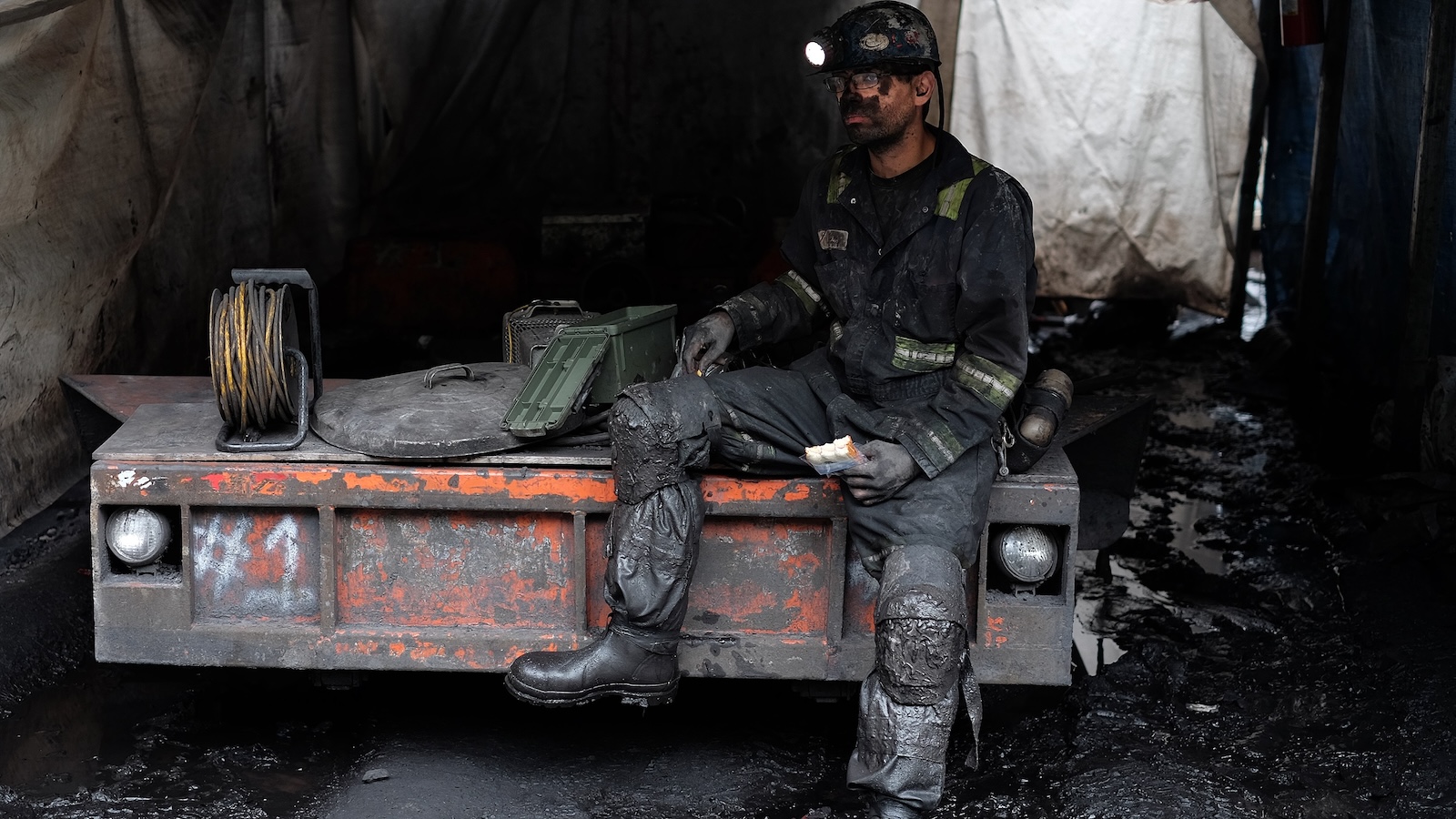
Still, she and others who work the nation’s mines worry President Trump is about to limit the agency’s local reach. As his administration targets federal buildings for closure and sale, 35 of its offices are on the list. Fifteen are in Appalachian coalfields, with seven in eastern Kentucky alone and the others concentrated in southern West Virginia and southeastern Pennsylvania. Of the remaining 20 offices, many are in the West, in remote corners of Wyoming, Nevada, and Colorado. Miners’ advocates worry these closures could reduce the capacity of an agency that’s vastly improved mining safety over the past 50 years or so and could play a vital role as the Trump administration promotes fossil fuels like coal, and as decarbonization efforts increase the need for lithium and other metals.

Since its inception in 1977, the agency has operated under the auspices of the Department of Labor to reduce the risks of what has always been one of the world’s most dangerous jobs. Before Congress created the agency, known as MSHA, hundreds of miners died each year, in explosions, tunnel collapses, and equipment malfunctions. (The number was far higher through the 1940s, often reaching into the thousands.) Last year, 31 people died in mining accidents, according to the agency’s data. Even after accounting for coal’s steady decline, that tally, while still tragic, reflects major strides in safety.

“Coal mining is a tough business. It’s a very competitive business. There’s always a temptation to compete on safety, to cut corners on safety, to make that your competitive advantage as a mine operator,” Christopher Mark, a government mine safety specialist who has spent decades making the job safer, told Grist. “And it’s our job to make sure that nobody can do that.”

Trump’s pick to lead MSHA, Wayne Palmer, who is awaiting confirmation, previously was vice president of the Essential Minerals Association, a trade association representing extraction companies. The Department of Labor declined to comment on the proposed lease terminations. A representative of the U.S. General Services Administration, which manages federal offices, told Grist that any locations being considered for closure have been made aware of that, and some lease terminations may be rescinded or not issued at all. 

Many of the country’s remaining underground coal mines – the most dangerous kind – are located in Appalachia. MSHA has historically placed its field offices in mining communities. Although the number of coal mines has declined by more than half since 2008, tens of thousands of miners still work the coalfields. Many of them still venture underground.

The dwindling number of fatalities comes even as the MSHA has been plagued by continued staffing and funding shortfalls, with the federal Office of the Inspector General repeatedly admonishing the agency for falling below its own annual inspection targets. It also has recommended more frequent sampling to ensure mine operators protect workers from toxic coal and silica dust. After decades of work, federal regulators finally tightened silica exposure rules, but miners and their advocates worry too little staffing and too few inspections could hamper enforcement. 

“There are going to be fewer inspections, which means that operators that are not following the rules are going to get away with not following the rules for longer than they would have,” said Chelsea Barnes, the director of government affairs and strategy at environmental justice nonprofit Appalachian Voices. The organization has worked with union members and advocates for those with black lung disease to lobby for stricter silica dust exposure limits.

Last month, the United Mine Workers’ Association denounced the proposed office closures. As demand for coal continues to decline, it worries that companies could pinch pennies to maximize profits — or avoid bankruptcy. ​​”Companies are completely dependent upon the price of coal,” said Phil Smith, executive assistant to union president Cecil Roberts. ”[If] it’s bad enough, they think, ‘Well, we can cut a corner here. We can pick a penny there.’”

The Biden administration made an effort to staff the agency. In the waning days of Biden’s term, Chris Williamson, who led the agency at the time, told Grist he was “very proud of rebuilding our team” because “you can’t go out and enforce the silica standard or enforce other things if you don’t have the people in place to do it.” The union worries that the Trump administration, which has pursued sweeping layoffs throughout the government, will target MSHA, where many of the Biden hires remain probationary employees. Despite the previous administration’s attempts to bolster the agency, it still missed inspections due to understaffing.

Anyone who isn’t terminated will have to relocate to larger offices if Trump shutters local outposts, placing them further from the mines they keep tabs on. In addition to inspecting underground mines at least quarterly and surface mines biannually, inspectors make more frequent checks of operations where toxic gases are present. They also respond to complaints. Work now done by people in the offices throughout eastern Kentucky likely would be consolidated in Lexington, Kentucky, or Wise County, Virginia, which are 200 miles apart. 

The Upper Big Branch memorial in Whitesville is dedicated to coal miners who died in a 2010 explosion just up the road.
Andrew Lichtenstein / Corbis via Getty Images

Field offices have been consolidated before, and mining experts acknowledged there may be a time and a place for such things, but it’s highly unusual to close so many without due process. In early March, the House Committee on Education and Workforce submitted a letter to Vince Micone, the acting secretary of labor, requesting documents and information on the closures and expressing concern that as many as 90 mine inspection job offers may have been rescinded. Their letter specifically referred to the agency’s history of understaffing that led to catastrophes like the Upper Big Branch mine explosion that killed 29 people in 2010, the nation’s worst mining accident in four decades.

“One of the lessons of the Upper Big Branch Mine disaster, according to MSHA’s own internal investigation, is that staffing disruptions at the managerial level resulted in MSHA’s inspectors failing to adequately address smaller-scale methane explosions in the months leading up the massive explosion that killed 29 miners fifteen years ago this April,” read the letter, which was signed by Democratic representatives Bobby Scott of Virginia and Ilhan Omar of Minnesota.

The impact of potential cuts stretches far beyond coal, into the mines that will extract the lithium and other metals needed for clean energy and other industries. As of last year, the nation employed almost 256,000 metal and nonmetal miners who pull copper, zinc, and other things from the earth. “It’s an agency that matters, regardless of how we’re producing our energy,” said Chelsea Barnes of Appalachian Voices.

After spending so much time in the mines, Lindsay is concerned by the direction the Trump administration is heading, even as lawmakers in states like West Virginia and Kentucky have in recent years attempted to roll back regulations. “That’s going to be the future of MSHA,” she said. “They’re going to be in name only. Miners are going to die. And nobody but their families are going to care.”

This story was originally published by Grist with the headline Trump administration moves to shutter mine safety offices in coal country on Mar 25, 2025.