As federal dollars for Head Start slow, rural parents left without other options

A teacher helps a child with an art project in a rural Head Start classroom. Half of Head Start slots are in rural areas. Credit: Jackie Mader/The Hechinger Report

In the rural Methow Valley in northeast Washington state, parents have few options for child care. There are only two licensed programs in the community — one of which is a Head Start center. About 40 miles northeast in the town of Okanogan, 30 percent of the town’s limited child care spots are provided by the local Head Start center.

Nationwide, Head Start has long played an outsized role in the rural child care landscape, existing in 86 percent of rural counties. If the federal program is eliminated, as President Donald Trump has reportedly proposed in his forthcoming budget, there will be massive consequences in many of the rural communities that voted for the Republican ticket. About 46 percent of all funded Head Start slots are in rural congressional districts, compared to 22 percent in urban districts. In some states, 1 in 3 rural child care centers are operated by Head Start.

In this swath of the Evergreen State, nestled just south of the Canadian border and east of the Cascade Mountains, Head Start fills a critical child care void: Even with the federal program, there is only enough licensed care for about 1 in 3 children under the age of 5. The program also provides vital services that many in the rural region might lack otherwise. Enrolled families can receive developmental screenings, home visiting programs, mental health services, parent support programs and dental care, all part of the federally funded program’s wraparound service model.

“Those federal grant funds make a huge difference in places where other programs cannot afford to operate,” said Katie Hamm, former deputy assistant secretary for early childhood development at the Administration for Children and Families. “If Head Start closes, it’s not like [families] have another option.”

Several of the congressional districts that stand to lose the most Head Start spots if the program is eliminated are rural districts that helped put Trump in office, according to an analysis by the Center for American Progress, a liberal think tank.

Since its launch in 1965, Head Start has served more than 40 million low-income children through a free preschool program and a counterpart for infants and toddlers, known as Early Head Start. 

While Head Start quality varies, research has found positive benefits from the program. Children who have attended Head Start are more likely to graduate from high school and enroll in college and are less likely to experience poor health. Head Start has been found to have a positive impact on self-control and self-esteem and on parenting practices.

The program’s two-generation approach of helping children and their parents is invaluable in rural communities, said Jodi DeCesari, executive director of Washington’s Okanogan County Child Development Association, which runs nine Head Start centers for more than 200 children. “We’re helping families get employment, we’re helping families get their GED. … We’re helping families lift themselves out of poverty and become more self-sufficient,” said DeCesari. “In the long term, that benefits our community.”

Although Head Start has received bipartisan support over the years, the program has been slowly starved of funding under the second Trump administration. Compared to this time last year, the federal government has sent $1 billion less in Head Start funding to states, according to an analysis by the Senate Committee on Appropriations. This comes after reports of funding freezes and mass terminations at the regional and federal levels.

In Georgia, Mindy Binderman, executive director of the Georgia Early Education Alliance for Ready Students, said Head Start programs are now experiencing delays because of an executive order requiring that all requests for federal funds include a detailed justification statement. This practice can be especially destructive for programs in rural areas, experts say, where Head Starts may not have other funding sources from local philanthropies or government sources to tide them over. One of the first programs to temporarily close earlier this month due to a delay in funding was a rural Head Start network outside of Yakima, Washington.

In Montana, a largely rural state, the uncertainty over Head Start’s future is causing fear as the program’s teachers worry their jobs could soon disappear, said Ashley Pena-Larsen, Head Start program director at Montana’s Rocky Mountain Development Council Inc. In rural areas, it’s already a struggle to find qualified teachers, and Head Start programs often have to compete with higher-paying positions in local school districts. Pena-Larsen fears the lack of certainty will compel teachers to search for jobs elsewhere. “When you already have a workforce that’s stretched thin, you don’t want to come into an environment where you’re unsure about your career. Are you wanting to start a career in a field that’s potentially dying?” she said.

Back in Okanogan, with summer heat looming, DeCesari is unsure what will happen when she submits a request to shift some funds to buy a new air conditioning unit at one of her centers. Usually that request would eventually end up at the regional office in Seattle, but that was one of the offices that was abruptly shuttered. “It’s been really chaotic,” DeCesari said. “I feel like everything is in question right now.”

One thing DeCesari is certain about is that if Head Start goes away, there will be an immense ripple effect throughout the local economy. In addition to providing child care and wraparound support, DeCesari’s organization employs more than 100 people and invests millions in the local community through buying food at local grocery stores and hiring companies that help run the organization’s buildings and buses.

But she worries most about the broader impact on Okanogan families if Head Start disappears. “Families benefit from our services,” she said. “Without Head Start, I think we’re really going to see a generational loss.”

Contact staff writer Jackie Mader at 212-678-3562 or mader@hechingerreport.org.

This story about Head Start was produced by The Hechinger Report, a nonprofit, independent news organization focused on inequality and innovation in education. Sign up for the Hechinger newsletter.

The post As federal dollars for Head Start slow, rural parents left without other options appeared first on The Hechinger Report.
Stevenson divided over shirtless display

County and Local Partners Exploring Solutions to Failing Chimacum Watershed Management

County and Local Partners Exploring Solutions to Failing Chimacum Watershed Management

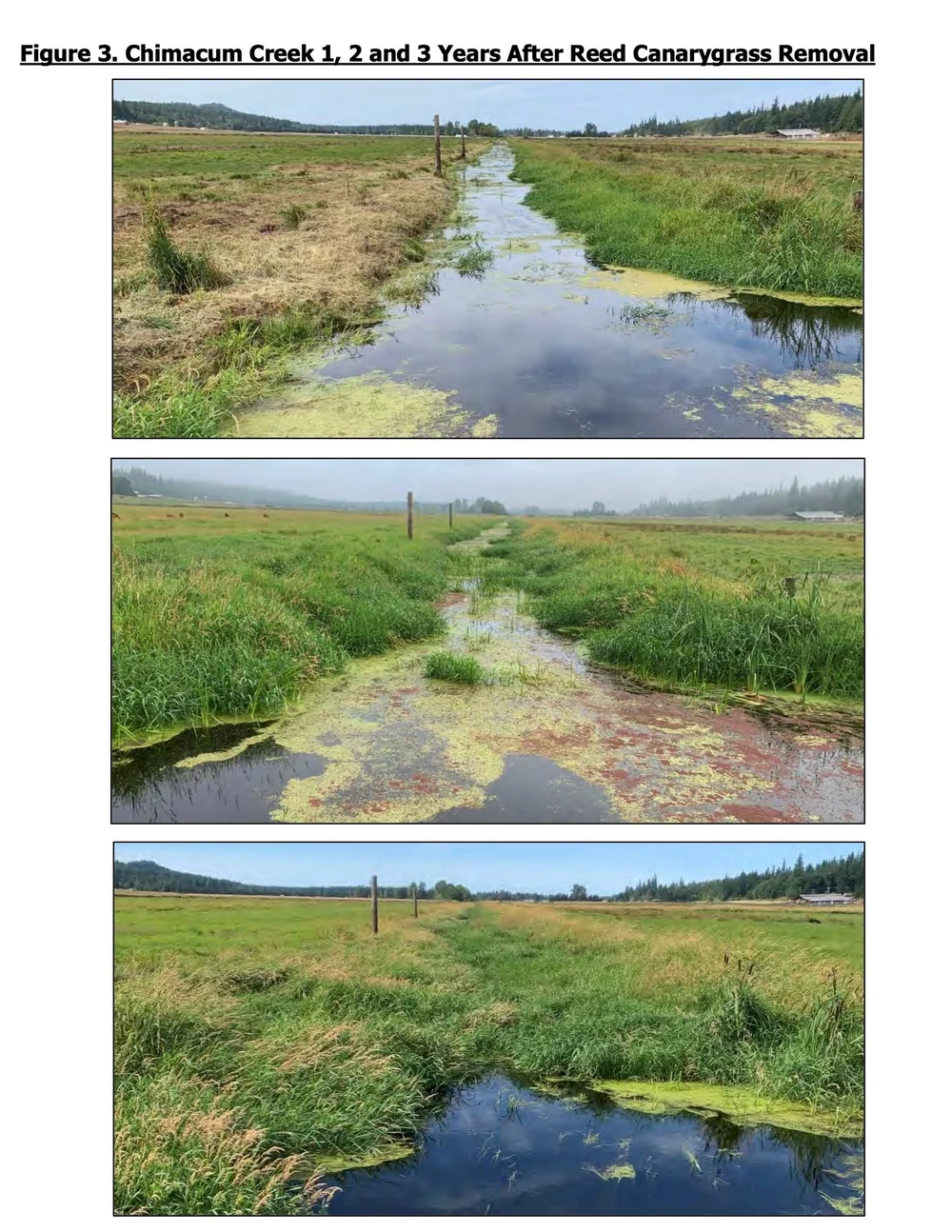
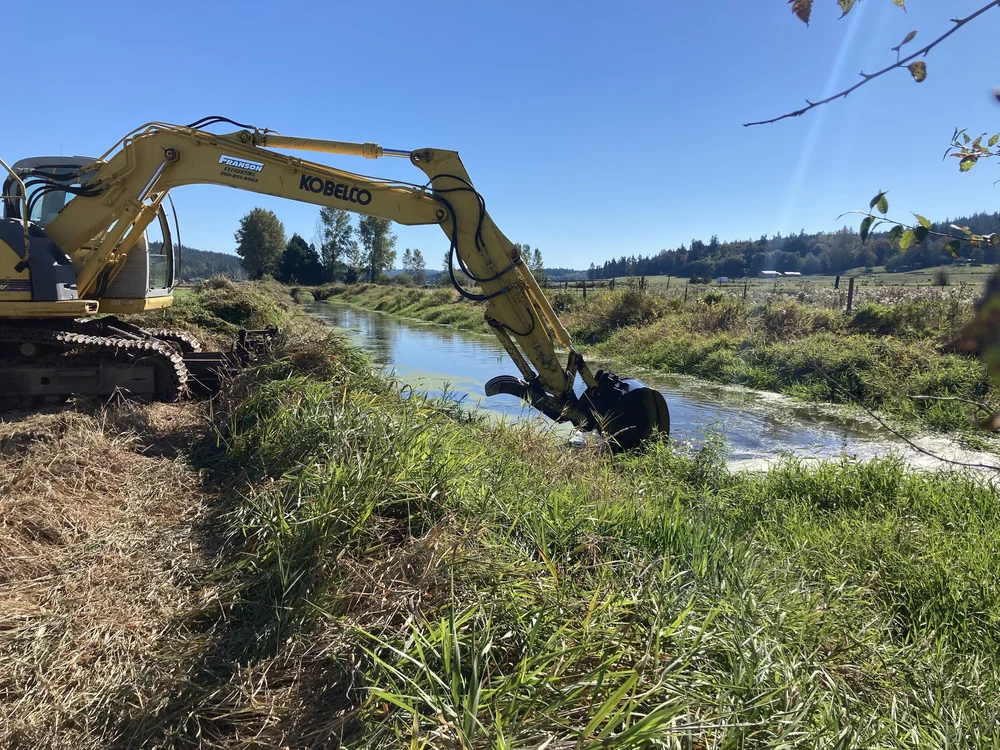
Clearing the Canary Grass out of Chimacum. Photo courtesy of the Jefferson County Conservation District.

News by Scott France

Heading south from Chimacum on either Center road or Highway 19, travelers are treated to bucolic landscapes that suggest healthy streams, and fertile, productive forest and farmland. But under this surface, the actual health of these Chimacum Creek valleys is more tenuous than it might appear.

The days when Chimacum Creek supported thriving runs of coho and chum, salmon, steelhead and trout are a distant memory. A proliferation of reed canarygrass has blocked water flows into waterways, causing flooding on hundreds of acres of once highly productive farmland. The grass was introduced as forage for cattle, but now there are few, if any, cattle in the watershed. It can reach heights of over six feet and form mats of rhizomes, stems and leaves across streams and ditches, choking the flow of water and creating challenges for adult and juvenile fish migration. It also robs the water of oxygen as it decomposes, resulting in lethal conditions for fish. In many areas, seasonal flooding now extends well into the growing season.

Image courtesy of the Jefferson County Conservation District.

The Jefferson County Conservation District (JCCD), in collaboration with local agencies, farmers, and other landowners, is developing a comprehensive drainage management and improvement plan for the Chimacum Creek watershed. This plan aims to balance agricultural needs with ecological restoration, considering strategies such as reactivating the drainage district, creating a new management entity, or continuing with individual landowner maintenance.

Joe Holtrop, manager of the Jefferson County Conservation District (JCCD), brought years of experience to the table as the parties convened to discuss the problems and potential solutions. He worked at the district in the early 90s, then worked for 30 years with the Clallam Conservation District, before returning to JCCD. “When I came here in 2021, drainage and flooding was issue number one,” Holtrop said. “We (the Conservation District) don’t have the authority to direct the needed changes, but we can provide technical assistance to those who want it.” Holtrop says that removing the red canarygrass from the steam channel is a top priority.

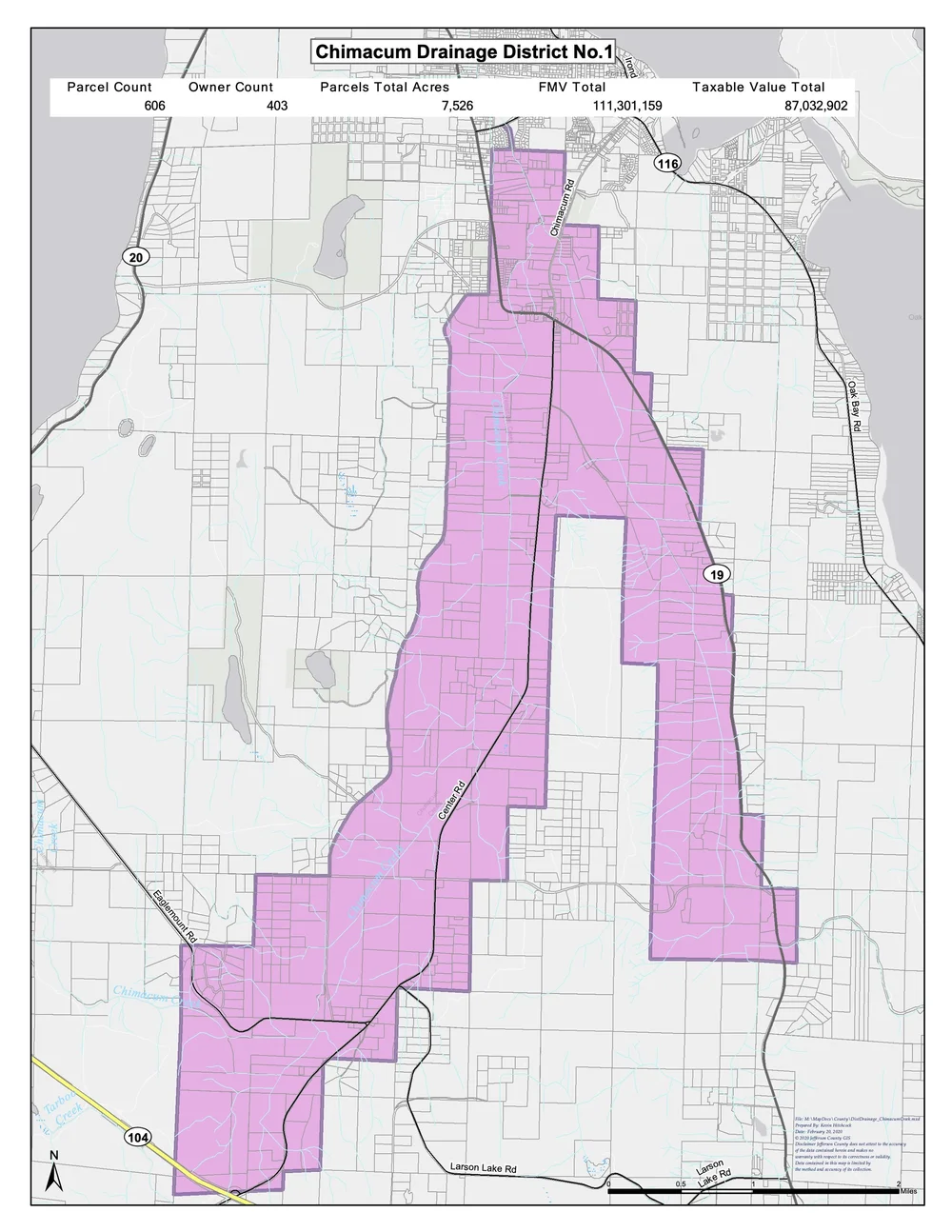
The main branch of Chimacum Creek runs parallel to Center Road and is commonly referred to as West Chimacum Creek, while East Chimacum Creek roughly parallels Highway 19. Agriculture thrived in these valleys for just a generation or two following major alterations in the natural drainage system, including channelization of Chimacum Creek, excavation of many miles of drainage ditches, and installation of miles of subsurface drainage. The vast majority of the drainage system alterations were undertaken by the Chimacum Drainage District, which was created in 1919, but has been dormant since 1974.

The grass problem is compounded by native plants and trees that were planted alongside the creek for the past 30 years, according to Eric Kingfisher, Director of Stewardship and Resilience with the Jefferson County Land Trust. JCCD and the North Olympic Salmon Coalition started these plantings 30 years ago to provide shade and better habitat for the stream, while Holtrop was at JCCD. “ Unfortunately, these plantings, especially the ones with a lot of willow, attracted beaver,” Holtrop said. “ They moved in, ate plantings and built dams, which resulted in more flooding, sometimes drowning many acres of established riparian plantings.”

Most land owners struggle to care for and maintain these trees and plants, and removal has occurred sporadically over the past three decades, and removal of sediment has not occurred because of permitting challenges. Sediment tends to build up in the channel due to a lack of velocity from low gradient and reed canarygrass choking the flow.

Most reed canarygrass removal has been limited to a handful of properties, as it has been largely paid for or performed by individual landowners. However, in 2020, JCCD received grant funding from the Washington State Conservation Commission to provide cost-share assistance for its removal. Five miles of stream channel across 14 properties was cleared of the grass with an excavator attachment specially designed for removing reed canarygrass. The project successfully improved stream flow and reduced flooding; however, one year after the treatment, the grass was growing back into the stream channel.

Deciding on an Action Plan

When Heidi Eisenhour started looking into the watershed problems during her first term as a Jefferson County commissioner in 2020 through multiple meetings, surveys and focus groups with area residents, she and the other commissioners gained a deeper understanding of the problems and the effects on the farms, ecology and land owners, and that the uncoordinated care and maintenance dramatically altered the watershed’s natural processes. “A healthy majority of the residents of the Chimacum Drainage District who responded to our March survey were supportive of developing a coordinated plan,” she said.

Partners such as Holtrop, who had dived deeply into the issues, reinforce Eisenhour’s findings. “This is a completely dysfunctional system,” he said. “ It’s not good for the farmers and the public and it’s not good environmentally.”

Image courtesy of the Jefferson County Conservation District.

So while there is a consensus among stakeholders and agencies around a goal to identify and detail management and maintenance practice and special projects that will help reduce flooding impacts to farmland, while also improving water quality and habitat conditions, the path to planning, implementing, funding and executing is complicated.

The degree to which landowners are currently affected and would benefit from certain solutions varies widely, presenting a challenge to fairly appropriating financial responsibility. Kingfisher acknowledges this challenge, and both he and Eisenhower float the possibility of a tiered system of taxation, where landowners who would benefit most would be assessed a higher tax amount than others. Kingfisher cites “the systemwide nature of the problem,” and the value that a healthy system has not only for farms, but for all land owners. “While one farm floods, the source of the problem could be four or five farms away,” he said. ”We need to be thinking long-term about working together to prepare for hotter summers, and warmer, wetter winters.”

Reactivation of the drainage district is the most commonly discussed solution. Eisenhour will meet with the Conservation District on May 13 to determine the feasibility of its reactivation. Alternatively, a New flood control District zone or possibly Watershed Improvement District might be formed according to Holtrop and Eisenhour. A third, and apparently less desired approach, would be the continued management of the system by individual landowners.

Animal Services confronts surge in intakes, launches volunteer crisis response program 

Thurston County’s Joint Animal Services is addressing an increase in animal intakes by developing an innovative volunteer program and …

‘People would die’: As summer approaches, Trump is jeopardizing funding for AC

The summer of 2021 was brutal for residents of the Pacific Northwest. Cities across the region from Portland, Oregon to Quillayute, Washington broke temperature records by several degrees. In Washington, as the searing heat wave settled over the state, 125 people died from heat-related illnesses such as strokes and heart attacks, making it the deadliest weather event in the state’s history. 

As officials recognized the heat wave’s disproportionate effect on low-income and unhoused people unable to access air conditioning, they made a crucial change to the state’s energy assistance program. Since the early 1980s, states, tribes, and territories have received funds each year to help low-income people pay their electricity bills and install energy efficiency upgrades through the Low Income Home Energy Assistance Program, or LIHEAP. Congress appropriates funds for the program, and the U.S. Department of Health and Human Services, or HHS, doles it out to states in late fall. Until the summer of 2021, the initiative primarily provided heating assistance during Washington’s cold winter months. But that year, officials expanded the program to cover cooling expenses. 

Last year, Congress appropriated $4.1 billion for the effort, and HHS disbursed 90 percent of the funds. But the program is now in jeopardy. 

Earlier this month, HHS, led by Secretary Robert F. Kennedy, Jr., laid off 10,000 employees, including the roughly dozen or so people tasked with running LIHEAP. The agency was supposed to send out an additional $378 million this year, but those funds are now stuck in federal coffers without the staff needed to move the money out. 

LIHEAP helps roughly 6 million people survive freezing winters and blistering summers, many of whom face greater risks now that the year’s warm season has already brought unusually high temperatures. Residents of Phoenix are expected to have their first 100 degree high any day now.

“We’re seeing the warm-weather states really coming up short with the funding necessary to assist people in the summer with extreme heat,” said one of the HHS employees who worked on the LIHEAP program and was recently laid off. Losing the people that ran the program is “absolutely devastating,” they said, because agency staff helped states and tribes understand the flexibilities in the program to serve people effectively, assistance that became extremely important with increasingly erratic weather patterns across the country.

In typical years, once Congress appropriates LIHEAP funds, HHS distributes the money in the fall, in time for the colder months. States and other entities then make critical decisions about how much they spend during the winter and how much they save for the summer. 

The need for LIHEAP funds has always been greater than what has been available. Only about one in five households that meet the program’s eligibility requirements receive funds. As a result, states often run out of money by the summer. At least a quarter of LIHEAP grant recipients run out of money at some point during the year, the former employee said. 

“That remaining 10 percent would be really important to establish cooling assistance during the hot summer months, which is increasingly important,” said Katrina Metzler, executive director of the National Energy and Utility Affordability Coalition, a group of nonprofits and utilities that advances the needs of low-income people. “If LIHEAP were to disappear, people would die in their homes. That’s the most critical issue. It saves people.”

In addition to Washington, many other states have expanded their programs to provide both heating and cooling programs. Arizona, Texas, and Oregon now offer year-round cooling assistance.

HHS staff plays a crucial role in running LIHEAP. They assess how much each state, tribe, and territory will receive. They set rules for how the money could be used. They audit local programs to ensure funds are being spent as intended. All that may now be lost. 

But, according to Metzler, there are some steps that HHS could take to ensure that the program continues to be administered as Congress intended. First, and most obvious, the agency could reinstate those who were fired. Short of that, the agency could move the program to another department within HHS or contract out the responsibilities. 

But ultimately, Metzler continued, LIHEAP funds need to be distributed so those in need can access it. “Replacing the federal Low Income Home Energy Assistance Program is a nearly impossible task,” she said. States “can’t have enough bake sales to replace” it. 

This story was originally published by Grist with the headline ‘People would die’: As summer approaches, Trump is jeopardizing funding for AC on Apr 11, 2025.

Trump Administration Abruptly Eliminates Funding for Food Banks and Schools

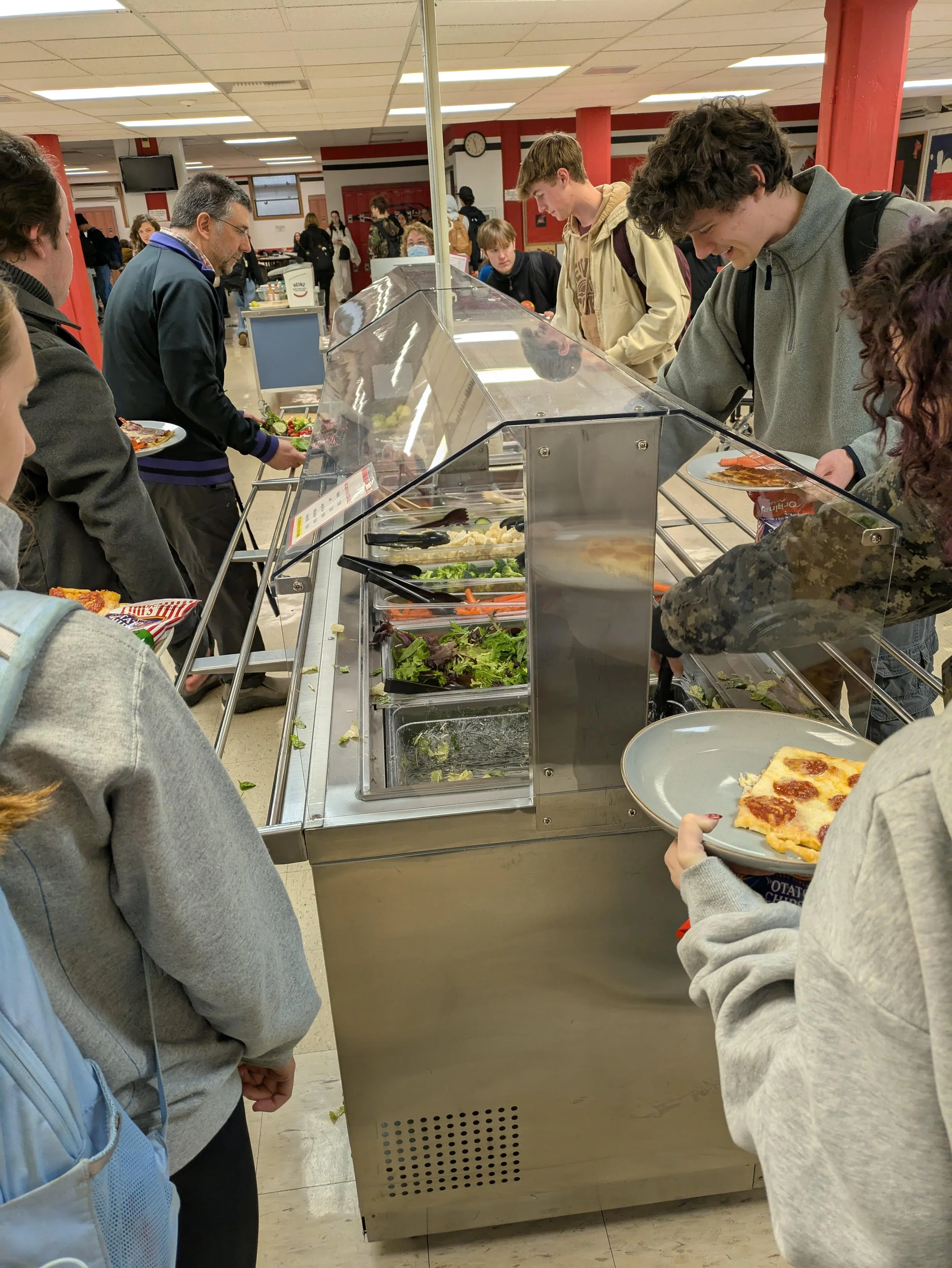
Students at Port Townsend High School currently benefit from a USDA program that helps fund local produce in school lunches, a program that was just eliminated by the current federal administration. Photo by Scott France.

News by Scott France

Jefferson County farms, food banks, and school districts are scrambling to plug holes created by the U.S. Department of Agriculture’s (USDA) termination of funding for two programs that provided more than $1.1 billion for schools and food banks to purchase food from local farmers and producers in the U.S. 

“This was an 100% gut punch for agencies like ours around the county,” said Patricia Hennessy, Executive Director of the Jefferson County Food Bank Association (JCFBA). The four food banks and one mobile unit operated by the JCFBA serve an average of 3,400 households per month. The number of households served rose 24% in 2024, according to Hennessy. “We might not find funding to replace the sudden shortfall,” Hennessy said. “Our largest line item is for food, and we need money to pay our staff and bills.”

The purpose of the programs was to maintain and improve food and agricultural supply chain resiliency. The food served feeding programs, including food banks and organizations that reach underserved communities. In addition to increasing local food consumption, the funds help build and expand economic opportunities for local and underserved producers.

The elimination of the two programs will affect local organizations in different ways.

Kai Wallin, Community Liaison with the Port Townsend School District, said that the District received funding from both programs, the Local Food for Schools (LFS)  and the Local Food Purchase Assistance (LFPA). “We will still buy locally what we can, but without this matching grant from the USDA helping us purchase local ingredients, our dollars won’t go as far, and we may need to buy more conventional, non-local ingredients to fill the gap,” she said.

People have come to rely on this funding for meeting the demands for healthy food

— Sallie Constant, Farm to Community Coordinator with Washington State University Extension for Clallam and Jefferson counties.

Other school districts in Jefferson County might not be as adversely affected by the cuts as the Port Townsend school district. Neither the Quilcene School District nor the Brinnon School District received any funding from either of the two programs, according to Ron Moag and Trish Beathard, superintendents of those respective school districts.

The Chimacum School District receives USDA funding through the Washington State Office of Superintendent of Public Instruction (OSPI), and is uncertain of the eventual effect on its funding pending finalization of  OSPI’s budget, said Kelly Liske, Executive Director of Business and Finance at the District. 

The Olympic Peninsula Community Action Program (Olycap) had an LFPA grant that served nine sites in Jefferson and Clallam counties. Between August 2023 and December, 2024, LFPA funded food purchases from farms in Jefferson and Clallam counties and distributed 135,875 pounds of produce to these nine sites.

Jefferson County food banks, local farmers and school districts with whom we talked say that the USDA’s decision is likely to increase food insecurity among vulnerable populations and create economic hardships for these farmers who previously supplied local produce to schools and food banks.​

“People have come to rely on this funding for meeting the demands for healthy food,” said Sallie Constant, Farm to Community Coordinator with Washington State University Extension for Clallam and Jefferson counties.

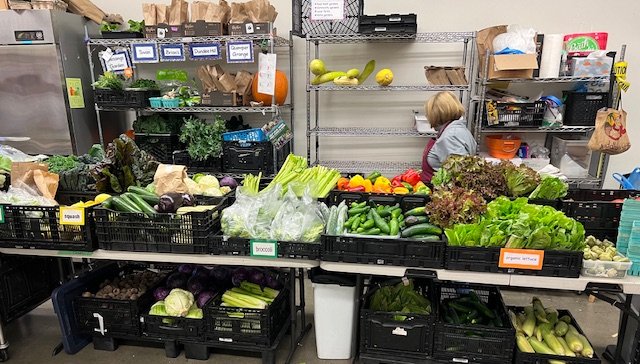
The produce at the Port Townsend Food Bank, a great deal of which was locally grown. Photo Courtesy of the Port Townsend Food Bank.

LFS was a cooperative agreement between the federal government and state entities (OSPI in WA) to identify producers of Washington-grown products and make those products available for free or at a subsidized cost for schools. For the 2025-2026 school year, $660 million was going to go towards purchasing regional foods such as salmon, berries, lentils, tortillas and squash and providing those foods to schools at half market price. The contract for this coming school year was canceled, so while these products will still be available, they will no longer be subsidized by the USDA, according to Danielle Williams with the WSU Clallam County Extension.

”The people who grow our food contribute to our local economy and food systems,” Hennessey said. Karyn Williams, owner of Red Dog Farm, said that the farm fills one order per week from Olycap, totaling approximately $50,000 annually, all of which will be eliminated. “I feel for people receiving this food, as well as my crew who get great satisfaction that the food they are growing feeds less advantaged people,” Williams said.

Hennessey is concerned about the consequences for seniors, houseless, domestic violence victims, and veterans, many of whom don’t have the capacity to shop in grocery stores if they can even afford to buy food. “Our mission is to “provide food to people in need,” Hennessey said. “They pulled the rug out from under us.”

Addendum:

The Beacon has learned that food bank officials in six states are reporting that up to $500 million dollars in funding for food banks through the USDA emergency food assistance program has been frozen. The New York Times reports that USDA representatives cannot be reached for comment. The Times reports that Vince Hall, the Director of Government Relations for Feeding America, a nationwide network of over 60,000 food, pantries and distributors, said that rural communities are likely to be most deeply affected. Emergency food assistance programs like this are “the food lifeline for rural America” because they come with funding to improve food storage and distribution, which can be more challenging in rural areas.

Anyone interested in supporting local purchasing for food access they can donate to the WSU Extension Olympic Peninsula Farm to Food Bank Fund or donate to their local food bank- JCFBA donations.

Tumwater School District board reviews protocols following audience protest

Following a recent issue regarding audience protest and proper implementation of meeting protocols, members of the Tumwater School District (TSD) Board of Directors reviewed …

Clinic closures, firings, buyouts: Northwest tribes sound alarm about cuts to health care, education and other key services

Protecting Rural Immigrant Populations from Expanding Reach of ICE   

Protecting Rural Immigrant Populations from Expanding Reach of ICE   

Helping people understand their rights might seem like dry legal work, but working for Jefferson County Immigrant Rights Association (JCIRA) allowed Courtney Morales-Thral, the Multicultural Center Administrator, to make a real difference in the lives of immigrants on the Olympic Peninsula in Washington State.

“We heard recently that Customs and Border Protection (CBP) was parked in front of the hospital in Port Angeles, and that stopped someone from going to see a baby in the hospital because they didn’t feel safe,” Morales-Thrall said. “That’s going to make people turn around and go home or go to a different hospital, which may be out here, rurally, an hour or two away”

Despite the Keep Washington Working Act passed in 2019, which prohibits law enforcement from detaining anyone to determine their immigration status and working with CBP or Immigration and Customs Enforcement (ICE) officers, amongst other rights, immigrants have good reasons to feel nervous. 

The immigrant community here still bears the trauma of a campaign waged against them in 2008. 

After a suspected terrorist was apprehended at the Port Angeles border, the number of agents increased from four agents to 25. Suddenly, checkpoints appeared on highways, with CBP and ICE agents demanding to see IDs and other documents from drivers and bus passengers. They also monitored public places, like hospitals and schools. 

In the 2011 documentary Keep the Border Patrol on the Border, it was reported that between February and November 2008, the border patrol stopped 24,524 vehicles at 53 roadblocks in Washington State. These stops led to 81 undocumented immigrants being taken into custody, though they were unable to find any additional evidence of terrorist activity.  “The community was decimated by the amount of deportations, stops, and the trauma of that time in this area,” Morales-Thrall said.

In that same documentary, Pastor John Topal from St. Mary of the Sea Catholic Church in Port Townsend summed up the cultural shift by saying, “The border patrol says it will not apprehend people in churches or schools, but their presence at these institutions nevertheless has had a chilling effect.” 

Trump’s recent executive order allowing ICE into formerly protected spaces like hospitals and schools has reignited that trauma for many in the immigrant community, regardless of the State’s new protections. 

Dr. Linda Rosenbury, the superintendent of Port Townsend Schools, is working closely with JCIRA to help parents and high school students understand their rights and give them the support and reassurance they need to continue attending school.

The school is also working with staff to understand what types of warrants allow immigration agents into part of the school beyond the main office and what kind of legal support they can get if they have an emergency need.

Port Townsend High School’s athletic fields are adjacent to Saint Mary Star of the Sea, the Catholic Church that holds mass in Spanish. (Photo by Nhatt Nichols)

Alongside having clear messaging for immigrant families and teaching staff, the school also helps families make plans in case anything does happen.

“When I’ve studied ICE raids in the past, it’s a major impact on a community. If there is an ICE raid at a local employer and then there are multiple children left without caretakers,” Rosenbury said.  “If we had to place students in homes, we would follow family plans and ensure that there’s a safe place for every student.”

While the schools are focusing on the physical well-being of immigrant families, JCIRA has found a way to help support both their understanding of their rights and their mental well-being through a trauma-informed therapy program specifically for immigrants. 

“We started a mental health partnership with an organization, a nonprofit based in Mexico because therapy is hugely cost-prohibitive for a lot of people and also has a lack of cultural understanding and language proficiency,” Morales-Thrall said.

JCIRA connects local immigrants with a therapist in Mexico who specializes in migration and trauma through a new low-bar support program. 

“The majority of the immigrants we work with are Mexican, Latino, Guatemalan, and so that’s the focus, but it’s not just for those people,” Morales-Thrall said. This program brought a resource to rural Jefferson County, whose local hospital has struggled to find the resources to provide even basic language support. 

“There’s one doctor that speaks pretty good Spanish, and so that’s really great, but therapists,  absolutely not,” Morales-Thrall said. “And even if they had a nice white lady that speaks Spanish, it wouldn’t be the same. Because people need that cultural understanding when you’re talking about immigration.”

The post Protecting Rural Immigrant Populations from Expanding Reach of ICE    appeared first on The Daily Yonder.

Slim margins, climate disasters, and Trump’s funding freeze: Life or death for many US farms

When the Trump administration first announced a freeze on all federal funding in January, farmers across the country were thrust into an uncertain limbo. 

More than a month later, fourth-generation farmer Adam Chappell continues to wait on the U.S. Department of Agriculture to reimburse him for the $25,000 he paid out of pocket to implement conservation practices like cover cropping. Until he knows the fate of the federal programs that keep his small rice farm in Arkansas afloat, Chappell’s unable to prepare for his next crop. Things have gotten so bad, the 45-year-old is even considering leaving the only job he’s ever known. “I just don’t know who we can count on and if we can count on them as a whole to get it done,” said Chappell. “That’s what I’m scared of.” 

In Virginia, the funding freeze has forced a sustainable farming network that supports small farmers throughout the state to suspend operations. Brent Wills, a livestock producer and program manager at the Virginia Association for Biological Farming, said that nearly all of the organization’s funding comes from USDA programs that have been frozen or rescinded. The team of three is now scrambling to come up with a contingency plan while trying not to panic over whether the nearly $50,000 in grants they are owed will be reimbursed. 

“It’s pretty devastating,” said Wills. “The short-term effects of this are bad enough, but the long-term effects? We can’t even tally that up right now.” 

In North Carolina, a beekeeping operation hasn’t yet received the $14,500 in emergency funding from the USDA to rebuild after Hurricane Helene washed away 60 beehives. Ang Roell, who runs They Keep Bees, an apiary that also has operations in Florida and Massachusetts, said they have more than $45,000 in USDA grants that are frozen. The delay has put them behind in production, leading to an additional $15,000 in losses. They are also unsure of the future of an additional $100,000 in grants that they’ve applied for. “I have to rethink my entire business plan,” Roell said. “I feel shell-shocked.”

Within the USDA’s purview, the funding freeze has targeted two main categories of funding: grant applications that link agricultural work to diversity, equity, and inclusion initiatives and those enacted under the Inflation Reduction Act, which earmarked more than $19.5 billion to be paid out over several years. Added to the uncertainty of the funding freeze, among the tens of thousands of federal employees who have lost their jobs in recent weeks were officials who manage various USDA programs.

Following the initial freeze, courts have repeatedly ordered the administration to grant access to all funds, but agencies have taken a piecemeal approach, releasing funding in “tranches.” Even as the Environmental Protection Agency and the Department of Interior have released significant chunks of funding, the USDA has moved slowly, citing the need to review programs with IRA funding. In some cases, though, it has terminated contracts altogether, including those with ties to the agency’s largest-ever investment in climate-smart agriculture. 

In late February, the USDA announced that it was releasing $20 million to farmers who had already been awarded grants — the agency’s first tranche. 

According to Mike Lavender, policy director with the National Sustainable Agriculture Coalition, that $20 million amounts to “less than one percent” of money owed. His team estimates that three IRA-funded programs have legally promised roughly $2.3 billion through 30,715 conservation contracts for ranchers, farmers, and foresters. Those contracts have been through the Environmental Quality Incentives Program, Conservation Stewardship Program, and Agricultural Conservation Easement Program. “In some respects, it’s a positive sign that some of it’s been released,” said Lavender. “But I think, more broadly, it’s so insignificant. For the vast majority, [this] does absolutely nothing.”

Slim margins, climate disasters, and Trump’s funding freeze: Life or death for many US farms
U.S. Agriculture Secretary Brooke Rollins announced the agency is unfreezing some funds, but it’s unclear how much is being released and how soon.
Saul Loeb / AFP via Getty Images

A week later, USDA secretary Brooke Rollins announced that the agency would be able to meet a March 21 deadline imposed by Congress to distribute an additional $10 billion in emergency relief payments.

Then, on Sunday, March 2, Rollins made an announcement that offered hope for some farmers, but very little specifics. In a press statement, the USDA stated that the agency’s review of IRA funds had been completed and funds associated with EQIP, CSP, and ACEP would be released, but it did not clarify how much would be unfrozen. The statement also announced a commitment to distribute an additional $20 billion in disaster assistance. 

Lavender called Rollins’ statement a “borderline nothingburger” for its degree of “ambiguity.” It’s not clear, he continued, if Rollins is referring to the first tranche of funding or if the statement was announcing a second tranche — nor, if it’s the latter, how much is being released. “Uncertainty still seems to reign supreme. We need more clarity.” 

The USDA did not respond to Grist’s request for clarification. 

Farmers who identify as women, queer, or people of color are especially apprehensive about the status of their contracts. Roell, the beekeeper, said their applications for funding celebrated their operations’ diverse workforce development program. Now, Roell, who uses they/them pronouns, fears that their existing contracts and pending applications will be targeted for the same reason. (Federal agencies have been following an executive order taking aim at “Ending Radical And Wasteful Government DEI Programs.”) 

“This feels like an outright assault on sustainable agriculture, on small businesses, queer people, BIPOC, and women farmers,” said Roell. “Because at this point, all of our projects are getting flagged as DEI. We don’t know if we’re allowed to make corrections to those submissions or if they’re just going to get outright denied due to the language in the projects being for women or for queer folks.”

The knock-on effects of this funding gridlock on America’s already fractured agricultural economy has Rebecca Wolf, senior food policy analyst at Food & Water Watch, deeply concerned. With the strain of an agricultural recession looming over regions like the Midwest, and the number of U.S. farms already in steady decline, she sees the freeze and ongoing mass layoffs of federal employees as “ultimately leading down the road to further consolidation.” Given that the administration is “intentionally dismantling the programs that help underpin our small and medium-sized farmers,” Wolf said this could lead to “the loss of those farms, and then the loss of land ownership.”  

Other consequences might be more subtle, but no less significant. According to Omanjana Goswami, a soil scientist with the advocacy nonprofit Union of Concerned Scientists, the funding freeze, layoffs, and the Trump administration’s hostility toward climate action is altogether likely to position America’s agricultural sector to contribute even more than it does to carbon emissions. 

Agriculture accounted for about 10.6 percent of U.S. carbon emissions in 2021. When farmers implement conservation practices on their farms, it can lead to improved air and water quality and increase soil’s ability to store carbon. Such tactics can not only reduce agricultural emissions, but are incentivized by many of the programs now under review. “When we look at the scale of this, it’s massive,” said Goswami. “If this funding is scaled back, or even completely removed, it means that the impact and contribution of agriculture on climate change is going to increase.”

The Trump administration’s attack on farmers comes at a time when the agriculture industry faces multiple existential crises. For one, times are tight for farmers. In 2023, the median household income from farming was negative $900. That means, at least half of all households that drew income from farming didn’t turn a profit. 

Additionally, in 2023, natural disasters caused nearly $22 billion in agricultural losses. Rising temperatures are slowing plant growth, frequent floods and droughts are decimating harvests, and wildfires are burning through fields. With insurance paying for only a subset of these losses, farmers are increasingly paying out of pocket. Last year, extreme weather impacts, rising labor and production costs, imbalances in global supply and demand, and increased price volatility all resulted in what some economists designated the industry’s worst financial year in almost two decades. 

Elliott Smith, whose Washington state-based business Kitchen Sync Strategies helps small farmers supply institutions like schools with fresh food, says this situation has totally changed how he looks at the federal government. As the freeze hampers key grants for the farmers and food businesses he works with across at least 10 different states, halting emerging contracts and stalling a slate of ongoing projects, Smith said the experience has made him now consider federal funding “unstable.” 

All told, the freeze isn’t just threatening the future of Smith’s business, but also the future of farmers and the local food systems they work within nationwide. “The entire food ecosystem is stuck in place. The USDA feels like a troll that saw the sun. They are frozen. They can’t move,” he said. “The rest of us are in the fields and trenches, and we’re looking back at the government and saying, ‘Where the hell are you?’”

This story was originally published by Grist with the headline Slim margins, climate disasters, and Trump’s funding freeze: Life or death for many US farms on Mar 5, 2025.