
Helene frayed the safety net for people who use drugs. This community wove it back together.
Kimberly Treadaway hoped she was prepared for the storm. Hurricane Helene was heading right for her home in Weaverville, North Carolina, and she worried about having enough food and water, and about her 5-month-old son. But something else weighed on her — access to Suboxone, a prescription medication she must take daily to reduce the cravings and withdrawal symptoms associated with opioid use.
“If I didn’t have my medication, I wouldn’t feel OK,” she said.
Treadaway is about a decade into her recovery. Maintaining sobriety depends upon a great many things remaining consistent: relationships, housing, employment, and, especially, access to the treatment she needs to avoid a relapse.
She wasn’t just concerned for herself. Her partner was also on Suboxone, as were “a lot of our friends.” Many had a stockpile, or a plan to taper their dosage if they suddenly lost access. Withdrawal is always unpleasant and often dangerous. The thought of navigating the aftermath of a natural disaster with fever, chills, vomiting, and other symptoms was frightening.
“Helene just made it really, really real,” she said.
Treadaway recounted the story in the office of Holler Harm Reduction, alongside fellow staffer Hush Sinn and volunteer Oscar Smith. The grassroots organization in Marshall, often known simply as “Holler,” strives to meet people who use drugs where they are, providing clean needles, naloxone, and other supplies to minimize the threat of an overdose or infection. Treadaway joined the staff in November 2024, right after Helene hit. In the wake of the storm, Holler was part of a loose network of similar organizations that mounted an ad hoc but essential response — to ensure that people who use drugs or are maintaining sobriety got the care and supplies they needed.
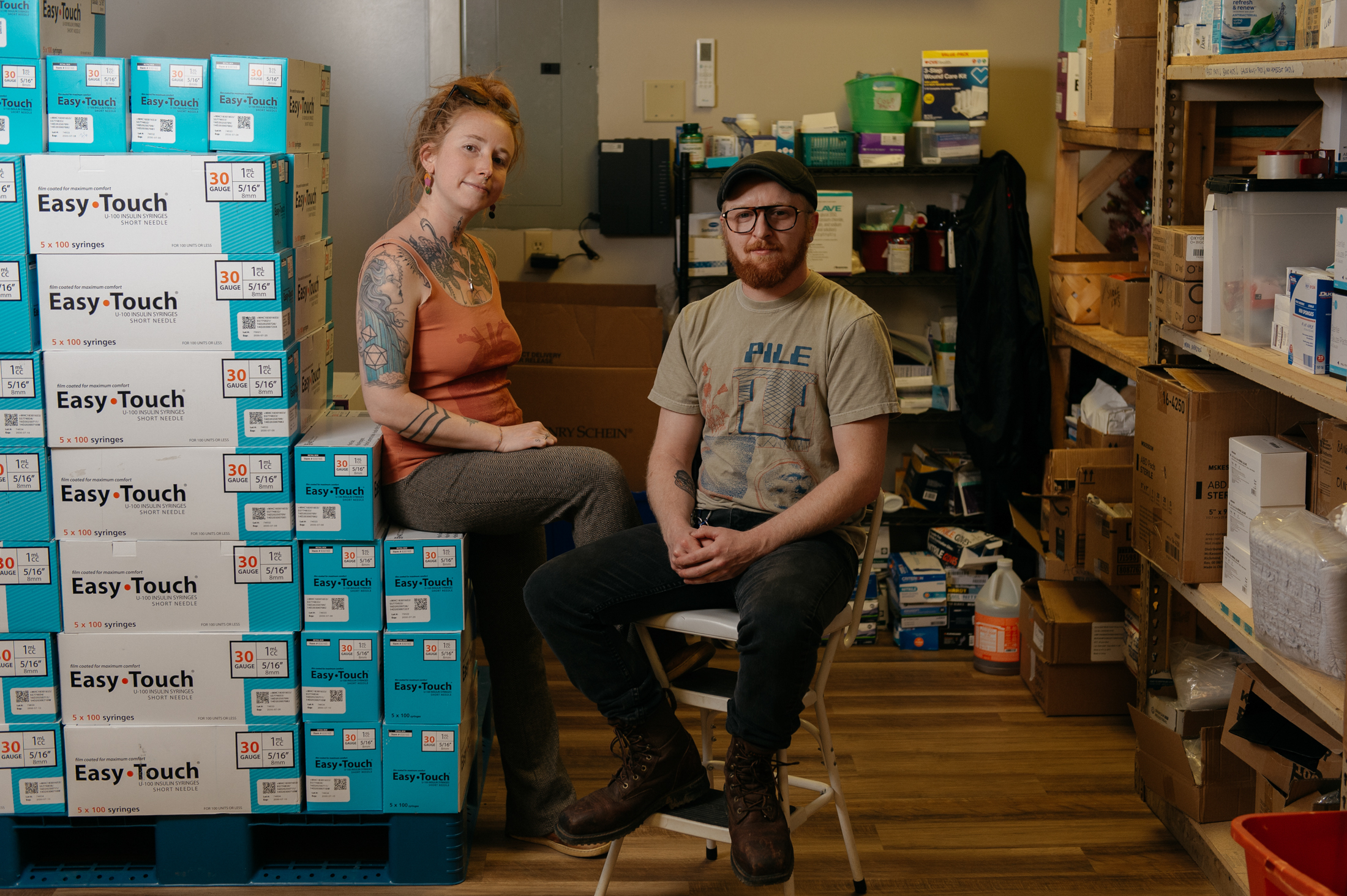
Jesse Barber / Grist
As the initial barrage of rain and wind gave way to isolation and infrastructural breakdown, the systems Treadaway and so many others rely on remained interrupted for weeks.
But something else took their place. Across western North Carolina and beyond, people like Treadaway joined doctors, nurses, and others on ATVs, in trucks, and occasionally on foot in delivering care and supplies. They did so in ways that official emergency responders, constrained by training, resources, logistics, or mandate, could not. They did what they felt was urgent and right, and in that, they revealed what disaster response might look like if it were designed with those realities in mind.
For people in recovery or still actively using drugs, survival depends on a connection to care, routine, and the people and systems that make such things possible: pharmacies; clinics, rehabs, therapists, and 12-step meetings.
Across Appalachia and the South, that web is already strained. A flood of prescription opioids, followed by heroin, fentanyl, amphetamines, and other drugs, brought skyrocketing addiction rates and death in the early 2000s. Though efforts to combat overdose have reduced death rates since 2022, rural areas hit by hospital closures and dwindling access to basic health care still see high rates of these and other so-called “deaths of despair.” With climate-fueled disasters growing more frequent, the same fragile system is tested again and again.
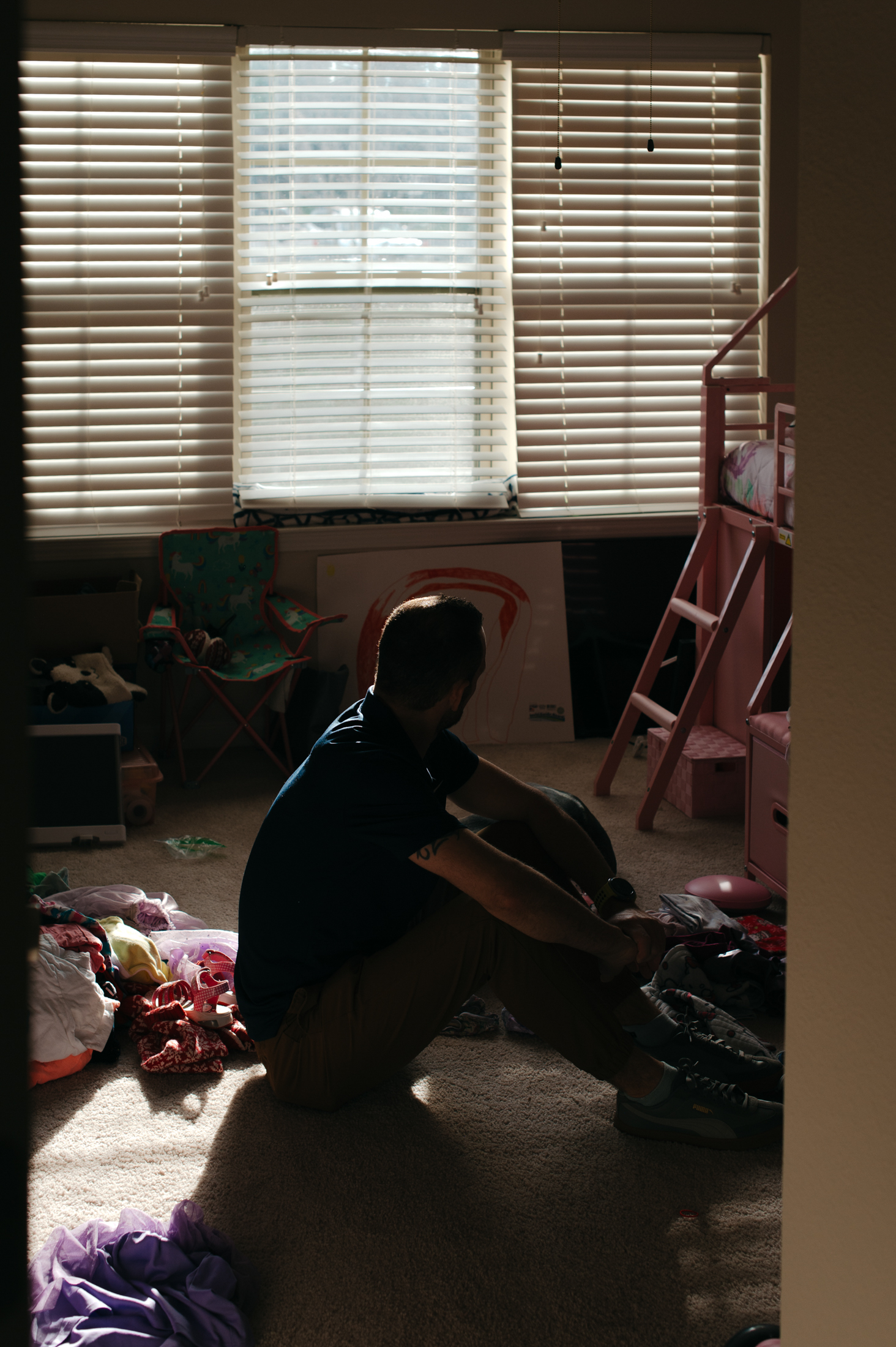
Treadaway, who is 33, grew up in a rural area outside Boone, near the Tennessee state line. Shy and raised on an abstinence-only education, she had been taught to avoid drugs at all costs without ever learning how they differed or how they affected the body. All she knew was that they felt good and made her more at ease in life and at parties. She began using opiates and other substances in high school, alongside friends and romantic partners. She eventually dropped out of school, and stopped doing other things she loved, like art, theater, and dance. One day, when she was 19, she awoke to find her partner lifeless in bed next to her. It shook her into seeking help.
She went back to school and tried to bring balance to her life. It wasn’t until around 2017 that she found a welcoming place in the harm reduction community, where she could share her experiences and wisdom. Harm reduction aims to reduce the risks associated with drugs — infection, illness, death — and promote understanding, respect, and compassion for people who use them. She found its philosophy of helping people without judgment appealing. Treadaway felt accepted for sometimes existing in a gray area between active use and recovery, a process that’s rarely linear.
“It wasn’t a clear-cut journey,” she said. “But after that, I let go of certain substances and then let go of some others, and worked my way into a place in life that felt good.”
Treadaway first volunteered with The Steady Collective, a harm-reduction group based in Asheville, and later served on its board. There, she found like-minded people who embraced her first-person perspective on complex health and social issues. She now works as the organizational director for Holler.
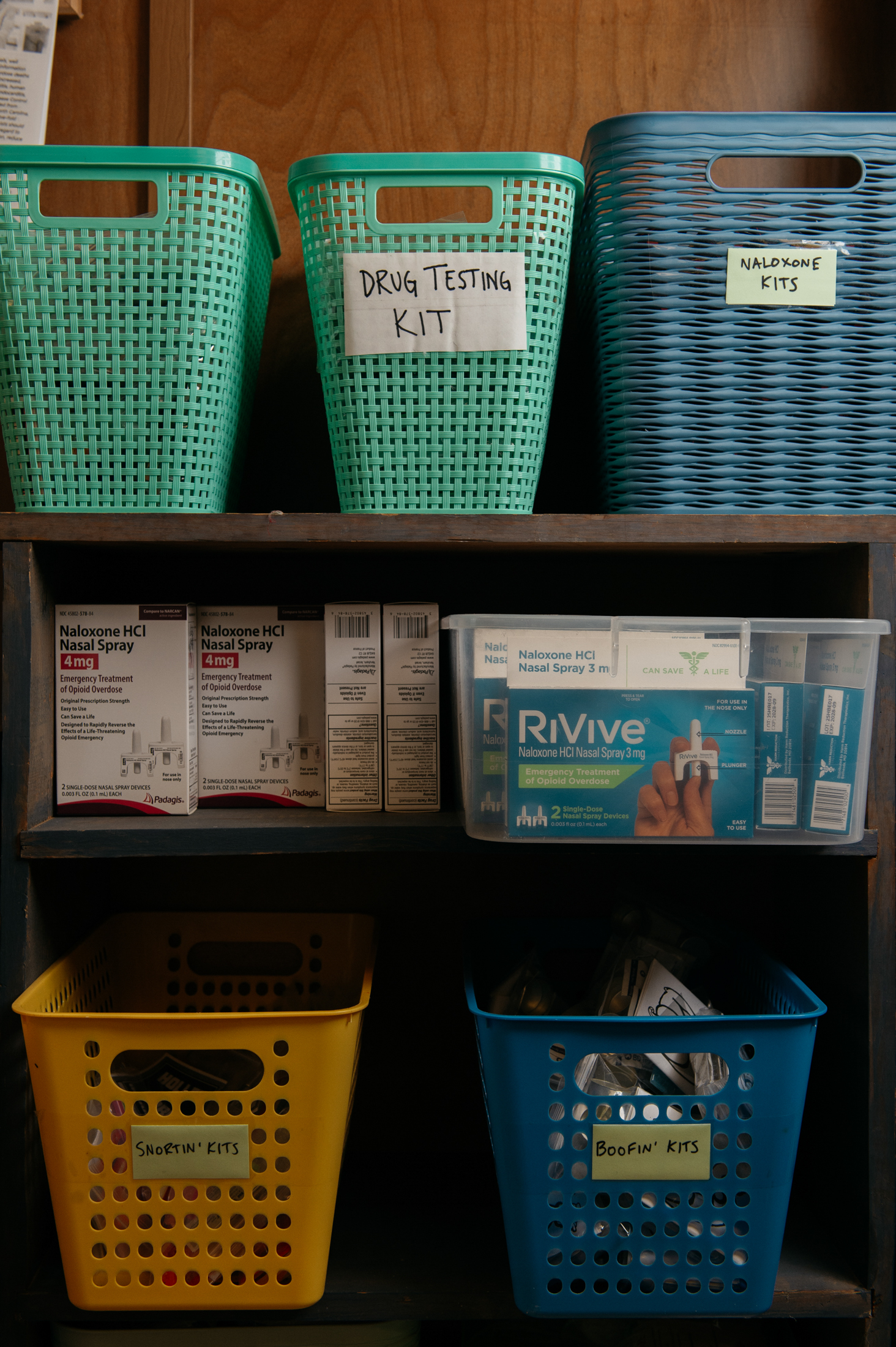
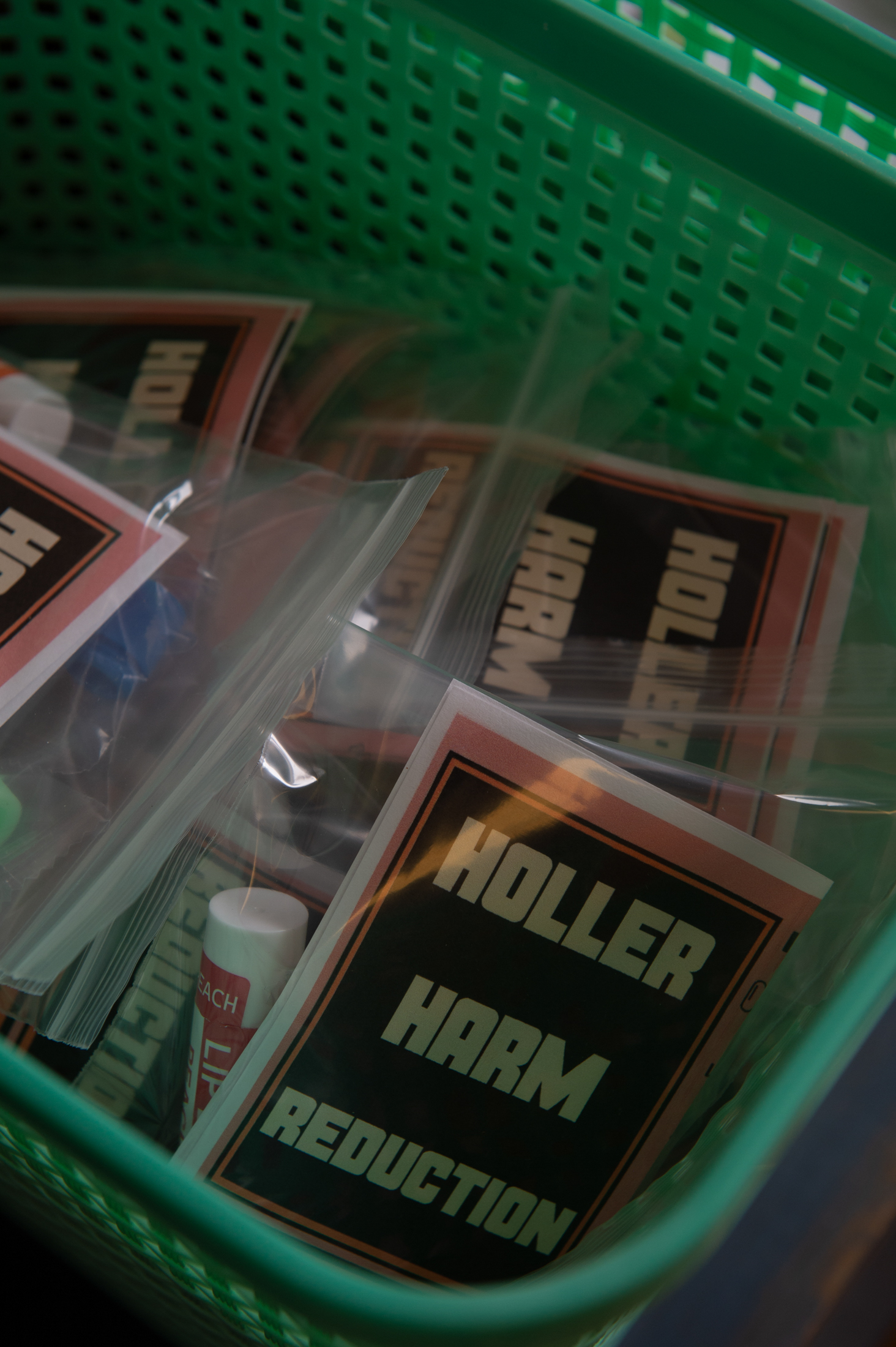
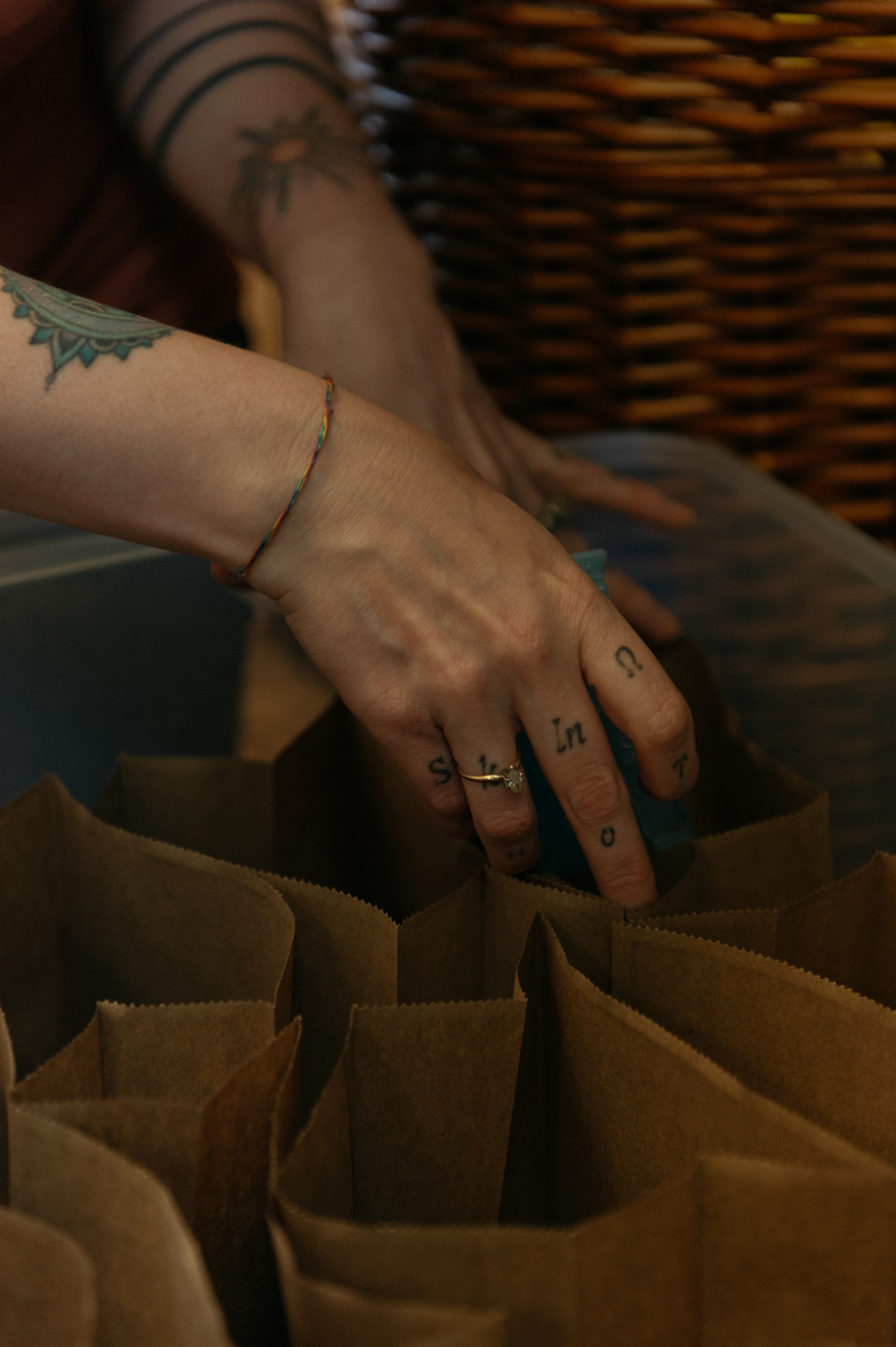
Holler Harm Reduction distributes supplies like Naloxone and drug testing kits (left), comfort items like lip balm (center), which treats dry-mouth symptoms caused by withdrawal medications like Suboxone, and clean supplies to prevent infection (right).
Many of her friends navigate the same space between use and recovery, occasionally moving back and forth between the two. In the harm reduction community, Treadaway said, they find forgiveness, patience, and love that the greater world doesn’t always have for them.
She and others in the community brought that approach to the aftermath of Helene, seeking to show their neighbors that they were there, loved them, and wouldn’t let them fall. The organization, along with other western North Carolina groups like Steady Collective and Smoky Mountain Harm Reduction, quickly mobilized. As soon as the roads were passable, truckloads of basic supplies arrived from all over. A region’s worth of people, increasingly accustomed to the disruptions of flooding, got to work distributing them.
“The scope of mutual aid is just like harm reduction,” said Hush Sinn. “The norm in mutual aid is that we show up for each other. That nobody says, ‘That’s not my problem.’”
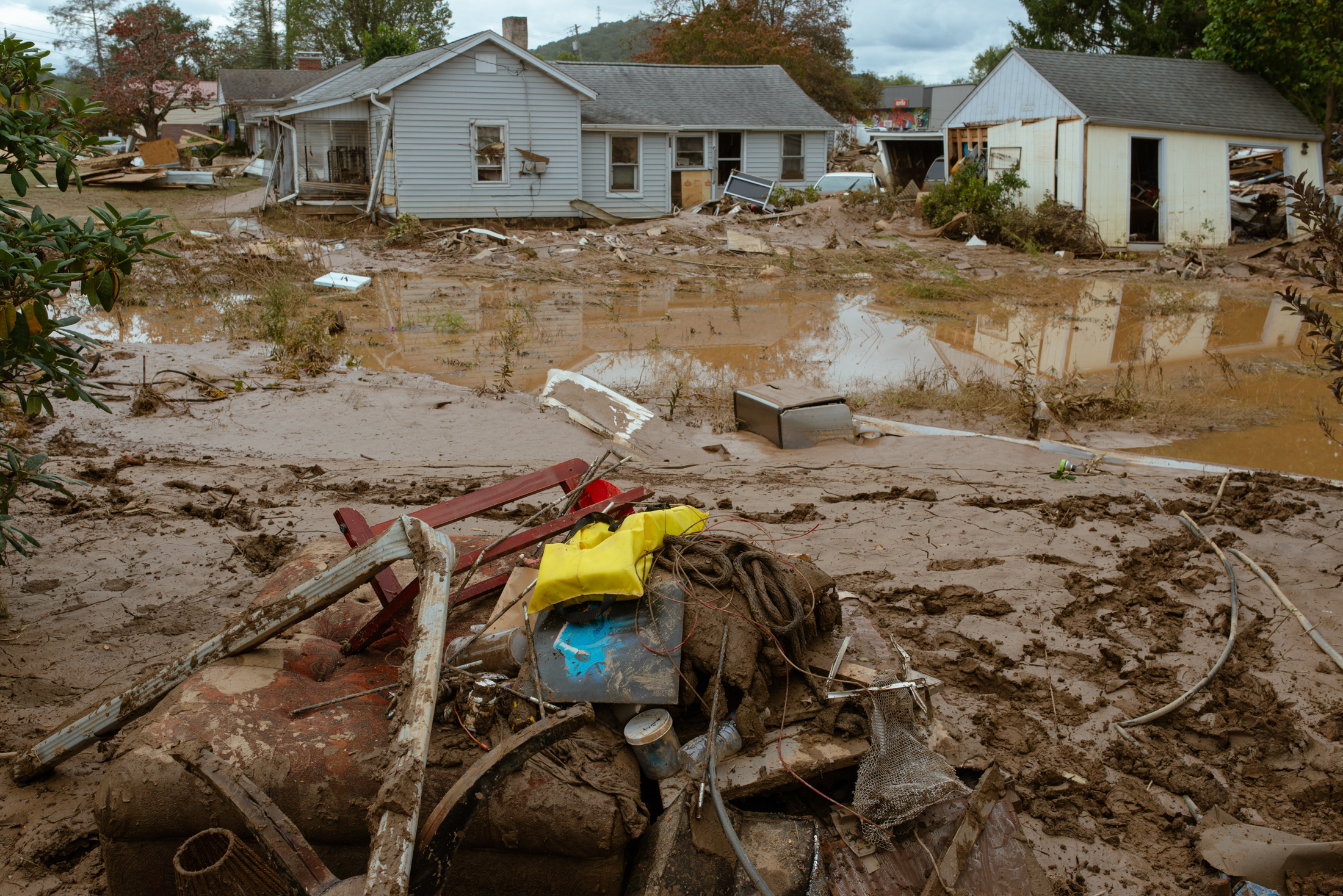
Flooding had washed out roads and cut communications, making it difficult or impossible to reach clinics or refill prescriptions. Those who could often found drugstores and clinics closed, or unable to verify insurance because of internet outages. For people in treatment for opioid addiction, the consequences were dire: Methadone typically must be dispensed daily at a clinic, while Suboxone is tightly regulated as a controlled substance.
“It was like hundreds of dollars” that people had to pay if they couldn’t apply insurance, Treadaway said. Most couldn’t afford that. With supplies uncertain, she reduced her own dosage. Some people pooled what they had and shared it with friends — helping each other through a crisis felt more important than following laws that prohibit such actions.
How to support people with substance use disorder during and after disaster
Treadaway ended up leaving for her son’s safety. Others, like Sinn and Smith, remained. They found people were doing surprisingly well, given the circumstances — not because the system was holding, but because many were accustomed to its failures. They were used to interruptions in electricity, water, or housing.
“People who use drugs are scrappy,” Treadaway said. “They are used to having to fight for their basic needs, which isn’t a good or correct thing, but I had this really deep sense of faith and trust in their survival skills that maybe other community members haven’t had to ever use.”
Sinn, who is on the staff at the Steady Collective and has a history of substance use, was drawn to harm reduction not only to save lives but to ensure no one faces the crushing loneliness that can come with substance use. That seemed particularly important in the wake of Helene. “There’s nothing worse than feeling like nobody gives a shit about you,” Sinn said.
State health officials also found themselves scrambling to meet urgent needs. Tyler Yates, the state opioid coordinator for the North Carolina Department of Health and Human Services, watched treatment centers across the state suddenly also become depots for first aid supplies, clean water, and gasoline, filling the community’s basic survival needs.
Yates, like many in his line of work, comes to the job with personal experience: He started using opioids and other substances when he was 11. He went to treatment in 2017, for what he said may have been the eighth time. It was around then that he found a home in harm reduction work.
After the storm, Yates knew what people who use drugs needed to survive, and was frustrated by how bureaucracy stood in the way. For instance, he wanted to quickly get sterile water to intravenous drug users, fearing that without it, they could face infection, sepsis, or death from water containing bacteria and other contaminants. But the request went nowhere. According to Yates, state emergency officials were reluctant to fund supplies beyond the usual disaster checklist. “When we submitted the order, it was denied by the emergency response folks because they didn’t think that FEMA would reimburse them,” he said.
North Carolina Emergency Management declined to comment and referred all questions to the North Carolina Department of Health and Human Services. Summer Tonizzo, a spokesperson for that agency, told Grist in an email that it collaborates with local jurisdictions, health departments, and community organizations to assist those with substance use disorder during disasters by helping provide naloxone and offering crisis counseling in shelters.
“The State Emergency Response Team makes decisions regarding the distribution of emergency health supplies based on the immediate public health needs and circumstances at hand,” wrote Tonizzo. “The reimbursement process occurs after the response phase has ended and involves separate processes.”
After a month of back and forth, Yates and his team ended up receiving supplies donated by local and regional harm reduction groups and delivering them throughout western North Carolina. “There’s so much red tape,” he said. His team did its best to fill supply and training gaps, like distributing naloxone to rural volunteer fire departments and first responders who often lacked the training and supplies.
The state also saw more contamination in the illicit drug supply, driven by a drop in availability of fentanyl and other opioids due to damaged roads and landslides. In places like Haywood County, health providers said xylazine — a cheap, widely available tranquilizer that slows breathing and can cause severe tissue damage — flooded the supply. Health care professionals and harm reductionists scrambled to warn people of the risk, and provide test strips to keep them safe.
Training and preparation were also an issue when it came to longer-term disaster relief volunteers. Several health providers in western North Carolina told Grist they saw people who used drugs — or even those taking medications for opioid use disorder — being turned away from shelters by volunteers who believed they were keeping others safe.
Tonizzo said her agency received no reports of people being wrongfully ejected from shelters for being on medications used to treat opioid use disorder, but that use of illegal drugs “can be restricted” and is grounds for removal.
Buncombe County officials said the county’s response plan prioritizes access to water, sanitation, and shelter for everyone, and it works with harm reduction groups to maintain access to safe use supplies. Although the county handled the initial coordination of emergency shelters, it handed that task off to the Red Cross, which did not respond to written questions, in the weeks after the storm. “Coordinating the various needs of the shelter population was no small challenge,” a Buncombe County spokesperson said in an email. “As the needs of shelter residents became more apparent, the Red Cross and our teams worked to relocate individuals needing specialized support to a more appropriate shelter setting.”
Jesse Barber / Grist
The storm’s overall effect on public health was mixed. Hospitalization data showed some illnesses worsened, particularly chronic illnesses such as diabetes and mental health conditions like anxiety. Emergency room visits for overdoses and alcohol use also rose, with opioid overdoses up about 21 percent in the three months after the storm, according to an analysis by Appalachian State University geographer Maggie Sugg and environmental epidemiologist Jen Runkle, who works for the North Carolina Institute for Climate Studies, a research arm of NOAA’s National Centers for Environmental Information. Because ER data reflects only those who needed and could access care, the real impact may have been greater.
Still, more than a dozen health care providers, harm reductionists, and peer counselors told Grist they were astonished that things weren’t worse, given the multitude of health risks the people they care for face. Some even said they saw fewer overdoses and cases of severe withdrawal than they expected.
“Some of my patients fared way better than they had in years,” said Cassie York, a peer support counselor at a Mountain Community Health Partnership clinic in rural, low-income Mitchell County. “Because there was food available, there were resources available, no questions asked.”
After disasters, a safety net of free emergency health clinics blooms and fades. But between those moments lies what many described as a glimmer of possibility — a kind of equality in access to care among people caught in addiction or early recovery, who are often uninsured or avoid seeking medical care due to fear of stigma and arrest.
Jesse Barber / Grist
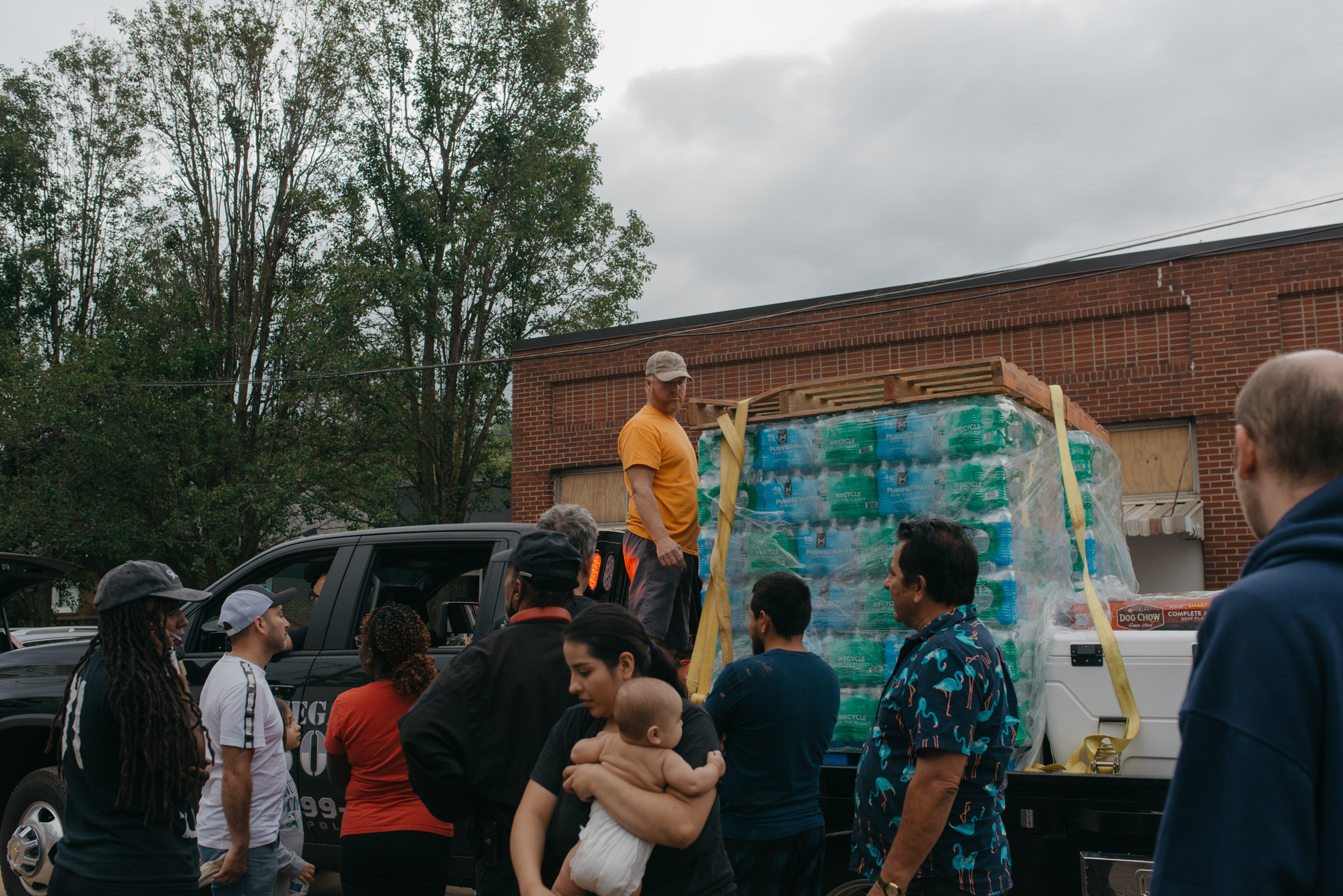
Doctors worked out of community centers and churches, writing prescriptions more freely as patients bypassed the usual restrictions on access. The state Board of Pharmacy, acting on Governor Roy Cooper’s declaration of an emergency and Drug Enforcement Agency approval, allowed doctors and pharmacists to provide emergency refills of regulated medications , including some of those used to treat opioid use disorder.
People came in with chronic infections, injuries, and diseases like AIDS — conditions that can arise from intravenous drug use — and were treated, free of charge. For a brief moment, many experienced what it meant to have free, nonjudgmental care. “Word of mouth spreads fast, you know? ‘Hey, there’s a doctor at the church, go get your prescription,’” York said.
But if that access was easier than usual, it was because there were people who made the decision to make it happen, and local and state officials willing to provide the resources. In other states throughout the Appalachian region, communities with high overdose rates and growing disaster risk face a very different set of political circumstances.
Not every county, or state, in the region provides harm reduction programs with the same level of support found in Buncombe County. Some actively inhibit it. West Virginia, for instance, passed restrictions in 2021 that threaten needle exchange programs, and a bill banning them is under judicial review. In Tennessee, state laws prohibit these exchanges, which help intravenous drug users avoid infection and disease by providing sterile injection supplies, from operating near schools or parks. Such restrictions limit how many syringe exchanges can operate, and often push them into less accessible areas. Many people in rural Tennessee drive across the state line seeking help, further straining services in western North Carolina.
The myriad challenges of meeting immediate needs make it difficult for harm reductionists to plan for the next crisis. Health workers in West Virginia, which has the nation’s highest overdose rate, described feeling as though their heads are being held underwater. “It can be hard to think about climate emergency, because so many people who I see are in a state of emergency all the time,” said Lake Sidikman, who coordinates harm reduction programs at the Charleston Women’s Health Center.
Even in Buncombe County, widely cited as a lodestar for substance use services, gaps remain. Helene highlighted the lack of a concrete plan for providing services during a crisis.
That gap has sparked efforts to rethink disaster planning. Harm reductionist Kathryn Humphries works with others in her field and officials at all levels of government and grassroots groups on disaster response. She said such plans often overlook people who use drugs and the unhoused, despite their heightened vulnerabilities and overlapping needs. She is among those helping lead a national conversation about how to better draw community organizations and those with direct experience with drug use into preparedness efforts.
To Dr. Shuchin Shukla, a physician and addiction medicine researcher who previously practiced family medicine in Buncombe County, disaster preparedness starts with the pillars of overdose prevention: naloxone to reverse overdoses, medications and supplies such as Suboxone and clean needles, and peer support from trusted people in the community. Strangers cannot arrive after a disaster and expect people in active addiction or early recovery to trust them. “You have to bring a ton of support to the people they already know and rely on,” he said.
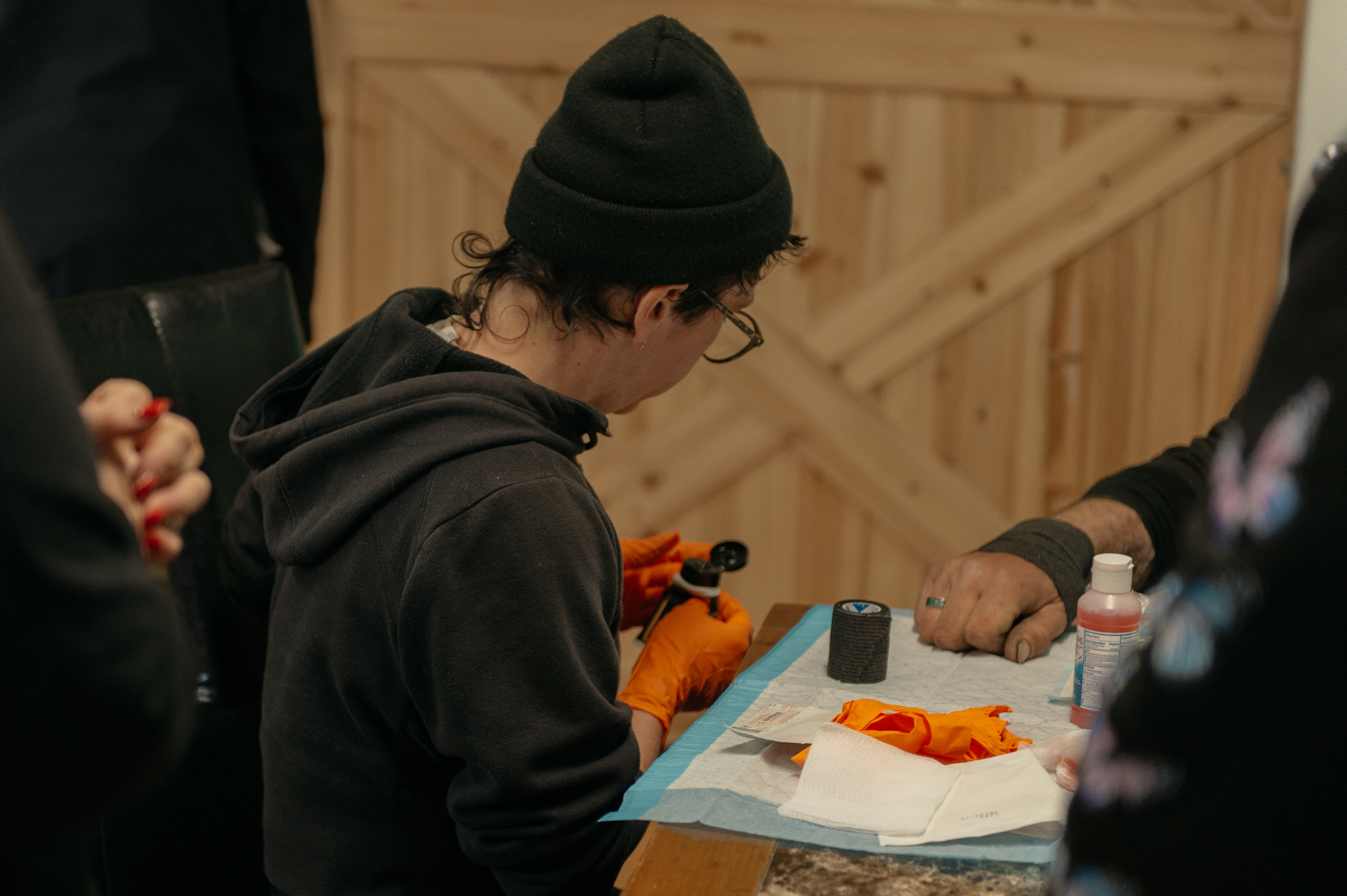
He’d like to see family members, trusted neighbors, and others with firm connections in the community trained to be first responders and given the necessary resources. Such methods worked after Hurricane Helene; the challenge is institutionalizing and funding these programs, which are just as important as access to food, water, and shelter when disaster strikes, at the state and federal level. “People will go through withdrawal from medication and fentanyl before they’ll go through withdrawal from food,” he said.
Jesse Barber / Grist
He also wants states to maintain emergency reserves of medications and safe-use supplies, and to provide basic first aid and medical resources. Ideally, he’d like to see trained staff, volunteer organizations, and federal emergency response teams prepared to distribute these resources.
Shukla sees this as increasingly urgent. Opioid settlement funds — more than $57 billion that drugmakers, distributors, and pharmacy chains paid to all 50 states for their role in the overdose crisis — are abundant now, but annual disbursements will decrease each year and expire in 2038. Federal support for substance use services has fluctuated under the Trump administration. After the Substance Abuse and Mental Health Services Administration saw as much as $1.9 billion in grants cut and later reinstated, the agency faced a wave of layoffs and resignations; the 2027 federal budget proposes further consolidation and reductions.
“We can’t predict what’s going to happen,” he said, “but we can make sure that if stuff were to happen, we have various levels of resilience.”
For people who work in harm reduction, the long tail of Helene has been hard to watch. The people they rushed to serve, and who benefited from the sudden abundance of free health care, have begun to fall back into isolation.
“When all of that finished, it was like, not only did they go back to being uncomfortable, but it was even harder because they’d kind of gotten used to having needs met as we all should, you know?” Treadaway said.
As quickly as a health care safety net unfurled, it began to fray.
“There are now folks where their living situations with like five to seven people are falling apart, and they’re just ending up with nothing,” Smith said. “Now they have to pick up the pieces and figure it out.”
The donations have slowed, but the need hasn’t. Last winter, the Holler crew and other nonprofits delivered propane and water alongside harm reduction supplies. A year and a half after the storm, they are still meeting basic needs for survivors even as they brace for the next disaster. They can only hope they’re ready when it comes.
This coverage is made possible through a partnership between Grist and BPR, a public radio station serving western North Carolina.
This story was originally published by Grist with the headline Helene frayed the safety net for people who use drugs. This community wove it back together. on May 4, 2026.
How Hood River’s pool and parks measures got to the ballot
“Reckless” lost hikers may soon be fined
Hood River city council aims to do more on impacts of immigration enforcement
Timberland Regional Library budget woes hits staffing, Hawks Prairie branch hours
Timberland Regional Library’s (TRL) ongoing budget issues is going to cost dozens of employees their jobs systemwide and is now pushing proposed hour …