
Trump halts historic orphaned well-plugging program
The billions of dollars approved by Congress to clean up abandoned oil and gas wells have been frozen as part of President Donald Trump’s sweeping cuts to government spending, creating concerns that the cleanup will be halted just as it’s getting started.
President Trump’s barrage of executive orders included a January directive called “Unleashing American Energy,” which, among other provisions, ordered that federal agencies stop distributing money appropriated by President Joe Biden’s Inflation Reduction Act (IRA) and the Infrastructure Investment and Jobs Act (IIJA).
The Trump administration titled this section of the order “Terminating the Green New Deal.” But in freezing this congressionally approved spending, the administration halted a program that paid for plugging and reclaiming so-called “orphaned” or abandoned oil and gas wells. The order stated that agencies should “immediately pause the disbursement of funds” from those two Biden laws. It set a 90-day deadline, upcoming in April, for agencies to review their spending programs and make sure that they align with the Trump administration’s goal of increasing U.S. energy production.
The orphaned well program, which was modeled on a North Dakota initiative, had been widely used by oil states, including several in the West.
The program — which set aside $4.7 billion, a historically large sum, for plugging wells — was distributed to states via grants from the Department of the Interior. In January, days before Trump took office, New Mexico announced that it would be receiving $5.5 million to clean up abandoned wells in the state. California also received a $9 million grant.

California, Colorado, Montana and New Mexico had each plugged over 100 orphaned wells using the Biden funds, according to an Interior Department report in 2024. Wyoming alone plugged 1,021 wells in just one year using federal grants.
As of last fall, the U.S. government had released over half a billion dollars in grants. Wells have been plugged in the people’s front yards, in national park areas and deep in the remote Alaskan wilderness. More than $3 billion are still left to be distributed, but previously available information about the grants appears to have been removed from the Interior Department’s website.
In response to questions from High Country News, an Interior Department spokesperson said that the grant program is “under review.”
“President Trump’s decisive actions are necessary steps to eliminate bureaucratic waste and refocus our agency on its core mission: serving the American people and managing our nation’s natural resources with integrity and efficiency,” the spokesperson said in a statement. “Orphaned wells negatively impact current and future oil and gas development activities and pose significant risk to national energy security and public safety.”
In addition to supporting jobs that address oil patch pollution, these federal dollars are used on wells that lack any owner to pay for reclamation. Left unplugged, such orphaned oil and gas wells leak huge amounts of methane into the atmosphere and can contaminate local water sources with salty water and benzene.
Now the future of that work is uncertain, in legal limbo alongside many of the Trump administration’s cost-cutting policies. The funding in question had already been appropriated by Congress, making it unclear that the Trump administration can indefinitely cancel it.
On March 20, more than 30 House Democrats sent a letter to Interior Secretary Doug Burgum, asking him to clear up the lingering confusion surrounding orphaned well funding and restart the grant program.
The funding “protects our communities, cleans up our environment, and builds our economy.”
“We have already begun to hear from IIJA funding recipients impacted by this pause who now face an uncertain future after DOI issued a stop work order on their orphaned well remediation projects,” the letter states.
The letter goes on to say that the Interior Department has issued no guidance on the funds’ status.
“We urge you to resume distribution of this Congressionally directed funding immediately,” the letter stated. “It protects our communities, cleans up our environment, and builds our economy.”
ORPHANED WELLS represent the final stage in what ProPublica recently described as the oil industry’s “ playbook”: When oil wells are no longer productive, large companies sell them off to smaller companies and thereby shed their obligation to plug those wells.
The increasingly marginal wells change hands, eventually landing with operators who lack the financial means to plug them. And when these companies go bankrupt, the wells become orphaned, meaning that the plugging costs then fall on American taxpayers.
The Biden administration’s infrastructure law was the first significant federal attempt to address the growing problem of orphaned wells across the United States, although the funding it provided paled in comparison to the scale of the problem.
The Interior Department estimates that there are about 157,000 documented orphaned oil and gas wells nationwide. This figure is likely a dramatic undercount: The Environmental Protection Agency stated in an April 2021 report that there could be as many as 3.4 million abandoned wells nationally.
“Undocumented orphaned wells may emit nearly 63 million grams of methane per hour into the atmosphere,” according to a November 2024 report, “the equivalent of over 3.6 million gasoline-powered passenger cars driven per year.”
Many state regulators are aware that their financial requirements for oil and gas operators are are aware of this pattern and struggle to prevent it.
Several state oil regulators stated this explicitly in a 2024 survey conducted by the Interstate Oil and Gas Compact Commission (IOGCC), a quasi-governmental body that represents dozens of oil states. The documents were obtained via a records request by Fieldnotes, an industry watchdog, and shared with High Country News.
“Yes, this is the common life of a well,” regulators from Louisiana said, referring to the pattern of marginal wells being passed along to smaller companies.
Utah regulators agreed: “It is definitely a problem when wells are transferred to ‘poor’ operators.”

The plugging program was supposed to address these dysfunctional state programs, primarily by providing money. The Interior Department released its first round of grants in 2023, offering up $658 million to 26 states, including most of the oil states in the West.
The subsequent grants were intended to actually push states to fix their well-plugging programs and require that operators submit more money up front — enough to ensure that the industry and not the public ends up paying for the cost of plugging.
Known as regulatory improvement grants, these pools of funding required that states demonstrate higher financial assurance standards, increase scrutiny on well transfers, improve their plugging standards or show other reforms to their orphaned well regulatory regimes.
These grants essentially became the sole tool for the federal government to incentivize tougher state regulations. But the attempt immediately ran into headwinds: Oil states pushed back on these conditions. Some of this occurred via the IOGCC, which collaborated with the federal government on the rollout of the infrastructure law. This included initiatives to reduce orphaned well numbers, program implementation and data collection. Public documents show the inter-state commission lobbied to keep the federal guidelines as weak as possible.
“Undocumented orphaned wells may emit nearly 63 million grams of methane per hour into the atmosphere.”
In a meeting of the Texas Railroad Commission in May 2022, Commissioner Wayne Christian – also an appointee to the IOGCC – said that he was working to remove the requirements from the federal grants.
“I’m part of the negotiation with IOGCC on the dollars coming down,” Christian said. “The Interior Department kind of have slowed things down, because all of a sudden, surprise, surprise, they decided they wanted to tell us how to do our work. And so we’re kind of fighting back on that.”
Regulatory improvement grants would have made available an additional $40 million per state. Now the future of those grants and the improvement incentives are in jeopardy, though some groups are challenging the legality of Trump’s decision to freeze funds that had already been appropriated by Congress and passed into law.
Several environmental groups and many Democratic states have filed lawsuits against the Trump administration, seeking to release the unspent funds from the Infrastructure and Inflation Reduction acts, the Biden administration’s landmark spending bills.
“The Trump Administration has continued to block funds needed for our domestic energy security, transportation, and infrastructure provided under the IRA and IIJA,” said California Attorney General Rob Bonta in a statement in February, after filing an injunction alongside 23 Democratic attorney generals, attempting to halt the administration’s funding cuts.
Bonta’s statement noted that the administration was blocking funding that “creates well-paying jobs while simultaneously reducing harmful pollution.”
The post Trump halts historic orphaned well-plugging program appeared first on High Country News.
Trump administration moves to shutter mine safety offices in coal country
Libby Lindsay spent 21 years working underground as a miner for Bethlehem Steel in West Virginia. She saw many safety improvements over the years, and always felt grateful that she could call the local Mine Safety and Health Administration office whenever she wondered whether a rule was being followed. She joined the safety committees launched by the local chapter of the United Mine Workers, which collaborated with the agency to watchdog coal companies. She understood the price that had been paid for the regulations it enforced. “Every law was written in blood,” she said. “It’s there because somebody was injured or killed.”
Still, she and others who work the nation’s mines worry President Trump is about to limit the agency’s local reach. As his administration targets federal buildings for closure and sale, 35 of its offices are on the list. Fifteen are in Appalachian coalfields, with seven in eastern Kentucky alone and the others concentrated in southern West Virginia and southeastern Pennsylvania. Of the remaining 20 offices, many are in the West, in remote corners of Wyoming, Nevada, and Colorado. Miners’ advocates worry these closures could reduce the capacity of an agency that’s vastly improved mining safety over the past 50 years or so and could play a vital role as the Trump administration promotes fossil fuels like coal, and as decarbonization efforts increase the need for lithium and other metals.
Since its inception in 1977, the agency has operated under the auspices of the Department of Labor to reduce the risks of what has always been one of the world’s most dangerous jobs. Before Congress created the agency, known as MSHA, hundreds of miners died each year, in explosions, tunnel collapses, and equipment malfunctions. (The number was far higher through the 1940s, often reaching into the thousands.) Last year, 31 people died in mining accidents, according to the agency’s data. Even after accounting for coal’s steady decline, that tally, while still tragic, reflects major strides in safety.
“Coal mining is a tough business. It’s a very competitive business. There’s always a temptation to compete on safety, to cut corners on safety, to make that your competitive advantage as a mine operator,” Christopher Mark, a government mine safety specialist who has spent decades making the job safer, told Grist. “And it’s our job to make sure that nobody can do that.”
Trump’s pick to lead MSHA, Wayne Palmer, who is awaiting confirmation, previously was vice president of the Essential Minerals Association, a trade association representing extraction companies. The Department of Labor declined to comment on the proposed lease terminations. A representative of the U.S. General Services Administration, which manages federal offices, told Grist that any locations being considered for closure have been made aware of that, and some lease terminations may be rescinded or not issued at all.
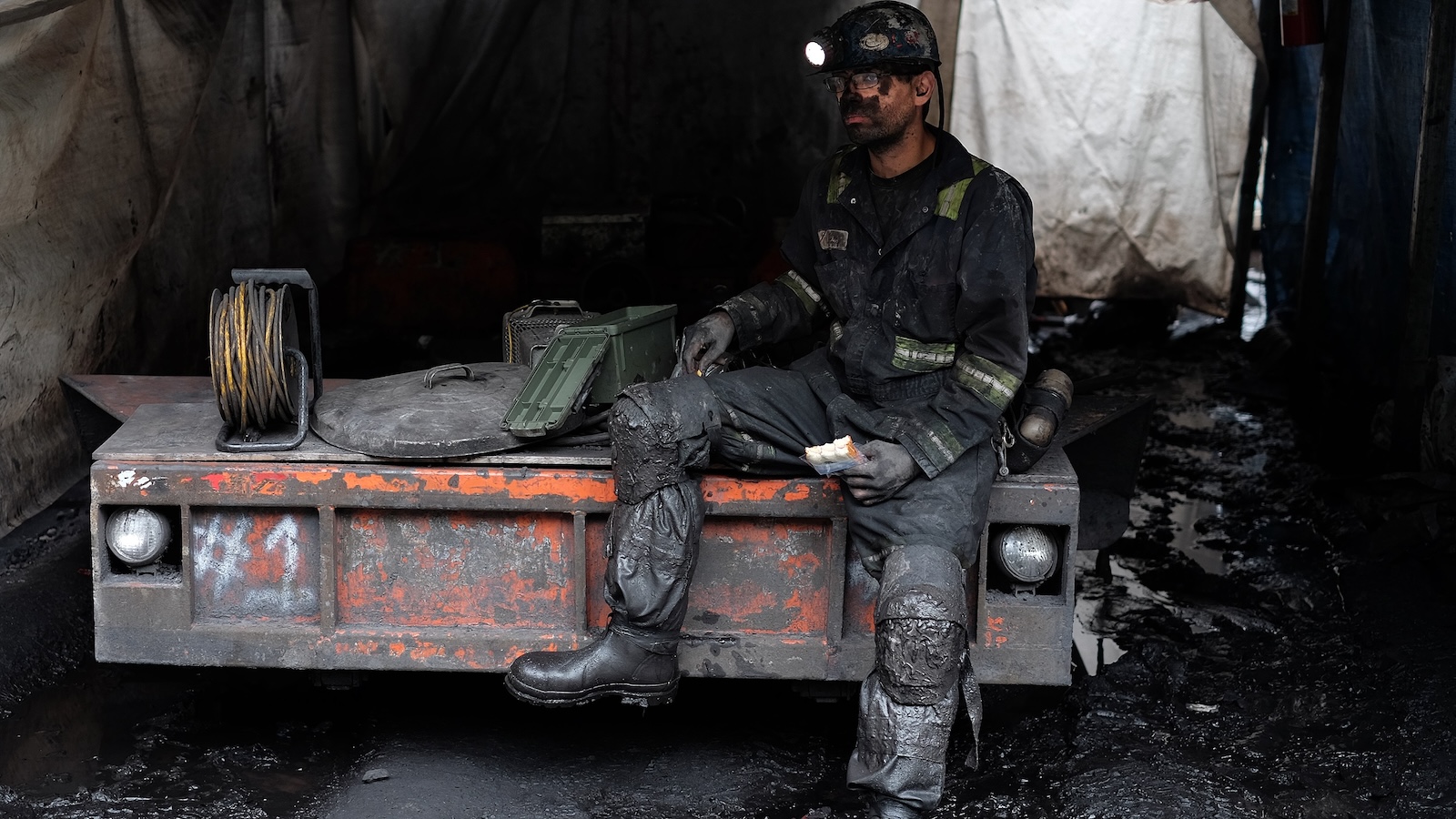
Many of the country’s remaining underground coal mines – the most dangerous kind – are located in Appalachia. MSHA has historically placed its field offices in mining communities. Although the number of coal mines has declined by more than half since 2008, tens of thousands of miners still work the coalfields. Many of them still venture underground.
The dwindling number of fatalities comes even as the MSHA has been plagued by continued staffing and funding shortfalls, with the federal Office of the Inspector General repeatedly admonishing the agency for falling below its own annual inspection targets. It also has recommended more frequent sampling to ensure mine operators protect workers from toxic coal and silica dust. After decades of work, federal regulators finally tightened silica exposure rules, but miners and their advocates worry too little staffing and too few inspections could hamper enforcement.
“There are going to be fewer inspections, which means that operators that are not following the rules are going to get away with not following the rules for longer than they would have,” said Chelsea Barnes, the director of government affairs and strategy at environmental justice nonprofit Appalachian Voices. The organization has worked with union members and advocates for those with black lung disease to lobby for stricter silica dust exposure limits.
Last month, the United Mine Workers’ Association denounced the proposed office closures. As demand for coal continues to decline, it worries that companies could pinch pennies to maximize profits — or avoid bankruptcy. ”Companies are completely dependent upon the price of coal,” said Phil Smith, executive assistant to union president Cecil Roberts. ”[If] it’s bad enough, they think, ‘Well, we can cut a corner here. We can pick a penny there.’”
The Biden administration made an effort to staff the agency. In the waning days of Biden’s term, Chris Williamson, who led the agency at the time, told Grist he was “very proud of rebuilding our team” because “you can’t go out and enforce the silica standard or enforce other things if you don’t have the people in place to do it.” The union worries that the Trump administration, which has pursued sweeping layoffs throughout the government, will target MSHA, where many of the Biden hires remain probationary employees. Despite the previous administration’s attempts to bolster the agency, it still missed inspections due to understaffing.
Anyone who isn’t terminated will have to relocate to larger offices if Trump shutters local outposts, placing them further from the mines they keep tabs on. In addition to inspecting underground mines at least quarterly and surface mines biannually, inspectors make more frequent checks of operations where toxic gases are present. They also respond to complaints. Work now done by people in the offices throughout eastern Kentucky likely would be consolidated in Lexington, Kentucky, or Wise County, Virginia, which are 200 miles apart.

Andrew Lichtenstein / Corbis via Getty Images
Field offices have been consolidated before, and mining experts acknowledged there may be a time and a place for such things, but it’s highly unusual to close so many without due process. In early March, the House Committee on Education and Workforce submitted a letter to Vince Micone, the acting secretary of labor, requesting documents and information on the closures and expressing concern that as many as 90 mine inspection job offers may have been rescinded. Their letter specifically referred to the agency’s history of understaffing that led to catastrophes like the Upper Big Branch mine explosion that killed 29 people in 2010, the nation’s worst mining accident in four decades.
“One of the lessons of the Upper Big Branch Mine disaster, according to MSHA’s own internal investigation, is that staffing disruptions at the managerial level resulted in MSHA’s inspectors failing to adequately address smaller-scale methane explosions in the months leading up the massive explosion that killed 29 miners fifteen years ago this April,” read the letter, which was signed by Democratic representatives Bobby Scott of Virginia and Ilhan Omar of Minnesota.
The impact of potential cuts stretches far beyond coal, into the mines that will extract the lithium and other metals needed for clean energy and other industries. As of last year, the nation employed almost 256,000 metal and nonmetal miners who pull copper, zinc, and other things from the earth. “It’s an agency that matters, regardless of how we’re producing our energy,” said Chelsea Barnes of Appalachian Voices.
After spending so much time in the mines, Lindsay is concerned by the direction the Trump administration is heading, even as lawmakers in states like West Virginia and Kentucky have in recent years attempted to roll back regulations. “That’s going to be the future of MSHA,” she said. “They’re going to be in name only. Miners are going to die. And nobody but their families are going to care.”
This story was originally published by Grist with the headline Trump administration moves to shutter mine safety offices in coal country on Mar 25, 2025.
Immigrants on the line
This article was produced in collaboration with Mother Jones. It may not be reproduced without express permission from FERN. If you are interested in republishing or reposting this article, please contact info@thefern.org.
In early December 2023, through a scrim of swirling flurries, Mackenson Remy steered his minivan past an open gate in the security fence surrounding a gray concrete factory along Highway 85, on the northeastern edge of Greeley, Colorado. Remy was still relatively new to the state, and he’d never been to Greeley before. He didn’t really know anything about the plant either, only the three letters he’d been told to look for—JBS—and what he’d heard: that they had jobs. Lots of jobs.
Remy is originally from Haiti. He’s in his 30s with braided hair and a thin beard. He has a wary way about him but also a restless hustle. About 10 years ago, he moved from Port-au-Prince to Boston, and for a while that was all he knew of the States. But when his wife, who is in the military, was stationed in Colorado Springs in early 2023, he started working at a Marriott there, driving shuttles of pilots to Denver International Airport. Despite constantly retreading the same ground, the view along the eastern front of the Rocky Mountains, with Pikes Peak soaring in the distance, never failed to impress him.
Listen to the audio version at Reveal
Remy had a TikTok channel, so he started shooting videos with narration in Haitian Creole and sharing them with his few dozen followers back home and those recently arrived in the United States. As Haiti has unraveled over the last few years, hundreds of thousands of migrants have fled the widespread violence and landed in the US in search of a better life. “I just started to show them how Colorado looks,” Remy said later. “ Couple people, they told me, ‘You’re always talking about Colorado is nice, it’s beautiful. How about the jobs over there?’” For those Haitians with temporary visas, having full-time work could help their case to stay.
So Remy, who has a green card, figured he’d ask around. He was always driving by big businesses—warehouses, factories, construction companies—so why not drop in and see if they had any openings? One woman told him her company wasn’t hiring, but she knew a place where they were always looking for new workers: JBS. The company is the world’s largest producer of meat, especially beef. If you’ve recently eaten a burger at McDonald’s—or anywhere, really—there’s a good chance the meat came from JBS.
Remy looked up the address of the company’s plant in Greeley, about two hours from Colorado Springs. It was starting to snow, but he set out anyway. After navigating the icy highway and a long line of cattle trailers idling on the shoulder waiting to be admitted to unload their livestock, Remy inadvertently entered through the facility’s exit. Meatpacking plants usually have security tighter than Fort Knox—it’s illegal in several states, but not Colorado, to photograph or shoot videos near their property—but there Remy was, phone out and already recording, as he circled the parking lot. He looked for anyone he could ask about available jobs. Finally, a security guard stopped him and provided the name and phone number for an HR employee named Edmond Ebah.
Ebah, who had started at the plant after migrating to the United States from Benin in 2017, told Remy that JBS had about 60 positions available slaughtering, butchering, and packaging the meat. Yes, it was hard work, he emphasized. (According to data from the Occupational Safety and Health Administration, jobs at meatpacking and poultry companies are consistently among the country’s most dangerous.) But Remy’s Haitian followers could make good money. Best of all: It was a sure thing. If they came to Colorado, he would find them a job.
So Remy went home and cut together a montage of his footage from inside JBS and around Greeley and recorded a voiceover with the information from Ebah. This isn’t a job for lazy people, he says in Creole. But you don’t need to know English. And, if they came, Remy told his followers, he knew places they could stay. “Those apartment is pretty close from the job,” he told me later, translating the voiceover. So if you’re interested? “You can text me, tell me when you want to come.” He posted the video that night and went to bed.
The next morning, he checked TikTok. Most of his videos only got a few dozen views, but this one had been shared by a Creole-speaking influencer who often went by the handle JeanJean Biden—and it had gone viral. It was already at 35,000. Remy’s phone started blowing up, flooded with direct messages from people who wanted to know more. But Ebah had told him that they only had several dozen positions, so Remy texted him right away. Ebah seemed unconcerned. “100 200 people,” he texted back. “Have them just book theirs flights tickets to Colorado, you and I will take care of the rest…”
Remy told me he was still worried. Where would people live?
“Tell everyone just to come,” Ebah replied. “Don’t worry anymore about where there are going to live, trusted me.”
[I]n February, the Trump administration announced that it would rescind the temporary protected status of more than 200,000 Haitians who had entered the United States legally during Joe Biden’s presidency.
Ebah and his supervisors at JBS came up with a plan. The company struck a deal with the Rainbow Motel, a tiny motor lodge less than a mile down the highway from the plant, to house new Haitian workers recruited by Remy’s TikTok.
But as these workers started to show up, it became clear that the job proposed in the videos was even harder than advertised. A local union representing workers at JBS, in complaints filed with multiple government agencies, would describe conditions at the motel as “squalor.” And inside JBS, the complaint says, this new crop of Haitian workers was asked to work at “dangerously unsafe” speeds. This past September, the union publicly accused JBS of abusing immigrant workers and human trafficking. (A JBS spokesperson told me that the company takes the safety and welfare of its employees seriously and that it follows all laws and regulations. The spokesperson also said that no substantiated evidence was provided that tied Ebah or company leadership to the claims outlined by the union.)
Since Donald Trump was elected to a second presidential term, things have only gotten worse. In January, Trump fired enough members of the boards of federal worker protection agencies to temporarily leave those bodies without a working quorum, effectively killing any investigations. Then, in February, the Trump administration announced that it would rescind the temporary protected status of more than 200,000 Haitians who had entered the United States legally during Joe Biden’s presidency. Trump reportedly intends to establish detention camps on military bases, including one in Colorado, to hold migrants while they are processed for deportation. Against this backdrop, the story of the workers in Greeley takes on new urgency and raises pressing questions. What does this country owe to the people it has admitted on humanitarian grounds? And what will we do without the workers who produce the lion’s share of our food?
Twenty years ago, at least one-quarter of all meatpacking workers were undocumented immigrants, mostly from Mexico. That changed on a single day. On December 12, 2006, Immigration and Customs Enforcement simultaneously raided six Swift & Company beef plants spread out across the country—in places like Grand Island, Nebraska; Cactus, Texas; and Greeley, Colorado. Federal agents and local law enforcement, many dressed in riot gear, entered and arrested 1,300 undocumented workers on charges of immigration violations and identity theft. It was the largest workplace immigration raid in American history. At the Greeley plant alone, 252 workers were arrested.
Swift needed to replenish its workforce fast. A Senate bill proposed expanding guest worker visas, but as a company spokesperson at the time said, “Our needs are year-round.” But few American workers were interested. Within about a month, the company reported its loss at $30 million. News reports at the time detailed the company’s attempts to start recruiting refugees who had migrated to the United States from places like Somalia and Myanmar. “Our survival was at stake,” a company executive said. But it wasn’t enough. In July 2007, Brazilian-owned JBS acquired Swift in a $1.5 billion all-cash deal.
With the purchase, JBS became the largest beef processor in the world. Months later, the company announced it would hire enough new workers to staff a second shift in Greeley, including some 400 Somali refugees. And soon, the rest of the industry followed JBS’s lead. Today, in many packinghouses, refugees account for as much as a third of the workforce. But most don’t last long on the line. The turnover rate is somewhere between 30 and 40 percent each year—one of the highest of any US industry. The reason is simple: The work is not only relentless, but often grueling.
These jobs are essentially like working on a dis-assembly line, a standard factory run in reverse. The live cow walks off the back of a cattle trailer and is slaughtered, then gets broken down into steaks and roasts and ribs and hamburger meat. When parts of a carcass slide by on the chain conveyor system, workers sink large meat hooks into those cuts—heavy loins or shanks or slabs of ribs—and then carve with a knife held in their other hand.
The pace of the chain is so fast—around 300 cattle per hour—that many can barely keep up. Workers at JBS and their union say the speed of the line makes serious injuries more commonplace. Complaints filed with OSHA detail ghastly injuries: a worker who was killed when he was hit in the head by falling machinery and knocked into a vat of chemicals; a worker whose arm had to be amputated after it was pulled into the sprockets of a conveyor belt. But more often, the injuries are from repetitive stress. Workers clutch the meat hooks for so many hours in such cold temperatures inside the refrigerated plant that they end up with carpal tunnel syndrome or trigger fingers or ulnar nerve palsy, known as claw hand.
During the Covid-19 pandemic, those jobs became increasingly deadly. Early in the outbreak, after packing plants were forced to close, Trump ordered them to reopen. Before JBS even had Covid safety protocols in place, it brought workers back to the line. In the Greeley plant alone, six workers died and hundreds were sickened when the company refused to heed union demands for a temporary shutdown. A Senate investigation—prompted in part by reporting I did with Esther Honig for Mother Jones and the Food & Environment Reporting Network—led OSHA to fine JBS $15,000 for failing to protect employees from exposure to Covid, a drop in the bucket compared to the meatpacking giant’s record revenue of $51 billion that year.
In September 2021, after months of negotiations, Kim Cordova, president of the United Food and Commercial Workers Local 7 in Denver, finally reached a new collective bargaining agreement for workers at the Greeley plant. Cordova told me she pressed Tim Schellpeper, CEO of JBS USA, for improved safety standards, higher wages, more paid sick leave, and better health care benefits. Schellpeper finally gave in to the union’s demands—but in some ways the victory was short-lived. After JBS was found to have been using a third-party cleaning company that had been employing children, the Brazilian owners ousted Schellpeper and installed Wesley Batista Jr.—the son of one of the owners—as the new American CEO in May 2023. (JBS characterized these moves as a “reorganization”; the company settled a federal investigation into child labor charges for $4 million in January.)
Batista would prove less amenable to the union’s demands. Cattle prices had begun to climb as JBS reported a shortage in supply. Batista instituted a new work plan at the Greeley plant that Cordova told me is aimed at getting some of those profits back: the white bone program. “What the company is trying to do,” Cordova explained, “is get as much of the meat off a bone, as much yield off the animal, as possible. It’s literally a white bone.” She said this change meant more cutting. More repetition. More exertion. And all at a dizzying pace—“line speeds we had never seen before.”
Workers started quitting. And Cordova said the culture had shifted; union members weren’t willing to work under hazardous conditions anymore—they mobilized, staged walk-offs, or left for good. The union said JBS responded by looking for a more vulnerable and compliant workforce. “JBS needed a new group of workers to come in,” Cordova said, “so that they had more control over them, especially to work at this high speed.”
This was all in the air when Edmond Ebah met Mackenson Remy in December 2023. After Ebah began working on the slaughter side of the operation in 2017, he quickly rose to become an HR supervisor—in part because he speaks seven languages. But he was especially focused on recruiting new workers from his native Benin. In 2020, with JBS struggling to keep its lines running amid the pandemic, Ebah helped hire at least 30 new recruits from his home country, collecting newly created referral bonuses worth up to $1,500 per employee. He bought a van and started an LLC to carry them to and from the plant.
JBS presented Ebah’s story as a manifestation of the American Dream. He was building a private business on the side by providing jobs to his countrymen and a stable workforce for his employer. A banner with his picture above the word “humility” hung in the plant’s main hallway. The company posted to its LinkedIn page congratulating Ebah when he became a US citizen, and it touted his good work in recruiting new employees by producing a two-minute promo video shared on its website and social media channels. The camera work is all soft focus and slow motion. Ebah narrates his experience at JBS over a bed of lush strings. “I’m happy to do what I’m doing,” he says. “I can help people come to work for JBS.”
But after Remy’s TikTok video unexpectedly went viral, people started pouring in—more than Ebah could house at the Rainbow Motel. A hundred. Two hundred. And still, people kept coming.
Auguste calls his journey from Haiti to the United States “an epic experience.” Violent gangs now control about 90 percent of Port-au-Prince. Fearing for his safety, Auguste (not his real name) flew to Brazil in March 2023. From there, he set off north, traveling across 10 countries, walking and hitching rides for thousands of miles. The journey included hiking across the Darién Gap—a 60-mile expanse of thick rainforest at the Colombia–Panama border that separates South America from North America. He slept on the jungle floor, woken in the night by the sounds of wild animals. He was always on guard because people warned him of armed thieves who would rob people—or worse. And then, of course, there were the dead. He saw bodies of people along the way who would never finish the journey. In lakes. On the shores of rivers. By the roadside.
Yet Auguste was never afraid. He believed in himself. He had faith that if others had made this journey, then he could make it, too. And he did. It took a month, but he finally reached Mexico, where he immediately used the online app CBP One to apply to enter the US legally via temporary protected status—TPS for short.
The Biden administration made extensive use of TPS. When Biden first took office, he used this executive authority to protect Afghans after the Taliban retook Kabul. Then he extended the policy to Ukrainians after Russia invaded. Between 2021 and 2023, Biden took a more controversial stance—expanding TPS to include people fleeing dictatorships and gang violence in Venezuela, Nicaragua, and Haiti. Today, Haitians make up one of the largest groups with temporary protected status.
Biden’s decision allowed Auguste to legally live and work in the United States—without a path to citizenship, but also without the threat of deportation. Auguste entered the country in May 2023 and made his way to Baltimore, where he stayed with family. Until his work visa was approved, he was unable to make money and would often go hungry. But, he told me, “It’s easier to live without food than it is without hope.”
He’d been in the US for six months when a friend showed him Remy’s TikTok. Auguste was skeptical at first, so he let his friend go ahead to Greeley. When the friend reported back that the job was legit, Auguste booked his flight to Colorado. He says he paid Remy $120 for a ride from the Denver airport to the Rainbow Motel. That’s when he realized the hardships he’d endured to make it to the US weren’t exactly behind him.
All the workers packed into the motel’s tiny rooms were in a strange place, with little to no money. There was also nowhere to make food. Auguste says that at one point, they got a hot plate so they could cook. But when the motel managers found out, they stopped them. Those managers later reported to JBS that it appeared workers had been using the bathtub as a cutting board. Auguste explained that the motel was off a busy highway with little around for miles. It wasn’t easy to walk anywhere to eat. Plus, it was the dead of winter and freezing outside. They had no money to order a ride, and if they did, what would they tell the driver? Many didn’t speak English. They felt stranded.
And then, there was the work. Auguste didn’t want to say where, exactly, he is on the line, for fear he could be identified. But he is on the “cold side,” the refrigerated side of the plant where beef is trimmed, cut, and packaged. He works with a meat hook and knife. He told me he was shocked by the speed and strain of the job. He’s not alone. I spoke to four current and former line workers from Haiti who said the pace was fast and kept getting faster as more Haitians were hired. The Denver Post reported that one worker filed a formal complaint with the Equal Employment Opportunity Commission, alleging that JBS intentionally discriminates against Haitian workers by subjecting them to unsafe and unequal working conditions.
According to the complaint, the speed of the chain on the A shift is usually between 250 and 300 head of cattle per hour. But as Haitians arrived and were put on the B shift, which runs from about 2 to 11 p.m., the chain speed at night allegedly pushed past 400 head per hour, to as much as 430. “We have people that have been working at the plant for 10, 15 years,” one union representative told me. “They have never seen any chain speed going over 390.”
Cordova, the Local 7 president, said complaints started pouring into the union offices. “New hires are now largely comprised of Haitian refugees,” an official complaint filed by the local with the Department of Labor alleges. The complaint claims that JBS “increased chain speed to dangerously unsafe levels when these workers occupied the line.”
The alleged exploitation didn’t stop there, according to the union complaint. The union suspected that applications for this new group of workers were being submitted with one mailing address for everyone—Ebah’s home address. “The hiring manager and connected individuals likely have control over incoming mail to these workers,” the union alleges. Letters were withheld. And Haitian workers were forced to sign documents in English that waived their rights after on-the-job injuries, “with workers not understanding what they were being asked to sign.” Many, Cordova said, felt trapped.
Meanwhile, Auguste and his fellow Haitians would go back to the Rainbow Motel with little to no food, a line for the bathroom, and only the floor to sleep on. One woman told me that the conditions were so bad there that she agreed to be “the girlfriend” of a more established line worker, just to have someplace safe to stay and something to eat. At one point, there were almost 50 Haitian workers staying in only nine rooms.
“I feel like I was being treated as a slave.”
Auguste
Auguste told me he can’t shake the humiliation. Every day at work, he walked through the slaughter side of the plant, where each cow has its own little holding pen, but he was expected to share a tiny space with five of his co-workers. He found himself thinking the cows had it better. “I feel like,” he said, “I was being treated as a slave.”
“I would not say I’m a victim of the process,” Tchelly Moise told me, “but I was a direct witness.” It’s hard to know whether the union would have even been aware of the dismal conditions at the Rainbow Motel if it weren’t for Moise, a Haitian line worker at JBS who had taught himself to speak nearly flawless English by watching YouTube videos and then working in a call center. Moise came to the US via a long journey from Nicaragua in 2023 after he was shot in the chest in a robbery and nearly died. Once he was allowed into the United States, he discovered his cousin had found a job working at JBS through a TikTok video.
Moise flew to Colorado and his cousin drove him to the Greeley plant for an interview, where his language skills quickly came into use. None of the other applicants spoke English, and the HR manager was struggling. Moise translated for 30 job interviews and was offered a job in the packing plant on the spot.
In the meantime, his cousin had started to pick up extra money—as a driver for Mackenson Remy, who was shuttling in recruits whom he’d connected with Ebah at JBS, taking them to work and driving them around town. Moise was along for one of the pickups at the Rainbow Motel. “You have eight people inside of that one little motel room with one bed, one bathroom, women and men at the same time?” he told me. “It was a very bad situation.” Moise said the motel finally got so packed that Ebah was forced to rent a house nearby. But it wasn’t much better.
There were around 40 people living inside a five-bedroom house, he said. “I’m saying people sleeping on the floor, on the blanket, people everywhere. And at some point, they didn’t have electricity in the house and it was winter, so you can imagine how bad the situation was.” Other workers, including Auguste (who lived at Ebah’s rental house for five months), confirmed that the electricity and water often went out.
Because Moise is fluent in English, some of the Haitian workers asked him to carry forward complaints to the union. Cordova soon told JBS that Ebah was charging workers for rides to work and putting his name on referral bonuses. JBS opened an investigation in December 2023 into Ebah’s activities, suspending him for several months during the process. Lawyers conducted more than a dozen interviews with employees.
But when the investigation was complete, Ebah was merely reprimanded, and he returned to JBS’s plant. Remy and Ebah continued their recruitment work. Cordova continued to press the company before finally reaching out to a reporter at the Wall Street Journal. In August 2024, JBS opened a second investigation.
The next month, the Journal published its story. Remy was featured throughout, alongside allegations of exploitation from the very Haitians he thought he was helping. Some workers alleged that Remy was working with JBS and getting paid $3,000 for every worker he brought to Greeley. He denies this. He says the company never paid him anything. (A JBS spokesperson said Remy never worked for the company and it notified local authorities and banned him from the premises.)
With these allegations made public, JBS was forced to respond. In an email to the Journal, JBS said it fired the two HR managers above Ebah and that Ebah was moved to a different facility in Greeley. The company said it also put in new training programs to teach employees about proper recruitment.
Still, the union kept demanding answers. “We have been dealing with what we believe is human trafficking and exploitation,” Cordova said, arguing that the workers were brought to Greeley under false pretenses. They were promised a good job and a place to stay but instead found unsafe work conditions and substandard housing.
JBS maintains that its leadership didn’t know what was happening at the Rainbow Motel, but I’ve seen the texts between Ebah and Remy. Ebah asked Remy who was being checked into the Rainbow Motel. Remy replied with five and six names to a room. After the Journal article came out, Ebah abruptly cut ties with Remy and hasn’t been in contact with him since.
The union hoped for a federal investigation into JBS. But that’s looking less and less likely in the current political climate. “While we were exposing this,” Cordova told me, “Trump, during his campaign, made up these crazy statements that Haitian workers were eating people’s pets—you know, their cats and dogs.” Now the Trump administration plans to evict them.
In the days after his inauguration, Trump issued a series of executive orders directing federal agencies to go after undocumented immigrants. Then in February, his administration started to go after legal immigrants, rescinding the temporary protected status of Venezuelans and then Haitians. If that policy remains in place, more than a million people will be forced to leave the country before August 3, including nearly all the Haitian workers who arrived at the JBS plant in Greeley because of Remy’s TikTok video.
When I spoke with Moise the day after TPS was revoked for Haitians, he was still in shock. “I can tell you honestly,” he said, “this is the first time I feel like this is really happening.” He told me that he kept thinking that Trump officials would look at the violence in Haiti—where more than 5,600 people were killed in 2024 alone—and conclude that they simply couldn’t send people back home. “Going back to Haiti is a death sentence, really,” Moise told me. “ We left the country, obviously, because it was very bad. You’re talking to some members at the plant, and they are telling you, ‘Man, my cousin just got killed today,’ or ‘My family members, they just burned down their house.’ So it’s getting worse every day.”
None of that seems to matter to this administration. The man in charge of Trump’s deportation plans—and his new deputy chief of staff for policy—is immigration hardliner Stephen Miller, who has said his goal is to arrest and deport as many immigrants as possible. He has vowed to use federal law enforcement, National Guard troops, and local police to carry out major sweeps of public spaces and raid workplaces. Those plans make little sense to Cordova. “This workforce is an immigrant workforce,” she told me. “The industry would collapse without these type of workers.”
Not to mention what this would mean for us, the consumers. In his campaign, Trump promised he would lower grocery prices. Instead, tariffs on Mexico and Canada threaten to send food prices soaring. Deporting the immigrant workforce that meatpackers depend on would halt processing at every stage of the supply chain, from feedlots to the packinghouse floor. This would drive up prices for Big Macs and Outback steaks, but also for chicken breasts and pork chops at grocery stores, for Hormel bacon and Campbell’s soup and Oscar Mayer hot dogs.
“I feel like us, the immigrants, we are a good part of the economy,” Moise told me. “Most of the jobs that we are doing, people who are born in this country are not actively looking to do those jobs.” This is why Moise said he’s confused. If mass deportations hurt not only JBS, but the economy as a whole, why do it? He’s left with only one answer. “ I think it’s just hatred against people with different skin color, because that’s the only logical thing that I can actually see.”
Given the animosity and the threat of deportation, you might expect that Moise would be making plans to flee to Canada or elsewhere, but for now anyway, he says he’s planning to stay put. After witnessing how badly new hires were being treated at JBS, he left his job there and now works for the union. He has retained an immigration lawyer and has a pending asylum application. But if Trump sets up deportation camps and fast-tracks hearings, as he has threatened to do, Moise doesn’t know what he’ll do.
Neither does Auguste. He still works at JBS. After about six months, he was able to save enough money to move into his own place, with his own bed and bathroom. But it all comes at a cost. The white bone program is still going on at JBS in Greeley. And Auguste told me that he can no longer fully close his left hand—an injury he says is a result of gripping a meat hook for hours without breaks, of his work being too fast and too repetitive.
Despite everything, Auguste told me he’s still glad to be in the United States, because his life is stable now. He knows all the things Trump has threatened to do, but he’s trying to stay optimistic. Because he doesn’t believe Americans will really let mass deportations happen. After all, he said, “the USA is the mother of democracy.”
It’s hard to share Auguste’s hopeful outlook. Yes, it’s possible that federal courts might intervene, hearing lawsuits from Haitians as they already are in cases brought by Venezuelans. Or some governors might step in. Colorado Gov. Jared Polis has vowed to help companies “retain their employees who are doing work critical to our economy—whether in agriculture, construction, service, or industry.”
But this broad-sweeping government crackdown? It will be difficult to oppose. It’s what Americans voted for.
Moise said he fears most Haitians don’t understand this. “I don’t think they really see the threats that is coming,” he told me. “A lot of them, they feel secure, maybe because of TPS, because they know they already filed for asylum. So I don’t think they know the power that Trump is actually going to have.”
Moise said he feels like his life is in Trump’s hands now. His life and the lives of thousands of other JBS workers in Greeley—and at dozens of similar plants in similar towns across the middle of America. The nearly million people who were granted entrance to our country because they were in danger and they sought protection within our borders. They followed all the rules—filled out the paperwork, allowed their cheeks to be swabbed, their fingerprints to be taken. They risked everything to come here and were allowed to cross the border legally. They trusted the United States to grant them asylum and protect them.
Help us keep digging!
FERN is a nonprofit and relies on the generosity of our readers. Please consider making a donation to support our work.
Cancel monthly donations anytime.
GOP Cuts to Medicaid Could Threaten Rural Hospitals

Southwest Memorial Hospital in Cortez, Colorado, received more than 59,000 patient visits last year. That’s enough to treat everyone in Cortez and surrounding Montezuma County twice.
Staff call the small hospital a bedrock of both medical care and the local economy.
But warnings that the Republican-controlled federal government might cut Medicaid funding have community members worried about the facility’s future.
They are not alone. Nationally, health policy experts warn that any cuts to Medicaid are likely to cause more trouble for rural hospitals than urban ones. That’s due in part because rural residents are more likely to be enrolled in Medicaid
In Montezuma County, 36% of the population is enrolled in Medicaid, which is publicly supported medical insurance for lower-income Americans. Southwest Memorial Hospital, a nonprofit hospital, expects about $20.5 million to come from the Medicaid reimbursements in 2025. That’s nearly a quarter of their expected revenue for the year, according to CEO Joe Theine.
If that revenue is threatened, the healthcare system would have a hard time adjusting without affecting the services they can offer.
Theine said that the hospital is planning for growth in 2025. But if Medicaid is cut, the hospital would have to consider their level of services, the same way a family would have to revise its spending if it lost a big part of its income.
“If [you] had a 25% reduction in household income, you have to make some different decisions other than just around the edges,” Theine said.
Any such changes could affect the community’s level of health services and the local economy.
The hospital employs nearly 500 locals, including employees with young families that support Cortez’s public schools, Theine said. “The ripples of a hospital in a rural community are many beyond just the health and wellbeing of the people we serve directly,” he said.
Medicaid reimbursement is a crucial part of Southwest Memorial’s funding, despite reimbursing less at lower rates than private insurance.
“If a patient comes in and has Medicaid as a pay source, even though it may pay less than the average cost for that service, it still is contributing to paying for that fixed cost of having the emergency room open,” said Theine, “If that same patient no longer has insurance and is unable to pay, we still take care of them. But now there’s nothing coming in that’s contributing to keeping all of those services available.”
GOP Legislation Could Threaten Rural Healthcare Systems
A March 5 letter from the Congressional Budget Office to two Democratic representatives said that House Republicans won’t be able to meet their budget target of $1.5 trillion in cuts without slashing Medicaid and Medicare.
Speaker of the House Mike Johnson said Medicaid was safe under Republican lawmakers, but the math doesn’t add up with Trump’s determination to drop the national deficit by more than $1 trillion, according to Democrats.
“There have been proposals around reducing or eliminating that federal match for [Medicaid] expansion populations,” said Carrie Cochran-McClain, chief policy officer of the National Rural Health Association.
That match was part of the 2010 Affordable Care Act, which provides federal funds to states to expand eligibility for Medicaid to families that earn up to 38% above the federal poverty line. A later Supreme Court ruling made Medicaid expansion optional. Currently, all but 10 states have accepted federal funding and expanded Medicaid.
How Does Medicaid Reimbursement Work?
Every year, the federal government reimburses every state a percentage of their overall Medicaid costs under a formula called the Federal Medical Assistance Percentage, commonly referred to as FMAP. The federal reimbursement rate, or FMAP, varies by state based on that state’s median income, with the lowest federal reimbursement rates set at 50%.
In Colorado and California, for example, the federal government issues a reimbursement rate of 50% of total Medicaid costs. But in states that have expanded Medicaid under the ACA, the federal government also reimburses them for 90% of the Medicaid costs of the expansion population. Colorado, along with 40 other states (including the District of Columbia), have expanded Medicaid under the ACA legislation.
According to a 2023 report from the Medicaid and CHIP Payment and Access Commission (MACPAC), an organization that advises Congress on healthcare policy, hospitals in states that expanded Medicaid under the ACA don’t have as many uninsured patients as those that didn’t adopt expansion. Medicaid expansion can save hospitals money by increasing the share of its patients who are covered under some form of insurance.
An analysis of 600 research papers on Medicaid found that expansion led to drops in the uninsured population and economic improvements for both states and healthcare providers. In the fiscal year 2020, the cost of uninsured care represented 2.7% of the total operating expenses in states that expanded Medicaid, compared to 7.3% in states that haven’t expanded.
Medicaid expansion under the ACA also means states can spend less money on mental health and substance use treatments because federal matches help pay for them.
“States can come up with a number of different ways that they finance their Medicaid programs, and it varies across the board,” Cochran-McClain said. “They can use specific kinds of fees or taxes to help support the Medicaid program.”
Reducing or eliminating that federal match would leave states with the option to either reduce the number of Medicaid enrollees, or to come up with another method of funding care for the expansion population. But some states might not be able to make up the funds.
Rural Residents Are More Likely to Receive Medicaid
The loss of that federal money would be especially hard on rural health-care providers, Cochran-McLain said. That’s because a greater share of the rural population relies on Medicaid compared to urban and suburban areas.
Nonmetropolitan, or rural, counties have slightly higher Medicaid enrollment rates than metropolitan counties. Nationwide, 24% of residents in rural counties received Medicaid either alone or in combination with another health insurance method in 2023, compared to about 20% of the metropolitan population that year.
In Colorado, 23% of the nonmetropolitan population and 18% of the metropolitan population received Medicaid in 2023, according to a Daily Yonder analysis of Census data.
Of the 47 states that have nonmetropolitan counties, 43 of them have higher Medicaid enrollment rates in rural areas compared to metro ones.
“There is a really direct and strong relationship between Medicaid coverage levels and the financial viability of rural hospitals,” Cochran-McClain said. “In states that have expanded Medicaid, we saw an improved hospital performance, rural hospital performance and smaller rates of vulnerability for rural hospitals.”
Expanding Medicaid to include more low-income individuals saves states money by reducing the cost of providing care to the uninsured.
States that have not expanded Medicaid leave their rural healthcare systems more vulnerable to financial crises.
“Whether it’s Medicare or Medicaid, it’s a really important revenue source and source of coverage,” said Cochran-McClain.
How Does Medicaid Work in Colorado?
Colorado lawmakers voted to expand Medicaid coverage in 2009, ahead of implementation of ACA. The state simultaneously created a hospital provider fee program that funds the state’s portion of Medicaid. In Colorado, the federal match rate comes to 63.6%. The hospital provider fees pay the rest..
Many states use provider taxes or fees to fund Medicaid programs at the state level. Colorado taxes hospitals and healthcare providers 5.5% of revenue (the fee cannot exceed 6%) with a program called the Colorado Healthcare Affordability and Sustainability Enterprise (CHASE). That money is then matched by the federal government at 90%, as long as the population falls under the ACA expansion eligibility.
Colorado’s CHASE funds go to offsetting the difference between Medicaid reimbursement and the actual cost of a service. Medicaid typically reimburses a provider around 50% of cost, said Tom Rennell, senior vice president of financial policy and data analytics for Colorado Hospital Association.
Rennell said that CHASE “helps out our rural hospitals more than our urban hospitals. Our rural hospitals pay in less fees and our rural hospitals receive more of the distribution.”
Increasing taxes and fees from healthcare providers are one funding source that could help bridge the gap if federal funding is cut, said Rennell.
In Colorado, the state legislature has a constitutional requirement to have a balanced budget. That budget is currently facing a $1.2 billion deficit, some of which is caused by rising Medicaid costs. Colorado’s Taxpayer Bill of Rights (TABOR) restricts government spending to population growth plus inflation, meaning that any additional tax revenue over that formula is returned to taxpayers.
This means that even if the state has the revenue to balance the budget, it’s incredibly difficult to reallocate those funds to other programs, like Medicaid. Colorado voters have historically been very protective of TABOR refunds. Raising taxes to fund Medicaid is also not an option in Colorado under TABOR.
“The state’s already wrestling with a billion dollar shortfall in our upcoming year, and then add onto that potential additional shortfall from this federal funding. And those really start to add up to some real sizable impacts that the state is going to have to deal with,” said Rennell.
The Colorado Hospital Association estimated that federal Medicaid cuts could cost the state $27.2 billion over the next five years, depending on specific cuts.
Rennell sees the potential cuts affecting rural hospitals disproportionately. “This funding from the federal government is their lifeline. It is what keeps those rural hospitals operating. And if you cut the lifeline, they will have to make difficult choices.”
The post GOP Cuts to Medicaid Could Threaten Rural Hospitals appeared first on The Daily Yonder.
Mind Springs cites funding shortfall and surprise federal regulations leading to detox closure
EPA takes unprecedented step to remove uranium waste from the Navajo Nation
As a child, herding her grandmother’s sheep, Teracita Keyanna unknowingly wandered onto land contaminated with radioactive waste from three abandoned uranium mine and mill waste sites located near her home on the Navajo Nation.
Keyanna and other Diné citizens have been living with the consequences of uranium mining near the Red Water Pond Road community since the 1960s. But now, uranium waste rock that has sat for decades at a Superfund site will finally be moved to a landfill off tribal land.
“This is a seismic shift in policy for Indigenous communities,” said Eric Jantz, an attorney for the New Mexico Environmental Law Center.
On Jan. 5, in a first-of-its-kind move, the Environmental Protection Agency signed an action memo to transport 1 million cubic yards of low-grade radioactive waste from the Quivira Mining Co. Church Rock Mine to a disposal site at the Red Rock Regional Landfill. The Northwest New Mexico Regional Solid Waste Authority owns and operates the landfill, which is located about 6 miles east of Thoreau, New Mexico.
“I feel like our community has finally had a win,” Keyanna said. She is a member of the Red Water Pond Road Community Association, a grassroots organization made up of Diné families that have been advocating for the waste removal for almost two decades. “It’ll help the community heal.”
“I feel like our community has finally had a win.”
Companies extracted an estimated 30 million tons of uranium ore on or near the Navajo Nation from 1944 to 1986, largely to fuel the federal government’s enormous nuclear arsenal. When the mines were abandoned in the 1980s, the toxic waste remained. Today, there are hundreds of abandoned mines in plain sight on the Navajo Nation, contaminating the water, air and soil. Altogether, there are an estimated 15,000 uranium mines across the West — 1,200 of them on the Navajo Nation alone — with the majority located in the Four Corners region.
The impact of all this mining on Diné communities has been devastating. A 2008 study found uranium contamination in 29 water sources across the Navajo Nation, while other studies show that people living near waste sites face a high risk of kidney failure and various cancers.
At Quivira, the cleanup is set to begin in early 2025 and will continue for six to eight years, according to an EPA news release. The permitting process, which will provide opportunity for public comment, will be overseen by the New Mexico authority that manages the proposed waste site and is responsible for its long-term safety monitoring.

The EPA had considered multiple options for waste remediation. But for years, Red Water Pond Road advocates and other local organizations continually pushed it to simply remove the waste, a course of action that the EPA has never taken before, even though the Navajo Nation has repeatedly called for the federal government to move all uranium waste from Diné tribal land.
Throughout the Navajo Nation, said Jantz, “prior to this decision, EPA’s primary choice in terms of remediation of mine was to bury the piles under some dirt and plant some grass seeds on top, called cap in place.” But studies have shown that this approach is not effective at containing radioactive waste in the long term, he said.
The agency took a similar approach when addressing the other uranium waste in the Church Rock area. In 2013, the EPA and the Nuclear Regulatory Commission, which oversees uranium mine-waste cleanup, dumped 1 million cubic yards of waste from the Northeast Church Rock Mine — a different waste site, roughly 3 miles from the Quivira Mine — on top of existing tailings located half a mile from the Red Water Pond Road communities.
“Prior to this decision, EPA’s primary choice in terms of remediation of mine was to bury the piles under some dirt and plant some grass seeds on top, called cap in place.”
But the EPA plans to handle the Quivira Mine’s waste differently, placing it in geoengineered disposal cells with a groundwater leak protection system after it is moved off-site, an approach that Jantz called “state-of-the-art.”
The Quivira Mine cleanup is part of the 2014 Tronox settlement, which provided $5.15 billion to clean up contaminated sites across the United States. The settlement allocated $1 billion of those funds to clean up 50 uranium mines across the Navajo Nation.
There is a lot more to be done, said Susan Gordon, coordinator for the Multicultural Alliance for a Safe Environment, a grassroots organization led by uranium-impacted communities. Hundreds of abandoned mines pepper the Navajo Nation, and the EPA has not formulated a broader plan to clean up the majority of them. Funding is also an issue, she added.
What the EPA’s decision means for the future of uranium mine waste remediation is unclear. Under other circumstances, Jantz said that the decision would signal a sea change for the EPA’s policy of removing waste from the Navajo Nation. But the incoming Trump administration has not indicated its policy on hazardous waste disposal.
As Jantz put it, “All bets are off.”
The post EPA takes unprecedented step to remove uranium waste from the Navajo Nation appeared first on High Country News.
The Biden administration weighs in on Colorado River management
On Nov. 20, the Biden administration released a list of proposals for long-term management of the Colorado River. The river, which provides water to 40 million people across seven Western states, 30 tribes and parts of Mexico, is in crisis. Climate change, drought and overuse have depleted its flow by 20% since 2000. After months of stalled negotiations among the Colorado River Basin states over how to address the chronic water shortages, the federal Bureau of Reclamation has now released four alternatives for managing the Colorado River.
It’s unclear how the states will respond to the proposals, despite dire warnings that climate change will further stress the already overtaxed water supply. Meanwhile, there is uncertainty over whether or how the incoming Trump administration will impact negotiations.
The Upper Basin states — Colorado, Utah, Wyoming and New Mexico — have long clashed with the Lower Basin states — California, Arizona and Nevada — over who should bear the brunt of future cutbacks from the beleaguered river. After failing to reach an agreement earlier this year, the Upper and Lower Basin states filed two competing proposals for the river’s long-term management to the federal government. Despite their current legal obligation to send a certain amount of water downstream, the Upper Basin states argue that they should be able to send less, while the Lower Basin states, which use much more water than their Upper Basin neighbors, contend that any cuts should be shared more evenly across the region during times of scarcity. Meanwhile, the Colorado River Basin tribes, which have historically never received their fair share of water, and conservation organizations have also submitted their own proposals for consideration.
The ongoing conflict has sparked fears that the states will end up embroiled in litigation after the current agreement expires.
The current crisis came to a head in 2022, when water levels in Lake Mead and Lake Powell dropped so low that they threatened hydropower generation. In response, the states adopted a short-term agreement to cut water use and raise the reservoirs’ water levels in 2023. But those rules expire in December 2026.
The Bureau of Reclamation was hoping that the states would come to an agreement over how to share the river’s dwindling water supply long before that deadline, but so far, negotiations have been mired in gridlock. The ongoing conflict has sparked fears that the states will end up embroiled in litigation after the current agreement expires.
Here’s what you need to know about the latest proposals, and what might come next:
Reclamation’s four alternatives were light on the details.
The proposals provide little advice about how, exactly, to divvy up the water; the agency says they are merely intended to provide “a path forward” for negotiations.
The first option focuses on what federal agencies can do in the absence of an agreement among the states to protect “critical infrastructure.” Shortages would be determined by the elevations of Lakes Powell and Mead, which serve as holding tanks for the Upper and Lower basins, respectively. Cuts would be distributed based on the region’s arcane water rights system, in which older rights take priority. The second “hybrid” proposal combines the first one with comments from tribes and other stakeholders. The third, which incorporates comments from environmental organizations, suggests that Lower Basin cuts should be triggered by water levels in reservoirs as well as factors like rain, snowmelt, and river and groundwater flows across the basin, rather than concentrating solely on Mead and Powell. The fourth is a hybrid of the proposals submitted by states, tribes and conservation organizations, with multiple options regarding which entities would bear cuts

Notably, the Biden administration did not include in their entirety either of the proposals from the Upper and Lower Basin states. “Clearly, Reclamation is laying out options that have a compromise built in, or incentive for compromise,” said Edith Zagona, research professor of water resources engineering at the University of Colorado Boulder.
The proposals are broad, and experts caution against reading too much into them. Many more details about how the cuts will be determined and shared still need to be hashed out. “It’s hard to know where this is going,” said Mark Squillace, a natural resources law professor at the University of Colorado Law School.
So far, water managers are remaining relatively tight-lipped about what they think of the alternatives.
In a press briefing after the alternatives were released, Tom Buschatzke, the director of the Arizona Department of Water Resources and the primary negotiator for Arizona, said that the various proposals had some really positive elements. At the same time, however, he said he was “disappointed that Reclamation chose to create alternatives, rather than to model the Lower Basin states’ alternative in its entirety.”
Similarly, Becky Mitchell, Colorado’s water commissioner and negotiator for Colorado, said in a statement that her state “cannot speak directly to the contents of Reclamation’s matrix of potential alternatives at this time,” but remains firmly committed to the Upper Basin states’ alternative.
The Biden administration will analyze the proposals and craft a draft environmental impact statement, which it plans to release later this year.
Uncertainty remains about how the Trump administration will impact Colorado River talks.
Negotiators have expressed optimism that the process will continue as planned under the incoming administration. Historically, the federal government has relied on the states to come to an agreement, and new administrations have had little impact on negotiations. Shrinking water supplies are not a partisan issue, said Jennifer Pitt, the Colorado River program director for the National Audubon Society, adding, “The fact of the matter is there’s less water in the Colorado River.”
But the Trump administration could still have an impact on the Colorado River’s future. It could refuse to advance Biden’s proposals, for example. Donald Trump has not only threatened to gut federal agencies, he’s also talked about revoking Inflation Reduction Act funding, which has paid for conservation initiatives and water-saving incentives in the Lower Basin. “That funding helped ward off the acute crisis that the Colorado River faced in 2022,” Pitt said. What will happen if it ends is anyone’s guess.
Multiple recent studies have found that climate change is bringing the Colorado River to a tipping point.
A study released last month, which modeled the drought vulnerability of Colorado’s Western Slope river basins, concluded that the Colorado River may soon reach a grim milestone: There will not be enough precipitation, full stop, to keep Lake Powell full. Other recent studies have found that future drought in the Colorado River Basin may be worse than previously anticipated and much harder to recover from.
Meanwhile, conservation organizations feel they cannot implement strategies to conserve water and restore habitats effectively until the seven states come to an agreement. Ultimately, to avoid jumping from climate change-fueled crisis to crisis, the states need come to an agreement for how to divvy up the water — and they need to do it sooner rather than later, Pitt said. “We’re stuck at the cusp of a crisis and a big fight.”
The post The Biden administration weighs in on Colorado River management appeared first on High Country News.
Is a farm that hosts weddings still a farm?
The residents of western Washington’s Skagit County, which stretches from the Cascade Mountains to Puget Sound, are proud of their county’s agricultural heritage. Throughout the region’s idyllic patchwork of fields and country roads, crop identification signs tell visitors exactly what’s being grown, while family farmstands offer fresh produce.
The amount of farmland, however, has declined over the past century. Now, only 7% of Skagit County is agricultural. And as crop prices fluctuate, costs rise and extreme weather becomes more common, some farmers are turning to more elaborate forms of “agritourism” to make ends meet, opening event venues and expanding their roadside offerings. To some residents, the new buildings and parking lots mean traffic jams, tipsy guests and other disruptions to traditional farms. Others see special events and nontraditional agritourism as the only way to preserve their beloved farmland.
“People are really focused on protecting our natural resource — the soil,” said Jessica Davey, who runs a farm and wedding venue in Skagit County. “That’s our farmland. It’s rich. It’s fantastic. But who works that resource? Farmers. Why aren’t we focusing more on supporting the farmers?”

EACH YEAR, SKAGIT County’s nearly 900 small and large farms produce about $350 million worth of berries, tulips, apples, potatoes, dairy products and other commodities. Agriculture is both a significant local employer and the heart of the county’s identity. But while some locals feel that agritourism should limit itself to activities directly related to farming, others want a broader definition that includes event hosting.
“We want options available for creative revenue streams — to keep our farms in business, to keep farming,” said Amy Frye, who runs a 35-acre produce farm.
“To have a business that is absolutely dissociated from farmland seems kind of antithetical to the whole idea of agritourism,” countered Peter Browning, a Skagit County commissioner who grew up on an organic farm. “We don’t want to completely thwart any sort of business. But if it’s not related to farmland, stay away from the farmland and do it someplace else.”


Disagreement has been fierce at times, leading to raised voices at public meetings and souring relationships between once-friendly neighbors. And people’s opinions are unpredictable; for example, local farmers big and small, young and old, are found in all camps.
“We want options available for creative revenue streams — to keep our farms in business, to keep farming.”
Last year, the county’s Agricultural Advisory Board proposed changes to the county code which, if approved by the county commission, would clarify the definitions of agritourism and “agricultural accessory use.” The suggested language states that “celebratory gatherings, weddings, parties, or similar uses … are not agritourism.” The changes, which would reduce the number of events permitted for each landowner from 24 to 12 per year, would also mandate that they be related to farming activities on the property.

The agricultural board hoped the changes would provide clarity, but they only created more confusion. Many found them ambiguous; some complained that they could prohibit existing farmstands or impact farms that weren’t even engaging in agritourism. And residents already operating event venues in compliance with existing codes were alarmed by the proposed restrictions.
In early 2023, Davey purchased a rambling, long-vacant estate near Mount Vernon — Skagit County’s “big city” — and revitalized it as both an event venue that specializes in weddings and a working farm that produces hay, a variety of produce and landscaping trees. Given her background in construction lending, she said she was rigorous in her planning and permitting process: “I devoured the county code.” But she fears that the proposed ordinance will put her first-generation farm out of business.
The proposed changes in some ways ran counter to the results of a 2021 county survey, in which many residents cited the benefits of agritourism while noting that traffic and parking were becoming a problem. About 78% said restaurants, breweries and tasting rooms qualified as agritourism, while just under 50% of respondents agreed that weddings and other temporary events did too.
“The recommended changes were vastly different from the direction of that (report),” Frye said. “A lot of people felt like, ‘Whoa, what happened?’ There was whiplash.”

MICHAEL HUGHES, a Skagit farmer and chair of the Agricultural Advisory Board, said the changes reflect existing county and state protections for agricultural lands. Hughes fears that if those protections are weakened, “we’ll see more accelerated erosion of agricultural lands and the agricultural economy,” he said. The biggest concern, he added, is the conversion of agricultural land to other uses, such as parking lots and non-farm buildings.
Approximately 20 event venues are currently operating on agricultural lands in the county, according to Will Honea, Skagit’s chief civil attorney. The extent of agricultural land in Skagit County has shrunk from an estimated 150,000 acres in the 1940s to roughly 88,000 today. But the county has not published a formal inventory of agricultural land converted to event venues and other non-farm uses.
Davey and others said that without such an inventory, it’s irresponsible to treat agritourism as an enemy of agriculture.
The biggest concern is the conversion of agricultural land to other uses, such as parking lots and non-farm buildings.
“Agritourism has been the poster child for why we’re losing ag land,” Davey said. But that oversimplifies matters: “There’s industry pressure, housing pressure … a lot of different aspects go into that.”
The current debate is not unique to Skagit County. King County, home to both the city of Seattle and the traditionally agricultural Sammamish Valley, has been embroiled in a yearslong legal battle with the state over the regulation of bars, tasting vineyards and other event spaces on agricultural land. In a 5-4 opinion issued in September, Washington’s Supreme Court affirmed the state’s ability to limit the uses of agricultural lands, writing that “agricultural land must be conserved, by maintaining or enhancing the land, and by discouraging incompatible uses.”
Back in January, the Skagit County commissioners adopted a six-month moratorium on permit applications for new business uses, including events, on agricultural land. They have since extended it through next April and sent the code changes back to the county’s planning commission to be reconsidered. That leaves dozens of small farms facing economic uncertainty — and county residents still at odds.
“It’s definitely stressful to be in this limbo,” Davey said. And with so much ire focused on event venues, she said: “I feel kind of like a leper in my own community.”

We welcome reader letters. Email High Country News at editor@hcn.org or submit a letter to the editor. See our letters to the editor policy.
This article appeared in the November 2024 print edition of the magazine with the headline “What makes a farm a farm?”
The post Is a farm that hosts weddings still a farm? appeared first on High Country News.
After half a century, the Apache trout swims off the threatened species list
When 19th-century miners first scouted eastern Arizona, they found that the region’s alpine streams contained more golden wealth than merely ore. The White Mountains are home to the Apache trout, one of only two native salmonids within Arizona’s borders. They’re lovely fish, endowed with mustard flanks, pink and purple undertones, and constellations of black spots. Miners called them “yellow trout” or “yellowbellies.”
Colonization wasn’t kind to the Apache trout. The newcomers caught and ate them by the bushel, and logging, overgrazing and mining degraded their mountain creeks. Worst of all were the legions of non-native trout — brook, brown and rainbow — that the state stocked for mining camps and anglers, which swiftly overwhelmed their native rivals. When the first iteration of the Endangered Species Act passed in 1967, Apache trout were protected by it, and the U.S. Fish and Wildlife Service classified the species as threatened in 1975.


This is a familiar ecological saga in the West, where native trout are among the most imperiled groups of species. But thanks to the concerted efforts of federal and state agencies, nonprofits and the White Mountain Apache Tribe, the Apache trout gradually recovered. On Sept. 4, the Fish and Wildlife Service removed Oncorhynchus apache from the federal list of threatened and endangered species — making it the first American sportfish to achieve delisting. The fish’s recovery, Interior Secretary Deb Haaland said in a statement, “reminds us of the transformational power that collaborative conservation efforts — grounded in Indigenous Knowledge — can have on fish and wildlife.”
Yet the Apache trout’s future is far from assured. The West is rapidly getting hotter, drier and more flammable — hardly promising for a fish dependent on cold, clear flows. “I don’t see this as, ‘OK, it’s time to stop, we’re patting ourselves on the back,” said Nathan Rees, Arizona state director for Trout Unlimited.

ALTHOUGH CONSERVATION SUCCESS stories never have single authors, the White Mountain Apache Tribe deserves the lion’s share of credit for the trout’s comeback. By the 1940s, Apache trout endured in just 12 streams — all of them on the Fort Apache Indian Reservation. (At the time, Apache trout were lumped together with Arizona’s other endemic salmonid, the Gila trout; not until 1972 did biologists reclassify the Apache as a separate species.) In 1955, the tribe, which regards the trout as sacred, closed its streams to sportfishing — an act of radical foresight that predated the trout’s federal listing by more than a decade.
In the 1980s, the White Mountain Apache, aided by a panoply of agencies, began assisting Apache trout in earnest. Land managers closed forest roads, improved logging management and fenced cattle out of streams to ease pressure on the fish’s habitat. Tribal and state agency staff bred Apache trout in captivity and returned them to their former public-land domains. Slowly, the fish’s population began to tick upward.
“The species was resilient and would just persevere.”

“I think we’re the leaders,” said Tim Gatewood, the tribe’s longtime fisheries manager and a tribal member. “A lot of times, those guys that helped take part in management came through our office, and we kind of told them what we wanted.”
Most crucially, fish managers curtailed the non-native fish that bedevil Apache trout. In many streams, agencies installed barriers to prevent invasive trout from penetrating Apache strongholds. With those headwaters secured, biologists set about purging the invaders, both with poison and currents of electricity. The process was hardly linear: Rock barriers failed and had to be replaced with sturdier concrete ones, and the 2011 Wallow Fire, the largest conflagration in Arizona’s history, killed thousands of Apache trout and incinerated riparian vegetation. Several times the fish was on the verge of delisting, only to narrowly fall short.
“We’d get close, and then there’d be a setback,” said Julie Carter, aquatic wildlife branch chief for the Arizona Department of Game and Fish. “But the species was resilient and would just persevere.”
Today, surveys indicate that the species currently inhabits less than a third of its former range, which once encompassed nearly 700 miles of stream. Still, recovery efforts have saved the fish from immediate jeopardy. According to the Fish and Wildlife Service, Arizona has 30 discrete populations of Apache trout, enough to satisfy the agency’s recovery plan. The Apache trout is now among a tiny handful of Western fish, alongside the Modoc sucker, the Oregon chub and the Borax Lake chub, ever to escape the threatened list — and the only one to which an angler might conceivably cast a line.

IN ITS 2023 PROPOSED delisting rule for the Apache trout, Fish and Wildlife acknowledged that the Southwest suffers from “a megadrought that has large consequences for streamflows” and thus for the suitability of trout habitat. Megafires, too, remain a concern: According to the Service, some important drainages still face “a high risk of crown fire … and subsequent debris flows” that could smother trout streams.
For those reasons and more, not everyone is celebrating the trout’s delisting. In public comments submitted to Fish and Wildlife, Robin Silver, co-founder of the Center for Biological Diversity, excoriated the decision for its failure to account for “the foreseeable effects of climate change and related long-term impacts.” While the agency’s analysis suggested the fish’s prospects were fairly rosy for the next 30 years, Silver objected to the timeframe’s relative brevity. Silver also noted that some streams are still battered by overgrazing, and that non-native fish barriers aren’t foolproof. “The bottom line is that the habitat is objectively not protected,” Silver said.
Over the next six decades, climate change’s impacts on Apache trout may be complex. According to one 2023 study, some formerly frigid headwaters could become just mild enough to support spawning trout, increasing Apache habitat. When the study’s authors incorporated the likelihood of reduced rain and snowfall into their model, however, they found that a number of Apache-bearing streams will become less hospitable by the year 2080.


Apache trout are hardly the only Western salmonid in climate-related peril. A 2021 study found that the distribution of bull trout and cutthroat trout stands to contract, respectively, by 39% and 16% by 2080, as their streams become warmer, drier and more vulnerable to invasive species. Such projections present a conundrum for managers: How should agencies weigh a species’ current status against its dubious future?
“The bottom line is that the habitat is objectively not protected.”
One answer is to pursue restoration projects aimed at enhancing climate resilience. This year or next, for instance, Trout Unlimited will begin to restore Thompson Meadow, a section of the Black River watershed degraded by overgrazing. According to Rees, the group intends to plant willows, fence out elk and construct more than 200 artificial beaver dams — efforts that will, in theory, cool the drainage’s overheated flows and bring back the complex shaded habitat that Apache trout require. The White Mountain Apache Tribe, the trout’s traditional keepers, has received more than $2.5 million from the Bipartisan Infrastructure Act to replace derelict road culverts on trout-bearing creeks, allowing the fish to flee to cold headwaters as downstream reaches warm.
“I know (delisting) is not the end here,” said Gatewood. “It’s just more work.”

This story is part of High Country News’ Conservation Beyond Boundaries project, which is supported by the BAND Foundation. hcn.org/cbb
The post After half a century, the Apache trout swims off the threatened species list appeared first on High Country News.